Author: Andrew

  • Do Record Changers Damage Vinyl Records? We Find Out

    Do Record Changers Damage Vinyl Records? We Find Out

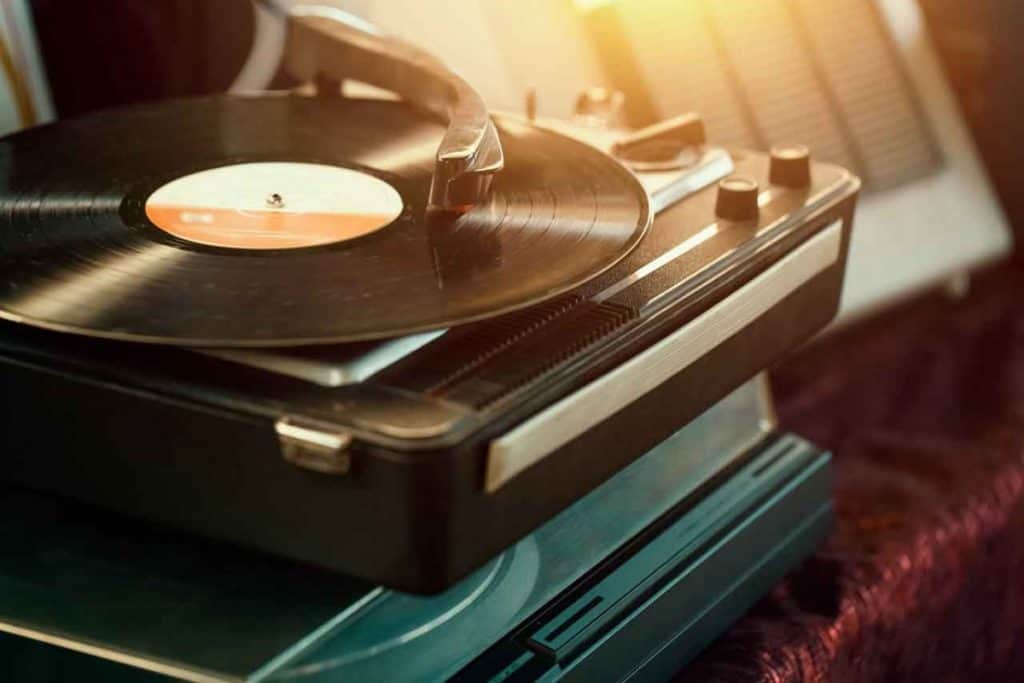
    A record changer is a device that automatically changes your vinyl records so you can play various phonographs without user intervention. They first came out during the late 1920s but were only common until the 1980s. They gradually became rarer because they believed that using these devices can wear, tear, and warp vinyl records. 

    Automatic record changers can really damage your record. The reason is that these changers drop the vinyl record a little carelessly when it is time to replace the record. The stacked vinyl records can also grind against each other, damaging their surfaces.

    To know how record changers damage your vinyl records, you also need to understand how they work.

    How Do Record Changers Ruin Your Vinyl Records?

    Most of the time, the mechanisms of record changers are complicated. They hold a stack of vinyl records placed on an extended central spindle. An arm then supports the spindle.

    In addition, some units have feelers responsible for detecting the sizes of the records stacked on them.

    Once the turntable finished playing a vinyl record, the arm moves out to clear the way, and then the next vinyl record will drop. While using this mechanism can be convenient, the way it drops the records can cause warping in the long run.

    Also, since the vinyl records are stacked on top of each other, their surfaces can acquire scratches. These damages on your vinyl records can damage and render them useless.

    Audiophiles spurned record changers because they noticed a compromise in reliability in these machines. The reason is that the tonearm changes its angle depending on the height of the stack. Vinyl collectors were also concerned about the rough treatment of record changers on discs.
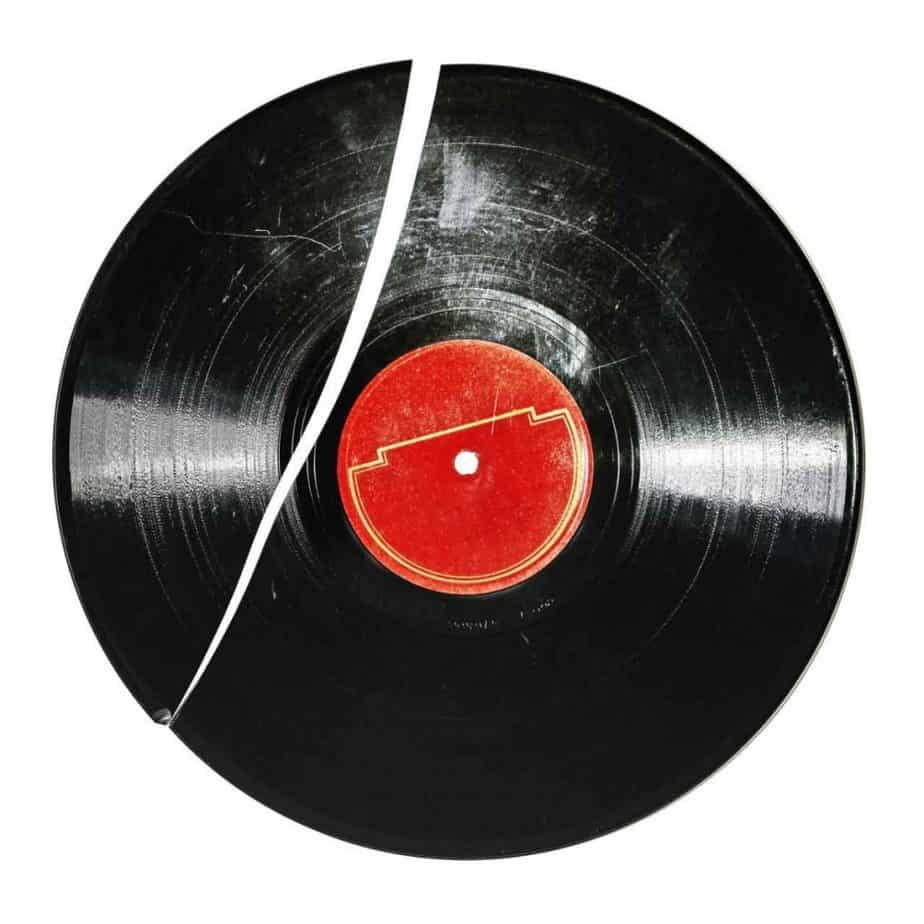
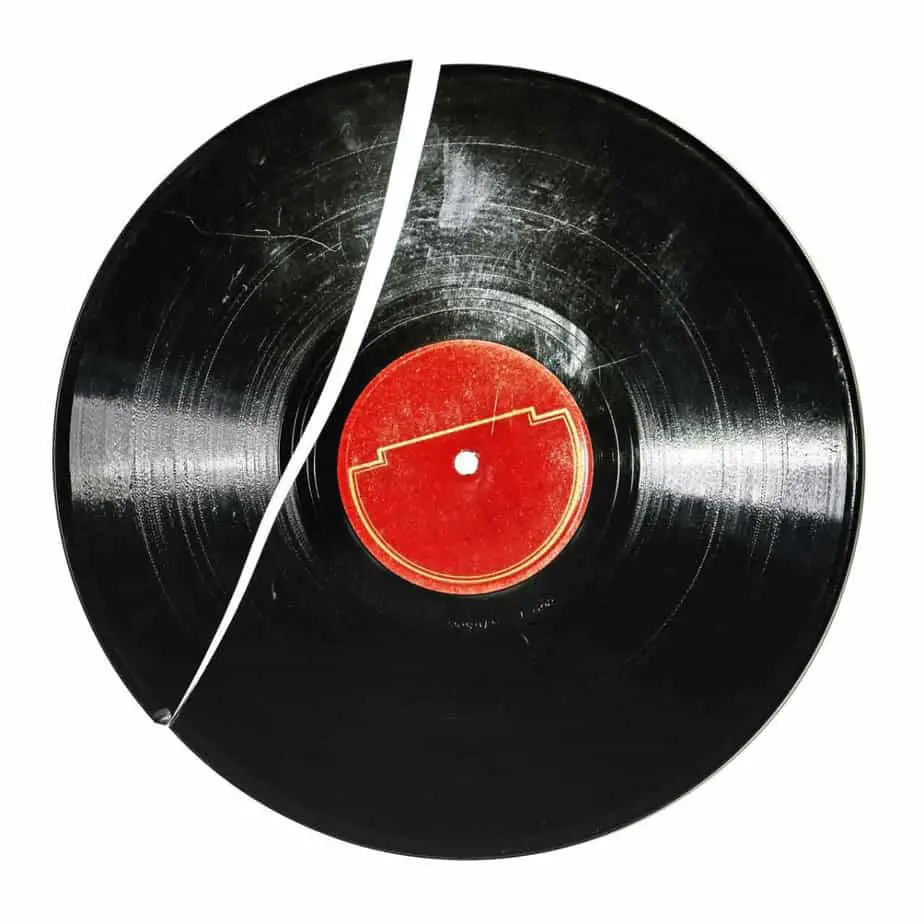
    Apart from scratches and warping, the change in the angle of the tonearm results in collective damage to the records’ spindle holes. Still, this damage results from dropping the vinyl from a height of a few inches going to the stack or record below the turntable platter.

    How Do Vinyl Records Work In An Automatic Record Changer?

    As mentioned, automatic record changers drop your vinyl record into the platter. For the records to play in the correct sequence, the numbering of the front and back is different. For instance, if you have four vinyl records, the sides are numbered 1 and 8, 2 and 7, 3 and 6, and 4 and 5, respectively.

    This sequencing method is popular as “automatic sequencing,” “auto-coupling,” or “changer sequencing.” Vinyl manufacturers record using this format during the pre-LP days, concertos, original cast albums, and classical symphonies.

    In addition, manufacturers designed this drop automatic sequence for record changers. This way, the machine simply dropped records instead of reversing the stack for it to play in sequence.

    On the other hand, there are also record changers that are capable of reversing the record stack automatically. That includes the record changers manufactured by RCA and GE in the 1930s.

    These units kept the vinyl records stacked on top of each other. Once the turntable finished playing a record, the changer slid it to the other side of the stack. This mechanism became famous as the “slide-automatic sequence.”

    Dust, Scratching, And Dropping: How They Damage Your Record

    Stacking vinyl records on a record changer exposed them to dust. The reason is that when people could play multiple records one after another, they tend to leave the records out of the sleeves for an extended period. As a result, the records accumulated dust.

    The more dust that came in contact between the vinyl records and the stylus, the more it produced surface noise. More than that, playing a dusty record could prematurely wear it down and damage the grooves. In time, the vinyl record was destroyed and rendered useless.

    Additionally, scratches can ruin your vinyl record and destroy its sound quality. Once a record accumulated scratches, those scratches will remain forever. When the turntable’s needle passes through those scratches, it would no longer produce high-quality audio.

    For that reason, you need to ensure that you are handling your record correctly. Unfortunately, proper handling was not something that record changers could do then.

    Finally, horizontally stacking vinyl records can warp them. The reason is that the records under the stack will carry the weight of all the vinyl records above them. As a result, the records warp and sometimes crack.

    Things That Can Damage Your Vinyl Record

    Apart from using record changers, improper handling can also ruin your vinyl records. Vinyl records are delicate things. For this reason, you need to know the things that can damage it so that you can easily avoid them.

    Using household cleaning materials for cleaning your records

    When you search on the internet for tutorials on how to clean your vinyl records, you will see a lot of suggestions. However, some of these tutorials can cause damage to your records instead of cleaning them.

    For instance, one of the most common cleaning suggestions on the internet today is to use household cleaning materials like Windex. However, the problem is that most household cleaning materials contain harsh chemicals. So, using them on your vinyl records can destroy their surfaces.

    Additionally, some people use a regular brush to remove dust from their records. But that can also scratch the surface of your record. For this reason, you should instead use an anti-static record brush when removing dust from your vinyl record.

    You may also want to read these articles that I wrote:

    Cleaning The Stylus

    Even if you are cleaning your record diligently, dust and other debris can accumulate on the stylus of your turntable. At first glance, this issue may not seem like a big deal. But in reality, the dirty stylus can lead to tracking problems such as skipping when you are playing music.

    The dirty stylus can also cause surface noise.

    Improper Handling

    When handling your records, you should only touch the label and outer edges. Touching the surface of your vinyl records will cause them to accumulate oil, grease, and dirt from your hands. Dust will stick to these oils, which will lead to stubborn surface noise.

    In addition, you can accidentally scratch your vinyl record with your fingers.

    Wrong Storage Technique

    Many vinyl owners let their records fall off as soon as they insert the edge to the record sleeve. As a result, the edge of the record warps and can destroy it in the long run. Additionally, not opening the sleeve enough will cause friction on the record and can potentially scratch it if there is any dirt or debris on the record or in the sleeve.

    Not Playing The Records Properly

    One of the worst things you can ever do to your vinyl record is finding a song manually. When you put your vinyl record on a turntable and place the needle down a random spot, chances are you will put it in the wrong groove. This mistake can lead to irreversible damage.

    So, instead of finding a song by hand, the best thing you need to do is to be patient and wait for the songs to play one by one.

    Using A T-shirt For Cleaning Your Record

    Sometimes, people feel tempted to wipe their vinyl records with their t-shirts or a soft towel. However, cloths not made for cleaning vinyl records may scratch and scuff their surface and will only move the dirt around. So, make sure that you are using a microfiber cloth every time you need to dry your vinyl record after deep cleaning them.

    Sources

    1. Technology Connections, Automatic Record Changers: We Used to Like Them, YouTube, https://www.youtube.com/watch?v=GuoFW2yAD7g/ Accessed July 29, 2021. 
    2. Record Changers, Wikipedia, The Free Encyclopedia, https://en.wikipedia.org/wiki/Record_changer#Automatic_sequencing/ Accessed July 29, 2021.
    3. Cleaning & Caring For Your Vinyl Records, U-Turn Audio, https://uturnaudio.com/pages/cleaning-and-caring-for-your-vinyl-records#:~:text=The%20more%20dust%20that%20comes,a%20clean%20microfiber%20cloth%20instead./ Accessed July 29, 2021.
    4. 5 Best Practices You Need to Learn about Record Storage, Life Storage Blog, https://www.lifestorage.com/blog/storage/how-to-store-your-vinyl-collection-record-storage-tips/ Accessed July 29, 2021.
  • Why Cheap Turntables Can Damage Your Records

    Why Cheap Turntables Can Damage Your Records

    The past few years have seen the so-called “vinyl revival.” With the resurgence of vinyl records, budget-friendly turntables also proliferate. But how do these cheap turntables differ from high-quality, expensive ones?

    Inexpensive turntables will destroy your records. They lack a counterweight to balance the tonearm, causing its weight to rest on the record. Your vinyl record will also hang on these undersized, cheap turntables, so it bends and flexes while spinning.

    There are a lot more reasons why budget-friendly turntables can damage your records. That said, it is essential that you know what to look for when buying a turntable.

    Why Cheap Turntables Can Damage Your Records

    Back then, the only place where people can purchase a turntable was a high-end audio shop and online stores. But since vinyl records became popular again, manufacturers began to produce turntables catered to those who are on a tight budget.

    Right now, there is a lot of cheap record players in the markets. However, these turntables have low-quality parts, making them bad for your vinyl record.

    Here are the reasons why cheap turntables can cause damage to your vinyl records:

    1. Cheap Turntables Do Not Have A Counterweight

    A counterweight is a part of a record player that works to balance out the tonearm. This way, all of the cartridge tonearm’s weight will not rest on the record itself.

    Additionally, turntables should have a tracking weight — the weight at which the tonearm rests on the record. A turntable’s tracking weight should be from one to two grams. The tracking weight is also adjustable to balance the tonearm if you add a new cartridge.

    A correctly set counterweight will allow modern records to survive even after hundreds of plays. However, cheap turntables do not have a counterweight. Instead, they only use a piece of plastic to hold and balance the tonearm.

    Since there is no counterweight, low-quality turntables will grind away your vinyl records twice or trice the right tracking weight. So, after approximately ten plays, your record will begin to deteriorate.

    1. Wrong Stylus Size

    Cheap turntable styli are too large for modern 33rpm records. They are also too small for old 78rpm records. Still, manufacturers opted for such a stylus to save cost and make the final product’s market price affordable.

    If you do not want your turntable to ruin your records, you need to ensure that you are getting one with two different styles. This way, you will be able to play both 33rpm and 78rpm vinyl records.

    A lot of good turntables do not even have a 78rpm speed. The reason is that you need to make many changes to play the old format properly. The large stylus will cause the turntable to skip over your record’s groove, leading to scratches.

    1. Lack Of Anti-shake Feature

    Turntables with an anti-shake feature prevent the arm from going to the center or out of the record. If the arm tries to move in and out of a playing record, it damages one side of the groove.

    If your turntable does not have an anti-shake feature, the arm will grind away your record. Anti-shake works by keeping the stylus at the center of the group. As a result, it maximizes the quality of sound and minimizes the damage to the vinyl record.

    1. Undersized Platter

    Some cheap turntables are too small, causing the record to hang off of it. Since the tonearm is tracking extensively against the other side of the vinyl record, it causes it to flex and bend while spinning. Such a factor results in lousy sound quality and damage to the groove of the record.

    1. Built-in Speakers

    Turntables amplify the vibrations that the stylus makes while it is running on the vinyl record. Some cheap turntables have built-in speakers that work by making vibrations. The vibrations cause the record player to skip, resulting in terrible audio quality and damage to your record.

    What Makes An Excellent Record Player?

    There are many turntables in the market. So picking the best one can be a difficult task. If you do not know the features you need for a record player, you might get the wrong one.

    But one thing worth noting about turntables is that they can be expensive. At first, spending more than $1,000 for a record player can sound ludicrous. But considering the features that you can get for this price, you are definitely getting what you paid for.

    On the other hand, buying a cheap turntable is not only a waste of money but is also a way of putting your vinyl record at risk.

    For that reason, make sure that you know the features that your record player needs to have.

    Sufficient Extraction

    A good turntable should be able to extract as much information out of the grooves as possible. You may expect your record player to extract all the information from the record groove, onto the stylus, and into the cartridge, without distortion or interference. However, that is impossible in reality.

    That said, you need to get the most stable turntable possible for your vinyl record.

    Good Motors And Belts

    It is inevitable for motors to produce vibration. But high-quality turntables can minimize their degree of vibration. They do such by utilizing a belt drive.

    Moreover, a belt drive also acts as a driver for the platter apart from working as a shock absorber for the motor’s vibration.

    Vibration Reduction

    There are different factors responsible for making a record player produce excellent sound:

    • Proper stylus size
    • Counterweight
    • Vibration reduction

    While we cannot argue that these three factors are essential, turntable engineers have a primary goal of reducing the most amount of vibration that they can.

    As a result, the only vibration that high-quality record players have comes from the record groove that moves around the stylus. Such is the reason why expensive turntables sound a lot better than cheap ones.

    Perfect Plinth

    The plinth is basically the body of the turntable. This part comes in a variety of materials and shapes. If you want the best turntable in terms of isolating vibration, a double plinth is an ideal choice.

    Moreover, the different materials used for making the plinth can significantly affect the sound. The reason is that different materials mean different resonation, frequencies, and how fast or slow vibration passes through them.

    In addition, the feet where the plinth sits play a factor. The feet can aid in controlling resonance. It can also dampen the vibration coming from the cabinet that your turntable is sitting on.

    The plinth also encases the main bearing that the spindle turns on.

    With all that’s said, you should look for a plinth that perfectly isolates vibration and improves resonation.

    Good Platter Design

    Turntable engineers often use heavy materials to produce heavy platters. This way, the platter will be less prone to being disturbed by vibration. Apart from that, it will also have inertia on its side.

    Heavy platter generally rotates to a speed that you set without it being too fast or too slow. On the other hand, lightweight platters tend to slow down pretty quickly.

    Moreover, some turntables feature a platter mat. This mat helps in reducing vibrations. It is essential to have something for vibration control so that it will not pass up into the record and reduce the sound quality produced.

    Furthermore, high-quality turntables have a platter and plinth designed to negate the need for a platter mat.

    Sources

    1. Stephen Nelson-Smith, Just Say No! Why Cheap Turntables Destroy Your Records, Audio Advent, https://audio-advent.ghost.io/why-cheap-turntables-destroy-your-records/ July 27, 2021. 
    2. Will A Cheap Turntable Damage Your Records?, Audio Appraisal, https://www.audioappraisal.com/will-a-cheap-turntable-damage-your-records/ July 27, 2021.  
    3. AJ Powell, Why Pay $1,000 for a Turntable?, Gear Patrol, https://www.gearpatrol.com/tech/a264002/how-a-good-turntable-works/ July 27, 2021. 
  • How Many Times Can A Vinyl Record Be Played?

    How Many Times Can A Vinyl Record Be Played?

    Nothing can compare with how delicate vinyl records are. In fact, its lifespan will end no matter how much you take care of it. It leads us to the question – how many times can you play a vinyl record?

    If you are taking care of your vinyl record well, you can play it over 100 times. But you will notice minor degradation in terms of sound. Still, you can play your record many times, depending on how well you take care of it.

    Vinyl records have a lifespan. For this reason, you need to know the factors that influence how long a record will last.

    How Many Plays Can A Vinyl Record Do?

    The world relies on digital technology today. So, it is not surprising that not everyone is familiar with old-school vinyl records. But recently, it seems like this vintage predecessor of CDs is making a comeback.

    On the other hand, you may be someone who collects vinyl records and display them on your shelf.

    But regardless of which way you lean, there is a chance that you do not entirely understand how vinyl records work.

    Moreover, one of the most common questions about vinyl records is how many times you can play them. The answer depends on how well you take care of them.

    If you take care of your vinyl record well, you can play it more than 100 times. However, it is essential to note that there will still be some minor degradation when it comes to the audio. On the other hand, a vinyl record that is poorly taken care of can be damaged in only one play.

    Even the slightest scratch can cause your vinyl record to skip when playing. Additionally, touching its surface with your bare hands can cause the record to accumulate dust, which can also destroy your record.

    That said, you need to properly take care of your record if you want it to last. Taking care of a record includes cleaning the record, proper storage, and correct usage.

    When cleaning your vinyl record, you should only use products, such as anti-static record brush and record cleaner, mainly made for it. If you use products with harsh chemicals, chances are you will scratch its surface. As a result, the number of plays that your record can do will decrease.

    Meanwhile, proper storage and usage include storing your record in its sleeve after using it. When placing your record on a turntable, put it carefully to ensure that no warping will happen.

    If you know how to handle your record properly, your record will last for up to a hundred plays. But if you are careless, you will destroy your vinyl record sooner than its expected lifespan.

    Factors That Affect The Lifespan Of Your Record

    Vinyl records consist of polyvinyl chloride. This material is proven to last for a very long time. But no matter how strong this material is, several factors can affect how long it will last.

    Cleaning Method

    Regularly cleaning your record is a crucial factor in terms of its longevity. You need to keep your record free of any dirt, fingerprint, and dust. This way, you will be able to preserve the highest possible quality.

    The grooves of a vinyl record are delicate. So, any dust, dirt, or foreign object that gets stuck within these ridges will significantly impact the record’s playback and sound quality.

    When there is a speck of dirt or dust buildup on record grooves, the vinyl record will start to skip while playing. 

    Additionally, your fingerprints are another factor that can render your record useless. If transferred on the surface of your vinyl record, the natural oil produced by your fingers can attract a lot of dirt. The dirt will then settle on the surface and grooves of your records, which results in scratching.

    Sunlight Exposure

    One of the most common factors that influence a vinyl record’s lifespan is its exposure to sunlight. Exposure to sunlight for a long time will result in high temperatures, something that your vinyl record cannot tolerate. The increase in temperature will cause your record to warp and distort.

    Moreover, polyvinyl chloride can only withstand a temperature of up to 140 degrees Fahrenheit. If the heat exceeds this temperature, the vinyl record will lose its resilience. Such will end up in deformation.

    You can reverse the warpage if it is minor. However, you cannot expect the record to have the best sound quality still.

    Humidity

    In order for you to preserve your record, you should store them in places with proper conditions. This way, they will not deprecate or tarnish.

    When storing a vinyl record, humidity is one of the significant factors that you need to look at. It is important to note that too much humidity can destroy the quality of your vinyl record.

    Humidity results in a static charge, and if your record is positively charged, it will attract a lot of dust and dirt. An anti-static record brush can reverse the positive charge. But if you keep on storing your record in places with 45 to 50 percent humidity, it will be a challenge to maintain static-free storage for your vinyl records.

    The problem for some people is that they live in cities with a naturally high humidity level. This factor is something that is out of control. Fortunately, there is one thing you can do to resolve it.

    If you live in places with high humidity levels, such as in the South, you can use a dehumidifier in the space where you are storing your records. This way, you will be able to manage humidity levels. As a result, you will be able to reduce static charge and preserve the quality of your vinyl record.

    Storing Your Records Improperly

    Properly storing your records is essential. It would be best if you placed them on your shelf or box vertically instead of horizontally. If you stack them horizontally, you will end up decreasing the quality of your vinyl records.

    Placing your records on top of each other will create pressure. This factor can result in warpage on your vinyl record, which will destroy it entirely. Additionally, the pressure built up due to horizontal stacking will crack your record, a type of damage that is entirely irreversible.

    Moreover, several methods will allow you to fix your warped vinyl record. Preventing such damage is still better than fixing it.

    For that reason, store your vinyl records vertically and make sure that nothing will cause pressure buildup on them.

    You may also be interested in this article:

    Can Records Be Stored Horizontally?

    Using A Cheap Turntable

    If you are planning to start a vinyl record collection, you should know that you need to pay a reasonable amount for a high-quality vinyl record. Never settle for inexpensive record players, as most of them have low quality and will end up ruining your vinyl.

    So, it would be best if you were willing to spend at least $1,000 on your turntable. A high-quality record player will allow you to play your vinyl record multiple times without worrying that it might get damaged.

    On the other hand, cheap turntables are often undersized and lack some features. For instance, it does not have a counterweight, so you cannot adjust the weight that the tonearm puts on the record. And since these turntables are undersized, records often hang on one side, causing unnecessary movements once you turn the machine on.

    Sources

    1. Steve Guttenberg, Do vinyl LPs wear out? The Audiophiliac takes on that myth, Cnet.Com, https://www.cnet.com/tech/home-entertainment/do-vinyl-lps-wear-out-well-bust-that-myth/ Accessed, July 30, 2021. 
    2. How Do Vinyl Records Work?, Victrola, https://victrola.com/blogs/articles/how-do-vinyl-records-work/ July 30, 2021.
    3. How Long Do Vinyl Records Last?, Victrola, https://victrola.com/blogs/articles/how-long-do-vinyl-records-last/ July 30, 2021.
  • Why You Shouldn’t Leave A Record On The Turntable

    Why You Shouldn’t Leave A Record On The Turntable

    Vinyl records require a lot of maintenance if you want them to provide you with the best sound quality. However, people sometimes leave them on the turntable so that they will not need to position it again once they want to play music. While that sounds convenient, what you don’t know is that it can damage your vinyl record.

    Leaving your record out of its sleeve will or on the turntable will expose it to dirt and dust. It will also increase the risk of damaging the record’s surface. In the long run, the sound quality of your vinyl record will degrade until you can no longer use it.

    Apart from leaving your vinyl record on the turntable, other things can ruin it. Fortunately, you can take several steps to keep the integrity of your record.

    Leaving Your Record On The Turntable: Is It Bad?

    If you want to get the best possible audio quality from your vinyl record, you need to exert a significant amount of discipline. Unlike digital music that does not require any maintenance, vinyl records need lots of time and care to remain in their best state.

    If you are new to collecting vinyl records, you may have tried leaving it on the turntable, so you can simply play it whenever you want to. But as good as that sounds, leaving your record on the turntable while it is not in use can ruin it.

    Ideally, the only time you can keep your record out of its sleeve is while using it. If you leave it on the platter or for an extended period, you are exposing the vinyl record to dirt and dust. Leaving the record on the turntable often will increase the risk of damaging its surface.

    Even if your turntable has a dust cover, leaving the record on the platter when not in use is still not ideal. A vinyl record sleeve or jacket is there for a reason, and that is to protect your record. So, make sure that you put your vinyl record in it the moment you are done playing some good music.

    Bad Habits That Damage Your Vinyl Record

    Knowing how to clean your vinyl record is one thing. But that is only the beginning of maintaining it. Apart from cleaning, you should be aware of your habits to avoid to ensure that you are not damaging your record.

    1. Horizontally Stacking Your Records

    Horizontally storing your vinyl records on your storage shelf makes sense. However, this storage method is the most common habit that every record owner should avoid.

    Under extreme conditions, stacking your records can render them unplayable. Putting your records on top of each other will apply excess weight to those stored under the stack. That can lead to warping and permanent damage to the record sleeve.

    For that reason, store your vinyl records vertically to prevent warping caused by pressure.

    1. Touching The Surface Of Your Record

    Your hands have dirt, natural oil, and grease. Touching the vinyl record will transfer these oils and dirt to the surface. That will result in the griming build-up, and the dirt and dust that stuck to the oil your hand transferred to the record’s surface will contribute to wearing the stylus.

    To avoid damaging your vinyl record, always handle it by the outer edge. In case you touched the surface accidentally, the best thing to do is to clean it immediately.

    If you cannot avoid touching your record, use a record cleaning solution to clean your hand prior to handling.

    1. Picking Up The Record Even Before The Platter Stops

    Removing the record from the turntable even before the platter stops spinning will scratch the wax’s other side. Flipping the record as soon as you turn the turntable off to play your favorite song may sound tempting. However, your patience can go a long way in preventing any damage to your vinyl record.

    1. Carelessly Pitting The Vinyl Record Back To Its Sleeve

    Some people let their vinyl record drop as it enters the sleeve. This habit will damage not only the record but also the sleeve.

    If you let the record slip into the sleeve often, you will end up punching a hole into the bottom of the sleeve. It is also likely that you will scratch the surface of the record.

    To prevent these damages, open the sleeve wide enough. This way, you will be able to reduce contact with the vinyl record.

    1. Poor Cleaning Practice

    One thing you need to avoid when cleaning your vinyl record is using household cleaning products. Using harsh chemicals to clean your record will be the fastest way to render it useless.

    In my experience, this is one of the biggest problems people have when trying to increase the longevity of their vinyl collection.

    Vinyl records are delicate as they consist of polyvinyl chloride. Even the slightest change will cause a significant impact on the tiny grooves of the record. So, if you have no choice but to clean the record, make sure that you are aware of the proper cleaning method and the materials that you need to use.

    How To Properly Clean Your Record

    Whether your record is new or old, you need to take time to take care of it. As mentioned, the wrong cleaning practice will damage your vinyl record and reduce its audio quality. Worse, you might even destroy your record permanently if you cleaned it the wrong way.

    To prevent yourself from damaging your vinyl record, you need to be aware of the proper cleaning method that you can do.

    But before that, here are the materials that you need to use when cleaning your record:

    • Record brush
    • Cleaning solution for vinyl record
    • Microfiber or cotton cloth
    1. Use A Record Brush To Remove Static And Dust

    When removing dust particles from your vinyl record, use a brush specifically made for a vinyl record. Do some long and gentle brush strokes to ensure that you can remove dust without scratching the record’s surface.

    1. Check If The Record Has Visible Blemishes

    Inspect the surface of the vinyl record under a soft and bright light to see if there are smudges, discolorations, and fingerprints. If there are any, you will need to exert time and record to remove them. You may even have to scrub the entire record in some cases.

    If there are many smudges and fingerprints, use warm and soapy water to clean the record. Next, allow it to dry and repeat the first step.

    1. Use Spray Cleaning Solution On Parts That Need Intensive Cleaning

    Check the entire record for sections that need intensive cleaning. If you find problem areas, spray a cleaning solution directly on them. However, it would be best if you were careful not to touch the label with any liquid to prevent the epoxy from loosening.

    Additionally, use a cleaning solution specifically made for vinyl records. Avoid using household cleaning solutions as the harsh chemicals in them can damage the record’s delicate surface.

    1. Wipe The Record Clean With A Microfiber Cloth

    After applying a cleaning solution on the record’s surface, wipe it in a circular motion using cotton or a microfiber cloth. Apply pressure to rub away the blemishes.

    Again, avoid touching the label to prevent any damage and discoloration.

    1. Store The Vinyl Record Back To Its Sleeve

    As mentioned, open the sleeve wide enough when putting the vinyl record back to it. This way, the sleeve will not touch the record too much, preventing its surface from acquiring scratches.

    Sources

    1. Marc Henshall, Seven Bad Habits That Will Destroy Your Vinyl Records, Your Sound Matters, https://www.yoursoundmatters.com/seven-bad-habits-will-destroy-vinyl-records/ Accessed July 28, 2021.
    2. 10 Things NOT to do to Your Vinyl Records, Disco Music.Com, https://www.discomusic.com/10-things-not-to-do-to-your-vinyl-records/ Accessed July 28, 2021.
    3. James Schiff & Brandt Ranj, For The Record: How to Clean and Care for Your Vinyl Collection, https://www.rollingstone.com/product-recommendations/electronics/how-to-clean-vinyl-records-850080/ Accessed July 28, 2021.
  • Does Record Scratching Damage The Vinyl?

    Does Record Scratching Damage The Vinyl?

    Does scratching damage vinyl? Vinyl records are pretty fragile. Moreso, if you’re starting and don’t necessarily know what you’re doing. You might be concerned about whether or not scratching is good or bad for vinyl records. Let’s find out. 

    The answer is yes; scratching will damage the vinyl record. However, vinyl records will inevitably get damaged with time, even without scratching. 

    Here’s how you can slow down the damage time:

    1. Clean your hands before putting them on the vinyl record.
    2. Use wax paper to reduce any friction during scratching.
    3. Use specialized needles. 

    If you’re looking for a vinyl maintenance guide, you’re in good hands. This article will guide you on scratching, its effects, and what DJs are doing to reduce vinyl record damage. Be sure to keep reading for lots of helpful information. Let’s get this spinning!

    Does Scratching Damage Vinyl?

    As shared earlier, yes, scratching will damage your vinyl records. There are no two ways about it. Vinyl records consist of PVC (polyvinyl chloride), which translates to plastic. 

    They are thin round plastic contraptions that can generate sound with the right tools. They are prone to warping, melting, and scratching if you expose them to anti-vinyl record conditions. 

    It’s why some vinyl records can cost up to $2000. Vinyl records are fragile, and with time they do start to wear out. Scratching increases the wear-out time, but there are ways to mitigate it. Firstly, let’s get the definitions out of the way. 

    What Is Scratching?

    In my experience, when you’re playing vinyl records on an everyday basis, the stylus tends to move across the grooves on a vinyl record. However, when you position the stylus or needle in the groove, that’s called scratching. 

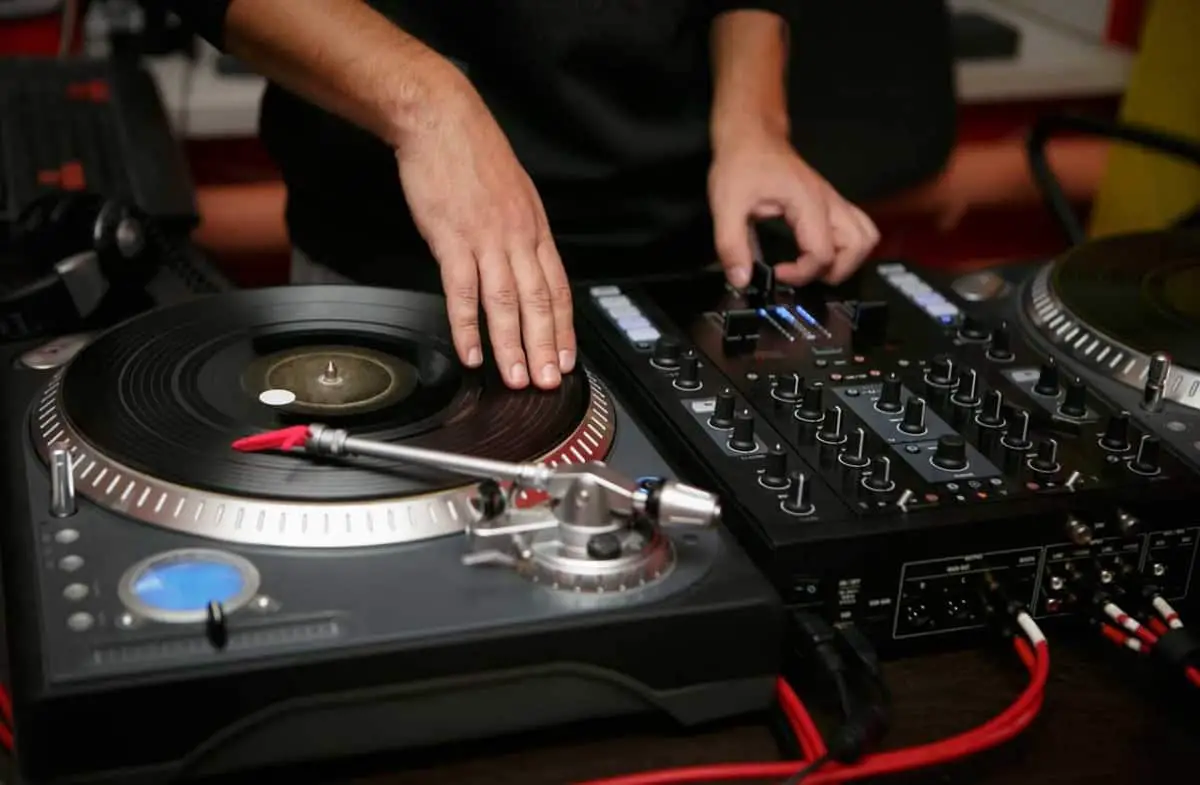
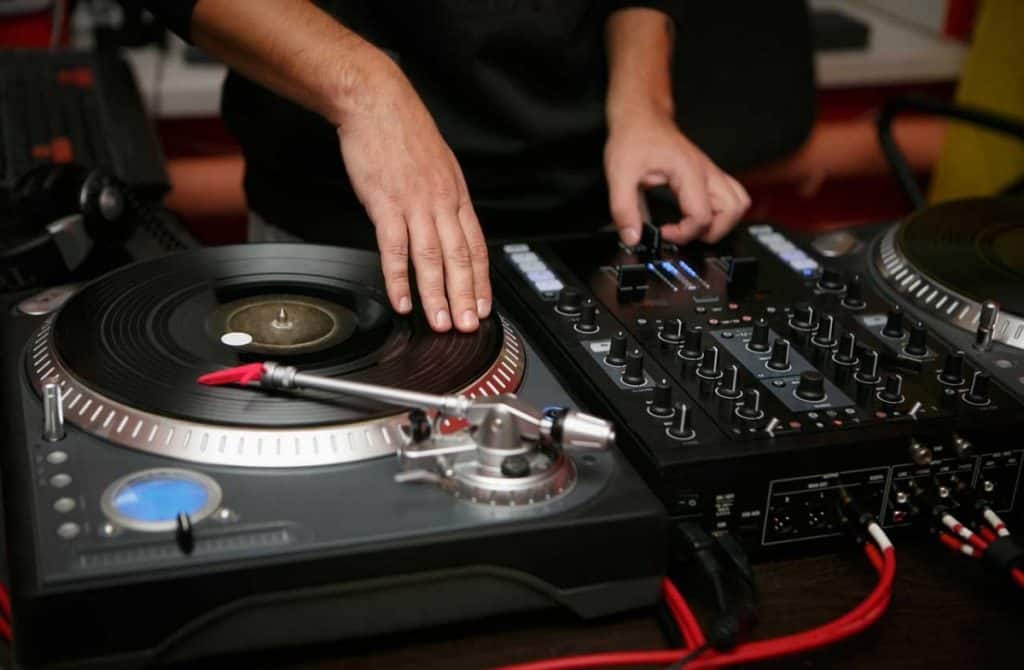
    DJs do this positioning to get that repetitive sound. Scratching is an art form. Not everyone can do it, and it is one of the fundamental skills of truly great DJing. However, it doesn’t take from the fact that it damages vinyl records. 

    What Do You Want From Your Vinyl Records?

    Before getting into the nit and grit of scratching, it’s best to outline the different record owners’ needs regarding their vinyl. As shared above, scratching is an art form to some and not to others. 

    1. Are you looking to get into the DJ scene? If so, you’ll need the tools such as pitch control turntables that DJs optimize for scratching. With this path, you’ll have to consider the scratch life of your vinyl records, but a damaged vinyl record will ultimately be the trade-off to the scratching. Art must persist. 
    2. Are you an audiophile looking for a high-fidelity sound production? If so, your vinyl record and turntable maintenance might be out of this world. You’re looking far from scratching into more classical vinyl record playing to get that specific result you’re looking for in your needs.  
    3. Lastly, Are you intrigued with the whole concept of vinyl records (maybe you’re just starting), and do you need a simple set-up? If so, you want some music to listen to from a turntable or record player. For you, as long as it doesn’t make noise for anyone else in your surrounding, it’s all fine and dandy. 

    It’s essential to note down what exactly you want from a turntable or a record player. Through that, you can understand where you lie on the scratching spectrum. 

    Not only that, but you can get the vinyl record equipment suited for you. It’s a win-win situation when you sit down and narrow down what exactly you want. 

    It’s like ice cream; sometimes, the fancy handmade ice cream is your forte, and other times, store-bought will do the job to get you through the summer. 

    Is It Bad To Play A Scratched Vinyl?

    Experts do not recommend playing a scratched vinyl whether you’re a DJ or either of the other two mentioned above. It will destroy your stylus or needle. You always want to care for every single part of your record player or turntable. 

    If you’ve noticed scratching sounds coming from a particular vinyl record, it’s high time to handle the situation. Fortunately, you can fix scratched records. Keep reading on how you can fix your scratched records. 

    Alternative Scratching Methods

    Thanks to the human brain and advancements in technology, there are different types of software that you can use to mimic scratching. That is if you’re looking to DJ. 

    The software comes with the entire set-up on your screen for you to recreate the scratching process. You could consider this method as training wheels because eventually, you’ll have to work with vinyl records physically, and that will take a lot of time, mistakes, and practice. No one gets it right the first time. 

    Can You Fix Scratched Vinyl Records?

    Firstly, experts do not recommend that everyone use this method. If you have a scratched record near and dear to your heart, do not try this method. If you do decide to try this method, it’s pretty, unfortunately, your responsibility. 

    If you would like to fix your scratched vinyl record, then try a wet melamine foam brush. How do you do it?

    Step 1: Clean the vinyl record first. You want to get rid of any dust or dirt on the surface of the vinyl record. Everyone has different cleaning methods, so use the method you feel gets the job done. 

    Step 2: Use either distilled or deionized water to wet the melamine foam brush. Make sure that you squeeze out any excess water. Remember your goal is to reduce any damage on the vinyl record as much as possible. 

    Step 3: Gently scrub the groove or the area where the scratch is present. Be careful with your vinyl record. They are pretty fragile. Would you please not put your back into it? A gentle scrub will do the job. 

    And voila, you’re done! Please note that this method won’t work all the time. The scratching noise may subside with time, but the odds are unfortunately not stacked in your favor. 

    The ultimate advice would be to care for your vinyl records to a T. Clean them before and after use, clean your stylus or needle, and ensure that anything that comes into contact with the vinyl record is dust or dirt-free.

    Helpful Vinyl Record FAQs 

    1. Is It That Bad To Touch A Record?

    If you’re a DJ, you will inevitably touch the vinyl record while playing. It’s part of the process. However, if you don’t have the DJing skills, it is not recommended to touch the viny record while playing. 

    You risk damaging the entire set-up and, most significantly, damaging the vinyl record to the point of no return. Keep your hands to yourself if you don’t have the skillset for it. 

    Also, make sure that when you are handling the vinyl record, your hands are clean. The goal is to ensure that any dirt or dust doesn’t get on the record’s surface. 

    2. How Bad Is An Old, Scratched Vinyl Record To A Needle Or Stylus? 

    On a scale of one to 10? Ten being the harbinger of doom? You could give it a ten. Needles are incredibly fragile, and without the needle, you wouldn’t be able to play any music from your record player.

    Please note that the sound that may come from the record may not be ideal. It would be best to set it aside. Either fix the record or get a new one. 

    3. If Some Turntable Needs Consist Of Diamond, How Come It Doesn’t Scratch The Vinyl Record?

    Manufacturers designed vinyl records to follow a specific path or track. If the needle goes off track, you best believe that it will scratch the vinyl record. So, as long as it doesn’t stay off the track, no scratches, but the results will not be pretty if it does go off track.

    Sources

    1. Jenna Miles, The Beginner’s Guide to Vinyl Records: How to Build, Maintain and Experience a Music Collection in Analogue (Massachusetts: Adams Media,2017) Accessed August 13th, 2021. 
    2. Discogs, Turntable 101: How To Set Up Your Turntable Correctly, Discogs, https://blog.discogs.com/en/how-to-setup-your-turntable/ Accessed August 13th, 2021.
    3. David, Learn how to scratch today: Top DJ scratching tips for beginners, DJiing Pro, https://djingpro.com/learn-how-to-scratch/ Accessed August 13th, 2021. 
  • The Proper Way To Take Vinyl Out Of A Sleeve

    The Proper Way To Take Vinyl Out Of A Sleeve

    How to take vinyl out of sleeve might be a no-brainer for some people. But for collectors and vinyl enthusiasts, it’s part of essential vinyl record maintenance. Here’s a step-by-step process of how to do it.

    Proper record handling is one of the basics when it comes to vinyl record maintenance. Getting your vinyl record in and out of the jacket is part of the process. Here’s how you do it:

    1. Wash your hands before touching anything.
    2. Carefully open the jacket 
    3. Pull out the inner sleeve
    4. Open the inner sleeve and let the record slide into your hand

    Not only will this article give you the proper vinyl record handling process, but it will also give you additional tips and tricks you can use along the way. You’re welcome to keep reading for more information on how to maintain your vinyl record collection.

    How To Take Vinyl Out Of Sleeves

    It’s a frequently asked question in the vinyl record community, and most people don’t get it right all the time. Fortunately for you, this article is here to assist you with a four-step process that will get the job done the right way. 

    But first things first, you have to understand the protective layers behind vinyl records. 

    The Protective Layers Of A Vinyl Record

    You must ensure that you protect every vinyl record with the following layers: 

    • The outer sleeve
    • The jacket
    • The inner sleeve 

    All three layers must be in place. It’s part of efficient vinyl record storage and handling. 

    The outer sleeve is usually a plastic sleeve that goes over the album. When you buy a new vinyl record, the vinyl records don’t come with an outer sleeve. What happens is that the manufacturers shrink-wrap them. It’s your responsibility to purchase an outer sleeve once you have removed the shrink wrap. 

    The inner sleeve is what is in direct contact with the vinyl record. You can also consider it as the sleeve that sits inside the jacket. Experts recommend using poly-lined inner sleeves. Collectors use these types of sleeves for higher-quality vinyl records. 

    However, just a plain paper sleeve should still do the job well. Please note that if you bought an old or used vinyl and the inner sleeve was absent, the previous owner did not store the record efficiently. 

    At this point, experts recommend thorough and careful inspection of the vinyl record for damages. 

    How Do You Remove Vinyl Sleeves?

    Now that that’s out the way, it’s high time to get to the article’s core, the sleeve removal process. Remember that everyone is different in how they handle their vinyl records. However, this step-by-step process is highly recommended and should help you properly maintain and handle your vinyl records.

    Here’s how you do it:

    1. Wash your hand before touching any part of the vinyl record

    Vinyl records are magnets to dirt or dust. Should you play the records while the dirt is on the surface, you could damage the record or even the stylus.

     For that reason, before you remove the sleeve, make sure that your hands are squeaky clean. In some cases, collectors will choose to handle their vinyl records using a pair of lint-free clean white gloves. 

    Kindly don’t assume that the use of gloves is going into an unconventional extra mile. If you love your vinyl records and are will to go the extra mile, knock yourself out. However, the point remains, keep it clean. If your hands aren’t clean, kindly keep your hands to yourself. 

    Tip 1: When handling the vinyl record, ensure that there’s no food or drink in its proximity. The goal is to create a surface of cleanliness. Having any food or drink on the work surface goes against that. 

    Tip 2: You must not touch the grooves on the record. You want to handle the record with as little contact to the grooves as possible. What can you touch? You can touch either the center of the record or the edge of the record. 

    The grooves are off the table. It’s just an essential tip before going into the handling of the record. 

    1. Carefully open the jacket

    First, you want to separate the jacket and the outer sleeve. It’s essential always to have these layers when storing vinyl records. In my experience, storing it in this layering format has brought many benefits to the overall upkeep of vinyl records. 

    The next thing to note is that you want to open the jacket towards you in an upward direction. You don’t want the vinyl record to drop and crash on the floor. 

    1. Pull out the inner sleeve

    Now that both the outer sleeve and the jacket are gone. It’s time to get the last protective layer of the vinyl record, the inner sleeve. 

    You want to separate the inner sleeve from the jacket. Pull it out without pulling out the record first. The keyword in this entire process is ‘carefully.’ 

    Inner sleeves come in two ways:

    • Inner sleeves that cover and protect the entire record.
    • Inner sleeves that have a hole and are parallel to the record’s label. 
    1. Open the inner sleeve and let the record slide into your hand

    Now that the inner sleeve is out of the jacket, you want to open it and let the record slide into your hand. You want to use your thumb and middle finger for this part. 

    You want to touch the center of the label with your middle finger, and the edge of the vinyl record should touch your thumb. And voila, you have successfully removed your vinyl record out of the sleeves. 

    Helpful Vinyl Record FAQs

    1.Should You Open The Record Sleeve Facing Upwards Or Outwards?

    The goal is to remove the record securely, so you want to open the record’s inner sleeve both upwards and outwards. Ensure that the opening is facing your direction. The record will slide into your hands, and you need to catch it by the edge. Remember not to touch the grooves on the vinyl record. 

    2. Should You Remove The Stickers On The Sleeves?

    It’s honestly up to you. If you want to keep the stickers, by all means, knock yourself out. If the sleeve isn’t damaged and can still protect the vinyl record, all is well.

    However, if you confuse the shrink wrap with the outer sleeve, the shrink-wrap may come with stickers; those will come off with the shrink wrap. However, some sleeves do come with stickers. But there should be a guideline from the manufacturer on how to handle that. Check their website for further information if you’re unsure. If you can’t see it right away, check the manufacturer’s FAQs or send them a direct message. 

    3. Where Do You Place Your Inner Sleeve Once You’ve Removed The Vinyl Record?

    The goal is to ensure that no speck of dirt or dust gets on the vinyl record. Before removing the vinyl record, clean the surface or area you’ll be placing the sleeves once you’ve removed them. 

    You also want to ensure that the area you’re working with isn’t next to a window or somewhere where the conditions are dust-prone and not conducive for vinyl record storage. 

    Once you’ve removed the sleeves, place them on that clean surface, and it should be fine. It should be as easy as pie as long as the vinyl record is safe and away from dust and dirt. 

    May the odds be in your favor. 

    Sources

    1. Jenna Miles, The Beginner’s Guide to Vinyl Records: How to Build, Maintain and Experience a Music Collection in Analogue (Massachusetts: Adams Media,2017) Accessed August 14th, 2021.
    2. Steven Williams, How to store vinyl records, Discogs, https://blog.discogs.com/en/how-to-store-vinyl-records/ Accessed August 4th, 2021.
    3. Record Sound and Research Center, Care, Handling, and Storage of Audio-Visual Materials, Library of Congress, https://www.loc.gov/preservation/care/record.html Accessed August 4th, 2021. 
    4. Vinyl Record Life, The Complete Guide to Handling Vinyl Records, Vinyl Record Life, https://www.vinylrecordlife.com/the-complete-guide-to-handling-vinyl-records-with-pictures/ Accessed August 4th, 2021. 
  • Will A Warped Record Damage The Stylus

    Will A Warped Record Damage The Stylus

    Can warped record damage stylus? Warping is one of the effects of improper vinyl record storage. It can be reversible, but can you still play the vinyl record even if it’s slightly warped?

    Fortunately, you can still play a warped vinyl record. How come? How does this science even function in the first place?

    1. It may be warped, but the grooves are still intact.
    2. It’s not the record that can destroy the stylus, but the stylus can destroy the record.
    3. It’s not warped to the point of no repair.

    If you want to understand how warped records can still play, you’re welcome to keep reading. This information is essential to both novices in the vinyl record industry and experts in the field. 

    Can Warped Record Damage Stylus?

    No, your warped record cannot damage the stylus. It’s the other way around. A blunt or worn-out stylus can damage a vinyl record, whether warped or not. 

    How is that possible? Well, it all boils down to the science of it all. But first, it’s best to get out what warping is and what causes warping. 

    What Is Warping? 

    Warping is the bending or distortion of vinyl records when you expose them to harmful conditions. Vinyl records are pretty fragile. They require adequate room temperature and dust-free environments to maintain their state.  

    Why Is My Vinyl Warped?

    The following reasons cause vinyl record warping:

    • Increase in temperature 
    • Inadequate vinyl record storage 

    If you’re new to vinyl records and have never seen vinyl warping, you can try two things. Watch a Youtube video where the creator purposefully warps a vinyl record. Or leave a vinyl record out in the summer sun for thirty minutes. You will find your vinyl warped and ready to go, or if you leave it there for much longer, you can find it completely melted.

    If you decide to do the latter, kindly use an old vinyl record with little to no value. Vinyl records do have some monetary value. Not all of them, but a small minority do. Nevertheless, this little experiment should give you a better understanding of a warped vinyl. 

    Is It Alright To Play A Warped Vinyl?

    In my experience, playing a warped vinyl is a recipe for disaster. The record will play, no doubt about that, but you won’t be listening to an album at that point. 

    Whatever will come out of the turntable will no longer be sound; it’ll be noise and nothing else. A warped vinyl record still has the grooves, but they’re more distorted than anything, and the noise that will come out of the turntable will be annoying. 

    It wouldn’t hurt to try playing a warped record for the sake of science and experience but play it at your own cost. Many vinyl record owners have made mistakes with a warped vinyl; it would be best if you learned from their mistakes and not yours.  

    Not only that, but experts do not recommend playing a warped vinyl record. It’s useless, to be honest, playing a warped vinyl because you’ll get nothing out of it, but at the same time, it goes against the unspoken yet still spoken code of vinyl record keeping. 

    Storing vinyl records is mandatory for anyone who’s going into vinyl keeping. It’s part of the basics of collecting vinyl records in the first place. To start, the fact that your vinyl warped could also be a sign of lousy storage from your end. 

    An inadequately stored vinyl record will warp. As shared earlier, vinyl records are like plants. If you don’t care for them, they won’t dry out or die; they will either warp, accumulate dust, and quite possibly get damaged the next time you want to play them. 

    What Damages Vinyl Records And The Stylus?

    Dust. If you decide to play a vinyl record without cleaning it first, you will damage both the record and the stylus. Dust, dirt, or any unnecessary matter on the surface of the vinyl record will damage or erode it to the point of no repair.

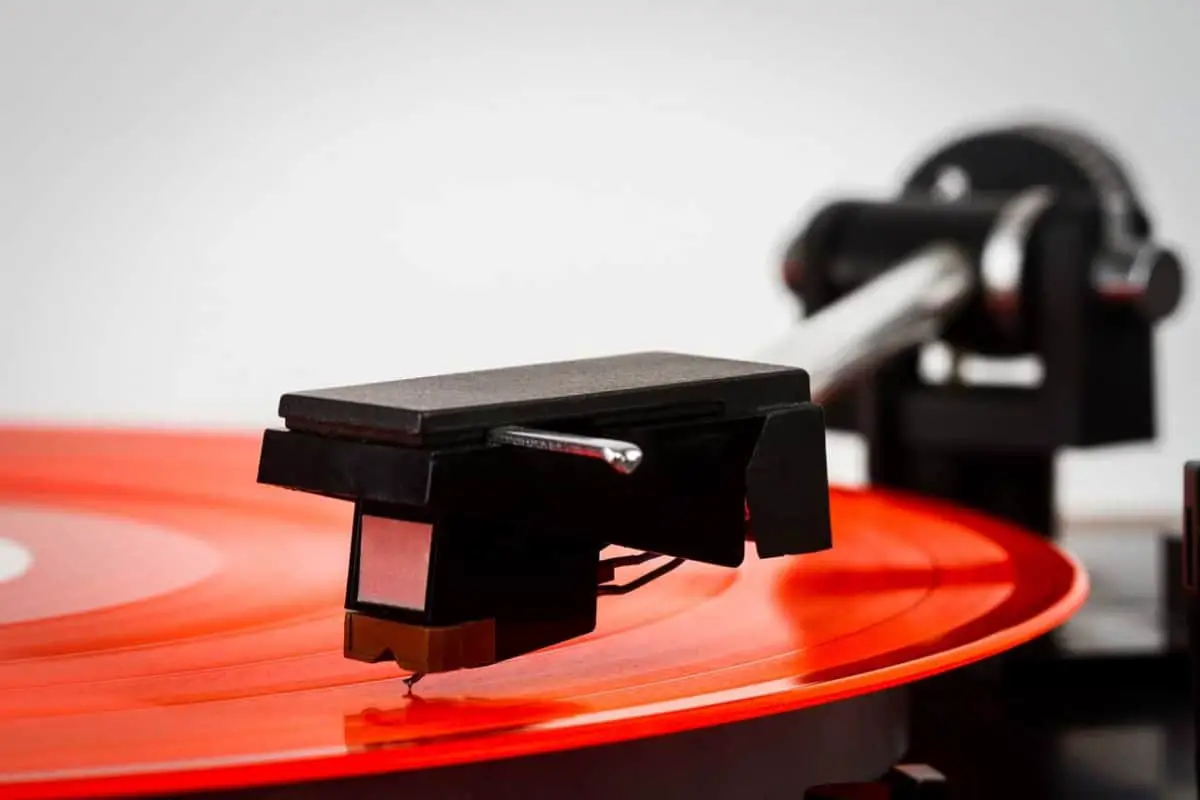
    Apart from that, a worn-out stylus can damage a vinyl record. A stylus isn’t necessarily a needle; it comes in a cone shape that manufacturers polish to perfection. 

    The higher the polish on the stylus, the less friction between the stylus and the grooves on the vinyl record, so playing the vinyl record will be a lot smoother. 

    Any dust or dirt on the grooves or the surface of the record causes fiction while playing. Therefore, the stylus begins to wear off, and voila, your worn-out stylus can damage the in-coming vinyl record you’re going to play. 

    All of this plays back to vinyl record storage. It is a necessity that a lot of new vinyl owners tend to overlook. If a record isn’t cleaned or stored correctly, it will experience some damage while it’s in use. You could say that without cleaning and proper handling of vinyl records, you’re skipping some parts in its circle of life. 

    As odd as it may be, the lifetime of a vinyl record is entirely dependent on its storage. You can say the same for sealed vinyl records. They all need to be stored adequately and efficiently. 

    Can You Fix A Warped Vinyl Record?

    Why yes, yes, you can fix a warped record. In the same manner, you created a warped record; can you also fix it. By using heat and pressure on both sides of the vinyl record, you can quickly flatten it out and, this time, correctly store the vinyl record. 

    Experts recommend taking your time with the fixing process. Patience is a virtue, and you’ll need lots of it when trying to CTRL Z, the warped vinyl record. 

    It would be best to consult various Youtube channels to get the gist on fixing a warped vinyl record. Most significantly, if you’re new to vinyl record keeping. 

    You may also want to take a look at my other article, where I describe my own methods for fixing a warped record. Is It Ok To Play A Warped Record? (Answer Here)

    Here you can read even more about warped vinyl records.
    Is It Normal For Vinyl To Be Warped?

    FAQs About Warped Records

    Sources

    1. Jenna Miles, The Beginner’s Guide to Vinyl Records: How to Build, Maintain and Experience a Music Collection in Analogue (Massachusetts: Adams Media,2017) Accessed August 5th, 2021. 
    2. Shure, Stylus Wear, and Record Wear, Shure, https://service.shure.com/s/article/stylus-wear-and-record-wear?language=en_US Accessed August 5th,2021.
    3. Steven Williams, How to store vinyl records, Discogs, https://blog.discogs.com/en/how-to-store-vinyl-records/ Accessed August 5th,2021. 
    4. Levi Sheppard, Guide to flattening warped vinyl records, Vinyl Me Please, https://magazine.vinylmeplease.com/magazine/guide-to-flattening-warped-vinyl-records/ Accessed August 5th, 2021. 

  • Is It Worth Keeping Your Vinyl Records Sealed?

    Is It Worth Keeping Your Vinyl Records Sealed?

    Should I keep vinyl records sealed? One of the most rewarding aspects of having a vinyl collection is keeping them long enough to become valuable. But is keeping the records worth the profit in the long run? Keep on reading to find out. 

    What increases the value of a sealed record over time?

    1. The release or version of the record.
    2. The condition of the record.
    3. The pricing guide of that time.

    Even if you keep the record for a long time, the Goldmine standard will assess the vinyl record’s value. 

    You’re welcome to keep reading if you want more information on sealed records, their value, and what happens to records if you seal them for a long time. 

    Should I Keep Vinyl Records Sealed?

    This issue has been a debate in the vinyl record community for years. Some audiophiles argue that you’re supposed to play records and not seal them for decades and decades to profit off of them. 

    It is an emotional rollercoaster for some and a business for others. Nevertheless, the decision is personal and based on some factors mentioned earlier. This article will discuss further in detail. 

    Is A Sealed Record Worth More?

    In my experience, it’s pretty tricky to assume that sealed records will cost more. Why? Well, the future is unknown, and anything could happen in the upcoming years that could render a record unprofitable. 

    For example baseball cards, in the 1980s, baseball cards turned into collectibles. However, not every baseball card is worth the penny today. You can say the same for Pokemon cards. Only a few Pokemon cards can be worth the investment, and you determine their value by special features, dates, and unique aspects. 

    Here are the factors that determine the value of a sealed record.

    1. The release date or version of a record

    An album’s release date is one of its core value assessment factors. Collectors are much more interested in first release dates. Manufacturers release vinyl albums in different pressings. Earlier release dates will have a limited number of copies in that pressing, thus increasing the value. 

    Here are other factors that go into assessing the release date of an album: 

    • The catalog number
    • Compare the different record labels.
    • The runout area should have some clues that collectors look out for when assessing. 

    2. Assessing the condition of the record using the Goldmine standard

    If you’re new to the vinyl record community, you may or may not have come across the Goldmine standard. What is the Goldmine standard?

    The Goldmine standard is a buying and selling guide for vinyl guides. It is the most widely used guide in the vinyl record market. Platforms like Discog, eBay, and independent websites use this standard as a measure of value. 

    Using a source of light, here’s what collectors typically look for:

    • Water damage
    • Tears
    • Bent edges
    • Discoloration

    The Goldmine standard uses a grading system. This grading system is on the master tier level, and so many aspects of vinyl condition go into the system. Not only that but records are graded into two ways:

    • Grading for the record
    • Grading for the cover

    According to Goldmine, they consider albums without covers absolutely worthless. Here’s how a typical record grading would go: 

    Album A has a record cover grading of VG (very good) and a record grading of VG +. Goldmine would take these two values, add them together and divide the answer by 2. 

    The result would give a mixed grade rough estimate value of the vinyl record. 

    Here’s a list of the vinyl record grades: 

    • M: Mint
    • NM: Near Mint or M-
    • VG+ or E: Very Good Plus or Excellent
    • VG: Very Good
    • G, G+ or VG-: Good, Good Plus or Very Good Minus 
    • P & F: Poor and Fair

    3. The pricing guide of that time

    Collectors will utilize sales data from the internet to evaluate the current market price of the vinyl record. Websites like Discogs and Popsike are excellent references to know what exact value the record would fetch. 

    As you can see, a lot goes into assessing the value of a record and not just keeping it sealed for an entire decade. If you do believe that in the long run, the value of your sealed vinyl record will bring in loads of profit, you’re welcome to keep it sealed. 

    However, this article is not a financial guide. Your sealed record and estimated value are up to you. Whether it appreciates or depreciates in time is a risky choice to make. 

    What Happens To Sealed Vinyl Records While In Storage?

    Nothing will happen to sealed vinyl records most of the time unless you don’t store them properly. One thing that vinyl enthusiasts emphasize is storing vinyl records. 

    If vinyl records are not stored properly, they are prone to warping, discoloration, and damages to the grooves. Vinyl records require consistent optimum temperature with little to no exposure to dirt or dust. 

    Since the latter is impossible, experts recommend consistently cleaning your vinyl records. 

    However, that isn’t the case for sealed records. Remember that the Goldmine standard assesses the condition of the record cover. A gatefold is one aspect that gets easily damaged on a sealed record if the sealed record is not stored correctly. 

    What Is A Gatefold? 

    A gatefold was a popular packaging method in the 1960s. In short, if the artists or company wanted to add interesting information onto an album, such as artwork, it would be placed on a gatefold. 

    There are modern gatefolds. However, they don’t make them as they used to in the 60s. It is essential that you correctly store and maintain (the little there is) your sealed vinyl records. 

    If collecting sealed records is something you’re interested in, go for it. If you want to make a profit on it, be careful and don’t rely on it as a source of income ten years later. Anything can happen in the timeline. 

    Some Vinyl FAQs To Help You

    1. How Do Other Vinyl Owners Take To Opening Sealed Vinyl Records?

    It’s a mix of emotions. Some vinyl owners are excited by the fact, while others are in a fit of rage. The keeping of sealed vinyl records has been a consistent debate in the vinyl record community. 

    It’s pretty much up to you and whether or not you can fight the temptation to open a sealed record. 

    2. Is It Wrong To Leave A Vinyl Record In Its Factory Seal?

    If you’re looking to keep the record sealed, there’s no problem with that. In fact, it would be best to buy an outer sleeve to keep its condition as mint as possible for the next couple of years. 

    It’s also alright to keep price tags or stickers that may come with the vinyl record. It adds to the authenticity of the record and will work great for your Goldmine standard grading. 

    However, it may also not work in your favor if the collectors deem the record a lower grade. Regardless, if you’re keeping the record sealed, anything that will attest to its press is an excellent choice to keep.

    3. Should You Take The Plastic Off The Records?

    The plastic wrap on records is known as shrink wrap. Again, if you’re keeping the records, buy an outer sleeve and keep the entire record, including the shrink wrap in the outer sleeve. With this method, you can keep the record’s authenticity while also adding to its mint condition in the long run. It won’t harm the sealed record inside as long as you keep the record in optimal conditions. 

    Sources

    1. Jenna Miles, The Beginner’s Guide to Vinyl Records: How to Build, Maintain and Experience a Music Collection in Analogue (Massachusetts: Adams Media,2017) Accessed August 14th, 2021.
    2. Steven Williams, How to Estimate The Value of A Record Collection, Discogs, https://blog.discogs.com/en/how-to-estimate-the-value-of-a-record-collection/ Accessed August 14th, 2021.
    3. Patrick Prince, Record Grading 101: Understanding The Goldmine Grading Guide, Goldmine, https://www.goldminemag.com/collector-resources/record-grading-101 Accessed August 14th, 2021.
  • Is It Normal For Vinyl To Be Warped?

    Is It Normal For Vinyl To Be Warped?

    Is it normal for vinyl to be warped? Warping is a result of poorly stored vinyl records. However, sometimes new vinyl records come at your doorstep a little warped. Is that normal? Let’s find out. 

    Unfortunately, it’s normal for new vinyl records to have a warped state. It’s the current state of the vinyl economy. Why is that?

    1. Warping is an adverse effect caused by improper storage of vinyl records.
    2. You can also get warping by leaving your vinyl records under the sun.
    3. Unsealed records can also warp if they are not stored properly. 

    As a vinyl enthusiast, you will come across warping a lot. It’s up to you to correctly determine the vinyl records state and whether or not you can fix the vinyl record. You’re welcome to keep reading and get more information on how you can achieve that result. 

    Is It Normal For Vinyl To Be Warped?

    In my experience, getting a warped vinyl is a result of poor storage and maintenance. Whether it’s a new, old, or used vinyl, a warped state is not normal, and you shouldn’t normalize it in the first place. 

    Vinyl collectors grade valued vinyl records using Goldmine standard. If a collector analyzed a warped vinyl record, it might receive a P grade regardless of its release date and other exceptional factors. P means poor, by the way. 

    This fact doesn’t mean that you should grade every record you see, but you should hold your vinyl records, their condition, and storage to a high standard. 

    Vinyl record storage is one of the basics of vinyl collecting, and of course, you might slip up and warp one record at least. But it would be better for you and your collection to care for them a little better. 

    Why Is My Vinyl Warped?

    To answer this question, you have to understand what warping is. By understanding what warping is and its causes, you can understand why your vinyl record is warping in the first place. 

    What Is Warping?

    Warping is an adverse effect caused by the following things:

    • By exposing the vinyl record to high temperatures. For example, the summer heat. 
    • Improper storage of vinyl records.

    Vinyl records require specific temperatures to stay flat and playable; in the case of sealed vinyl records, flat and profitable. Vinyl records require room temperature to remain playable and flat. At room temperature, you’re talking around 65°F or 70°F.  

    At about 140°F, the vinyl record will warp. It is inevitable. Moreover, if the temperature increases, the vinyl record will eventually melt. 

    As a vinyl record enthusiast, make sure the room or area you’re storing your vinyl records maintains a constant temperature that will keep the record cool and flat. 

    Another thing to note is that the vinyl records will become brittle and break if the temperatures get any lower. 

    Why does vinyl warp in the first place? Vinyl records consist of PVC (polyvinyl chloride). PVC is a type of plastic. When you expose a thin plastic (vinyl records) to harmful conditions, it will melt, break or warp. 

    Look at it this way; if you left a plastic cup out in the Summer afternoon for a long time, you wouldn’t be coming to a plastic cup in an hour or two. It’s the same concept. The plastic will bend (warp) or melt (if we’re talking Death Valley). 

    Is It Normal Few New Vinyl Records To Come In Warped?

    If you chose to have your vinyl records delivered to your doorstep during the summer, there’s a high chance that they will come in warped. It’s not that it’s normal, but rather it’s a form of cause and effect. 

    The keyword here is Summer. 

    There’s no way of regulating the heat inside your package while it’s in the delivery truck or shipping center. Many vinyl enthusiasts will not ship vinyl records during the summer because of this particular problem. 

    Experts recommend shipping your vinyl records in seasons other than summer, preferably the beginning of autumn where it’s not too cold or too hot, and the record should make it in peak condition.

    How Do You Fix A Warped Vinyl?

    Fixing a warped vinyl isn’t hard, but it does take some patience. It requires heat to warp a record, but it also requires heat to CTRL Z the warping process. 

    What do you need?

    • A source of heat
    • Heavy objects to sandwich the warped vinyl record

    Kindly note, do not use a stove to undo the warping. Not only is it dangerous, but it might also break a couple of restrictions in your locale or building. Experts recommend staying away from the stove method; it’s not safe for you.

    Some experts wait for summer to undo the warping. Then they leave the records between books that will hold them in place and provide that pressure to flatten them. Please note, you are still keeping the records at a pleasant temperature that won’t warp them. 

    It’s essential to check the temperature so that you’re not crossing the line. 

    After leaving the records for around a week, the process should’ve fixed the warped record or reduced the warping to an agreeable state. 

    Doing this method a couple of times should fix most of the warping, and you would’ve done it safely. Again, the keyword is safe. 

    Regardless prevention is better than cure. Take care of your vinyl record, store your records correctly and make sure that you consistently clean your records.

    This method is the best way to keep your records free from warping. It may seem like a pain in the neck, but the results will never disappoint you.

    Lastly, vinyl records can warp; sometimes, it’s inevitable. However, do not normalize the warping of vinyl records—God speed. 

    You may want to take a look at my other articles if you want to learn more about the subject.
    Is It Ok To Play A Warped Record? (Answer Here)
    Will A Warped Record Damage The Stylus? Is It Ok To Play A Warped Record? (Answer Here)

    New And Second Hand Vinyl FAQs

    1. How Are New Vinyl Records Warped And Second-hand Vinyl Records Are Flat?

    It’s tricky trying to pinpoint the problem with new vinyl records warping. The reason for this problem may lie with pressing companies, warehouses, or even shipping companies. Maybe blame the entire manufacturing process. 

    There’s also the case of 60s records were much thinner and warped a lot easier. However, records from the 50s were a lot sturdier and didn’t warp as quickly as other vinyl records after that decade. 

    It’s pretty challenging to poke and prod where precisely the problem is coming from, but if you had to choose one clear winner, it would have to be cats. Blame the cats. 

    1. Should You Return Warped Records That Sound Fine?

    It depends on how much warping the vinyl record has undergone. If the warping is undisputed and doesn’t satisfy your level of quality, then it’s an excellent choice to return the vinyl record. You can get a new one or get your money back.

    However, sometimes it’s never that serious. If the warp is less than an inch and the album plays well, then it should be fine to keep it and play it on your turntable. 

    Regardless, overly warped vinyl records are worth returning to the seller and getting a better vinyl record for your money.

    1. Can You Fix A Warped Record With A Hairdryer?

    Well, this tool of choice is quite uncontrollable. You can’t control how much heat is on the record, and you might blast it with so much heat that you make the warping a lot worse. 

    Experts do not recommend using a hairdryer. It’s an uncontrollable medium that may let things go south in the blink of an eye. 

    Sources

    1. Jenna Miles, The Beginner’s Guide to Vinyl Records: How to Build, Maintain and Experience a Music Collection in Analogue (Massachusetts: Adams Media,2017) Accessed August 15th,2021. 
    2. Record Player Expert, Vinyl Temperature Guide, Record Player Expert, https://recordplayerexpert.com/vinyl-temperatures/ Accessed August 15th, 2021.
    3. Steven Williams, How to store vinyl records, Discogs, https://blog.discogs.com/en/how-to-store-vinyl-records/ Accessed August 15th,2021. 

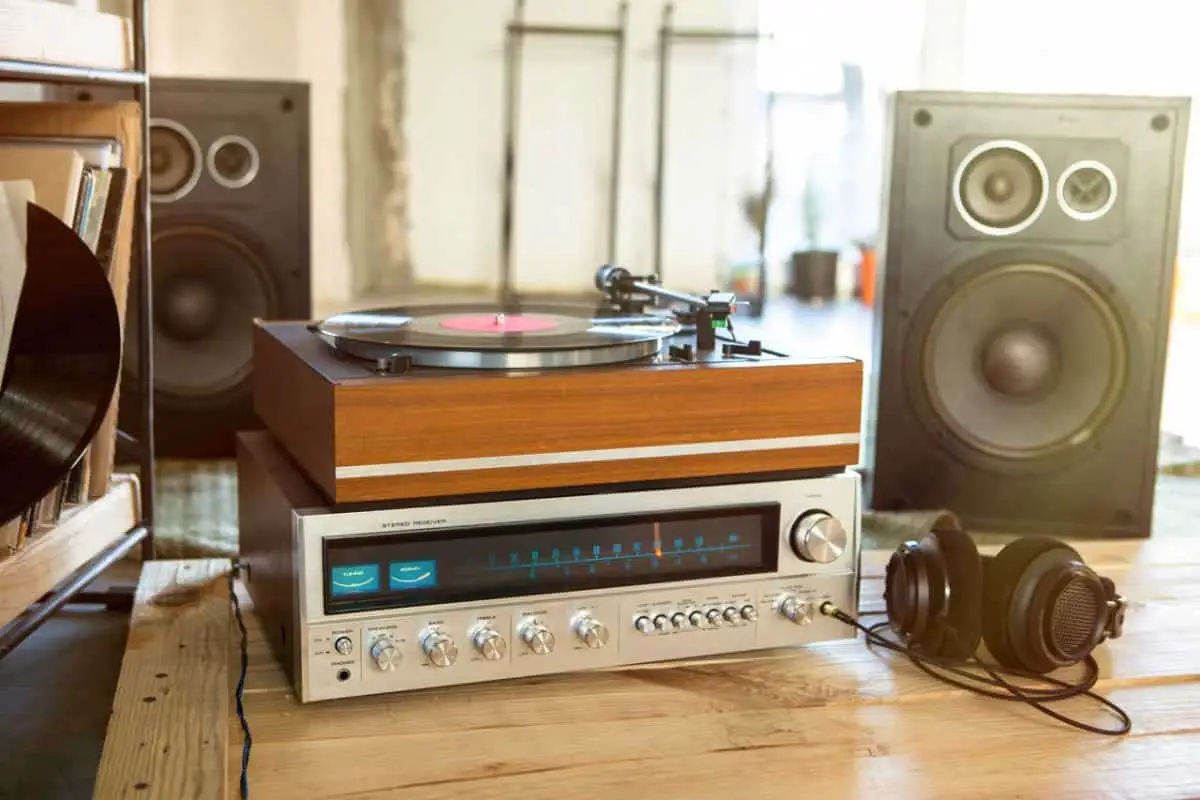
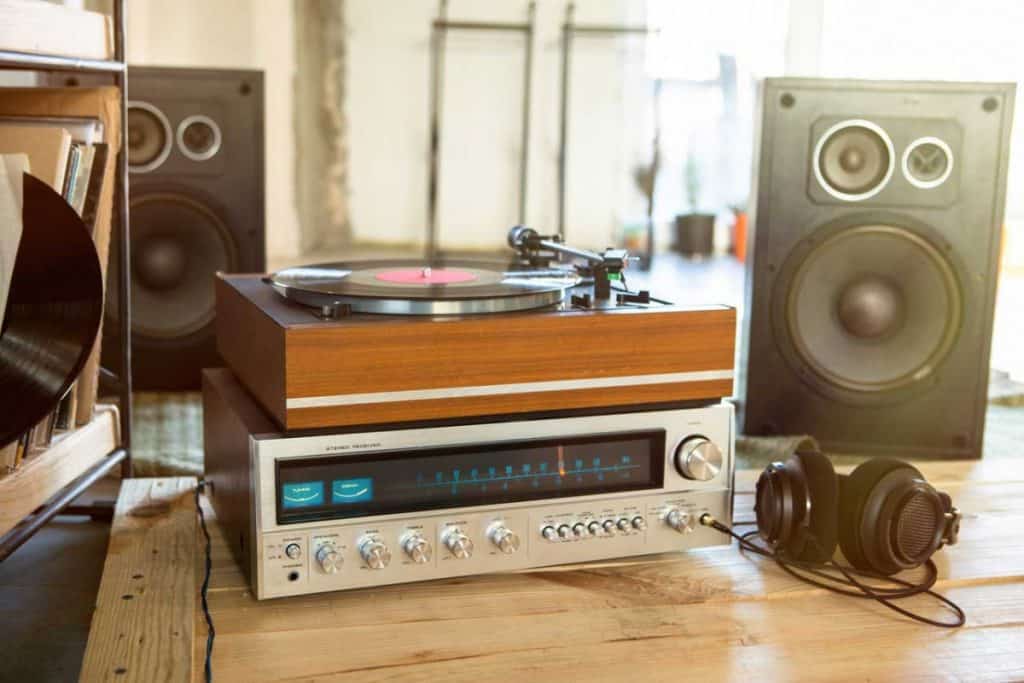
  • Can A Turntable Be Set On Top Of A Receiver?

    Can A Turntable Be Set On Top Of A Receiver?

    Can you put a turntable on top of a receiver? Turntable setups have evolved. With so many options in the market, correctly positioning your setup can be a chore. No worries, this article will help you efficiently set up your turntable and all the different devices that come with it. 

    Firstly, experts recommend not placing your turntable on top of your receiver. Here are the reasons why:

    1.Receivers generate a lot of vibrations that will negatively affect your turntable.

    2.Experts recommend placing your turntable on a vibration-free and movement-free surface

    3.An improper setup can damage your records. 

    If you’re looking for a guide to help you position your turntable correctly, you’re in the right place. This article will give you advice on your turntable, receiver, etc., setup, and a bit more information to help you along the way. If you’re interested, then be sure to keep reading.

    Can You Put A Turntable On Top Of A Receiver?

    Physically, you can take the turntable and put it on the receiver. It should take less than five minutes to do the entire process. But is it the right thing to do? 

    Unfortunately, it’s not. In my experience, putting your turntable on top of your receiver is not the best thing for your turntable setup. At first, it may seem easy and probably efficient. Everything would be at a convenient distance, and you can save up on space if that’s what you’re looking for in a setup.

    However, don’t get it twisted; this positioning will bring more harm than good, and here’s why. 

    What Is A Receiver?

    It’s best to address the elephant in the room that some readers may not have basic turntable knowledge. It’s nothing to be ashamed of; knowledge is power. Maybe they’re starting, and it’s good practice to include everyone in a conversation. 

    A turntable tends to output a low phono signal that the human ear cannot possibly pick up. So how do we finally hear the phono signal? It’s all thanks to the receiver. 

    A receiver is a phono signal amplifier. It boosts the signal to a point the human ear can decipher. 

    Others may define a receiver as a combination of the following devices:

    • Power amplifier
    • Line-stage amplifier
    • Radio Tuner
    • Phono preamplifier

    It’s a 4-in-1 package, and to be honest, it’s a steal to audiophiles. In simple terms, a receiver’s primary purpose is to transmit the sound from the turntable to the speakers. 

    What Is A Phono Preamplifier?

    You may have also come across the term preamp or preamplifier. Receivers and preamps tend to do the same thing. However, they are two entirely different components. 

    Users use preamps alongside power amplifiers. You use the power amplifiers to generate power for your speakers. 

    Nowadays, preamps tend not to come with a phono stage. Some brands will come with a phono stage, but it’s not mandatory. Why? Consumers prefer to have these two components separate. 

    As the name suggests, a phono preamplifier has something to do with the low phono sound mentioned earlier. A phono preamplifier takes the phono signal from the phono cartridge and converts that signal into music.

    It does this conversion process through equalizing and then amplifying the sound. 

    The phono preamplifiers come in three ways:

    • As a singular unit
    • Combined into the turntable and sold as a unit
    • It comes with a receiver, integrated amp, or preamplifier.

    It was important to mention preamps and phono preamplifiers to differentiate these components from receivers. They may have the same purpose, but they function differently and produce different results. 

    What Should I Put My Turntable On?

    You want to put your turntable on a surface that does not vibrate and will not move at all. Turntables can be pretty fragile things; because of this reason, they need a surface that will reduce the risk of any accidents.

    Some experts recommend positioning the speakers and the turntable on different surfaces. By doing this, you do not provide a transmission mechanism for the vibrations to travel through. 

    Sound travels fast, and with suitable mediums, vibrations can travel across surfaces. It’s why soundproofing is such a chore. Sound waves and sound vibrations escape faster than you can guess. In a way, by putting the speakers and turntable on different surfaces, you are creating your version of a soundproof scenario. 

    It’s not exactly at the recording studio level, but it shows that you grasp the concept of sound and its properties, which is great if you’re an audiophile into turntables. 

    What Happens When You Put A Turntable On Top Of A Receiver?

    While saying that putting a turntable on top of a receiver is not the best professional practice is simple. However, it’s always best to give reasons behind the logic. How else would scientists accept assumptions without proof?

    So why is it a big no-no?

    1. Experts recommend a vibration-less flat surface

    Mainly, you want a surface that is free from movement and vibrations. Vibrations will negatively impact the quality of the sound. It may turn to borderline noise at some point. 

    That’s not what you’re trying to achieve from a turntable. You want lovely and seamless sound or music coming from your turntable. Other factors may impede this desire, but let’s not add wrong turntable positioning to the list. 

    2. Receivers generate a lot of unwanted vibrations

    This point ties back into the first one, your turntable requires a vibration-less surface. The receiver is not vibrationless. The process of amplifying the sound involves sound vibrations, and these vibrations will inevitably impede your turntable. 

    3. Incorrect turntable setup can damage your records or your equipment.

    The science of it all can be frustrating at times. However, it all has a purpose. By putting the turntable on top of the receiver, you’re blocking airflow to the receiver. 

    This blockage could result in overheating, and finally, you would no longer have a fully functional receiver. Wrong positioning has ruined several turntable setups, which is why it’s best to learn from the mistakes of others. 

    Care and maintenance of turntable setups are the responsibility of its owners. The first step in caring for your turntable is by placing it in the correct position. Make sure to allow it a firm space to sit, and it will be a worthy investment.  

    Are You Interested In What Other Like-minded Individuals Are Asking? Here Are Some Extremely Helpful Faqs. 

    1. Can you stack a record player on an amp?

    Depending on the type of amp, it’s best not to test it out and not stack it at all. It might come across as convenient and efficient to some degree, but in the long run, it’s not. Stacking it reduces the proper airflow and can cause dust accumulation and, finally, overheating. 

    Experts recommend separating your record player and your amp (regardless of which amp it is) in your setup. Make sure to allow the necessary space for each component. 

    2. Can you position a record player on its side?

    Vintage record players may not survive this evolution. But there are specialized record players that manufacturers built to reduce the amount of space they take and increase the portability. 

    However, regular record players or turntables will not be worth the try. The design is to have them as flat and horizontal as possible. You cannot play it while it’s on the side if it could work while they’re on the side. 

    Kindly stick to the manual; it may help you more than you think.

    3. How should you go about starting your turntable setup?

    It depends on your budget, research, and what you want your turntable set up to do for you. Firstly, understand what components you want as part of your setup. This information will give you a starting point for your setup. A significant component of the setup would be some records. 

    Sources

    1.Jenna Miles, The Beginner’s Guide to Vinyl Records: How to Build, Maintain and Experience a Music Collection in Analogue (Massachusetts: Adams Media,2017) 256.

    2.Jeffree Lee Pucket, The Beginner’s Guide to a Basic Turntable Set-Up, Discogs, https://blog.discogs.com/en/turntable-set-up-guide-gear/ July 30th, 2021.

    3.Discogs, Turntable 101: How To Set Up Your Turntable Correctly, Discogs, https://blog.discogs.com/en/how-to-setup-your-turntable/ Accessed July 30th, 2021.

    4.U-Turn Audio, How to Position your Turntable, U-Turn Audio, https://uturnaudio.com/pages/turntable-positioning Accessed July 30th, 2021.

    5.Purdy Lounge, Preamp vs. Receiver – Detailed Comparison, Purdy Lounge, https://purdylounge.com/preamp-vs-receiver/ Accessed July 30th, 2021.