Category: Turntable Cartridge

  • The 5 Best Phono Cartridges Under $500

    The 5 Best Phono Cartridges Under $500

    Phono cartridges are one of the most critical parts of a record player. The mechanism transfers the sound from the needle, allowing you to listen to your vinyl records. However, they can get quite pricey!

    The best phono cartridge under $500 is the Audio-Technica VM540ML. It’s best for those just getting into vinyl. It provides excellent sound, has a solid build, and is easy to install. Additionally, it costs significantly less than $500! Audio-Technica is well-known for its quality vinyl products.

    However, the Audio-Technica VM540ML won’t suit you if…

    • You’re on a tight budget. Go with the Audio-Technica AT-VM95C (available on Amazon).
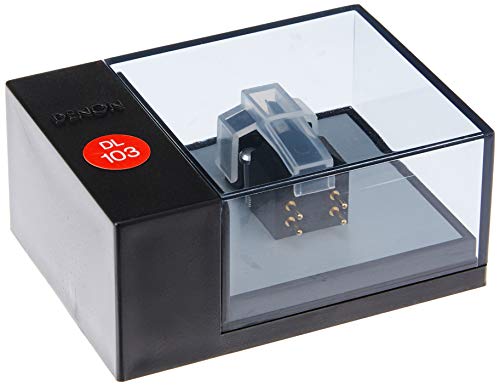
    • You want the best sound quality and don’t mind paying more. Choose the Denon DL-103 (available on Amazon).
    • You want a phono cartridge that’s very easy to install. The Ortofon 2M Blue (available on Amazon) is what you should choose.
    • You enjoy reduced noise and clarity for better hi-fi. Then choose the Grado Timbre Series Opus3 (available on Amazon).

    This article will go over what you need to consider when buying a phono cartridge under $500. I’ll also cover why the Audio-Technica VM540ML is the best choice for most people and what options you have for different situations. Here’s everything that you need to know!

    Factors To Consider

    There are a few main factors that you’ll want to consider when buying a new phono cartridge. They include:

    • Moving magnet or moving coil
    • Tracking force
    • Ease of installation
    • Price

    I’ll explain these four factors below:

    Moving Magnet or Moving Coil

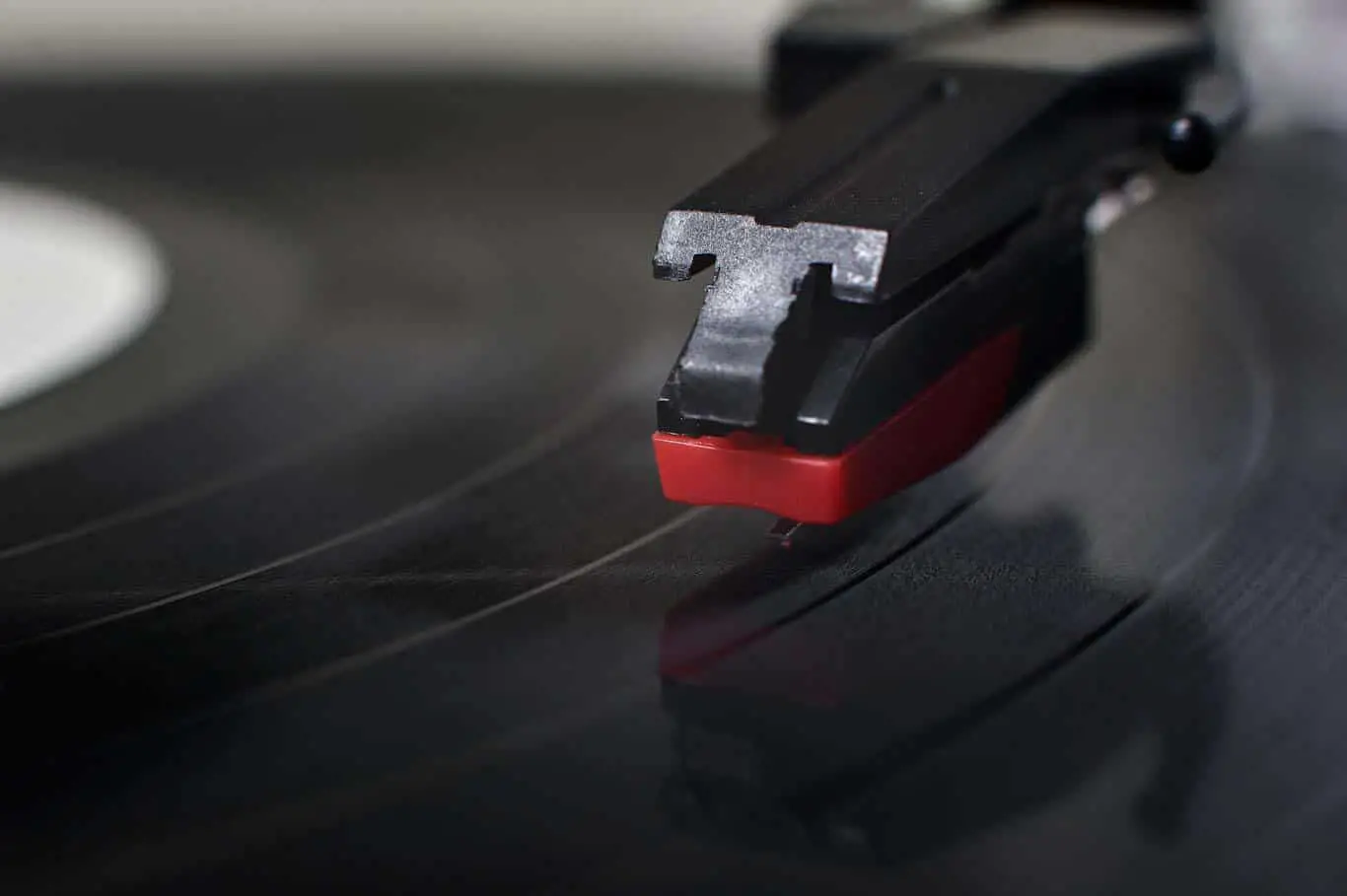
    These options are tiny electromagnetic generators that convert needle vibration into sound. Moving magnet (or MM) cartridges use magnets on the stylus. They use a cantilever to transfer vibrations from the vinyl to the magnet. Your amplifier will need to have MM inputs for it to work well.
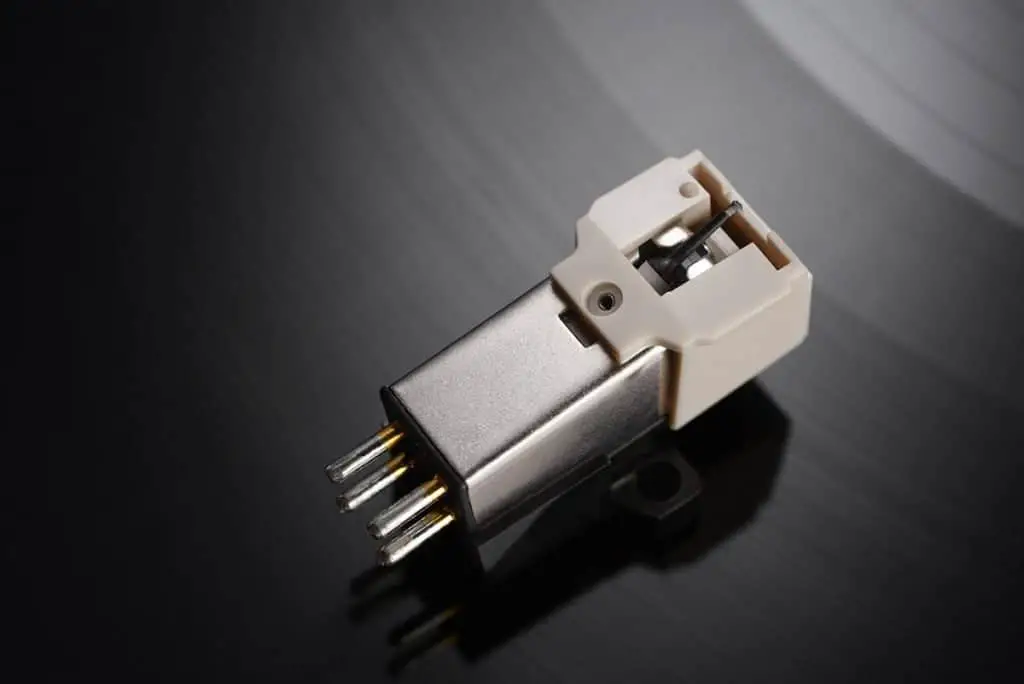
    A magnetic phonograph cartridge on a vinyl record groove.

    A moving coil cartridge has a mobile coil paired with a fixed magnet. The coil moves in the magnetic field that the magnet generates. You’ll receive a more robust high-fidelity sound with this option, making it the perfect choice for audiophiles. However, you’ll have to pay a lot more for this option.

    Here’s how the phono cartridge options on this list break down:

    Phono Cartridge ModelType
    Audio-Technica VM540MLMoving magnet
    Audio-Technica AT-VM95CMoving magnet
    Denon DL-103Moving coil
    Ortofon 2M BlueMoving magnet
    Grado Timbre Series Opus 3Moving coil

    In general, the more expensive options tend to use a moving coil. If you want to pay more for quality sound, a moving coil is often the better choice. However, these options won’t fit into everyone’s budget.

    Tracking Force

    Phono Cartridge ModelTracking Force
    Audio-Technica VM540ML1.8 to 2.2g (2.0g standard)
    Audio-Technica AT-VM95C1.8 to 2.2 g (2.0g standard)
    Denon DL-1032.5g standard
    Ortofon 2M Blue1.8g standard
    Grado Timbre Series Opus 31.6 to 1.9g (1.75g standard)

    The tracking force is quite significant. It refers to the amount of pressure the phono cartridge puts on your vinyl when you play it. You want the ideal weight — too much can scratch the records, while too little gives you a bad sound quality.

    You’ll want a lighter tracking force for your records to keep them in good condition. When the record player first came out, tracking forces of three grams were common. Today, however, you’ll find more options with less than half that force, which is ideal.

    Some brands give you a tracking force range. You can expect the pressure to fall within that range, although the “standard” is what you can expect the most often. The standard tracking force usually falls in the middle of the spectrum, so you know what to expect with the phono cartridge.

    If you have a heavier phono cartridge, you’ll want to adjust the arm and needle to account for it. That way, the needle won’t press too deeply into the vinyl. You’ll need to check your record player for ways to adjust the weight, as all models are slightly different.

    Ease of Installation

    It’s also good to think about the ease of installation of the model. Some are universal and can easily snap into place on your machine without much effort. However, others can be more difficult to set up correctly.

    These models are pretty easy to set up and should fit almost any record player out there. You won’t spend long installing your phono cartridge when choosing one of them.

    However, ease of installation is still essential for you to consider. You wouldn’t want to choose a phono cartridge that doesn’t fit correctly! It could damage the vinyl or produce lousy quality sound.

    Price

    Lastly, you’ll need to consider the price. While the options below are all under $500, some are still more expensive than others. Make sure to consider your budget beforehand — you don’t want to overspend!

    Higher-quality phono cartridges do tend to have higher price tags associated with them. However, not everyone wants to pay for them — and that’s okay! There are plenty of excellent budget options that offer great sound quality as well.

    First things first, make sure that you know how much you’re comfortable spending. It makes it easier to stay within budget, even when searching for a phono cartridge under $500. You can also buy a cheaper one now, then upgrade to something more luxurious later.

    Best Overall: Audio-Technica VM540ML

    The Audio-Technica VM540ML is the best phono cartridge for most people. You can buy it as is or in a kit that includes the headshell. It’s a reasonable price for a cartridge, and you get good sound. Listeners find it produces a sound that isn’t too bright or dull.
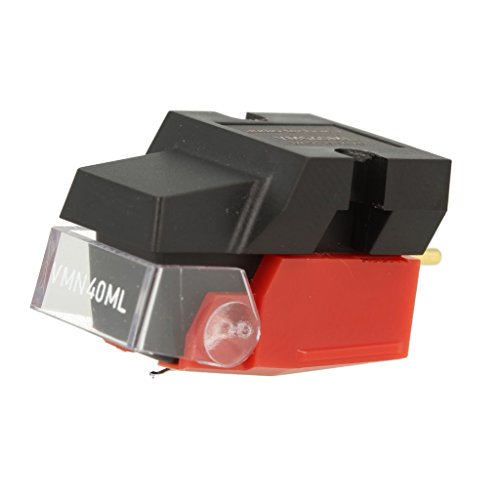
    Audio-Technica VM540ML MicroLine Dual Moving Magnet Stereo Turntable Cartridge Red

    It won’t create any unnecessary noise or distortion. The tracker is one of the best parts of this cartridge, too. It’s not too forceful. It glides smoothly along records without any problems.

    Moreover, the phono cartridge is very easy to install. It shouldn’t take you more than a few seconds to put on. It may take a few minutes to adjust the needle and arm balance for the best sound, but it’s an effortless procedure.

    It’s worth noting that this product uses a moving magnet. It won’t get you as good a quality sound as a moving coil would. However, the other features make up for it, so you still get impressive audio.

    Bottom Line: The Audio-Technica VM540ML is perfect for most people. It’s excellent for beginners to vinyl, has a reasonable price, is easy to install, and uses a moving magnet. For the price, you get high-quality sound, making it a good deal!

    Pros

    • Price. You get a fantastic value for the quality.
    • Smooth tracker. The tracker is very soft and reduces noise.
    • Easy to install. It fits many record players and doesn’t take much effort.
    • Great sound. You get a clear, smooth sound.

    Cons

    • Doesn’t pick up small details. The only downside is that the sound is neutral; you won’t get the more subtle details in a song.

    Product Specifications

    DimensionsWeightScore
    4 x 2 x 3 inches (10.16 x 5.08 x 7.62 cm)0.23 ounces (6.52 g)9/10

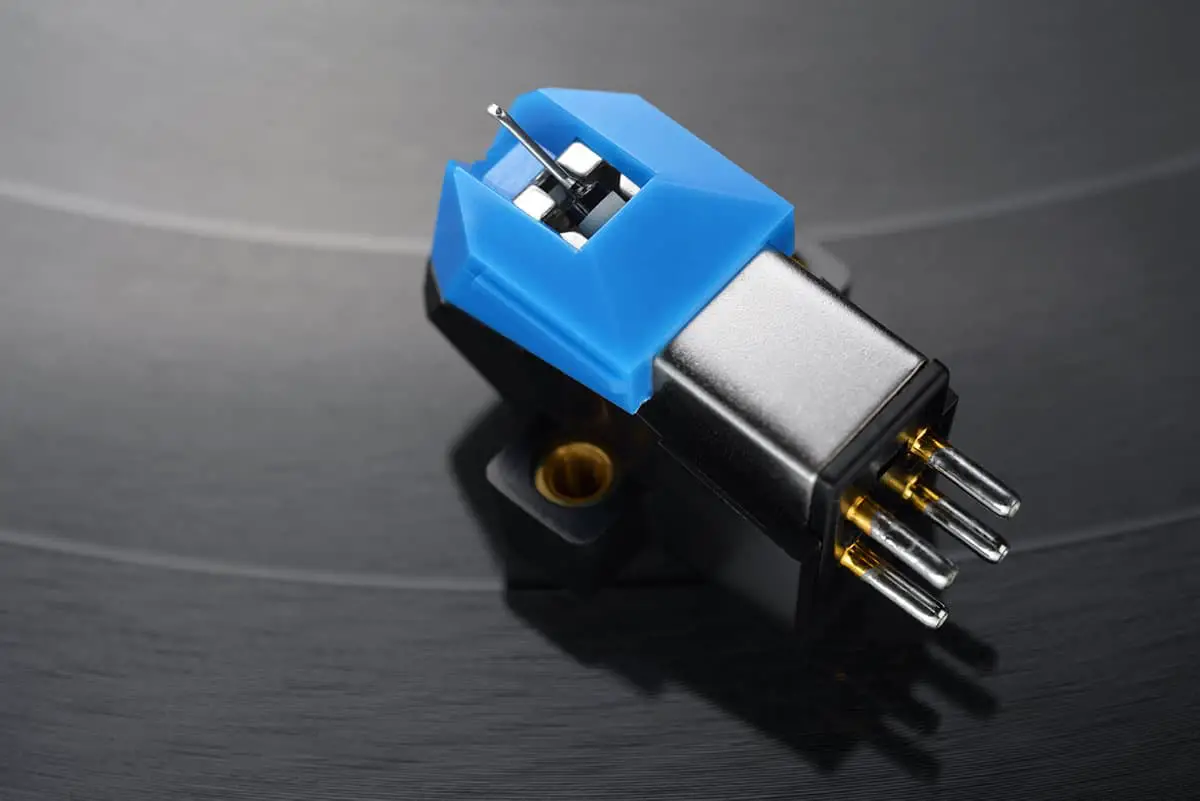
    Best Budget Option: Audio-Technica AT-VM95C
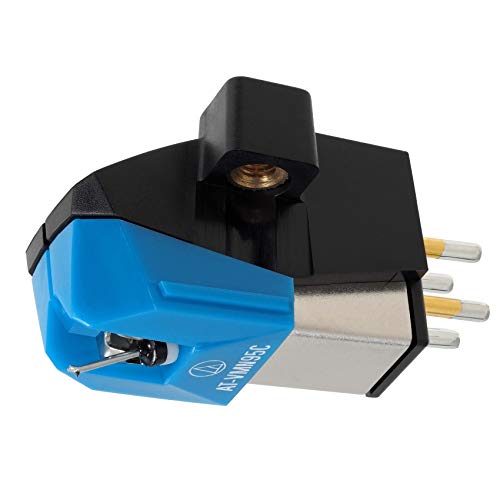
    Audio-Technica AT-VM95C Dual Moving Magnet Turntable Cartridge Blue

    If you can’t afford the best overall pick, the Audio-Technica AT-VM95C (available on Amazon) is the perfect budget option. It’s significantly less than $100, allowing it to fit into almost any budget. If you’re new to vinyl, then you’ll want to start with this cost-effective option. It’s also effortless to mount and get running. 

    This model is the “entry-level” product in Audio-Technica’s VM line. It’s better than the previous AT95 series, offering bolder, richer sound, even at this price point. The Audio-Technica AT-VM95C won’t provide you an extensive range of sound, but it’s still great for the cost.

    It does make the sound a little bright, but it’s not noticeable to most people. However, users did mention that it had a “break-in” period. The vocals will sound a little off and distorted at first. But the more you use the phono cartridge, the better the audio becomes.

    Overall, this product is a bargain! If you need a cost-effective replacement, this is the best option for you under $500.

    Bottom Line: The Audio-Technica AT-VM95C is perfect for anyone looking for a cheap phono cartridge. It makes a great replacement if your current one ever breaks. It’s great if you’re new to the world of vinyl collecting and don’t know what you want yet.

    Pros

    • Price. This cartridge is the cheapest on the list. You won’t find other phono cartridges at a lower price without losing all quality.
    • Good entry model. This model is perfect for exploring Audio-Technica products for the first time.

    Cons

    • Long break-in period. You’ll need to spin a lot of vinyl for the cartridge to produce the best sound.

    Product Specifications

    DimensionsWeightScore
    4 x 1 x 3 inches (10.16 x 2.54 x 7.62 cm)1.3 ounces (36.85 g)6/10

    Best Sound Quality: Denon DL-103

    Denon DL-103 Moving Coil Cartridge

    Maybe you want enhanced audio quality and don’t mind paying more for it. The tracking of the Denon DL-103 is outstandingly smooth overall. It launched in 1962 and instantly became a considerable part of radio broadcasting.

    It’s straightforward to install. It should only take a few minutes to fit it to the arm. However, it does have a higher track force than the other options on this list. You’ll need to be very careful to ensure you don’t increase the pressure too much on your vinyl.

    This model offers outstanding audio quality. The vintage design is timeless and sounds better than many new phono cartridges. The only downside is that the treble portions can sound a little flat, but you get incredible range and rich sound overall.

    Bottom Line: With the Denon DL-103, you get a deep sound and outstanding quality. The original design is over 60 years old. It’s best for those with a higher budget who want the best sound quality. Due to the high cost, it’s not for everyone.

    Pros

    • Sound quality. You get three-dimensional, high-fidelity audio at an impressive quality level.
    • Easy to install. The model fits nearly every record player and takes a few minutes to put on.
    • Moving coil. The model uses a moving coil for sound transfer, giving you better audio.

    Cons

    • Cost. The model is very expensive.

    Product Specifications

    DimensionsWeightScore
    1.06 x 0.59 x 0.59 inches (2.69 x 1.49 x 1.49 cm)0.3 ounces (8.50 g)8/10

    Best Universal Fit: Ortofon 2M Blue

    The Ortofon 2M Blue is a universal fit for turntables. By choosing this option, you’ll feel confident that you won’t have to send it back because it doesn’t fit your gear.
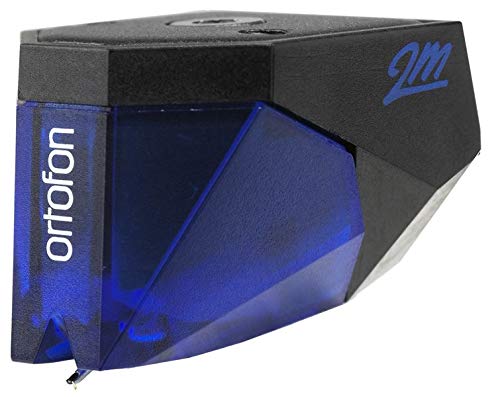
    Ortofon 2M Blue Moving Magnet Cartridge

    Plenty of reviews praise this model online — and for a good reason. It’s a reasonable price for a phono cartridge, and it offers great sound quality. You get impressive highs and lows, giving your music a remarkable range and Hi-Fi qualities.

    It’s also great for very old albums with a lot of noise. The phono cartridge helps clear them up a bit, making it possible to listen to your favorite vinyl records again. It does use a moving magnet, but the sound is still impressive.

    Finally, this brand has great customer service. If you have any problems with the phono cartridge, you can reach out to them, and it’ll get taken care of quickly!

    Bottom Line: This phono model is perfect for those who need a universal fit and want good audio quality. It’s also great for old record collectors.

    Pros

    • Reasonable cost. The price falls into the middle range.
    • Easy to install. It takes less than 10 minutes for most people to install this model.
    • Clear sound. The cartridge brings out the best in old vinyl.

    Cons

    • Not the best for beginners. Those new to vinyl may have a more challenging time setting it up.
    • Design. Some people don’t like the blue design because it stands out too much from most record players.

    Product Specifications

    DimensionsWeightScore
    4.72 x 3.54 x 1.18 inches (11.98 x 8.99 x 2.99 cm)0.32 ounces (9.07 g)7/10

    Best Hi-Fi Option: Grado Timbre Series Opus3

    Lastly, if you want the best high-fidelity sound, the Grado Timbre Series Opus3 should be your first choice. It falls into the middle price range and has a unique design. Plus, it’s made of real maple wood! 

    Grado Timbre Series Opus3 High Output Stereo Phono Cartridge w/Stylus

    Hi-Fi means that you get a life-like sound close to what the artist intended. This model is the “entry-level” for the Timbre series, all wood cartridges. While it’s the cheapest option in the series, it has great audio quality.

    Bottom Line: This model is best for those looking for an authentic Hi-Fi experience with vinyl. It’s also great for those who want a traditional wood design.

    Pros

    • Hi-fidelity sound: You get very realistic audio with this model.
    • Unique design: This model is the first to use maple wood.

    Cons

    • Not for beginners. It may not fit every turntable and take more effort to set up.

    Product Specifications

    DimensionsWeightScore
    4.3 x 3.6 x 1.7 inches (10.92 x 9.14 x 4.31 cm)6.4 ounces (181.43 g)8/10

    Key Takeaways

    Overall, the Audio-Technica VM540ML is best for most people. It is a good price, easy to install, and has good sound quality. It’s also suitable for both beginners to vinyl and old-school enthusiasts.

    Always consider the four main factors when buying a new phono cartridge. You can’t go wrong with any model from the list!
  • How To Tell If Your Turntable Cartridge Is Bad

    How To Tell If Your Turntable Cartridge Is Bad

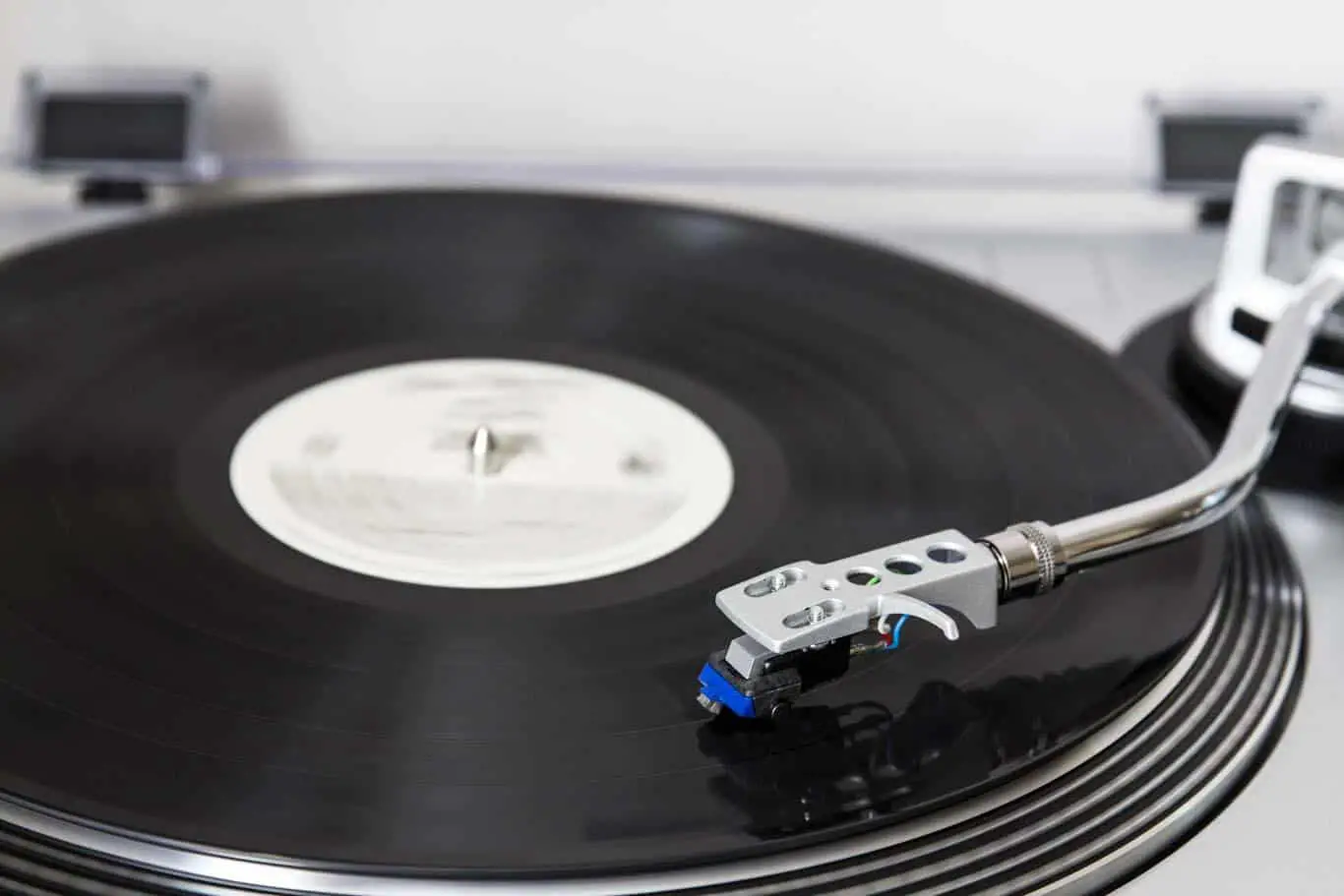
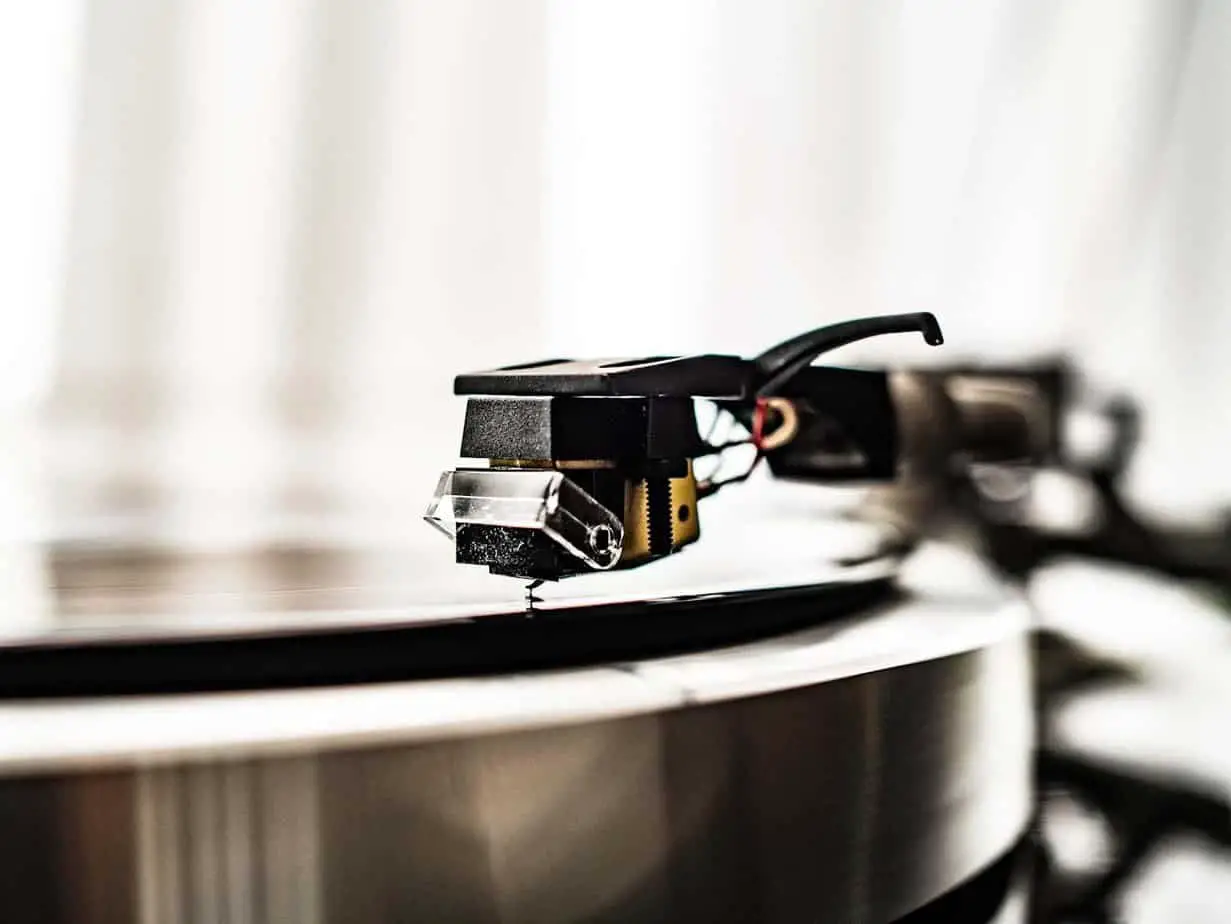
    The cartridge, also mistakenly referred to as the styli or needle, is the most crucial part of the turntable. After all, every record player has a component that sits on the vinyl record’s grooves and reads the undulation on the grooves’ walls. Unfortunately, some parts of the cartridge, particularly the stylus, tend to wear down with time. So if you want to know how to tell if your turntable cartridge is bad, please read on.

    The phono cartridge is a crucial component generally attached to the tonearm that directly contacts the vinyl record. The cartridge is typically mistaken for the needle; after all, the stylus and needles are in the cartridge. And one of the main signs of a damaged cartridge is a damaged stylus. (source)

    As aforementioned, the cartridge is the most crucial part of the turntable containing the styli. The stylus is the needle that sits on the grooves of the vinyl; unfortunately, different components of the cartridge break down or wear out with time. So in this article, we will show you the signs to watch out for when the cartridge goes bad. We’ll also show you how to replace a bad cartridge.

    What Is a Turntable Cartridge?

    Generally, there are two kinds of cartridges: moving coil (MC) and moving magnets (MM). The MC and the MM have pros and cons, but they play a crucial role in the quality of the sound produced by your turntable. So before picking any cartridge, you should first test them out.

    The vibrating magnets vibrate near the coiled wires in the MM cartridge system. The MM cartridge has a high output, and you can easily replace its stylus; therefore, it has a sturdier design. Unfortunately, they are heavier than the MC cartridges. (source)

    So they tend to press deeply into the vinyl’s grooves than the MC cartridges. Therefore, they are less detailed than the MC cartridges, especially how they travel along the vinyl’s grooves. On the other hand, the MC cartridges attach to cantilevers and travel within the field of its fixed magnet. The MC cartridges are lighter than the MM, producing accurate and detailed sound. (source)

    Unfortunately, since you can’t replace the stylus of the MC cartridge when the needle gets damaged, you have to replace the entire cartridge. Compared to the MM cartridge, replacing the MC cartridge can be quite costly. (source) So, if you don’t know how often or the right time to replace the cartridge, you need to know which signs to watch out for regarding the component.

    How Does It Work?

    The work of a cartridge is to convert the movement of the stylus into signals thanks to the magnet attached to the cantilever. Therefore, when the needle moves, the magnets move, which can induce voltages in the coil placed between them. The coil of wire links to the pins situated at the back of your cartridge. There are four pins at the back of your cartridge (the negative and positive connections for all the channels) and two sets of coils.

    It works for the MM cartridge, but with the MC cartridges, the magnet remains static, and the coil moves. Therefore, the MC cartridge is lighter, which means that the coils, cantilever, and stylus weigh less. So they can start and stop the vinyl records faster than with the MM cartridges. But the MC cartridge requires a fine wire for greater precision, so they are more expensive than the MMs.

    In fact, the MM cartridges wear down faster than the MC cartridges. Fortunately, cartridges have a lifespan, and they tend to wear out with time.

    How Often Should You Replace the Stylus?

    A considerable percentage of the turntable manufacturers recommend that you should replace the cartridge or the styli after about 1,000 hours of playing time. Therefore, if you’re using your device for about an hour every day, you will have to replace the cartridge or stylus once every few years. But this varies with manufacturers and the materials used to make them. So you should confirm the recommended lifespan of the stylus before purchasing it.

    Some turntable users will claim that sticking to the manufacturer’s lifespan is too cautious. And as long as you’re cleaning the stylus, then it will serve you for a very long time. On the other hand, some will say that replacing the needle or cartridge is essential to getting the most out of your turntable.

    Fortunately, there are many ways you can extend the lifespan of the stylus. And one of the easiest and most effective ways is by taking good care of it. After all, if you take care of the cartridge, it will take good care of your vinyl records. Remember, anything that sticks to the grooves of the vinyl, like dirt or dust, can damage the stylus forcing you to either replace the needle or the entire cartridge. (source)

    So it all depends on you; after all, there is no science behind this. Numerous factors can increase the wear and tear level of the needle. So before replacing the cartridge as per the manufacturer’s recommendation, you should consider the following signs of a bad turntable cartridge.

    What Are the Signs of a Damaged Cartridge That Needs Replacing?

    As aforementioned, the stylus, which is the part of the cartridge that comes into contact with the vinyl, tends to wear out with time. Other than the cartridge’s lifespan, many signs warn you when it is time to replace it. Some of the critical signs to watch out for include:

    The Needle Is Jumping or Skipping Out of the Vinyl’s Groove

    The turntables come in different types of style, with the most common ones being the spherical/conical and the elliptical. The design of these styli is to rest on the grooves of the vinyl and help convert the undulations on the grooves to analog sound picked by the amplifier. But with time, the needle can wear out, making it hard for it to rest on the vinyl tracks. (source)

    Therefore, when it starts skipping the grooves, it means that it has worn out and it is time to replace the stylus. If your device uses an MC cartridge, you may have to replace the entire cartridge, but you may need to replace the stylus with the MM cartridge. So when it starts skipping the grooves, you should stop the record player and replace the cartridge. After all, if you continue using it, the stylus may damage the vinyl records.

    Examine the Tip of the Stylus for Wear and Tear

    If you have a high-powered magnifying glass, you can examine the needles’ tip for signs of wear. Look for bends and jagged edges on the stylus’ head. If you notice any black residue on the needle, it means that it has been overused and has never been maintained or cleaned in a very long time. If the stylus tip is damaged, you need to replace the cartridge or the stylus.

    Use a magnifying glass to examine the tip of the stylus for dirt and any deformity. If it is dirty, you have to clean it and continue listening to exceptional music. (source)

    Change in Sound Quality

    One of the most prominent signs of a damaged cartridge is a change in sound quality. So the first thing you should do is listen to the dips in the quality of the sound produced by the record player. After all, there is a high likelihood that the stylus may be the issue. Therefore, you should test the dips by playing a familiar record, but make sure it’s not too valuable as it may get destroyed by the stylus. (source)

    The record player will produce a distorted or muffled sound if the issue is the stylus. You may find the treble and upper mids extremely hard to discern, or the record player may skip the “ting of the cymbals” in any music. You may also hear static or hiss in places where there was none before. The change in the quality of the music will be gradual, so you need to be keen when listening to the record.

    The change in sound quality is the best sign for a bad MC cartridge that needs to be replaced or change the stylus of the MM cartridges.

    Dirt Buildup

    The needle is one component that is in the front line of your music experience. So if anything were to affect the needle, you wouldn’t be able to enjoy your music. The stylus is the most delicate component of the record player known for diving the dust and dirty grooves of the vinyl record. Therefore, it’s bound to catch the dirt and dust that sits on the record’s groove. (source)

    With time the dirt can accumulate if not cleaned regularly, and the stylus can end up with yellow-brown dirt on its tip. The dirt can end up damaging your precious vinyl records, so you should be ready to clean them regularly. But if not cleaned on time, it may result in the stylus getting damaged. After all, the longer the dirt stays, the harder it will be to remove it.

    You may try dissolving the dirt buildup, but you will end up with a damaged needle. Therefore, the best option is to replace the stylus if it’s removable or the entire cartridge.

    Brittle components

    Vintage record players have ancient parts like a rubber cantilever that may become brittle after drying up. And while the record player can still work, excessive tracking may damage all your vinyl records. Therefore, if you inherit a turntable or purchase a second-hand turntable, you should always be ready to replace the cartridge.

    After all, determining how old the record player’s age can be challenging. Plus, the previous owner may not have taken good care of it. In other words, some parts may have broken down already. Therefore, replacing the cartridge will ensure that you enjoy your second-hand record player for an extended period. (source)

    Broken Cartridge

    If your record player has fallen at some point, then the chances are that some parts of the cartridge may have broken down. So if you notice some loose parts when shaking the turntable, then the magnets, cantilever, or needle may have broken down. If that is the case, you may have to replace the cartridge to enjoy your music.

    If your record player fell, then the connection between the cantilever and the stylus may not be sturdy enough. A loose connection between the needle and cantilever means the turntable won’t work. After all, anything can happen to the cartridge resulting in the connection between the cantilever and the needle becoming loose. So you will have to replace the cartridge when this happens.

    How Do You Replace a Bad Cartridge?

    So depending on the type of cartridge your record player is using, you may be required to either replace the whole unit or the stylus. Luckily, most MM cartridges come with a replacement stylus which is relatively easy to replace. All you have to do is clip it into the forepart of the cartridge, and in most cases, you may never have to uninstall the cartridge. But if your device has an MC cartridge, then a lousy needle spells doom for the cartridge; therefore, you have to replace it.

    If you notice the above signs, it is time to replace the cartridge. Unfortunately, most record player owners don’t know how to replace the cartridge. When replacing the bad cartridge, you should do the following:

    Pull Out the Cables Attaching the Cartridge to the Tonearm

    Hold the turntable’s tonearm in one hand and pull the wires using needle-nose pliers. Remember, not every turntable comes with removable wires, so you may have to replace the headshell if your device doesn’t have removable wires. (source)

    Unscrew the Mounting Screws and Uninstall the Cartridge

    Using a flat-head screwdriver, you can unscrew the two screws attaching the cartridge to the tonearm. If you don’t see the headshell screws, then it means that you can only replace the stylus.

    Install the New Cartridge

    Slide the new cartridge in place by simply pushing it into the tonearm. Place the screws in place and then tighten them partially. The stylus cover must be in place while you’re installing the new cartridge to prevent further damages.

    Push the Cables Back in Place as per the Color Combinations.

    Remember, the cables are blue, white, green, and red, so you should look for the letters corresponding to the colors of the wires. Next, push the blue cable to the nub marked “B” and vice versa. Unfortunately, manufacturers label their cartridges differently; therefore, you should refer to the manual and plug the cartridge correctly if the markings are different.

    Every cartridge comes with the recommended stylus pressure labeled on its packaging. So make sure you confirm the correct pressure before setting your machine. If the replacement cartridge’s recommended pressure is between 1.8 and 2.2 grams, you should rotate the turntable’s counterweight to 2. After all, two is at the center of this pressure range, and it can work perfectly if your device falls within this range. (source)

    Confirm the stylus pressure using a stylus force gauge by placing it on the turntable right near the tonearm and switching the turntable to the on position. Remove the stylus cover and lift the record player’s tonearm before setting it on the gauge. Read the pressure being displayed by the gauge and make sure it falls within the required range. So you should be ready to turn the counterweight right and left to adjust the pressure until you get the proper stylus pressure.

    Finally, you can align the cartridge using an alignment protractor, and you’re good to go.

    FAQs

    How Will I Know if My Cartridge Is Damaged?

    First, you need to check if the cartridge is damaged or crooked. You should monitor this stylus while playing the record if it’s okay. And if it’s skipping out of the records’ grooves, then it is damaged, and you have to replace the stylus or cartridge.

    Do Turntable Cartridges Wear Out?

    Yes, cartridges do wear out, especially the ones with rubber components. The rubber components can be impacted by pollution and degrade quickly. The stylus can also wear out, leaving you with a deformed cartridge that can’t read the undulations on the record’s grooves.

    Which Is Better, the MC or the MM Cartridge?

    Both the MC and the MM are exceptional, but the MC can go a step higher and even exceeds the audiophiles’ height. But if you’re looking for an affordable option that can still guarantee you excellent music, then you should go for an MM design. If you’re looking for the best overall sound, you should go for the MC cartridge.

    Conclusion

    The turntable cartridge is one of the most crucial components responsible for determining the quality of the sound produced by the turntable. Unfortunately, the stylus does wear out with time, so you need to know when the right time to replace the cartridge is. But with the above symptoms of a bad cartridge, you will never have to worry about your records getting damaged or listening to distorted music.

    Sources 

    1. David Murray, A Guide TO Turntable Cartridge and the Best Budget Models, Accessed December 27, 2021
    2. Ketan Bharadia, How to Change the Cartridge on your Turntable, Accessed December 27, 2021
    3. Jess Thompson, How Often Should You Change Your Turntable’s Stylus? ,Accessed December 27, 2021
    4. Tucker Bowe, When Should You Replace Your Turntable’s Stylus? Accessed December 27, 2021
    5. Kat Bein, How to Clean and Care for Your Turntable Stylus, Accessed December 27, 2021
    6. wikiHow staff, How to Change a Turntable Cartridge, Accessed December 27, 2021

    .