Blog

  • Why Turntable Cartridges Are So Expensive

    Why Turntable Cartridges Are So Expensive

    Turntable cartridges are the heart of the turntable experience. They are responsible for ‘reading’ the record and translating it’s microscopic transcriptions of sound into an electrical signal. For such a small piece of the turntable, you’re probably wondering why turntable cartridges are so expensive given what a small part of the whole turntable they are.

    Turntable cartridges are considered expensive because the cost of medium to high end record playing cartridges can range from hundreds to thousands of dollars. Compared to what a smartphone can do, the simple technology carries a high price tag.

    To truly appreciate and understand why the price of turntable cartridges is so high relative to other, seemingly greater technologies, we must turn to understanding the product’s manufacturing process.

    I’ll take you on a turntable journey through the cartridge in particular to examine the types of cartridges and why some are so much more expensive than others. Stick with me and let’s find out more about why turntable cartridges are so expensive.

    Types Of Turntable Cartridges (And Cost)

    In order to discuss why turntable cartridges are so expensive, we’d better define what it is we’re talking about; after all, there’s more than one kind of turntable cartridge.

    When it comes to turntable cartridge types, there’s tow very common forms and they are:

    • Moving magnet – $$
    • Moving coil – $$$

    Moving coil are almost always more expensive than moving magnets. In case you’re wondering what I’m talking about, I’ll describe each and throw in those costs you’re probably looking for as a comparison.

    Moving Magnet Turntable Cartridges

    The concept of a record player (turntable) cartridge is pretty simple. The needle vibrates as it scrapes over a minute groove cut into the record. The needle, otherwise known as the stylus, wiggles around as it encounters the minute variations within the groove.

    The wiggling stylus is attached to a moving magnet. The magnet changes proximity with coils inside the cartridge as it moves from the wiggling stylus. Those proximity changes cause the coils to output electrical signals which correspond to a phono audio signal.

    The moving magnet cartridge is heavier and cannot move as well as a coil cartridge. Therefore, the moving magnet type of cartridge doesn’t catch all the tiny subtle changes of music. The sound is still great, but it’s sort of the brute of cartridge types, in my experience.

    Average Moving Magnet Cartridge Cost

    Okay, so I told you I would get you a price, and here it is: it depends. It depends on the manufacturer and model of cartridge. You could go to a big box store and merely purchase an entire new turntable for the price of some other cartridges.

    For the sake of audiophiles looking for some examples, here you have it:

    • Audio-Technica AT-VM95ML – Retails for $169
    • Ortofon 2M Blue – Retails for $236

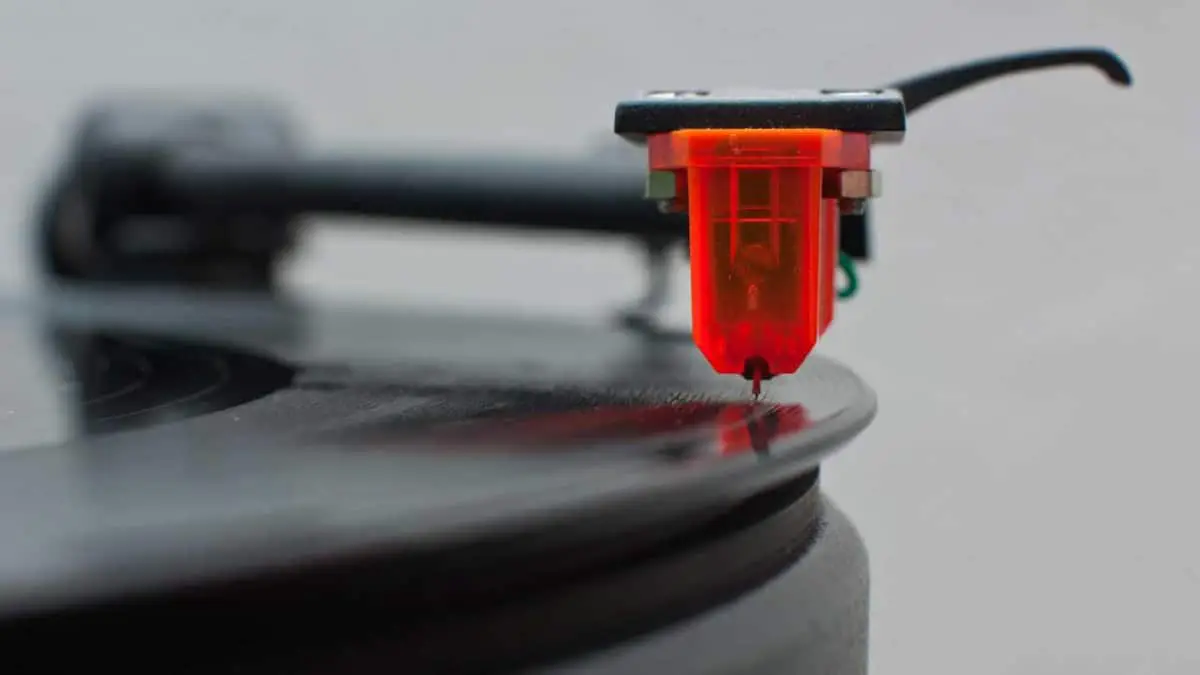
    Audio-Technica AT-VM95ML Dual Moving Magnet Turntable Cartridge Red

    Moving Coil Turntable Cartridges

    Moving coil turntable cartridges are more delicate than the moving magnet type. The principles are the same, the audio signal is produced by movement of coil to magnet, rather than the moving magnet to coil.

    The moving coil cartridges are lighter and more precise than the moving magnet type. They pick up the finer details and subtleties of the records. However, the finer sound comes at a greater price.

    The manufacture of moving coil cartridges is more difficult and uses finer components such as wires for the assembly. The downside to the fine componentry is the lack of a strong signal produced. The weaker signal requires a secondary amplification if you are to hear it.

    • Denon DL-103R – Retails for $260
    • Audio-Technica AT33Sa – Retails for $1419

    Audio-Technica AT33SA Shibata Nude Dual Moving Coil Turntable Cartridge Beige

    Which Type Of Turntable Cartridge Is More Expensive? Which Is Cheaper?

    As mentioned, you will find that the moving magnet type of cartridge is less expensive than moving coil type. The moving coil type is lighter and produces a finer sound, yet also produces less voltage than the moving magnet.

    The finer sound of the moving coil cartridge requires finer components and thus a more laborious manufacturing process. The higher labor and finer componentry equates to the higher cost for the moving coil style of turntable cartridge.

    Obviously if the moving coil type is more expensive, the moving magnet style is cheaper. However, it doesn’t mean you can’t find a very high quality moving magnet cartridge with great sound.

    How Much Should I Spend On A Phono Cartridge?

    When it comes to phono cartridges, there are innumerable choices out there to choose from. Deciding which is best for you may seem difficult, but when we analyze the situation, you’ll find that you likely already have the answer. Let me explain.

    The amount spent on a phono cartridge ought to be equal or greater than the replacement value of a standard OEM cartridge for your make and model of turntable. In practice, if focused on quality, you will always get you the same or better quality than the original equipment.

    At the end of the day, the amount you choose to spend to replace a turntable cartridge will depend on you make and model of turntable, the available compatible models of cartridge, and your desired budget.

    Desired budget based upon your quality of sound ideology, of course. If you’re like me, then in my experience you’re going to grab something that’s better than your last cartridge. I have a simple rule, if I have to replace it, I upgrade it.

    What’s In Turntable Cartridges That’s Expensive?

    The basics of a turntable cartridge material list are pretty simple. There are only a handful of components within the cartridge. Here are the basic components:

    • Coil
    • Magnet
    • Cantiveler
    • Stylus
    • Rubber suspension
    • Terminals
    • Wiring
    • Casing

    The casing is typically a lightweight plastic and that is pretty cheap. The magnet and coil, although specialty, are not typically very expensive parts either. Certainly there are ‘high-end’ coils and magnets, but for the most part these are standard and common in terms of the materials used to manufacture them.

    The cantilever arm and rubber suspension are nothing too extraordinary. The cantilever arm typical construction uses metal, and it is a tube shape most of the time as well. The cantilever has a great effect upon the quality of sound produced.

    Wiring is not expensive and neither is the solder used to for the wiring connections, so these are not the major source of expense for manufacturing.

    The last part, the one I have yet to mention, this is where the money gets involved: The Stylus.

    Typically diamond or sapphire finds use as the stylus tip. These incredibly hard minerals make great tips for the stylus needle and work well at translating the grooves into movement.

    Some types of stylus are more expensive than others. For example, the spherical tipped stylus are more affordable than other types. There are four stylus tip shapes commonly in use. (source)

    • Spherical – cheapest tip type, easy to use
    • Elliptical – great tracking, wears out faster than spherical (requiring more replacements is more expensive)
    • Hyper Elliptical – very precise sound and relatively expensive by comparison to spherical or elliptical stylus tip types
    • Micro-Ridge – the most accurate and most expensive

    You may not have much of a choice, depending on your turntable and the types of cartridges that are compatible with it, but if you have the option, a hyper elliptical makes superb sound in my experience.

    Turntable Cartridge Manufacture Vs. Supply And Demand

    The primary factors in the final cost determination of a turntable cartridge, aside from the materials used in it’s manufacture, are the labor and supply and demand.

    Labor is always one of the most expensive parts of any manufacturing process. The fabrication of high-end turntable cartridges is no exception.

    The last factor in determining the expensiveness of a turntable cartridge falls on the law of supply and demand. The higher-end cartridges are requested by fewer people than the cheaper ones. The most expensive also require the greatest cost labor for the highest skilled workers. Add these facts up, and the better the cartridge, the more expensive.

    The manufacture of turntable cartridges is a specialty skill left to artisans who don’t mind staring into a microscope for most of their day. The components are so small, that without such optical equipment, it would be very difficult to properly assemble a high-end cartridge.
    Related Articles

  • The Lifespan Of A Turntable Belt

    The Lifespan Of A Turntable Belt

    Sitting listening to your favorite record, relaxing with the audio pounding in your cans, and you hear the slip – the music slows for a few seconds and then speeds back up. You turn to see if someone entered the room and messed with your turntable – but no one is around. Time for a new turntable belt. But how long should your turntable belt last?

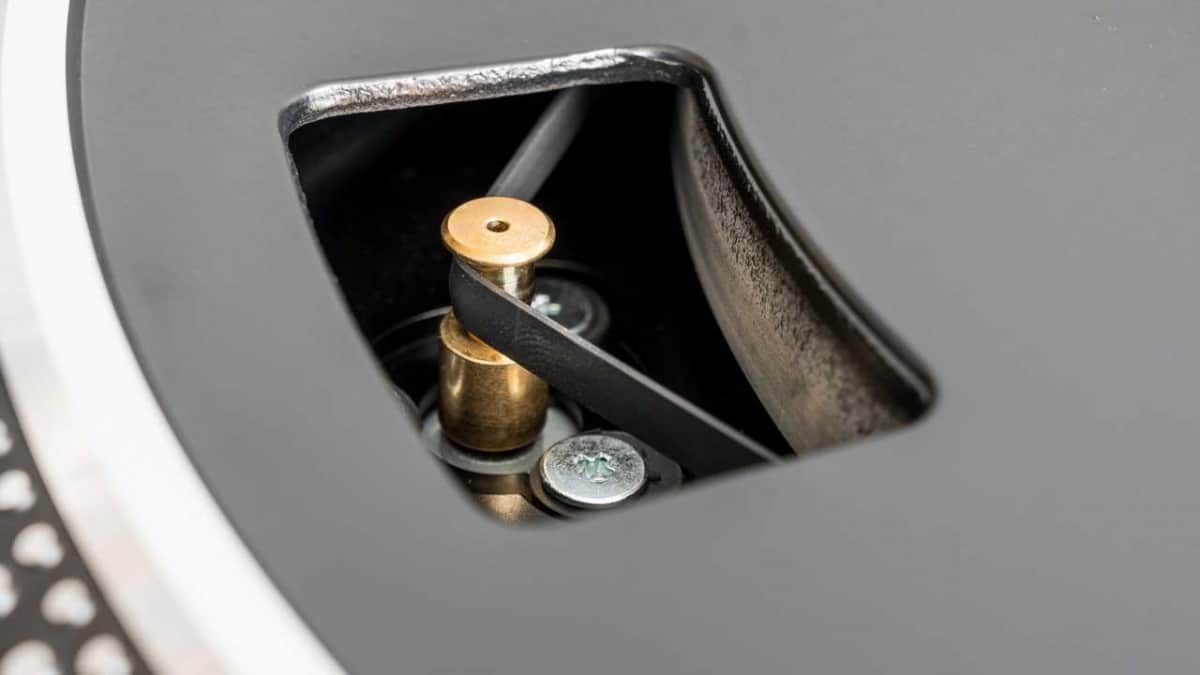
    Most belt-drive turntables utilize a rubber-based closed loop belt that typically lasts up to 5 years or so. The lifespan of the belt is determined by its quality, tightness, elasticity, and use. With no use, a belt will last 5-6 years in typical conditions.

    Not only will I share with you my experiences with turntable belts, but I’m also going to share a few tips and tricks to maintain your belt-drive turntable better. First, we’ll look at everything to do with the belt so you can make the most informed choices about your belt-drive turntable. Let’s get spinning into this.

    How Long Turntable Belts Last – Turntable Belt Lifespan Explained

    As mentioned, several factors affect the viable longevity and useful lifespan of a turntable belt. Although my personal preference is for the direct-drive type of turntable (being a bit of a turntablist), belt-drive turntables are the best for isolating motor noise. When I listen to records at home, it’s usually on my belt drive unit.
    Due to rubber degradation, most rubber-based turntable belts will last upwards of 5 years, depending on quality, use, and exposure to light, oxygen, and heat.

    The issue with belt drive is that the belt fabrication typically occurs using rubber most of the time. Newer turntables use a variety of materials, but rubber has always been the turntable belt mainstay.

    Rubber breaks down over time. Primarily caused by exposure to light, oxygen (ozone), or heat, rubber deterioration is inevitable. (source)

    Rubber does a few things over time and exposure to the elements:

    1. Rubber dries and cracks.
    2. Rubber becomes brittle.
    3. Rubber loses elasticity.
    4. Rubber loses tensile strength.

    Air, light, and heat are all factors that affect the degradation process of rubber. Rubber breaks down primarily in two ways: molecular chain hardening and molecular chain scission. These equate to the rubber becoming brittle and the rubber softening, respectively.

    These two rubber degradations account for the bulk of belt failure over time. In the case of turntables, it’s usually the first issue – hardening and the belt turning brittle. However, when the belt softens, it stretches, causing slip, another common ailment to belt-drive tables.

    Therefore, the overall lifespan of a belt is determined by the type of rubber, the extent of light, oxygen and heat exposure, and the amount of use.

    When I regularly worked with my belt-drive turntable, I found that I had to change out the belt after about three years. That’s when I noticed the sound start to warble and mutate. It was pretty imperceptible at first, but then one day, it happened more noticeably, and I was forced to admit turntable belt defeat.

    Factors That Affect Turntable Belt Quality (And Lifespan)

    I mentioned how exposure to the elements would accelerate belt wear and degradation. Eliminating some of these factors may aid in increased longevity of the turntable belt.

    To slow rubber belt degradation, you need to limit or eliminate the belt’s exposure to light, oxygen, and heat.

    Light is easy, don’t leave the turntable upside-down in the sun – pretty straightforward. Heat is also reasonably straight – don’t mount your turntable over a heater or near a heating source. That’s right; you can’t have your turntable next to the fireplace if you want it to last, sorry.

    The tough one is oxygen. How do you keep a turntable belt away from oxygen without launching it into outer space? There’s actually a pretty neat solution: treat the belt.

    Now, I’ve heard a lot of arguments on both sides of using conditioners for belts. However, I’d like to point out that they had to do with trying to revive an already stiff belt most of the time.

    Once a belt has weathered, become brittle, or stretched, you have to replace it. Don’t try to revive an already expired belt. It is a waste of time to try.

    However, if you just got a new turntable or a new belt for your turntable, you can treat the belt right away to help prolong its lifespan.

    Use products recommended for performance car engine belts. These conditioners are typically the best out there for maintaining higher-quality rubber belts.

    Before you go spraying or wiping on an automotive product, though, it’s a good idea to reach out to the manufacturer and determine the belt material specifications before applying a belt conditioner. The newer turntables use various types of rubber, and you don’t want to use a conditioner that will damage the belt, so do your research based on your particular model and the year it was manufactured.

    How Often You Should Replace Your Turntable Belt

    Turntable belts made of rubber have an approximate lifespan of about five years at maximum. However, there are a few pieces of evidence that may point you to an immediate belt replacement. Let’s take a look at what those factors are.

    1. Prolonged ramp-up
    2. Pitch and time stalls
    3. Slips

    When you turn on your turntable and hit start, you know that it takes a second or so to get up to speed, right? It’s typical of belt-drive turntables to do this by nature of the physics involved in using a belt drive. That said, when you notice that it’s taking longer than usual to get up to speed, the belt is likely stretched and is ‘trying to grab’ but not quite getting there in time.

    Pitch and time stalls can be trickier to hear unless you have an audiophile-trained ear. Being a turntablist, I notice the slightest pitch or time shifts in the tracks I know well, but you might miss them when they first start.

    Pitch and time stalls occur when a turntable belt starts to stretch or becomes brittle. When it stretches, it loosens on the motor and platter pulleys allowing slack to stall the momentum. When the belt hardens and turns brittle, hard spots can form where the belt won’t turn around the small motor pulley so readily. This situation causes the belt to stall on the small pulley as the brittle spot sticks out of not wanting to bend around the pulley. It slows the music for a second until the brittle spot pops over the small pulley wheel.

    Slips are the obvious sign that you should replace a belt. You can’t miss a slip. You’ll be listening to your music, and there is a noticeable stop or change in the sound for a second or two. It’s a sure-fire thing you’ll need a new belt when the old one starts slipping.

    Should Your Replace With An OEM Belt?

    Over the years, I’ve talked to a lot of people about turntables. Most of the time, it’s talking about the direct drive or the latest and newest tech. But I also get asked quite a bit whether or not a turntable belt should have the originally manufactured equipment replacement belt or whether a generic belt of the exact dimensions is appropriate.

    You can determine the answer to replacing turntable belts with OEM after asking a couple of questions.

    1. Is the OEM belt still available?
    2. Is the non-OEM belt a better quality than the OEM?
    3. Is the turntable any good?

    If you answered yes to question 1 and no to question 2, skip question 3 and buy the OEM model.

    If you answered no to question 1, you have no choice, buy the aftermarket belt.

    If the turntable is a cheap or inferior quality variety, an aftermarket belt is likely better. In this case, the answer is also apparent – always get the better quality belt.

    When I buy belts for my turntables, I use a rule: I buy two, and I shrink wrap one of them for future use. It’s a trick, a fellow DJ friend of mine told me. He had a vintage Linn LP 12 but couldn’t find a replacement belt at the time. He found an old record shop with a few newer belts because the owner had shrink-wrapped them and stored them in a box in his basement.

    My friend bought two belts, put one on the table right away, and stuck the other in a box. Four years later, he used the boxed replacement. It saved him trying to find a second belt years later, and shrinkwrapping the belt preserved it for future use. It was a pretty neat trick, in my opinion.

  • Is It Ok To Play A Warped Record? (Answer Here)

    Is It Ok To Play A Warped Record? (Answer Here)

    Is it bad to play a warped record? You wouldn’t want to damage your record player, stylus, or even your amp and speakers with audio pops or other sounds caused by record damage. However, just how safe is it; is it OK to play a warped record? Let’s find out.

    Playing a warped record may damage the record further if the warp causes the stylus to skip. A skipping stylus can scratch the record grooves causing irreparable damage. So, if you want to protect your records, don’t play them when warped.

    Let’s jump into vinyl record warping more and find out a few more things, like whether or not we can fix a warped record or why they warp in the first place so we can do our best to prevent damage. Join me as I take you through my experiences with warped vinyl records and what you need to know about them.

    Can A Warped Record Damage My Record Player?

    Some people have claimed that a warped record may damage your stylus or record player. It would only be the case if the record were so irreparably damaged that you likely wouldn’t consider attempting to place it on your turntable. I think large cracks would do it, but a slight warp is not likely to damage anything except the record itself (from stylus skip and scratch).

    Warped records will not damage your record player. Cracked records will.

    Why Records Warp In The First Place

    Vinyl records are exceedingly popular. So much so, in fact, that vinyl records have seen growth year after year for the last 15 years. Over 27.5 million LPs were sold in the USA in 2020, according to Statista. (source)

    The exceeding popularity of records means more and more people like yourself have the same issues with warped records. I’ve often had the problem myself, usually from one of the following scenarios that cause records to warp.

    Vinyl Records Warp When:

    1. Left in the sun
    2. Left in the heat
    3. Stored improperly

    These are the three common scenarios that cause vinyl records to warp. Here’s why each is important to understand.

    The Sun And Warping Your Vinyl Record

    The sun is incredible. A source of happiness for most people, encouraging our vitamin D3 production and giving us a nice tan. However, this same source of joy, warmth, and light is an enemy to our nightlife-loving vinyl records.

    Vinyl records are made of vinyl, as the name suggests. This type of material is a form of plastic. The scientific name of the plastic is polyvinyl chloride, but you’re probably familiar with it being called PVC. (source)

    PVC is one of the most versatile plastics humankind has ever invented. We use it because it is straightforward to work with, a soft and versatile plastic we can shape and use as we see fit.

    One of the primary characteristics of PVC is the versatility to make either soft or rigid plastics.

    Vinyl records use a semi-rigid form of PVC. You know you can pick up a record and give it a bit of flex; it isn’t like glass – it won’t shatter straight away but has a bit of flex.

    When you leave Vinyl, in particular a vinyl record, in the Sun, the rays of the Sun heat the plastic and react with it.

    The addition of heat from the Sun’s rays causes the plastic to begin to melt. We’re not talking a sticky, gooey, burn-your-fingers kind of melt, but it’s enough to cause the record to warp. If left without a sleeve, the Sun will cause irreparable damage in a short period. It will still damage the record with a sleeve, but it will take longer (like a few hours, in my experience).

    Heat And Warping Vinyl Records

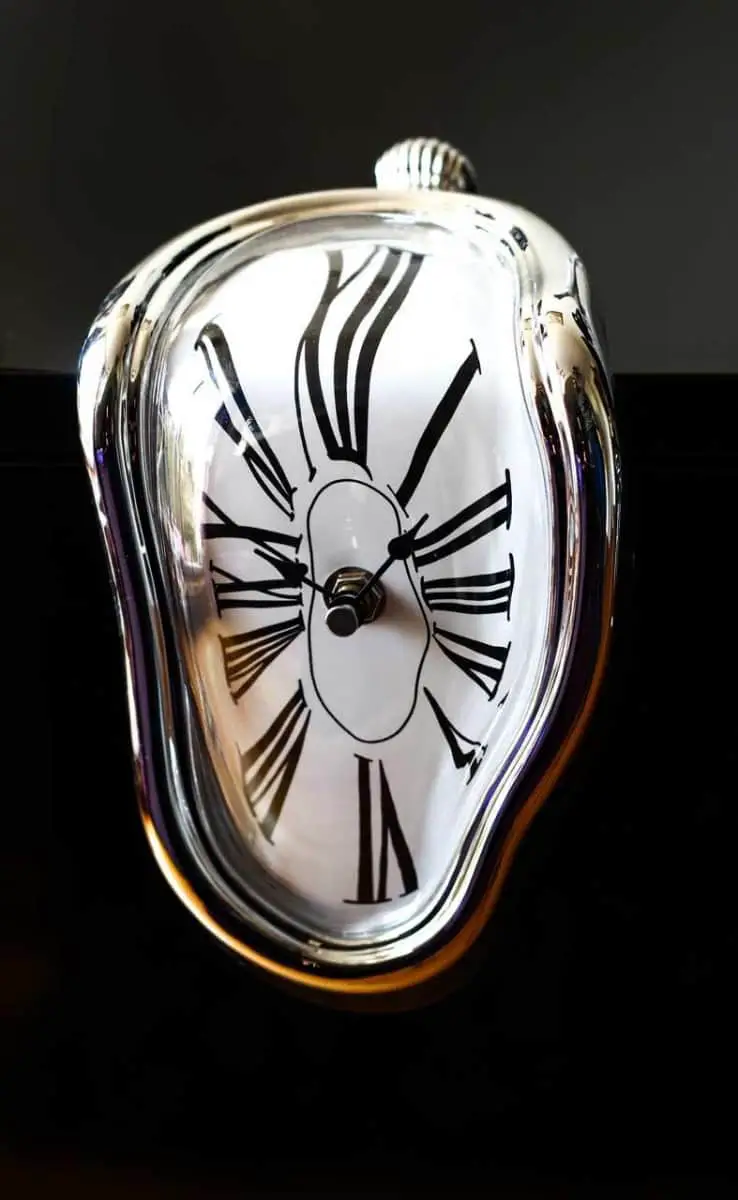
    Similar to sunlight, straight heat will melt a record. For example, I once left a copy of Armando’s Land of Confusion’ on a water radiator. Let’s just say the record looked like Salvador Dali’s clock the following day.

    Storing Records Improperly Or How To Warp Your Vinyl

    As vinyl records are semi-soft plastic, they are easy to deform. Even easier to deform if you add time and pressure (we’ll chat more about that later when I tell you how I’ve fixed warped records of mine). When you store your vinyl, the best way is to use a hard case and keep the vinyl neatly stacked on edge. However, there’s a trick to this you NEED to know:

    Never stack vinyl upright, on edge, without support!

    For example, let’s say you have a record box that holds 50 records in their sleeves. However, if you only have 20 records in the case, the extra space causes the records to slump over, leaning on an angle against the side of the case.

    You might think, “What’s the big deal, the records are protected?” But, they are leaning. Leaning records over time will warp, guaranteed. I’ve lost many a record to warping from foolishly leaning a stack of records. Always store your records vertically but ensure they are supported and not leaning on an angle.

    Do Warped Records Produce Poor Sound Quality?

    You’ve got a warped record but want to play it – is it going to sound like garbage? To answer this question, we need to look at a couple of factors.

    1. Extent of warp
    2. Quality of turntable arm balance

    The extent of the warp of a record will determine the extent of sound quality damage. When severely warped, the sound may ‘warp’ as well.

    RPM may sound like it speeds up or slows down momentarily. The pitch can shift slightly, and sounds may become distorted. However, the worst of warps will cause your stylus to skip, potentially scratching your vinyl record.

    The turntable has some responsibility to accommodate for a slight amount of warp. As you likely know, a stylus needs to grace the grooves of a record gingerly. You can adjust the counterweight of the stylus tone-arm to accommodate different scenarios by making the stylus lighter or heavier weight against the record.

    A quality turntable with an adequately balanced stylus arm will accommodate for minor record warping. Inferior quality turntables will have a much higher chance of stylus skip on warped records, potentially causing the stylus to scratch the vinyl surface.

    Why Playing Warped Records Is Bad (For The Record)

    As I mentioned earlier, from my experience, a warped record holds zero threat to your stylus or turntable. However, if the warp is bad enough, the warp may pose a further threat to the record itself.

    With a badly warped record and an unbalanced or poorly set up tone-arm, your stylus can skip grooves on the warped record. The skipping stylus can damage the record.

    When a stylus skips a groove, it can scratch a notch connecting parallel grooves inscribed on the vinyl record. This damage, in turn, causes further skipping, and the record now has irreparable damage that cannot be easily fixed and often renders the record into a nice round paperweight.

    Can I Fix A Warped Record?

    It’s that one downbeat on that one track playing in your cans that you just can’t let go of, even if the record is warped like a banana. And, unfortunately, you can’t buy any more either. So, what can you do to fix a warped record? There are few options, but you’re luck better be good, or you’re out of hope. Here are a few techniques I’ve found tend to work well (or not, read on to find out) on repairing warped vinyl records: time/pressure, time/pressure/heat, and specialty record straightening equipment.

    Time And Pressure

    I genuinely hope you have patience. I’m not talking about waiting a few hours here; I’m talking days or even weeks. Here’s how to fix that slight to medium warp in a vinyl record:

    1. Carefully inspect and clean the warped record. It must possess zero dirt. A sand particle can destroy a record if pressed into it, ensuring it’s clean and free of debris.
    2. Find a ludicrously flat surface. I use my marble kitchen counter. It must be perfectly smooth, perfectly flat, and clean.
    3. Keeping the record in its protective sleeve, place the record on top of a piece of cardboard (again, clean and smooth and flat), on top of the flat surface (like a stone countertop).
    4. Place the second piece of cardboard on top of the record; the same with cleanliness and smoothness applies.
    5. Set a weight on top. The weight must be big enough to cover the entire record and just as flat and smooth as the surface it’s sitting on. I use a smoothly sanded piece of plywood and then place a few standard house bricks on top.
    6. Wait and then wait some more. This process of weighting to re-shape the record has taken me anywhere from 3 to 6 weeks, depending on the extent of the warp. Make sure you don’t use too much weight either; you can cause damage to the record. That’s what I learned the first time I did this method, so use the cardboard as a protective buffer.

    Time, Pressure, And Heat

    The following method I’ve used to fix my records is the same as the first, except I apply heat. I learned this trick when I was gardening. True story: I was germinating tomato seeds, and they love the heat. I use under-tray heater pads fabricated to speed germination time. You can buy them at most garden centers.

    I found using two of these tray heaters for seed germination speeds the process of repairing warped records by a significant factor. Instead of waiting weeks, I’ve fixed records in days using this heat and press method. It works best on severely damaged records.

    Follow the steps listed above for the time and pressure technique, but add the hard surface and cardboard heating pads. The heat will transfer just enough through the single layer of cardboard and your record sleeve to gently warm the vinyl to aid in pressing.

    Specialty Equipment

    Yes, you can actually buy a machine to fix warped records. I’ve got one thing to say about these: extremely overpriced junk. It is the tool some have purchased just to find out that it doesn’t work very well. I had a friend who used one of these and destroyed a vintage house record from the 80s. It was the first time I ever saw him cry. Needless to say, you’re better off using the first or second technique I’ve described and tested.

    Have you had experiences with warped records or repairing them? I’d love to hear your methods or even your successes using my methods above. Let me know in the comments below if you have a great trick to help other vinyl lovers with their music.