Category: Record Players

  • A Step By Step Guide To Cleaning Your Technics 1210

    A Step By Step Guide To Cleaning Your Technics 1210

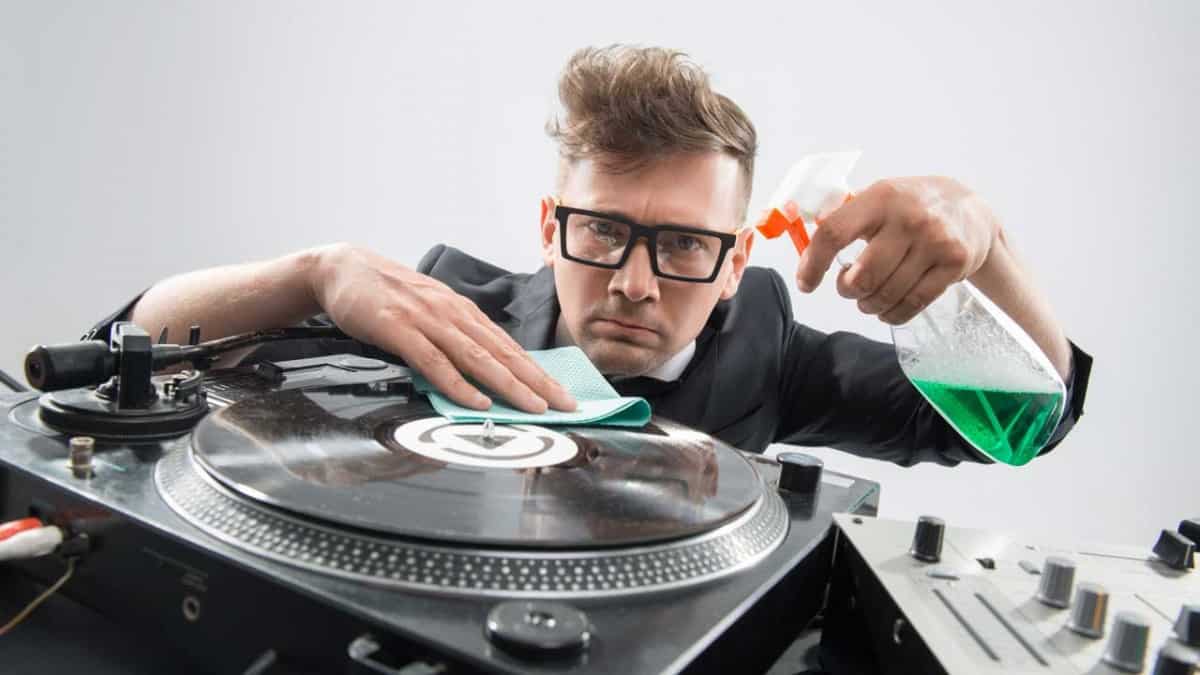
    Technics make a fantastic bunch of turntables. But maintaining your turntable is essential to keeping it in good condition. The 1210 model is no different in its requirements for maintenance. However, knowing the correct way to perform a cleaning service is vital to proper turntable maintenance.

    The process for cleaning a Technics 1210 is no different from the process of cleaning a Technics 1200. However, to avoid any confusion, I’ll provide a step-by-step guide to cleaning your turntable without wrecking it or getting yourself electrocuted.

    Cleaning your turntable is vital for a turntable’s longevity and proper operation. So, let’s get started and walk through a good cleaning of your Technics turntable.

    Technics 1200 Series Turntable Cleaning Procedure

    Cleaning a Technics 1210 is the same as cleaning a Technics 1200. The only differences between the two models are a voltage selector on the 1210 and the fact that the 1210 model is usually black in color instead of the silver-grey of the 1200 model.
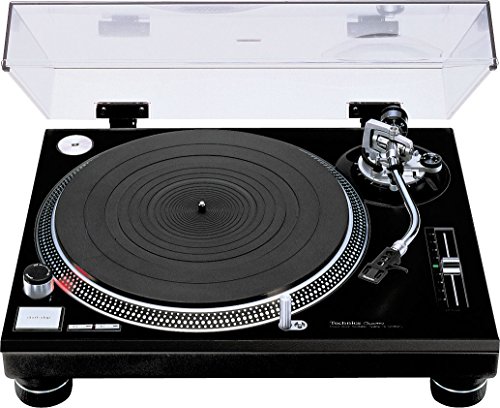
    Technics SL-1210MK2 Professional Turntable

    What You’ll Need

    • Sponge
    • Warm water
    • Mild soap (no perfumes, moisturizers, or additives)
    • Bucket (for your soapy water)
    • Cotton swab sticks (brand Q-Tip is well-known)
    • A stylus cleaning brush
    • Alcohol (optional)
    • Paper towels (optional)

    Most Important First Step

    Unplug your turntable completely. It includes power and audio cables. There should be no wires plugged into the turntable at all when you start cleaning. It is for safety reasons. You do not want to get electrocuted while cleaning your turntable.

    Turntable Cover Cleaning

    If you have a turntable dust cover installed, or rather, haven’t removed the stock cover that came with the turntable, then it’s likely you’ll want to clean it.

    In time the dust covers can lose clarity. However, that’s more of restoration, so I’ll save that for another day. Today, let’s focus on cleaning.

    The dust cover is made of clear plastic. However, the plastic is somewhat rigid, and we don’t want to scratch the clear surface. Therefore I recommend only using a soft cloth and warm water mixed with a small amount of mile soap.

    When I clean my turntables, I take a small pail and add some warm water. The soap I use is a bar soap with zero additives, so I just put the bar into the water and rub it a few times until there’s a small amount of soapiness in the water. Then, I remove the bar and save it for another day, leaving me just the soapy warm water.

    The cloth I use is a small microfiber cloth that won’t scratch the plastic. 

    1. Mix your warm soapy water.
    2. Wet soft cloth in water and wring out all water possible so the rag is moist but will not drip, even when squeezed.
    3. Wipe the top of the dust cover to remove dust. 
    4. Churn the cloth in water to remove the dust you just removed and wring out the cloth well a second time. Again, no dripping even when squished.
    5. Wipe the cover again. The interior won’t need wiping if it has been left installed on the turntable.

    Platter And Body Cleaning

    Here we will use the same pail of warm water and a soft cloth. We will also use the rag and some cotton swab sticks. Alcohol is optional. I’ll explain when I get to that point.

    Platter and Underneath

    1. Remove your platter slipmat or rubber mat. If you need to wash the rubber mat, look at my article on cleaning a turntable rubber mat best.
    2. Your platter will have two holes. Using both hands, hook your stronger fingers (one per hand) into the two holes. Using your thumb, press down on the center spindle while pulling up on the two holes to lift the platter off the spindle. 
    3. The platter is a part of the direct-drive motor. It’s why you need to push on the spindle when you lift the platter, so the spindle lets go of the platter, and the platter will rise off the spindle and lower assembly.
    4. After removing the spindle, you’ll notice a plastic cover over the electronic guts underneath. The cover is held on by several screws, which you will need to remove now that the platter is out of the way.
    5. Under the plastic cover you’ve just removed, you will see a large circuit board, half of the direct-drive motor and some wiring, and other such guts. In addition, there will be a half-inch edge around where you screwed off the plastic cover, and you will see dust and dirt around this edge. 
    6. Using your sponge, soak with your warm soapy water and wring out exceptionally thoroughly. Next, use the moist sponge to wipe out the dirt around the circumference of the edge you have exposed.
    7. Using your cotton swab sticks and some rubbing alcohol, moisten the cotton with the alcohol, but squeeze it out, so it’s again moist but won’t drip. Use this to get into the fine edge that would be under the edge of your platter. Also, use the swabs to clean any dust that has accumulated around the circuit board. Do not touch the circuit board at all, though.
    8. Once clean, do a once-over with a clean and dry cotton swab stick. It will pick up any last bits of dust or moisture left behind to ensure a clean under-platter.
    9. You can use warm soapy water and a soft cloth to clean the plastic cover after removal. Then you can dry it properly and ensure it’s dry before reinstallation.
    10. Reinstall the circuit cover and the platter.

    Main Turntable Body

    Treat the main turntable body as you would the cover. A moist, soft cloth and a wipe down for dust is likely all that is required. 

    Use extra caution around knobs or the slider. It would be best if you used the cotton swab sticks with rubbing alcohol in these areas. Rubbing alcohol ensures that it evaporates and that you don’t short anything out by leaving the water. Remember, you don’t need to use alcohol, but it’s better for electronics than water.

    Tonearm Assembly 

    The turntable tonearm assembly is a bit more complicated to do a thorough cleaning. My advice is unless it is severely dirty, I would avoid disassembling. I’ve used the same turntables for years and never had to disassemble the actual tonearm assembly, although I have replaced one. Typically, you can maintain these assemblies with some TLC and delicate care. Here’s how I go about it:

    1. I use mostly just cotton swab sticks and rubbing alcohol to clean the tonearm assembly (anti-skate, balance, and arm). Due to the delicate tiny cracks and crevices, it can be difficult to access, so I ensure a moist (but not enough to drip) cotton swab using rubbing alcohol.
    2. Go over the edge carefully to remove any dust accumulated around the rotating unit’s perimeter. Remember that there are electronics underneath, so be cautious and never use anything wet that could drip.
    3. Clean all the little nooks and crannies around the anti-skate, balance, and counterweight parts of the tonearm assembly. Use the cotton swab sticks because not much else will fit in many spots without you jamming it in. Doing this could cause liquid to drip out of the sponge or cloth, so stick to using the cotton swab sticks for this part.
    4. As I don’t recommend disassembly (you need to take the body apart to get at the inside workings of the tonearm assembly), it shouldn’t be too difficult to clean. It’s just a bit time-consuming due to all the small spots you need to try to access in and around the tonearm assembly.
    5. Lastly, take your stylus cleaning brush and gently brush the needle from back to front. You will only need to brush it a few times to remove any dust. Do not try to wash or wipe with your wet cloth or sponge. 

    To clean any further, you would need to disassemble your turntable seriously. Although I’ve done this a few times, I don’t recommend you disassemble any more than the cover under the platter, or you can seriously damage components. Having to replace an expensive part because of a failed attempt at cleaning is a poor way to reward yourself for the hard work of cleaning your appliance.
  • The Costs Of Repairing A Record Player

    The Costs Of Repairing A Record Player

    When your favorite record player stops working so well, it’s time to take it in for a repair. Knowing the costs of repairing a record player is vital before spending any money to ensure the player is worth repairing. In some circumstances, it might be wise to replace the unit merely. But don’t fret; we’ll go over all of this here today to make your life easier.

    The costs of repairing a record player vary based on the make, model, parts needed, and labor required to repair. Most repairs are simple, but others that involve high-precision soldering or other specialized repairs can turn out expensive.

    Understanding the repairs that record players most commonly require is a fundamental aspect of understanding the associated costs. I’ll take you through the most common of these turntable repairs and some of the costs you can expect. It’s going to help you decide whether to do a repair, upgrade, or replace the turntable altogether, so stick around and let’s go for a spin, shall we?

    The Cost Of Repairing A Record Player Explained

    As mentioned, and evident as it may be, I’ll mention that the type of turntable will dictate whether or not a repair is worth doing. If a record player is a budget one, you may not even have the option to get parts. Therefore, it’s advised that you have a rough formula to figure out if it’s worth the repair in the first place.

    Here are the formulas I use to determine if I should repair a turntable:

    • Value of Turntable < Cost of Repair = Don’t Repair
    • ¼ Value of Turntable = Cost of Repair = Repair Turntable or Upgrade/Repair
    • ½ Value of Turntable = Cost of Repair = Consider Upgrade

    When I use these rules, I take my love for the turntable into account. For example, if you have a solid Technic 1200 base, you may want to keep it forever and upgrade minor components as they break. You have to consider how you use the machine and how comfortable you are with it.

    Let’s take a quick look through some of the more common repairs required and what you can expect to pay for them.

    Common Record Player Repairs, Descriptions, And Costs

    Repair Estimate

    Many record player repair services will charge a nominal equipment troubleshooting/repair estimate fee. Some shops will do a preliminary investigation for free, but anything over a minute or two and you are likely looking at the cost of between $50 and $95, depending on the shop. (source)

    Broken, Stretched, Or Worn Drive Belt

    This repair never happens on direct-drive turntables, but it’s an inevitable repair on a belt drive. Most people don’t bother taking the record player into the shop for this, it’s usually a very straightforward repair. That and the fact that many repair shops carry a 2 to 3 week wait time for turntable repairs, so it usually isn’t worth paying someone to replace the belt when you can likely do the work yourself. (source)

    Drive belts for record players start at as little as a few dollars. However, you get what you pay for in the end. Here are a few examples of standard OEM replacement belt costs for standard models:

    • Audio Technica $17-$35
    • Clearaudio $29-$49
    • Crosley $10-$25
    • Emerson $10-$25
    • Harman Kardon $17-$35
    • Magnavox $17-$20
    • Pioneer $17-$20
    • Technics $17-$30

    Drive belts for record players are typically repaired by the owner of the record player. It’s relatively straightforward to replace and is often not worth the price of labor to replace.

    If you decide to get someone to replace the belt, you can expect to pay about $60 plus the cost of the belt. This service usually includes a complimentary tune-up and cleaning for the cost as a way of justifying a two-minute repair. (source)

    Tip: If your record player is worth less than $100, you may want to consider buying an upgraded turntable instead of replacing the belt.

    Cartridge Replacement

    Replacing a cartridge is something that all record player owners will need to do at some point or another. Audiophiles who enjoy their records must replace their cartridges more than others, as the greater the use, the greater the wear.

    Cartridge replacement can vary widely in cost. Here are two manufacturer examples of the extensive range in cost that a cartridge might cost you:

    • Audio Technica
      • AT-XP5 DJ Cartridge $79
      • AT-F2 MC Phono Cartridge $189
      • AT-ART9 Phono Cartridge $990
      • AT-ART1000 Cartridge $4,999
    • Clear Audio
      • Concept V2 MM Phono Cartridge $250
      • Performer V2 Ebony Phono Cartridge $450
      • Maestro V2 Ebony Phono Cartridge $1,300
      • Da Vinci V2 Phono Cartridge $7,000
      • Goldfinger Statement Phono Cartridge $16,000

    As you can see, you can get cheaper yet name-brand products at relatively low costs. However, you can also get 24-carat gold components with embedded diamonds. I’m not kidding; the Goldfinger cartridge is literally machined from gold and has a ½ carat diamond embedded. (source)

    So, what kind of record table repair do you need?

    The cartridge replacement is likely the most common repair amongst all record players despite make or model. Different cartridge mounting types exist, so if you do decide to upgrade to a non-OEM model, you may require an adapter plate of sorts to accommodate a different mounting arrangement.

    Tune-Up And Cleaning

    A common repair required for record players is the basic tune-up and cleaning service. This repair service usually costs in the neighborhood of $60 to $75 for most turntable brands. The repair usually includes calibration of the tonearm counterbalance and detailed and delicate cleaning of all components. Turntables with built-in brakes, like those used for DJing, may also include having the brakes adjusted. Some service repair shops include a new drive belt in the tune-up service if the turntable is a belt-drive type.

    Tonearm Issues

    There are several issues that a tonearm might have that may include:

    • Lowering too fast – counterbalance adjustment most likely cause
    • Wandering to one side – check if the record player is on a level surface
    • Won’t lower completely – check counterbalance adjustment or limit screw

    Most issues involving the tonearm are easy to repair, and thus you shouldn’t have to pay anything for most of these minor issues. Usually, an adjustment is all that is required. However, if you aren’t sure and frustrated, you could bring the turntable into a general cleaning and tune-up shop. Usually, service shops will include a minor adjustment like that of tonearm counterbalance or similar in a tune-up/cleaning cost. Typically you will be looking at anywhere from $60 to $75 for this service.

    Another not-so-common issue with the tonearm is the failure of the cables. Sometimes a cable just has a bad spot on it and needs replacement. The cables will be very fine and easy to damage, so extreme caution is required.

    Many tonearm cables are plug and play, but some models will require skill with soldering. You will need to remove the cartridge and possibly part of the unit’s underbelly to expose where the cables need to be fed through the tonearm and counterbalance assembly.

    Replacing tonearm cables is a repair usually best left to a repair shop. The part is typical at $10 to $45 for most models and makes of the turntable; however, the higher-end models like Clearaudio will cost considerably more, depending on the model the cable set is made to suit.

    Power Source Repairs

    One of the less common issues that turntables may face is a failed power source. Typically a transformer, this repair can be more involved than you may want to take on yourself. For starters, you’ll likely need some experience with soldering electronics.

    Typically, when an internal component of a record player such as a transformer goes, I recommend taking it into the shop. Here’s where you need to look at whether or not it’s worth it.

    Most repair shops will charge between $60 and $150 in labor to replace an internal component like a transformer. Likely, the cost of the part will be in addition. Depending on the make/model, the part can range from $25 to $400 or more. Use the formula for this to decide if it’s worth paying for the repair.

  • 9 Of The Worst Record Players To Avoid

    9 Of The Worst Record Players To Avoid

    Everyone will try to tell you which are the best record players to buy. And they are likely based on a mixture of real-life reviews and the amount of money the blog is making from convincing you to purchase. But, whoever warns you NOT to buy something?

    Wasting money on products with poor reviews is something I try to avoid. So, I’ve compiled a list of the worst record players (in my opinion) that you should avoid purchasing at all costs.

    Top X lists are enormous. I say let’s take a look at what to avoid for once, rather than just show what’s hot and selling. After all, some of the best gear is just off the main playing field. Let’s just try to avoid the lousy gear while we navigate the turntable market, shall we?

    My Top 9 Worst Record Players To Avoid At All Costs

    In the following table, I’ve collected data from Google on the worst-rated turntables being offered currently. These were all the way at the end of page 16, and Google was not offering a page 17, so I’m assuming these are the worst that Google is willing to show.

    These models are assumed to be the worst available, based on the reviews of actual buyers. If you do your research in the forums, you’ll find a correlation between what people say is not good and the brands listed in the table below. Or at least, I found a correlation at the time of researching this information.

    Record Player

    Rating On Google

    Price On Google

    RPM

    Crosley T200A

    3.3

    $ 129.00

    33.3, 45

    Crosley Turntable McQueen

    3.2

    $ 109.99

    33.3, 45, 78

    Crosley C3

    3.1

    $ 69.25

    33.3, 45

    Jensen JTA 470 Professional

    3.0

    $ 74.55

    33.3, 45, 78

    Victrola Hawthorne 7 in 1

    3.0

    $ 149.99

    33.3, 45, 78

    Victrola Acrylic Bluetooth Turntable

    2.9

    $ 149.99

    33.3, 45

    Crosley Journey Turntable

    2.7

    $ 49.99

    33.3, 45, 78

    Victrola 3-in-1 Bluetooth Suitcase Turntable

    2.6

    $ 49.99

    33.3, 45, 78

    Victrola Brighton Turntable

    2.4

    $ 99.99

    33.3, 45, 78

    As you can see in the table above, the worst record players are dominated by Crosley and Victrola, with only a Jensen also making the list.

    Assuming that user ratings and reviews correlate to the worst record players for sale, it’s safe to say that Victrola is the worst, having all four positions within the bottom half of the ratings. Crosley comes in as the second-worst brand of the turntable, with a review rating correlation showing the four Crosleys all reside in the top half of the worst nine.

    Jensen sneaks its way into the list with an underperforming JTA 470 Professional turntable. Far from what I call professional, this record player is not on my wish list, that’s for sure.

    My advice is to buy yourself something decent. If you’re buying for a five-year-old, then maybe one of these. Nah, even a five-year-old deserves better, in my opinion.

    Are Cheap Turntables Any Good

    The bottom line is that any turntable will play a record as long as the RPM of the turntable coincides with that of the record. However, this says nothing about the quality of the audio. Not to mention, really cheap cartridges with cheap needles might harm your records. So, if you like your records, you should use a half-decent cartridge and needle at the bare minimum.

    There are two primary considerations when looking at purchasing a cheap turntable. Answering these two questions before spending any money can help save you from making a wrong purchase.

    1. What is the purpose of this turntable?
    2. What is a good quality sound worth to me?

    What is the purpose of this turntable?

    When you’re on a tight budget, determining the purpose of a turntable purchase is an excellent way to figure out what you should buy.

    For example, if you are buying a turntable for a kid, and it’s likely they won’t respect it, or perhaps it’s just a fad, then a cheap turntable might be the best solution.

    If you are heading off to college and there is a high likelihood that your record player will get borrowed a lot, then perhaps a cheaper one is a better idea.

    However, if you intend to guard your turntable along with your valued vinyl collection, then a cheap turntable is not for you.

    If you enjoy listening to music, you might want to reconsider and get a better turntable.

    That leads me right into the second point:

    What Is Good Quality Sound Worth To Me?

    When you consider the stereo system, that is something that plays music either out loud or through headphones or other speakers; there are many links in the chain. I am referring to these links: the amplifier, the record, the record player, the speakers, the wiring or cables, and so forth. You get the idea.

    Each of these components creates a chain that outputs music in your chosen way (speakers, headphones, etc.). That chain is only as good as the weakest link. I’m sure you’ve heard that expression before.

    The rule I always use is never to purchase a “link” of equal or lesser value. Or rather, in this case, never purchase a turntable of equal or lesser value. Now keep in mind here that I say the word value. I did not use the word cost. My definition of value is a quality manufactured product intended to last. Sometimes you find a used Technics 1200 at a garage sale for $20, and it works perfectly. That’s value.

    Now that we’ve established value let’s consider the quality of sound for a moment. If we only look for value, quality manufacture intended to last, then we consider quality sound over mediocre sound. What are you willing to pay to upgrade from mediocrity to a pleasurable existence? That is while listening to vinyl records, of course.

    Other Brands To Avoid

    I find that there are altogether too many brands of turntable now. Call me old-fashioned, but in my experience, it’s best to go with the tried, tested, and authentic brands. So, if it’s a weirdly named brand you’ve never heard of, your best bet is to carry on not knowing it and leave it behind.

    However, you can’t judge a record player by whether or not you’ve heard of the name. For example, many people have heard of Crosley and Victrola. But I wouldn’t touch these brands with a ten-foot pole.

    Perhaps I am just old-fashioned, but I’m still a Technics guy. Don’t get me wrong; there are some other great brands out there like Audio Technica, for example.

    Sometimes It’s The Model, Not The Brand

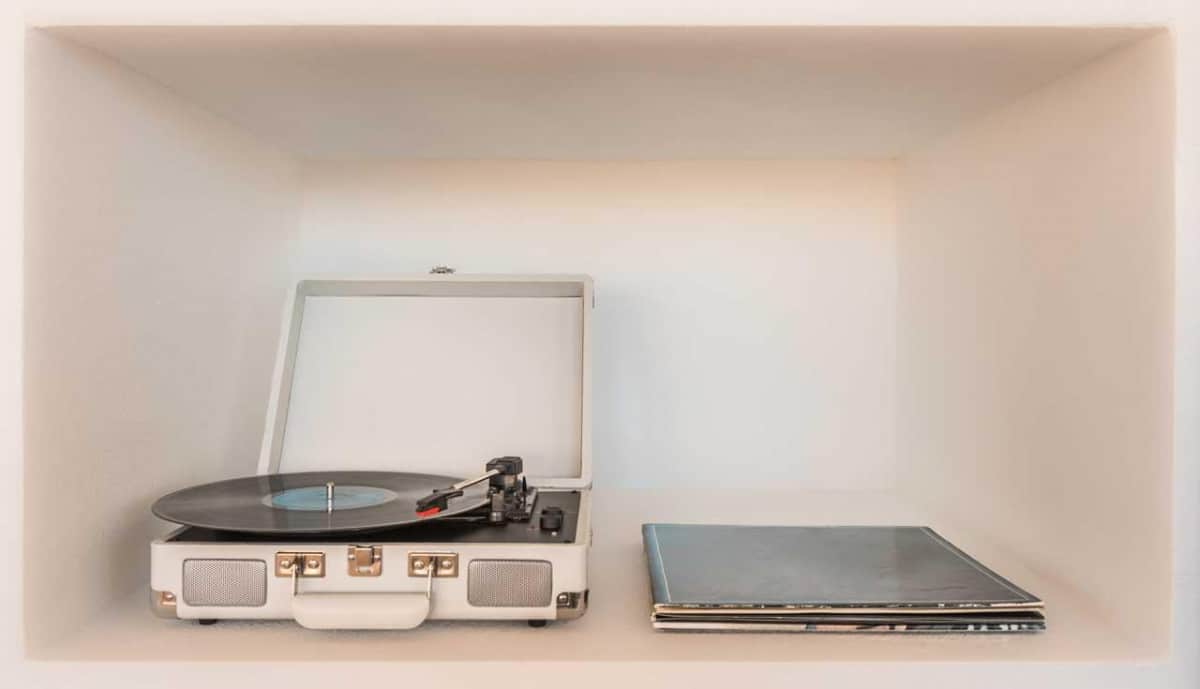
    I’ve found that out of the name brands that don’t catch my eye, I have one rule for turntables: Never buy a portable or ‘suitcase-style record player. They never seem to be any good, and many models have shown to prematurely wear records from cheap needles, improper tracking pressure, and similar issues. Not to mention the atrocious sound quality you get from the small and inadequate built-in speakers in many of these models.

    Sometimes I also notice that a brand might have a flawed model, but some other great ones. For example, you can debate which Technics record player is the best and which is the worst. It’s a matter of perspective, but who is to say the worst Technic model is not equivalent to the best model of another brand?

    Either way, the cheap portable types of record players are usually the bad ones. Turntables intended for single location use are the ones you want to look at if you want any kind of quality at all.

    And if budget is an issue, take a look at hock shops and used electronics stores. You can often find a great deal on a great record player worth much more than a suitcase-style in terms of quality, but often for less money. I once found a Technic 1200 at a garage sale for only $20. I still have that turntable twenty years later. What does that tell you about the value of the $20 I spent?

    Do yourself a favor and buy a decent turntable right from the start; it doesn’t have to be expensive if you shop for a bargain or a used unit. You’ll be glad you did.

  • Why You Should Never Buy A Crosley Record Player

    Why You Should Never Buy A Crosley Record Player

    A lot of people really dislike the Crosley brand. Famous for their cheap, low-end, all-in-one portable record players, Crosley appeals to many people not interested in a high-end record player for its sound generating abilities. However, even for a cheap turntable, there are a lot of reasons you should never buy a Crosley record player, in my opinion.

    Crosley record players are known for their low price and their low quality. Touted on many forums as the bane of the true audiophile, Crosley record players are some of the cheapest and cheapest quality portable record players on the market.

    However, if you are in the neighborhood for a budget-friendly option, you don’t have to break the bank to get a better sound than a Crosley. If their low price is still luring you in that direction, take heed – I’m not the only one with an opinion on these cheap record-turning devices (I don’t even want to call them turntables).

    Let’s take a look at what some people have said about the Crosley and why you’re likely better off without one. Stick with me to the end, and I’ll share my not-so-secret alternative to a cheap turntable you’ll regret.

    Why Shouldn’t You Buy A Crosley?

    As mentioned, I’m not the only one with an opinion about the cheap Crosley players. Mawnck of the Reddit community had this to say about Crosley:

    “…the main problem with the Crosley/Skywin stylus is its plastic cantilever.”

    Okay, so we can see from this statement that if true, these record players would produce inferior sound. Or so it would lead me to believe. However, Mawnck doesn’t stop there. The user goes on to lacerate the brand further.

    I don’t take some random forum person’s opinions for the gospel. I know to take everything I read with a grain of salt. With that in mind, I decided to go hunting for more reliable sources of information.

    Who Has Some Authority To Talk About Crosley?

    My journey to find out all I could to back up my experience and opinion with Crosley record players led me to more professional opinions. I left the forums behind and went to see what some real audiophiles had to say about these budget record players (again, I want to call them record-turning devices, not turntables).

    The next place I stopped was an article by the respected Brent Butterworth of Wirecutter. Here’s what Brent had to say about the Crosley:

    “With all the records I played on it, the sound was thin and blaring. I heard little else but vocals and guitars when I played albums from Bob Dylan, R.E.M., and Yes.”

    This sentiment sounds like a broken record after reading all the user reviews about the Crosley record players. In particular, the Cruiser and other portable, cheap models.

    Brent went on to tell us more about his experience with the Crosley, and I can say that it mirrors my own experiences,

    “I was sure the album included a bassist but I couldn’t easily hear him.”

    The final point Brent nails right on the head, and I agree wholeheartedly.

    “Noise from the turntable’s motor leaked into the stylus and was audible through the speakers.”

    The very same experience I had with the Crosley I tested. I turned on a record to listen to the silence between tracks and could hear the motor coming out the speakers. The speakers are of inferior quality as well, in my opinion, and from my experience. They sounded kind of like tin cans were mounted as horns. I felt it wasn’t worth wasting money on their product.

    Here’s what Brent says about the speakers, again mirroring my sentiment:

    “I hadn’t expected much from the Cruiser’s two 2½-by-1¼-inch oval speakers; even so, I couldn’t lower those expectations enough to enjoy listening to it.”

    With Crosley, It’s Not Just The Speakers, Stylus, Or…

    You may think that I just had a flawed model, and so did all these other people. So, I found another person who distinctly did not use the Cruiser model that many of us dislike. Here’s what I found from Justin Channell on Steve Hoffman Music Forums:

    “So, for years I used a Crosley turntable/CD combo cabinet, until I got sick of it’s poor tracking ability.”

    Let me see if I’ve got this straight. Aside from my experience with the Cruiser that sounded like cheap cans and was all over the place in terms of tracking, other users have said a few things. Let’s sum up the top three complaints:

    • Poor tracking quality
    • Poor speaker quality
    • Poor build materials

    A few other ‘rumors’ are floating about the forums, stating that the Crosley product wears out records prematurely. I have yet to see the evidence to support this claim. However, I can tell you from experience that the three issues above are, in my opinion, critical issues and cannot be ignored.

    Why People Buy Crosley And Other Budget Brands

    The truth is that not everyone has the passionate desire to hear perfect sounds. Not everyone is an audiophile. However, there has to be some sort of reasons why a person ignores what so many tell them about the quality of these record players.

    The primary reason people buy units like the Crosley is that they are cheap and all-in-one, meaning you don’t need a separate amplifier and speakers – The Crosley has them built-in.

    To be honest, if you’ve had a few drinks, or if you don’t care so much about missing half the bass (or all of it) then, it might not be the worst option. I mean, there might be a worse record player out there; I hear the Victrola’s have equal quality as the Crosleys do. Though, you should look at other options.

    Other Options To A Cheap Product Selection

    When it comes to electronics or most music equipment for that matter, I usually prefer to purchase brand new, so I can take advantage of any warranties and use a new flashy product. However, I can appreciate used equipment and the next person; and when it comes to turntables, used is an excellent option for a cheap alternative.

    Here are my top two favorite ways to find an excellent turntable for dirt cheap.

    Take A Saturday Morning Drive

    One of the best things I did when I was in college did a Saturday morning drive. I had ten dollars in my pocket and just received my box of records from my parent’s house – with no turntable!

    To make a long story of youth chasing deals shorter, let me just say that I found my first turntable – a Technic SL-1200 in the driveway of a charming Jamaican woman selling a few things on a Saturday morning. After chatting with her about her garden for several minutes, I asked her how much the record player was missing its plastic cover, but the rest looked intact. She sold it to me for $10.

    I brought it home and plugged it into my stereo, and it worked great. I still have that direct-drive turntable in my basement.

    Hock Shops, Buy And Sell Shops, Second Hand Stores

    You might be surprised to see what brands people will part with at used product stores. Some areas call them Hock Shops. You know the stores, they are notorious for buying stolen goods in the movies. In real life, you can find some fantastic deals on turntables that people are getting rid of because they have an iPod now or some other digital means of playing music. The same thing happened to tape cassettes, except vinyl has a vintage sound many of us, myself included, refuse to let go of in exchange for digital source.

    Drive around, look for garage sales and used equipment stores, and I bet you’ll find a sweet deal before you know it. Just be prepared to buy a new cartridge. It’s often required when buying a used record player. Good luck and happy turntable hunting!

  • Will New Record Players Play Old Records? (We Find Out)

    Will New Record Players Play Old Records? (We Find Out)

    Collecting vintage vinyl is something that many an audiophile enjoy. However, if you’re new to the world of ancient vinyl, you’ll likely ask, ‘Will new record players play old records?’, and you wouldn’t be wrong for the asking.

    New record players will play both 33 ⅓ and 45 rpm records. 78 rpm records from before 1960 will require a specialized turntable and likely stylus as most new record players cannot play at 78 revolutions per minute.

    Diving into the world of new record players vs. old records, we see some exciting shifts in things within the audio industry. History has shown us different record speeds and sizes, and some that worked well and others that worked better. Join me in this deep dive into older records, newer turntables, and the relationships these two shares.

    Will New Record Players Play Old Records?

    The first record player was invented in 1877. It was called the phonograph, and Thomas Edison was the man responsible for its creation. Little did Thomas know it was to become a mainstay in family homes for generations to come. (source)

    New record players will likely only play old records of the 33 ⅓ and 45 rpm (revolutions per minute) speeds. Some specialty players might provide playback for the even older 78s if equipped with speed controls for that particular rpm.

    If we are to make a rule that says yes or no, we’d better define what is new and old. Let’s take a look at when the different records came to the world to better handle what we should call old.

    What Defines An Old Record From A New Record?

    Records come in two speeds today: 33 ⅓ and 45 rpm. The speed the record plays is consistent with the amount of audio the record can hold and relative to the audio quality. A slower spinning record can hold more audio, yet faster records hold more detailed sound.

    The First “78”

    Way back in 1898, the first 78 rpm (revolutions per minute) records appeared, following the 1877 invention of the phonograph. According to Yale University Library:

    “The materials of which discs were made and with which they were coated were also various; shellac eventually became the commonest material.”

    Enter 33 ⅓ RPM

    The 1940s were a crazy time to be alive. The world war, the devastation across Europe, the financial crisis after the war, and the changing technology of the times made the decade a sort of proverbial train wreck.

    Then in 1948, just as the post-war spending was cooling off and people started to ease their buying (source), the world was handed the 33 – a record capable of containing a full-length album.

    The slower speed meant we could cram more music onto the record.

    What About The 45?

    Singles were in their height in the late 40s, and jukeboxes didn’t work great with 33s. So, in 1949 RCA Victor released the first 45. The 7” single-sized records were perfect because of their small size, ability to fit an entire single song (so great for jukebox use), and they had higher quality sound than the former 78 due to new technologies. (source)

    Due to the increasing popularity of 45s to play singles and 33s to play entire albums, in 1959, the last 78 was produced. The 1960s would see fewer and fewer old 78s in the used record shops as the other speeds quickly dominated the market.

    Do New Record Players Sound The Same As Old?

    New and old record players do not generally sound the same. Newer turntables tend to have a cleaner, crisper sound. Older, even vintage models of record players often sound warmer, even with a thin layer of fuzz gently soothing the music in the faintest background.

    Everyone has heard the classic crackling of a vintage, dated record player. From an old horror movie to a seventies class reunion flick, most people will recognize that crackly static sound that only an old record player may produce with such loving distinction.

    Do New Record Players Sound Better Than Old Record Players?

    Almost all of the time, a new record player will sound better than an old one. However, this is not always the case. (source)

    Let’s look at an example to describe how this rule might not be the case.

    Take the Technics SL-1200 Direct Drive Turntable as an example. This sweet machine premiered in 1972 and was the turntable of choice for DJs for at least two decades. The record player has incredible bass characteristics, and a minor upgrade makes it one of the best performing turntables to have seen mass production.

    Compare the Technics to a Music Public Kingdom, or other ‘no-name’ brand of new turntable sold on the significant internet stores. I would bet dollars to donuts that the cheap player, although brand new, will sound like garbage compared to a vintage player that held its own back in the day.

    The flipside to the above argument becomes relevant when comparing cheaper old turntables like those one might have purchased in the mid-1980s or even ’90s for regular home use compared to a mid to high-end turntable of today.

    The new Audio-Tehnica or Denon turntables even are pretty decent. When compared to older vintage models, you can hear the difference that the new technology makes – or in some cases; you can’t hear it.

    Remember that as technology has progressively improved to existing inventions over the years, the turntable was improving too. Better cartridges, better stylus, better precision-crafted components all came with new technology. But it wasn’t just the parts that create the sound which has improved.

    Other components have improved, like the rubber bushings used to hold the tonearm. Better rubber chemistry has improved that piece. Better motor technology also means quieter turntables, less noise transferring through the system into the sound.

    The result is a much cleaner, crisper sound from the cleaner signals the new record player technology creates. We have effectively done away with the dirty yet warm sounds of our past.

    Do New Records Sound Better Than Old Records?

    Like the debate about record players, many have debated whether or not old records sound better than new records.

    The truth about old records sound versus new records sound is twofold. First, one must consider that vinyl degrades over time.

    You’re probably thinking, ‘but I take excellent care of my records, and plastic lasts forever, right? Well, you aren’t wrong that plastic lasts a long time, and the PVC (polyvinyl chloride) that makes records does last a long time. Some records have survived well over 100 years, so we know that a record can last a very long time with proper care.

    If you intend to play the record regularly, it won’t last as long. The truth is that every time you play a record, the grooves wear just a tiny bit. Remember you’re dragging a diamond or sapphire across a soft vinyl surface.

    Probability dictates that every record will eventually wear, scratch, warp, become damaged, or even just crack and break with enough time and use.

    So, does that old record sound better than a brand new record? Not likely. It might sound a bit warmer or have that familiar soft crackle of vintage recordings, but it won’t sound as crisp or clear as a newly cut vinyl, that’s for sure.