Category: Turntable Belts

  • How To Measure A Turntable Belt

    How To Measure A Turntable Belt

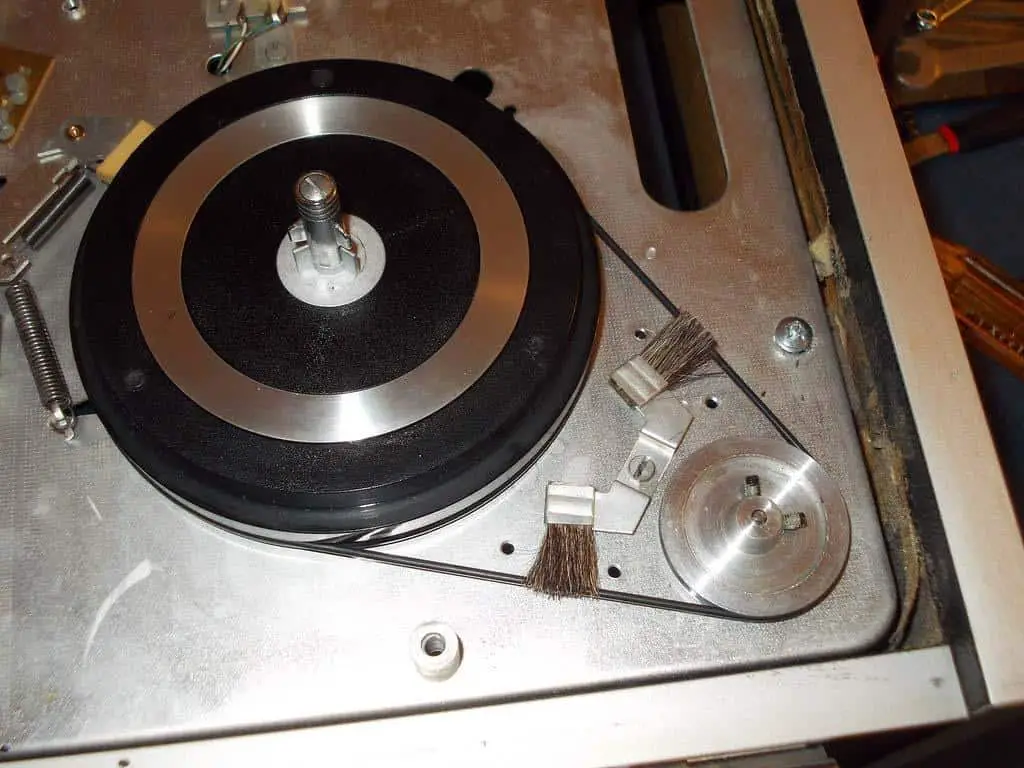
    “Reel_Belt” by tony_duell is licensed under CC BY 2.0

    How to measure a turntable belt? Rubber belts lose their elasticity over time. So, this is a question that belt-driven turntable owners often ask.

    You can measure the belt of a turntable by measuring the motor, full platter decks, or split platter decks. Deduct a few millimeters from your final measurements to ensure that the belt is tight enough. Measuring the old belt is also an option, but it does not deliver accurate results.

    How To Measure A Turntable Belt

    The turntable belt can stretch, wear, and break in the long run. If such a thing happens, you will have to purchase a new turntable belt and install it on your record player. However, this job can be a challenge if you are unsure how to take the belt’s measurement correctly.

    The reason is that a belt that is too loose or too tight will ruin the sound quality of your record player.

    But before proceeding to measure your turntable belt, you first need to answer the following:

    • What is the belt’s shape (round, flat, or square)?
    • How wide is the belt?
    • What is the thickness of the belt?

    5 Ways To Measure A Turntable Belt

    Finding a belt for your turntable is relatively easy. What is difficult is knowing the size that you need to purchase. The reason is that a tight turntable can put too much friction and pressure on your motor bearing. As a result, the motor will tilt, and the belt will ride the incorrect location.

    On the other hand, an overly loose belt can also cause an issue. A loose belt will not help the motor rotate efficiently.

    Moreover, there are four ways on how to measure a turntable belt. You can do a combination of each to ensure that you get the correct measurement.

    1. Measuring The Old Belt

    This method is the least recommended way of measuring a turntable belt. It is not accurate, so turntable enthusiasts do not find it ideal.

    It is essential to note that an old turntable belt is likely to have stretched over time, similar to a rubber band. For this reason, make sure to replace it with a slightly smaller one. However, there is no way of knowing how much your old turntable belt has stretched.

    For this reason, the only thing you can do is to guess whether or not you need to subtract a few inches from the final measurement that you have taken.

    Moreover, hold the won belt on two ends by stretching them and measuring the belt’s inner part to get the length.

    2. Measuring The Motor Without The Belt

    This method is one of the easiest ways to measure a turntable belt.

    To measure the motor without the belt installed, you first need to tie a piece of thread around the belt’s path. Next, pinch both ends of the thread and measure its length in millimeters.

    3. Measuring The Full Platter Decks Without The Belt

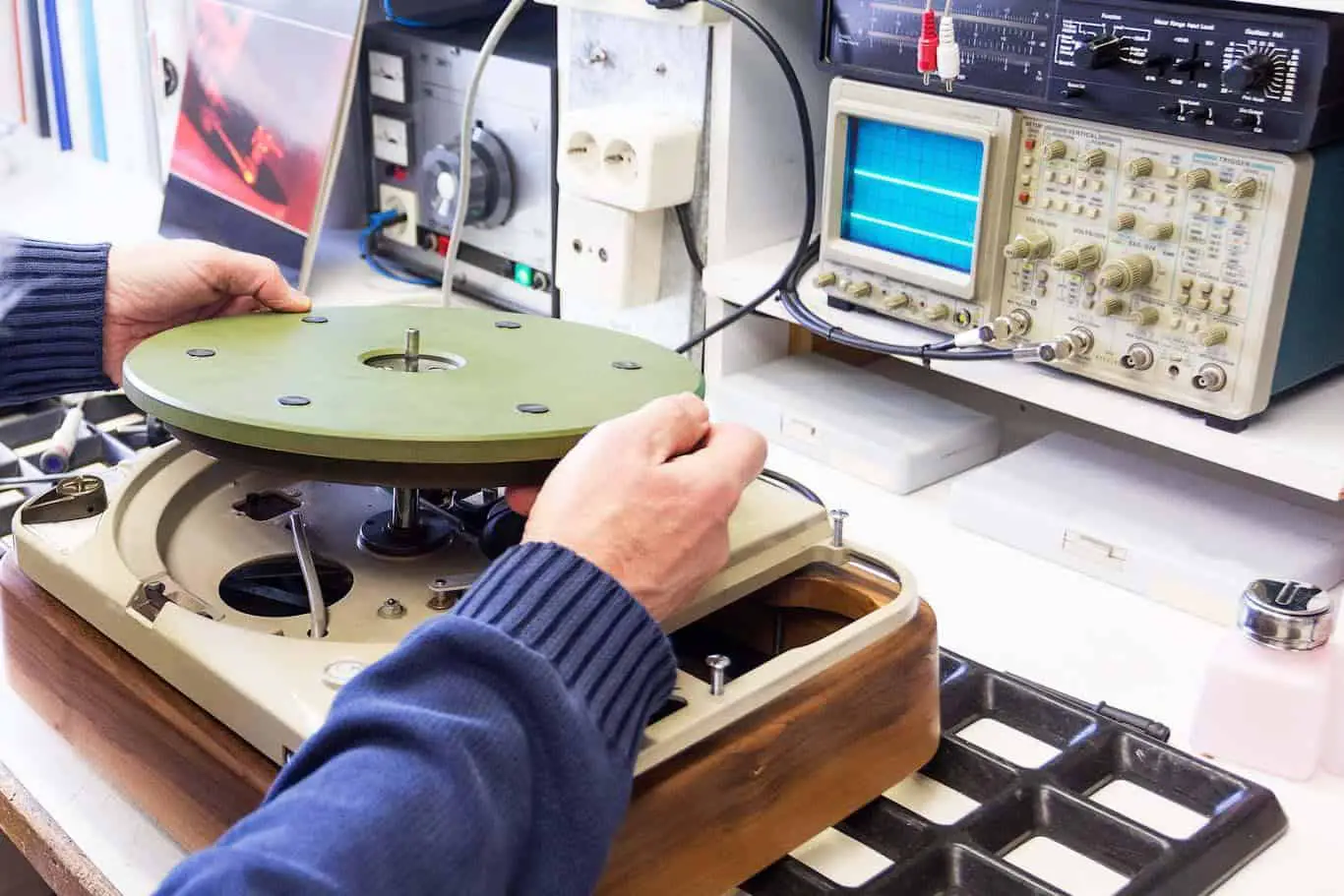
    Take off the rubber mat and lift off the platter for this step. It is worth noting that some record players have platters that you can lift off, while others require you to lift the circlip at the spindle.

    After lifting off the platter, turn it over and measure the hub’s circumference. Remember that the belt has to be tight enough to hold the inner hub without you having to stretch it too much. To ensure that you have the correct measurement, deduct 5 to 10mm from the circumference.

    Moreover, the belt needs to be small enough to stay in place. It should not fall off when you turn the hub upside down. Similarly, the belt should not be too tight, putting pressure on the motor bearings.

    4. Measuring The Split Platter Decks Without The Belt

    Measuring the split platter decks is another way to measure a turntable belt. To do this method, remove the platter mat and lift off the platter’s outer ring section. Next, get a piece of string (non-stretching is best) and use it to measure the total distance around the motor and the hub.

    Finally, deduct approximately 4 to 6 percent or usually 20 to 30mm to achieve the proper tension.

    5. Measuring The Belt’s Width And Thickness

    Apart from the length, it is equally essential to measure a turntable belt’s width and thickness. That said, get your old turntable belt and find an area still in good condition. Make sure that you are getting the correct width and thickness for the motor to function at a normal speed.

    Moreover, most turntable belts have a measurement of 0.5mm – 0.6mm x 4mm – 6mm. (source)

    How To Know If Your Turntable Belt Has The Right Measurement
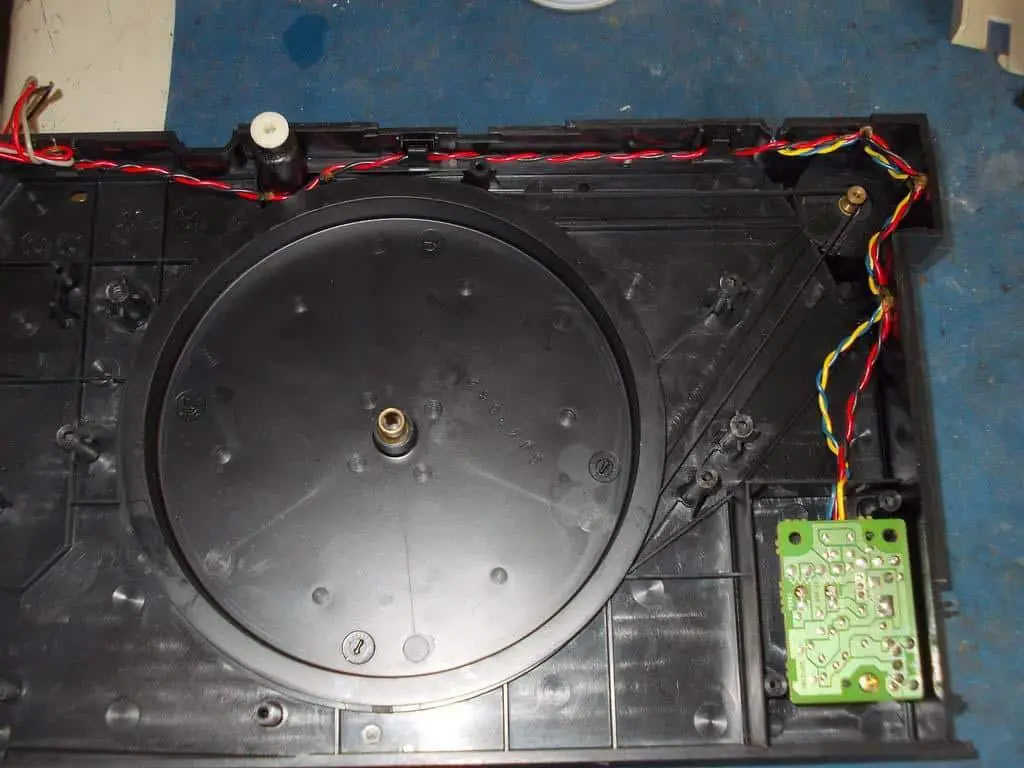
    “Turntable_fitted” by tony_duell is licensed under CC BY 2.0

    Many people opt to use a belt-driven record player as it is less expensive than a direct-driven one. However, record players are not as easy to use as digital music, such as smartphones, iPods, and CD players. So apart from knowing how to measure a turntable belt, you also need to determine whether your belt is a perfect fit.

    That said, balance is the key to determining whether or not your turntable belt has the correct fit. As mentioned, turntable belts should not be too tight or too loose as they will interfere with how your turntable operates.

    So, after installing your turntable belt, make sure that the record player’s platter rotates smoothly and consistently without any sign of stress.

    Moreover, it is ideal to have a belt that is a little tight rather than loose when you measure a turntable belt. Still, it is essential to note that an overtightened belt will damage your device. So, be careful when you are deducting measurements.

    Additionally, the stress from a tight turntable belt can heavily impact the device’s mechanisms. The same goes for the bearings and the motor used for the rotating belt. Even worse, it can obliterate your turntable, with the repair cost higher than the device’s original price. (source)

    How Do You Tighten A Record Player Belt?

    Sometimes, you need to create a temporary solution to your loose belt. So, instead of proceeding to measure a turntable belt and purchase a new one, you will look for ways to re-use your old turntable belt.

    But can you tighten a record player belt? Absolutely. In fact, the methods for tightening an old record player belt are pretty simple.

    The Hot Water Method

    Heat is the best way to tighten a loose turntable belt. The reason is that heat forces the rubber to compress and shrink, thus bringing it back to its original size. That said, boil tap water, just enough to cover the entire belt. Then, soak the rubber until you see changes.

    But if the hot water fails to tighten the rubber, another alternative method is to boil it. In this case, let the rubber simmer for approximately 5 to 10 minutes. Such will result in shrinking as the boiling water will deliver high heat intensity.

    Finally, turn off the stove and allow the belt to soak for about 5 to 8 minutes.

    Moreover, rubber has a higher boiling point than water. So, you do not have to worry about it melting. Still, watch for signs of wear as you boil the rubber. Make sure that there are no debris floating or areas melting away.

    The Blowdryer Method

    If the hot water method does not seem to be a feasible option, heating the turntable belt using a blowdryer is an ideal alternative. However, ensure that you will not touch the belt when heating it, as the heat it accumulates can burn your skin. Additionally, the rubber might emit fumes, which can cause respiratory issues after prolonged exposure.

    When heating the belt with a blowdryer, try to be as consistent as possible. This way, you will be able to distribute the heat evenly on the entire belt, thus letting it shrink evenly.

    Moreover, heat the belt for about 5 minutes. You can also do this method longer if you need to.

    It is also essential to take caution when performing this method. Allow the belt to cool before touching it to ensure that you will not burn your skin. Once completed, go back to the steps to measure a turntable belt and see if your belt has shrunk. (source)

    How Long Will A Turntable Belt Last?

    A music experience brought by a record player can be pretty nostalgic. As a result, many people opt for this type of music device instead of digital music forms.

    But as you relax and listen to music, there are times when you hear a slipping sound from your turntable, followed by the music slowing down. Such is a sign that you need a new turntable belt.

    That said, you might go and get a measuring tool and measure a turntable belt. But there is one question that you need to answer – how long should a turntable belt last?

    Turntable Belt Life In A Nutshell

    Belt-drive record players are the best option if you want to isolate motor noise. However, manufacturers only use rubber as their belts. The problem is that rubber belts stretch over time, which reduces the sound quality of your record player.

    Moreover, most belt-drive record players only last for about five years due to rubber degradation. This lifespan depends on how you use your device, the belt’s quality, and exposure to heat, oxygen, and light.

    Here are the signs of rubber degradation:

    • brittleness
    • drying and cracks
    • loss of tensile strength
    • loss of elasticity

    If you see any of these signs on your rubber belt, then it is time to measure a turntable belt and purchase a new one.

    Factors Affecting The Lifespan Of A Turntable Belt

    Light and Heat

    The light and heat from the sun can dry your rubber and cause it to crack. To prevent such from happening, do not leave your record player upside down in a place where sunlight can reach it. It is also not ideal for placing your device near a heat source, such as a fireplace.

    Air

    Oxygen or air is another factor that can dry up your record player’s belt. You can prevent cracks from appearing by treating your belt before installing it. (source)

    What Is The Difference Between Belt Drive And Direct Drive Turntables?
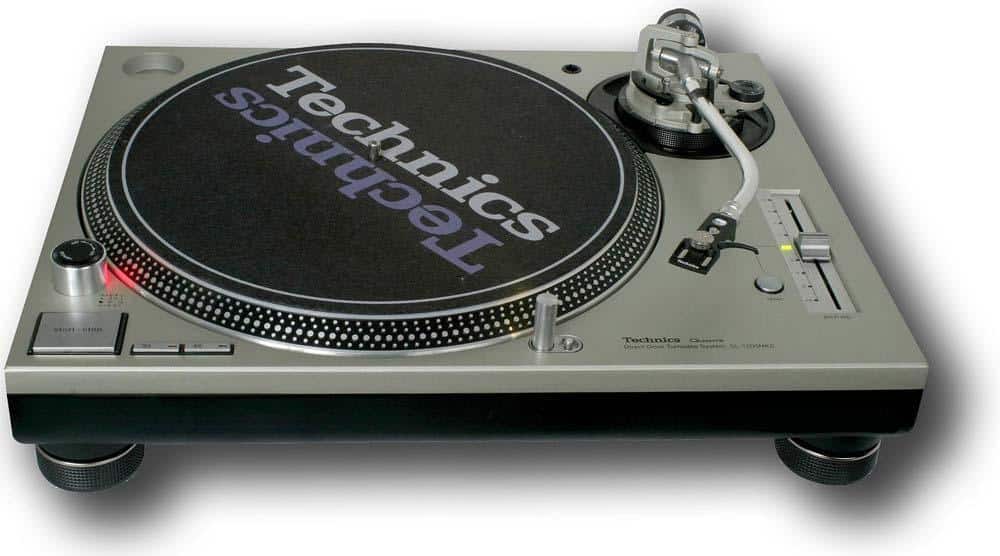
    “jjforsale.technics.sl1200mk2.turntable.audio” by Jazzy Junggle is licensed under CC BY-NC-SA 2.0

    If you are new to record players, you might be overwhelmed by the differences. That said, there are two turntable types – belt drive and direct drive turntables. So, how do these two types differ?

    Direct drive record players have their motors beneath the platter. This motor rotates directly, allowing the platter to spin the vinyl record.

    On the other hand, belt-driven turntables have an offset motor. According to Todd Souvignier in his book The World of DJs and the Turntable Culture, “belt-drive works like a car’s fan belt.” A rubber belt wraps around the spindle, hugging the main platter and prompting it to rotate like a pulley.

    The problem with belt-drive record players is that the belt wears out over time. If such happens, you will have to measure a turntable belt and purchase one that adheres to the size you got. (source)

    The Pros And Cons Of Belt Drive Turntables

    Pros

    Cons

    The rubber belt can absorb shock, reducing the vibrations that can damage the device.

    Belt-drive turntables have a lower torque than direct drive ones.

    Produces better sound quality

    It has a little less accuracy in the playback speed

    Belt-driven turntables have cleaner and clearer sounds.


    The Pros And Cons Of Direct Drive Turntables

    Pros

    Cons

    They are more reliable than belt-drive turntables as they do not have belts that degrade over time.

    It has a low playback quality.

    It has a quick start-up feature that lets you easily turn on and play your turntable.

    Often suffers from motor vibration noises.

    Boasts a durable design, making it an excellent investment

    You need to separately purchase a shock absorber to reduce vibration (source)

    Are Belt-Driven Turntables Better Than Direct Drive?

    The answer to which is better between the belt and direct drive turntables has always been debated. But the truth is that it is not difficult to choose, especially if you know the difference between the two.

    Direct Drive Vs. Belt Drive Record Players

    A direct-drive record player mainly attracts a different audience, usually DJs. The reason is that it has a design that works in a two-turntable setup. It also has functions that you will not usually find on belt-drive record players.

    In addition, a good direct-drive record player has a slicker design with more bells and whistles. This way, the user can interact with the record player more by manipulating its platter, the spin speed, and even the direction.

    On the other hand, belt drive record players differ in how the motor turns the platter. For this reason, people who often opt for belt drive turntables are new record player enthusiasts and audiophiles.

    Moreover, belt drives are designed for ease of use and output quality. The reason is that most audiophiles and casual users will not be manipulating the turntable platter while they listen to music. That said, belt-drive turntables usually have little control than direct drive turntables.

    Which Turntable Type Should You Get?

    If you are new to using a record player, the ideal option is to choose a belt-drive turntable. Apart from being less expensive than direct drive record players, it is also easier to use with less navigation.

    In addition, belt-drive turntables are easier to understand the direct drives, especially if you are a newbie. The reason is that this turntable type does not have any buttons. So, beginners will not get confused about which one they should push.

    Similarly, music enthusiasts who give so much importance to sound quality should get a belt-drive turntable. The rubber belt absorbs shock, so you will not have to deal with vibration noises.

    On the other hand, those who should have a direct drive turntable are DJs. They need to start and stop the music instantaneously and mix two decks, and the quick-start feature will allow them to do such.

    Still, it is essential to note that your choice boils down to your preference. (source)

    Final Thoughts

    Belt-drive record players are ideal for casual music listeners and audiophiles. However, the only problem is that turntable belts can stretch and break over time. But you do not have to worry as you can measure a turntable belt and purchase a new one.

    To know the size of the belt you need, you can measure your old rubber belt, the motor, full platter decks, or split platter decks. You also need to measure the width and thickness of the rubber belt that you need.

    Additionally, you must know what external factors can damage your record player belt. This way, you will be able to prevent exposure to those factors from happening, thus extending the lifespan of your turntable belt.

  • Belt Drive vs. Direct Drive Turntable: How To Choose?

    Belt Drive vs. Direct Drive Turntable: How To Choose?

    Turntables have an eclectic history since 1857, but there have only been 4 mechanisms to drive the platter, of which only 2 are common and popular. Both belt drive & direct drive mechanisms have had a fascinating journey over the decades, and it is still difficult to choose between them. 

    Choose a belt drive turntable if your priority is high fidelity audio playback. Consider a direct drive turntable if you want higher torque and more efficient manual control of the playback. Direct drive is more suited for turntablism, while belt drive is for avid listeners. 

    Audiophiles have strong preferences, and they often get into heated debates to champion their favored drive mechanism. However, the choice is truly perplexing if you don’t have a preference. This guide explains the theoretical & practical differences of belt drive vs. direct drive turntables. 

    How Does a Direct Drive Turntable Work?

    In 1857, French inventor Edouard-Leon Scott de Martinville created the phonautograph, the first-ever turntable to record sound, not play it back. In 1877, Thomas Edison created the phonograph, and Alexander Graham Bell made the first graphophone in 1886. 

    The foundation of modern record players and turntables is Emile Berliner’s gramophone, invented in 1887. The primitive turntables required hand cranking, and a few expensive models ran on a loud motor. In 1898, Eldridge Johnson patented a spring motor to drive gramophones. 

    Hence, you could say that direct drive was the first sustainable and reliable mechanism to rotate the platter. You may read about direct drive as a much later invention in 1969 by a Panasonic (then Matshusita) engineer named Shuichi Obata, but this is not accurate by any definition. 

    Eldridge Johnson’s direct drive gramophones were commercially available in the United States as early as the 1900s. Watch the following video at ~1:02, and you will see a direct drive turntable manufactured in 1927. 

    A direct drive turntable has a simple mechanism. An electric motor inside the plinth and underneath the platter is connected to the spindle through its rotor. As you power it on, the turntable’s motor spins and rotates the platter, depending on your selected settings. 

    Direct Drive Turntable Pros

    Here are the pros of direct drive turntables: 

    • Faster starts and rotations per minute 
    • Easier maneuverability like scratching for DJs 
    • Power-free spinning possible 
    • Less maintenance due to fewer components 
    • Highly reliable for turntablism 
    • Exceptional durability, subject to brand & model 

    The free-spinning attribute of direct drive motor-operated platters makes them popular among performers. Also, scratching is more convenient with a direct drive turntable because the motor retains the rotation per minute. Furthermore, many artists often need faster RPMs or speeds. 

    Direct Drive Turntable Cons

    Direct drive turntables have only 2 significant downsides: 

    • Audio quality 
    • Speed consistency

    The latter may not be an issue in premium models, but entry-level or low-quality direct drive turntables may have fluctuating speeds due to the various settings and thus electric signals.

    Audio quality should not be a dealbreaker in premium models as the motors are almost quiet and not much vulnerable to external factors causing any distortion or performance issues. However, louder and inefficient motors can have a noticeable impact on audio fidelity. 

    Also, the vibration affecting the tonearm may be reduced by using a torque generator or another motor. However, you will need to buy a direct drive turntable with such a feature to eliminate the vibration effects on the tonearm and audio fidelity. 

    How Does a Belt Drive Turntable Work?

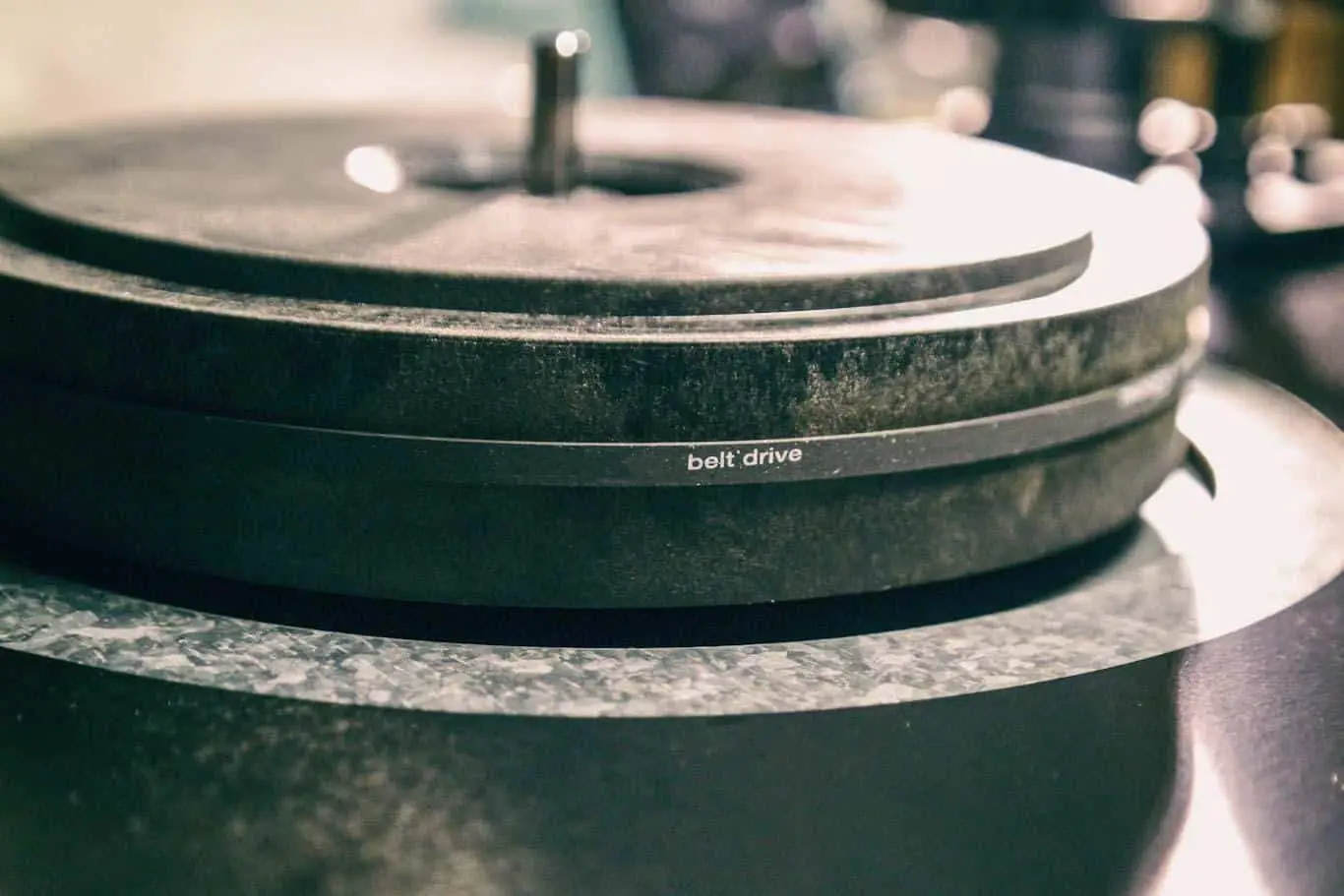
    A belt drive turntable uses elastic rubber wrapped around the platter to rotate it when you power the device and its motor. Unlike the direct drive mechanism, the motor in a belt drive turntable is not directly under the platter but towards a side inside the plinth. 

    The first belt drive turntable was created by the audio pioneer Edgar Marion Villchur, and it was commercially released in 1961. Since then and the renewed direct drive turntable popularized by many brands, the two mechanisms are at loggerheads, drowning out the idler and flywheels. 

    The belt drive turntables are not necessarily complicated compared to the direct drive mechanism. However, there is an additional component, the belt, and thus you have to weigh its strengths and weaknesses vis-a-vis the pros and cons of a direct drive motor under the platter. 

    Belt Drive Turntable Pros

    Here are the pros of belt drive turntables: 

    • High fidelity audio playback due to less vibration 
    • Consistent speed unless the belt is worn out 
    • Aesthetic designs and a classic appearance 
    • More suitable for listening to an audio playback 

    Belt Drive Turntable Cons

    Here are the downsides of belt drive turntables: 

    • Slower start as the belt attains the requisite speed 
    • No free spins without power due to the belt’s tension 
    • Difficult to maneuver during turntablism, such as scratching 
    • Belt issues: looseness, tightness, wear & tear, damage, etc. 

    You can spin a belt-driven platter without power, but the elastic rubber’s tension will cause some inconvenience. Also, you may inadvertently cause a bit of wear & tear in the belt. Besides, scratching is not easy due to the omnipresent tension of the belt in such designs. 

    Belt Drive Turntable vs. Direct Drive – Audio Quality

    Direct drive turntables have an inherent challenge due to the vibration caused by electric motors. Since the motor is directly under and connected to the platter, there is a slight vibration and distortion of your playback audio. However, this effect may not be cognizable to all. 

    A belt drive turntable eliminates this motor-induced vibration and distortion because it is housed away from the platter. Also, the belt is rubber and has some elasticity that can absorb any inevitable vibration caused by the electric motor. Thus, the audio quality is apparently better. 

    The earliest electric motors used in gramophones were large, heavy, and noisy. The vibration was a serious issue and the audio playback quality suffered as a result. Modern electric motors are much smaller, lighter, and quieter. Thus, you may or may not notice any loss in audio fidelity. 

    Eventually, the practical difference in audio quality comes down to the particular turntables, their manufacturers, the designs, the deftness of the engineers, and the precision of all components. A poor quality belt drive turntable will distort the audio quality, much like an unsuitable motor. 

    Furthermore, the drive mechanism is not the only factor in high fidelity sound reproduction or audio playback. Everything from the entire design to the type & quality of materials, cartridge, coil & magnet, stylus, and customizable settings will determine the real-world audio quality. 

    Belt Drive vs. Direct Drive Turntable – Durability

    The only undisputed difference between belt drive and direct drive turntables is durability. Direct drive turntables may last longer because they have one less component that can fail. In other words, there are fewer chances of a part failing in direct drive compared to belt drive turntables. 

    Both types of turntables have motors, which may fail at some point in time. Also, the stylus, cartridge, coils or magnets, springs, and other parts may suffer from damage in due course. With belt drive turntables, you may have to replace the belt if it is loose, worn out, or damaged. 

    While a belt can get loose, wear out, and be unusable, a premium-quality turntable should not have this problem any time soon. You can use a belt drive turntable for years, if not decades, before you may need to replace the rubber strap. Also, use & maintenance are decisive factors. 

    How To Choose a Turntable Drive Mechanism

    Consider your priorities and preferences. The direct drive mechanism will be a more practical option if you are into turntablism and intend to reproduce or perform. The belt drive mechanism is better if you are a home user who wants impeccable, high fidelity audio playback. 

    It is necessary to note a caveat about both these mechanisms. A bad belt will distort the audio, and it will be vulnerable to many external factors, including the turntable’s functioning components, such as: 

    • Spindle rotation 
    • Stylus position 
    • Tonearm 
    • Cartridge performance 

    Likewise, a low-cost motor in direct drive turntables can nearly ruin audio fidelity. This problem can also occur in belt drive turntables, as the rubber cannot absorb phenomenal vibration caused by a failing or bad quality motor. Thus, you need a brand & model-specific comparison. 

    The general practice among DJs and other musicians is to go for a direct drive turntable. Home users and non-performing audiophiles can prefer a belt drive turntable as none of the free-spinning, scratching, and higher torque features will be a concerning issue or shortcoming. 

    Final Thoughts

    Like the belt and direct drive mechanisms, the styli shapes, the cartridges, spindles, and other model-specific features will affect audio fidelity. Besides, every turntable model operates best at its optimum settings. Stressing the drive or using demanding settings will impair durability. 

    Furthermore, the materials play a significant role. For instance, metal or alloy is heavier than plastic, so a motor must work harder and may be noisier to rotate such platters. Lighter platters are easier for smaller and quieter motors to operate. These aspects matter for all turntables. 

    Related Articles:

  • Are Turntable Belts Universal? Everything You Need to Know

    Are Turntable Belts Universal? Everything You Need to Know

    If your turntable doesn’t spin after being turned on, then the chances are that you have problems with the belt. The turntable belt links and spins all the motors in your record player at a constant speed. Unfortunately, it does wear down with time, and if yours has, you may be wondering, are turntable belts universal?

    Turntable belts construction is usually the same material, but they are not equal in size. These belts vary in thickness, length, and width; therefore, you can’t just install any belt in your turntable. In fact, each model has its specific replacement belt.

    A turntable belt is a crucial part of the turntable responsible for spinning the motors and playing the record. The belt connects the motor to the platter, which in turn rotates the vinyl record.

    So, in this article, we will elaborate more on why you can’t just install any belt in your turntable. We’ll also show you how to replace the belt and how to pick the right one.

    Are Turntable Belts Universal?

    Generally, three kinds of turntable drives are produced in the market (direct-drive, idler-wheel, and belt-drive systems). And their names are based on the coupling installed between the motor and the turntable’s platter. It means that the motor is situated outside or underneath the platter.

    The direct-drive systems have a motor beneath the platter that rotates it, while belt drives have a belt connecting the platter to the motor. (5)

    The belt connecting the platter to the motor in drive belts systems is made using elastomeric materials. (source) The direct drive system is quite common among high-end options, while the drive belt system can be found in low-end turntables and uses less costly motors.

    The elastomeric belt does more than turn the motors; it also absorbs the vibrations from the motor that the stylus would have picked. (source) The belt acts as a filter and absorbs the low-frequency vibrations, and as long as the belt has proper tension, it won’t create speed irregularities. (source)

    Unfortunately, there is nothing like one turntable belt that fits all; different belts from different manufacturers vary in length and width. These belts consist of using different types of elastomeric materials.

    So you have to be very careful when looking for a replacement for your turntable. You can either get a substitute for your model or get the right option that has the same size as the one on your machine.

    Until recently, all high-end turntables used belt drive, but their popularity has reduced since the introduction of direct drive systems. Luckily both direct drive and belt-driven systems have their enthusiast, but most DJs prefer direct-drive designs.

    Some DJs prefer the belt drive systems because the slippage of the belts makes it easy for them to manipulate the platter’s speed. (source)

    Turntable belts are designed to serve you for a few years, but they tend to wear out with time when used regularly. So if your device is running slow, then it means that it’s time for a replacement. Another standard indicator of a damaged belt is a change in the quality of the sound produced. When the belt is damaged, a record may sound deeper or low-pitched. (source)

    Once you have opened the turntable, you might notice signs of belt slippage on the rim of the platter. Some slippage symptoms include shiny gray pulleys inside the turntable belts or dark slick spots on the platter.

    You might also see tiny rubber particles on the turntable’s motor pulley. It will show that the belt is slipping in the platter and motor, and it’s time for a replacement. (source)

    How To Replace An Old Turntable Belt

    As aforementioned, turntable belts rarely snap, so when they start slipping, then you need to replace them. When the wearing of the belt occurs, their resistance reduces, and the speed of the platter increases.

    So you may notice the speed of the platter is high after placing the stylus on the record. Plus, the belt’s length will increase by about 5% resulting in a reduction in resistance and slippage.

    Luckily, every turntable model has a replacement belt designed for the exact model or a matching belt customized to fit your machine. Plus, replacing an old belt is relatively easy, and anyone can do it with minimal effort and tools.

    But make sure you clean the dark, slick particles on the platter and the surface of the motor before installing a new belt. To replace the turntable belt, you should do the following:

    Diagnose The Turntable Belt And Confirm If You Need A Replacement

    If you suspect your belt is getting old, the main sign to watch out for is if the turntable spins when turned on. If you notice a change in speed when playing a record, then you need a replacement. To confirm the speed of the turntable, you need a strobe disc.

    A stroboscope or strobe disc is a circular device used to set and determine the turntable’s speed. The strobe disc helps you set the speed of your turntable when it’s new.

    Nobsound 50/60Hz Stroboscopic Speed Strobe Light + Tachometer Disc for Turntable LP Record Player (Power Supply Version)

    So when you notice that its rate has increased, you can confirm it by placing the disc on the player and running it. The strobe disc will help you ensure that the turntable is running correctly. (source)

    You can even confirm if the length of the turntable belt has increased by checking if the tension between the platter and motor has reduced. After confirming that the belt is the issue, you can remove it and start looking for a replacement.

    Look For The Right Belt For The Turntable

    Remember, all belts are made differently. They vary in length, width, and thickness. So you need the right option if you plan on listening to high-quality sounds. After all, the dimensions of the belt will make a massive difference in how the record plays.

    Therefore, if possible, you should replace it with the same belt; this means getting a replacement made for your specific type of record player. (source)

    You can find the right option online by looking for your turntable’s model replacement. Luckily, many websites offer specific turntable belts, like turntable belts; all you have to do is click your model and make. So before ordering a replacement belt, you should do the following:

    • Measure the length of the old belt and then subtract about 10mm to account for how much it has stretched over the last few years.
    • Measure its width and then make your order
    • If it’s an old machine and you can’t find its original belt, you will have to measure the circumference of the platter’s hub using tape. Remember, the belt has to be tight, so make sure you subtract about 10mm from the platter’s circumference to get the right length of a replacement belt. (source)

    With the correct measurement, you can place your order and make sure it’s made using durable elastomeric material.

    Unplug The Turntable And Remove Its Plastic Mat

    Before you even start doing any repair or replacement work on any electronic machine, including the turntable, it’s always a good idea to disconnect it from the mains. It will help lower the likelihood of getting an electrical shock.

    Electrical shock may be rare, but for the safety of your motor and you, you should disconnect it from the power.

    After unplugging it, the next step is removing the plastic mat. The plastic mat is situated on the platter, and it’s where the record sits when playing. Removing this mat from the center shaft is relatively easy; all you have to do is pull it out and place it aside. (source)

    Remove The Turntable’s Platter

    Platters are the plastic or metal circles beneath the mat that are spun by the motor. Most platters come with two access ports that allow you to access the motor while others don’t. The platters are typically attached to the turntable’s center shaft in different ways, but removing it can be pretty straightforward. For example:

    Removing it can be straightforward if the platter has a tiny C-shaped clip attached to its center shaft. All you need to do is pry it out using a flat-head screwdriver and then free the platter.

    If it has no clip and resists when being pulled out, then it’s press-fitted. So you can pull it out while tapping the center shaft lightly using a hammer. (source)

    Clean The Motor

    Before replacing the belt, you may consider cleaning the motor, especially if you have never done it before or it looks dirty. Using rubbing alcohol and a lint-free rag, wipe the exposed parts of the motor and remove all the dirt and dust.

    Stretch The Turntable Belt Over The Platter’s Hub

    The belt must fit snugly over the platter’s center hub, so make sure you do it correctly. First, you should make sure the belt is straight and then flip the platter upside down to access the center hub. Next, put as much of the belt as possible in the center hub. Remember, the belt doesn’t have to be kinked or twisted in any way.

    So if you notice that it’s twisted after stretching it over the hub, you can remove it and then install it correctly. If your new belt has a ribbon, you can line it up with one of the access holes. It will make it possible for you to pull the belt and run it over the motor.

    If your platter doesn’t have an access hole, you should stretch it onto a small post or peg. You can place a peg near the edge of the platter and stretch it over it to create a round-bottomed triangle. The peg will give you access to the belt when stretching it over the motor. (source)

    Flip The Platter Over And Install The Turntable Belt

    After installing the belt, you can flip the platter over and put it back, but don’t install the C-clip yet. Turn it until the access holes can expose the motor. The turntable’s motor is a metal shaft situated at the corner of your record player. Remember, the belt must hook to it for the turntable to play the record. So make sure you can reach through the holes and touch the motor.

    If your turntable’s platter doesn’t have an access port, then you should align the motor spindle with the peg or post that you placed on the platter. Place the platter back in its position and then spin it two complete rotations counterclockwise and two clockwise to help hook the belt on the motor’s spindle.

    Hook The Belt Over The Motor’s Spindle

    If your platter has access ports, you can pull the belt and stretch it over the motor’s spindle. Ensure the motor has a small cap on its spindle to hold the belt in place and prevent it from slipping off. Place the belt on the motor’s body after pulling it over the cap and make sure it’s locked tight. (source)

    Test The Belt

    After stretching the belt over the motor, you should spin it in both directions to confirm if it’s working correctly. And when turning it, make sure you get a light, consistent resistance. If the platter is stopping instantly or jerking, then it means that you didn’t install the belt correctly. So you should check the new belt for twists and kinks before reattaching it and testing it again.

    If it’s smooth, you should replace the c-clip on the center shaft and the mat before plugging it in and hitting the start button.

    Troubleshoot The Turntable

    The most common problem with replacing the turntable belt is not attaching it correctly to the motor. So make sure the belt is below the small cap on the motor. Another problem that can affect the spinning speed of the motor is a loose or tight belt. If the belt is loose, then it can’t spin the motor.

    And when it’s too tight, then turning the platter by hand can be very hard.

    If this is the case, then you should repeat the above steps and install them correctly.

    How To Unstretched A Turntable Belt

    Does the revolving speed of your turntable keep you up every night? (Nelson Kline, 2019) Well, if it does, then you may have noticed a change in its speed, and one of the leading causes of this problem is a stretched belt.

    Naturally, belts stretch with time, and while stretching for about 6mm may seem too small, it can affect the speed of your turntable. (source) if it stretches for even a few millimeters, the record player will slow down.

    But if the stretched belt has no cracks and is in excellent condition, then you can shrink it back to normal instead of replacing it. To unshrink it, you should fold it into two and measure its size before placing it in hot water. so set the belt in a container and then boil some water in a kettle to its boiling point. (source)

    Pour the boiled water over the turntable belt and let it soak for about 5 minutes. Please remove it from the water and then measure its size again. You will notice a size reduction, and if it hasn’t returned to its original size, you can repeat the process later.

    Remember, the goal is to return it to normal, and since you know its original size, you want it to shrink to that size.

    FAQs

    How Long Can A Turntable Belt Last?

    Generally, turntable belts can serve you for between 3 to 5 years or even more. But if you’re the kind of person who uses the turntable once in a while, then it can serve you for more than five years. After all, the wear and tear rate depends on how often you use the machine.

    How Tight Should My Turntable’s Belt Be?

    The right belt needs to be tight enough to effortlessly grip the platter’s hub with little to no strain. It must also be tight enough to remain on the platter’s rim even after it’s turned upside down and not too tight to put too much pressure on the motor’s bearings.

    How Do I Know That the Turntable Belt Is Damaged?

    There are a few signs that can show you when to replace the belt, and one of them is when the sound becomes pitchy after the belt starts slipping. You’ll quickly notice the sudden change in the rotating speed of the turntable belt.

    Conclusion

    The turntable belt is one of the most crucial parts of a belt-drive turntable. The belt is responsible for turning the platter for the record to play. So don’t assume that all belts are equal or universal, and install any belt you find in the store when your turntable’s belt gets spoiled. Instead, you should remove the belt, measure its length and width and then order the exact model designed for your machine or a matching replacement.

    Sources

    1. WikiHow contributors, How to replace a record player belt, Accessed November 16, 2021
    2. Wikipedia contributors, Belt drive turntable, Accessed November 16, 2021
    3. Art Zuckerman, What to look for in new direct-drive audio gear, Accessed November 16, 2021
    4. Ben James, The gear, Accessed November 16, 2021
    5. Andrew Murphy, Belt-drive and direct-drive turntables: everything you need to know, Accessed November 16, 2021
    6. Record-ology, Strobe disc! Record-ology! Accessed November 16, 2021
    7. Nelson Klein, Dialing in your turntable speed, Accessed November 16, 2021

  • This Is How Tight A Turntable Belt Should Be

    This Is How Tight A Turntable Belt Should Be

    Turntables (or vinyl record players, depending on how you see them) are complicated machines. They aren’t as easy to use as “press play” with your iPods, iPhones, and DVD players. Because of this, we bumped on the question regarding how tight a turntable belt should be.

    The key to determining a turntable belt tension is balance. The grip must not be too tight that it hampers the overall mechanism and creates too much friction, but not too loose that it won’t work at all.

    In this article, let us tighten our seatbelts and know how tight a turntable belt should be and the processes to determine that.

    What Is a Turntable Belt in the First Place?

    Before we try to answer how tight a turntable should be, we should first learn to define what a turntable belt is. So really, what is a turntable belt?

    Turntable belts are essential parts of belt-driven turntables but are nonexistent on direct-drive turntables. Essentially, the difference between belt-driven turntables and direct-drive ones is that the belt-driven employs turntable belts as methods to rotate the platter. The direct-drive ones instead use a motor to drive the plater, thus eliminating the need for belts. (1)

    Turntable belts are essential parts of belt-driven turntables but are nonexistent on direct-drive turntables.

    For a belt-driven turntable, the belts are required for the cartridge to navigate through the vinyl record, which ultimately helps the record player read data and express it in the form of sound. If you use a belt-driven turntable, you will know added complexities to using such technology. One of the added complexities is exemplified and amalgamated in the very question of how tight a turntable should be.

    Balance is Key: How Tight a Turntable Belt Should Be

    Turntable belts are essential parts of belt-driven record players, and assuring their appropriateness is critical for better sound quality and stabler feedback. Despite its essentiality, many audiophiles still find themselves lost in their turntable belt’s “appropriateness.” As such, we have tried to ask ourselves the same question as well.

    In questions like these, it is pretty hard to define a quick and precise answer. However, we have specific guidelines that will help you answer how tight your turntable belt should be. 

    A key to understanding how the standard goes is to know that a turntable belt is off balance. Some turntable belts are thicker, while others are thinner, so knowing this “balance” is crucial to override such differing factors. As such, we have defined the general guidelines below.

    Turntable belts must not be too loose that it loses its grip, as a loose turntable belt is no more valuable than a wisp of air trying to lift a log of wood. Moreover, you must also ensure that it is not too tight, as doing so imposes the risk of interfering with your turntable’s operations. To know the appropriate tightness, ensure that the turntable’s platter rotates consistently and smoothly without any hitches or signs of stress. (2)

    We most often recommend having your turntable belts tighter rather than loose. However, we always remind other audiophiles that having turntable belts too tight may damage your equipment, so make sure you are going on the right track.

    Speaking of damage, the stress induced by tight turntable belts will heavily impact the mechanisms, the motor used for rotating the belt, or the bearings, and more. Additionally, it can cause your turntable to result in a complete halt of operations, with repairs costing you many times the original price of the belt. (2)

    Size Matters

    We always remind our fellow audiophiles to have a suitable diameter of the belt for their turntables. It can prevent extra stress on the record player while still reducing the possibility of loose installations.

    There are five standard belt diameters to be considered for your record players. Make sure you have the right one. The standard diameters are the following: 128 mm diameter belts, 150 mm diameter belts, 172 mm diameter belts, 206 mm diameter belts, and 300 mm diameter belts.

    So the next time you view some of the available diameters for turntable belts, make sure to constantly assess it using the general guidelines, as this is how tight a turntable belt should be.

    Why Do People Still Use Belt-Driven Turntables?

    If you have not realized already, direct-drive turntables offer a much smoother, less clunky experience than belt-driven ones, and as such, offer a more direct and easier-to-navigate experience. With the belt-driven turntables having significantly larger moving parts compared to the minuscule motors of the direct-drive turntables, many have turned to ask why there are still belt-driven turntables in the first place.

    The Price Matters

    Since the direct-drive record players use a smaller approach to their technology implementation, it will also bear the cost of miniaturization. Simply put, all of that technology and all that engineering marvels required to make the package a little bit smaller and less clunky will obviously drive up the cost of the overall product. Because of this, it is most evident that the direct-drive ones are significantly more expensive than the belt-driven record players.

    Other reasons aside from the engineering driving up the cost are also the inherent cost of the belts compared to motors. Unlike the less complex belt, motors are intricate and complex mechanical components used in many machines today.

    As It Is With Most Audiophiles: It Sounds Better

    Of course, the main reason why many opt to buy belt-driven turntables is the sound. For most audiophiles, one of the most quintessential qualities or variables of audio equipment should be sound quality. In the case of belt-driven and direct-drive record players, simply put, audiophiles prefer the sound produced by the belt-driven record players. (3)

    So why exactly do belt-driven record players sound better than direct-drive record players? The true answer: engineering. Inherently, motors are said to be much noisier than belts, and for a piece of audio equipment, any unnecessary noise is a huge variable that can affect sound quality significantly. Unlike the motors, belts run smoother, thus eliminating or at least mitigating any excessive noise.

    Although the belt-driven turntables do sound better, they still have a sense of clunkiness, as explained by the constant queries “How tight a turntable should be, and more.” Speaking of clunkiness, this leads us directly to our next segment.

    Where the Direct-Drive Record Players Win

    As stated earlier, direct-drive record players and turntables are often much less clunky than their belt-driven counterparts. However, these are not the only variables and features that direct-drive record players have significantly improved upon from their belt-driven predecessors.

    Most DJs use direct-drive record players simply because it allows them to change where the record players turn. It will enable them to achieve the signature DJ “scratching” sound. (3)

    Moreover, the smaller moving parts incorporated in these players also last longer than the belt of the belt-driven turntables. Unlike the more stable motors, belts have greater chances of failing and will need more frequent maintenance at the same time.

    Turntable Belt Frequently Asked Questions

    How Do I Preserve The Integrity Of My Belt-driven Turntable Belts?

    To preserve the integrity of your turntable belts, make sure to always check them once in a while, and make sure you are using the appropriate diameter and the appropriate thickness. Moreover, we recommend everyone not wait until the turntable belt is completely unusable before replacing the belt.

    How Do I Replace My Turntable’s Belt?

    Replacing a turntable belt is no mentally intensive exercise, nor is it physically exhausting. We recommend you remove the rubber mat first as this exposes the belt. After that, lift the platter.

    The belt will then be exposed fully, and we will need to replace it. Grab your new turntable belt and put it on the bottom of the platter, aligning it to the inner circle. Slowly slide the platter upside down and put it back to the turntable, returning all the removed parts.

    How Often Should I Replace My Belts?

    We recommend replacing them every three to five years, depending on the mileage.

    Sources

    1. https://en.wikipedia.org/wiki/Direct-drive_turntable
    2. https://allforturntables.com/2021/07/09/how-tight-should-turntable-belt-be/
    3. https://www.wise-geek.com/what-are-turntable-belts.htm
  • The Lifespan Of A Turntable Belt

    The Lifespan Of A Turntable Belt

    Sitting listening to your favorite record, relaxing with the audio pounding in your cans, and you hear the slip – the music slows for a few seconds and then speeds back up. You turn to see if someone entered the room and messed with your turntable – but no one is around. Time for a new turntable belt. But how long should your turntable belt last?

    Most belt-drive turntables utilize a rubber-based closed loop belt that typically lasts up to 5 years or so. The lifespan of the belt is determined by its quality, tightness, elasticity, and use. With no use, a belt will last 5-6 years in typical conditions.

    Not only will I share with you my experiences with turntable belts, but I’m also going to share a few tips and tricks to maintain your belt-drive turntable better. First, we’ll look at everything to do with the belt so you can make the most informed choices about your belt-drive turntable. Let’s get spinning into this.

    How Long Turntable Belts Last – Turntable Belt Lifespan Explained

    As mentioned, several factors affect the viable longevity and useful lifespan of a turntable belt. Although my personal preference is for the direct-drive type of turntable (being a bit of a turntablist), belt-drive turntables are the best for isolating motor noise. When I listen to records at home, it’s usually on my belt drive unit.
    Due to rubber degradation, most rubber-based turntable belts will last upwards of 5 years, depending on quality, use, and exposure to light, oxygen, and heat.

    The issue with belt drive is that the belt fabrication typically occurs using rubber most of the time. Newer turntables use a variety of materials, but rubber has always been the turntable belt mainstay.

    Rubber breaks down over time. Primarily caused by exposure to light, oxygen (ozone), or heat, rubber deterioration is inevitable. (source)

    Rubber does a few things over time and exposure to the elements:

    1. Rubber dries and cracks.
    2. Rubber becomes brittle.
    3. Rubber loses elasticity.
    4. Rubber loses tensile strength.

    Air, light, and heat are all factors that affect the degradation process of rubber. Rubber breaks down primarily in two ways: molecular chain hardening and molecular chain scission. These equate to the rubber becoming brittle and the rubber softening, respectively.

    These two rubber degradations account for the bulk of belt failure over time. In the case of turntables, it’s usually the first issue – hardening and the belt turning brittle. However, when the belt softens, it stretches, causing slip, another common ailment to belt-drive tables.

    Therefore, the overall lifespan of a belt is determined by the type of rubber, the extent of light, oxygen and heat exposure, and the amount of use.

    When I regularly worked with my belt-drive turntable, I found that I had to change out the belt after about three years. That’s when I noticed the sound start to warble and mutate. It was pretty imperceptible at first, but then one day, it happened more noticeably, and I was forced to admit turntable belt defeat.

    Factors That Affect Turntable Belt Quality (And Lifespan)

    I mentioned how exposure to the elements would accelerate belt wear and degradation. Eliminating some of these factors may aid in increased longevity of the turntable belt.

    To slow rubber belt degradation, you need to limit or eliminate the belt’s exposure to light, oxygen, and heat.

    Light is easy, don’t leave the turntable upside-down in the sun – pretty straightforward. Heat is also reasonably straight – don’t mount your turntable over a heater or near a heating source. That’s right; you can’t have your turntable next to the fireplace if you want it to last, sorry.

    The tough one is oxygen. How do you keep a turntable belt away from oxygen without launching it into outer space? There’s actually a pretty neat solution: treat the belt.

    Now, I’ve heard a lot of arguments on both sides of using conditioners for belts. However, I’d like to point out that they had to do with trying to revive an already stiff belt most of the time.

    Once a belt has weathered, become brittle, or stretched, you have to replace it. Don’t try to revive an already expired belt. It is a waste of time to try.

    However, if you just got a new turntable or a new belt for your turntable, you can treat the belt right away to help prolong its lifespan.

    Use products recommended for performance car engine belts. These conditioners are typically the best out there for maintaining higher-quality rubber belts.

    Before you go spraying or wiping on an automotive product, though, it’s a good idea to reach out to the manufacturer and determine the belt material specifications before applying a belt conditioner. The newer turntables use various types of rubber, and you don’t want to use a conditioner that will damage the belt, so do your research based on your particular model and the year it was manufactured.

    How Often You Should Replace Your Turntable Belt

    Turntable belts made of rubber have an approximate lifespan of about five years at maximum. However, there are a few pieces of evidence that may point you to an immediate belt replacement. Let’s take a look at what those factors are.

    1. Prolonged ramp-up
    2. Pitch and time stalls
    3. Slips

    When you turn on your turntable and hit start, you know that it takes a second or so to get up to speed, right? It’s typical of belt-drive turntables to do this by nature of the physics involved in using a belt drive. That said, when you notice that it’s taking longer than usual to get up to speed, the belt is likely stretched and is ‘trying to grab’ but not quite getting there in time.

    Pitch and time stalls can be trickier to hear unless you have an audiophile-trained ear. Being a turntablist, I notice the slightest pitch or time shifts in the tracks I know well, but you might miss them when they first start.

    Pitch and time stalls occur when a turntable belt starts to stretch or becomes brittle. When it stretches, it loosens on the motor and platter pulleys allowing slack to stall the momentum. When the belt hardens and turns brittle, hard spots can form where the belt won’t turn around the small motor pulley so readily. This situation causes the belt to stall on the small pulley as the brittle spot sticks out of not wanting to bend around the pulley. It slows the music for a second until the brittle spot pops over the small pulley wheel.

    Slips are the obvious sign that you should replace a belt. You can’t miss a slip. You’ll be listening to your music, and there is a noticeable stop or change in the sound for a second or two. It’s a sure-fire thing you’ll need a new belt when the old one starts slipping.

    Should Your Replace With An OEM Belt?

    Over the years, I’ve talked to a lot of people about turntables. Most of the time, it’s talking about the direct drive or the latest and newest tech. But I also get asked quite a bit whether or not a turntable belt should have the originally manufactured equipment replacement belt or whether a generic belt of the exact dimensions is appropriate.

    You can determine the answer to replacing turntable belts with OEM after asking a couple of questions.

    1. Is the OEM belt still available?
    2. Is the non-OEM belt a better quality than the OEM?
    3. Is the turntable any good?

    If you answered yes to question 1 and no to question 2, skip question 3 and buy the OEM model.

    If you answered no to question 1, you have no choice, buy the aftermarket belt.

    If the turntable is a cheap or inferior quality variety, an aftermarket belt is likely better. In this case, the answer is also apparent – always get the better quality belt.

    When I buy belts for my turntables, I use a rule: I buy two, and I shrink wrap one of them for future use. It’s a trick, a fellow DJ friend of mine told me. He had a vintage Linn LP 12 but couldn’t find a replacement belt at the time. He found an old record shop with a few newer belts because the owner had shrink-wrapped them and stored them in a box in his basement.

    My friend bought two belts, put one on the table right away, and stuck the other in a box. Four years later, he used the boxed replacement. It saved him trying to find a second belt years later, and shrinkwrapping the belt preserved it for future use. It was a pretty neat trick, in my opinion.