Author: Andrew

  • Two Types Of Amps For Turntables (And A Few Recommendations We Bet You Would Like)

    Two Types Of Amps For Turntables (And A Few Recommendations We Bet You Would Like)

    There are so many questions in the land of audio that may pose too complicated for the common folk, such as knowing the types of amps for turntables. If you have tinkered with audio equipment before, you must have already known that there is always an amplifier for every speaker, as both are what I would call “partners in crime.” In this article, we will be dissecting the role of the amplifier in the vinyl record 2system, its types, and some of the editor’s recommendations.

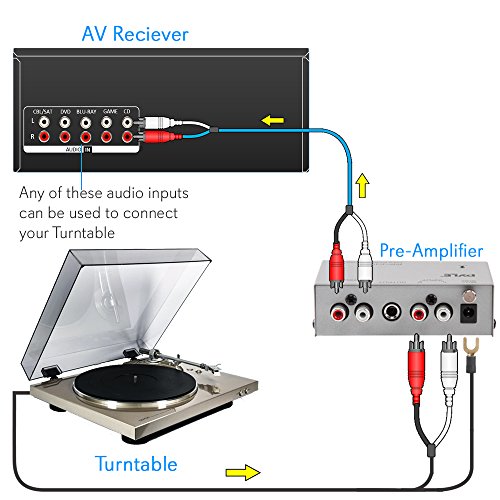
    There are two main classifications of amplifiers for record players. One of which is the phono preamplifier, an amplifier specific to vinyl players. The second type is called the outboard preamplifier, a more common type of amplifier. (source)

    This article will explore the preamplifier, the need to have one, the types of amplifiers you can buy for your vinyl records, and some of the preamplifiers we recommend.

    What Is An Amplifier?

    If you have some knowledge regarding audio equipment, you should know that an amplifier is essential. Maybe a close friend said so, or a stranger from the internet told you such, that does not matter. However, while many people know the importance of the amplifier, many do not understand why it is essential in the first place.
    In this section of the article, let us talk about the following topics to help you understand the basics of amplifiers. Aside from the types of amps for turntables, we will also talk about the importance of amplifiers. Additionally, we will be touching upon essential subjects, such as the differences between an amplifier and a preamplifier, and more!

    The Importance Of An Amplifier

    Before we proceed with the importance of an amplifier, let us first understand the definition of what an amplifier is. An amplifier is a device that, you guessed it, amplifies the electrical signal to increase either or all of these variables. (source)

    Amplifiers can amplify the following:

    • Power
    • Voltage
    • Current

    An amplifier is very helpful in a variety of fields. However, for this article specifically, we will be focusing on its uses on audio equipment with a more specialized view on vinyl record players. 

    So how do amplifiers work specifically for turntables, and what are the types of amps for turntables? Well, an amplifier works mainly by exaggerating audio signals. To put it simply, it is like “screaming a whisper.”

    Suppose that you are an “amplifier.” At one instance, someone whispered something into your ears, and you, the amplifier, screamed it out for everyone to hear. By exaggerating signals, amplifiers help audiophiles and casual listeners enjoy music at a more audible range.

    So what about the person that whispered into your ears? What is their role in a vinyl record player? Well, they are what we call your record player’s cartridges.

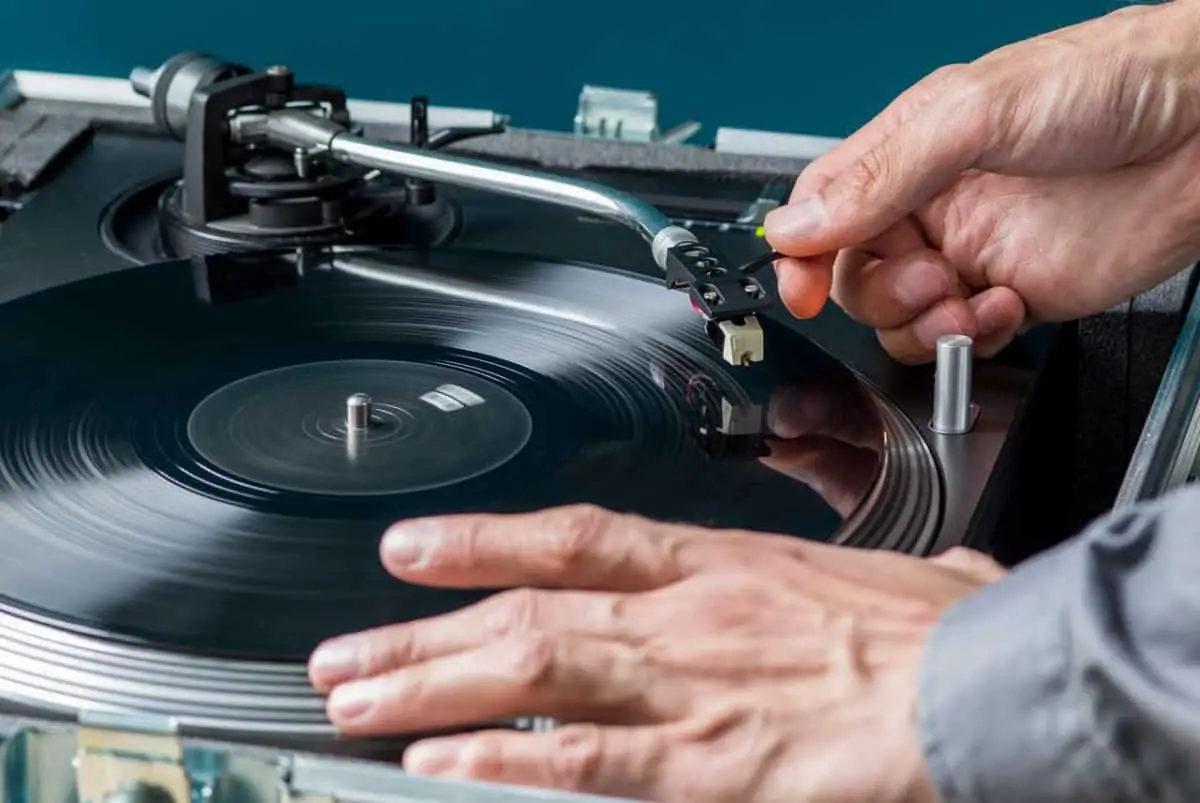
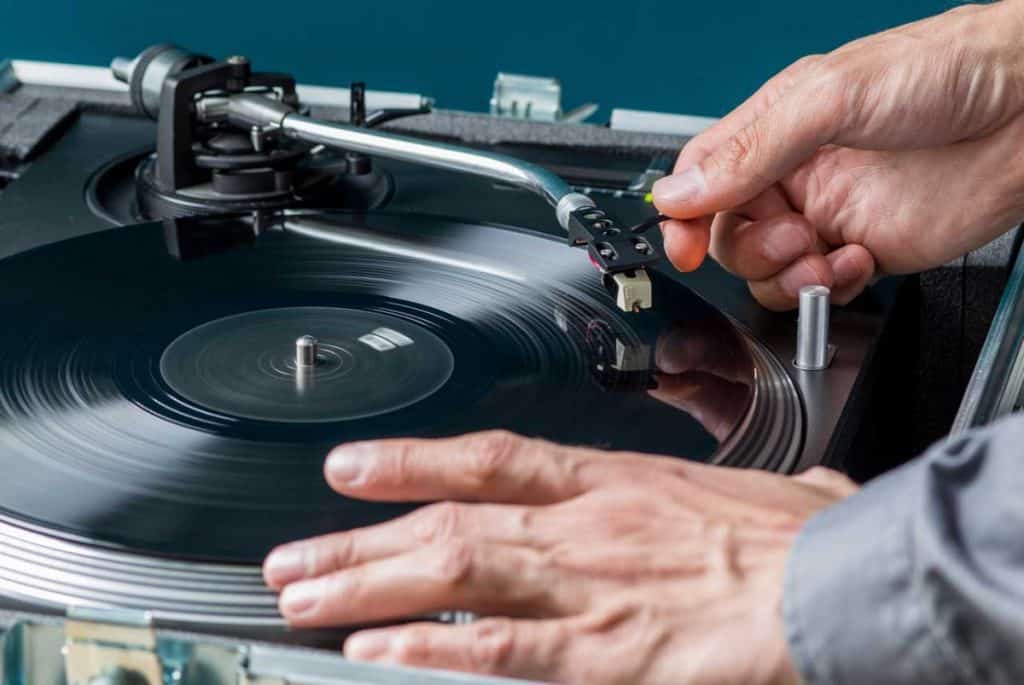
    Cartridges are gadgets you can find at the tip of your turntable’s tonearm, and most often, they also house the needle. The audio signals read by the stylus (needle) from the vinyl records will go through the amplifier, which will amplify the signal into the speakers for you to hear.

    How Does An Amplifier Amplify Signals?

    An amplifier amplifies signals by taking power from a power supply. By doing this, the relatively low-power signal of your record player’s cartridge is amplified and strengthened for the speaker.

    Since amplifiers amplify and strengthen signals, they may cause distortion and some noise. However, this does not outweigh the benefits of running an amplifier, as, without it, it will be virtually impossible actually to have a good listening experience.

    The Duality: Two Types Of Amplifiers

    Earlier, we discussed the two types of amps for turntables. Although considering both as amplifiers (despite both identifying as preamplifiers), their differences are still staggering.

    The two types of amps for turntables are:

    • Phono Preamplifiers
    • Outboard Preamplifiers

    In the following section, we will be differentiating the two and why you need not only one but both of them. So, let us not waste time and get started, shall we?

    Phono Preamplifiers

    Record players are complex machines, and to further understand the concept of phono preamplifiers and try to explain the types of amps for turntables, we must first grasp the concepts behind the vinyl record players.

    There are four significant concepts that you will need to understand regarding vinyl record players. These are the following: (source)

    Why Vinyl Records Need Phono Preamps

    • Vinyl record players rely on the physical artifacts stored in-between the grooves inside the vinyl to read the data and transform said data into audible audio.
    • Vinyl record players use the stylus or needle to do the “reading” process.
    • Needles are a part of a more extensive system called a cartridge, which produces electrical signals. Although these electrical signals are vital, they tend to be too weak. 
    • Because the electrical signals are feeble, a phono preamplifier fixes this problem.

    A phono preamplifier’s (phono stage) function is most often to amplify signals. Still, because of this ability, the effects of such amplifications transcend from just “mere amplifying” to other skills as well. For example, because of the phono amplifier, you can now connect your turntable to sound systems such as speakers and other amplifiers, just like how you would with other audio sources such as 3.5 mm jacks and microphones. (source)

    Preamplifiers Versus Amplifiers: Does The “Pre-” Make A Difference?

    Ah yes, the confusion is due to two things having almost the same names. It reminds me of the “lead as in leader and pencil lead” confusion we once had in college, but that’s irrelevant. However, many people tend to associate two things together just because they sound similar.

    Okay, I get that both preamplifiers and amplifiers are amplifiers, but in reality, their functions are different as they tackle problems on different levels. First of all, we must understand that the preamplifiers are “pre-” for a reason: they handle ground-level situations while the amplifiers handle system-wide issues. (source)

    At this point, let us first forget the types of amplifiers for turntables and let us first understand what preamplifiers are. Let us know firsthand the limitations of your vinyl records as to why a preamp is needed. With turntables (excluding those with built-in preamplifiers), most people must grasp that record players themselves are not responsible for the sound that comes out of your speakers.

    The process is made out of different components helping out together. Preamplifiers are mainly responsible for amplifying the electronic signal from the amplifier to be on par with other audio sources. Then, the amplifier amplifies the sound for it to be audible to the human ear.

    Amplifiers Versus PreAmplifiers:

    • Amplifiers handle and amplify the sound from sound sources such as microphones and other preamplifiers.
    • Preamplifiers boost audio signals of audio sources with weak signals (i.e., guitars and vinyl record players) to be on par with other sound sources.
    • Both amplifiers and preamplifiers are essential.
    • Both are prone to distortion.
    • A preamplifier’s quality will significantly impact the output of your vinyl record, so choose wisely!
    • While preamplifiers strengthen electrical signals to line-level, amplifiers advertise line-level signals by an even more significant margin.
    • Separating preamplifiers and amplifiers is crucial due to temperature concerns.

    Now that we know the two types of amps for turntables, let us proceed to the following topic: the editor’s recommendations.

    Meeting The Best Of The Best: Phono Preamplifiers Edition
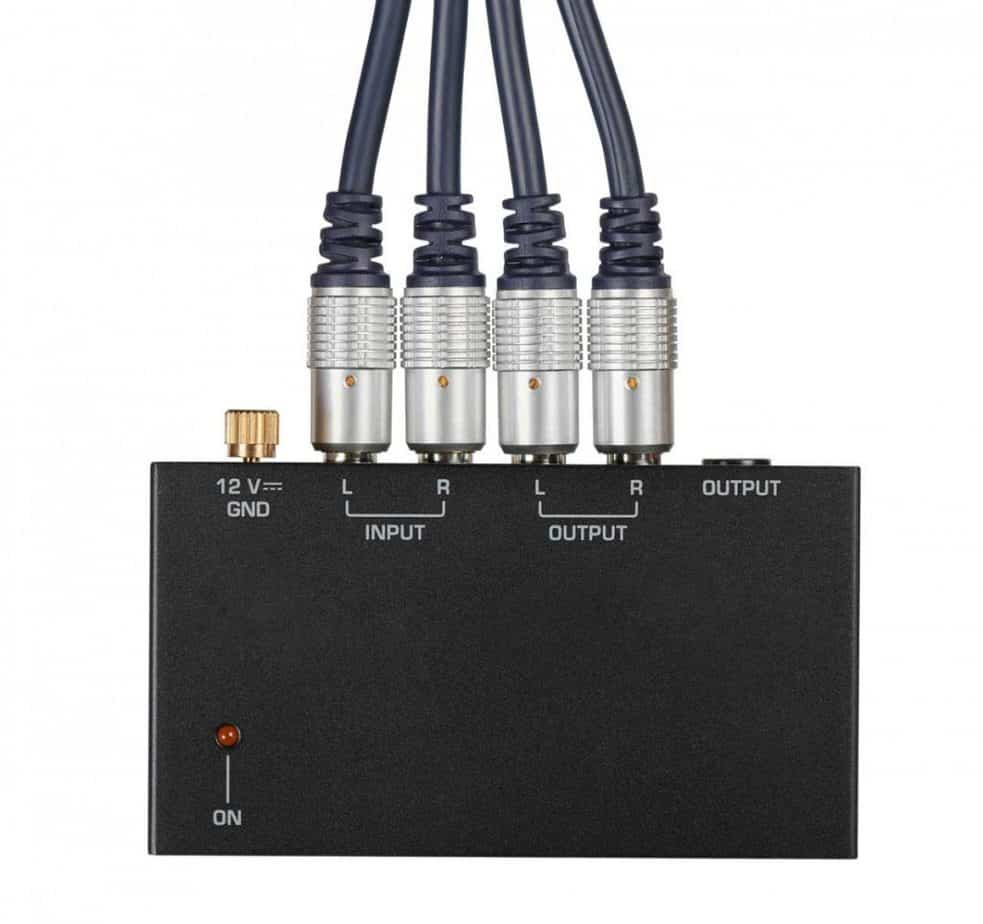
    Phono preamplifiers, as discussed earlier, is one of the two types of amps for turntables, and in fact, is an essential one at that

    Phono preamplifiers, as discussed earlier, is one of the two types of amps for turntables, and in fact, is an essential one at that. As a quick review, phono preamplifiers are line-level amplifiers that help your vinyl record player enhance and amplify the signals from the cartridge for it to compete with other sound sources. However, even though phono preamps are considered a must-have, do you need to buy one, or should you skip this one?

    Can I Skip Such An Essential Product?

    Of course, without a phono preamplifier, it will be tough to make use of your vinyl record player. However, what if I tell you that there is a possibility that you might have one already? Yes, even if you specifically did not buy one, you might have one lying around.

    Aside from the two types of amps for turntables, there are also other types of phono preamps: the built-in phono preamp and the external preamp. If you are not aware, your vinyl record player might have a built-in phono preamp already, so you might want to check with your manufacturer or with the product specifications. (source)

    You Might Still Want To Buy A Separate Phono Preamp

    Now that we have discussed the possibility of you having a built-in preamplifier, now let us discuss the reasons as to why you might consider buying a separate one, even though you may already have a built-in one. In this section of the article, we will discuss the differences and the rationales you might have for buying a separate phono preamp.

    First of all, there is the elephant in the room: quality. Of course, most dedicated phono preamplifiers are much more high quality than the built-in ones as most of them use cheaper materials such as circuit boards and resistors. Moreover, since they use a smaller form factor, a sacrifice might have been made for miniaturization. (source)

    Not all phono preamplifiers that are built-in are subject to such constraints. However, unless you are using the most high-end vinyl record players, you can bet on your money that the built-in phono preamplifier is a significantly stripped-down version of the external phono preamplifiers.

    Here Are The Key Takeaways Why You Might Want To Consider A Dedicated Phono Preamplifier

    • Built-in amplifiers generally have lower quality sound
    • Most built-in amplifiers make use of cheaper component
    • The smaller size of built-in options suffer from problems related to miniaturization
    • Most dedicated phono amplifiers are more durable

    Phono Preamplifiers: Our Recommendations

    They say phono preamplifiers are a vinyl record player’s best friend, who, by themselves, is an audiophile’s best friend. Of course, you would want only the very best for your vinyl record player. Here are the types of amps for turntables that you would like for your very own.

    Baseline Phono Preamplifiers For The New Audiophiles: Pyle Phono Turntable 

    Let us be honest, people, not all can shell out a hundred bucks for a phono preamplifier and call it a day. Some can only afford the bare minimum, but that does not mean that their experiences should be the bare minimum as well, as we believe that there are two types of amps for turntables: the trashy ones and the good ones. Nothing in there says anything about price, so do not fret.
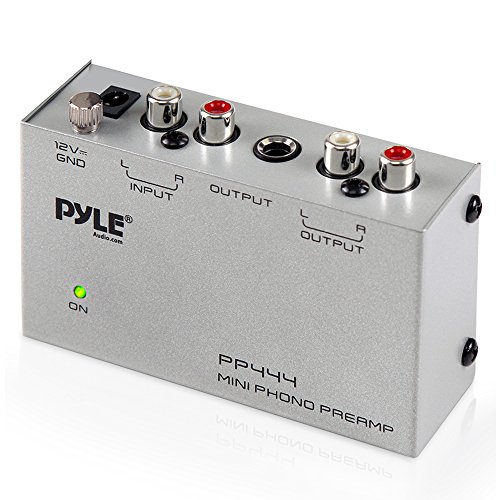
    Pyle Phono Turntable Preamp - Mini Electronic Audio Stereo Phonograph Preamplifier with RCA Input, RCA Output & Low Noise Operation Powered by 12 Volt DC Adapter (PP444)

    We think it would be only appropriate to offer a cheap yet nice-sounding product: the Pyle Phono Turntable Preamplifier for the new audiophile and the audiophiles on the budget. For the tech-savvy, here are the specifications. (sources)

    Pyle Phono Turntable Preamplifier (PP444) Specifications:

    • Powered by a 12 Volt DC Adapter
    • RCA Output
    • RCA Input
    • It has a green LED indicator
    • Input sensitivity of 3 mV at 50k ohms

    Pyle Phono Turntable Preamp - Mini Electronic Audio Stereo Phonograph Preamplifier with RCA Input, RCA Output & Low Noise Operation Powered by 12 Volt DC Adapter (PP444)

    Well, let us not fret upon the specifications, as all of these will not be more than moot if it sounds like trash. So for a $17 phono preamplifier, does it sound like its price? Well, truthfully, it does not sound like something above $100, but it is much better in comparison to other phono preamplifiers at its price range. (sources)

    Pyle Phono Turntable Preamplifier (PP444) Sound Signature:

    • It offers excellent sound quality in the bass range, creating a tight, round bass quality.
    • It falls off when it comes to the mids and the highs, so instruments like the snare drum and the vocals are generally more washed-out when compared to high-end phono preamplifiers.
    • Compared to phono preamplifiers of its price range, it can be considered as excellent, a satisfying fit for a money-pinching audiophile.

    Although the Pyle Phono turntable preamplifier (PP444) offers excellent sound, there may be concerns regarding its durability. For a $17 to 19 dollar offering, I would not expect much either. Looking at the silver lining, we can see its very generous warranty of one whole year, enough for you to judge it out. 

    This type of amp for turntables is modestly suitable for those looking for great basses and are not too concerned with the ultra highs and those who involve themselves with classical music. Below is a list of its recommended genres to listen to together with our affiliate link.

    Genres Recommended For Pyle Phono Turntable Preamplifier:

    • Suitable for most rap songs and modern rap
    • Ideal for music with a lot of bass guitar
    • Not too good with percussions, especially with snare drums
    • It is not suitable for classical music or any very treble-heavy music.

    Buy the Pyle Phono Turntable Preamplifier Here: Buy It Here!

    High-End Phono Preamplifier: Pro-ject Tube Box S2

    Seeing that you are still reading this article means that you do not lack cash, nor are you willing to skimp out for phono preamplifiers. Well, here it is, our recommendation for the high-end segment: the Pro-ject Tube Box S2.
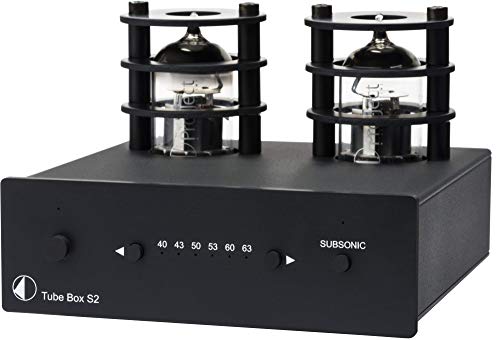
    Pro-Ject Tube Box S2 Phono Preamplifier - Black

    The Tube Box S2 is a passion project by the Pro-ject, exemplified by its design, capabilities, and output. An intelligent design comes with quirky internal architecture, allowing it to be absent of operational amplifiers or OPAmps while coming in with replaceable tubes for tube rolling and sound-shaping. Below, we dictate its list of features. (source)

    Pro-ject Tube Box S2 Features:

    • Allows the replacement of tubes for flexible listening.
    • Has no operational amplifiers
    • Suitable for MM and MC cartridges
    • Dual mono circuitry
    • Robust high-voltage anode power supply
    • Gold-plated RCA inputs and outputs
    • Sports polystyrene capacitors
    • Ultra-low noise circuitry

    Again, now that we have discussed the specifications let us proceed with the real-world performance. How does it sound, and does it sound good? As a disclaimer, the sound performance will heavily vary with your setup, so your experience may not be holistically representative of yours. (source)
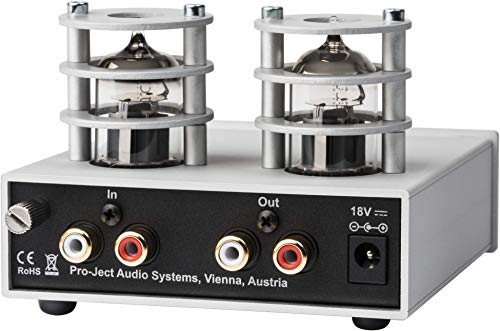
    Pro-Ject Tube Box S2 Phono Preamplifier - Black

    Pro-ject Tube Box S2 Sound Signature:

    • Because of its variable tubes, the sound signature will be varying.
    • It has a very smooth and warm sound.
    • Produces a rich, pleasant sound with no audible downsides

    In conclusion, if you have the money for it, the Pro-ject Tube Box S2 will impress you with its output. However, that does not mean that you can’t experience good quality music without the Pro-ject Tube Box S2. As I said earlier, there are two types of amps for turntables: good ones and bad ones. No one says that just because something is cheap, it is terrible, nor just because something is expensive, it is automatically good.

    If the Pro-ject Tube Box S2 tickles your fancy, then please we highly recommend you buy it. Buy it now with our affiliate link here: Buy It Here!

    Highly Anticipated Questions

    1. Do Phono Preamps Affect Sound Quality? 

    When it comes to turntables, everything affects the sound, even the material used for your turntable. Some may affect the overall sound output more than others, and the phono preamp is undoubtedly one of the significant reasons a turntable may turn out fantastic or a plain disappointment.

    1. What are the differences between a solid-state preamp and a tube preamp?

    A solid-state preamp uses transistors and operational amplifiers (Pyle), while tube preamps use vacuum tubes to amplify (Pro-ject).

    1. Does the tube preamp sound better?

    Of course, the sound output is always in the ear of the beholder. However, it is most often associated with a more warm sound signature, so whatever floats your boat, buy that one.

    https://www.devotedtovinyl.com/whats-the-best-amp-for-a-turntable/
    https://www.sweetwater.com/insync/amplifier/
    https://www.audioadvice.com/videos-reviews/what-is-a-phono-preamp/?__cf_chl_captcha_tk__=pmd_Pj5ag1yvUgEIYmLnMjMEoWIBBX6TFJXYI4P2PAQATOI-1631527313-0-gqNtZGzNAuWjcnBszQi9
    https://blog.andertons.co.uk/labs/preamp-vs-power-amp
    https://toprecordplayers.com/built-in-preamp-vs-external/
    https://www.whathifi.com/best-buys/accessories/best-phono-preamps
    https://www.analogplanet.com/content/19-pyle-phono-preamp-anything-crap
    https://www.amazon.com/Pyle-Phono-Turntable-Preamp-Preamplifier/dp/B004HJ1TTQ/ref=sr_1_1?dchild=1&keywords=Moon+110LP+v2+phono+stage&qid=1631609792&sr=8-1
    https://www.project-audio.com/en/product/tube-box-s2/
    https://vinylrestart.com/pro-ject-tube-box-s2-review/
    https://www.amazon.com/Pro-Ject-Tube-Box-Phono-Preamplifier/dp/B075KPB1P2/ref=pd_sbs_4/134-5383634-3524100?pd_rd_w=ftsbc&pf_rd_p=3676f086-9496-4fd7-8490-77cf7f43f846&pf_rd_r=1WPDRV00XZY116AYQ88H&pd_rd_r=ee305d0d-288a-4e80-9926-d6db40c7ae98&pd_rd_wg=QKpLS&pd_rd_i=B075KPB1P2&psc=1
  • How To Define A Pressing Of A Record

    How To Define A Pressing Of A Record

    If you have ever seen or, better yet, held a vinyl record before, you will likely notice the texture on its surface, with grooves so defined you can feel them at every caress. Just like any curious mind, you might want to ask how these patterns are implemented into the vinyl record. We also had the same question as we had to ask ourselves: how do they define the pressing of a record?

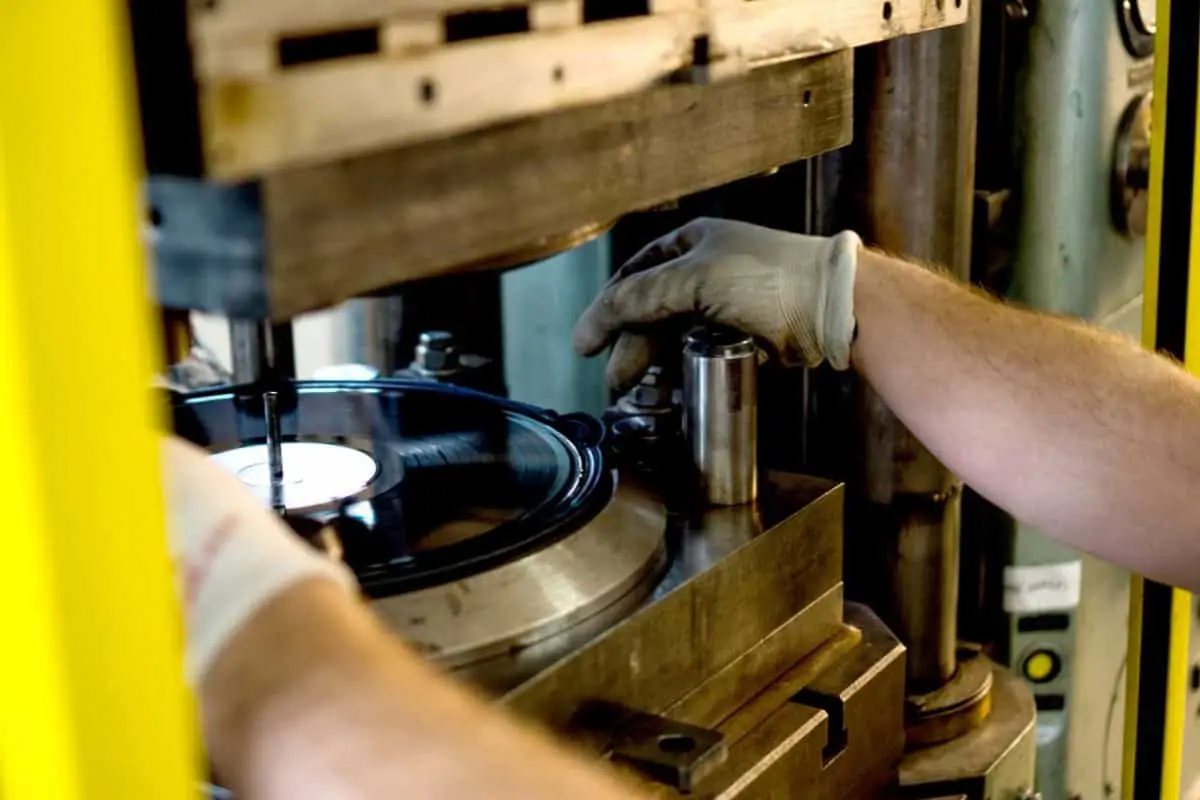
    There is an intricate process dedicated to defining the pressing of a record. The pressing of a record involves many smaller, intrinsic processes, and it requires heat and a master disc. (1)

    What is a master disc, and how exactly are vinyl records made? We will talk more about that in this article and the importance of the “first press.”

    How To Define A Pressing Of A Record

    You may be thinking of doing a homemade vinyl pressing service, or you are probably just curious. Either way, the fact remains that pressing a record is a complicated, intricate process involving a lot of technical knowledge, especially if one desires to mass-produce a record.

    First, we may want to talk about why we need to define our records before asking how to define a record’s pressing. I mean, we could observe how compact discs work without grooves. Why do vinyl records need defined patterns, unlike compact discs?

    One significant difference between a vinyl record and a compact disk is that a compact disk is a digital format, meaning that it relies on data stored as ones and zeroes to replicate music. For the case of a vinyl record, however, they utilize the patterns within the disc. The reason behind this is that vinyl records need the pattern to transcribe the stored data into audio.

    At this juncture, let us talk about the main point, which is”how to define a pressing of a record” once again. Undoubtedly, the manufacturers don’t use needles by hand and start scratching the vinyl surface, do they?

    In this article, we will talk about the process of defining the pressing of a record. We have formulated a step-by-step list to help you understand the process thoroughly.

    1. The Audio

    Before we get to the part where we define the pressing of a record, we should first settle the audio. After all, no one can create good vinyl records without good audio. Because of this, specialized audio engineers collaborate to create a perfect blend of music, specifically mastered to fit with the vinyl record’s standards.

    There must also be precision and passion other than the instruments or the vocalists used in the audio. Moreover, a constant mindset of attention to detail is needed while working with vinyl records. While the vocalists and instruments need to be pitch-perfect for their job, the audio engineers must also be very meticulous to avoid errors, distortions, and audio skips. (1)

    2. The Formation Of Master Discs

    Next, we look at the master discs. Master discs, or lacquer, are like molds that enable vinyl records to be mass-produced. It would imply that no, vinyl records do not get scratched by hand at a recording studio.

    What happens first is a master disc must be produced to quickly replicate vinyl records, ensuring that each one that goes out of the recording company is up to standard and are up to par with industry standards. (2)

    Before producing the final master disc, it goes through multiple test cuts to ensure no problems arise, creating a domino effect on the production chain. Fun fact: instead of grooves, master discs have creases instead.

    During the cutting process, problems may arise, especially when it comes to the range of the audio on hand. For example, powerful basses and trebles may create technical issues. Moreover, powerful basses can heavily hamper the recording time and reduce it significantly, as basses require deeper grooves. (1)

    However, if you think that that is all with the process, the truth is that we are far from it. At this stage, the master disc is too vulnerable to damage and is, therefore, reinforced with strengthening materials.

    Going back to the process of pressing a record: now you know that to define a record, you must first use a master disc.

    3. The Pressing Stage

    Now we are in the most awaited part: the pressing stage. However, before we proceed, engineers must first test out the master disc to mitigate possible errors. If the errors fail detection, then errors after mass production will incur heavy losses to the record companies.

    After the testing phase, the pressing and the manufacturing stage follow. Liquefied pellets help to produce the vinyl, creating a patty-like form.

    After this stage, the master disc is ready to be put to good use. Using stampers from the top and the bottom, they stamp the creases from the master disc and reinforce them to create grooves in the vinyl records. They may use pressure that can rise to more than a hundred tons and heat the presses at temperatures higher than 200 degrees Celsius. (1)

    4. Labels And Packaging 

    Label and packaging are one of the most manageable parts of the process as they are not as volatile compared to, say, the vinyl records themselves.

    First, they will need to contact artists that may do the label’s artwork or a graphic designer that will incorporate designs together to create a coherent piece. More often than not, this process will happen way earlier compared to the whole “pressing” process.

    After the design, labels and packaging are printed, cut, folded, glued, and sealed to be ready for shipment. Despite not being a relevant answer to: “How to define pressing a record,” it is still a very integral part of the vinyl record experience.

    What Is The First Press And Does It Matter?

    So what is the first press exactly? The first press refers to a set of vinyl records produced using the first pressing of a master disc. The definitions of the first press vary heavily and are a cause of debate within the vinyl community.

    Some may refer to the first press as the “first pressing,” while some may refer to it as the “first issues.” However, one thing that stands clear is a point of agreement between these parties, and that is that the first presses “sound way better” than the latter presses.

    Another reason collectors and audiophiles prefer first pressings can boil down to another variable: the materials. These determined collectors have noticed that the materials used for first pressing vinyl records are significantly more durable than later pressings. They have justified this as they have pointed out that first pressings contain more material than later pressings. 

    The Frequently Asked Questions On Defining The Pressing Of A Record

    How Do You Define The First Pressing Of A Record?

    Some savvy audiophiles are very determined to find out whether a specific vinyl record is the first pressing or not. They have many ways of doing so. One of the key takeaways that will tell us whether something is first pressing or not is the labels.

    Since each manufacturer uses a different labeling format, we cannot give you a magical guide for first presses. It means that if you are determined, you might need to do a lot of heavy research regarding the origins of your vinyl records, together with their manufacturers.

    How Many Vinyl Records Can Be Made Within A Day?

    A company in New York named Brooklynphono has claimed to have made 300 records per hour. However, the numbers will heavily vary per company’s resources. (2)

    Can Vinyl Records Be Stereo, Despite Being Analog?

    Yes, vinyl records can both be mono or stereo. Analog signals can be split into dual channels, or a stereo signal in other words.

  • Putting A Penny On A Record Player Finally Explained!

    Putting A Penny On A Record Player Finally Explained!

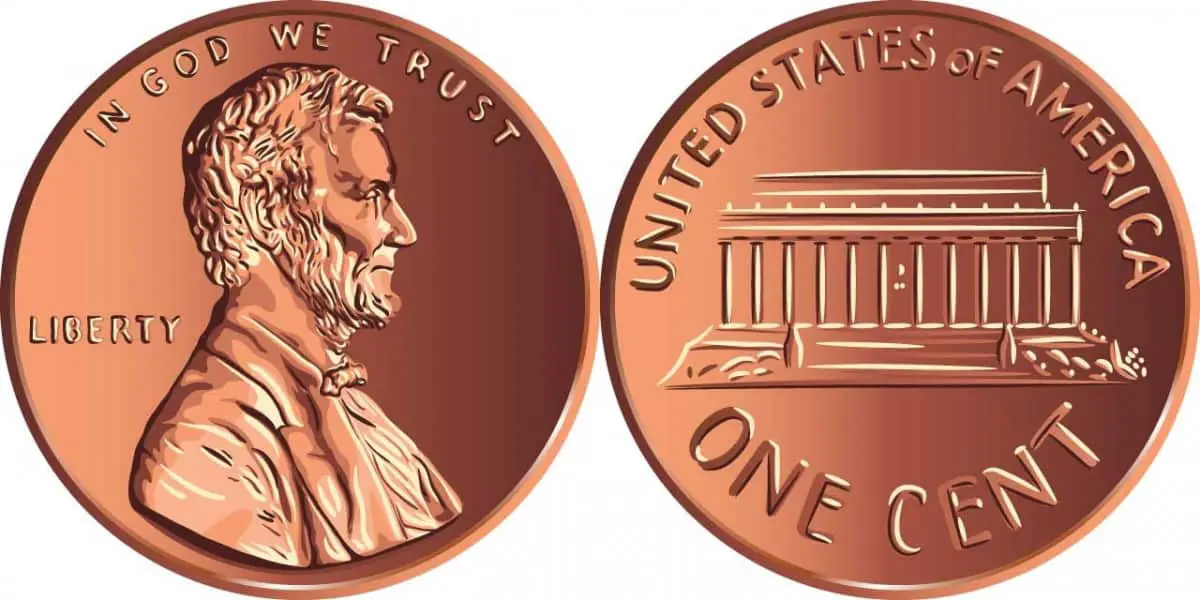
    As a child, I was always fascinated with the penny on top of our turntables. This fascination was not because of its peculiar position but because I wanted to grab that penny and use it to buy candy. However, today, I am still plagued by the same question for a different reason: why do we put them there in the first place?

    Pennies can act as an anchor, helping ground the needle or stylus to the vinyl record. This “penny on the record” action usually happens when the needle in the turntable is already damaged or has suffered some stress, causing it not to thread to the vinyl’s grooves properly.

    Read on to find out more about putting pennies on a record player. 

    What’s The Rationale?

    A turntable and a vinyl record are excellent mediums for listening to your favorite music tracks. However, the trouble with them is that they are not necessarily the most durable, nor are they degradation-free. Unlike the modern digital MP3s, which do not degrade and can be listened to from device to device, vinyl records, due to their analog processes, are heavily affected by physical changes and manifestations due to stress.

    Due to this, many people encounter problems regarding vinyl records, from record playback issues to issues within the hardware itself. Even worse is that these hardware problems may manifest themselves from the external and internal components of the turntable to the vinyl itself. One of the banes for these turntables is the needles.

    The turntable needles are an intricate part of the turntable, which, when harmed, can heavily affect the overall quality of the audio. We must understand how the needle of the turntables work and slowly work ourselves up to the central question of why there are pennies on a turntable.

    What’s With The Needle?

    A turntable’s needle may look like one of the most boring things out there, but trust me, it is much more interesting than it seems. There is a lot of science within that needle’s tip, especially considering it needs to work hand in hand with different types of vinyl records.

    We already know that the grooves in a vinyl record are essential as it holds the information which will then transform as the music we hear from the turntable. However, not many people question the process of how the transmuting of the physical grooves into audio works, not realizing that the needle is the show’s star. 

    As the turntables turn the vinyl at a constant pace, the stylus touches the surface of the vinyl as it trudges through the grooves of the vinyl, bouncing along the groove. What happens is that the vibrations created by the grooves get changed into electric energy and are transformed then as audio, the same music we hear with our ears. (2)

    Now that we know the importance of the needle or stylus, let us discuss why there are pennies on your record player– most specifically on top of the needle’s cartridge.

    Why Was The Penny There?

    Pennies are acting as anchors that help ground the needle or stylus to the vinyl record. This “penny on the record” action usually happens when the needle in the turntable is already damaged or has suffered some stress, causing it not to thread to the vinyl’s grooves properly.

    When the needle is not grounded correctly, troubles may arise, such as skipping tracks or the stylus not detecting the grooves on the vinyl. Because of this, people tried to solve the issue by putting some “weight” on the needle. It was a penny, probably because it was the easiest thing to find that had consistent mass.

    There are other use cases as to why the penny was there too. It didn’t necessarily have to do with a broken needle in the turntable; sometimes, it had something to do with the vinyl or parties (yes, the kind of party you are thinking of).

    In clubs where a lot of movement is present, the turntables’ needles may jump off from one groove to another, causing it to skip a track. This “jumping tracks” action is a problem for obvious reasons. Additionally, some deejays do this to create some scratch or gritting sound to the overall mix.

    However, one of the main reasons many people put pennies on their turntables’ needles is that the vinyl records they have been using have sustained some damage that can increase the likelihood of it jumping a track. These damages have manifested from different variables. For example, some vinyl damage is not necessarily considered as damage but does cause audio distortion. 

    One of the most common examples is when some dirt or solid matter is in the vinyl record itself. When this happens, make sure to clean the matter with appropriate tools such as a carbon fiber record brush. In my experience the carbon brushes are the best cleaners for dust and light debris. However, when using coarse materials, make sure to do the cleaning operation with intense care.

    Another possible reason as to why a track may randomly skip is due to record damage. When this happens, sometimes, putting a penny on a record player can help, if not fix the problem as a whole. However, we do not guarantee that a simple penny will solve all your needle-related, skipping-inducing problems.

    To Put Or Not To Put, That Is The One Cent Question!

    Although the tradition of putting a penny on a record player has been practiced way before our time, that does not mean that it is a perfectly safe practice. It is quite the opposite. To the question, to put or not to put, we highly recommend you not to put.

    There is a reason why the practice of putting a penny on a record player is not as common as it used to be: and one of the primary reasons? It is just not that good in the long run, especially for your record player, as it may be very detrimental to your record player’s health, and even to your vinyl record as well!

    Let us talk about what happens when we put a penny on the record player. When a penny stands at the stylus, its weight drags down the entire needle mechanism, which in the short term, helps you prevent unwanted skipping. However, it can induce unnecessary stress in the long run, which may damage the record player. Especially if you find your record player unreplaceable, you might want to double think about putting a penny on your record player’s stylus. (4)

    Another problem that is induced by the penny is putting unnecessary stress on the vinyl record itself. What does this imply, exactly? When extra pressure is placed on the needle, this is distributed directly to the vinyl, damaging the grooves.

    The grooves are an integral part of a vinyl record as it is the grooves that represent the song inside the record player. Damage to the grooves would mean that the track inside the vinyl record will be altered forever! How horrifying is that?

    The actual biggest reason why you should reconsider putting a penny on a record player is that record players have an adjustable knob that accomplishes the same things as a penny, minus the external stress. It will save you time and effort, but it will also save you from a lot of stress.

    Instead of weighing the pros and cons of a penny on a record player, you should use the built-in features of the record player itself. It will surely help you with the problems related to track skipping.

    Frequently Asked Questions About Pennies On A Record Player

    Do Record Players Have A Warranty?

    While these policies may vary from the distributor to the manufacturer, most record players have a one-year warranty covering all problems related to factory defects.

    Is It Normal To Put A Penny On A Record Player?

    While this was considered as standard practice back in the day, in contemporary times, this is no more than an unnecessary practice that may induce possible damages to your record player or record.

    What Should I Do If My Stylus Is Damaged?

    If it is due to factory defects, contact your distributor to avail your warranty. Moreover, you can also visit an expert to handle the problem better. If it is beyond repair, you might need to buy a new one.

    Sources

    1. https://ilovemusic.edu.in/blog/turntable-needle-stylus-guide/
    2. https://forums.stevehoffman.tv/threads/for-those-who-play-vinyl-do-you-tape-a-coin-to-the-arm-of-your-record-player.94491/
    3. https://dvdyourmemories.com/blog/how-to-prevent-skipping-on-your-vinyl-record-lp/
    4. https://www.dubstepforum.com/forum/viewtopic.php?t=152595
  • The Reasons Why Turntables Have Two Tonearms

    The Reasons Why Turntables Have Two Tonearms

    Most turntables have one tonearm. However, you might also notice that some turntables have two, three, or even *gasps* four tonearms! How is this exactly, and why do some turntables have two (or more) tonearms?

    Tonearms are crucial to developing a specific tone whenever a vinyl record is played on a turntable. As such, some people may have two or more tonearms for the sake of convenience, sound quality, or both.

    In the article, we will be taking a deep dive into why some turntables have two tonearms and try to answer if you need more tonearms than what you already have. Let’s get tuning!

    What Is a Tonearm? Why Is It So Important?

    Before discussing how some turntables have two or more tonearms, let us first discuss what a tonearm is. After all, we can only talk about something we truly understand. If you already know what a tonearm is, you can skip directly to the appropriate sections.

    A tonearm is functionally a supporting part of a turntable that helps hold the cartridge in the correct position of a vinyl record. The tonearm is very important as it maintains the cartridge and the needle at the perfect height at the right angle. Without a properly functioning tonearm, it would be virtually impossible to use your record table. (1)

    Many people, even some audiophiles, may not know this, but the tonearms play an integral part in creating a unique signature within a record player’s output. We will later discuss the undeniable changes observed within different tonearms when discussing the two tonearm situation within the higher-end turntable units. 

    Why Do Turntables Have Two Tonearms?

    A turntable having two or more tonearms is not unusual, especially when surrounded by an avid audiophile community or especially if that person is an audiophile themselves. However, to the newbies to the audiophile community or the casual listeners out there, having a turntable with two, three, or even four tonearms is undoubtedly a spectacle! This section of the article will answer the question: “Why do turntables have two tonearms?”

    The Sound. It All Boils Down to the Sound.

    If you ask any audiophile what the most crucial aspect of a turntable, an instrument, or audio technology in general, most of the time is, they would answer “the sound quality.” With that in mind, it is no surprise to know that one of the primary reasons some turntables have multiple tonearms is due to an audiophile’s particular attitude to sound quality. So why is this actually, and how does a tonearm have such a drastic effect on the sound quality?

    First, let us understand that there are many types and genres of music. While some musical pieces may have many trebles, vocals, and an unspeakable amount of stringed instruments, some musical genres, especially the pop, EDM, and dance genres, rely on synthetic sounds and heavy booming bases. Moreover, while most modern songs include vocals, some music tracks and pieces, especially classical and instrumental music, do not contain any vocals.

    What does this imply? It means that it would be tough to make a “one for all” outstanding audio equipment that would produce music at all those varying genres and still provide the best output possible. Notice how speaker systems have tweeters, woofers, and subwoofers for different sound frequencies, which are required to produce the best audio quality possible.

    This analogy can also be replicated within turntables and tonearms. Some tonearms and cartridges are more functional or create better-sounding audio with a specific range of music genres or frequencies. So instead of swapping the cartridges and the tonearms whenever using a track, by using multiple tonearms, this work of switching and turning is significantly reduced. (2)

    Some tonearms and cartridges are also attributed to the decade or era when a music style came out. For example, while “tonearm A” performs better on ’90s disco-pop, “tonearm B” might work better in the ’20s and ’30s jazz eras. Fascinating, isn’t it?

    The next time you find yourself asking why turntables have two tonearms, remember: “sound quality is key.”

    A Choice of Convenience

    While some audiophiles will willingly do the “multiple tonearm situation” for the sake of sound quality, some do it for the sake of convenience. As said earlier, some cartridges and tonearms perform better under different musical genres and musical styles. So instead of switching the cartridges every time you pull up a vinyl record, you would have to use the other tonearm. (3)

    However, this is not the only use case though. Some tonearms, needles, and cartridges are very expensive. It would mean that it would be unwise to use them often or on old or possibly damaged vinyl.

    In this type of scenario, having two tonearms– a cheaper, older one and a newer, more premium one, can help preserve the integrity of your new and superior needles, tonearms, and cartridges. It allows you to use the subpar tonearm on possibly damaging tracks while using the delicate tonearms and vinyl records on the newer setup.

    Mono vs. Stereo Debate

    For this topic, let us back up a bit and take a history lesson. First, you must realize that the “all too normal” stereo audio was not “so normal” back in the day. Stereo didn’t even exist for the vinyl records. The structures of the grooves on the vinyl records were much simpler and less complex than the stereo technology we take for granted today.

    Indeed, stereo arguably does sound better. However, this is not for all situations. Despite stereo offering a more immersive experience, some songs and vinyl records sound better in mono audio format.

    We must first understand that mono and stereo vinyl records have different structures. As such, when songs recorded in mono are made a much more “better” stereo version, it ends up being worse (like non-spatial audio native music is repurposed and reformatted for spatial audio formats).

    In these situations, it would be better to have two tonearms, one specializing in stereo, the other specializing in mono. It is so that when mono native songs are played, they can utilize the specialized mono tonearm. (2)

    However, this does not mean that stereo cartridges and tonearms do not play mono vinyl records. The catch is that since they are not made for mono, they will indeed sound worse. The mono and stereo debate is undoubtedly one reason why turntables have two tonearms (or more).

    “Do I Need the Extra Tonearm?” and Other Frequently Asked Questions Answered

    Do I Need The Extra Tonearm?

    If you find yourself very particular with the sound quality, then the additional tonearm might be worth it. However, if you are very content with what sound output you have on your current setup, you might not need the extra tonearm. Save yourself some bucks, as when you start hearing better audio quality, you will never go back. 

    Why Do Different Tonearms Have Different Sound Signatures?

    The reason why most tonearms have different sound signatures is less of the tonearm itself but because of the cartridge used. However, the tonearm does play a function, such as its length.

    It has been said that longer tonearms are less susceptible to distortions within the inner grooves. However, shorter tonearms have a lesser mass which can be beneficial as well. (2)

    How Many Tonearms Can A Turntable Hold?

    It depends. However, we do recommend you do your research when expecting multiple tonearms. For example, some turntables do not allow multiple tonearms.

    Another point of contention is that you must also consider the space available within your turntable. Moreover, the angles needed for proper tonearm positioning must also be taken into consideration.

    Sources

    1. https://magazine.vinylmeplease.com/magazine/hows-whys-and-whats-tonearms/
    2. https://www.vinylchapters.com/turntables-two-tonearms/
    3. https://www.whatsbestforum.com/threads/multiple-tonearms.2007/
  • Yikes! This Is What Happens If You Drop A Vinyl Record

    Yikes! This Is What Happens If You Drop A Vinyl Record

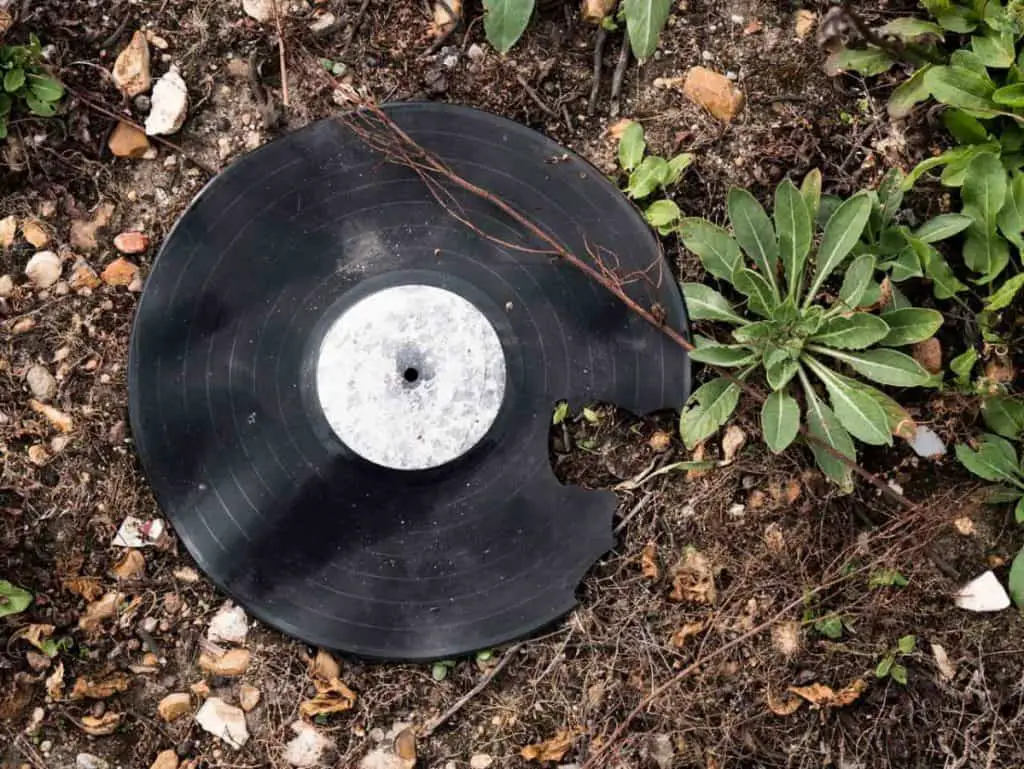
    Despite vinyl records being more than a century old, they are still highly regarded today as the highest-quality audio storage material, mainly because it is highly analog. However, with that in mind, this means that physical damage to vinyl records can heavily hamper or degrade their sound quality. Here, we try to determine what happens if you drop your vinyl records.

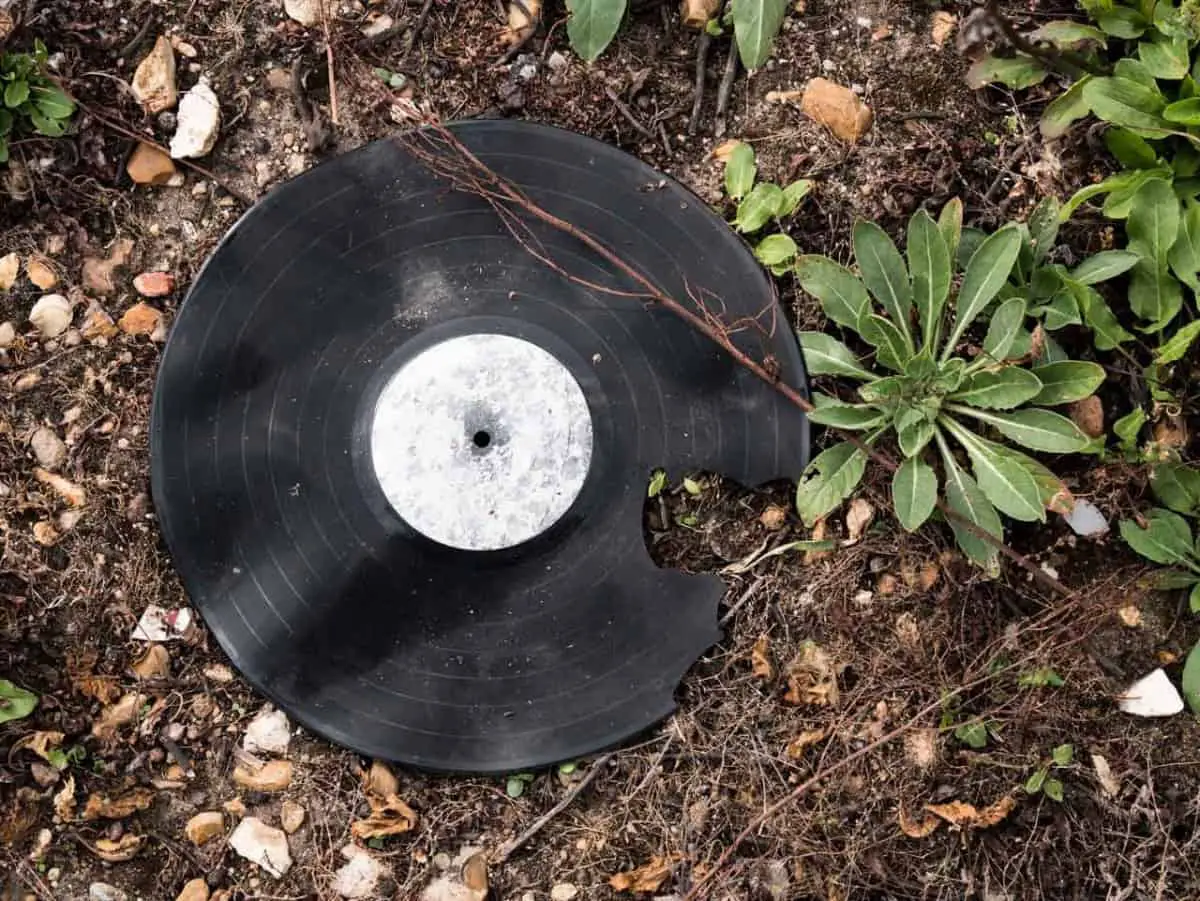
    Vinyl records can take a lot of stress before eventually breaking into pieces. However, it does suffer damage during falls, especially if it falls on pointed objects that may scratch the vinyl record’s surface.

    This article will discuss the implications of dropping a vinyl record and cover other elements that may degrade or damage a vinyl record.

    What Happens If You Drop A Vinyl Record

    What happens when you drop vinyl records? Does it magically just fall off and not mind the external stress, or does it just break off into oblivion? Well, the answer to that is somewhere in between.

    Unlike its predecessors, the current vinyl record is much more durable. It takes a considerable amount of force to break it. However, it does suffer damage during falls, especially if it falls on pointed objects that may scratch the vinyl record’s surface.

    Compared to modern vinyl records, shellac is a brittle substance, making them unreliable for long-term audio preservation. If you drop shellac on the floor, it will probably break. Just like that, a precious piece of audio is now lost to external damage.

    On vinyl records, the damage doesn’t come very quickly. That is the reason why you can still find antique vinyl records that still deliver on their sound quality and experience. Compare that to a five-year-old compact disc; you might notice how the compact disc is forever affected by slight scratches, with the majority of the scratches not caused by dropping but instead are just caused by sand rubbing on the surface of the compact discs.

    One of the significant factors that may affect your vinyl records heavily when dropped is when they hit pointed objects like rocks, which may cause scratches. Despite not being completely cut into pieces, these scratches may still make the listening experience unbearable. (2)

    Why Scratches On A Vinyl Record Matter (And How To Prevent Them)

    Scratches were always an enemy of physical music storage options, from the easily broken VHS tapes to the digital compact discs, and yes– even vinyl records. For vinyl records, in particular, scratches are a massive blow to the quality of the sound. This section of the article will discuss why scratches are a big deal and prevent them from happening.

    Vinyl Is Analog

    Earlier, we have discussed how the analog part of vinyl records makes it one of the best audio storage options available. Since vinyl records have music engraved on their physical structure, it does not need to be compressed. MP3s, on the other hand, will need to be compressed for music streaming to efficiently cater to a massive crowd of people listening to their mobile devices simultaneously.

    However, this unbeatable quality preservation feature of analog comes with an enormous cost: its vulnerability to physical changes. Since vinyl records rely on their physical structure to reproduce music, any alterations to the grooves will likely change music as well, especially if the alterations are scratches and the scratches are deep.

    To understand this better, let us first know how a vinyl record works. A needle creates the grooves on vinyl records, used to represent soundwaves. They are then replayed utilizing a needle (again), using a transcription process, which transforms these grooves and transforms them into signals that you can turn into audible audio. (3)

    Since scratches will change the physical form of the vinyl record, the transcribed audio will not be the same as the original recorded audio. More often than not, the artifacts of these physical alterations will be nothing more than popping sounds, which hampers the listening experience heavily.

    So what happens if you drop a vinyl record? Most often than not, you will do more than creating scratches and some physical damage. You will also hamper the overall audio quality, despite not having the vinyl record snapped into pieces.

    The Threat Of The Scratches Rely On How Severe They Are

    It is more than obvious how the depth of the scratches will have variating impacts. For example, a small hairline scratch may have a lesser effect when compared to deep grooves across the board. However, it may be best to look at each type of scratch one by one.

    A basic scratch severity test can be conducted to know the degree of the said scratch. Try running your finger through the scratch, and if you can feel it through your skin, most probably, the scratch will have a detrimental effect on the sound output of the vinyl record.

    When these types of scratches appear, you may hear a “clicking” sound in your audio, an audible artifact of the degrading integrity of the vinyl. However, other scratches like those that do not have much tactile feedback will have minor effects on the overall integrity of the audio. However, you may still hear differences in output. (3)

    With this in mind, it is imperative to keep your vinyl records from being damaged, which brings us to the next topic in question: the preservation of your vinyl record’s integrity.

    Let us go back to the main question, shall we? So what happens if you drop a vinyl record? The answer will rely on the scale of damage.

    Preserving the Integrity of Vinyl Records

    Preserving the integrity of the vinyl record is vital to maximizing the listening experience. After all, despite vinyl being not portable, expensive, and very clunky, its listening experience is enough to convince audiophiles to continue using the format. It makes the preservation even more vital than it initially seemed.

    One way to preserve your vinyl records is not to drop them. Moreover, keeping them in proper storage spaces will help increase the lifespan of a vinyl record by a significant margin.

    Many people may not know, but one of the leading causes for scratching vinyl records is improper handling and storage and not dropping. Of course, proper storage is not only defined by having the presence of a record cabinet but also by ensuring that the environmental variables are well under control. 

    For example, high temperatures can cause your record to warp its shape. Moisture can facilitate the growth of mildew and molds that will heavily degrade the vinyl record’s integrity. (4)

    However, one of the real threats to the preservation of vinyl records lies within your very hands. which means it is your very own hands. Touching vinyl for no appropriate reason or carelessly caressing it even though dust is present in your palms can affect your vinyl records significantly. Moreover, some natural excretions of human skin, such as oil and sweat, can also affect vinyl integrity.

    Frequently Asked Questions: Vinyl And Integrity 

    What Is The Leading Cause Of Vinyl Record Damage?

    Although dropping and moving vinyl can impact the record’s integrity, the leading reason for vinyl degradation is high temperatures. Moreover, worn-out needles also come second. Unnecessary touching and high humidity come in third and fourth, respectively. (4)

    If you are concerned about your vinyl record’s integrity, make sure to keep them away from extreme conditions. It will make sure that your vinyl records will serve you for years and years to come.

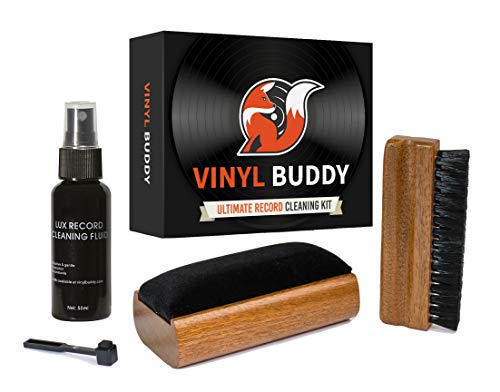
    How Can I Clean My Vinyl Records Without Damaging Them?

    To clean your vinyl records straight out of the gate, avoid do-it-yourself solutions. Instead, grab a lint-free cloth and wipe them. Apply cleaning solutions appropriately.

    Vinyl Buddy Record Cleaner Kit 5 Piece Ultimate Cleaning System - Velvet Brush - Nylon Microfiber Brush - Stylus Brush - LP Cleaning Solution - Storage Pouch

    How Long Do Vinyl Records Last?

    It highly depends on how one handles their vinyl records. While some may only last for a couple of years, those handled with extreme care will last well over a lifetime.

    Sources

    1. https://recordplayerexpert.com/do-vinyl-records-break-easily/
    2. https://www.vinylrecordlife.com/how-vinyl-records-get-scratched-and-how-to-avoid-it/
    3. https://victrola.com/blogs/articles/how-do-vinyl-records-work
    4. https://recordplayerexpert.com/the-biggest-threat-to-vinyl-records/
  • Do Turntables Require Subwoofers?

    Do Turntables Require Subwoofers?

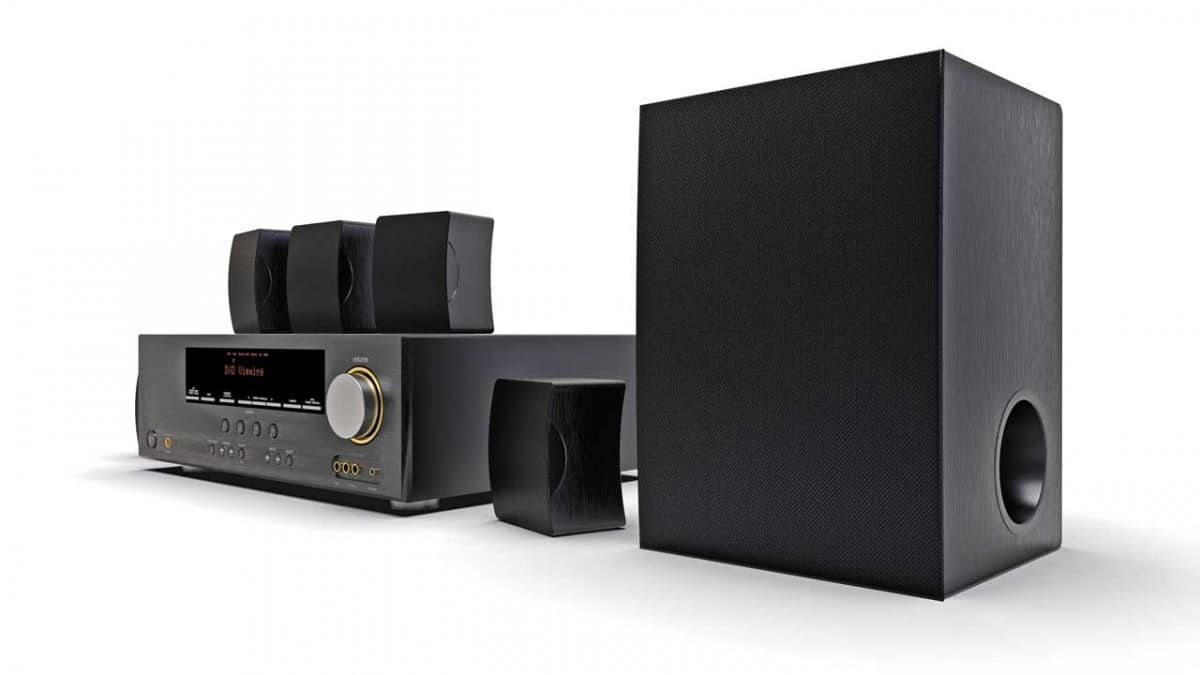
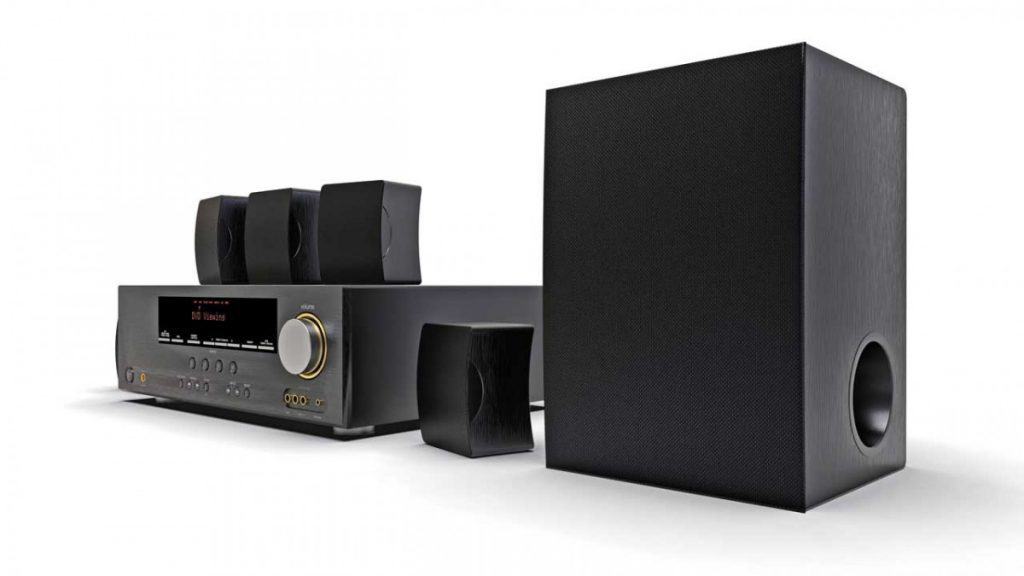
    Do turntables require subwoofers? Let’s find out. Turntables or record players are types of audio equipment renowned for their crisp sound, lossless audio, and most important of all, the vintage experience. However, a turntable is nothing if paired with speaker systems that have subpar capabilities and configurations.

    Subwoofers are not a required purchase for vinyl record players. However, we highly recommend you buy one because you’ll enjoy the rich bass tones of your record’s audio.

    If they are not required, then why exactly are subwoofers recommended? This article will answer all those questions, and to ensure peak experience, we delve into the unknown and try to answer the question, “Do turntables require subwoofers?”

    Do Turntables Require Subwoofers? Here Are The Answers.

    There is a chance that you might have seen it on your friends’ setup, and they swear to the audio gods that a subwoofer is worth it– worth every cent. You’ve seen the articles saying the same thing as well, but still, as critical as you are, you are making sure that you will not be making hasty, impulsive purchases. So what is the deal, really, and do your turntables require subwoofers, or are they just a fad?

    Subwoofers are not a fad, and they generally bring fantastic value to your whole audio setup. However, determining if that value is worth it for the price is generally more complicated. Many reasons may stop or discourage you from buying subwoofers.

    You have a system tailor-made for your preferences, a perfect treble, the right amount of bass, and the crisp mids and vocals. If you find yourself ideally in line with your current setup, then, by all means, we recommend you to keep your money and spend it on something else. Subwoofers generally help your system sound better, but if your tweeters and woofers are already fulfilling that gap, to begin with, then there is no good reason for you to buy one. (1)

    You might need to know that subwoofers are extensive audio equipment, more prominent than your woofers, and even more extensive than your tweeters. I am sure that you already know this for a fact, but still. If you find your listening room (if you have one) already cramped as it is, it may be better not to buy a subwoofer.

    However, it is pretty unfair to only talk about the reasons why you might not consider buying a subwoofer. The reasoning behind this is because subwoofers do offer unreplaceable value to you, your ears, and your audio equipment! Your woofer may finally love you like the deep ends of audio will now be redirected to a piece of more suitable equipment.

    If you like listening to bass-heavy music, especially modern pop music and jazz music, I must tell you that buying a subwoofer is especially recommended. Subwoofers help flaunt the deep bases and well-rounded lows. They can significantly help your sound system provide a more holistic sound, and generally, bases are fun to listen to.

    If you find your current system lacking those deeper ends, then we suggest you buy a subwoofer for your setup. On the contrary, if you prefer classical music or more music focusing on acoustic guitars, strings, and pianos, buying subwoofers may be a waste of your most essential resources: time, space, and money.

    We suggest that you think about things thoroughly before buying them. When you are ready, answering the question: “Do turntables require subwoofers?” should be more straightforward.

    What Is A Subwoofer Exactly? And Is It Important?

    Subwoofers are precisely like a Doberman’s “woof.” Not only are they humongous, and some even take up twice the size of a regular woofer, but they also make big, deep sounds. The sound they make is what the Beats earphones lineup would like to copy (although failing horribly at it). For short, they are all about the bass.

    There are three major divisions in a speaker system: the tweeters, the woofers, and the subwoofers. You may be tempted to say that the subwoofers are redundant if you have woofers because they are practically the same. I will have to tell you that such conjecture is incorrect politely, and we will explain why that is the case later.

    What Is A Tweeter? Do I Need One For My Vinyl Record Player Setup?

    If you came to ask me if you need a tweeter for your setup, the answer is a quick and resounding yes. Unlike the subwoofer, getting the tweeter is a no-brainer. There isn’t much to say about this.

    To explain why that is, let us first understand what a tweeter is. A tweeter is the exact opposite of the subwoofer; not only are the tweeters small, but they are also in charge of the high-frequency audio in comparison to the subwoofer’s low-frequency tones.

    They are very critical as most vinyl record player owners typically prefer vintage, classical stringed music with fantastic vocals. The common denominator between most vintage music, classical music, stringed instruments, guitars, and great vocals is that they heavily rely on the tweeters.

    That’s right! All of that music is handled mainly by the small, minuscule tweeters! So if you are thinking of skimping your budget on tweeters– well, just don’t! 

    The tweeters are mainly in charge of audio frequencies ranging from 2 kHz to 20 kHz for the technicalities. So if you are a full-on audiophile, you may want to consider buying excellent tweeters for superb audio reproduction! (3)

    Subwoofers Vs. Woofers: The “Woofing” Comparison!

    Now we are finally here: what’s with all this “woofing?” Is there a difference between a woofer and a subwoofer? Well, let us discuss that, shall we?

    First, let us get their similarities before comparing them with each other. Both woofers and subwoofers focus on the basses, and both are relatively large (the tweeters are dwarfed next to them). 

    However, despite their similarities, if you ask me, “do turntables require subwoofers, or do they need woofers more?” I would likely side with the woofers on this one.

    Subwoofers offer narrower ranges of sound frequencies. While woofers may produce 20 Hz to 2 kHz sound frequencies with a hitch, a subwoofer may only be comfortable with frequencies up to 200 Hz. Although the woofer may not necessarily sound better than subwoofers, woofers have more flexibility. 

    As you can see, their ranges are starkly different. As a recap, a woofer is a specialized speaker for lower frequencies, while a subwoofer is a specialized woofer. (4)

    If Subwoofers Are So Inflexible, Why Recommend Them Then? 

    It seems that we have circled back to the original topic, “Do turntables require subwoofers?” Well, the thing is, since subwoofers are specialized, they are not of great value in all situations. However, they do offer great importance to those who need them.

    Despite woofers also covering the ranges of the subwoofers, the subwoofers are so specialized with the lower range that they practically produce significantly better lower range outputs than woofers do. As said earlier, if you have many low-ends on your vinyl music tracks, then subwoofers become an easy recommendation!

    Frequently Asked Questions

    Do Turntables Have Speakers?

    No. Most turntables do not have speakers built-in. Because of this, we recommend hooking up high-quality audio systems to provide justice to your vinyl speakers.

    If you want a very convenient experience, you can also buy Bluetooth speakers, as they are more versatile and easier to set up! However, do note that some speakers do not have built-in amplifiers, so you may also need to consider that.

    Do I Need Two Subwoofers For My Record Player Setup?

    No. Buying one was already a stretch for some people. Although some may benefit from it, “need” is a pretty strong word if you ask me.

    Is It Better To Have A Separate Subwoofer?

    Of course! If you find money not a huge issue and would like to invest in your audio equipment, buying a subwoofer should be a no-brainer. 

    Sources

    1. https://www.vinylengine.com/turntable_forum/viewtopic.php?t=54588
    2. https://www.klipsch.com/blog/what-are-subwoofers-and-why-do-you-need-one
    3. https://soundcertified.com/what-are-tweeters-what-do-tweeters-do/
    4. https://wooferguy.com/difference-between-woofer-and-subwoofer/
  • This Is How Tight A Turntable Belt Should Be

    This Is How Tight A Turntable Belt Should Be

    Turntables (or vinyl record players, depending on how you see them) are complicated machines. They aren’t as easy to use as “press play” with your iPods, iPhones, and DVD players. Because of this, we bumped on the question regarding how tight a turntable belt should be.

    The key to determining a turntable belt tension is balance. The grip must not be too tight that it hampers the overall mechanism and creates too much friction, but not too loose that it won’t work at all.

    In this article, let us tighten our seatbelts and know how tight a turntable belt should be and the processes to determine that.

    What Is a Turntable Belt in the First Place?

    Before we try to answer how tight a turntable should be, we should first learn to define what a turntable belt is. So really, what is a turntable belt?

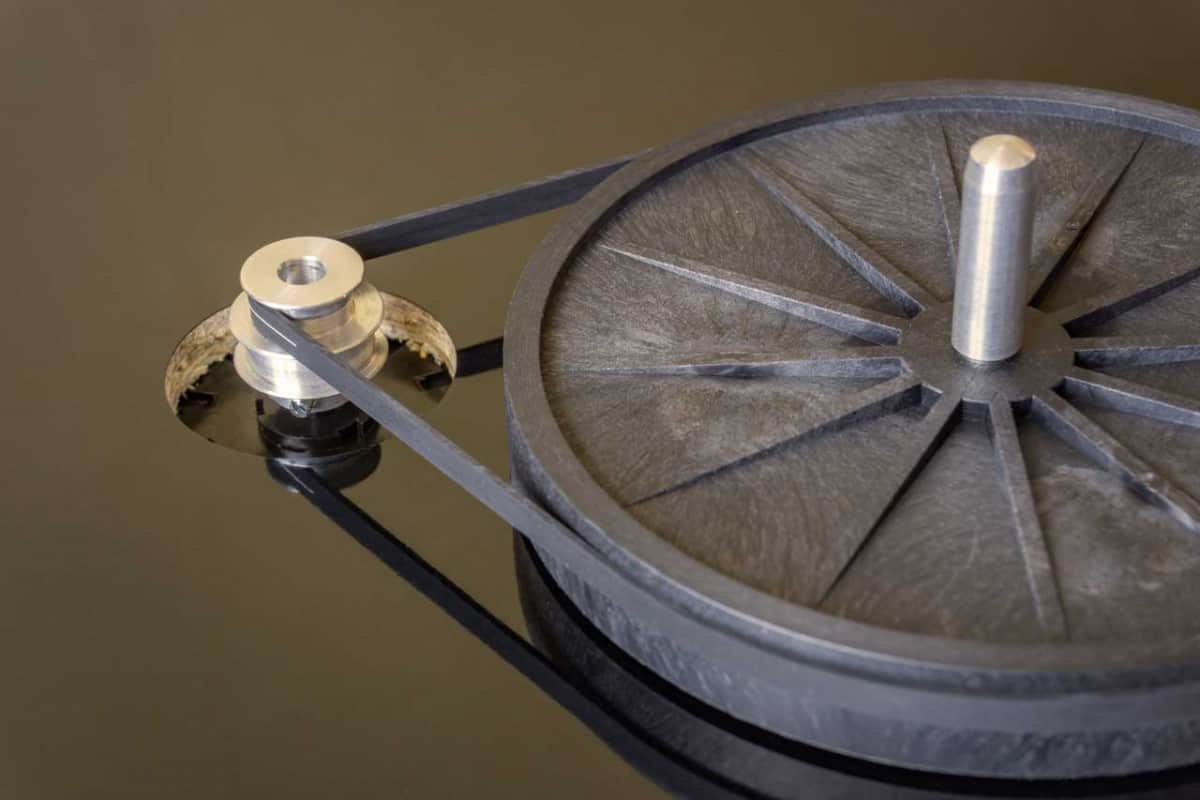
    Turntable belts are essential parts of belt-driven turntables but are nonexistent on direct-drive turntables. Essentially, the difference between belt-driven turntables and direct-drive ones is that the belt-driven employs turntable belts as methods to rotate the platter. The direct-drive ones instead use a motor to drive the plater, thus eliminating the need for belts. (1)

    Turntable belts are essential parts of belt-driven turntables but are nonexistent on direct-drive turntables.

    For a belt-driven turntable, the belts are required for the cartridge to navigate through the vinyl record, which ultimately helps the record player read data and express it in the form of sound. If you use a belt-driven turntable, you will know added complexities to using such technology. One of the added complexities is exemplified and amalgamated in the very question of how tight a turntable should be.

    Balance is Key: How Tight a Turntable Belt Should Be

    Turntable belts are essential parts of belt-driven record players, and assuring their appropriateness is critical for better sound quality and stabler feedback. Despite its essentiality, many audiophiles still find themselves lost in their turntable belt’s “appropriateness.” As such, we have tried to ask ourselves the same question as well.

    In questions like these, it is pretty hard to define a quick and precise answer. However, we have specific guidelines that will help you answer how tight your turntable belt should be. 

    A key to understanding how the standard goes is to know that a turntable belt is off balance. Some turntable belts are thicker, while others are thinner, so knowing this “balance” is crucial to override such differing factors. As such, we have defined the general guidelines below.

    Turntable belts must not be too loose that it loses its grip, as a loose turntable belt is no more valuable than a wisp of air trying to lift a log of wood. Moreover, you must also ensure that it is not too tight, as doing so imposes the risk of interfering with your turntable’s operations. To know the appropriate tightness, ensure that the turntable’s platter rotates consistently and smoothly without any hitches or signs of stress. (2)

    We most often recommend having your turntable belts tighter rather than loose. However, we always remind other audiophiles that having turntable belts too tight may damage your equipment, so make sure you are going on the right track.

    Speaking of damage, the stress induced by tight turntable belts will heavily impact the mechanisms, the motor used for rotating the belt, or the bearings, and more. Additionally, it can cause your turntable to result in a complete halt of operations, with repairs costing you many times the original price of the belt. (2)

    Size Matters

    We always remind our fellow audiophiles to have a suitable diameter of the belt for their turntables. It can prevent extra stress on the record player while still reducing the possibility of loose installations.

    There are five standard belt diameters to be considered for your record players. Make sure you have the right one. The standard diameters are the following: 128 mm diameter belts, 150 mm diameter belts, 172 mm diameter belts, 206 mm diameter belts, and 300 mm diameter belts.

    So the next time you view some of the available diameters for turntable belts, make sure to constantly assess it using the general guidelines, as this is how tight a turntable belt should be.

    Why Do People Still Use Belt-Driven Turntables?

    If you have not realized already, direct-drive turntables offer a much smoother, less clunky experience than belt-driven ones, and as such, offer a more direct and easier-to-navigate experience. With the belt-driven turntables having significantly larger moving parts compared to the minuscule motors of the direct-drive turntables, many have turned to ask why there are still belt-driven turntables in the first place.

    The Price Matters

    Since the direct-drive record players use a smaller approach to their technology implementation, it will also bear the cost of miniaturization. Simply put, all of that technology and all that engineering marvels required to make the package a little bit smaller and less clunky will obviously drive up the cost of the overall product. Because of this, it is most evident that the direct-drive ones are significantly more expensive than the belt-driven record players.

    Other reasons aside from the engineering driving up the cost are also the inherent cost of the belts compared to motors. Unlike the less complex belt, motors are intricate and complex mechanical components used in many machines today.

    As It Is With Most Audiophiles: It Sounds Better

    Of course, the main reason why many opt to buy belt-driven turntables is the sound. For most audiophiles, one of the most quintessential qualities or variables of audio equipment should be sound quality. In the case of belt-driven and direct-drive record players, simply put, audiophiles prefer the sound produced by the belt-driven record players. (3)

    So why exactly do belt-driven record players sound better than direct-drive record players? The true answer: engineering. Inherently, motors are said to be much noisier than belts, and for a piece of audio equipment, any unnecessary noise is a huge variable that can affect sound quality significantly. Unlike the motors, belts run smoother, thus eliminating or at least mitigating any excessive noise.

    Although the belt-driven turntables do sound better, they still have a sense of clunkiness, as explained by the constant queries “How tight a turntable should be, and more.” Speaking of clunkiness, this leads us directly to our next segment.

    Where the Direct-Drive Record Players Win

    As stated earlier, direct-drive record players and turntables are often much less clunky than their belt-driven counterparts. However, these are not the only variables and features that direct-drive record players have significantly improved upon from their belt-driven predecessors.

    Most DJs use direct-drive record players simply because it allows them to change where the record players turn. It will enable them to achieve the signature DJ “scratching” sound. (3)

    Moreover, the smaller moving parts incorporated in these players also last longer than the belt of the belt-driven turntables. Unlike the more stable motors, belts have greater chances of failing and will need more frequent maintenance at the same time.

    Turntable Belt Frequently Asked Questions

    How Do I Preserve The Integrity Of My Belt-driven Turntable Belts?

    To preserve the integrity of your turntable belts, make sure to always check them once in a while, and make sure you are using the appropriate diameter and the appropriate thickness. Moreover, we recommend everyone not wait until the turntable belt is completely unusable before replacing the belt.

    How Do I Replace My Turntable’s Belt?

    Replacing a turntable belt is no mentally intensive exercise, nor is it physically exhausting. We recommend you remove the rubber mat first as this exposes the belt. After that, lift the platter.

    The belt will then be exposed fully, and we will need to replace it. Grab your new turntable belt and put it on the bottom of the platter, aligning it to the inner circle. Slowly slide the platter upside down and put it back to the turntable, returning all the removed parts.

    How Often Should I Replace My Belts?

    We recommend replacing them every three to five years, depending on the mileage.

    Sources

    1. https://en.wikipedia.org/wiki/Direct-drive_turntable
    2. https://allforturntables.com/2021/07/09/how-tight-should-turntable-belt-be/
    3. https://www.wise-geek.com/what-are-turntable-belts.htm
  • A Review On Thorens Turntables: Are They Good?

    A Review On Thorens Turntables: Are They Good?

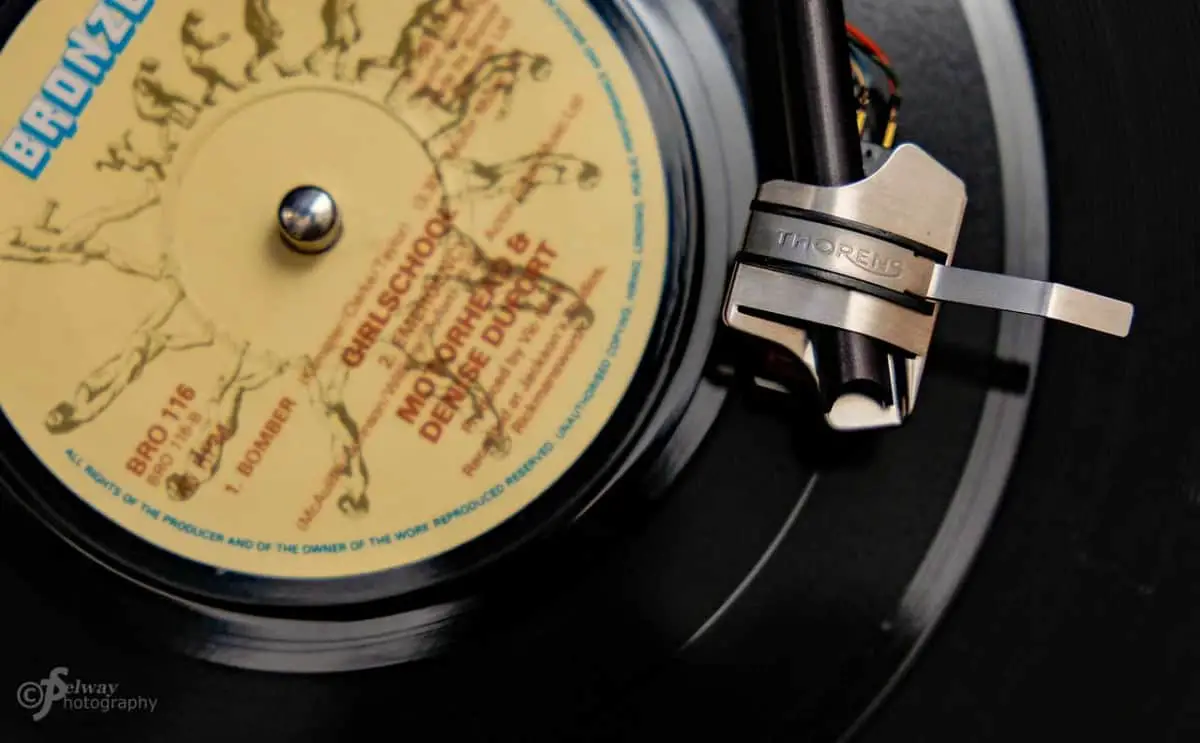
    Thorens is a renowned brand that produces an extensive range of phonograph models (turntables). However, does its products hold up to its name, or does its reputation precede it? This article will talk about a general review on Thorens turntables: are they good?

    Thorens is an old brand, so it would be proper to assume that reviewing their whole lineup in a single sentence does not grant justice as to what they are worth. However, they are a reliable brand, albeit the price.

    To get a holistic view of Thorens’ lineup, we have viewed community opinion as well as detailed reviews. Let us see how they hold up then.

    A Review On Thorens Turntables: What Do The Experts Have To Say?

    Thorens have made such a wide range of products up their catalog that it would be virtually impossible to finish this article if I had looked up every single one of their lineup. First of all, they started in the early 1900s and had their first electric turntable product up by 1928. Just thinking about reviewing all their products from 1928 makes me dizzy. (1)

    In this section of the article, let us look at what the experts have to say. Moreover, we will also be looking back at memory lane and getting you a general overview of their lineup.

    A Trip Down Memory Lane

    As stated earlier, Thorens had produced and released their first electric turntable way back in 1928. However, the truth is that they had started the Thorens brand as a family business way back in 1883 and had produced musical boxes before they started with the phonographs. They had only started producing turntables in 1903. (1)

    However, when they started producing these electric record players, they were so successful that even until today, their vintage record players are still rated as high-end record players. Imagine the prestige of being called high-end even after more than 50 years after release. That is a true legend out there, I tell you.

    However, for Thorens, life wasn’t a rosy path. Instead, it was a quite thorny one, as, despite their cost-reduction efforts in 1997, their debts were too big to ignore, forcing them to be absorbed into a more prominent company.

    Now, let us talk about the Thorens in the current time. How are their products holding up? Let’s ask the experts. 

    What Do the Experts Have to Say?

    When it comes to product reviews, who is the best to ask other than the audiophiles– or the experts themselves? In this section of the article, let us talk about what the experts had to say and what their Thorens turntables review.

    First, I had to look up “What Hi-Fi?” had to say regarding Thorens turntables. To debrief you on “What Hi-Fi?” really is, first founded in 1976, “What Hi-Fi?” is a leading website that helps consumers select the highest grade hi-fi products.

    While reviewing one of Thorens’ products, “What Hi-Fi?” has mentioned how the company has been a trusted manufacturer, having their origins be more than a hundred years in the past. This heritage, according to them, makes Thorens’ products highly reliable while also commenting on their excellent build quality as well as their innovative design. (2)

    Thorens’ turntables are known to have a classic design, no alien-like form factor, no highly unique features. Still, they are exemplary at things that a turntable or record player considers as the most essential. They give you the basics, without the unnecessary fuss, but all the creamy basics.

    As a high-end brand, expect Thorens’ turntables to be much more expensive than your usual 300-dollar threshold. However, with the reliability and peace of mind they bring, you surely won’t regret it.

    When looking at their vintage and new models, you might be shocked to look at the pricing. More or less, your bank may call you after a “suspicious” purchase on your credit card. After all, a 3000-dollar purchase is quite a hefty one. (3)

    Unless if you are an extreme hardcore audiophile, shelling out more than $300 on a turntable may not be worth it. First of all, untrained ears will get highly diminished returns as the prices of the turntables go higher. However, if you consider yourself to be quite the audiophile, then in more words than one, be my guest too but a Thorens turntable.

    Thorens is known for its unique sound mix, and for sure, they will sound more than better than the turntables you can buy at less than $300. However, you can also try to search for other cheaper alternatives with the same drive or quality of sound as Thorens.

    Thorens 125th Anniversary LP

    A Review on Thorens Turntables: What the Community Has to Say

    Although individual expert opinions have unbeatable value and reliability, nothing beats community opinion. In this section of the article, we will be looking at what the community thinks about Thorens record players and how they fare in terms of pricing, design, and sound. In particular, for this section, we have researched our findings by using a plethora of community forum-style posts from Quora, Reddit, and Stack Exchange to find out the consensus of enthusiasts such as you and me.

    Finding Consensus

    After rigorous reading through community comments, we have found out the consensus for Thorens isn’t so “general,” and the community cannot seem to find an agreement per se. However, we have seen some patterns that may help you understand what the community thinks of Thorens.

    To understand this phenomenon, let us first understand that Thorens is an old company, and as a long-running company, it is tough to create an all-successful lineup. As a result, the opinions of their old, vintage record players differ significantly, especially compared to their newer lineups.

    The Divide

    The divide in public opinion is defined when we look at their vintage record players. The vintage Thorens turntables are most often viewed as top-tier choices while also giving the ’60s and ’70s look, feel, sound, and vibe. (4)

    For the newer models, however, the consensus seems to get bleaker and bleaker. For example, a community post called their models “trash” and “expensive,” implying that their products are too expensive for their quality, or in layman’s terms, “glorified pieces of trash.” (5)

    To conclude, the community review on Thorens turntables seems to be that their vintage turntables are of high class, premium quality. In contrast, their newer ones seemed to have suffered a steep decline in quality despite having more or less similar pricing. However, the future appears to be bright for Thorens, as in 2012, they received the EISA Award “best product 2011 / 2012” for the TD 309 (one of their record players). (2)

    Questions Frequently Asked About Thorens

    Is Buying A Cheaper Old Thorens A Better Deal Than Buying More Expensive New Ones?

    Thorens TD 1600 Classical Wooden Plinth Turntable (Walnut)

    Definitely! Especially if the “older” Thorens record player is a vintage one, it is a no-brainer to buy the older one, albeit sparing money for some possible needed upgrades. 

    Is Thorens German?

    Yes and no. Originally, Thorens was a Swiss company. However, due to debts, they were absorbed by a German company by the year 2000.

    What Is An Audiophile?

    An audiophile is a person that has an exemplified interest in audio equipment, most especially the high-fidelity ones. Most of them seek to experience the raw live performance under reproduced methods through analog means such as vinyl and digital lossless, primarily through .flac files.

    Audiophiles most often obsess on speakers, headphones, turntables, and more. Unfortunately, the regular folk does not fully appreciate most audiophile equipment, as some can be pretty expensive with diminishing gains. To the audiophile, however, these incremental improvements can be worth it.

    Sources

    1. https://en.wikipedia.org/wiki/Thorens
    2. https://www.whathifi.com/thorens/td-203/review
    3. https://parttimeaudiophile.com/2020/10/23/thorens-td-1601-turntable-review/
    4. https://www.reddit.com/r/vinyl/comments/5zvlbz/does_anyone_here_have_experience_with_the_modern/
    5. https://www.reddit.com/r/vinyl/comments/gpgcx/thinking_of_getting_this_thorens_td150_as_my/

  • 10 Best Turntables Under $250

    10 Best Turntables Under $250

    It seems like you only hear about two kinds of record turntables. There’s the vintage model you come across in a thrift store. It’s pretty battered on the outside and only costs a couple bucks. There’s a 50-50 chance that it sings like an angel… or screeches like the lead in a Hair Metal band.

    On the other hand, there’s that sleek modern machine advertised with all the accessories and smart capabilities you could dream of. You’ve been drooling over it for a while now… but it costs two months’ rent.

    There’s some good news here. Thanks to the resurgence in vinyl’s popularity, you don’t need to break the bank or risk your eardrums. The market has some quality record players at a decent price, if you know where to look. All of the devices on this list have 33 and 45 RPM capability. Many of them also include the same features as top-end turntables, like:

    • Bluetooth compatibility
    • upgradeable cartridges and other components
    • curved S-type tonearms
    • automatic operation
    • vibration-dampening design
    • gain controls
    • anti-skate systems
    • a variety of aesthetics, from playfully retro to classic wood to sleek metal

    What’s the catch? If you’ve gotten bit by the vinyl bug, you probably want it all. For under $250, you’ll probably need to pick your priorities and let a few extra features go. That’s why this isn’t a Top Ten-style list that ends on the absolute ‘best record player under 250’. However, there’s a good chance that you’ll find the best turntable under 250 for you somewhere down below.

    The record players on this list were drawn from a variety of review sites. Some were more tech-oriented, focusing on advanced features and fine-tuned control.  Others focused more on beginner-friendly options that were durable and easy to operate.  I took a look at buyers’ reviews as well to get some insight on real user experiences.  Finally, I chose a mix of devices to cater to every kind of user.  In the list below, you’ll find recommendations for everyone from beginners who just want to play their favorite records to techies itching to fiddle with the controls and get that perfect sound.  Let’s take a look.

    10 of the Best Turntables for Under $250

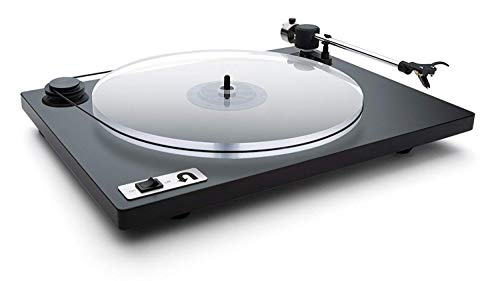
    U-Turn Orbit Basic

    U-Turn Audio - Orbit Plus Turntable (Black)

    Best for: Vinyl beginners willing to save a little by learning manual controls.

    U-Turn designed the Orbit for beginners who’ve gotten a taste for vinyl but don’t want to break the bank. You won’t see all the high end features here or a lot of automatic controls. What are you getting instead?  A simple set up, manual operation, and the option to upgrade certain components in the future. Overall, the U-Turn Orbit Basic incorporates a quality build with great sound for your investment.

    As we mentioned, the turntable’s manual. Users need to set the needle by hand. You also need to manually adjust between 33 and 45 RPM speeds. This can take a little practice and may be difficult for people with poor grip strength or finger dexterity. The advantage of manual over automatic is price, and there’s one less component that might get damaged and need replacing.

    The U-Turn uses a midrange cartridge with a conical diamond stylus. This can be upgraded later, if you’re interested. The cheapest version of the Orbit doesn’t have a preamp, but you can find the model with this feature and still fall within the budget for this list.

    Features:

    • a precision OA2 gimbal tonearm
    • Audio-Technica AT91B cartridge
    • adjustable counterweight
    • low-noise motor
    • powdercoated MDF acrylic platter for clearer playback
    • a cue lever, available separately


    1byone High Fidelity Belt Drive Turntable

    1 BY ONE High Fidelity Belt Drive Turntable with Built-in Speakers, Vinyl Record Player with Magnetic Cartridge, Wireless Playback and Aux-in Functionality, Auto Off

    Best for: People looking for an easy-to-use device that’s compatible with even complex music systems.

    1byone’s High Fidelity Turntable is compact and unobtrusive, keeping the focus on the music. At just 7 ½ inches high and a touch over 17 inches wide, it’s also a great space saver.  You’ll be able to slot the record player into your media tower or the corner of your desk without sacrificing another part of your sound system.

    1byone isn’t marketing this as a turntable so much as an all-in-one music system. In today’s world, that means Bluetooth compatibility. You’ll be able to go analog with your records and then transition smoothly to streaming music from your phone, PC, or other compatible devices. However, that has a limit as the Bluetooth connectivity is input only. You can connect it with devices like tablets but not Bluetooth speakers. On the plus side, the High Fidelity also features an AUX input, addingflexibility to your music setup.


    1 BY ONE High Fidelity Belt Drive Turntable with Built-in Speakers, Vinyl Record Player with Magnetic Cartridge, Wireless Playback and Aux-in Functionality, Auto Off


    Features:

    • manual start
    • switches for pitch correction and shifting speed
    • a universal head shell
    • diamond-tipped MM Phono Audio-Technica stylus
    • adjustable counterweight
    • manual start
    • built-in preamp
    • analog Phono and Line outputs
    • Bluetooth

    Fluance RT81

    Best for: Users who are willing to give up some features for a machine that doesn’t cut corners on quality. Fluance RT81 Elite High Fidelity Vinyl Turntable Record Player with Audio Technica AT95E Cartridge, Belt Drive, Built-in Preamp, Adjustable Counterweight, Solid Wood Plinth - Walnut

    Fluance is one of the bigger names at this price point, so it was tricky to narrow the options down. Their RT81 turntable rises to the top of the pack by offering a solid and usable set of features at a reasonable price.

    The appearance may be a little on the plain side, but every part of it was designed with function in mind. First of all, this record player has a real wood plinth, not veneer. Who cares?  Well, the combination of solid wood and sound isolation feet dampens vibrations throughout the machine. This helps the needle transmit a more accurate sound. Meanwhile, the aluminum platter is lightweight yet sturdy. This helps it keep a steady pace and further reduces the vibration.

    Fluance is offering an upgraded elliptical stylus as well as a curved S-type tonearm. The curve, plus 2.0 grams of tracking force, doesn’t just echo the sleek design of more expensive turntables. It also increases accurate music tracking by keeping the needle centered in the groove. There are semi-automatic controls for the tonearm. You get a switch to engage or disable auto-stop, but no auto-return.

    Features:

    • built-in Texas Instruments pre-amp Fluance RT81 Elite High Fidelity Vinyl Turntable Record Player with Audio Technica AT95E Cartridge, Belt Drive, Built-in Preamp, Adjustable Counterweight, Solid Wood Plinth - Walnut
    • gold-plated RCA line to protect sound quality
    • a pre-balanced and adjustable counterweight
    • an advanced anti-skate system
    • reverb-controlling rubber slip mat
    • AC power adapter for 100V and 240V

    Crosley C100 Belt-Drive Turntable

    Best for: Those who want a modern aesthetic with modern tech as they enjoy classic sound.

    Instead of the usual understated fare and dark woods on the list, Crosley’s C100 has a sleek and modern design incorporating bright aluminum, black accents, and an S-shaped tonearm. It’s a departure for this list and for Crosley itself. The brand used to stick to a retro-replica aesthetic and suitcase style machines. Crosley C100A-SI Belt-Drive Turntable with S-Shaped Tone Arm with Adjustable Counterweight, Silver

    However, the C100 isn’t just good looking. It’s also highly adjustable and customizable. The adjustments give you a lot of control over your final sound. Meanwhile, customization options mean that the device can be grown into as you upgrade features along the way.

    This turntable gives you stop-start controls and an adjustable strobe pitch. The arm itself offers a lockable rest, height adjustment, a counterweight, and hydraulic lift control. All of this is calibrated to keep the needle in position and reducing skipping. This means moment by moment control for people with turntable experience. Raw beginners may have a bit of a learning curve as they learn how to coax out the best analog sound.

    However, it isn’t the most feature-heavy item here. There’s no Bluetooth receiver, which somewhat limits your setup options.

    Features:

    • AT3600L cartridge and NP5 needle
    • adjustable counterweights
    • a preamp ready to plug and play
    • detachable RCA output cables
    • felt slip mat
    • die-cast aluminum platter

    Sony PS-LX310BT

    Sony PS-LX310BT Belt Drive Turntable: Fully Automatic Wireless Vinyl Record Player with Bluetooth and USB Output Black

    Best for: Those with the space for a large, solidly built machine that offers quite a bit of audio control.

    The Sony PS-LX310BT belt drive turntable is heavier and has a larger footprint than many on the list. It’ll take up more space in your media center or audio tower. On the plus side, this size and mass can help keep vibrations to a minimum.

    You’ll be able to fine tune your audio experience with a smartly thought out control scheme, no manual fumbling involved. This includes switches to adjust the speed, accommodate 7” and 12” records, and lift and lower the needle.

    The PS-LX310BT has a preamp like many others here. It stands out from the competition by featuring three gain control settings. For added versatility, you can also switch the preamp off and connect to other devices with Bluetooth.

    Always wanted to digitize your vinyl collection? This turntable can connect to your PC via its USB port. You can use this to record digital files. If that’s a priority for you, check the specifications carefully to make sure your system’s compatible.

    Features:

    • Sony PS-LX310BT Belt Drive Turntable: Fully Automatic Wireless Vinyl Record Player with Bluetooth and USB Output Blackeasy-to-replace cartridge and stylus
    • toggle for speed control
    • a built in preamp
    • one-step audio playback
    • a thick dust cover
    • Phono and line output

    House of Marley Stir It Up Wireless Turntable

    House of Marley Stir It Up Wireless Turntable: Vinyl Record Player with Wireless Bluetooth Connectivity, 2 Speed Belt, Built-in Pre-Amp, and Sustainable Materials

    Best for: People who want an eco-friendly device with a rustic look.

    There’s a growing concern about the environmental impact of the electronic gadgets we love so much. People are looking for that middle ground between enjoying their favorite hobbies while minimizing their carbon footprint. House of Marley’s Stir It Up is a record player designed to fit neatly in that market space.

    This turntable is crafted from multiple sustainable and eco-friendly materials. House of Marley uses bamboo for the wood top. This highly sustainable source of wood offers an elegant natural grain, a clean look, and visual warmth. Here, bamboo is paired with recycled fabric, a solid aluminum platter, and a slipmat of recycled silicone. The Stir It Up turntable has a simple, brighter presence than the dark hardwood or polished steel bricks of some devices. This makes it a comfortable fit for more rustic or casual homes.

    It may seem homey, but this record player offers users a host of modern features. There’s a preamp, making it a snap to integrate with speakers and stream to other devices. The base model doesn’t have Bluetooth, but you can get an upgraded model with pairing capability. You can also take advantage of its USB port to back up your favorite albums on your PC or MAC. This uses Audacity as the recording software. You may want to check out our review of the AT-LP60 (see below) for device compatibility.

    Features:

    • Audio-Technica MM ATN3600L stylus with replaceable cartridge
    • adjustable counter balance
    • volume control
    • a switch for shifting playback speed
    • belt drive with auto start and stop
    • multiple options for connectivity
    • RCA and Phono line

    Audio-Technica AT-LP60

    Audio-Technica AT-LP60-USB Fully Automatic Belt-Drive Stereo Turntable (USB & Analog), Silver

    Best for: Vinyl enthusiasts with some technical knowledge, looking for a feature-rich device on a budget.

    Looks-wise, the AT-LP60 is not that impressive. It’s a simple black and grey with boxy lines and a plastic frame. So what’s it doing on this list?

    You may be giving up a certain style factor, but in return you’ll be gaining a record player with many of the bells and whistles of more advanced and expensive models. It gives you a lot of direct control, with 33/45 RPM toggle, start and stop, and buttons and switches to precisely position the tonearm at the start of the single or album.

    Complete newbies might be overwhelmed by this array of controls. Audiophiles with more experience will appreciate the convenience.

    Looking to connect your Audio-Technica record player with the rest of your setup? There’s a built-in preamp that’s compatible with powered speakers. You can also connect via RCA cables to your stereo, or through the USB to your computer.

    You can use the AT-LP60’s USB connection to make high quality backups on your computer… maybe. The system requirements are fairly basic: a PC or Mac with a USB port of USB 1.1 or higher, running OS X 10.1, Windows 98, or later versions. Most computers have that. The included software itself, Audacity, has been somewhat fiddly for reviewers to use. Backing up music on this device may be better suited for tech-minded people who are already passingly familiar with Audacity.

    Note that you’ll need a CD-R or CD-RW drive for burning the files onto the CD. If your computer doesn’t have one (nowadays, many laptops don’t), you can get a portable CD-R drive and plug it into a second USB port.

    Features:

    • dual magnet ATN3600 cartridge with a replaceable needle
    • a 7” adapter
    • fully automatic belt drive
    • compatible with Mac and PC
    • aluminum platter that dampens resonance and vibration
    • 120V AC only

    Audio-Technica AT-LP60X

    Audio-Technica AT-LP60X-BK Fully Automatic Belt-Drive Stereo Turntable, Black, Hi-Fi, 2 Speed, Dust Cover, Anti-Resonance, Die-Cast Aluminum Platter

    Best for: Users who liked the specs on the Audio-Technica LP60 but want crisper sound.

    Audio-Technica earns another spot on this list with the AT-LP60X. This is technically a newer model of the LP60 that we already covered. However, it isn’t so much an across-the-board upgrade as it is a moderate redesign.

    You’re getting a budget, fully automatic turntable that offers quality sound. The LP60X has many of the same features of the LP60 including:

    • built-in preamp for your powered speakers
    • fully automatic playback with play, stop, and autostop capability
    • multiple switches for device control
    • quality components
    • USB output and Audacity software for archiving your discs to the computer
    • compatibility with 7” and 12” discs

    So what’s different? Audio-Technica has made a number of tweaks to improve the sound experience. The tonearm was redesigned with a new headshell and base to improve needle tracking and reduce vibration. The power cord includes an AC adapter that reduces possible interference. The cable output has been switched from non-removable RCA to removable AUX, allowing you to upgrade the cable or replace it if it gets worn.

    Can a casual ear tell the difference between this and the earlier model? It’s hard to say. Both devices are solid in the mid-range and have decent bass. True beginners may want to choose whichever unit is on sale at the time. People with a trained ear may benefit from the LP60X’s audio fine-tuning.

    The overall look has also gotten an overhaul. The compact design has been squared off a bit. It comes in a choice of classy colors. Overall, it has a more subtle look that would be right at home with other electronic devices. This turntable will fit easily into smaller setups and tight gaps in the media tower.

    Features:

    • upgradeable line and phono outputs
    • adapter for RCA cable

    Pro-Ject Primary E

    Best for: People willing to sacrifice bells and whistles for a quality build that will last for years.

    Pro-Ject has earned a solid reputation on the market with their midrange devices. However, they’ve also dipped their toes into the more budget friendly edge of the scale. The Pro-Ject Primary E is a great introduction to the brand. It’s also a good choice for people who may work up to more expensive record players.

    The Primary E doesn’t offer USB recording. It doesn’t have a built-in phono stage. What it does have is a seriously sturdy build and quality components. These all tie together to create great sound without the hassle of a finicky setup and multiple buttons and switches.

    This device’s overall look is understated. It has a simple top in solid colors, available in white, red, or black. This keeps the focus on the record itself. Note that this unit is designed with three feet, and some users have struggled to keep it stable.

    Features:

    • Ortofon OM cartridge pre-set with tracking force and anti-skate
    • tonearm with durable sapphire bearings to improve needle tracking
    • Made in Europe with a 230V motor
    • acrylic lid and felt mat
    • manual speed control
    • gold-plated RCA Phono cable
    • 7” singles adapter
    • stylus pressure gauge


    Lenko L-85

    Best for: Those looking for user-friendly operation in a budget-friendly package.

    The Lenko L-85 has had a polarizing entry into the budget-friendly turntable market. It is lightweight and includes a lot of plastic. It’s available in a variety of vivid colors that might be at home among Crayola crayons. The rounded appearance has been compared to old-timey school lunch boxes. In short, if you love the classic elegance of hardwood and aluminum, look elsewhere on this list.

    However, the Lenko L-85 is a great choice for the right user. This petite record player is one of the most affordable we cover. It also offers a very user-friendly music experience. The turntable is essentially plug and play. Buyers can be enjoying their favorite vinyl within minutes of unboxing. It may not have the crispest sound, but it handles voices and the midrange well.

    This is a semi-automatic device with a built in phono stage. You can get started right away with the RCA cables and a stereo amp. Sadly, your other devices will languish because it doesn’t offer Bluetooth. As a pleasant surprise, there is an included USB port. That’s a feature missing from some turntables twice the price.

    Features:

    • integrated stereo preamp
    • USB port
    • MM cartridges
    • mechanical arm lift
    • auto return
    • removable plastic dust cover


  • New Vinyl Records Vs. Old: Which Is Better?

    New Vinyl Records Vs. Old: Which Is Better?

    There is no denying that vinyl records are back in the mainstream. There are now new models of vinyl records to allow people to have a nostalgic music experience. But because old and new vinyl records are popular again, it prompted a debate, “Which is better between new and old vinyl records?”

    Vinyl records that came out in the 70s, 80s, and early 90s are better than the new ones. While new re-presses work pretty well, the difference lies in the audio quality and volume. Meanwhile, some new ones have crackles, affecting the sound that they produce.

    Some people think that new versions of vinyl records are better. However, some aspects still make vintage ones the best among the vinyl record industry.

    Which Is Better Between New And Old Vinyl Records?

    Graham Jones, the man who wrote The Vinyl Revival and the Shops that Made it Happen, explained vinyl resurgence. He said that it is more expensive to purchase re-releases today because manufacturers pressed vinyl in the ‘70s in quantities of over 5,000.

    On the other hand, the music industry only presses approximately 1,000 vinyl records, causing them to cost more than the old ones.

    Which Is Better Between New And Old Vinyl Records?

    Additionally, the materials used affect the price. Vinyl records released in the ‘80s consist of recycled materials, while new ones are made of virgin vinyl.

    The difference in materials used makes the two records sound different, too. With that said, it is easy to conclude that new vinyl records are better than the old ones.

    But it is not as simple as that. While new records use higher quality materials than old ones, people still perceive vintage vinyl records to be of higher quality. The production, mixing, and mastering methods of producing these records explain why old vinyl records are still better.

    With new vinyl records, you will sometimes hear crackles and other sound interruptions like distortion. The reason behind these weird noises lay in the manufacturing process.

    It is common knowledge that it takes effort to make vinyl sound good. But in the past, this job was more straightforward as manufacturers exerted effort on behalf of the listeners.

    Additionally, vinyl is not plug-and-play. It would be best if you learned a lot about setting it up to ensure that it will produce excellent sound.

    Some vinyl records are also mastered differently from old records. It is very rare for manufacturers of new records to mix them down analog to tape. Shipping to a record pressing plant is also very rare for these records to be shipped to a record pressing plant.

    While some plants can cut down from tape, many new records recorded from analog to tape were mixed as digital files for mastering and pressing.

    Why Are Old Vinyl Records Better Than New Ones?

    While new vinyl records are made of higher quality virgin vinyl, many collectors still prefer vintage records. Immediately, you will see that the appeal of new vinyl records is that you will get a pristine copy of your favorite music. Still, collectors and audiophiles prefer vintage vinyl records for a variety of reasons.

    1. Availability

    Sometimes, people collect vintage vinyl records due to a matter of availability. While there are many modern records, they cannot represent what audiophiles and music collectors might be looking for.

    It can be challenging to purchase vintage records right now. If you find one, it can be very expensive. For this reason, collectors buy vintage vinyl records because that is their only opportunity to buy that music in vinyl record format.

    1. Various Versions

    Right now, a surprising number of classic albums are available in LP format. However, not all of them are available in every different version they may have been available back then.

    For instance, vinyl records launched between 1958 and 1968 were usually available in both stereo and mono. Meanwhile, records released in the early and mid-1970s were available as four-channel quadrophonic pressings.

    Moreover, stereo and mono versions of the same album usually differ in terms of mixes. They also sounded a lot different from each other. For instance, mono versions might lack the backing vocals that the stereo version has.

    1. Different Or Better Artwork

    Another reason why a lot of people prefer vintage vinyl records is that their album art is better or different from the modern ones. Of course, a vinyl record is larger than a compact disk. For this reason, it has better and larger artwork. In fact, digital music sometimes does not come with album art at all.

    Apart from that, there are other reasons why vinyl records are better than new pressings when it comes to artwork.

    When an artwork gets created and stored in a file cabinet, there are times when that artwork will get misplaced or destroyed accidentally. As a result, manufacturers have no choice but to create another artwork using an existing album as a source.

    That said, the new artwork may end up with the wrong color and blurrier images compared to the original.

    Moreover, vintage vinyl record collectors often look for records with original artwork as they are better than re-created ones. In addition, the thought of having a record that has original album art seems to be satisfying for these collectors. Such is especially true now that vintage vinyl records are a little challenging to find.

    The Comeback Of Vinyl Records

    Despite the popularity of digital music sources like Apple Music, Spotify, and iTunes, the traditional medium saw resurgences. In 2020, sales of vinyl records saw a significant increase, leaving behind CDs, cassette tapes, and MP3 players.

    True enough, people associate vinyl records with middle-aged people. Still, the music industry witnessed that the driving force behind vinyl resurgence is actually Gen Z and millennial consumers. In fact, nearly half of the people who purchase vinyl records are under 35 years old.

    Considering the technological advances that the music industry now has, vinyl records should have been extinct way back then. But why are people drawn to traditional records when digital streaming is so easy and convenient?

    1. Personal Experience

    With streaming services, people can get what they want, whenever and wherever they are. However, some people feel digital music can never compete with the authentic music experience that vinyl records offer.

    For many people, putting a vinyl record on a turntable and listening to it is a more personal experience than listening to music from a digital platform.

    In addition, the quality of sound is a huge topic in terms of vinyl records. A lot of audiophiles think that analog sound vinyl is more superior to modern digital audio. Such is especially true when it comes to compressed formats that streaming platforms use.

    Moreover, there is a belief that old analog audio is warmer and fuller than digital music in terms of sound. 

    1. Vinyl Records Are Tangible

    Digital music provides listeners with almost everything except for one thing – ownership. When playing music from digital platforms, you do not own those songs.

    Meanwhile, vinyl records are physical items that you can own, hold using your hands, and collect. Therefore, records provide tangibles, which you can see and hold anytime you want to.

    1. Sound Quality

    Many people think that the old analog audio that vinyl records provide is better than digital audio. Of course, better digital playback formats, such as Free Lossless Audio Codec (FLAC), are available. However, you will have to search them out particularly and may cost more.

    On the other hand, vinyl is always available from local record stores and online sellers.

    Sources

    1. David Greenwald, Does Vinyl Really Sound Better? An Engineer Explains, Oregon Live, https://www.oregonlive.com/music/2014/11/does_vinyl_really_sound_better.html/ Accessed July 28, 2021. 
    2. Why Some Vinyl Records Sound Better Than Others – Explained, Record Player Expert, https://recordplayerexpert.com/why-some-vinyl-records-sound-better/#Original_Master_Recording_-_Analog_Tape_vs_Digital/ Accessed July 28, 2021.
    3. Maria Vole, Why Is Vinyl Making A Comeback?, Readers Digest, https://www.readersdigest.co.uk/culture/music/why-is-vinyl-making-a-comeback/ Accessed July 28, 2021.
    4. Vintage Vinyl Records – 9 Reasons Why Collectors Like Them, Rare Records.Net, https://www.rarerecords.net/record-info/vintage-vinyl-records/#sound/ Accessed July 28, 2021.