Category: Records

  • This Is The Temperature In Which Records Warp

    This Is The Temperature In Which Records Warp

    At what temperatures do records warp? Warping is one of the signs of poor vinyl record keeping. But what temperature levels cause the warping process? This article is here to give you the answers to help keep your records alive and well. 

    Here’s a general rule of thumb that you can use to keep your records in the proper storage conditions:

    1. Below 0°C, records will turn brittle and start to break.
    2. At 140°F, warping will occur
    3. Over 100°C or 212°F melting will occur on vinyl records.
    4. At room temperature, 65°F or 70°F is an ideal storage temperature.

    For more information, be sure to keep reading. This article will delve deeper into the science behind records and how they are affected by heat. 

    At What Temperature Do Records Warp?

    Record warping is a pain in the neck for a lot of record owners. What causes warping? There are two reasons why record warping occurs:

    Intense heat exposure 

    Improper record keeping (You should store your records vertically and not flat)

    Way Basics Vintage Vinyl Record Cube 2-Shelf Storage, Organizer - Fits 170 LP Albums (Tool-Free Assembly and Uniquely Crafted from Sustainable Non Toxic zBoard Paperboard) Espresso

    In my experience, records tend to warp at around 140°F. Any higher than that, probably at the boiling point of water, the record will melt. Another interesting thing about heat and records is that you will require heat to restore the record after warping. 

    Records can be pretty fragile things, and like anything else that’s not maintained or stored correctly, they will break or wrap. 

    What’s The Science Behind Vinyl Records And Heat?

    It seems easy to share a number on the temperature scale, but it would be more interesting to share how the process works from a scientific perspective. 

    Firstly, it’s best to understand the consistency of records. 

    What Makes Up Vinyl Records?

    When purchasing records, you’ll come across records made of different types of materials. These materials are the most commonly used in record manufacturing:

    1.  Shellac

    The earliest version of records consisted of shellac. The earliest record versions date back to the 1800s. It’s that far back. Manufacturers would create records from cardboard and fiber then finally coat the records with shellac resin. 

    Shellac records or 78s are the most fragile records. They break easily and can turn quite brittle if not well maintained. 

    1. PVC 

    PVC is short for polyvinyl chloride, and it’s a form of plastic. PVC makes up 12% of the total demand for plastics. Records made of PVC are known as vinyl records. These types of records are the more evolved version of shellac records. They are more durable than shellac; however, they are prone to wrapping when exposed to heat. 

    Here are some of the properties of PVC:

    • It has a melt temperature of 212 – 500 °F (100 – 260°C).
    • PVC has a heat deflection temperature (HDT) of 92 °C (198 °F).
    • The softening point of PVC is between 176°F and 183°F (80°C-84°C)
    • The chemical formula of PVC is (C2H3Cl)n (just a little side note for those interested readers.)

    Apart from the chemical formula, the numbers mentioned look eerily familiar. PVC-made records are the most common type of record. PVC is cheap and readily available. 

    The fact that vinyl records are cheap and accessible makes it easier for both manufacturers and buyers. It also means that you most likely will have vinyl records in your collection. 

    1. Colored vinyl 

    As the name suggests, it refers to vinyl records in different colors. Mostly popular in the 1970s, they are still vinyl records. What differentiates them is the color on the surface of the record. 

    What Are The Parts Of A Vinyl Record? 

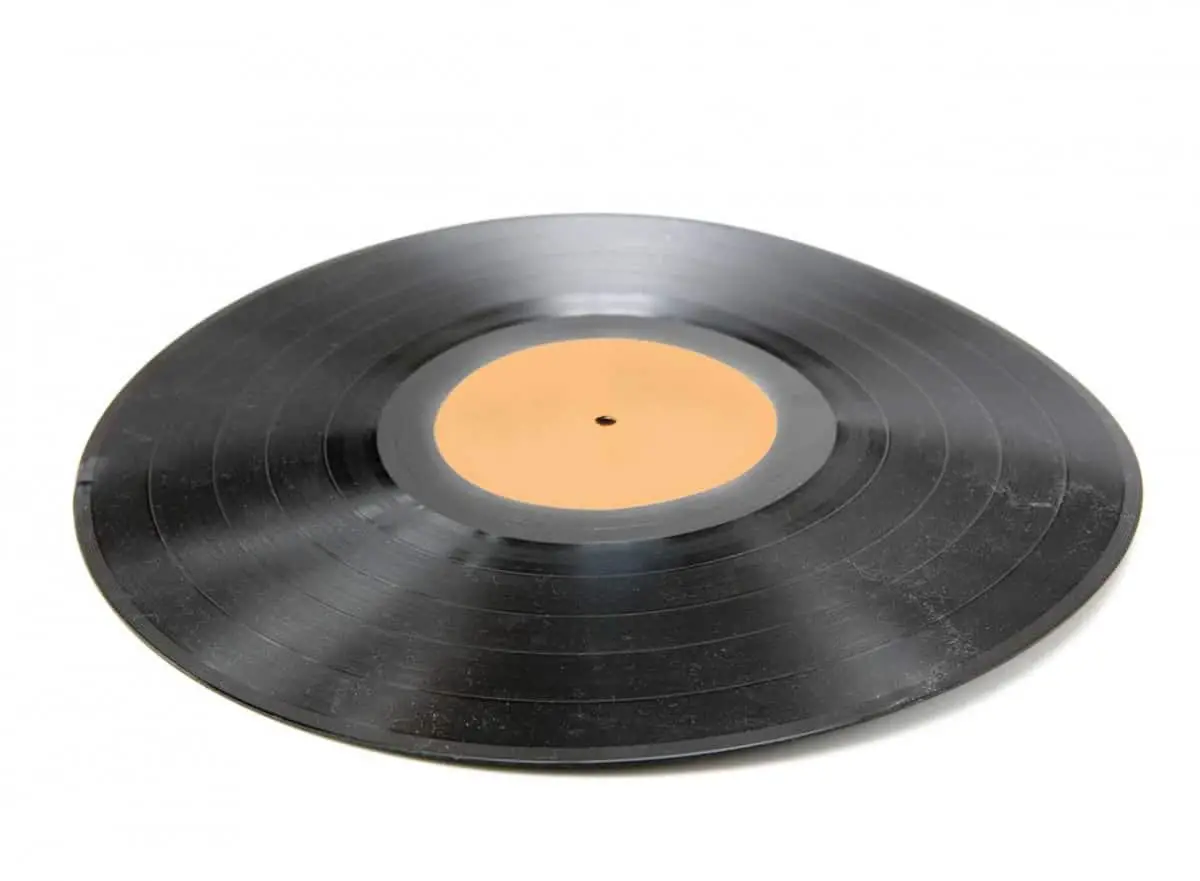
    Did you know that records consist of different parts? If not, don’t worry. Here are the parts of a record, and it comes with an image to boot:

    • Lead-in groove
    • Recorded grooves
    • Dead Wax/End groove
    • Center label
    • Spindle hole

    When you expose a record to high temperatures, you will notice warping along the recorded grooves. The center label doesn’t consist of PVC, so you’ll find that it won’t warp like the outer layers of the record. 

    Is It Bad To Leave Vinyl Records In The Heat?

    Yes, it is terrible to leave your vinyl records in heat. High temperatures cause warping in records, and eventually, the records will melt. Sometimes, warping is reversible, but it can get to the point of no return, and the record is no longer usable. 

    Shellac records are incredibly fragile, and if stored or placed in unhealthy conditions for the record, it won’t take long for them to break. 

    PVC or vinyl records are more durable than shellac records. However, they are weak to increased temperatures. They will warp if the temperatures exceed a certain level. Not only that, but they are also capable of melting. 

    Vinyl collectors advise keeping your records in a clean, cool, and dry place that won’t negatively affect the record. 

    Are You Interested In What Other Like-minded Individuals Are Asking? Here Are Some Incredibly Helpful Faqs. 

    1. Is the warping and melting of records two different things?

    Yes, warping and melting are two different things. Warping is the bending of records due to an increase in temperatures. Warping is also a reversible process in some cases. Melting, as the word suggests, the record turns from a solid to a liquid form. 

    Warping also has a different temperature than melting. Warping occurs at 140°F (60°C), while melting occurs at 212°F (100°C). Remember that once the record has melted, you cannot restore or reverse it. The heating process will completely ruin the record, and a new one will have to take its place. It’s sad, but it is what it is.   

    2. Is it recommended to ship records in the summer?

    Summer is a glorious time of the year for some people but not others. Thanks to online stores and delivery, everything is a lot more convenient. But that doesn’t mean that delivering records during summer will be the easiest thing for record owners this summer.

    If you’re planning to order records at any time during summer, it would be best to stop and take several seats back. There are no specialized solutions to delivering records in the summer that won’t protect the records from warping or even melting. 

    Deliveries take time, and sometimes, the package can be left outside your doorstep for hours before you remember that your new records are in-bound. 

    Its recommended not to order and have records delivered during summer. The outcome may cost you time, money, and joy. It’s not worth it. Choose to either have an in-store pickup or wait till summer’s out and with a click of a button, you can order your favorite records. 

    3. Will the heatwave warp my records?

    Yes, leaving your records exposed during a heatwave will cause them to warp. As long as you store your records in a cool and dry place, your records are unlikely to warp. That’s the name of the game.

    However, if you leave your records exposed to the heat or the storage environment is not conducive to the record’s material, they will most likely warp.

    Records are fragile pieces of plastic. The Center for Climate and Energy Solutions shared that the average temperature in a heatwave is 90°F. This temperature is past the peripheral point where PVC starts softening. 

    A little longer at that temperature and warping will not be a dream anymore. It will be a harsh reality for both you and your records. In my experience, it should take half an hour for the warping to start if your records will remain at that temperature for that specific amount of time. 

    Leaving it any longer may melt the records. 

    Related articles

    You might be interested in some other articles that I wrote about warped Vinyl Records and how to store them. Take a look here:

    Sources

    1.Jenna Miles, The Beginner’s Guide to Vinyl Records: How to Build, Maintain and Experience a Music Collection in Analogue (Massachusetts: Adams Media,2017) 256.

    2.Record Player Expert, Vinyl Temperature Guide, Record Player Expert, Accessed 29th July 2021.

    3.Yu, Jie & Sun, Lushi & Ma, Chuan & Qiao, Yu & Yao, Hong. (2015). Thermal degradation of PVC: A review. Waste Management. 48. 10.1016/j.wasman.2015.11.041. 

    4.Saliu Adelakin Durosinmi, Mechanical and Structural Changes of PVC when Subjected to Heat, Arcada,

    5.Center for Climate and Energy Solutions, Heat Waves and Climate Change, Center for Climate and Energy Solutions Accessed 29th July 2021.

    6.Vinidex, Polyvinyl Chloride, Vinidex Accessed 29th July 2021.
  • Why Your Record  Is Skipping In The Same Spot And How To Fix It

    Why Your Record Is Skipping In The Same Spot And How To Fix It

    Do you have a record skipping in the same spot? I can’t stand it when that happens. There you are, grooving away, and suddenly the skip noise and it’s back where it was a few seconds ago. It’s like a finger’s on a chalkboard, isn’t it?

    Luckily, I’ve already gone through so many record skipping scenarios myself, that I felt it prudent to put this little skipping troubleshooting guide together for you. So, keep reading, and let’s discover together the five most common reasons why your turntable skips and what you can (or can’t) do about it.

    Why Your Record Is Skipping – A Troubleshooting Guide

    As mentioned, there are only really five reasons why your record is skipping in the same spot. I mean, there might be a sixth reason I’m yet unaware of, but these five are the usual suspects.

    1. The Tonearm Is Out Of Balance
    2. Bass Vibration
    3. The Record Is Dirty
    4. The Record Is Warped
    5. The Record Is Scratched

    The Tonearm Is Out Of Balance

    Symptom: During parts of a song, depending on where the record player resides and depending on the level of bass, the song may skip. It may also occur when you walk past the record player.

    Troubleshooting tip: Walk from five feet away up to your record player. Do so repeatedly with more firm steps each time (starting by nearly tip-toeing). Notice at what point the vibrations from your walking make the record skip. If the tonearm skips easily, either it is out of balance or the dampeners or surface the turntable is on is insecure.

    Remedy: If the tonearm is out of balance, the remedy is obviously to set the balance. If the surface is insecure, then move the turntable to a more secure surface. Check the dampeners as well to ensure the turntable feet are dampening vibrations adequately as well.

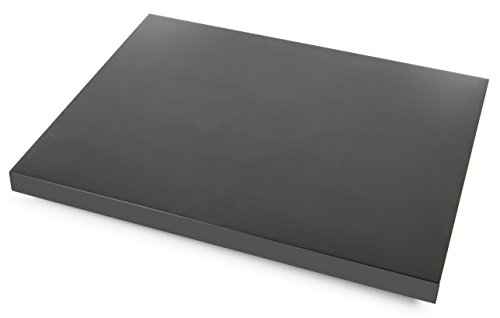
    If vibrations are a problem after you’ve balanced your tonearm, you can try using a turntable base that eliminates further vibrations. I like the Pro-Ject Ground It E Turntable Base available on Amazon. It’s heavy, feels solid, and works well to help isolate your turntable.

    Pro-Ject: Ground It E Turntable Base

    Bass Vibration

    Symptom: Similar in many ways to what you might expect with a tonearm that’s out of balance, bass vibrations can cause a record to jump or skip, but only in certain conditions.

    If your record player mounts above a speaker or subwoofer, then you likely require moving the turntable to a more suitable location.

    Troubleshooting tip: If you think the bass is causing a skip, try testing your theory with one of your records that has a lot of bass. Turn the volume up (safely) and play a track with bass. If your record skips during the heavy bass parts, you know that is why the skipping has occurred.

    Remedy: Move your record player onto a different surface. Do not place a record player on a speaker, subwoofer, or another sound-producing device.

    The Record Is Dirty

    Symptom: You may notice some crackling noises potentially followed by a skip. If dirt or dust has built upon the record or collected on the needle, a skip might occur each time the record revolves around a point where the build-up of dirt or dust overcomes the ability of the needle to stay in its groove.

    Sometimes this build-up of dirt or dust can correspond to a place on the record. The dirt or dust might even be stuck in place on the record. It would cause the record to skip each time the needle tries to plow through the dirt or dust stuck to the surface of the record.

    Troubleshooting tip: In my experience, you can see if a record is dirty or dusty by shining a flashlight on it at an angle. While shining the light, look at the record up close on an angle. If it is dirty, the dirt or dust will stand out like a sore thumb. That is, assuming you have good eyesight.

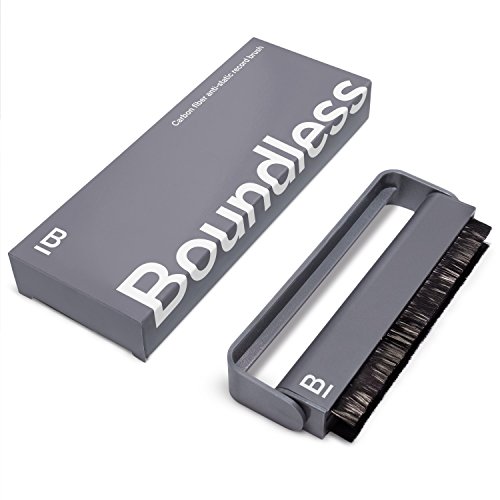
    Remedy: Use a proper vinyl record carbon fiber brush to clean your record. I like the Boundless model, again from Amazon. It’s cheap, works well, is anti-static, and most importantly it gets the job done.

    Boundless Audio Record Cleaner Brush - Vinyl Cleaning Carbon Fiber Anti-Static Record Brush

    The Record Is Warped

    Symptom: If a record is warped enough, it can cause the needle to skip. If records are stored on edge without proper support, the vinyl will sag and warp over time. Check how you’ve been storing your vinyl.

    Troubleshooting tip: Place the record on the turntable and look at it as close to horizontally as you can. Slowly rotate the record by hand and look for warps in the record.

    Remedy: Fixing warped records takes time. You need to reform the record without causing damage to the etched grooves. The process is tedious, but with a lot of patience, you can fix minor warps nine times out of ten. Take a look at the process to fix a warped record here.

    The Record Is Scratched

    Symptom: The record plays and has a noticeable skip at the exact and precise second in a track. You can either see the scratch, feel it, or see it with a magnifying glass.

    Troubleshooting tip: A bad scratch will be noticeable by the naked eye. A scratch that is not so noticeable will be visible with normal magnifying glass. Who doesn’t have a magnifying glass lying around? They are great in case of emergency for starting fires (all you need is sunlight and tinder), for plant observation if you’re into gardening, or, if you’re a bit of an audiophile, for inspecting records.

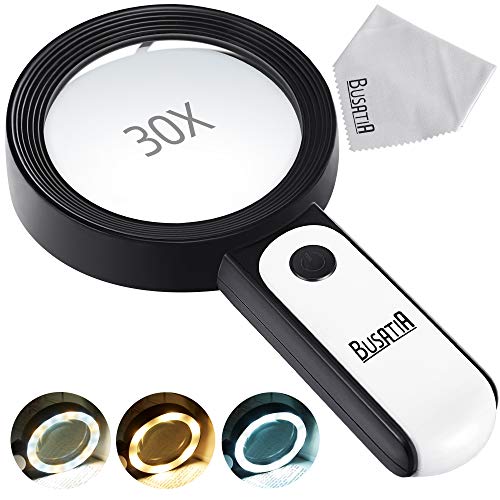
    A lit 30x magnifier is a great tool to help you see how your records are doing. If your record is scratched, this should see most scratches.

    BUSATIA Magnifying Glass 30X, 18LED Handheld Magnifying Glass with Light, 4in Large Glass Magnifier with 3 Modes, Illuminated Magnifying Glass for Reading, Hobbies - with a Lens Cloth (White + Black)

    Remedy: Unfortunately it’s time to go through your records pockets and look for loose change. If a vinyl record is scratched bad enough to skip, there’s very little chance you’re going to be capable of fixing it.

    I’ve heard of people trying to use fine knife sets, like those used for fine model crafting, to carve the groove back, but unless you’ve got a microscope and a robot-like steady hand, I think you’d best find a replacement for that record.

    With vinyl records formed out of malleable polyvinyl chloride, or PVC for short, you might think it should be easy to fix. And it would be if it weren’t for the tiny size of the grooves you’d need to fix.

    According to Wikipedia, some of the smallest record grooves cut in history were 0.001 inches wide. That’s really, very small, and obviously much smaller than the human eye can clearly discern.

    So, I’m sorry, my record-loving friends, but if the vinyl is scratched, you’re pretty much out of luck (S.O.L).

  • 3 Reasons Why Records Pop (And What To Do About It)

    3 Reasons Why Records Pop (And What To Do About It)

    I was sitting with my friend in the living room of my apartment listening to vinyl 33’s, and then I heard it in the middle of one of my favorite tracks – the dreaded pop. It led me to wonder what causes the pop sound that can sometimes happen with vinyl records.

    Vinyl records will make a popping noise for three reasons I call the 3-D’s: Dirt, Debris, and Damage. Dirt and debris are similar, but I think of debris as a more severe particulate residue, dirt, and debris repairable. Damage is irreparable in most cases.

    If you’ve had a record start popping, there might be something you can do. However, the first thing you need to do is to diagnose the pop – what caused it. I’ll walk you through how to diagnose and fix the pop in many cases quickly. I’ll also explain the alternative when you can’t repair the issue. Let’s get this spinning on the table, shall we?

    Why Records Pop – The 3-D’s Explained

    Dirt, debris, and damage are the three ‘D’s’ that are the typical culprits of the classic record pop sound. However, the sound can also be generated by wiring shorts, which I’ll explain after; the three D’s are the most common culprits, so we’ll get them sorted out first.

    Dirt

    I suppose I could have said Dust instead of dirt, but you get the idea. The concept here is that any dry foreign material may get lodged into the grooves of your record. The material will need to be small enough to enter the grooves, and the most common culprit of this is dust.

    Dirt may also include food (if you drop crumbs on a record or other such foolishness). The concept is again that it is foreign material. I classify anything dry into this category because as long as the record isn’t physically damaged, you have a hope of correcting the issue. The correction is often cheap and easy, often as simple as using a carbon brush and taking decent care of your records.

    Keeping a carbon brush and needle cleaner are great ways of avoiding pops by maintaining clean records and equipment. It’s always a wise choice in my experience.

    Prevention Tip: Never leave a record on your record player unless you’re listening to it. Even a covered player will allow dust particles in the air to settle on the vinyl record. Always store your records in the sleeve they came in, and don’t forget them on your turntable.

    Dirt and dust may not be on your record at all, either. The dirt might stick it to your needle and stylus. Sometimes dust will loosely collect on the needle as it scrapes its way along the record groove. Just like rolling sprinkles onto a fresh donut or rolling snowballs to make a snowman, the dust rolls and builds until the needle catches it and ‘drives’ over it, causing a momentary pop noise as the needle jumps over the dust ball.

    Keeping a carbon brush and needle cleaner are great ways of avoiding pops by maintaining clean records and equipment. It’s always a wise choice in my experience.

    Debris

    When I’m talking about debris, I’m referring to the more difficult foreign objects and materials entering a groove in a record, causing a pop sound. More challenging foreign materials include things like oil from your fingers, liquid-like a sneeze over your record, or even spilling liquid nearby that can send tiny droplets flying onto your vinyl.

    Aside from oils and liquids, debris may also include particles that have semi-merged into the vinyl either by chemical reaction or by the needle forcing micro-particulates hard into the soft vinyl surface. These particulates may even cause damage. Think little salt or sand-like particles that are extremely small but hard; much harder than the soft vinyl. The diamond or sapphire record needle is tough. It can act as a hammer of sorts to force tiny hard particles into the surface of the vinyl, causing microscopic damage (our third reason for the popping noise coming up next). (source)

    Damage

    The culprit, none of us, want making a pop noise playing our vinyl records is damage. Various reasons may cause damage, but the outcome is typically the same; the record is irreparable.

    I hope it isn’t your favorite record that’s suddenly making popping noises, but if it is, there might be hope. Not that I want to get your hopes up if the record is physically damaged, but if it’s any of the other reasons, then you might be in luck. Let’s take a look at a couple of other causes before we write off your record. We should also look at proper diagnosis to determine once and for all why your record popped.

    Other Possible Pop Causes

    • Electrical shorts – Check your cables and ground. If the ground wire isn’t properly hooked up, static charge can build and cause audio interference that might sound like a popping noise as the electricity builds and discharges.
    • Player damage – Damage to your stylus or needle might also cause popping or other audio interference. Check your needle and stylus with a high-power magnifying glass to see if you can observe any damage. Maybe you need a new cartridge, and that record you love is okay.
    • Poor quality recordings – Sometimes, it’s just a poorly made record. GuildX700 from Steve Hoffman Music Forums says, “…some vinyl is just crap, I’ve got dead quiet ones and ones that pop and click even though they are clean.” (source)

    How To Diagnose Why A Record Pops

    Diagnosis of your turntable creating a popping noise during record playback is not difficult (if you have the right tools). Ideally, you will have a high-power magnifying glass, but even if you don’t, there are a few things that you can do. Try these steps that I found helped me figure out what the cause of the popping noise is.

    1. Check the connections. Record players are notorious for having issues with things like static electricity. If you’re using old wires like some old RCA cables you found in the garage, check the cabling. If there is a short or damaged cable, it can produce a crackle or popping sound during playback.
    2. Check your needle and stylus. If there is damage to the needle, then it could cause a popping sound. Also, there might be dust on the needle, so try using a needle brush or cleaning dabber to ensure your needle is clean and free of debris.
    3. Clean your record. The easiest fix to the most common issue that causes popping is to clean the record itself. The most common cause of audio interference being a dirty record. This popping noise happens a lot when records aren’t handled properly, and there are oily fingerprints on the vinyl surface.

    Try using a good quality carbon brush and clean your record according to the directions provided with the brush. There are also unique cleaning solutions you can purchase to aid in removing oils and other contaminants that a carbon brush may not remove on a light pass over the record.

    If your record is clean, the needle is clean, and the connections are all good, you likely have a damaged record. I’m sorry, but damaged records usually cannot be repaired.

    How Do You Stop Vinyl Popping?

    If you have proceeded through each of the three steps mentioned above to diagnose a popping noise, then you have likely determined that it is fixed, improved, or your record is damaged, and there’s no hope.

    If you happen to run into the scenario where the record is suddenly worse, or if the record is mildly better, you will likely face a dirt and debris issue. Damage is not likely to worsen if you are using appropriate cleaning tools and agents designed solely for vinyl records.

    The best thing you can do is keep your records stored in a case while leaving them in their sleeves. Don’t leave your records lying out and about. Try always to use a carbon brush on your record before playback to remove any dust before the needle drives it into the soft vinyl.

    If you’re desperate and have some money to burn, you can pick up a legitimate record cleaning machine. The quality machines do a great job, but you pay for it. If you have a record collection that’s seemingly more important than life itself, you may want to pick up one of these machines and give your records the five-star cleaning treatment.

  • 7 Reasons Your Record Is Repeating (And How To Fix It)

    7 Reasons Your Record Is Repeating (And How To Fix It)

    Listening to your favorite record can be a magical experience. The experience loses its magic the moment your record starts repeating, though. Why do records do that, anyway? If you were just listening to the record and it never skipped or repeated before, it can seem all the more bizarre. Before you rush to smite anyone who may have touched the record, let’s first look at the reasons why a record may start repeating.

    Record players skip or repeat for the following reasons:

    1. Dust
    2. Dirt
    3. Warped record
    4. Scratched record
    5. Unbalanced tonearm and counterweight
    6. Unsecure location
    7. Damaged vibration dampener

    I’ll take you through my experience fixing each of these situations when you find your record repeating. I use a quick method to test and find out which one of these is the culprit, and I’ll share that as well. Let’s get things spinning and dive right in.

    Why A Record Repeats And How To Fix A Looping Record

    You’ll find a handy guide here to quickly diagnose, fix and prevent from recurring each of the seven ailments I’ve mentioned to your record playing enjoyment. If you find your record is skipping, looping, repeating, or generally misbehaving, check out each of these items and hopefully get it fixed fast.

    Dust

    If you haven’t had a chance to dig into the delicate parts of a record cartridge, check out my article on why turntable cartridges are so expensive for an explanation of their parts. Needless to say, the stylus, cantilever, and rubber suspension components of the record player cartridge are all tiny and delicate.

    It doesn’t take much dust to get caught on the record groove to form a tiny lump of dust within individual grooves. With a diamond or ruby stylus bearing down on the dust as the record turns, it can easily catch things up and cause your record to repeat, loop, or even skip.

    How To Fix A Dusty Record

    Maintaining a good quality carbon fiber brush with your record player is a wise concept to battling the dust bunnies. Before you drop the needle, turn on the table and let your record spin a few times. Gently lower the brush onto the record, holding the brush so it brushes the record without slowing it down (not being too abrasive here, or you might damage your record).

    Holding the brush perpendicular to the motion of the record, gently slide the brush outwards from the center of the record to, and off, the outer edge. Ensure you make this motion slowly and without pressing too hard. Be gentle and make sure your motion takes several rotations of the record to complete. This way, you leave no dust behind.

    Check your stylus to ensure no dust has caught on the tip. Sometimes you’ll clean a record, but the dust was stuck to the stylus all along, so ensure you check this.

    If there is dust on the stylus, turn off the player before cleaning it. The ideal tool to clean your stylus is a stylus brush. You can cheat with some cleaning products. I used to use a very fine dish cloth moistened with warm water. Make sure it’s just on the edge of being moist, nothing wet.

    Raise and lower the stylus gently and repeatedly onto the brush or cloth, which usually removes dust. Do not scrape the stylus, or you could deform the tip. Only gently ‘dab’ the stylus on soft material.

    Dirt

    Talking about dust and dirt, you might assume we’re talking about the same thing, but we aren’t. Let’s say a friend of yours came over and was eating some cheese-flavored potato chips. Do you know the kind that leaves the sticky orange flavoring all over your fingers?

    Let’s say when you aren’t looking, your grubby friend picks up one of your favorite records and gets a sticky finger on it. They put it back in the sleeve, and no one is the wiser. Until you play it and it skips on the leftover chip flavoring your friend so kindly left behind unnoticed. This scenario is one that happened to me, by the way.

    How To Fix A Dirty Record

    Cleaning the dirt off the record can be tricky if it’s stuck on there good. The best solution is using warm water and a very soft cloth. Never use hot water as it will deform the record.

    Moisten the cloth with warm water and gently rub the cloth in the direction of the grooves. NEVER rub the cloth against the direction of the grooves.

    I like to do what I call the feather approach: touch it lightly, like a feather, to clean it. Repeat. Sometimes repeat a lot for double cheese flavored dirt. But gentle action with a moist, soft cloth will work most of the time without damaging the record.

    Warped record

    Warped records are painful to see and hear when they cause things like skips, repeats, looping, or other such audio destructions of enjoyment. If you have a record warp bad enough to cause the record to skip, then you’ll want to check the record to ensure it isn’t scratched.

    How To Fix A Warped Record

    I wrote another article talking about playing warped records, and it’s got some great ideas to fix them, in case you’re in need. The process might take some time, but it’s worth it if the record is salvageable. You can read more about it here: Is It Okay To Play A Warped Record?

    Scratched record

    If you’ve got a record with a scratch that’s bad enough to cause a loop or skip, then there’s only one thing left to do: Check your record’s pockets for loose change. Seriously though, there’s not much you can do to fix a scratch on a record. Vinyl is pretty soft, but turning it back in time after the damage is next to impossible with records. (source)

    How To Fix A Scratched Record

    Unfortunately, in my experience, there is no fix for a badly scratched record. I had one that was minor but would repeat at this one spot. I used a high-power magnifying glass and a chemically sharpened knife from a specialty set for model making. I was able to cut the groove, so the scratch causes a blip instead of a loop or repeat. But The scratch damaged, either way, that part of the track, and I bought a replacement record.

    Unbalanced tonearm and counterweight

    Every decent record player worth its salt has a finely adjustable tonearm and a counterweight. Typical adjustment is via a dial at the rear of the tonearm assembly, on the opposite side of where the tonearm pivoting attachment to the record player resides.

    If a tonearm is out of balance, the arm and stylus can bounce quickly off the groove that’s being played. When a heavy bass part of the song comes, it may be enough vibration to cause the arm to bounce up and out of its current groove.

    How To Fix An Unbalanced Tonearm And Counterweight

    Balancing your tonearm isn’t tricky, but it can be frustrating if you don’t have patience.

    First, test how you need to adjust the counterweight by zeroing things out. Zero out both the anti-skate and the counterweight tracking adjustment. Set the counterweight, so the arm floats horizontally without you touching it. The counterweight adjustment is usually at the back of the weighted end of the tonearm assembly.

    You need to set the tracking adjustment after you have zeroed your counterweight, so the tonearm floats horizontally. I like to set this around 3.5, but you can set it as low as two if the record player is on a very secure surface. The dial adjustment is usually labeled and closer to the tonearm’s pivot by the rear counterweight. (source)

    Next, set your anti-skate adjustment to match your tracking adjustment number. Remember to consult your stylus manufacturer’s guide to optimal stylus tracking settings.

    Unsecure location

    If you’ve ever acted as DJ at an event, you know this is a huge concern – unsecure record player location. I once played a party that the guy throwing the shin-dig decided to set some wood on top of the bass bins and put the turntables and mixer on top. It worked great until we turned the volume up past small room volume (outside in a field).

    An unsecure location can cause your record to skip from something as simple as a person walking past.

    How To Fix An Unsecure Location

    A solid base is the only fix for this issue. Using a heavy and firm piece of furniture is excellent; the heavier, the better. Counters work great, but no one plays records in the kitchen, so use a desk, a solid record stand, or other firm and secure furniture pieces.

    The other way to ‘fix’ a location that tends to vibrate your record player is through the addition of turntable vibration isolators. Adding something like a zaZen isolation platform or other available specialty record player mounts is a great, albeit expensive, way to solve a location that vibrates or requires isolation. (source)

    Damaged vibration dampener

    WIth older record players or record players that have been through a move without a good travel case, sometimes the built-in table dampeners can become damaged.

    How To Fix A Damaged Vibration Dampener

    If an internal component such as a vibration dampening spring has broken, your best bet is to find the OEM replacement. Unfortunately, I can’t tell you how to fix this, as every record player model is different. Still, I can tell you that a spring-loaded screw threaded through a compression spring usually attaches to the turntable’s feet.

    There is usually a rubber boot on better models, and this boot can become rigid over time. Turn over your player, carefully holding it up, so you don’t damage or rest it on the tonearm or other components and check the player’s feet. They should move and compress against the player with equal force. If one feels more rigid than the others, it may have a rubber boot gone brittle with time. If one feels too sloppy, it may have a broken compression spring.

    As long as you can find the original parts, both of these components are usually easy to replace on most models.

  • Is It Ok To Play A Warped Record? (Answer Here)

    Is It Ok To Play A Warped Record? (Answer Here)

    Is it bad to play a warped record? You wouldn’t want to damage your record player, stylus, or even your amp and speakers with audio pops or other sounds caused by record damage. However, just how safe is it; is it OK to play a warped record? Let’s find out.

    Playing a warped record may damage the record further if the warp causes the stylus to skip. A skipping stylus can scratch the record grooves causing irreparable damage. So, if you want to protect your records, don’t play them when warped.

    Let’s jump into vinyl record warping more and find out a few more things, like whether or not we can fix a warped record or why they warp in the first place so we can do our best to prevent damage. Join me as I take you through my experiences with warped vinyl records and what you need to know about them.

    Can A Warped Record Damage My Record Player?

    Some people have claimed that a warped record may damage your stylus or record player. It would only be the case if the record were so irreparably damaged that you likely wouldn’t consider attempting to place it on your turntable. I think large cracks would do it, but a slight warp is not likely to damage anything except the record itself (from stylus skip and scratch).

    Warped records will not damage your record player. Cracked records will.

    Why Records Warp In The First Place

    Vinyl records are exceedingly popular. So much so, in fact, that vinyl records have seen growth year after year for the last 15 years. Over 27.5 million LPs were sold in the USA in 2020, according to Statista. (source)

    The exceeding popularity of records means more and more people like yourself have the same issues with warped records. I’ve often had the problem myself, usually from one of the following scenarios that cause records to warp.

    Vinyl Records Warp When:

    1. Left in the sun
    2. Left in the heat
    3. Stored improperly

    These are the three common scenarios that cause vinyl records to warp. Here’s why each is important to understand.

    The Sun And Warping Your Vinyl Record

    The sun is incredible. A source of happiness for most people, encouraging our vitamin D3 production and giving us a nice tan. However, this same source of joy, warmth, and light is an enemy to our nightlife-loving vinyl records.

    Vinyl records are made of vinyl, as the name suggests. This type of material is a form of plastic. The scientific name of the plastic is polyvinyl chloride, but you’re probably familiar with it being called PVC. (source)

    PVC is one of the most versatile plastics humankind has ever invented. We use it because it is straightforward to work with, a soft and versatile plastic we can shape and use as we see fit.

    One of the primary characteristics of PVC is the versatility to make either soft or rigid plastics.

    Vinyl records use a semi-rigid form of PVC. You know you can pick up a record and give it a bit of flex; it isn’t like glass – it won’t shatter straight away but has a bit of flex.

    When you leave Vinyl, in particular a vinyl record, in the Sun, the rays of the Sun heat the plastic and react with it.

    The addition of heat from the Sun’s rays causes the plastic to begin to melt. We’re not talking a sticky, gooey, burn-your-fingers kind of melt, but it’s enough to cause the record to warp. If left without a sleeve, the Sun will cause irreparable damage in a short period. It will still damage the record with a sleeve, but it will take longer (like a few hours, in my experience).

    Heat And Warping Vinyl Records

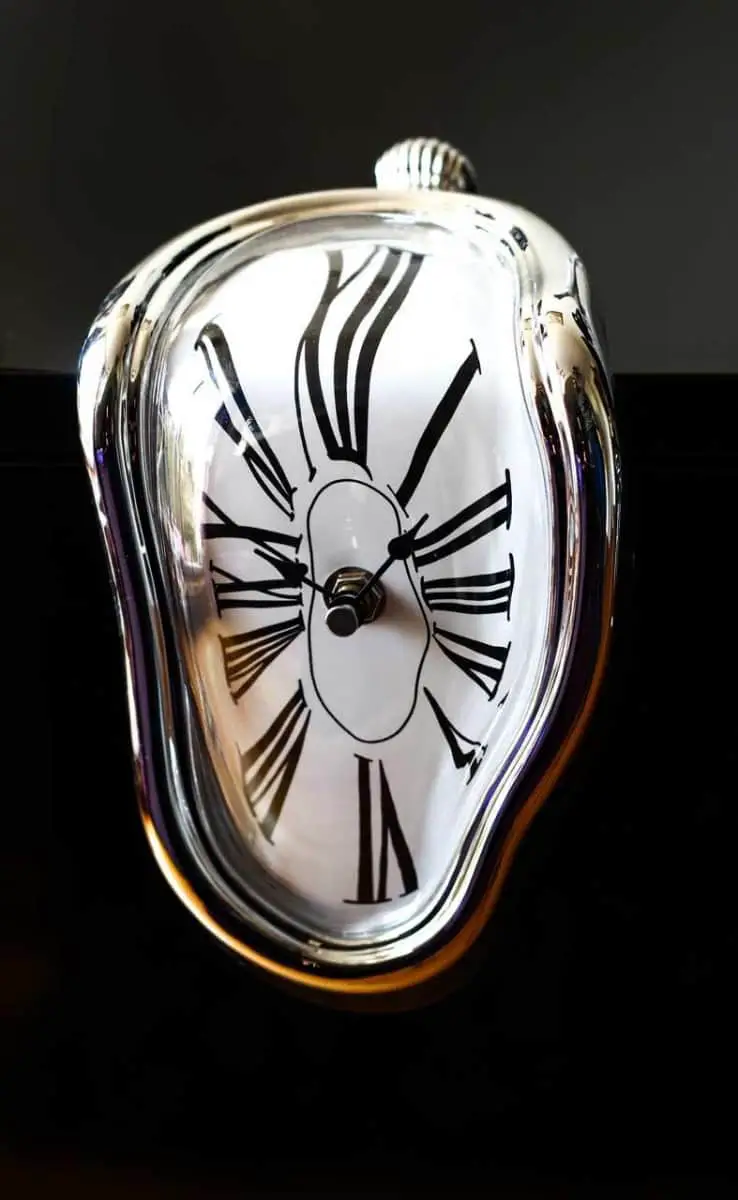
    Similar to sunlight, straight heat will melt a record. For example, I once left a copy of Armando’s Land of Confusion’ on a water radiator. Let’s just say the record looked like Salvador Dali’s clock the following day.

    Storing Records Improperly Or How To Warp Your Vinyl

    As vinyl records are semi-soft plastic, they are easy to deform. Even easier to deform if you add time and pressure (we’ll chat more about that later when I tell you how I’ve fixed warped records of mine). When you store your vinyl, the best way is to use a hard case and keep the vinyl neatly stacked on edge. However, there’s a trick to this you NEED to know:

    Never stack vinyl upright, on edge, without support!

    For example, let’s say you have a record box that holds 50 records in their sleeves. However, if you only have 20 records in the case, the extra space causes the records to slump over, leaning on an angle against the side of the case.

    You might think, “What’s the big deal, the records are protected?” But, they are leaning. Leaning records over time will warp, guaranteed. I’ve lost many a record to warping from foolishly leaning a stack of records. Always store your records vertically but ensure they are supported and not leaning on an angle.

    Do Warped Records Produce Poor Sound Quality?

    You’ve got a warped record but want to play it – is it going to sound like garbage? To answer this question, we need to look at a couple of factors.

    1. Extent of warp
    2. Quality of turntable arm balance

    The extent of the warp of a record will determine the extent of sound quality damage. When severely warped, the sound may ‘warp’ as well.

    RPM may sound like it speeds up or slows down momentarily. The pitch can shift slightly, and sounds may become distorted. However, the worst of warps will cause your stylus to skip, potentially scratching your vinyl record.

    The turntable has some responsibility to accommodate for a slight amount of warp. As you likely know, a stylus needs to grace the grooves of a record gingerly. You can adjust the counterweight of the stylus tone-arm to accommodate different scenarios by making the stylus lighter or heavier weight against the record.

    A quality turntable with an adequately balanced stylus arm will accommodate for minor record warping. Inferior quality turntables will have a much higher chance of stylus skip on warped records, potentially causing the stylus to scratch the vinyl surface.

    Why Playing Warped Records Is Bad (For The Record)

    As I mentioned earlier, from my experience, a warped record holds zero threat to your stylus or turntable. However, if the warp is bad enough, the warp may pose a further threat to the record itself.

    With a badly warped record and an unbalanced or poorly set up tone-arm, your stylus can skip grooves on the warped record. The skipping stylus can damage the record.

    When a stylus skips a groove, it can scratch a notch connecting parallel grooves inscribed on the vinyl record. This damage, in turn, causes further skipping, and the record now has irreparable damage that cannot be easily fixed and often renders the record into a nice round paperweight.

    Can I Fix A Warped Record?

    It’s that one downbeat on that one track playing in your cans that you just can’t let go of, even if the record is warped like a banana. And, unfortunately, you can’t buy any more either. So, what can you do to fix a warped record? There are few options, but you’re luck better be good, or you’re out of hope. Here are a few techniques I’ve found tend to work well (or not, read on to find out) on repairing warped vinyl records: time/pressure, time/pressure/heat, and specialty record straightening equipment.

    Time And Pressure

    I genuinely hope you have patience. I’m not talking about waiting a few hours here; I’m talking days or even weeks. Here’s how to fix that slight to medium warp in a vinyl record:

    1. Carefully inspect and clean the warped record. It must possess zero dirt. A sand particle can destroy a record if pressed into it, ensuring it’s clean and free of debris.
    2. Find a ludicrously flat surface. I use my marble kitchen counter. It must be perfectly smooth, perfectly flat, and clean.
    3. Keeping the record in its protective sleeve, place the record on top of a piece of cardboard (again, clean and smooth and flat), on top of the flat surface (like a stone countertop).
    4. Place the second piece of cardboard on top of the record; the same with cleanliness and smoothness applies.
    5. Set a weight on top. The weight must be big enough to cover the entire record and just as flat and smooth as the surface it’s sitting on. I use a smoothly sanded piece of plywood and then place a few standard house bricks on top.
    6. Wait and then wait some more. This process of weighting to re-shape the record has taken me anywhere from 3 to 6 weeks, depending on the extent of the warp. Make sure you don’t use too much weight either; you can cause damage to the record. That’s what I learned the first time I did this method, so use the cardboard as a protective buffer.

    Time, Pressure, And Heat

    The following method I’ve used to fix my records is the same as the first, except I apply heat. I learned this trick when I was gardening. True story: I was germinating tomato seeds, and they love the heat. I use under-tray heater pads fabricated to speed germination time. You can buy them at most garden centers.

    I found using two of these tray heaters for seed germination speeds the process of repairing warped records by a significant factor. Instead of waiting weeks, I’ve fixed records in days using this heat and press method. It works best on severely damaged records.

    Follow the steps listed above for the time and pressure technique, but add the hard surface and cardboard heating pads. The heat will transfer just enough through the single layer of cardboard and your record sleeve to gently warm the vinyl to aid in pressing.

    Specialty Equipment

    Yes, you can actually buy a machine to fix warped records. I’ve got one thing to say about these: extremely overpriced junk. It is the tool some have purchased just to find out that it doesn’t work very well. I had a friend who used one of these and destroyed a vintage house record from the 80s. It was the first time I ever saw him cry. Needless to say, you’re better off using the first or second technique I’ve described and tested.

    Have you had experiences with warped records or repairing them? I’d love to hear your methods or even your successes using my methods above. Let me know in the comments below if you have a great trick to help other vinyl lovers with their music.