Category: Storing

  • Can Records Be Stored in the Cold? (Let’s Find Out)

    Can Records Be Stored in the Cold? (Let’s Find Out)

    If you’re new to the vinyl record hobby, you may wonder what the best way to store your vinyl records is. If you want to keep your records in as good of condition as possible for as long as possible, you’ll want to ensure they get stored in the correct environment. Now, can vinyl records be stored in cold?

    Vinyl records can be stored in the cold. However, there are some things you’ll want to look out for. The vinyl records will become brittle and more prone to breakage at low temperatures. As they thaw, moisture will condensate, which can cause problems if you’re not careful.

    Keep reading as I discuss the changes your records go through when exposed to heat and cold and the proper protocol for storing vinyl records. 

    Can the Cold Damage Vinyl Records?

    The cold can damage vinyl records if the temperatures are below freezing. Temperatures below freezing, 32°F (0°C), can cause your records to become more brittle and attract moisture, both of which can damage your vinyl records.
    While the brittleness itself doesn’t have a negative effect on the record, it makes them far easier to break. Suppose you’re planning on transporting your records in this weather. In that case, you’ll need to be especially careful to ensure they’re properly packed so that they don’t shatter or crack during the shipping process.

    Another issue you’ll run into with the cold is when temperatures start to rise. As the temperatures rise, your record will begin to thaw. The thawing process attracts moisture, which can damage your record and its case.

    It’s best to thaw your records in a controlled environment where you can gradually make the temperature change and wipe away any moisture as it accumulates.

    Can the Heat Damage Vinyl Records?

    The heat can damage vinyl records. Heat effects on vinyl records are far more severe than cold effects. Heat and direct sunlight can easily warp your vinyl records and distort the sound to the point where it’s no longer playable.

    Generally speaking, most temperatures that are comfortable for you are comfortable for your vinyl record, so if you’re not sweating or shivering, you shouldn’t have to worry too much. However, once the temperature reaches 100°F (37.78°C), you’ll start to see damage from the heat in the form of warping and distortion.

    Note that the air around your record doesn’t need to reach 100°F (37.78°C) before damage starts to occur. Only your record does. Most records are black, meaning they tend to absorb heat more quickly than other objects. If you place your records directly near a heater or in the sunlight, they’ll absorb that heat, and their temperature will rise very quickly.

    Once your vinyl reaches the melting point, varying from 212 to 500°F (100 to 260°C) depending on the manufacturer, the damage will be irreparable. That’s why it’s so important to keep your vinyl records out of the sun and extremes in temperature, especially heat.

    How To Properly Store Vinyl Records

    You should keep your vinyl records in a cool area. 50 to 70°F (10 to 21.11°C) is generally safe, without excess humidity, and away from any damaging UV rays. You’ll also want to ensure you’re not putting excess weight and pressure on your vinyl records.

    Don’t Keep Your Records in Very Low or High Temperatures

    One of the most important aspects of storing your records to think about is the temperature they’re being stored at. As stated earlier in this article, both very low and very high temperatures can harm your vinyl records.

    At temperatures below freezing, vinyl records become brittle, making them more likely to break, especially if they’re under any additional pressure from other records. At temperatures over 100°F (37.78°C), you’ll start to run into issues with your vinyl warping. 

    Minor cases of warping can be repaired by reheating and shaping the record, but if it becomes too severe, your only option will be to toss the record and start over. Or you can keep your vinyl record as decoration.

    Avoid Keeping Records in Rooms With High Humidity

    Another thing to think about with your vinyl storage is the average humidity in the room. Over time, high humidity levels will cause significant damage to your vinyl records.

    It’s recommended that you keep your vinyl storage room at 30 to 40% humidity to avoid causing any damage.

    Remember that humidity is another concern that comes along with storing your records in cold temperatures. As the temperature fluctuates, the humidity will be attracted to the record. It will damage both the actual record and its sleeve. So, if your records freeze at any point, monitor them as they thaw to remove excess moisture before it causes damage.

    Avoid UV Rays

    Another environmental factor that’s damaging to vinyl records is UV rays. Over time, UV rays will start to break down your vinyl and its casing.

    Fortunately, this is a relatively easy problem to avoid. All you need to do is ensure that your records are stored away from any windows so that they’re not receiving any direct sunlight. Even if UV rays weren’t damaging to records, it would still be a good idea to keep them far away from the windows to avoid any temperature fluctuations that windows can bring.

    If you have any animals that require heat lamps or use grow lights on your plants, those also release UV rays, so make sure you place your vinyl collection far away from these items.

    Don’t Stack the Records

    Although it’s common to see vinyl collections stacked up against each other, and it looks amazing, it’s not the best way to store a vinyl record.

    Vinyl records typically weigh a little over 5 ounces (141.75 g) — that’s not too much. But if you have a stack or shelf of 30 vinyl and they’re all leaning against each other, they become too heavy. With that much weight, your records are likely to warp over time, ruining them.

    If you’re planning on storing your vinyl for an extended period, then you’ll want to make sure you have no more than 15 stored together. It will reduce the amount of weight that the pieces of vinyl have to carry and, if all the other conditions are right, should prevent them from warping.

    Where Should You Store Vinyl Records?

    You should store vinyl records in a temperature-controlled room in your home that has low humidity and no big windows that could introduce UV rays. For most people, a furnished basement will be the place that meets most of these requirements.

    To keep your records in tip-top shape, you’ll want to store them in an area with as few temperature fluctuations as possible and away from any humidity producers such as bathrooms. 

    If you have a furnished basement, this will likely be the best place to store your records as long as you can keep the humidity under control. Basements are less sensitive to rapid temperature fluctuations, tend to stay cool, and don’t have an issue with UV rays.

    Conclusion

    After all that information, it may seem like it’s impossible to store your vinyl records without damaging them, but that’s not the case. As long as you follow as many of the guidelines as possible, you shouldn’t have any significant damage occur.

    Your records should be stored in a cool environment, but not too cold as they can become brittle. As a general rule, if you’re comfortable, your records are, too.

    Related articles:
  • A Guide To Storing Your Vinyl Records

    A Guide To Storing Your Vinyl Records

    When you’re an audiophile, or even just want to keep your music in great condition, understanding the requirements for storing your vinyl records is essential. After all, you’re collecting them for a reason, just as I do. After years of storing vinyl in various conditions (not all of which were my choice), I’ve found the best ways to store your vinyl records for the optimal condition of your records.

    Vinyl records, like other fabricated physical forms of music storage, have specific conditions which offer optimal results. Optimal conditions will benefit your collection by increasing the longevity of your vinyl records. Best conditions include low humidity, stable temperature, and vertical placement.

    Let’s dive into the different things that affect vinyl record storage to give you the best chance of maintaining your collection for the longest possible time, in the best possible condition.

    How Things Affect Vinyl Record Storage

    We know that vinyl records construction is that of polyvinyl chloride. Commonly known as PVC, we use this same sort of plastic for all kinds of things, from water pipes to our audio record recordings. Given that PVC is a type of plastic, it can last a long time – but it is by no means invincible. (source)

    There are things that can negatively affect PVC. I mean, you can take a PVC pipe and shatter it if you drop the temperature enough. Similarly, PVC will also melt at higher temperatures. The melting point of PVC is between 212 and 500 degrees Fahrenheit. (source)

    What Determines A Record Is Well-Kept?

    A paper on changing perceptions to what good sounding (good quality) vinyl records are to collectors notes how our perceptions have changed. The paper points out how in 1979, a Rolling Stones reader complained about vinyl records ‘the snap, crackle and pop on undulating vinyl’ (Di Gianvittorio, 1979: 6). (source)

    Current culture (at the time of writing) is such that we yearn to hear those familiar sounds that define vinyl, albeit not during the actual music playback, but maybe in between tracks, right? It’s one of the things we all love about our vinyl.

    Although our perceptions of a good condition of vinyl record recording have changed over the years, collectors today still want our records to maintain their familiar-sounding personality and warmth only achievable with a good turntable and vinyl record.

    Let’s look now at what things affect vinyl so we know how to best store it for the best condition over time.

    Placement

    PVC plastic is a relatively malleable plastic, so it is so versatile and used for so many different purposes. As the plastic is somewhat pliable, vinyl records can bend and warp. Knowing this, we can define some rules for vinyl record placement for optimal storage results.

    Horizontal Placement

    Horizontally storing vinyl records is ideal. However, some stipulations make it likely less suitable for practicality. Let me explain.

    Vinyl records stored horizontally on a flat and level surface will be ideally protected in terms of a stable base to rest without fear of warping. However, they must not be stored horizontally with any weight on top. Given that most people who collect vinyl records have more than a few records in their collection. Well, imagine you had hundreds of vinyl records. If you were to store them horizontally and not pile them on top of each other, you would need an awful lot of floor space. Totally impractical in reality and therefore not recommended.

    Vertical Placement

    Vertical storage of vinyl records solves the issue of impractical floor space used for storage purposes. However, we now must introduce several other variables that can affect the record negatively when stored horizontally.

    First, if a record is stored vertically without proper support (like leaning against something on a slight angle), your record will warp over time. So, optimal storage of vinyl records requires stable support to maintain a true vertical storage position without leaning or horizontal pressures. An ideal piece of furniture for such a purpose is a record storage box utilizing rigid foam inserts to hold records upright; if the box isn’t full of records, that is.

    Light

    One of the most deadly adversaries of your record collection is sunlight. Have you ever felt something that is black and left in the sun? It gets pretty hot! With that said, your records will be destroyed by sunlight. Do not store your records anywhere that direct sunlight will find them.

    Sunlight is a significant contributor to vinyl decay. And vinyl decay is a primary source for audio degradation, so again, it’s best to avoid it if you like your records. (source)

    Temperature

    Temperature plays a significant role in degrading PVC. Keep in mind that the audio recorded into the record is done so within tiny microscopic grooves with even smaller cuts and notches. These tiny cuts into the record grooves are what give the record the ability to record audio. Can you imagine how easy it is to melt a tiny groove enough to affect the audio quality negatively? As the melting point of PVC can be as low as 212 Fahrenheit (boiling water temperature), depending on additives to the plastic, you can understand that leaving a record on a radiator could leave you with a very soft and useless clump of vinyl.

    Cold temperatures at extremes will also damage or increase the risk of damage to your records. For example, say you were living in Michigan and get some pretty nasty winter weather. You wouldn’t want any of your vinyl stored in an unheated garage. Extreme cold makes PVC extremely brittle.

    If you’ve ever seen a video of something dipped in freezing nitrogen and then shattered, that’s the same as what happens to records when cold and dropped. And you don’t need liquid nitrogen to do that to a record, just some nasty winter weather below zero. So, it isn’t just heat that can hurt your records.

    Similarly, as mentioned with sunlight, just leaving a record out in the sun for a short time can heat the plastic enough to cause audio degradation in mere minutes of exposure. And if you leave a record in a hot area or in the sun and it isn’t on a level surface, you can expect a lovely warp in your vinyl record.

    Humidity

    Humidity does not generally affect PVC on its own. However, if we add a few things to moisture, then it can be very detrimental.

    First, we have to consider that most record sleeves are made of cardboard. Well, cardboard in a moist environment makes mushy paper mache-like stuff, doesn’t it? You can imagine what high humidity will do to your collector record sleeves holding your precious musical recordings. For this fact alone, it is best to store vinyl in a low humidity environment.

    Second, if we add temperature change to high humidity, we get another set of issues. Fast temperature changes with high humidity levels induce condensation. Think of a cold drink in a glass on a hot day. The cold glass will ‘sweat’ as the humidity in the air condenses on the cold surface. Similarly, if your records are cooler than the atmosphere around them, condensation will occur that could damage your cardboard vinyl record sleeves.

    Long-term storage of vinyl records in a moist environment may also encourage mold or bacterial growth, so again, high humidity should be avoided for best results storing your records.

    Atmosphere

    As we were just discussing the nature of high humidity, let’s take a moment to consider the atmosphere itself and neglect the moisture content for a moment.

    Have you heard of rust? Of course, you have (not like you’ve been living under a rock, right?). Rust is basically the oxidation of iron. However, it brings about a good point – oxygen likes to oxidize stuff. Fire is another form of oxidation, which can be a handful to stop once it gets started.

    Oxygen reacts with many things. You could say it is reactive. PVC also degrades from oxygen overtime via oxidation. However, it’s not like the rusting of iron; it’s much more subtle.

    The air we breathe is about 21 percent oxygen. So this is the sort of benchmark we want to use when thinking of the best atmosphere to store records. (source)

    Indeed storing them near any type of possible harmful vapor is a bad idea. For example, I wouldn’t keep my records anywhere near where I might get acidic vapor trapped in their storage box. In other words, I don’t use bleach spray cleaner or similar things near my records that could affect them via vapor exposure. Not something I typically worry about nearly as much as potential chemical exposure.

    Chemicals

    One of the last serious considerations for storing vinyl records is ensuring that they are not exposed to chemicals. Now, I don’t generally concern myself with spraying cleaners and whatnot in the room where my vinyl is in storage. Due to keeping my vinyl in a storage box, there is little chance I will expose them to chemicals.

    The main problem that some face with chemical exposure and storage damage is cleaning vinyl records with inappropriate chemicals and leaving a residue that damages the records while in storage. Similarly, some substances can seep into the cardboard sleeves holding your records, causing long-term exposure to potentially various harmful substances.

    Similarly, chemicals might damage your record sleeves also. Therefore, knowing how to clean your records properly is vital to their long-term storage success. Take a look at an article I wrote on proper cleaning for the vinyl records here.

    Many manufacturers have perfected the chemical composition of vinyl to best suit the audio recording process. However, it does not necessarily mean they use the chemical additives the PVC needs to reduce oxidation or reactivity to radiation like ultra-violet.

    Studies have shown that using additive chemicals like dibutyltin maleate (DBTM) and dioctyltin bis(isooctyl thioglycollate) (DOTG) both help to stabilize the PVC further and reduce its reactivity to both oxygen and ultra-violet radiation. (source)

    Try to say those chemical names three times fast; I dare you! Seriously though, unless you are a genius chemical engineer, understanding how cleaners or other chemicals might react with these sorts of additives to PVC is a bit of a mystery. So, to err on the side of caution and attempt to prevent a reaction between chemicals, it’s best to steer clear of using any chemicals to clean your vinyl records.

    Summary Of Best Storage Practices For Storing Vinyl Records

    • Keep your vinyl stored vertically but well-supported to avoid warping over time.
    • Keep your records out of direct sunlight.
    • Try to maintain a consistent room temperature for storage without swings in temperature.
    • Keep records stored in a low humidity environment.
    • Maintain storage of records at a safe distance from hazardous chemical vapors
    • Keep records clean with a carbon fiber brush and avoid using harsh chemicals that could leave residues that cause damage over time.

    My Favorite Type Of Record Storage Box

    I’ll be honest – I love my records. I’ve also had my eye on the music business for years. I just find it so fascinating. Well, my taste in record storage boxes reflects not only my desire to have outstanding quality records kept in excellent condition, but it also reflects my love for concerts and the industry.

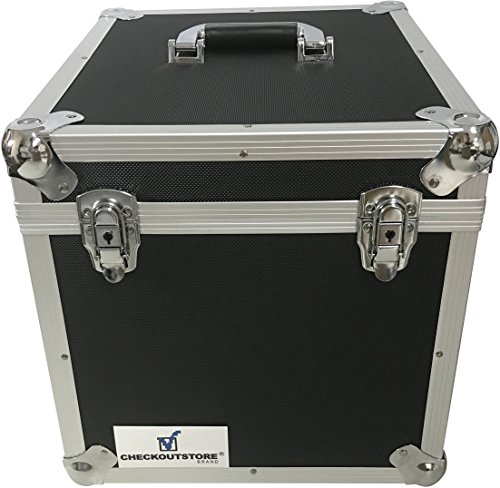
    My favorite record storage box is a sturdy aluminum (road case style) vinyl record box like this one I bought from Amazon.

    CheckOutStore (1) Aluminum Heavy Duty 12" LP Vinyl Record Album Storage Box (Black/Holds 125 Records)

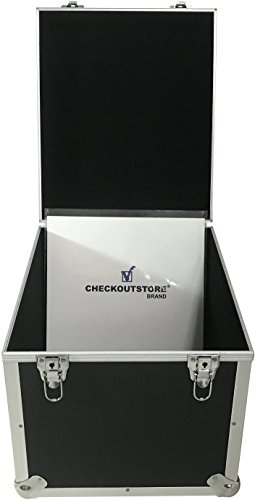
    This record storage case holds up to 125 records, although about 120 is best. It has soft padding on the inside and rigid heavy-duty protection on the outside. A sturdy handle and two latches keep your storage box closed, locked, and secure. The handle makes it easy to carry, but still, you need to consider that a full crate of vinyl is still going to be pretty hefty (don’t throw your back out!).

    As you can see from the style, it’s a very concert road case styled with a definite appeal to those like me who value function over appearance (but still want it to look cool).

    CheckOutStore (1) Aluminum Heavy Duty 12" LP Vinyl Record Album Storage Box (Black/Holds 125 Records)

    I also like that the case has a locking lid. Not that I need to lock my records up at home, but it helps to keep them dust-free by having the lid shut. I’ve seen a lot of record storage shelves and similar, but all keep your records exposed to the elements, and many will warp your records unless they are completely full. This storage box is, in my experience, the best option for storing records at home. And you can travel with it, given its great road-case robust construction.

    Sources

  • How to Store Vinyl Records: 8 Things You Need to Know

    How to Store Vinyl Records: 8 Things You Need to Know

    Your vinyl collection has finally outgrown its designated space, and it’s time to figure out a better place for them. But ensuring the safety of your precious records is hard, especially when there is so much to remember.

    What if I told you that storing your records doesn’t have to be stressful, or even difficult?

    In this article, we’ll discuss a few storage tips, general care tips, and display tips to keep your record collection safe, clean, and eye-catching.

    Jackets With Sleeves

    When it’s cold outside, a jacket without sleeves isn’t what we’re going to reach for, because we know it won’t help. This is the same concept with your records. A cardboard jacket can’t totally protect a record. This is why record sleeves have come into practice and popularity.

    There are two types of record sleeves. First, the inner sleeve. This one goes over the vinyl record as the first layer of protection. For an inner sleeve, you’ll want the material to be smooth and silky. Other materials- paper-like sleeves, for example- will scratch up the surface of the vinyl. Once the inner sleeve is over the record, it will go inside the cardboard jacket.

    Next, we have the outer sleeve. This is similar to the inner sleeve in that it needs to be smooth and silky in material and feel. The outer sleeve will help protect from dust buildup on the vinyl and its jacket. You’ll want to make sure that your outer sleeve is also lightweight. A heavy one could end up sticking to and eventually peeling pieces off of the jacket.

    If you don’t want to have multiple sleeves, you can try vinyl bags. These are similar to outer sleeves in that they go over the cardboard jacket. However, vinyl bags can also seal and become airtight, better helping to protect from dust, dirt, and anything else that could antagonize your records. If you like the sleeve idea and you want to give your vinyl that extra 10% of protection, try adding a vinyl bag on top of the sleeves.

    Temperature

    There are several factors that can affect your records, including temperature, light, and humidity. Temperature is perhaps the most major of these because vinyl records are incredibly sensitive to heat- within minutes they can be rendered completely unusable. As a general rule, lower temperatures are safer for your records.

    The recommended temperature for records to be stored at is about 46-50°F. Anything above 50 degrees can start warping your records. This isn’t a hard and fast rule, though. For the records you play daily, the collection can be stored in temperatures from 65-70°F. That said, for long-term storage, 50°F and under is the best temperature range to keep your vinyl safe.

    Related articles

    What Temperature Can Vinyl Records Withstand? We Have The Answer.

    This Is The Temperature In Which Records Warp

    Light

    Light is another important environmental factor to watch out for while deciding where and how to store your vinyl records. Records should not ever be directly exposed to light, whether it’s intense or not. But that doesn’t mean that you need to keep your records out of all light, though that would be kind to the vinyl. A good principle to follow is to keep the vinyl out of direct light as much as you can- minimal exposure is key.

    Direct exposure to light can, like high temperatures, start to warp your vinyl. This is because direct light does have heat, whether we can feel it or not.

    Humidity

    Similar to temperature and light, humidity can also create heat and, therefore, warping effects in your vinyl collection.

    The biggest key to this is keeping air flowing. Fans and air conditioning are both great options to assist with this. And another tip: don’t store your vinyl in the attic or the basement. You may have noticed that neither of these areas has good air circulation, and they sustain more extreme temperatures, because attics and basements are more affected by outside temperatures. This is not good for vinyl, so try to keep it in a spot where there is consistent airflow and not a lot of humidity.

    Vinyl loves a dry environment. By dry, we mean anywhere from 35-40% relative humidity (RH). Anything more than that can create a greenhouse-like effect on the vinyl, like higher temperatures and more water in the air.

    Cleaning and Care

    The way you clean and care for your vinyl collection also has a big effect on the records. A record cleaning brush is a great way to keep your records clean. True to the name, these brushes are specific to cleaning records, so they have no problem getting into those grooves and cleaning out any dust or dirt that has gathered while it was out of its jacket and sleeves.

    You may be the type of person that cleans their records on their t-shirt and calls it good, and if so, this next part is for you. Cleaning the record with your t-shirt is not good for the record. Even if the shirt is super comfy and soft, fibers in the shirt can still scratch the vinyl.

    Another great cleaning option for your vinyl is a vinyl cleaning solution that comes as a simple spray. For use, you can just spray the solution onto the record. Make sure to stay clear of the record label! Then, gently wipe down with a microfiber cloth. Using this cleaning process every 6 months will keep your records looking nice, shiny, and most importantly, clean!

    As a general rule, don’t touch your records with your hands (unless you’ve carefully washed and dried them first). Even after being washed, and especially before, hands have so many oils in and on them, and these act as a trap to catch all the dirt, dust, and debris. Think of handling your vinyl collection as you would handle a hard copy of a photograph. Touching the photograph damages it, right? It’s the same case with vinyl: the oils in our hands are harmful to the material.

    Using finger cots or clean nitrile gloves while cleaning will help to keep fingerprints and oils off of the vinyl, give you a better grip, and assist in keeping the vinyl records clean. If you’re just playing your records, make sure to wash your hands first, and try to only touch the edges of the record.

    Boxes

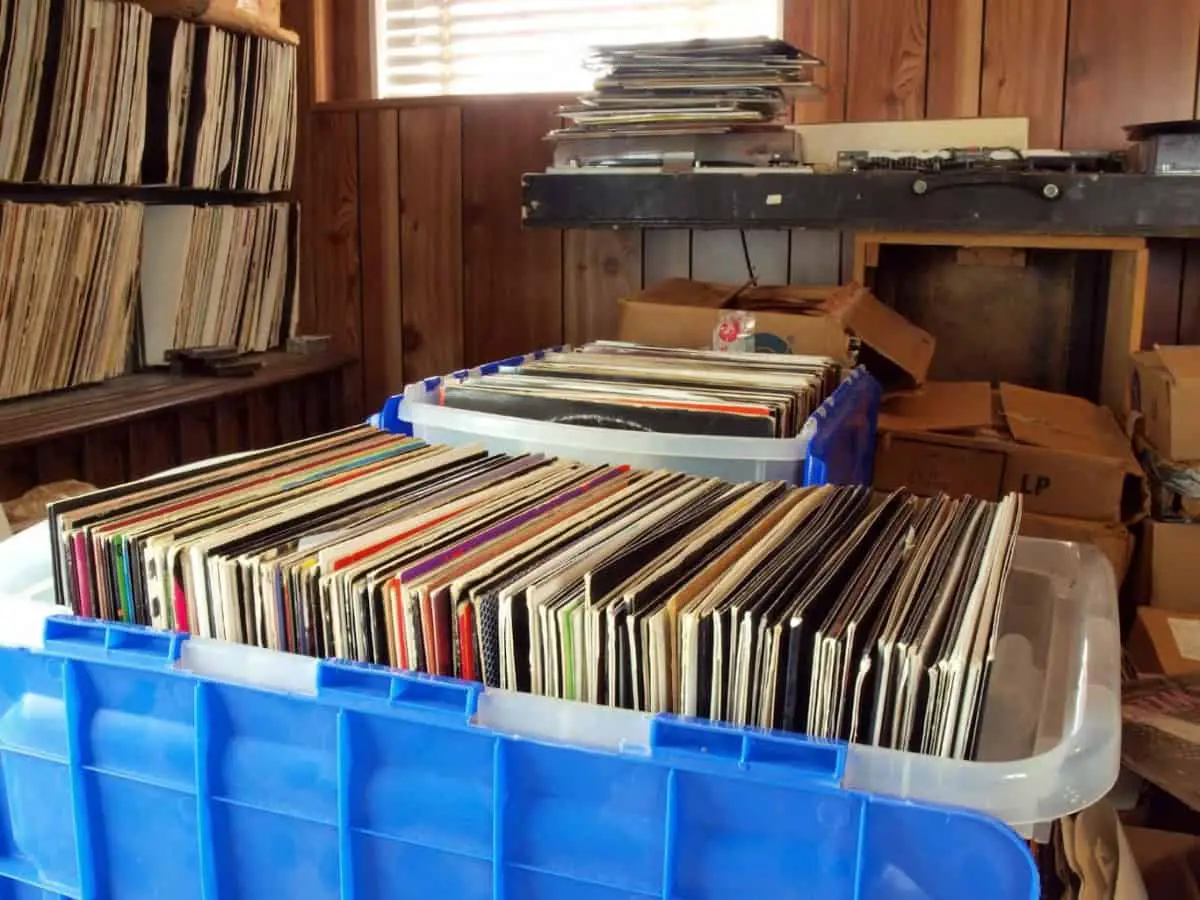
    Boxes and bins are great storage options, especially if you don’t play your records super often. If you’re storing your records in a box, make sure it’s not in a cardboard box. Cardboard boxes aren’t as strong as other materials and they can break easily. A better option would be a heavy-duty plastic box. Crates and baskets are also some great, more stylish, options.

    There are also several airtight options, some that are specifically designated for record storage. These are great for transporting your collection during a big move, but for permanent storage, these are also not the greatest option. Though they’ll keep the records safe, airtight boxes have no airflow, which can contribute to higher or lower temperatures and other components that can compromise your records.

    Shelving

    Because there are so many types of shelves, they have a lot to offer. Shelves can be fun accents, function as beautiful accent furniture, provide useful storage, and so much more. These uses make shelves the perfect candidate for vinyl storage. We’ll further discuss how to style different types of shelves later, but here’s a list of shelving do’s and don’ts for your vinyl collection.

    • DO install metal brackets under the corners of shelves. Shelves aren’t mean to hold too much weight, especially floating ones. Give your shelves a little extra power by adding brackets underneath them.
    • DO group your vinyls together by size. You may already have a great organization system, whether it’s by color, genre, or artist, but trust me on this. Grouping records together by size will not only make the shelves aesthetically pleasing to look at, but it will also assist in evenly distributing weight among shelves.
    • DO use labeled dividers in between groups. This one isn’t necessary, but for the inner perfectionist and organization master in all of us, it makes tracking down the record we’re wanting so much easier.
    • DO store your vinyl records in an upright position. This will eliminate pressure on the vinyls and keep them happy.
    • DON’T touch your vinyls! If you must touch them, wash and dry your hands first. And please, just touch the edges. The oils in your hands can cause damage to your records.
    • DON’T stack your records on top of each other. Pressure isn’t good for records. This is another factor that can cause warping and other complications in the records.
    • DON’T store in direct sunlight. You may have an empty shelf on the wall, but if that wall gets tons of sun, that is not the place for your vinyl collection. Direct and intense light can cause major warping problems in vinyls.
    • DON’T put away vinyl records before cleaning them. Nobody wants to see a buildup of dirt and dust, and it’ll start to affect how they play after going too long without cleaning.

    Some Display Tips

    Vinyl records are becoming a very popular way to decorate, whether you’re into collecting them or not. We’re seeing them pop up in college dorms and on prominent display in homes, bringing some nice vintage, retro, or sometimes even boho vibes to the room. It all depends on what they are styled with.

    Crates have always been an interior design staple. You may be surprised to hear that they have a history with storing records- people used to use milk crates as record storage because they fit the records perfectly. Now, though real milk crates are incredibly hard to come by, putting your records in a cute crate would add a touch of history to the space.

    Open shelving units are another great way to store records. A great example of these is the KALLAX shelves from IKEA. These have so many functions, and you’re able to either put the records straight into some shelves and put baskets in the other shelves to add a bit of balance and keep some things out of sight and out of mind.

    Related Article:

    Great IKEA Hacks for Storing Vinyl Records

    Floating shelves are another fun way to store your vinyl records. There are so many types, ranging from wire racks bent into fun shapes to the basic, clean-cut wooden shelves we all love. You can either prop up a few records on the shelves, slide them into the racks, or you can combine them with other design elements like cute plants, stacked books, and figurines. Floating shelves are easy to overload, so be careful to not put too much weight on shelves that are holding your collection (or any other valuables).

    Wire magazine racks (and designated record racks) that can stand in a corner are another great way to store records. Be careful of storing yours in one of these, though, because overloading the angled shelves could cause pressure on the records that are on the bottom.

    There are also so many great end tables that can be used to store records. With the rise in people looking for beautiful and functional furniture, stylistic and functional shelves seem to be incorporated into everything, including those tiny tables on the sides of your sofas.

    If you want to display your records on the wall, you could purchase a pretty picture frame and display the record on a wall without lots of sunlight. This will give a little bit more of a sophisticated, art-gallery vibe to your decorating.

    Another super fun option is to mount your records on the wall without a frame. Twelve Inch sells an amazing wall-mount made for vinyl records specifically. It comes with two magnetic pieces, one on the wall and one on the jacket of the record, that allows for easy attachment and removal. This is perfect for those that want their favorite vinyls displayed prominently, but want to be able to listen to those favorites with ease.

  • Great IKEA Hacks for Storing Vinyl Records

    Great IKEA Hacks for Storing Vinyl Records

    With the 80’s making a surging comeback, vinyl records have become trendy as of late. With artists releasing albums on vinyl and record shops popping up in every city, there is a growing conundrum: stacks of thin, perfectly square vinyl records with nowhere to store them. In this article, we will turn to Ikea to help us find the most chic ways to house our vinyl.

    Kallax Shelves- A Vinyl Staple

    Kallax shelves are those square cube shelves that look like a physical version of the graph paper you used in seventh grade, and Ikea practically invented them. Kallax shelves usually have pretty equal dimensions, 13×13 inches and about 15 inches deep, making them the perfect place to store vinyl records, which typically have similar dimensions at 10 inches on average. This sizing is pretty consistent, although you can find cubes to house vinyl with smaller or larger dimensions.

    The style of kallax units can vary greatly, with some units being low to the ground and small enough to fit comfortably in a corner where they won’t be the center of your home. These smaller units look elegant in any space and are light enough that they can be hung on the wall for a modern ‘floating’ shelf. On Ikea, kallax ranges from four shelves to twenty five. Have a lot of vinyl? A larger unit is a nice thing to place against the wall with small potted plants, framed pictures, and of course vinyl in the windows. Check out the largest unit available here.

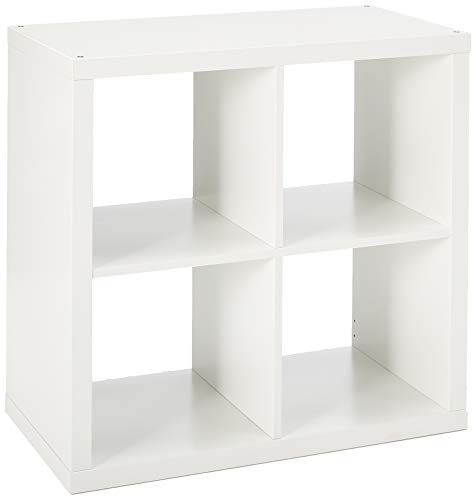
    IKEA KALLAX shelving unit, 30 3/8x30 3/8"", White

    If you are not a fan of the homogenous look of kallax shelves with all the same dimensions, don’t despair! Ikea offers a tall kallax shelf with different sized cubes for a more modern, eclectic look. That way, you can house your vinyl in a neat space that also lends a nod to the look that you are trying to create. Check this shelf out here.

    Ikea offers three color choices for kallax: black-brown, light effect light gray, and white. If you like a more classic style, black-brown might be a good choice, while gray and white make good accents to a minimalistic space.

    Overall, kallax shelves are really a perfect option for housing vinyl due to their seamless, compact feel and accommodating dimensions.

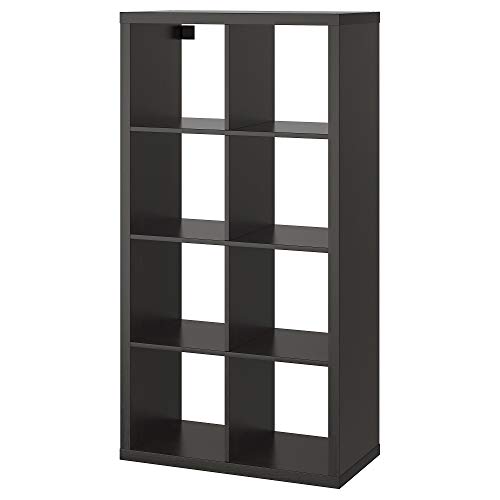
    IKEA KALLAX Shelf, Black-Brown

    Types of Kallax Inserts

    A great way to turn a standard kallax shelf into a cozy piece of home furniture is to put storage boxes inside the shelves. Not only will this add a unique accent to your home that is difficult to replicate, but it will add a splash of color that will make the unit look like a work of art. Additionally, some people might be worried about their vinyl getting bumped and falling off the shelves. Kallax inserts ensure that they rest easy as their possessions are not only stored but protected.

    Ikea offers many different types of storage boxes. One is a the Lustigkurre basket, an intricately woven seagrass basket that has a braided wheat pattern. While a bit pricer at $12.99 per basket, these are a great way to beautiful any space. With dimensions of 12 ½x13x12 ½, they are also a perfect place to house vinyl records.

    Another option is the Bullig box, a slightly smaller basket made of woven bamboo. According to the Ikea website, they press and treat the bamboo to give it its gorgeous natural brown color. These baskets are $9.99 a piece, and have slightly smaller dimensions at 9 ¾x12 ½x9 ¾, making them a great option for housing smaller vinyl. These baskets are great if you’re trying to create bohemian living space.

    If you appreciate a more vintage style or will be storing your vinyl in an office space, the Rejsa box might be a good addition to your kallax unit. This grey-green metal box is in the style of an old school filing cabinet. It has a place for a label on the front, so if you like to keep your vinyl separate according to artist or genre, the Rejsa box might be a good way to do that. The dimensions on these is 12 ½x13 ¾x12 ½ inches and $17.99, but because of the durable material, you would likely be getting your money’s worth!

    If you’re looking to save money or fill up a particularly large kallax shelf, the Fysse box is perfect. A fabric box that comes in one color- dark grey- this insert is a great choice for people looking to simplify their home. One box is only $2.99, and the dimensions are 11 ¾x11 ¾x11 ¾, making it suitable for all but the largest vinyl.

    Things You Can Do With Kallax

    While the kallax unit may simply look like a glorified book shelf, there are many different ways to organize the units that will fit into your everyday life. The most common option is to make it a beautiful center feature for your home. This unit has numerous windows of different sizes in which you can house vinyl, seashells, flower pots, and even artwork! To get ideas of how you can turn your kallax unit into an eye-catching display, see this blog.

    TV stands are functional and creative ways to optimize space while also showing off the spines of your colorful vinyl. Ikea’s Lappland unit is a good example of this, with a space made for a television and kallax shelves surrounding it. The Kallax/Lack unit has one horizontal and one perpendicular shelf, and an open space on which a TV can be placed. It is slightly cheaper than the first option, and forms clean, simple lines with its kallax boxes. These boxes make a great space to adorn with decor or to store vinyl. Personally, we believe there is no better way to adorn your TV than with a bunch of colorful vinyl!

    Another thing you can do is make your kallax unit into a piece of furniture: a bench, a window seat, or even a couch. Window seats are a lovely option if you like to listen to records in a bedroom or office space. It is also a great, space-saving way to store your vinyl while also basking in a comfortable window view. Kallax window seats make for a perfect reading (or listening!) nook. Ikea doesn’t sell window seats online, but you can make one yourself by adhering a cushion to size on top of a small kallax unit such as this one. We will go more in-depth about these options in the sections below.

    Storage Benches- A Minimalistic Approach

    Multifunctional units- every home designer’s dream! We think we’ve talked sufficiently about the merits of kallax for maintaining a minimalistic lifestyle, but it’s about to get better: not only are storage benches a great addition to an office or mud room, they are a classy way of storing your vinyl as well. Depending on the style and the way you like to design your house, storage benches can be sparse or luxurious, with hidden space or open display windows. If you like to display your vinyl for all the see, we recommend something like the Panget, a beachy white and blue cushioned bench with space for storage on the bottom. If you’re looking for the kind of storage bench that you’d place at the end of the bend, you might look at the Inndyr bench, a dark grey cushion that is an elegant edition to any home. This kind of bench is a great place to store vinyl if you’d like to keep it out of view.

    Under-the-bed Storage

    When storing vinyl under or around your bed, your best bet is to find a bed frame with a kallax unit underneath it, which is the perfect size for displaying upright vinyl records. However, there are also some great general storage options at Ikea that make it easy to store anything from vinyl to spare sheets. The Brimnes is our favorite option, and has several long storage boxes underneath and kallax style boxes along the side that accommodate vinyl records nicely. This is a great choice if you live in a small space or if you simply want to keep your vinyl records close at hand.

    Looking for a holiday gift for a college student who loves vinyl? This is a great option. Not only are they able to protect their precious record collection, they can also organize them nicely in the Brimnes.

    Filing Cabinets

    We know what you’re thinking…boring! But trust us, this old school style is making a comeback. Even lockers are being implemented into home decor for a uniquely chic look. Check out this article if you’re curious how! Ikea sells many varieties of filing cabinets, including the Idasen, which is the perfect size for storing vinyl records. Choose a finished blue, white, brown, or classic egg shell colored cabinet from Ikea, or go thrifting and refurbish your own filing cabinet.

    This is also a great way to store records if you have a large collection. It makes them very easy to access and organize quickly.

    Smaller Shelf Units

    While some people may wish to show off their vinyl, other may not have the budget (or the space!) to do so. Ikea offers a variety of smaller shelving units that can meet the needs of someone with less to spend and more minimal tastes. The Hyllis is a three tiered steel shelf that could easily blend into any space. At only $9.99, it also accommodates any budget. With dimensions of 23 5/8×10 5/8×29 1/8 inches, this shelf is best for storage larger vinyl upright or smaller vinyl stacked. For an even smaller shelf, Ikea’s Dynan cabinet is a simple white storage unit that is small enough to fit into a closet. The dimensions are 15 3/4×10 5/8×21 1/4 inches, making it perfect for vinyl.

    Traditional Book Shelves

    Bookshelves! How did we not mention them before? Traditional bookshelves are an obviously sensible option for storing vinyl, even alongside your books and other newsprint. While most of the other storage methods are more clean and modern, nothing screams vintage chic like a wooden bookshelf. One of our favorites is the Laiva, a black-brown bookcase that has shelves wide enough to fit vinyl records and is very budget-friendly at $19.99.

    Another option for a traditional bookshelf is from the IKEA Billy collection. The Billy bookshelf collection has three different types of bookshelves depending on the exact dimensions you need for your record room. The bookshelves also come in three different color options. Color options include white, tan/natural, and black. The different size options for the Billy collection are listed below in the chart.

    To view the product on the IKEA website, click the hyperlink of the name to be directed to the website.

    Name and Description Dimensions Price
    BILLY (tall and thin)15 3/4x11x79 1/2 “$39
    BILLY (tall and medium)31 1/2x11x79 1/2 “$49
    BILLY (short and medium) 31 1/2x11x41 3/4 ” $29

    Wall Shelves

    For someone who loves to showcase their record collection, wall shelves are great tool to use. They can be used to hold the entire collection, or to show off certain records. This is also a great tool to use if there are little hands in your home that love to touch the records. Having them hung high on the wall will keep them out reach of young hands, but easily accessible for yours.

    One option we like for either a small collection or showcasing one record is the BERGSHULT / PERSHULT. With the panels coming up on either side, it sleek enough to emphasize the record(s) without taking away from the aesthetic that the record offers to the room and decor. This would be a great option for someone who has a couple favorite records they want to have on display as decoration and easy access. Having a couple of these hanging on the wall near the record player would really pull the room together and emphasis that it is the record-playing room.

  • Can Records Be Stored Horizontally?

    Can Records Be Stored Horizontally?

    Storage is one of the routine maintenance practices for your vinyl records; the way they are stored directly affects their functionality and life shell (2).

    You should never stack your vinyl records horizontally because stacking them on each other causes scratches and warping the records over time.

    This article will discuss the difference between vertical and horizontal storage, why you should not store records horizontally, why they should be stored vertically, and how to keep your vinyl records.

    Can Records Be Stored Horizontally? – Vertical Or Horizontal Storage?

    Vertical storage style has always been the best record storage practice, while horizontal storage style damages records over time.

    The storage style of your records matters a lot; they determine the life shell of your vinyl records and their sound quality. 

    If you are storing less than five records, then you can try the flat storage style. If you own more than five records, make sure to keep them vertically. In my experience, The weight on the vinyl records at the bottom of a horizontal storage style causes many damages. 

    There are many reasons you should always consider vertical storage style, from saving the vinyl records from bearing unnecessary weight to avoiding warping or mishappening of your vinyl records and crack. 

    Dangers Of Horizontal Storage Of Vinyl Records

    There are a lot of dangers attached to storing your records horizontally. They are not risks or probable outcomes but direct and definite consequences of holding records horizontally, which I have encountered in the world of vinyl collection. Here’s some of them:

    1. Warping – When you stack your records on top of each other, distortion is inevitable. Warping means your vinyl records will start to bend to the weight and become deformed, taking another shape entirely. Warping can cause your vinyl record to become unplayable permanently; it will no longer be flat but have a bowl-like form, which definitely cannot be played. Many record owners have tried flattening it out again (1), but there is only a slim chance of that working out, and in the end, you might have to throw it out.
    2. Skipping – In some rare cases where warping has not started yet, cutting takes place. The weight applied to your vinyl records will cause them to miss while playing them when they have endured the weight for too long. While playing, some parts might get cut off or not play at all; this is caused by applying weight on your vinyl records. 
    3. Scratch from Pressure – The pressure generated from the weight on the records at the bottom of the stack is high, and your vinyl records cannot hold pressure. They are fragile materials that cannot withstand too much pressure on them. This pressure ultimately begins to cause scratches on the vinyl records, which continue to get deeper until they are no longer playable. Scratches happen when your vinyl records are in sleeves; by forcing them out from under the stacks. Therefore, the sleeves that are supposed to protect them from scratches cannot do their jobs but damage the records because of their storage conditions. 
    4. Heat Generation – Storing your records on each other does not allow air to go in between them to keep them aerated. Getting oxygen is also essential for your vinyl records because heat causes them to be damp, and this is also a perfect condition for molds to grow. When the heat gets too much, moisture accumulates, causing mildew growth and rendering them unplayable. 
    5. Cracking – The worst thing that can happen to your vinyl records is getting snapped. Cracking often occurs when you store your vinyl records horizontally, especially on an unstable surface. They crack easily from the pressure, and sometimes when you are pulling them out. 

    Why Is Vertical Storage The Best?

    There are several reasons why vertical storage of your vinyl records is the best for you. Below is just a few:

    • When you store your records vertically, you do not need to worry about warping because there is no pressure on them, and nothing can make them bend. They remain flat and always ready to be played.
    • There will no longer be any weight on them, and this means no scratches. There will be no force to pull out a record since they are not stacked anymore. Your record sleeves can do their jobs of protecting the vinyl records from getting scratched and won’t damage them either. 
    • Elimination of mold growth due to proper aeration between your records occurs. They now get a fair and adequate air supply, no more dampness or moisture accumulation that grows mold.
    • There is no risk of getting cracked or broken anymore, and this can only now occur when you are handling them, but not while in storage. 
    • This storage improves your vinyl record’s shelf life; they can be stored vertically for years without damage. They will not depreciate or sound quality because they are correctly stored. 

    How To Store Your Vinyl Records

    Proper storage of your records goes beyond horizontal or vertical storage styles; you must take several steps for an adequate repository for fragile vinyl records (3). I have broken them down into five quick and easy steps:

    1. After playing your record, the first thing to do is to clean your vinyl record. Cleaning can be done with vinegar and distilled water solution, cleaning the vinyl record properly, rinsing out the mixture, and drying the vinyl records. There are other cleaning methods, but ensure that you follow one of them appropriately, using the correct tools and measurements. Improvising some of them might cause severe damage to your records. 
    2. After cleaning them and drying them correctly, make sure you put your records back in their sleeves. Your vinyl records must always be in their sleeves, except you are playing them at the moment. Keeping them in their sleeves prevents the accumulation of dust and dirt on them, another risk factor to vinyl health. Sleeves save your records from getting scratched or cracked by mistake due to bad handling. 
    3. Your records must be in vertical positions; this means they should be upright in their shelves or boxes. To avoid warping, skipping, cracking, and other damages to them, you have to store them vertically. 
    4. Never store your vinyl records horizontally for any reason, the risks are way too much to deal with, and some are permanent and cannot be fixed or reversed. Frequently you might not get those vintage records anymore, so ensure to treat them nicely to avoid damages.
    5. Play your records the right way. Do not directly touch the surface of your records; handle them by the edge only. Skimming the surface of your record can cause scratch or transfer of oils to them, which affects your sound quality. Always wait for your song to come on, do not handle the needle while playing to search for songs; this can cause severe damage when placed on the wrong grooves. 

    Frequently Asked Questions (FAQ)

    Can I Store Less Than 20 Records Horizontally?

    The best storage practice is the vertical style, and to be on the safe side, make sure you store your records in a secure manner irrespective of the number of records.

    It should not matter how many records you have before following the best storage guideline. Store your record vertically only, do not let them get stacked on each other because there will be adverse effects over time, and they might not be reversible.

    How Long Can I Store Records Vertically?

    There is no time limit for vertical storage; you can store your records uprightly forever.

    Vertical storage keeps your records fresh for as long as you have them; you can store them vertically for as long as you want. Ensure they are in a place with the right amount of air, free from external risk factors, and carefully handled when you want to play them. Doing this protects them for as long as you own them.

    How Long Does It Take For Records To Get Warped?

    Warping takes a very long time, but it can take less than a month when there is a heat source or improper aeration from lousy storage.

    Warping from horizontal storage is a very long process, but it occurs fast when a heat source is applied to the record or generated from the inadequate air supply. Store your records vertically, away from the heat source, and ensure an adequate supply of air.

    Summary 

    Vinyl records can be stored horizontally, but they come with substantial risk factors when they become a long-time habit and when the records are more than five. Vertical storage poses no threats irrespective of the number of records. If you have further questions, kindly leave a comment below.

    Sources

    1. McCrigler, Brittany, et al. “How to Repair a Warped LP Record.” iFixit, 2014, https://www.ifixit.com/  Accessed 13 July 2021.
    2. Rigby, Paul. “How to store your record collection in 8 steps.” The Vinyl Factory, 2015, https://thevinylfactory.com/ Accessed 13 July 2021.
    3. Storage, Life. “5 Best Practices You Need to Learn about Record Storage.” LifeStorage, 2017, https://www.lifestorage.com/  Accessed 13 July 2021.