Category: Speakers

  • How To Connect a Turntable to Sonos? Let’s Find Out!

    How To Connect a Turntable to Sonos? Let’s Find Out!

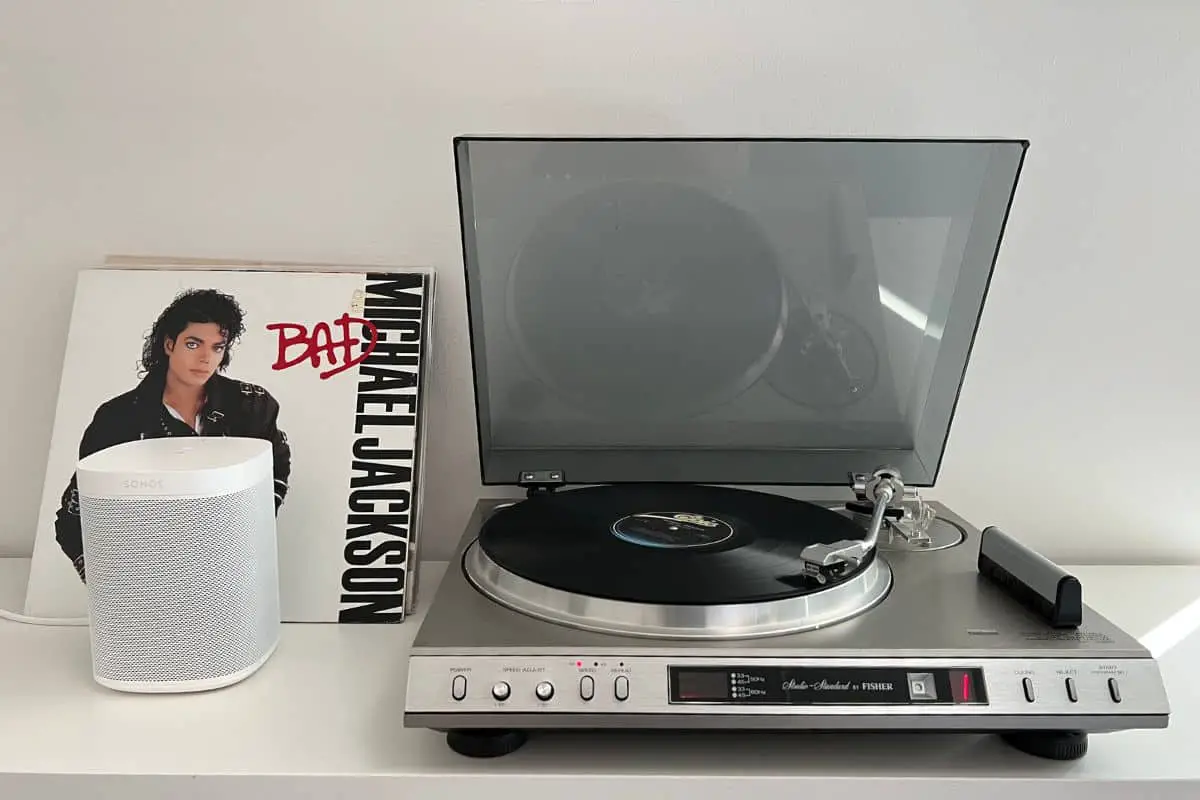
    Sonos speakers are classy, easy on the eyes, and have terrific sound quality. If you consider yourself an audiophile, there’s probably nothing more exciting than pairing the uncompressed sound of a turntable with the power of a Sonos speaker. But how do you connect a turntable to your Sonos product?

    Here’s how to connect a turntable to Sonos:

    1. Learn about the different options Sonos offers.
    2. Check if your turntable has a phono preamp.
    3. Purchase any required extras (such as cables or preamps).

    In this first step, we will talk about the different Sonos options and how to connect Sonos speakers to your turntable (regardless of whether you have a phono preamp). If you have a turntable that doesn’t have Bluetooth modality and a phono preamp, we will discuss that a little later. Let’s dive in!

    1. Learn About the Different Options Sonos Offers

    If you’re scouring the internet for information on how to connect your Sonos product to your turntable and finding very little information, there’s a reason for it. Sonos sells a plethora of different products that can pair with a turntable. As you’ve probably found, each one connects a little bit differently. Not only do they connect differently, but they function differently as well. 

    Below, we’ll discuss the main Sonos products that pair with a turntable. We’ll discuss what makes them different from the other options and how to connect them to a turntable with or without a preamp.

    Sonos Amp

    The Sonos Amp and Sonos Connect: Amp have line-in ports to connect your turntable to your other speakers. In general, amps take an electrical signal and “amplify it.” You may be interested in this product if you want an undistorted sound through all of your speakers. It gives you more control, as you can adjust the bass, treble, and loudness. 
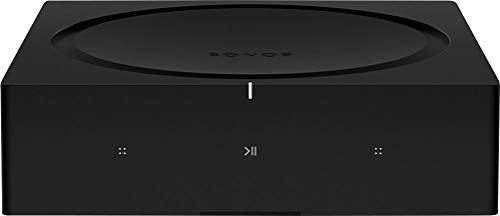
    New Sonos Wireless Amplifier 125 Watt Black Amplified Streaming Music System AMPG1US1BLK

    Amps are not speakers but means by which you can control the speakers you already have. They essentially power the speakers you have on your wall or your ceiling. If your home has Sonos speakers in each room that connects wireless or over your wired network. The Sonos amp will help connect your turntable to connect the rest of the speakers. 

    Here’s how to connect your Sonos Amp to your turntable:

    1. You will need an RCA cable which you can find on Amazon here its not included with your Sonos Amp, plug one end into the turntable (or the turntable preamp if yours doesn’t have a preamp built-in).
    2. Plug the other end of the cable into the corresponding ports in the back of the Sonos Amp (IN).
    3. Place a record on your turntable and play it.
    4. Using the app, connect the amp to other speakers by going into the settings tab and looking for “Line In” devices.
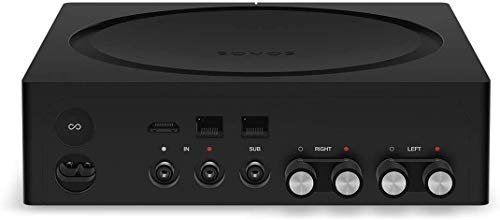
    Sonos Amp - The Versatile Amplifier for Powering All Your Entertainment - Black

    The Sonos amp will typically work with speakers that need no more than 2*125 watts. If you already have your favorite pair of active speakers then you can easily integrate them into the Sonos ecosystem by connecting them to a Sonos Amp.
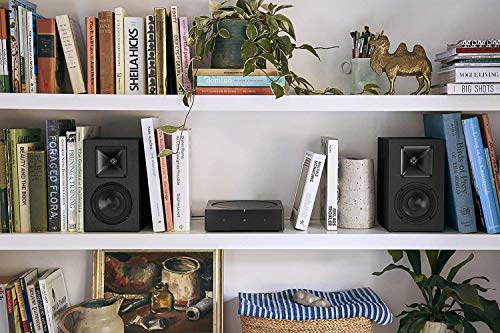
    New Sonos Wireless Amplifier 125 Watt Black Amplified Streaming Music System AMPG1US1BLK

    Sonos Amp is also often used for speakers connected to the ceiling or wall in your home. Now, you can enjoy the unfiltered record sound through all your speakers!

    Sonos Five

    The Sonos Five is an excellent choice if you want the power of a speaker and still need something that has a line in connection for your turntable.
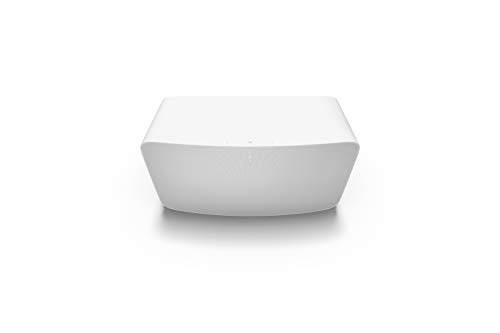
    Sonos Five - The High-Fidelity Speaker for Superior Sound - White

    This high-quality speaker has a 3.5mm input built into the back of it and comes with an auxiliary cable so you can hook it up to your TV, CD player, old iPod, or turntable. Unlike the amp above, the Sonos Five is a speaker, so you can plug your turntable in directly and start playing music in addition to connecting to other speakers on your Sonos network. 

    To connect your Sonos Five:

    1. Plug an RCA-Y cable (not included with Sonos Five) into the corresponding port on the back of the Sonos Five. This should be the side that only has one connector. If you don’t have an RCA-Y cable I recommend this one from amazon.com
    2. Connect the other side of this cable (which should have colors and two connectors) into the back of your turntable where the colors match up (or into a phono preamp if yours doesn’t have one directly built-in).
    3. Place a record on the turntable and start playing it.
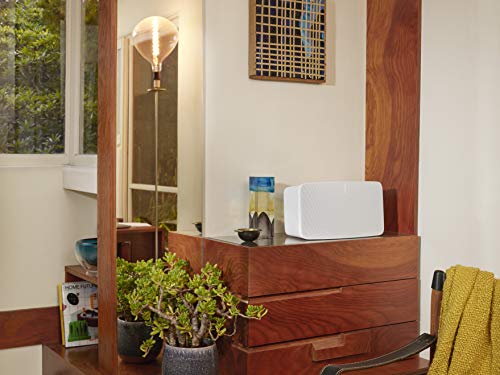
    Sonos Five - The High-Fidelity Speaker for Superior Sound - White

    If you’d like to connect it to other speakers on your Sonos network, you can go into the app and find the “Line In” option under settings. This way, you can hear the pure sound of your favorite record on the high-quality Sonos Five and any other speakers on your network. 

    Sonos Port

    Like the amp, the Sonos Port isn’t something that will directly play your music aloud. Instead, the Port is kind of like a control tower for all the speakers within your home. It doesn’t power anything like the amp but puts all speakers onto the same network. It’s just like a Wi-Fi router that unifies all smart devices.

    Sonos Port - The Versatile Streaming Component for Your Stereo or Receiver

    With Sonos Port, You can enjoy endless possibilities for multiroom listening and get the Sonos experience on your existing stereo, receiver, and turntable. You can also stream music, radio, audiobooks, and more from your favorite services.
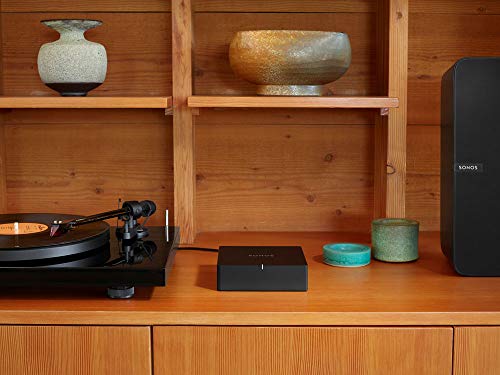
    Sonos Port - The Versatile Streaming Component for Your Stereo or Receiver

    The Sonos Port works with turntables just like both products mentioned above. Essentially, you use this product to connect your turntable to the network. 

    To do this, you will:

    1. Plug one end of the audio cable (not included with the Port) into the back of the Sonos Port. 
      I recommend this RCA cable available from Amazon.
    2. Connect the corresponding connectors into the turntable (or phono preamp) in the L/R inputs.
    3. Play a record on your turntable.
    4. Open the app and select the settings.
    5. Find the “Line-In” option and connect this to the rest of your speakers (or the speakers you would like to use).

    Now, your turntable will be a part of the more extensive network of speakers in your home. The added benefit of this with your Sonos app is that instead of just one speaker playing your music, you can have the cumulative sound of all of them playing it!

    Sonos Speakers 

    There are many different types of Sonos speakers, and you can connect via any of the options above using the “Line-In” option on your settings.

    But what if you don’t have any of the above products?

    Unfortunately, no ordinary Bluetooth speaker will connect to your turntable unless you have a modern Bluetooth-enabled turntable. The above products work because they connect through some means to the turntable through a cable and can then connect via the Sonos app to other speakers (which is what makes Sonos so cool!). If you’re struggling to connect a Bluetooth speaker to a normal turntable, you should consider purchasing the Amp, Port, or the Five.  

    If you’re still unsure which product is best for you, the audiophiles at Smart Home Sounds Ltd. have an in-depth video on selecting the right Sonos product for you:

    They also go through a few different setups to inspire your next purchase.

    2. Check if Your Turntable Has a Phono Preamp

    You’ve probably noticed that I’ve referred to different turntable features already one important feature is the phono preamp. Some turntables have one built-in; others require an external phono preamp. The PCMag Encyclopedia describes a phono preamp as a “circuit that amplifies and equalizes.” This thirty-minute YouTube video by the Audiophile mangoes in-depth about different phono amplifiers and their purpose:

    For our purposes, we’ll summarize that a phono preamp is an important part of your turntable system. It supports the sound, and it’s needed to connect a Sonos speaker or a line-in chord. 

    Turntable With a Phono Preamp

    If your turntable has a phono preamp built-in, then congratulations! 

    You won’t need a secondary system to plug into your Sonos speakers. Instead, you’ll just plug the line-in chords directly into your system.

    If you are on the lookout for a new turntable and your goals would be much better suited to one with a phono preamp already built-in, we will give you a few suggestions for turntables with preamps already in them. Be wary, though. Some audiophiles still purchase a phono preamp separate from their built-in one to get the sound quality they like.

    Here are a couple of turntables with excellent built-in phono preamps:

    Audio-Technica AT-LP60 Fully Automatic Belt-Drive Stereo Turntable (Amazon.com)

    This turntable comes with a built-in preamp. It also comes in a few lovely colors. Audio-Technica products are known for being stylish and have tons of positive reviews on Amazon. This turntable would make a great addition to your audio setup, regardless of your aesthetic.

    Fluance RT81 Elite High Fidelity Vinyl Turntable (Amazon.com)

    The Fluance vinyl turntable is sleek, attractive, and highly regarded. This one has a built-in phono preamp as well. It makes connecting it to your Sonos speakers a straightforward endeavor. The finish and hardware on Fluance turntables are particularly reminiscent of those old, classic vinyl players, which pay an homage to the past!
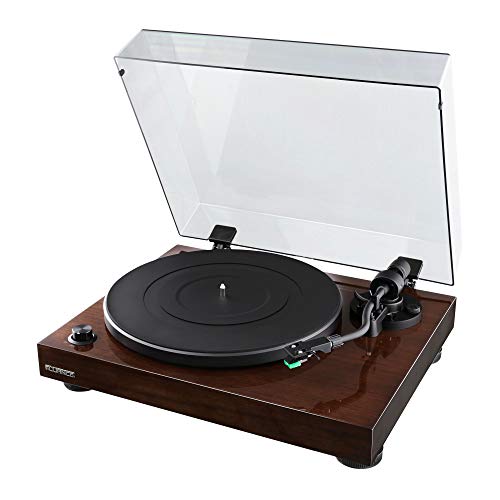
    Fluance RT81 Elite High Fidelity Vinyl Turntable Record Player with Audio Technica AT95E Cartridge, Belt Drive, Built-in Preamp, Adjustable Counterweight, Solid Wood Plinth - Walnut

    If you want to dig deeper into the subject then you can take a look at this article about the best turntables for Sonos.

    Turntable Without a Phono Preamp

    If you have a turntable without a phono preamp built-in, you aren’t alone. In fact, most turntables are built without one. This just means that your phono preamp will need to come from an outside source, which you’ll first connect to your turntable and then connect to your Sonos speakers.
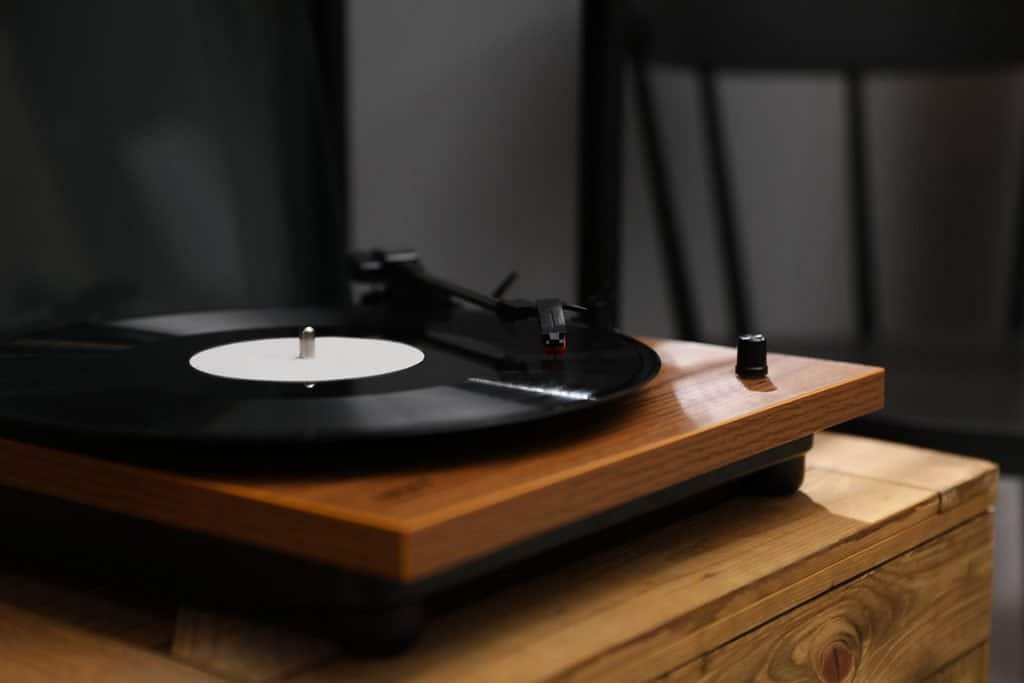
    Why would someone make a choice to buy a turntable without a phono preamp if they’re so important, though? Because many audiophiles already have their favorite phono amp that they want to use.

    If an additional device with cables isn’t a big deal to you, then this doesn’t matter as much. Some people prefer the certain look of a turntable rather than the features, or it could have something to do with nostalgia.

    Regardless, there are tons of low-cost and high-cost turntables that’ll need a phono preamp to connect to Sonos speakers. Once you have your phono preamp, setting it up is fairly simple.

    3. Purchase Any Required Extras (Such as Cables or Preamps)

    As mentioned above, there may be a few other things you have to purchase, particularly if you don’t have a turntable with a built-in phono preamp. Be on the lookout for RCA cables, which you need to connect your turntable to the phono preamp. 

    A phono preamp is essential for the quality sound of your turntable. If sound quality is important to you (as it is with most vinyl listeners), you’ll want to make sure you find one that doesn’t filter out the sound of your records. Here are a few preamps I like: 

    Pro-Ject Audio Phono Box (Amazon.com)

    This phono preamp is simple, straightforward, and no-fuss. The sleek, gray design doesn’t prompt much attention, which is perfect if you’d like to keep the simplistic look for your audio setup. The quality of this phono box is why it’s listed on Amazon’s Editor picks!
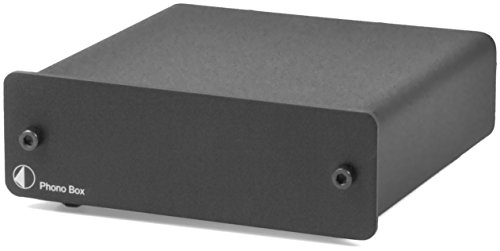
    Pro-Ject Audio - Phono Box DC - MM/MC Phono preamp with line Output - Blk

    Fluance PA10 High Fidelity Phono Preamp (Amazon.com)

    The Fluance PA10 is deemed High Fidelity for a reason. With over 85% of users rating it five stars, this phono preamp is a pick you can be confident in. The wood finish looks great with most entertainment centers, but it is a little larger than most preamps. 

    Fluance PA10 High Fidelity Phono Preamp (Preamplifier) with RIAA Equalization for MM Turntables/Vinyl Record Players

    Fluance PA10 High Fidelity Phono Preamp (Preamplifier) with RIAA Equalization for MM Turntables/Vinyl Record Players

    SUCA-AUDIO Phono Preamp (Amazon.com)

    This is a Tube phono preamp, but this might be a huge plus based on your style! Tube phono preamps use analogue tubes and valves to amplify the signal that turntables emit when they play vinyl records. Meanwhile, solid state preamps use silicon transistor components to amplify the same signal.
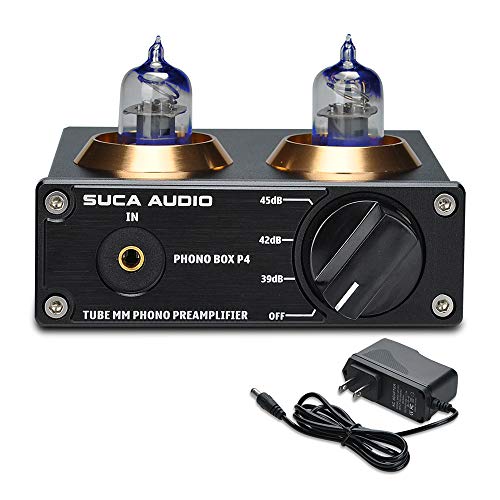
    SUCA-AUDIO Phono Preamp for Turntable MM Phonograph Vacuum Tube Preamplifier with Gain Gear Mini Hi-Fi Stereo for Home Audio with DC 12V Power Supply

    Audio Cables 

    Most preamp setups will require an RCA cable or some other audio cable, which is usually included in the box. However, some may not come with it. When purchasing a preamp, look for information revealing what pairs with your turntable and what cables need to go between the preamp and the turntable.

    Conclusion 

    Sonos speakers have terrific sound quality that won’t muffle the unfiltered sound of your turntable.

    Here are a few things you need to remember:

    • You will need a “middle man” (such as the Sonos Five, Sonos Port, or Sonos Amp) if you are trying to connect your turntable to a Sonos Bluetooth speaker unless you have a Bluetooth turntable. 
    • If you don’t have a phono preamp built into your turntable, you need to get one to connect to the Five, Port, or Amp.
    • You can use the app to connect your turntable to any speakers on your Sonos network.
  • Record Player and Speaker Placement

    Record Player and Speaker Placement

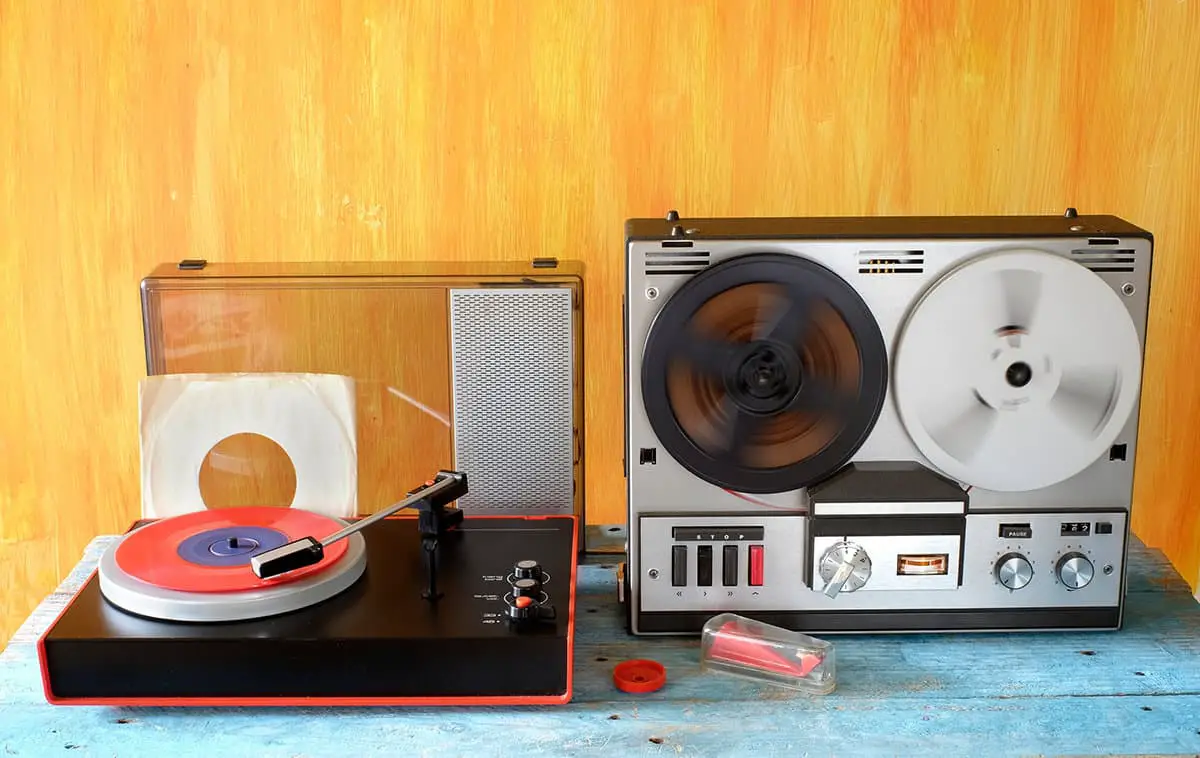
    Record players produce high-quality sound and add decor and style to any room. It’s vital to put record players and speakers in the right location to deliver the best sound. When your speakers and record players work together, they can generate fantastic sound.

    You should put your record player and speakers on a flat, sturdy, and stable surface. Keep the record player away from other speakers or anything else that’ll cause unwanted vibrations and other frequency-emitting electronics. Put speakers equidistant in front of you to create a stereo effect.

    The rest of this article will explain where and how you should place your record player to protect it from interference and environmental factors. I’ll share everything you need to know about speaker placement, speaker stands, and subwoofer speakers.

    Where You Should Put Your Record Player

    Proper record player and speaker placement is essential to get the best sound. Record players are extremely sensitive and can easily pick up other vibrations. So, it’s necessary to separate them to ensure they pick up the correct vibrations. Using speakers to create a stereo effect makes it feel like the singers are in the room with you, allowing you to achieve a vibrant sound.

    The most important part of a record player is the turntable. It’s vital to place it on the right surface to get the best sound. 

    You should put your record player on a completely flat and stable surface. Ideally, the surface should be stationary and heavy because you don’t want it to move while using your record player. 

    The tonearm on your record player tracks the record’s vibrations while the vinyl is spinning and helps produce the sound. The tonearm shouldn’t pick up any other vibrations outside the record player. If it catches excess vibrations, your sound quality takes a massive dip. 

    If your record player is on an unstable surface, it can cause friction on the tonearm while the records are playing. This can cause your records to skip and track improperly, resulting in distortion and clipping. If your tonearm constantly catches extra vibrations, it can wear out extremely quickly.

    Isolation platforms are also available for you to purchase. You can put your record player on specially designed platforms to get the best sound with minimal extra vibrations. Many record players have replaceable feet that you can change for better isolation and minimal vibrations.

    Eliminate Other Sound Frequencies in the Room

    Other electronic devices in your home can emit different frequencies and vibrations that affect your sound system. Be sure to keep your record player away from any electromagnetic interference (EMI) devices. 

    These EMI sources include:

    • Wi-Fi routers
    • Electric Circuits
    • High-energy electronics (such as microwaves)

    These devices emit sound vibrations that can interfere with your record player. 

    Keep your record player away from:

    • Amplifiers
    • Large electronic devices
    • Kitchen appliances
    • Cell phones

    All these devices can cause interference, drastically lowering the sound quality of your record player.

    Temperature, Environment, and Other Factors in Record Player Placement

    Avoid placing your record player in direct sunlight as it can damage the player or cause it to overheat. 

    Your record player should be in a relatively stable environment where the temperature doesn’t fluctuate. 

    Try to keep your record player at room temperature. Avoid putting it in basements or other extremely cold or hot spots. 

    Avoid placing your record player in drafty regions as well.

    Where You Should Put Your Speakers

    Since excess vibrations lead to poor sound quality, don’t put your speakers too close to your record player. The record player tracks all minor grooves on the record, which is how sound is reproduced. Speakers also produce strong sound vibrations in the air. 

    Putting the speakers too close to the turntable will inhibit the record player from reading all the grooves because the turntable will also pick up the speakers’ vibrations.

    The ideal spot to put your speakers is equidistant from where you’ll be listening to imitate a stereo effect. The sound will arrive in both ears from two different directions. You want the speakers to form a triangle with you at the point.

    Take some time to adjust and maneuver your speakers and their placement to get the best sound quality. It’s best to start with your speakers about six feet (1.83 m) apart and change them from there. Many people suggest playing different records to test the sound quality of various types of songs.

    Put the speakers in front of you and out to the sound to get the feeling of surround sound. It should sound like the singers are in the room giving you a private performance. Although many people do it, you don’t want to put your speakers behind you. 

    You’ll get the best sound quality if the speakers are in front of the listeners at ear height. If you’ll be standing most of the time, put your speakers at standing ear height. If you’ll be sitting while listening to the speakers, put them at your sitting ear height. 

    To improve sound quality, point your speakers toward the listeners. Be sure to put some space between your speakers and the wall because you don’t want them directly against the wall. Your speakers should be about 10 centimeters (3.94 in) away from the wall.

    Speaker Placement

    There’s debate about the optimal speaker placement. You can put them onto:

    • The floor
    • The table
    • Speaker spikes
    • A wall

    Spikes used to be the preferred method for holding your speakers. Using spikes involved screwing your speaker into the floor or the stand it was on. However, many experts have recently discovered that putting your speaker on spikes diminishes the sound quality.

    The best way to secure your speakers is to separate them from the surface they’re sitting on. 

    For example, if you place your speakers on the floor, you’ll want to put them on some padding so that they’re not sitting directly on the floor. The more space you get between the speaker and the surface, the better. You can use any of the following materials to isolate the speakers from the floor:

    • Foam
    • Springs
    • Soft pads

    Speaker Stands

    Speaker stands are another great option for holding your speaker. Bookshelf or monitor speakers will most likely require speaker stands. However, you don’t need a speaker stand with a floor speaker.

    Speaker stands come in various materials. They’re made from different types of materials. A speaker stand can add to the sound quality. So, choosing a stand that enhances the quality and fits your budget is essential. Stands made from wood and metal are the most popular stands.

    If you want a more intense and direct sound, you’ll need to put your speaker on a heavier stand. The sturdier and heavier the frame, the more intense your sound will be. If you want a more airy sound, use a light speaker stand. Metal stands tend to be heavier, and plastic or wood stands are generally more lightweight. 

    Just as you need separation with your speakers on the floor, you’ll also need separation if you put your speakers on a stand. Using isolation with your speakers will give you a better sound quality because you combine the stand quality with whatever material you’re using to separate the two.

    Subwoofer Speakers

    Subwoofers are speakers that emit lower frequencies. If you want the best sound quality in your listening area, you’ll want to add a subwoofer to balance out the frequencies. The best place to put a subwoofer is in a room’s corner or slightly away from the middle of a room.

    A subwoofer will amplify the bass in a room. It should blend effortlessly with your other speakers and shouldn’t be too overwhelming. Adjust the speaker’s control to get the best, most seamless sound.

    Final Thoughts

    You should put your record player on a flat, sturdy surface with minimal to no movement. The surface must be sturdy so that your record player doesn’t pick up other vibrations besides the ones from the vinyl record.

    Put your speakers equidistant from you to form a triangle so that you get the best sound. Placing your speakers away from each other creates a stereo effect. 

    Use an isolator or different types of padding to separate your speaker from the floor or its stand. Having your record player and speakers in optimal places will give you the best sound.

  • Where To Put Your Speakers And Turntables

    Where To Put Your Speakers And Turntables

    While you can place your speakers anywhere in the house and still enjoy your music, you can’t do the same with the turntable. After all, turntables function by measuring the vibrations, which can be affected by the vibrations produced by the speakers. (source) So if you want to know where to put your speaker and turntable, please read on…

    The best place to position your turntable is away from any source of vibrations, and this means your speakers. As well, walking past a turntable can make it skip if not secure, so a secure location, isolated from the speaker vibration is best.

    You may own the best speakers and turntable on the planet, but if they are not set up or positioned correctly, you won’t be able to get the best out of your system. So in this article, we’ll show you where to put your speakers and turntables. We will also show you the factors to consider when positioning your turntable and speakers.

    Does the Place Where You Put Your Turntable and Speakers Matter?

    Generally, turntables function by measuring the vibrations. The vinyl record forces the stylus to vibrate or move in its grooves. The records player turns the vibrations into a minute electrical signal amplified and converted into sound by your speakers. Therefore, for the record player to work, it only needs to read the groove’s vibrations.

    Unfortunately, the stylus is very sensitive and can even pick external vibrations. Therefore, it is a delicate operation, and external vibrations can affect the quality of your music. If the stylus is not getting a smooth ride, you won’t enjoy great music.

    On the other hand, the speakers’ work is converting the electrical signal to sound, and for it to do its job, the speaker must vibrate. Basically, the turntable and the speakers produce music this way; therefore, you should always keep the speaker and the turntables apart.

    You can keep a moderately-sized speaker on the same surface as the turntable with little to no issues. But the speaker should be well-made and not produce excess bass; plus, the surface must be solid. (source) Suppose you have a pair of powerful speakers. In that case, isolation is mandatory, especially if you don’t want the vibrations to affect the quality of your music.

    Some speakers are cranked up enough to force the stylus to skip a bit, and at times they can cause acoustic feedback. This can be very scary for audiophiles, especially since the vibrations are picked by the stylus, creating a loop. (source) Therefore, placing the speakers and the turntables on the same surface or close proximity can hinder the record players’ ability to produce high-quality music.

    Turntable Placement

    Let’s begin with the vital component, the record player. After all, it is the most sensitive part of the setup. For the stylus to convert the vibrations from the vinyl to an electrical signal, it needs to be protected from external vibrations. Therefore, for you to enjoy exceptional music every day, you should follow the following advice:

    Stability is Mandatory

    Firstly, to prevent tracking problems, you should place the turntable on a heavy, flat, and stable surface. Placing the turntable on a flat, leveled surface and far from the speakers can help prevent tracking problems and lower tonearm friction. A sturdy and flat surface will make it possible for the turntable and the vinyl record to last longer. You can also enjoy high-quality music every day without worrying about vibrations and tracking issues if you place your turntable in the correct position.

    The main reason you need a heavy and stable surface for the turntable is to lower the effects of vibrations and any other thing that can affect the quality of your music. If the right side is an inch lower than the left side, the tonearm and stylus will work extra hard when tracking the grooves on the vinyl records. Poor leveling can compromise channel balance, uneven wear and tear of the grooves, and slight distortion. (source)

    Isolation

    Isolation refers to getting rid of or reducing resonances or vibrations that can be easily picked up by the turntable’s stylus, cartridges, or tonearm. The vibrations that affect your record player can be categorized into three groups: self-generated, airborne, and structural. So make sure you address each of them independently when positioning your turntable and speakers.

    Structural Isolation

    Structural isolation refers to the sound waves that travel through the physical medium, including the surface where the turntable rests. Suppose your turntable is on a plastic surface with some speakers in close proximities. In that case, the lack of isolation can result in the stylus jumping out of the grooves. The vibration from the speakers can force the turntable to hum or rumble constantly. Luckily, there are many aftermarket solutions and creative DIY solutions for this problem. (source)

    Airborne Vibration

    The airborne vibration incorporates the airborne sound waves from the speakers that can create resonance or vibrations in the stylus/cantilever point, turntable, tonearm, and the circuit board. These issues typically present as mild distortions, which can be very annoying to audiophiles.

    Therefore, the main factors to consider when dealing with airborne vibrations are turntable and speaker placement. Moving the speakers or turntables away from each other can reduce the feedback they can generate and airborne vibrations. (source)

    Self-Generated Vibrations

    The self-generated vibrations can be triggered by the belt or turntable itself. Luckily, some turntables like the Technics SL-1200 have a magnetic motor; therefore, you’ll never have to worry about high self-generated vibrations. The design of the SL-1200, it’s unique dampening, and high-torque motor with low flutter and wow levels are what made this brand the best option in the industry. (source)

    Where to Position the Turntable?

    As aforementioned, the best position for your turntable should be perfectly leveled, have low resonance, and be as far from your speakers as possible. If your home has a concrete floor, a floor standing support can come in handy. Unfortunately, a floor standing support can cause footfall on suspended wooden floors. So, if you have a suspended wooden floor, you need to install a dedicated wall shelf. (source)

    A dedicated wall shelf can help you prevent footfall problems, so try and use some heavy-duty fixings and mounting screws. Unfortunately, they can be pretty costly, but they are worth the investment. These decks have some unique built-in isolation, with the simplest form of support being rubber feet. For some turntables, you can go for a fully suspended shelf design. (source)

    Therefore, the more isolated the turntable is, the less fussy your stand should be. In fact, the best designs will function better with exceptional support and careful placement. After identifying the best position for your turntable, the next step is ensuring that it is leveled.

    The stand or shelves should always be leveled; after all, this is the only way you can ensure that the stylus tracks the vinyl’s grooves correctly. You can even confirm if the shelves are leveled using a light, trim spirit level.

    You should begin with the pedestal, but you shouldn’t have a lot of work if the stand is leveled. But if you need to make some adjustments, then some adjustable turntables feet can help you get everything leveled.

    Next, confirm if the platter is leveled; luckily, most turntables’ platters are positioned relative to the stand. Therefore, they should be parallel from the start unless there is an issue from the factory. A suspended shelf design will make it possible for you to achieve some degree of adjustment. Usually, the leveling is done in its original position; however, some decks will require a specialized jig, so you may have to take it to the dealer.

    Speaker Placement

    After placing the turntable in the right place, the next thing you should consider is speaker placement. And with vibration from the speakers being a problem with turntables, the place where you position your speakers is essential. Therefore, you should ensure that the record player and the speakers never interact. Here are some of the things you have to consider when looking for the right place for your speakers include:

    Bad Vibrations

    One of the leading issues with turntables and speakers is their vibrations. Generally, the turntable works by reading the minuscule variations of the grooves of the vinyl records. And for it to do its work perfectly, it needs to be still and not affected by the external sources of vibrations like the one produced by speakers playing bass frequencies.

    Where Can You Put Your Wireless Turntable?

    You can move it from one place to another with a wireless turntable. Luckily, most turntables like Yamaha MusicCast Vinyl 500 use Wi-Fi to signal the speaker. Therefore, with a wireless turntable, you have an option. Still, some of the best places for putting a wireless turntable include:

    • Reading Nook
    • The home office
    • Enclosed patio
    • Bedroom
    • Dining room/ kitchen
    • Near your home bar
    • Game room (source)

    Securing the Speakers

    If you place the speakers on the same shelf or near the record player, the vibrations will affect the quality of your music. Therefore, you should put your speakers on wall brackets or stands and the turntable as far away from the speakers as possible. (source) You should never put them on the same surface.

    Therefore, if you own some bookcase speakers, you should use speaker stands to help isolate the vibrations. The floor-standing speakers are designed to sit on the floors. Still, you need to consider the connection between your speakers and the floor when using them with your turntable.

    What Should I Place Between the Speaker and the Stand to Minimize Vibrations?

    There has been an issue with floor standing speakers and stands between the floor and the speakers. And for the longest time, most folks have used spikes to nail their speakers to the stand and floors. In fact, some speakers come with spikes that can help you attach them to the floor to limit vibrations.

    But some folks have discovered that nailing the speakers to the floor negatively affects the sound quality. These folks claim that the best solution is isolating the speakers from the stand using some soft rubber or foam pads. Remember, the bigger the speakers, the larger the effects of isolation. Luckily, all speakers sound more open and better when isolated. (source)

    The speaker stands come in a wide range of sizes, types, and materials, with wood and metal being the famous options. Luckily, each material has the unique character that it adds to the quality of the sound it produces. But when it comes to the stand, the general rule stipulates that the heavier the material used to make a stand, the more rich and solid the sound.

    Therefore, if you need a controlled and tightly focused sound, you should place your speakers on a heavy metal stand. You can also go for a fast and open sound if you use a lighter stand. The interface between the stand and the speakers is crucial. If you place a sponge pad between the stand and speakers, you will get a better balance. (source)

    Therefore, you should get your speakers off the shelves or behind the sofa and look for a better position for them. If you find an exceptional place that won’t affect your turntable, you will notice the difference.

    Speaker Positioning

    The position of your speakers is crucial as it can play a pivotal role in the quality of your setup’s sound. The speakers should be at a listening height. If you’re on the sofa, then the placement height of the speakers should be determined by the height of your ears when seated. Placing the speakers near the back walls will give you more bass, while setting them far away will offer you convincing stereo imaging. (source)

    Even though it may be convenient, you should avoid placing the speakers in the corners. Putting them in the corner will give you a lumpy, fat bass that will affect the quality of the music produced by turntables. Imaging can also be affected by the speaker’s angle. In fact, most speakers sound perfect when toed-in towards the most common listening position in your home. (source)

    For peak sound dispersion, all speakers should be at an equal distance to your favorite listening position. So here are a few factors to consider when positioning your speakers:

    • Room length: if the room where you usually sit when listening to music is rectangular, the speakers should face the room’s length. Therefore, you should place the speakers on the shortest walls in the room.
    • Think about the room in thirds: start by dividing the room’s length by three and place your speakers in the first third and about a meter from the side walls.
    • The speaker angles: the sound of the music is spread between your speakers. If you have two speakers, positioning them at a 60-degree angle will create an exceptional stereo angle. So you should measure the angle ideally using a protractor. Simply place a marker on your listening position and start from there.
    • The space between the walls and the speakers: if you’re working with a huge room, you can leave a zone of about 2.2 meters between the walls and the speakers. After all, placing them near the wall will result in the speakers producing bass, which may cause too much vibration and end up affecting your turntable.
    • Place the sub-woofers about 30 cm from the corners: Subwoofers should never be placed in the corners; instead, they should be about 30 cm from the corner.
    • Speaker height: the speaker should always be leveled with your head, so if you love listening to the music when seated, it should be leveled with your head when seated or about 1.2m high. The tiny speaker cones, also referred to as tweezers, are responsible for the high-quality sound produced by the turntable. The sound from the tweezers always travels in a straight line. So they should point directly to your ears.
    • Place desktop speakers on foam: if you’re using some desk speakers, you should place them on a foam pad. The foam will prevent the desk from becoming a bass speaker. (source)
    • The center channel of the surround sound system should be in front of you: the center channel must always be in front of you with your side speakers at about 110-degrees to the side. The speakers should be at a 60-degrees angle from you.

    FAQs

    How Far Should Your Speakers Be From the Turntable?

    Speakers are known for producing vibrations that can affect your listening experience, so you should ensure that they are far apart. Therefore, the distance between the turntable and the speakers should be at least 2 meters.

    Where Can I Place My Speakers?

    Walls reflect sound and vibrations; plus, speakers have a rear-facing bass port. Therefore, the speakers should be at least 3 feet from the walls.

    How High Should Your Speakers Be Off the Floor?

    The best place for the center speakers is at your ear level when seated on the sofa. The right height is usually between 30 and 50 feet from the floor. If you can lift the center speaker, you should tilt it, making sure it fires directly into your ears.

    Conclusion

    There is nothing more relaxing and fun than listening to a vinyl record of your favorite. Unfortunately, any form of vibration can affect the quality of your music, including the speakers’ vibrations. Therefore, the speakers and the turntable should be as far away from each other as possible.

    Sources

    1. Ketan Bharadia, How to get the best sound from your turntable, Accessed January 02, 2022
    2. Jeffrey Lee Puckett, The importance of isolation and how to fix vibration in your turntable setup, Accessed January 02, 2022
    3. RA Pro staff, a guide to troubleshooting turntables, Accessed January 02, 2022
    4. Jason Kennedy, Speaker Placement: A step-by-step guide, Accessed January 02, 2022
    5. Andrew Murphy, How to set up and position your speaker, Accessed January 02, 2022
    6. Tom Davenport, How to position your speakers perfectly, Accessed January 02, 2022
    7. Mac Randall, Seven Fun Places to Put Your Wireless, Accessed January 02, 2022
  • Best Powered Speakers for Turntables: Budget to High-End

    Best Powered Speakers for Turntables: Budget to High-End

    Turntables and record players have increased in popularity in recent years and with that comes a need for bigger and better speakers. Everyone loves to be able to hear their music clearly, but when you have a turntable, they often do not come with built-in speakers or an amplifier. The most obvious solution to this is to get powered speakers that you can connect to your turntable.

    When budgeting, the best powered speakers under $200 are the Edifier R980T Speakers, the Micca PB42X, and the Edifier R1280DB. If you have the budget for more expensive speakers, the Audioengine HD6, the KEF LSX Music System, and the Klipsch The Fives Speaker System are great options.

    While these are definitely some great options for a powered speaker set, there are so many more options and details that are good to know before making a decision on the speaker set that you want. Keep reading to learn more!

    Why you need Powered Speakers

    Before we get into all of the details of each speaker, it is important to know why you even need to get a powered speaker in the first place. While there are a lot of different reasons to want powered speakers, to amplify your existing record player’s speakers, or to have better sound quality when playing music, in the situation that you have a turntable, you need external powered speakers because most turntables do not have built-in speakers.

    Because turntables do not usually have speakers or an amplifier built-in, you have to buy powered speakers that you can connect to it. If you don’t have these external, powered speakers, your turntable is nothing more than a nice decoration that has no practical function. When you purchase speakers that connect with a wire or Bluetooth, you can now use your turntable to play the records that you have bought for it!

    If your turntable does have built-in speakers, you might still want to purchase exterior powered speakers. Often times, the speakers that are built into record players or turntables do not play the sound very clearly or very loudly. This can be very annoying for a lot of people because you spent all this money to play vinyls but now you can’t hear it very well. Purchasing and hooking up powered speakers is an easy solution to this problem, and the speakers will likely last you a very long time.

    Speakers for a Tight budget

    The very first price range of speakers that we will talk about are the speakers for people on a strict budget. While the average price for powered speakers is anywhere from $300 to $600, but each of these speaker sets, for those on a budget, are under $200! They are also pretty good quality speakers and are worth looking at for your sound set up.

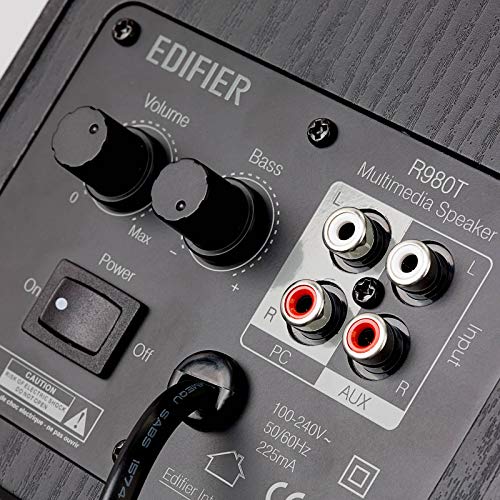
    Edifier R980T 4″ Active Bookshelf Speakers

    The first set of speakers are the Edifier R980T 4″ Active Bookshelf Speakers. These speakers are specifically designed to fit in small spaces like on bookshelves and in between other items on desks, hence the name “Bookshelf Speakers”. They have a 4-inch bass driver, which is significant for a speaker of this size and will give you a sufficient “bass” sound when dialed up.

    Edifier R980T 4" Active Bookshelf Speakers - 2.0 Computer Speaker - Powered Studio Monitor (Pair)

    Edifier R980T 4" Active Bookshelf Speakers - 2.0 Computer Speaker - Powered Studio Monitor (Pair)

    These speakers connect primarily by an auxiliary chord and it has two inputs for that so you can connect two devices to it without needing to unplug the first one. It also has RCA ports for connecting to devices that require a connection through RCA wiring like a TV, a DVD player, and some turntables. Unfortunately, there is no wireless connection or a remote control for these speakers.

    These speakers run for about $75 on Amazon.

    Micca PB42X Powered Bookshelf Speakers

    The next speaker set for those on a budget is the Micca PB42X Powered Bookshelf Speakers. This set of speakers is significantly smaller than the Edifier R980T speakers, but that is not to say that they give any less sound clarity or power. These will fit in any little area and are great to keep on a desk or side table with your turntable.

    Micca PB42X Powered Bookshelf Speakers, 30-Watt RMS Power, Active Near Field Studio Monitors, 2-Way (Black, Pair)

    This speaker set was built for clean sound and a clean look. They are compact and modern and are built from materials that give you the best sound quality possible for its size and tweeter. It has a 3.5 mm input port, for a standard auxiliary cord and RCA ports on the back for connectivity options. This speaker set also does not offer a wireless connection option.

    This speaker set is about $120 on Amazon.

    Edifier R1280DB Powered Bluetooth Bookshelf Speakers

    Another excellent option for powered speakers on the cheap side are the Edifier R1280DB Powered Bluetooth Bookshelf Speakers. These speakers are much heavier than the other two options, and for good reason. They are packed with all sorts of features that the other two, cheaper options don’t have. However, the sound quality of this speaker set is the same as the sound quality of the Edifier R980T Speakers.

    Edifier R1280DB Powered Bluetooth Bookshelf Speakers - Optical Input - Wireless Studio Monitors - 4 Inch Near Field Speaker - 42w RMS - Wood Grain

    This speaker set does have wireless connection options in addition to its two available RCA inputs and AUX port. With the wireless design, it leaves a cleaner sound set up and allows you to move the speaker as close or as far from the turntable, within the Bluetooth range, as you would like. It also comes with a remote so you can change the setting from a distance.

    The R1280DB Edifier Speakers are roughly priced at $140 on Amazon.

    Average Priced Powered Speakers

    The next category of powered speakers that you should consider are ones that are priced closer to the average range of this type of speaker. If you have a little extra money budgeted for buying speakers, these are a few great options that are a bit more expensive than the previous category of speakers. The range for these is between $200 and $600.

    ELAC Debut 2.0 B5.2 Bookshelf Speakers

    The first set of speakers that are a good middle price are the ELAC Debut 2.0 B5.2 Bookshelf Speakers. These speakers have a wonderful sound to them because of the size and placement of the tweeter. Because of how clear the sound is, they make for great turntable speakers. The clarity will showcase all of the little details of sound that vinyls and turntables offer in the first place, but on a much louder, and clearer level.

    ELAC Debut 2.0 B5.2 Bookshelf Speakers, Black (Pair)

    These speakers do not offer a Bluetooth connection option, but they do have wired connection options like RCA ports. While they are not Bluetooth compatible, they still offer easier connection options by having many of the ports at the front of the speaker so you can back it up against a wall for a more compact look.

    These bookshelf speakers are about $280 on Amazon.

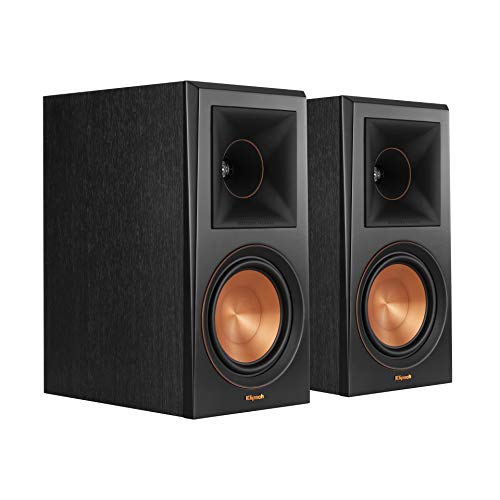
    Klipsch RP-600M Bookshelf Speakers

    The last middle range priced speakers are the Klipsch RP-600M Bookshelf Speakers. This set of speakers has a beautiful, vintage look to them and they come in black, and two options for dark, wood tones. Each of these speakers is quite large, but again, that allows for more cabinet space for the sound to reverberate in, just like the Wharfedale Diamond speakers. One problem with the sound is that the speakers sound best when they are given some room from the wall, about 1.5 to 2 feet of space.

    Klipsch RP-600M Reference Premiere Bookshelf Speakers - Pair (Ebony)

    These speakers have the downfall of requiring an amplifier to connect them to your turntable (non powered). If your turntable has an amp already included in the model, then these could be the perfect speakers for you. They do not offer a Bluetooth connection, but the sound of them is rich, clear, and well worth considering. They look beautiful, sound great, and are offered for a great price.

    These mid-priced speakers are on the higher end at roughly $600 on Amazon.

    High-End Powered Speakers

    The final section of powered speakers to consider are the high-end, expensive speakers. These are for people who want the best sound system they can possibly get and with that standard, they can be quite pricey. These speakers have a ton of useful features and the best sound quality that can be produced, but that drives the prices up, in between $700 and $1,300.

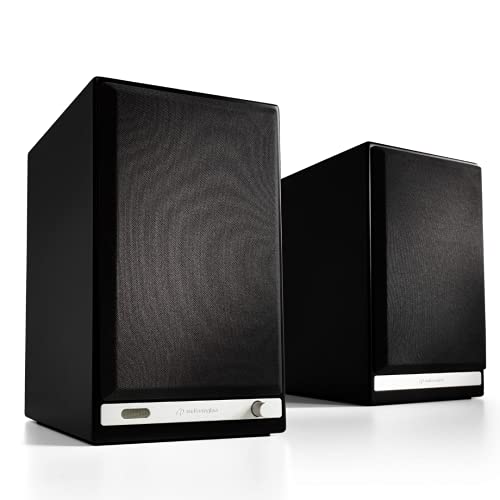
    Audioengine HD6 Wireless Speaker

    The first high-end speaker is the Audioengine HD6 Wireless Speaker. It is made to be sleek and small to fit in any available space. Do not let its size fool you however, because these speakers are powerful with a sound that is full and loud that can fill any room. They have so many great features that are practical and create a sense of luxury when you use these speakers.

    Audioengine HD6 Wireless Speaker | Desktop Monitor Speakers | Home Music System aptX HD Bluetooth, 150W Powered Bookshelf Stereo Speakers, AUX Audio, USB, Optical, RCA, 24-bit DAC (Black)

    These speakers offer a 30 meter Bluetooth range in addition to RCA ports, AUX ports, and the corresponding cords to go with them. They also come with a remote control so you can change any of the settings from across the room. They are easy to set up and have an additional subwoofer connection option.

    This set of powered speakers is about $700 on Amazon.

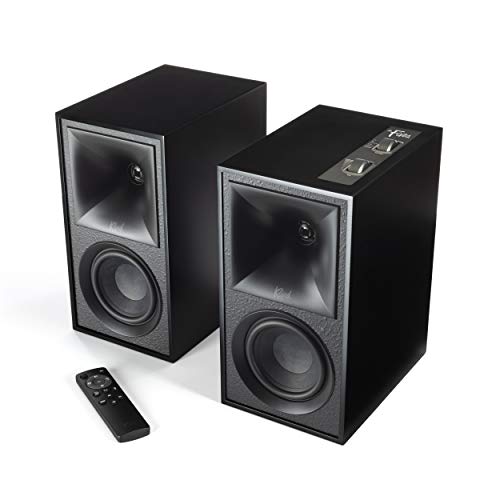
    Klipsch The Fives Powered Speaker System

    The next set of high-end powered speakers is the Klipsch The fives Powered Speaker System. This speaker system promises true connectivity which means that they have connectivity options for virtually every device out there. This is great because it means you will have no problems connecting these speakers to your turntable, no matter the age, brand, or model it is.

    Klipsch The Fives Powered Speaker System (Matte Black)

    These speakers have a beautiful vintage look to them and will greatly compliment nearly any room and turntable nicely. They offer Bluetooth connection and also come with and HDMI connection option and a remote control for easy access to the levels of these speakers. The Klipsch speakers are larger, but they look stunning next to a turn table, on a TV stand, or on a side table for a more surround sound feel.

    This powerful set of speakers is usually $800 on Amazon.

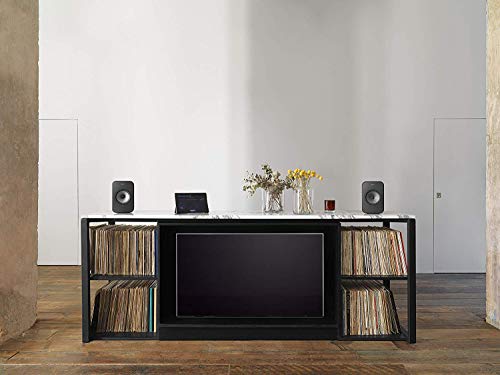
    KEF LSX Wireless Music System

    The final set of speakers we will talk about is the KEF LSX Wireless Music System. These speakers are very high-end and they are very expensive. However, they are not expensive for no reason, as they have an incredible sound quality with their “Uni-Q driver array”. This makes the sound as clear, and powerful as possible. These speakers come in a variety of colors for you to choose from, so you can find the color that complements your decor the best and they will look stunning.

    KEF LSX Wireless Music System (Black, Pair) LSX Black

    These speakers come with several connectivity options such as Bluetooth, WI-Fi, Auxiliary, and even Ethernet. While these speakers are a great option for a turntable that can connect wirelessly, they are also well equipped to connect via Apple AirPlay so you can play music to the speakers from your phone with a few taps. When connected to your turntable, you can also use your phone, instead of a separate remote control, to change the levels of the speakers, and any attached subwoofers.

    Being the most expensive set of speakers we have covered, they are priced at about $1,250 on Amazon.

    KEF LSX Wireless Music System (Black, Pair) LSX Black