Category: Record Players

  • The 7 Best Vertical Vinyl Record Players

    The 7 Best Vertical Vinyl Record Players

    If you enjoy listening to records, then you likely appreciate vinyl records and the authentic, beautiful sound they produce. And if you’re in the market to purchase a record player, it is worthwhile to consider a vertical vinyl record player.

    The best vertical vinyl record players are: 

    1. Pro-Ject VT-E-R Record Player
    2. Floating Record Vertical Turntable 
    3. Easygoproducts Vertical Bluetooth Turntable
    4. Fuse REC Vertical Vinyl Record Player
    5. Pyle Bluetooth Vertical Record Player
    6. TECHNICS SL-V5
    7. Sony PS F-5 

    In this article, I will cover the features for each of these vertical vinyl record players in-depth, weighing the pros against the cons and considering the specifications. I will also explain what to look for in a vertical player to help you find the best one for you.

    1. Pro-Ject VT-E R (OM5e) – Black Vertical Turntable

    The Pro-Ject VT-E-R Record Player can be purchased on Amazon.com. This sleek, modern record player can be placed on a flat surface or wall-mounted to want to save space. It is made with high quality, state-of-the-art materials that allow it to offer excellent sound quality. 

    Specs 

    Here is what you get with the Pro-Ject VT-E-R Record Player:

    • Precision belt drive. The belt drive on this vinyl record player has an advanced design made to reduce  the amount of vibration and audio distortion. 
    • 8.6″ aluminum tonearm. This feature allows the player to pick up pure sound from the record and filter out any other external noises, such as the sound of the needle on the record. 
    • Made with plastic in a back matte style. 

    Pros 

    Some of the outstanding features of this option include:

    • Design and aesthetics. This record player is made with high-quality materials, which ensures its longevity. Plus, it is available in three different colors; black, red and white. It can be placed freestanding on a flat surface or mounted onto a wall to save space. 
    • Sound quality. Thanks to the tonearm and precision belt drive, this record player offers excellent audio. 
    • Easy to use with a comprehensive user guide is included. 

    Cons 

    The main drawback of this record player is that it is made with plastic, and this design may not suit some old-fashioned rooms and decor. 

    Bottom Line 

    The Pro-Ject VT-E-R Record Player is an excellent option at a cost-effective price as it has excellent sound. It can easily be mounted onto a wall, so it doesn’t take up too much space. However, the design may not suit all interior environments. 

    2. Floating Record Vertical Turntable 

    Made by Vertical Grooves, the Floating Record Vertical Turntable is available to purchase on VerticalGrooves.com. This is an elegant record player that offers great sound and acoustics. Notably, it is hand-assembled and can support a variety of different record types. 

    Specs 

    Here are the specs for the Floating Record Vertical Turntable:

    • Has two built-in 2″ speakers. 
    • Has vibration dampening feet, which keeps it stable even while playing deep bass or an upbeat tempo. 
    • Compatible with international voltage capabilities. 
    • Has a built-in headphone jack. 
    • A 2x15W Stereo Audio Amplifier for enhanced sound quality
    • Capable of switching between 33 ½ and 45 RPM, allowing you to use different vinyl records. 

    Pros 

    Some highlights of this unique turntable are:

    • Aesthetics and design. Made with a walnut or maple wood base and MDF, this record player is minimalistic and elegant in every room. 
    • Sound quality. This record player offers excellent sound quality and volume range. 

    Cons 

    The downsides of this choice include:

    • Can’t be mounted on the wall. This means you’ll need to find enough space on a flat surface to hold your record player. 
    • Has limited additional features. While this can support different sizes of records, it doesn’t have many of the additional capabilities that other modern record players have, like Bluetooth connectivity, the ability to play CDs, or a radio. 

    Bottom Line

    The Floating Record Vertical Turntable record player is an excellent option if you purely want to play vinyl records and have a few different record sizes you need to play. Overall, it is moderately priced and will make a beautiful addition to any room. 

    3. Easygoproducts Vertical Bluetooth Turntable

    This is a three-speed record player that offers excellent value for money, particularly because it has plenty of additional features. As it can be mounted on a wall and displayed on a table, it is versatile and will suit a range of environments. You can purchase this record player on Amazon.com.
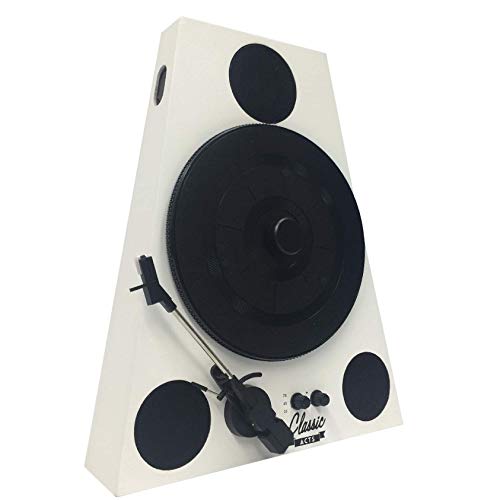
    Easygoproducts Vertical Bluetooth Turntable – 3 Speed Record Player – Auto Stop Feature – Amplified Triple Built-in Stereo Speakers – Headphone Jack Input and RCA Outputs - White

    Specs 

    Some alluring specs of the Easygoproducts Vertical Bluetooth Turntable include:

    • Triple built-in stereo speakers, which allows it to produce different sound quality. 
    • Can be connected to external speakers using right and left jacks to elevate the sound it produces. 
    • Has a magnetic record holder. 
    • Allows you to play records at three different speeds. 

    Pros 

    Notable standouts of this vertical record player are:

    • Design and build. This record player is built with high-quality materials, assuring longevity. It can be mounted on a wall with a bracket or placed on a shelf or table by standing it on built-in feet. It also has a built-in magnetic holder to store your records without them getting damaged. 
    • Extra features. This record player has Bluetooth functionality which allows you to connect it to your phone, computer, and other devices to play music from. It also has aux cables which also allow you to connect to devices. 
    • Satisfaction guarantee. Easy products offer you a full refund within 30 days if you are unsatisfied with the record player for whatever reason. Thanks to this guarantee, you can test it out before deciding to keep it. 

    Cons 

    While the player has an excellent sound quality for high frequencies, some users have noted that it can distort frequencies lower than 300Hz. This may limit the type of records you can play on the record player. 

    In addition, this record player can only receive Bluetooth connections and not transmit them. Therefore, if you want to play your records on a phone or laptop, you’ll need to use a different device. 

    Bottom Line 

    Consider getting the Easygoproducts Vertical Bluetooth Turntable if you are looking for a record player that you can mount and store your records in. However, it would be best to consider the frequency you want your record to play before buying this record player. 

    4. Fuse REC Vertical Vinyl Record Player

    This is another elegant vertical vinyl record player made with handcrafted ash wood. As well as being able to play vinyl records, it has several additional features, including Bluetooth connectivity. You can purchase this record player on Amazon.com.

    Fuse REC Vertical Vinyl Record Player with Bluetooth + Audio Technica Cartridge - Handcrafted Ashtree Wood

    Specs

    Here’s what makes the Fuse REC Vertical Vinyl Record player great:

    • Has full-range 3″ stereo speakers that offer excellent sound quality. 
    • Equipped with an Audio Technica AT3600L cartridge which produces excellent bass and sound quality. 
    • Can run at 33 1/3 or45 RPM. 
    • Can be connected to Bluetooth, has a built-in, and connects to external speakers. 

    Pros 

    Some positive aspects about this player are:

    • Aesthetic and design. This is an elegant record player made with the ash tree wood. It has a simple interface. 
    • Additional features. This record player has several additional features, making it excellent value for money. It has Bluetooth, USB ports, and the ability to dial into the radio. It can also function as an alarm clock. 
    • Sound quality. Thanks to the speakers and the needle, this record player offers clean and high-quality sound. 

    Cons 

    The main downsides of this player include:

    • After multiple uses, this record player may start dragging sound. However, the company may offer a replacement if this happens. 
    • Complexity. Users have noted that changing the modes on this record player can be complicated; the Mode button requires connecting to Bluetooth before toggling between modes. 

    Bottom Line 

    The Fuse REC Vertical Vinyl Record is a pocket-friendly choice that offers a range of different features. However, it should be noted that this record player may not last as long as other models. It’s a good option if you are looking for an entry-level record player to test using vinyl records. 

    5. Pyle Bluetooth Vertical Record Player

    This is a vintage-style record player which blends traditional design with modern features. As well as vinyl records, it can play mp3 records and read audio files from USBs. This versatility makes it an excellent purchase. 

    Specs 

    The specs for the Pyle Bluetooth Vertical Record Player include:

    • Dual built-in stereo speakers.
    • Can function at three speeds; 33 ⅓, 45, and 78 RPM. 
    • Has a ceramic stereo cartridge. 
    • Has a belt-drive turntable system. 

    Pros 

    Reasons to purchase this player include:

    • Additional features. This record player has several additional features, including the ability to receive and stream Bluetooth from 30 feet (9.1 m)  away. It also has a USB flash drive reader, supporting a 32 GB Flash drive. 
    • Build and Design. This player resembles a vintage piece with a sturdy wooden base, making it a beautiful addition to any room. 
    • Range of controls. This player has a range of different controls that allow you to manipulate the sound and speed of the audio. 
    • Warranty. Pyle offers a one-year warranty on this product, allowing you to exchange it if you face any problems. 

    Cons 

    While this record player offers excellent sound when playing vinyl, some users note that the Bluetooth sound is a little distorted. In addition, it can only act as a Bluetooth receiver and not a transmitter. 

    Bottom Line 

    Choose the Pyle Bluetooth Vertical Record Player if you want to play vinyl on a device with modern features but old-world charm. It is available to purchase from Pyle Audio. 

    6. TECHNICS SL-V5

    This is a vintage vinyl record player that isn’t being produced anymore. However, you can buy it online and at some record stores. Indeed, it is a great vertical vinyl record player which produces excellent sound. 

    Specs 

    Here’s what makes the TECHNICS SL-V5 a good choice:

    • Equipped with a brushless dc motor. 
    • Can run at two speeds; 33 and 45 rates per minute with both auto and manual speed selections.
    • Fully automatic and can autorun, auto-stop, and automatically select the size of the record. 
    • Has a tonearm with a 12-hertz resonance frequency to provide clear sound. 

    Pros 

    Some of the favored characteristics of this player include:

    • Aesthetics. The Technics SL-V5 can add character and visual appeal to any space as a vintage model. While it cannot be mounted on a wall, it looks striking when placed atop a flat surface. 
    • Linear tracking model. Because this record player has linear tracking, it doesn’t have issues like anti-skating. 
    • Automatic features. This model can automatically select and play the size of the records lined up, which requires only minimum engagement. 
    • Made of metal. This model is made with high-quality metal, which ensures its longevity. 

    Cons 

    Some notable downsides of this model are:

    • No longer under warranty. Since this model is no longer in production, finding parts and repairing any malfunctions can be both time-consuming and expensive. 
    • You may need to upgrade particular parts of this model like the cartridge to ensure it runs smoothly. 
    • Doesn’t have any additional features. 

    Bottom Line 

    The Technics SL V-5 is an excellent vintage record player to consider. However, you should buy it only if you have a technical understanding of record players and are prepared to upgrade it if necessary. 

    You can find the Technics SL V05 for sale online or at record shops and vintage stores. 

    7. Sony PS F-5 

    The Sony PS F-5 is another excellent model that’s no longer in production but still available to purchase second hand. It was initially in production in 1983 and is one of the best older record players you can buy. 

    Pros

    Here are some of the best features of the Sony PS F-5: 

    • Flexible. The Song PS F-5 can play both 7 and 12″ and 33 and 45 RPM records.
    • Portable. This record player is both small and light, making it easily portable. It is powered by AA batteries, allowing it to be used in spaces with no power accessible.
    • Made with high-quality materials. This model is made with quartz and is painted with pearlescent paint, which has assured its longevity. 
    • Sound quality. Users are impressed by the continuing sound quality that the Sony PS F-5 offers.

    Cons 

    If you consider getting the Sony PS F-5, you should note it can be expensive to upgrade. If you buy a secondhand model, you may have to upgrade some of the parts, which may be more expensive than if you get a model which is still in production/ 

    Bottom Line 

    Consider buying the PS F-5 if you are looking for a portable record player with excellent sound quality. Look to purchase the PS F-5 online. 

    Reasons To Choose a Vertical Vinyl Record Player 

    While vertical vinyl record players don’t have different sound quality and acoustics compared to the more traditional horizontal ones, there are some reasons you may choose a vertical record player:

    • Aesthetically pleasing. Vertical record players make the records look like they are floating in the air offering exciting visuals. They can also make a great design focal point in any room. 
    • Easy to use. Vertical vinyl players are easy to use – similar to horizontal players, you have to slip in the records and select the right mode to play them. 
    • Takes up less space. Some vertical vinyl players can be wall-mounted, so they take up less space than traditional ones. 

    It should be noted that there are fewer vertical vinyl players on the market than horizontal record players. Because of this, it can be hard to identify the best vertical record players that support vinyl. It’s important to do your research before making your final decision. 

    Finding the Best Vertical Vinyl Record Player for You

    When choosing a vertical vinyl record player, here are the factors you should consider: 

    • Sound quality and volume capacity 
    • Display capabilities 
    • Design and visual appeal 
    • Extra features 

    Each of these factors is explored in further detail below to help you choose the best vertical vinyl record players. 

    Sound Quality 

    As you will be using your vertical record player to play and enjoy vinyl records, sound quality is one of the most important factors to consider. Look for record players with a low tendency to warp sound and create distortion. Instead, the record player should play clear sound. It should also have a decent volume range.

    To judge the sound quality, you can look at the record player’s specifications. However, it would be best to test the sound of the record player before buying it. 

    Display Capabilities 

    Vertical vinyl record players will have different display options. While some may be built to sit on a flat surface, others can be mounted onto walls. When choosing the best record player for you, consider the space you have available. 

    Design and Visual Appeal 

    When selecting a record player, you should look for one made with high-quality materials to ensure its longevity. Naturally, you’ll also want to choose a record player suited to your design aesthetics. Some vinyl record players have a sleek, modern look, while others are vintage in style. 

    Extra Features 

    Modern vinyl record players can do much more than play records. Look for record players that have additional features like playing a CD, connecting to Bluetooth, and connecting to tune in to the radio. These additional features ensure that you are getting the best value for money. 

    Classic Vinyl Albums to Purchase 

    If you’ve chosen a vertical vinyl record player, your next focus may be building your vinyl record collection. Here are some of the most classic vinyl albums and records you should try tracking down, especially if you’re starting your collection. While these are no longer in production in vinyl, they can be purchased at record and vintage stores.

    Some classic vinyl albums and records are: 

    • Pink Floyd – The Dark Side of the Room. This album offers a depth of sound and range of instruments that make listening to a record player an almost transcendent experience. This was popular when released in 1979, and it can easily be tracked down for purchase. 
    • The Beatles – Sgt Pepper’s Lonely Hearts Club Band. This is a highly coveted album by The Beatles. As well as offering a range of acoustics, it features songs that reflect history and popular culture. 
    • Bruce Springsteen – Born to Run. This song features various guitar tracks, assuring you a beautiful sound on your vertical record player. This record can be a little challenging to track down, but you may be able to find it in vinyl online. 
    • Joy Division – Unknown Pleasures (1979). This is an album known for its atmospheric sound. IT was Joy Division’s debut album featuring various vocals and guitar melodies. 
    • Simone and Garfunkel – Bridge Over Troubled Water. This folk-rock song is a true classic which features seminal vocals and instrumentals. The vinyl for his can be found in vintage stores and online. 

    Related articles:
  • What is a Slipmat, and Do I Need It? Let’s find out!

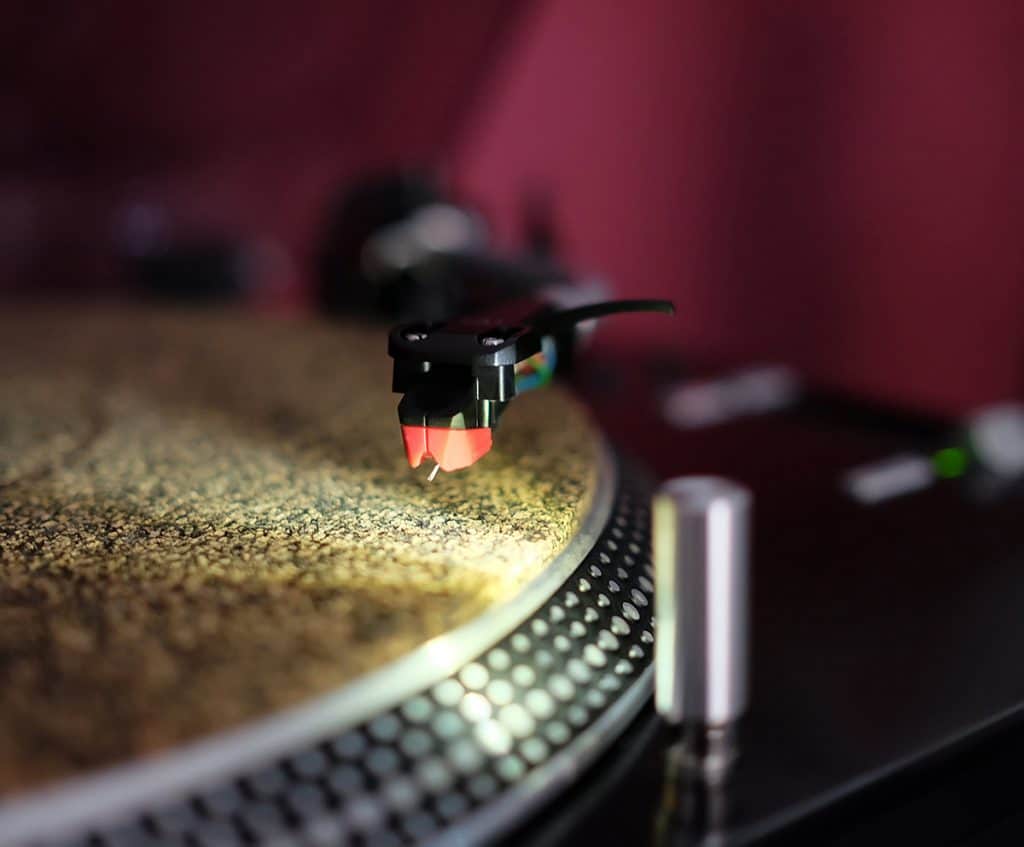
    What is a Slipmat, and Do I Need It? Let’s find out!

    Slipmats are essential for an excellent vinyl experience, both for DJing or just recording. A slipmat can help produce a better sound when scratching, so the platter doesn’t stop when in use. Knowing the difference between a rubber mat, a felt mat, and a slipmat is essential when experimenting with different sounds. 

    You need a slipmat for your record player for scratching or DJing. Slipmats can help when mixing, but they also change the sound and feel of your turntable. You may eventually decide that you don’t like how it sounds or feels, but it’s a worthwhile accessory for your turntable nonetheless.

    This article will explain and explore what record slipmats do, if you need one for an acrylic platter, whether they affect the overall sound, and if you can make one yourself.

    What Does a Slipmat Do?

    Record players sometimes come with felt slipmats or rubber mats. There’s a bit of a difference between the two, and it’s up to you whether or not you choose to use one. Nevertheless, most pros recommend the use of slipmats. 

    A record slipmat is a safe, soft surface that protects against scratches and scuffs. They’re fantastic for smooth transitioning or mixing. However, they do collect dust and lint and, if they’re too thin, can sometimes cause a suction-like effect that causes your music to sound off. 

    A slipmat is different from a rubber mat; rubber mats are made to hold the record in sync with the platter. Slipmats slip onto the platter, allowing a DJ to manipulate a record on a turntable while the platter rotates. It doesn’t just aid the DJ in moving the record, but it also adds to the aesthetics of your turntable.

    DJs recommend using a thin felt platter because they don’t make wind-like sounds like plastic mats, and they’re easier to manipulate than rubber mats. The best mats bend slightly and are pretty thin.

    How Do You Use a Slipmat on a Record Player?

    You can use a slipmat on a record player by placing it on an empty turntable platter. You then put a record over the slipmat and start the record player. There’s also a technique called “record stacking,” which involves placing a slipmat on a record and then placing another record on top of it.

    Slipmats can be used on any record player but are primarily designed for DJs who scratch or mix; it essentially allows the DJ to manipulate the record quickly. 

    The DJ will place the slipmat on the platter. Some slipmats are made out of different materials, such as felt. Companies are creating more innovative designs with a plastic-like material on one side. That allows for a better slip and less stoppage when the DJ manipulates the track. 

    You don’t want to put your record right on the turntable because it can damage your record. It may cause scratches on one side. It’s a fantastic idea to use a rubber mat or slipmat on your platter. 

    You don’t need a slipmat if you listen to a record player. Slipmats are designed for DJs who scratch and mix. A rubber mat that comes with most record players is perfectly suitable to keep your record from being damaged. 

    It’s entirely up to you whether or not you choose to use a slipmat made of whatever material you like. 

    Slipmats come in many different materials and thicknesses. Many DJs prefer a thin felt slipmat because it doesn’t affect the sound as much as a plastic slipmat. It also allows for less stoppage when scratching or mixing. 

    Some DJs use a method known as record stacking, allowing for quicker access to the next record. If you decide to use this method, the best way to do this would be to place a slipmat between those records. Many DJs prefer this popular solution. 

    Do You Need a Slipmat for a Acrylic Platter?

    Suppose you have an acrylic record player; you don’t need a slipmat. You’d only need a weight or clamp to mate the vinyl to the platter. It’s a fantastic choice if you don’t want to worry about using slipmats on your record player. 

    You don’t need a slipmat if you’re using an acrylic record player. Nonetheless, it’s possible to use a slipmat with an acrylic record player if you so desire. There won’t be any adverse effects on sound quality.

    You shouldn’t have to worry about scratching the surface of your records. Acrylic platters are smooth, and there isn’t a need for a slipmat. However, if you want to stay on the safe side, using a slipmat might be a good choice.

    You may decide that you want a slipmat just for the looks because some slipmats have very creative designs on them. 

    However, they’re not essential with acrylic platters. Acrylic platters are made of material similar to records. Thus, it won’t scratch the surface. This is similar to why a needle won’t damage your records.

    Do Slipmats Affect Sound?

    Many different types of slipmats are mainly designed for DJs. Turntable mats can come in felt, plastic, and even leather sometimes. These materials can affect the sound of your vinyl, and you should test each fabric until you find the right slipmat for the sound you’re looking for. 

    Different material slipmats can affect the sound of vinyl music. Each mat’s made differently with varying levels of thickness and various types of material. The best mats are usually made out of felt; however, that’s all based on preference. 

    If you’re learning how to DJ, scratch, or mix, it’s essential to use a slipmat; rubber mats don’t allow for the same ability because they’re designed to grip the record rather than let it slip. Using a rubber mat isn’t the best idea for someone learning to manipulate a form. 

    Thin plastic slipmats aren’t recommended either. Plastic slipmats can make a wind-like sound, though the slip is great for scratching. It’s excellent when you’re practicing. 

    However, you’ll notice the plastic sound in the background when recording, which isn’t great for professional recordings.

    Can You Make a Slipmat Yourself?

    You can make a slipmat yourself. Making your own felt slipmat might be the best choice for you because you can decide how thin or how thick you want your slipmat. Making a slipmat yourself also gives you control over the materials, allowing you to control the sound and feel.

    Slipmats are a fantastic idea for DJs and, if you’re only getting started with the hobby, you may not want to spend money on a slipmat. If you’re going to make your own with your materials, that’s perfectly acceptable. 

    There are a few essential items you may need for your do-it-yourself slipmat, these are:

    • Thin cardboard
    • Record for template size
    • Scissors and pen
    • Felt fabric
    • Hot glue gun or glue

    Here are the steps:

    1. Trace your record shape onto the cardboard. Trace the center hole as well. 
    2. Cut out the traced cardboard. 
    3. Place the felt fabric over the round cardboard piece. Don’t cut around the cardboard just yet; you want to glue it first and cut around the material after the glue is dry. Repeat on the other side of your cardboard. 
    4. Cut a hole in the middle of your fabric.

    Many companies make mats that are sometimes too thick and don’t allow you to manipulate the record smoothly.

    Conclusion

    Record players are a great way to experience music in many different ways. Whether you wish to learn how to DJ or listen to music more authentically, slipmats are essential for the safety of your record. 

    Slipmats keep records from being damaged or scratched, allowing a DJ to manipulate a record. However, you don’t need one for your record player if you’re not a DJ or not mixing or scratching. A simple rubber mat will do. 

    Slipmats may affect the sound of a record, so be sure you pick the suitable material for the sound you want; it’s about preference.

  • What Are Bluetooth Record Players And Are They Worth It?

    What Are Bluetooth Record Players And Are They Worth It?

    The record player became famous since its birth also a source of classic joy for people. These devices progressed slowly for decades, but new technological changes revolutionized these record player devices. Is there such a thing as a Bluetooth record player?

    Modern speakers and other peripherals use Bluetooth technology to provide wireless connections. Similarly, now some record players use Bluetooth and are known as Bluetooth record players. 

    It is the 21st century, and you do not need a wired connection to listen to your music collection. These Bluetooth devices are popular due to their sound quality and unique designs.

    Bluetooth record players are famous among music lovers because they provide excellent audio output using wireless technology. Wireless Bluetooth devices gained abnormal hype during the last decade, and Bluetooth record player is one of them. The popularity of these audio players is due to their aesthetics and time to time modifications. The demand for these Bluetooth players is rising and setting new sale records. (source)

    If someone prefers to buy a Bluetooth record player over modern stereos, there is something special about these audio players. People find these wireless record players fantastic for playing old or new record collections. Unlike any other demanding product, the prices of these turntable Bluetooth record players are not that high. (source)

    Some people are still confused about what are Bluetooth record players? Are Bluetooth record players worth it or not? So, we will divide this question into two parts and discuss them separately. 

    What Are Bluetooth Record Players?

    A Bluetooth record player is a turnable device that uses Bluetooth technology to connect to a speaker, headphones, AirPods, or a stereo, e.t.c. The average range of this Bluetooth device is about 30 feet, and you can listen to your favorite music wirelessly. It means you do not have to be in the same room and can use wireless speakers or other audio devices in any other room. This device is fantastic for casual and regular music listeners to enjoy their vinyl records anywhere they want. 

    The Bluetooth record players also have some drawbacks and caveats, as the audio quality will fall slightly. This wireless vinyl player is helpful for people who want an audio player setup with speakers. This type of record player is easy to set up and use at any place you like. You can set this Bluetooth vinyl player with speakers in different rooms without connecting a single cable or wire. (source)

    Some people find it difficult to set up and use wireless devices. Some people might have some queries about Bluetooth record players. So, let us answer some famous questions about Bluetooth record players.

    • How does Bluetooth record player work?
    • How to connect a Bluetooth record player to a Bluetooth speaker?
    • Can we use Bluetooth speakers with a standard record player?
    • Does Bluetooth record player ruin audio quality?
    • How to improve the audio quality of Bluetooth speakers paired with Bluetooth record players?

    1. How Does Bluetooth Record Player Work?

    Some people may know that an ordinary record player uses analog recordings to play recorded music. It means that the storage media of the record player stores these analog signals, which is a vinyl record. On the other hand, a Bluetooth record player uses these analog signals and converts them into digital signals. This record player uses a built-in DAC (Analog to digital converter) to compress and digitalize the audio signals. (source)

    There is also a mechanism in the Bluetooth record player to send compressed audio signals to wireless devices like speakers or headphones. When the wireless headphone or speaker receives these compressed signals, these signals decode into the original analog audio signals. After this conversion, you can listen to the music from your wireless speakers or headset. Some users do not have wireless speakers or headsets, but they can play music using wired speakers or other wired devices.

    Bluetooth record players are portable, which is one of the main reasons for their popularity. These Bluetooth vinyl players allow you to choose between wired and wireless speakers. So, you can use any one of these audio devices, depending on your choice.

    2. How To Connect A Bluetooth Record Player To A Bluetooth Speaker?

    Firstly, people do not know there are two different types of wireless speakers. The Bluetooth wireless speaker and WiFi wireless speaker are the two variants of wireless speakers. Both wireless speakers use various mechanisms to play your vinyl record music. You need to understand that WiFi and Bluetooth are not the same technology, and a Bluetooth device cannot work smoothly with a WiFi device.

    A Bluetooth record player will need to pair with the Bluetooth speakers before you use them. You have to set both Bluetooth devices to paring mode to connect them via Bluetooth protocols. You can listen to your vinyl record music once the Bluetooth wireless speakers connect with the Bluetooth vinyl player. The music transfers to the speakers through the Bluetooth protocol, and the Bluetooth speaker generates music accordingly. (source)

     The music transfers to the speakers through the Bluetooth protocol, and the Bluetooth speaker generates music accordingly. This pairing is a one-time process, and you do not have to pair these devices again and again. Now you can turn both devices on to listen to your vinyl record collection.

    3. Can We Use Bluetooth Speakers With A Normal Record Player?

    An ordinary record player can not work with Bluetooth speakers in their current state. Many people have a regular vinyl record player with no Bluetooth support to play music on Bluetooth speakers. Do you want to use Bluetooth speakers and headsets on your regular record player? Yes, now it is possible to pair your vinyl record player with Bluetooth devices, but with some modifications.

    If you want to pair your record player with a Bluetooth speaker, you have to set up a Bluetooth transmitter on your record player. You can directly plug in the transmitter if your record player has a built-in preamplifier. But if it is not available, you can also buy a new preamplifier for your record player. After setting up a built-in or external preamplifier, you can directly play your vinyl record music on your Bluetooth speakers or headsets.

    4. Does Bluetooth Record Player Ruin Audio Quality?

    The bitter reality is the audio quality of vinyl music on wired speakers is better than that on a WiFi or Bluetooth speaker. The Bluetooth record player converts analog signals into digital signals and sends them to the Bluetooth speakers. The Bluetooth speakers then convert them back to analog signals and play the music. This conversion of signals causes the audio quality to drop.

    Setting up a Bluetooth speaker is not recommended if you have a high-end record player and prefer audio quality. Bluetooth speakers can distort the audio quality of your high-end Bluetooth Record player. But if you have a low-end Bluetooth recode player and like to play music wirelessly, you can try out Bluetooth speakers. There is not much noticeable audio quality drop for a low-end Bluetooth record player on Bluetooth speakers. (source)

    You can also buy a mid-range Bluetooth record player to keep a balance between audio quality and price. It will help you set up Bluetooth speakers in your rooms and get a reasonable audio quality for your vinyl music.

    5. How To Improve The Audio Quality Of Bluetooth Speakers Paired With Bluetooth Record Players?

    Do you have a high-end Bluetooth record player and like to listen to vinyl music through wireless speakers? Are you tired of the audio quality drop on your Bluetooth speakers? Can we improve the audio quality of Bluetooth speakers paired with Bluetooth record players? Congratulations, you can improve your audio quality and music experience with various simple tricks.

    The first tip is to check whether there is any obstacle between the record player and the wireless speaker or not. If there is an obstacle, you should shift its place to improve the signals and improve the audio quality. The second tip is to keep both devices as close as possible, but it may not be that useful. The third tip is to check the audio codec of the Bluetooth, which is essential to transmit fewer data to strengthen the signal.

    You can use these tips to improve the audio quality of your vinyl record player paired with a wireless speaker or other devices.

    Are Bluetooth Record Players Worth It?

    Bluetooth record player is one of the best wireless devices to play music without any cable connection between the device and speakers. The vinyl record music lovers find this wireless music player beneficial in fulfilling their music demands. Bluetooth record players come in different sizes and price ranges depending on the requirements. Are Bluetooth record players any good or not?

    People are leaving the wired setups and switching to wireless systems day by day. Wireless Bluetooth devices are handy as you can use them anywhere on the go. If you and your family want to enjoy your music collection in different rooms, the Bluetooth vinyl record players are super helpful. Are Bluetooth record players worth it?

    The answer depends on multiple factors and varies for every user of record players. It is worth it to buy a Bluetooth record player if you have a good album collection and it comes with an excellent stylus. But wireless devices come with a price, and you will notice some quality drops in the music through the wireless speakers. It is unclear whether a Bluetooth record player is worth it for you or not.

    It will help us to determine whether the Bluetooth record player category is worth it for you or not. So, we will define it for every class, whether it is worth it for you or not. Here are the three types of Bluetooth record players:

    • Premium Bluetooth Record Players
    • Mid-range Bluetooth Record Players
    • Budget Bluetooth Record Players

    1. Premium Bluetooth Record Players

    It is a universal truth a device needs quality components to deliver good results. Similarly, if you are a regular music listener, you need a Bluetooth record player with quality components. You can find excellent premium Bluetooth record players at a reasonable price in seasonal sales and other sale events. You can also find a good vinyl record collection at flea markets and yard sales.

    Any other device can not replicate the experience of the audio quality of a premium Bluetooth record player. The experience of playing your vinyl record collection on a quality Bluetooth record player makes it worth every penny you spend. So, it is worth it to buy a premium Bluetooth record player if you are a passionate music lover. (source)

    2. Mid-range Bluetooth Record Players

    Many people like to listen to music on and off to release their daily stress. Some people like to listen to music to spend their free time on the weekends. But these people can not afford a premium Bluetooth record player, and it is not worth it for them to spend this much. A mid-range Bluetooth record player comes with a mix of quality components at a much lower price than a premium Bluetooth record player.

    A mid-range Bluetooth record player is worth it for you if you are not a passionate regular music listener and your budget is not that big. You will get slightly less audio quality on a mid-range Bluetooth record player, but it is worth it if you are a casual music listener. (source)

    3. Budget Bluetooth Record Players

    Most music lovers have a tight budget and can not afford an expensive premium or mid-range Bluetooth record player. These people do not listen to music regularly but enjoy themselves whenever they listen to music. If they do not listen to music regularly, it is not worth buying a premium or mid-range Bluetooth record player. A budget Bluetooth record player is the best available option for a non-regular music listener and someone with a low budget.

    A budget Bluetooth record player cannot give the audio quality of a premium or mid-range Bluetooth record player, but it is good enough for someone who listens to music rarely in weeks. If your budget is low, you can try a budget Bluetooth record player if you like. (source)

    Difference Between Wired And Wireless Record Player?

    A wired record player is a classical music player which allows you to play your favorite vinyl record music collection. You can use a cable or wire to connect a wired record player to an external speaker. You will get excellent audio quality if you pair multiple speakers simultaneously with the record player. You have to pace the speakers close to the record player as the length of the cable is not that long.

    On the other hand, a wireless record player comes with some latest technologies. A Wireless record player does not need any wires to pair with an external speaker. These record players either use Bluetooth or WiFi to pair with a wireless speaker. You can place your speaker almost 30 feet away from the wireless record player.

    How To Use A Soundbar With A Record Player?

    Connecting a soundbar with your record player will increase the audio quality. You can use a soundbar with a record player if there is a built-in phono preamplifier in it. You have to connect the phono preamplifier with one of the analog inputs to prevent distortion. It will stop two phono preamplifiers from working at the same time.

    You can also use an external phono preamplifier to use a soundbar. If the soundbar is capable of phono inputs, you can use it easily with your record player. If both devices have a built-in phono preamplifier, you can choose one of them.

    How To Buy The Best Bluetooth Record Players?

    You do not have to waste your time searching the market for the best options for Bluetooth record players. Here are a few tips you can use to buy the best Bluetooth record player:

    1) Check Its Connectivity With Other Devices

    Firstly check that what devices can connect with the selected Bluetooth record player. Many Bluetooth record players are pairable with various devices like Bluetooth speakers, Bluetooth headsets, Airpods.  

    2) Look For The Built-in Preamplifier

    Many Bluetooth record players come with a built-in preamplifier. A preamplifier helps in customizing your vinyl record setup. It also allows you to attach various transmitters like Bluetooth, WiFi e.t.c.

    3) Check The Speakers

    Some Bluetooth record players come with built-in speakers, and some with small external speakers. You can also upgrade your speakers later to keep up with the latest trends.

    The Bottom Line

    So, a Bluetooth record is a new sensation for the music lover community. It is convincing people to switch to wireless devices and leave those cable devices behind. In the end, the choice is yours to choose between wired and Bluetooth record players. Maintenance of a Bluetooth record player is also a headache for some non-regular music listeners.

    A Bluetooth record player is worth it for a passionate music lover but not for everyone. Some cheaper ones are worth it for casual music listeners. So, choose a Bluetooth record player that suits your passion for listening to music.

    Sources

    1. Wireless Music Player
    2. Record players vs Bluetooth turntables: do you need the extra tech? | Louder
    3. Best Bluetooth turntables 2022: wireless record players for streaming vinyl | What Hi-Fi?
    4. Record player
    5. What is a Bluetooth​ Turntable and How to Connect It? | Vinyl Restart
    6. Bluetooth in wireless communication | IEEE Journals & Magazine
  • When To Replace Your Record Player Needle?

    When To Replace Your Record Player Needle?

    Over the last few years, record players have made a robust comeback in the music industry, appealing even to younger generations who grew up on mp3 players. Suffice it to say, we could all use a refresher on keeping our players working well. For instance, how do you know when it’s time to replace your record player needle? 

    Replace your record player needle about once every 3 years or per 200 to 1,000 hours of playtime. It’s vital to regularly inspect your needle, as this time frame depends on the model. Replace the needle when it’s jagged, skips over grooves, reduces sound quality, or if you bought a used player.

    In this article, I’ll explain when to replace your record player needle and why it’s crucial to do so. I’ll also cover how to clean a needle to prolong its lifespan, the signs a needle requires changing, and how to replace it. 

    Reasons To Replace Your Record Player Needle

    Record player needles maintain intimate contact with the records themselves each time you play music. Their job is to delicately navigate the vinyl grooves containing data that the rest of the machine can convert into playable compositions. Although companies typically manufacture needles from solid materials like sapphire and diamond, they’re still vulnerable to wearing down due to the nature of their jobs. 

    Damaged or worn needles can: 

    • Widen grooves and interfere with record data 
    • Attract debris to the record by creating microscopic chips 
    • Fully slide out of the groove and scratch the entire record 
    • Render the record unplayable 
    • Make the music sound atrocious 
    • Plunge the resale value of records 

    Damage to records can be especially crushing when it’s a rare release or collectible that’s hard to find. We want all our records to sound as good as they can for as long as possible, and that requires regularly replacing needles to avoid inadvertent damage to the vinyl. 

    It’s tempting to save time, money, and energy by leaving the needle in place when it comes to a part so small. But don’t be fooled—though the record player needle is far from the most prominent feature of the machine, it’s one of the most crucial to maintaining and enjoying your records for years to come—or selling them later for a bit of money. 

    Other Record Player Issues That Cause Damage to Needles

    Record player needles frequently get blamed for audio and other record player problems. However, trouble doesn’t always stem from the needle alone. Issues can originate higher up in the process at the cartridge or tonearm. 

    Sometimes, the cartridge itself is crooked or otherwise not appropriately aligned with the tonearm, which affects the needle placement beneath it. A metal strip within the tonearm itself can also stop absorbing shocks and place undue pressure on the needle and, consequently, the record. 

    It’s not always safe to simply adjust the arm assembly, so be prepared to replace the entire thing if you find this is the issue. 

    6 Signs It’s Time To Replace Your Record Player Needle

    For the most part, time determines when you need to replace your needle. Between 200 and 1,000 hours is the most quoted range, depending on the quality of the record player. Even with perfect use, however, record player needles can require replacement sooner than anticipated if they become damaged, dirty, or unfixable, regardless of their age.

    You Bought The Record Player Used

    Many of us turned to used products to save money and reduce waste, especially with more expensive items like record players. However, some risks are simply better left untaken—especially the chance that a previous owner hasn’t replaced the record player needle in a long time. 

    Kind of like getting an oil change and switching out air filters when you buy a used car, replacing the needle when you first get the record player ensures that you know how old the needle is and can monitor its lifespan more accurately. 

    Muffled, Distorted, and Staticky Sound Discrepancies 

    One of the most noticeable symptoms of a needle in need of replacement is a distorted or unpleasant audio quality on otherwise spotless records. Jagged edges and jumping needles can dull the cymbals, thin out the trebles, and produce crackling, static, or fuzziness that didn’t exist on the original piece. 

    If the records themselves appear a little worn, it’s still necessary to check up on the record player needle since it could be the source of the damage. 

    Needle Points Have Changed Shape

    Some record player needles come rounded, while others are sharp. No matter which style of needle your player uses, it’s crucial to examine the tip every now and again to ensure it hasn’t worn down. 

    For sharp needles, wear and tear translates to dullness or rounding of the needle tip. Conversely, rounded needles become jagged and sharp. The result of both is poor sound quality, record damage, and a needle in need of replacement. 

    Elliptical-shaped needles are especially prone to wearing down more quickly than other needlepoint shapes. Since they experience more contact with the grooves in order to access more data from the record, they’re more vulnerable to scraping and wearing. 

    To examine the needle closely enough to verify its point shape, use a high-powered magnifier to amplify its structure. 

    The Needle Body Is Out of Shape

    It’s not just the point shape of the needle you need to keep an eye on. Indeed, the entire needle should be frequently inspected to ensure it’s intact. If the body of the needle has bent, split open, or in some way become deformed, it’s time to replace the needle. 

    Black Residue That Originates From the Vinyl

    Residue isn’t the end of the world. With time and use, needles inevitably need cleaning from dust and other household debris. 

    However, the needle can sometimes scrape material off of the vinyl record itself. Scrapings come off as a dark residue or stain at the tip of the needle. If you notice other signs of wear in your needle—or even chips and other damage to your records—it’s time to replace it. 

    Frolicking Needles: Skipping Over Grooves

    Needles ready for replacement sometimes start skipping over entire grooves rather than widening them. Skipping is especially problematic because the needle can scratch up not just an individual groove but also across the whole record’s surface. 

    Needles can skip because they’re bent or have otherwise worn down. Take a look at the needle tip, body, and at your vinyl records for any signs of chipping. Also, listen for crackling, popping, and other startling audio distortions caused by jumping needles. 

    How To Replace a Record Player Needle

    Typically, replacing the needle itself is easy. Sometimes you’ll need to replace the entire cartridge, but that’s usually a simple task, also. If necessary, obtain the model number to guarantee you order the correct part. Once you’ve got your replacement in hand, follow these steps: 

    1. Remove the former needle or cartridge that you’ve determined needs replacing. 
    2. Place the new needle or cartridge where the old one was before. 
    3. Align said needle or cartridge to manufacturer specifications. 

    How To Prolong Record Player Needles and Vinyl

    Prevention will prove invaluable in protecting the integrity of your record player parts and vinyl records themselves. Consider the following advice as a vinyl record enthusiast: 

    • Clean the needle every time you use your record player, or at least once per week. You can pull a needle brush toward you to scrub the needle tip–this helps protect the cantilever. You can also place a needle gel on the turntable, lower the needle, and let the tonearm dip the needle into the gel a couple of times. 
    • Close the turntable cover to protect from ambient debris, even when you’re not playing music. Though this may be inconvenient or alter the aesthetic of your whole vinyl deal, it’s a crucial aspect of preventing debris from gathering where it can experience friction with the vinyl and damage records. 
    • Store records in their cases. Do everything you can to protect your records from accumulating ambient debris. The most effective way is to cover up your records in the cases they came in. 
    • Handle the record from the edges. Avoid direct contact with the grooves of the vinyl itself. Use your fingers or palms and gently place records down while holding the outer perimeter.
    • Clean your records with a microfiber cloth and cleaning fluid or isopropyl alcohol before you play them. That way, any dirt that manages to get onto the vinyl won’t stay caught in the grooves and scratch up the surface. Dedicate time to cleaning your records at least once annually. 

    Conclusion

    Vinyl records hold a special place in the hearts of many, from those who grew up playing records in their bedrooms to those who have recently discovered older technology and come to adore it. No matter what we use to play and enjoy our art, it’s vital to keep our record player parts and vinyl spiffy. That way, we can enjoy our music and collectibles long after purchase.

  • Record Player and Speaker Placement

    Record Player and Speaker Placement

    Record players produce high-quality sound and add decor and style to any room. It’s vital to put record players and speakers in the right location to deliver the best sound. When your speakers and record players work together, they can generate fantastic sound.

    You should put your record player and speakers on a flat, sturdy, and stable surface. Keep the record player away from other speakers or anything else that’ll cause unwanted vibrations and other frequency-emitting electronics. Put speakers equidistant in front of you to create a stereo effect.

    The rest of this article will explain where and how you should place your record player to protect it from interference and environmental factors. I’ll share everything you need to know about speaker placement, speaker stands, and subwoofer speakers.

    Where You Should Put Your Record Player

    Proper record player and speaker placement is essential to get the best sound. Record players are extremely sensitive and can easily pick up other vibrations. So, it’s necessary to separate them to ensure they pick up the correct vibrations. Using speakers to create a stereo effect makes it feel like the singers are in the room with you, allowing you to achieve a vibrant sound.

    The most important part of a record player is the turntable. It’s vital to place it on the right surface to get the best sound. 

    You should put your record player on a completely flat and stable surface. Ideally, the surface should be stationary and heavy because you don’t want it to move while using your record player. 

    The tonearm on your record player tracks the record’s vibrations while the vinyl is spinning and helps produce the sound. The tonearm shouldn’t pick up any other vibrations outside the record player. If it catches excess vibrations, your sound quality takes a massive dip. 

    If your record player is on an unstable surface, it can cause friction on the tonearm while the records are playing. This can cause your records to skip and track improperly, resulting in distortion and clipping. If your tonearm constantly catches extra vibrations, it can wear out extremely quickly.

    Isolation platforms are also available for you to purchase. You can put your record player on specially designed platforms to get the best sound with minimal extra vibrations. Many record players have replaceable feet that you can change for better isolation and minimal vibrations.

    Eliminate Other Sound Frequencies in the Room

    Other electronic devices in your home can emit different frequencies and vibrations that affect your sound system. Be sure to keep your record player away from any electromagnetic interference (EMI) devices. 

    These EMI sources include:

    • Wi-Fi routers
    • Electric Circuits
    • High-energy electronics (such as microwaves)

    These devices emit sound vibrations that can interfere with your record player. 

    Keep your record player away from:

    • Amplifiers
    • Large electronic devices
    • Kitchen appliances
    • Cell phones

    All these devices can cause interference, drastically lowering the sound quality of your record player.

    Temperature, Environment, and Other Factors in Record Player Placement

    Avoid placing your record player in direct sunlight as it can damage the player or cause it to overheat. 

    Your record player should be in a relatively stable environment where the temperature doesn’t fluctuate. 

    Try to keep your record player at room temperature. Avoid putting it in basements or other extremely cold or hot spots. 

    Avoid placing your record player in drafty regions as well.

    Where You Should Put Your Speakers

    Since excess vibrations lead to poor sound quality, don’t put your speakers too close to your record player. The record player tracks all minor grooves on the record, which is how sound is reproduced. Speakers also produce strong sound vibrations in the air. 

    Putting the speakers too close to the turntable will inhibit the record player from reading all the grooves because the turntable will also pick up the speakers’ vibrations.

    The ideal spot to put your speakers is equidistant from where you’ll be listening to imitate a stereo effect. The sound will arrive in both ears from two different directions. You want the speakers to form a triangle with you at the point.

    Take some time to adjust and maneuver your speakers and their placement to get the best sound quality. It’s best to start with your speakers about six feet (1.83 m) apart and change them from there. Many people suggest playing different records to test the sound quality of various types of songs.

    Put the speakers in front of you and out to the sound to get the feeling of surround sound. It should sound like the singers are in the room giving you a private performance. Although many people do it, you don’t want to put your speakers behind you. 

    You’ll get the best sound quality if the speakers are in front of the listeners at ear height. If you’ll be standing most of the time, put your speakers at standing ear height. If you’ll be sitting while listening to the speakers, put them at your sitting ear height. 

    To improve sound quality, point your speakers toward the listeners. Be sure to put some space between your speakers and the wall because you don’t want them directly against the wall. Your speakers should be about 10 centimeters (3.94 in) away from the wall.

    Speaker Placement

    There’s debate about the optimal speaker placement. You can put them onto:

    • The floor
    • The table
    • Speaker spikes
    • A wall

    Spikes used to be the preferred method for holding your speakers. Using spikes involved screwing your speaker into the floor or the stand it was on. However, many experts have recently discovered that putting your speaker on spikes diminishes the sound quality.

    The best way to secure your speakers is to separate them from the surface they’re sitting on. 

    For example, if you place your speakers on the floor, you’ll want to put them on some padding so that they’re not sitting directly on the floor. The more space you get between the speaker and the surface, the better. You can use any of the following materials to isolate the speakers from the floor:

    • Foam
    • Springs
    • Soft pads

    Speaker Stands

    Speaker stands are another great option for holding your speaker. Bookshelf or monitor speakers will most likely require speaker stands. However, you don’t need a speaker stand with a floor speaker.

    Speaker stands come in various materials. They’re made from different types of materials. A speaker stand can add to the sound quality. So, choosing a stand that enhances the quality and fits your budget is essential. Stands made from wood and metal are the most popular stands.

    If you want a more intense and direct sound, you’ll need to put your speaker on a heavier stand. The sturdier and heavier the frame, the more intense your sound will be. If you want a more airy sound, use a light speaker stand. Metal stands tend to be heavier, and plastic or wood stands are generally more lightweight. 

    Just as you need separation with your speakers on the floor, you’ll also need separation if you put your speakers on a stand. Using isolation with your speakers will give you a better sound quality because you combine the stand quality with whatever material you’re using to separate the two.

    Subwoofer Speakers

    Subwoofers are speakers that emit lower frequencies. If you want the best sound quality in your listening area, you’ll want to add a subwoofer to balance out the frequencies. The best place to put a subwoofer is in a room’s corner or slightly away from the middle of a room.

    A subwoofer will amplify the bass in a room. It should blend effortlessly with your other speakers and shouldn’t be too overwhelming. Adjust the speaker’s control to get the best, most seamless sound.

    Final Thoughts

    You should put your record player on a flat, sturdy surface with minimal to no movement. The surface must be sturdy so that your record player doesn’t pick up other vibrations besides the ones from the vinyl record.

    Put your speakers equidistant from you to form a triangle so that you get the best sound. Placing your speakers away from each other creates a stereo effect. 

    Use an isolator or different types of padding to separate your speaker from the floor or its stand. Having your record player and speakers in optimal places will give you the best sound.

  • Why Do Vinyl Records Crackle?

    Why Do Vinyl Records Crackle?

    Vinyl records have surprisingly made a comeback in the past decade and even threaten to outsell CDs, with an increasing number of younger people becoming more interested in them. Many well-known artists have released their old albums in the vintage vinyl record format. It’s pretty cool, except some people complain about a constant crackling noise.

    Vinyl records crackle because of dust and other impurities caught in the grooves, scratches and microscopic cracks on the record, and static electricity. Vinyl records must have a smooth surface to ensure they produce the finest sound. Unfortunately, they’re very delicate and difficult to maintain.

    Suppose you are one of the newer collectors or have inherited some old vinyl records and have encountered a crackling noise in one of your pieces. This article will help you understand why it happens and how to prevent it, allowing you to keep your records in pristine condition for longer.

    Reasons Why Vinyl Records Crackle

    Vinyl records, properly called phonograph disc records or less often LPs, are among the earliest evolutions of music format. They truly transcend time as you can find numerous people of all generations interested in collecting and using them.

    You may have seen movie scenes where actors play LPs where you can clearly hear crackles. This might lead you to believe that it’s normal for an analog sound storage disc to produce such noise. After all, it’s analog! Well, there’s a bit of truth in that.

    Some music enthusiasts and avid LP collectors may even fondly say that these crackles give the classic records a certain appeal that makes them unique. However, not all crackling noises can be ignored as they may be warning signs that your records or the player may have some problems.

    Several factors can contribute to the crackling noise you hear on your records. Below is a list of common causes and an explanation of why the crackles happen.

    Dirt and Dust

    Over time, dirt will inevitably build up on surfaces, especially those that don’t receive enough attention with regular dusting. Vinyl records are no exceptions. Improper storage or lack of a regular cleaning routine after using your LPs may cause them to accumulate dust faster.

    Most people use a feather duster or a regular brush to remove dust from surfaces. Some might even think it is okay to use the same for vinyl records. Sadly, that isn’t the case. Using these cleaning tools will only cause the dust to lodge deeper into the grooves and make it near impossible to remove.

    When dust gets lodged into the grooves of a record, it can alter the quality of the sound and cause crackling as the dust gets picked up or struck by the record player’s stylus. It can also damage the stylus and possibly any other LPs you play on your record player afterward.

    Impurities From the Factory

    Inconsistency in the manufacturing process and the use of recycled or poor-quality materials may cause impurities in the vinyl records and bring about unwanted crackles

    Some vinyl records may also be less resistant to heat than others due to certain materials present in them. This makes them more prone to damage from exposure to high temperatures. Poorly made records may also be sensitive to weight and may dent if stored improperly.

    While most manufacturers keep their LP record recipe a secret, well-made records made mainly from polyvinyl chloride (PVC) are usually highly durable. They can last a long time when cleaned and stored properly.

    Microscopic Scratches and Cracks

    Many household items, including vinyl records, have specific requirements to help them work well and last long. Using the wrong cleaning materials may damage or create scratches on the record’s surface and cause crackling.

    Improper handling or accidents may also cause irreparable scratches on the records. For instance, when setting up the record player, the position of the stylus can damage the surface of a record. If the stylus is set up too deep into the disc, it can dig into the grooves and significantly alter the sound with repetitive playing.

    Static Electricity

    As hinted at earlier, LPs are made from PVC. PVC is a non-conductive plastic that can build up static electricity over time when it comes in contact with other non-conductive materials. The LP sleeve and the cloth you use to wipe down the record are common sources of static electricity.

    Friction is the main source of static electricity when playing vinyl records on your turntable. As the disc spins, the stylus rubbing against it can also generate static energy. As the energy builds up, the record will attract more dust and eventually create crackling noises when the stylus catches on it.

    How To Stop Vinyl Records From Crackling

    Although it may be a lot to remember and pretty troublesome to follow for new collectors, proper upkeep of vinyl records is essential. Regularly maintaining your records keeps them working at their best for a long time. Check the tips below if you have a few records that you don’t want to crackle:

    Keep the LPs in Their Sleeves When Not in Use

    Keeping the records in the corresponding sleeves when not in use can help minimize dust buildup and any potential damage to their surface. It can also help organize your collection and make it easier to find the album you want to play later.

    Plus, your records will look nicer and hold their value better if you still have the original sleeves.

    Store the Records in an Upright Position

    Records are pretty durable, but when stored on top of each other in huge piles, they may be at risk of dents. They may also be easy to overlook. If you accidentally place something heavy on top of your records, they’ll have to suffer under the weight.

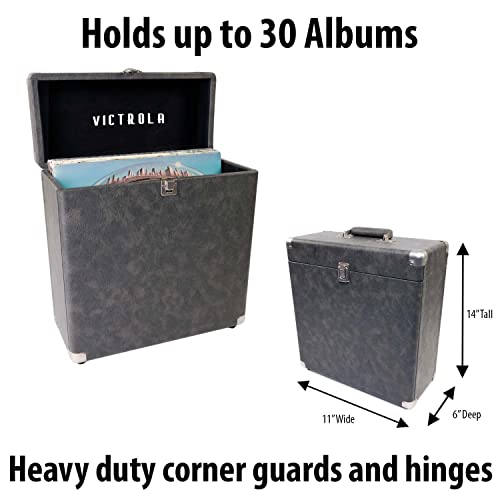
    If you love traveling with your records, you should check out the Victrola Vintage Record Case (available on Amazon.com). It is portable, fits around ten records snugly, and comes in various designs and colors.

    Victrola Vintage Vinyl Record Storage and Carrying Case, Fits all Standard Records - 33 1/3, 45 and 78 RPM, Holds 30 Albums, Perfect for your Treasured Record Collection, Gray, 1SFA (VSC-20-GRY)

    Related article:

    Remove the Records From the Player After Use

    If you are using a record player with a dust cover, it’s fine to close the lid after use to prevent dust buildup. Otherwise, it is best to keep the habit of removing the record, cleaning it properly, and storing it after use to keep them clean and safe. This ensures that the record stays in pristine condition for years to come.

    Related article:

    Use the Right Materials When Cleaning Your Vinyl Records

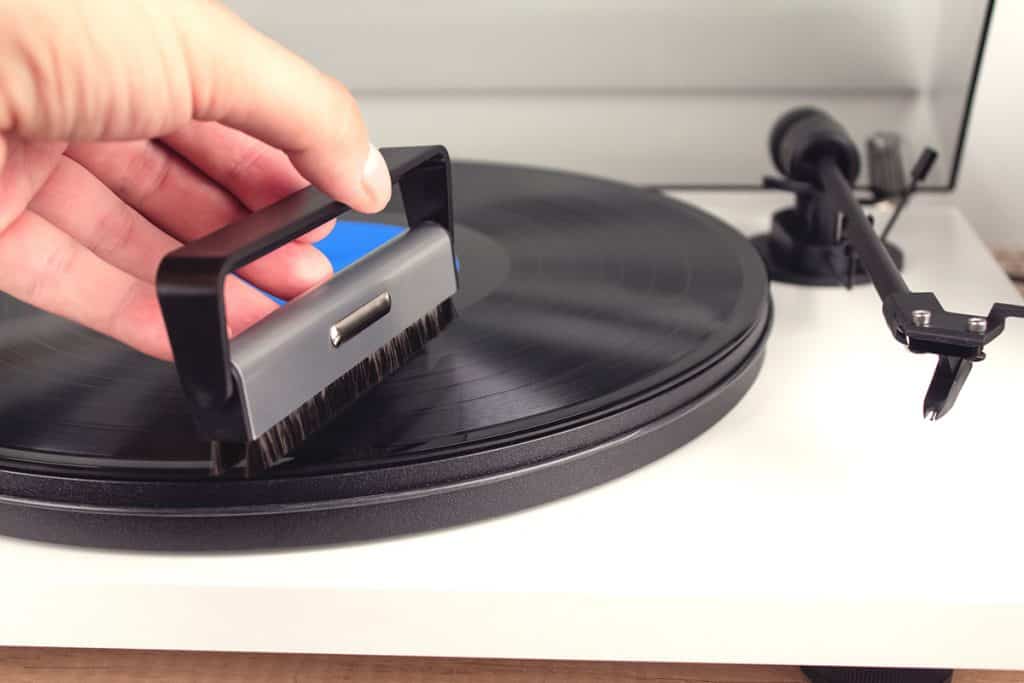
    Any regular household cleaning brush won’t do when cleaning your vinyl records. They’re likely to damage your LPs instead of cleaning them. It would be much better and safer to use a soft microfiber cloth or a soft carbon fiber brush that works to remove dust and dirt on the record’s surface.

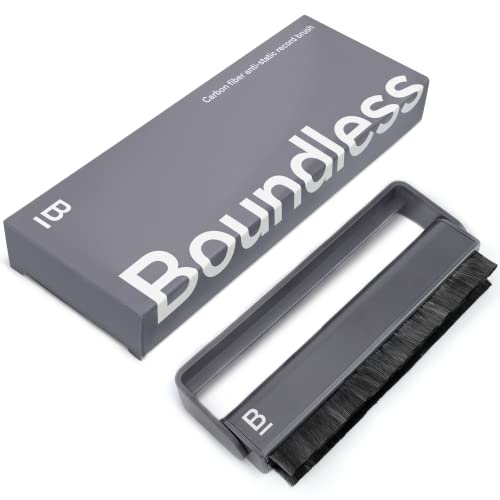
    Invest your money in the Boundless Audio Record Cleaner Brush (available on Amazon.com) if you own a lot of records. It’s made of fine carbon fibers that can gently remove dust. It also has an anti-static effect that reduces crackles caused by static electricity buildup.

    Boundless Audio Record Cleaner Brush - Vinyl Cleaning Carbon Fiber Anti-Static Record Brush

    Since deep cleaning requires some pricey materials and equipment, it might be best to hire professional services for any issues beyond dust. It’s pretty helpful if you don’t have too many records in your collection that merit your own cleaning equipment.

    In addition, leaving your records at the hands of experts would help ensure that they are properly handled and guarantee that they would last longer.

    Final Thoughts

    Avid collectors of vinyl records spend a certain amount of time, dedication, and money to keep their collection in top shape for as long as they can. 

    If you have listened to a record playing recently and fell in love with the quality of its sound or the overall experience and want to start your own collection, you’d better understand that it’s not just a hobby but a passion. You might as well read more articles or conduct a little research if you are up for the challenge.

  • Can A Turntable Be Used As A Record Player?

    Can A Turntable Be Used As A Record Player?

    Can a turntable be used as a record player? This article explores the differences between both devices and the possibility of using one instead of another.

    You can use a turntable like a record player. The difference in both devices has to do with their functions and not necessarily the quality of sound produced.

    Evidently, a record player needs a turntable to operate. The same also goes for the turntable in the same light, which requires a couple of additional pieces of equipment to function as a record player.

    What Is A Turntable?

    A turntable is a significant part of a record player. It is the part of the record player that holds the record and spins it.

    A turntable can also be a standalone device modeled to play records and transmit the signal to your speaker for amplification. The core components of a turntable are as outlined:

    • A plinth, which is the base of the turntable.
    • A platter, which is the spinning part.
    • A stylus, tonearm, and cartridge. These parts track and read the record.

    Since most turntable models do not have built-in speakers, you will have to connect the turntable to an amplifier or receiver to boost the sound before it can be transmitted loudly through speakers.

    You will also require a phono preamp to read the signal from the turntable and then send it to the amplifier.

    To simplify this, the stylus, also called the needle, runs in the grooves of the record, reading and transmitting the vibrations through wires found in the tonearm to the cartridge.

    The cartridge then reads that information and sends it to the phono preamp, turning it into sound through an external amplifier and then the speaker. The tonearm is the component that also holds the cartridge and stylus in place. (Source)

    In order to function effectively as a record player, a turntable will generally require external components for you to use them. It also affords you flexibility and range as you can endlessly customize and go for high-end external components.

    Benefits Of Owning A Turntable

    Superior Sound Quality

    While not every turntable is worth purchasing, some high-quality turntable models are explicitly designed to play vinyl records. You get what you pay for with a turntable when it comes down to quality.

    Adjustable

    A turntable comes with adjustable settings such as an anti-skate, tracking speed, and balance weights that you can fine-tune. Turntables are most preferred and exclusively used by electronic music lovers and DJs or hip-hop artists. (Source)

    Easy To Upgrade

    Ownership of a turntable is perfect for you for music lovers who like to build and tweak their sound systems and improve their sound setup.

    You can easily purchase replacement parts for the cartridge, needle, or tonearm. You can also upgrade with various external components of superior quality.

    Uniqueness

    Because you can customize and fine-tune your turntable with the best components that suit your taste, it means that the possibility of having the same setup as others is reduced.

    Each turntable user can build their device into precisely what is pleasing aesthetics and sound quality-wise.

    Disadvantages of Turntables

    Complicated

    Since you can purchase and build your turntable your preferred way, getting help with a difficulty or problem might be difficult, especially if you have to look online for a self-fix.

    Maintenance And Upkeep

    While maintaining your turntable might not be as frequent given that you follow the care guide and keep the turntable as clean as possible, you could have to deal with changing the components, primarily if you use the turntable frequently. Components like a belt or direct drive, depending on your turntable uses, and a cartridge will need to be oiled or replaced.

    Expensive

    Turntable units are generally more expensive than a record player unit, which doesn’t include the additional external components such as the phono preamp and speakers.

    What is a Phono Preamp?

    A phono preamp is an audio component that executes two main functions. The first function is to amplify the signal level from the turntable up to a certain level suitable for the standard receiver input on your system.

    The second function performed by the phono preamp is to apply the industry-approved and standard equalization curve RIAA (Recording Industry Association of America) to change the standard frequency adjustment recorded during the record cutting process. (Source)

    A phono preamp is pretty essential for a turntable; why? The signal produced by a turntable is feeble and much lower than the standard “line-level signal” made by other audio equipment generally.

    Bass frequencies are also reduced in cut records while the high frequencies boost. This equalization performed by the phono preamp helps to allow a much longer recording time by keeping the groove dimensions small. It also increases sound quality and decreases record wear.

    Some turntable models come with a built-in phono preamp. At the same time, most will require you to buy an external phono preamp or connecting cables to connect the phono preamp built into your amplifier or receiver.

    Related articles:
    What Is A Record Player?

    A record player is a device that comes with all the required components to playback and to listen to records on a single device.

    All the components, such as the turntable, the preamp, the amplifier, and the speakers, are all housed in a single unit. (source)

    The record player is usually much more elaborate than a turntable and comes with several additional features, such as the possibility of playing other audio formats like an MP3.

    When dealing with a record player, the main disadvantage is its size. Record players are commonly heavier and larger than turntables, making them less portable.

    That’s why record players stay inside the house in a dedicated area or a home entertainment section.

    Record players are also more expensive than turntables. Now, because of all the additional components they come with, there is a high risk of lower quality components instead of buying external components like with the turntable.

    The main benefit you’re paying for when purchasing a turntable is convenience. The fact that you don’t need to get any additional components makes it the most preferred choice, especially for vinyl newbies who tend to lean more towards aesthetics than sound quality.

    Benefits of getting a record player

    Portability

    Since a record player is an all-in-one unit, they are usually very easy to move and transport around instead of the turntable with multiple heavy components.

    Budget-Friendly

    There are record player models that sell for as low as $60. You also don’t have to spend extra fees on additional components.

    Style

    The aesthetically pleasing look of the record player makes it the most preferred for most record lovers.

    Extra Functionality

    Modern record players commonly have added functionality such as phone charging ports, MP3 players, Bluetooth speakers, CD players, and Radio.

    Disadvantages of Record Players

    Zero Upgrade Potential

    For people who love to build and tweak electronic devices, or commonly enjoy improving your vinyl setup, then the record player is not for you.

    Since all the components come pre-built into a single unit, you don’t have the luxury of building what you want.

    Lower Sound Quality

    Record players have been associated with producing a lower quality of sound when compared to turntables. It is mainly because most components are of lower quality and cannot be changed.

    Record Damage

    Record players have been commonly associated with adding unwanted and unnecessary wear and tear to vinyl records over some time. It is because the record player is less calibrated than the turntables.

    Turntable Vs. Record Player: Which is Better?

    There are pros and cons to getting each device, and the answer to this question largely depends on your primary intentions. Would you rather go with premium sound quality, or would you prefer aesthetics?

    Most sound-oriented lovers would go with the turntable, while vinyl newbies or record lovers who don’t care would choose a record player. The main deal-breaker is, of course, the performance and sound quality.

    But with most sound systems or equipment, the more you can build, the better sound production you get. You have to find a way to balance portability, price, sound quality, and aesthetics.

    However, when it comes to making a choice, A good and quality turntable will perform way better in the three core areas of sound quality, record wear, and build quality.

    Build Quality

    Some record player brands, such as Victrola and Crosley, design and manufacture some all-in-one record player models that include built-in speakers.

    Often, these models come with a highly appealing retro aesthetic, which targets the budget-conscious and affordable end of the market.

    Thus they do not have the same component and build rating and quality as a cheap turntable.

    Record Wear

    When it comes to preventing wear and tear on the record, most record players lack the same attention to detail commonly noticed in a turntable regarding tonearm alignment, performance, and tracking force.

    These components and settings come pre-set from the factory by design and are not user-adjustable in most cases.

    A stylus that isn’t correctly tracking the record groove will wear faster than it would typically, risking audio quality degradation to the record.

    Sound Quality

    Every single component of an audio system ultimately affects its final sound quality. When it comes to vinyl records, correctly tracking the record groove is highly instrumental to the quality of sound it will produce.

    No matter what type of external component you own, it will not boost a poor signal caused by poor tracking.

    With a record player, you are paying for convenience, portability, and a fixed design that you can’t upgrade when the situation warrants.

    You can change out the cartridge or other components with a turntable for a better and higher-quality part. You also get to make the better and superior choice for speakers.

    Budget

    For vinyl-loving newbies, a record player is generally a cheaper and preferred option to getting started since they are built to go and don’t require extra components.

    Most record player models are also super affordable and aesthetically pleasing to make up for features they lack.

    Can Your Turntable Double As A Record Player?

    Yes, your turntable can double as a record player. To get this done, all you need to do is purchase the best sets of additional external components required to help produce and transmit premium quality sound.

    However, it would be best to consider that your turntable doubling as a record player means you have to give up mobility.

    The additional pieces of equipment are usually bulky (for example, the speakers), and you cannot easily pack them up to transport. It also requires more in-depth maintenance practices.

    How To Set Up A Turntable

    When setting up your turntable, you need to get the following components:

    • The turntable
    • Preamplifier
    • Amplifier
    • Quality speakers

    There are five possible setups that you can use to make your turntable play as a record player. These are:

    1. The Turntable + Powered Speaker Combo

    It is the simplest, most compact way to set up your turntable. It involves only the use of powered speakers (that have their own amplifiers) and a turntable with a built-in preamp. All you need is an RCA cable to connect both devices.

    2. The Turntable + Preamp + Powered Speakers Combo

    This setup needs an additional preamp to give you more control over the quality of sound produced.

    To complete this setup, you need a grounding wire that connects the turntable to the preamp and the preamp to the powered speakers. It prevents buzzing sounds when you play music.

    The best turntables for this are ones without a built-in preamp or one that has a phono stage that you can easily bypass.

    3. Turntable + A/V Receiver + Passive Speakers Combo

    If you already have an existing speaker setup that allows multi-purpose use, like wireless music streaming or home theater watching, you can use this setup to connect your turntable. All you need to do is connect a turntable with a built-in preamp to the A/V receiver with an RCA cable.

    Some receivers have a built-in preamp that allows you to bypass your turntable’s built-in preamp or connect a turntable without a built-in preamp.

    4. Turntable + Standalone Speaker Combo

    This setup uses the same principle as the turntable and powered speaker combo. However, this is more compact.

    Connect your turntable to the standalone speaker using a wired RCA to aux connection. The most significant disadvantage of this setup is that it is hard to get proper stereo separation.

    5. Turntable + Preamp + A-V Receiver + Passive Speakers Combo

    It is the most disjointed, component-heavy setup so far. However, many vinyl enthusiasts prefer it because it gives them the most freedom to customize and upgrade the ability of their systems.

    Over time, you can replace specific components in this setup until you achieve the desired sound quality.

    Factors To Consider When Buying A Turntable That Can Double As A Record Player

    When choosing the best turntable that can double as a record player, there are several factors to consider. However, we have outlined the essential ones that will be useful for you below.

    Preamp

    Consider purchasing a turntable model that comes with a built-in preamp. This built-in preamp option lets you plug your connectors directly into any pair of receivers or powered speakers.

    However, purchasing a standalone preamp also benefits because you can upgrade to a better model over time.

    Standalone preamps are also generally of better quality than built-in ones.

    A good quality preamp is essential for professional or expert use, while newbies can settle for a built-in preamp.

    Built-in Speaker

    Setting up an external audio system to convert a tour turntable like a record player is not only time and effort-consuming, it can also be expensive.

    Consider going for a model with built-in speakers that will save money and effort and set up space.

    Digital Features

    While the vinyl record is in an analog music format, some modern turntables come packed with various digital features such as Bluetooth and USB ports. (Source)

    You can also use wireless speakers and digitize your vinyl record for safekeeping.

    Cartridge and Speaker Quality

    The cartridge is number one of the two most essential components in a turntable, and number two is the speakers.

    The cartridge converts the physical grooves already pre-carved into the record into an electrical signal.

    The preamp and the amplifier read this electrical signal before being transmitted to the speaker to broadcast as quality sound. (Source)

    Now, since the cartridge primarily starts the sound journey and the speaker ends it, they have the most impact on the sound performance of the turntable setup.

    Most low-range turntables commonly come with fixed cartridges, while mid-range and high-end turntables commonly come with upgradeable/replaceable cartridges.

    You must consider the cartridge’s quality on the turntable you want to purchase and confirm if it is replaceable or fixed.

    A cartridge is essential in determining the quality of sound produced by the turntable, so it’s advisable to always go for the best and easily upgraded choice.

    Conclusion

    We have talked about how the record player and the turntable came into existence. It is because learning this history is very helpful in understanding the primary need for both devices and what they offer.

    Judging by models available in the market today, it is safe to say record players are a single unit device that houses all the needed components.

    At the same time, a turntable is a device that requires additional external components to function as a record player effectively. However, choosing which to go with depends on your primary and personal need and want.

    Sources

    1. Dawson, Stephen. “How things work: The returning turntable, part one.” Connected Home Australia Mar 2014 (2014): 44-45.
    1. EE, Micaiah Reid, and Chung Yong Chan. “Vinyl Player 2.0 ” Department of Electrical & Computer Engineering, University of Central Florida 
    2. Galo, Gary A. “Disc recording equalization demystified.” ARSC Journal 27, no. 2 (1996): 188-211.
    3. Suzuki, Tory, Masao Toyosawa, and Chiaki Toyoda. “Record player.” The Journal of the Acoustical Society of America 67, no. 3 (1980): 1098-1098.
    4. Hansen, Kjetil Falkenberg. “Turntable music.” Musikklidenskapelig Årbok 2000 (2000): 145-160.
    5. McCarry, Kyle P. “Versatile USB Powered Turntable.” California Polytechnic State University  (2018), 
    6. Dawson, Stephen. “How things work: The returning turntable, part one.” Connected Home Australia Mar 2014 (2014): 44-45.
  • Why Do Record Players Need To Be Grounded? Let’s Find Out

    Why Do Record Players Need To Be Grounded? Let’s Find Out

    Record players have come back into style. What was once a sound of the past is again becoming mainstream as music lovers turn to authentic vinyl experiences for better sound quality. However, using a record player is more involved than turning on a radio or playing a CD.

    Record players without a built-in preamp must be grounded to the amplifier to ensure good sound quality. An ungrounded player causes the listener to hear a loud, unpleasant humming sound. Grounding is essential to redirect unneeded current away from the current loop to avoid overloading your system.

    If you’re just getting into record players and have no background in electrical engineering, the idea of grounding a system may be overwhelming. However, in this article, I’m going to break down what grounding a system means and give you step-by-step instructions on how to do it. I’ll also give you some extra tips along the way, so be sure to read until the end!

    What Happens if You Don’t Ground Your Record Player?

    Why do record players need to be grounded?

    If you don’t ground your record player, you’ll likely hear a hum or other sound distortion in your equipment. This hum is indicative of electronic interference and can ruin the listening experience. 

    If your turntable doesn’t have a built-in preamp, you’ll need to ground your system. Turntables that need to be grounded will typically feature a cable, so it’s easy to tell if you’ll need to ground yours or not. If your player is grounded improperly, you’ll hear a loud humming noise.

    What It Means To Ground Your System

    Electric current is what allows the record player to produce music. However, if the player overloads with current, you can experience some problems; in this case, humming. A grounding wire connects your player to the Earth to minimize these issues.

    Electric current flows through a device in a loop and will travel in the path of least resistance. Because the grounding wire to the Earth has a lower resistance than the current loop, it travels down and away from the loop when the current reaches this grounding wire.

    If this grounding wire weren’t present, this current would stay in the loop and add to the current brought in from the outlet. This compounding of current would eventually cause an overload in the system, causing your record player to hum and could even damage the device.

    To avoid an electrical overload, you want to ensure you have a grounding wire properly installed to direct unneeded current away from your system.

    Not All Record Players Need To Be Grounded

    Though grounding is necessary for some models, not all record players need to be grounded. Budget-friendly turntables tend to come with an internal preamp.

    When an amplifier is built into the system, you no longer need to connect to an external amplifier, eliminating the need for a ground wire. This setup is often used to minimize the potential of the hum.

    An easy way to tell if your player has a built-in preamp is to look at the back of the system. If you see a switch that toggles between “phono” and “line,” this means there’s a preamp built into your player.

    If you’re interested in owning a record player with a built-in preamp, check out these options on Amazon.com:

    How To Ground Your Record Player

    Grounding a record can be slightly intimidating if you’ve never done it before. Here are 6 simple steps to follow when grounding a record player:

    1. Turn the power off. Before adjusting anything electrical, you’ll want to make sure you’ve turned off the power supply to the record player. Doing so will help avoid any unwanted accidents to the system.
    2. Find the grounding wire. This wire is usually located under the turntable and has an unconnected copper spade with a connector. Manufacturers usually color this wire green and cover it with a zip tie under the chassis.
    3. Locate the ground terminal. The ground terminal on your amplifier will likely be on the back of the turntable. It’s typically labeled “ground” to make it easy to spot. From here, you’ll need to disconnect the ground terminal.
    4. Optimize distance. Be sure the grounding wire can reach the ground terminal before continuing.
    5. Connect the wire to the terminal. Once you ensure the wire can reach the terminal, slip the ground wire spade connector onto the grounding terminal, and tighten.
    6. Turn the power on. You can turn the system back on after connecting the wire to the terminal.

    To watch an example of how to ground a turntable, check out this YouTube video from Audio Advice that walks you through grounding a Rega turntable:

    If there isn’t a ground connection on your amp or receiver, you can connect the ground wire directly to the metal box. To do this, loosen a screw on the box and wrap your grounding wire around it. Once the wire is in place, firmly retighten the screw. 

    Another way to do this is to tape the wire directly to the box using the Gaffer Tape (available on Amazon.com). The strong adhesive of this product makes it an excellent option for this method. It also comes in many colors.

    Following these easy steps, you can get your audio system set up in no time!

    Oxidation on Your Fittings Can Cause Troubleshooting Grounding Issues

    If you turn on your system and hear that awful humming sound, you’re likely experiencing a grounding issue. Be sure you have correctly grounded the system using the steps above.

    If you still hear this noise, you may have oxidation on your fittings. In this case, unscrew everything and open your system up. You can use sandpaper or steel wool to scrub the wires clean. You’ll want to make sure they’re bright and shiny. After this deep clean, be sure to screw everything back tightly before repeating the grounding steps above.

    If after following the steps above and you’re still experiencing issues, here are a few things to try if you’re still having problems with the audio:

    • Ensure that your phono switch is in the phono position if your system has a built-in preamp and is connected to an external receiver.
    • Don’t connect to an external amplifier when using the phono input if you don’t have an internal preamp.
    • Ensure your turntable is on a flat surface.
    • Make sure the speakers aren’t on the same surface as the player.
    • Try an isolation pad.
    • Try installing a ground loop isolator.
    • Remove and reseat the stylus.
    • Reseat the headshell.
    • Clean the connectors.
    • Test with different RCA cables.

    Final Thoughts

    Grounding your record player is essential to experiencing the high-quality audio for which vinyl is known. If your system isn’t grounded, you’ll experience a loud humming when you turn on your system.

    Be sure to follow the steps outlined above to ensure your system is properly grounded. And if you’re still experiencing issues, check out the other tips in this article to solve your problems.

  • Are Portable Record Players Bad for Records?

    Are Portable Record Players Bad for Records?

    With the revival of the vinyl industry over the last few decades, there has been a sudden influx of sellers offering a wide array of alternatives for record players. Although this process has brought on some excellent, high-quality turntables enthusiasts can purchase for a much more affordable price, there has been a resurgence of cheaply-made options as well. Portable record players are now more accessible, but are they bad for records?

    Most portable record players are bad for records. They feature low-quality styluses with a very limited lifespan and can damage your vinyl pieces. Although there are some higher-quality options, beginners should err on the side of safety and skip them altogether.

    Although there are tweaks and tricks you can use to optimize the performance of these cheaply-made turntables, more often than not, it’s not worth the trouble. Read on to explore the article — are portable record players bad for records — and learn why most portable turntables can damage your records and how to choose a record player if you’re a beginner.

    Why Are Portable Record Players Bad for Records?

    The extent to which a portable turntable can damage your vinyl pieces depends on various components such as brand, material quality, design, etc. Therefore, although you can find some higher-quality options on the market, a standard portable record player won’t be ideal for your records’ longevity.

    Portable record players are bad for records because they’re usually made of lower-quality materials. Furthermore, their unique design makes their shape unideal for your average record, with incompatibilities in both size and functionality.  

    Portable Record Players Usually Have Low-Quality Stylus

    Given that the needle is a component that comes in constant direct contact with your discs, its material and design are essential for the maintenance and longevity of your piece.  

    Usually, the golden standard when it comes to stylus construction is to use a diamond or sapphire tip. Portable options tend to run on the cheaper side, meaning that you can’t expect premium materials being used on any component, stylus included. More affordable, less durable needles will wear out as time goes by and can cause significant damage as the vinyl moves around due to excessive friction. 

    Styluses found on some of the worst-quality turntables can last as little as 40 hours, meaning after a certain amount of time, you run the risk of the needle causing irreparable scratches and marks to your records.

    The worst part is, you most likely won’t be able to notice any sign of damage until it’s too late, as most scratches won’t be immediately visible. Therefore, if you think you can use a cheaper option for a limited time and change the stylus when you spot signs of damage, keep in mind that you likely won’t be able to efficiently figure out the exact time when the stylus becomes unusable. 

    If you already own a portable turntable and want to improve its quality and longevity, a great strategy to try out is to replace the stylus with a high-quality alternative. Replacing the needle is a pretty straightforward process that can make the biggest difference in the quality of your records.  

    The Platters of the Portable Record Players Are Small

    Portable record players are made with convenience and movability in mind. Given that this quality is their whole selling point, they often tend to be smaller and lighter compared to their traditional counterparts. But this ease of movement isn’t always as much of an advantage as manufacturers make it out to be.

    Most records are sized based on a conventional turntable, meaning when using a smaller alternative, the piece will most likely hang off the side, causing it to bend and move unnaturally during its spins. 

    It will lead to the loss of sound quality while simultaneously damaging the structural integrity of your vinyl. Furthermore, the imperfect spins can lead to the needle skipping over the record altogether.

    Portable Record Players Lack the Necessary Features

    These types of record players present their users with many functionality issues as well.

    Firstly, most of these alternatives don’t include an anti-skate feature, which stops the arm from swinging uncontrollably towards the center or outside the record. This feature keeps the stylus centered, which maximizes sound quality. At the same time, it allows the vinyl to spin smoothly and minimizes damaging friction.

    On the other hand, counterweight adjustments allow you to ensure that the needle is never too heavy or too light, keeping the tracking weight between 1 and 3 grams (0.03 and 0.10 oz). You can make adequate adjustments by looking at the end of the tonearm (found on the opposite end of your stylus) and turning the dial until it reaches your preferred level.

    These features also tend not to be included in cheaper portable record players, which, as you can imagine, can significantly affect its overall performance. Another detail that you’re unlikely to find in these options is the possibility of altering alignment facets. That means you won’t be able to optimize the longevity and quality of your turntable by adjusting its alignment according to your needs. 

    Therefore, when deciding on the ideal record player for you, consider these significant shortcomings before making a decision. 

    How To Choose a Record Player as a Beginner

    If you’re a beginner and are struggling to find a turntable that will fit your preferences as well as your budget, there is no need to go for the first cheapest record player that you see, just like there is no need to go for the most expensive piece, either. By going through a few simple steps, choosing the best possible option for you can be easier than you’d think.

    Decide Why You’re Buying a Record Player

    Purpose matters when choosing a turntable. Suppose you’re an audiophile looking to experience the most authentic, high-quality sound. In that case, you’ll need to look at a completely different range of options compared to casual listeners looking to support their favorite artist.

    That’s why understanding your reasoning behind the purchase will allow you to determine the ideal type or model you’ll want to be looking into, along with a rough estimation of your preferred price range. 

    Either way, I suggest looking at your first purchase as a true investment piece, as you’ll ideally want to hold onto your expensive equipment for as long as you can. Additionally, records themselves can also get very pricey, meaning acquiring a turntable that can maintain and optimize their longevity can be very beneficial in the long run. 

    Determine the Features You Want

    As I mentioned, some features are essential for the performance of your record player. Therefore, when choosing an alternative, look for one with adequate downforce, an anti-skating component, counterweight adjustments, and a high-quality tonearm. 

    This might be the most crucial step you’ll need to go through, so look into any possible features that you might want to be included in your piece to be able to make a well-informed decision.

    Make Sure You’re Pleased With the Aesthetics

    Last but not least, a turntable should match your desired aesthetic, as these pieces are designed to add an unparalleled flair to any space they’re included in. An excellent record player should not only produce fantastic acoustics, but it should also be visually pleasing and stimulating; therefore, don’t compromise on this factor when choosing your equipment.

    Conclusion

    Portable record players can often damage your records due to low quality and poor design. Although there are some better-made alternatives on the market today, if you’re a beginner, it’s best to avoid these turntables altogether and go through a thorough selection process to find the ideal record player for you.

  • 9 Reasons That Make Record Players Worth It

    9 Reasons That Make Record Players Worth It

    Record player and vinyl renaissance are currently showing no sign of ever slowing down. What was once considered a dying trend is presently growing in popularity at a fast rate. And this is slowly turning young music lovers into vinyl record collectors. So if you are still on the fence and still not sure why you should switch to analog music, here are nine reasons that make record players worth it.

    Record players, which adopted this name in the 1940s, have evolved from phonographs to the automatic record players that we have today. But the quality of sound they produce is still unrivaled to date and what really makes record players worth it.

    Even with the convenience of introducing digital music on streaming platforms, some people still prefer record players. Audiophiles prefer the quality of sound produced by record players. So in this article, we will give you nine reasons why record players are worth it.

    What Are Record Players?

    A record player, known initially as a phonograph or gramophone, is the oldest device used for analog recording and playing sound. Generally, the sound vibrations are recorded on a vinyl record with spiral grooves engraved on its surface.

    And to recreate the recorded sound, the disc is rotated with the stylus tracing the grooves to reproduce the sound. (source)

    Record players have evolved for the century, with the first phonographs’ stylus vibrating to a diaphragm that produces sound waves. The record players dominated the industry until the 1980s when the compact cassettes took over. The cassettes became replaced by the compact disc, and the introduction of digital music began.

    Fortunately, record players find use by turntablists, collectors, DJs, and audiophiles who love listening to quality music. And since the 2000s, record players have undergone a revival, with music lovers turning to records.

    Fortunately, the change in record player technology plays a crucial role in the rising popularity of vinyl records. (source)

    The renewed interest in vinyl records has seen sales of record players and vinyl records increase in the music industry. Vinyl records have experienced increased popularity in East and West Asia since 2007.

    And by 2010, the once almost forgotten music player’s popularity had started growing at an even faster rate. In some parts of the world, vinyl records are more popular than they were in the 1980s. (source)

    The steady increase in record players’ popularity is evident in the revival of record shops and music charts dedicated to vinyl. However, vinyl records still account for 6% of music sales, so why the sudden interest in vinyl records?

    (2) During the covid-19 pandemic, the sales of vinyl records exploded, the sales grew by 28.7% in 2020. (Terry Josh, 2021) (source)

    The sales of the vinyl record have been increasing since the early 2000s. But 2020 marks the year when the vinyl beat finally beat CDs in revenue. It is the first since the 1980s that vinyl records have plagued the industry. (source) and that is because music lovers have spent the cash on turntables instead of concerts.

    So why don’t you join the vinyl bandwagon and enjoy quality sounds? After all, it is part of our past and the future for high-quality music.

    Reasons That Make Record Players Worth It

    We also experience music differently, with audiophiles preferring the best sound ever. But all this depends on the music player that you’re using.

    The music we stream from YouTube, mp3, and CDs are digital formats. It means that they are compressed to smaller sizes, making it possible to carry them on our smartphones.

    For most folks, the convenience of digital songs outweighs the low quality of the digital formats. On the other hand, some music enthusiasts enjoy listening to the experience only a record player can provide.

    For them, the quality outweighs the convenience of streaming music.

    It is why the sales of vinyl records skyrocketed during the pandemic; after all, people could no longer go to concerts, so they had to pick the next big thing.

    And these were vinyl records which are known for delivering more than music. Vinyl records can introduce the experience of music in our homes. So here are a few reasons why record players are worth it:

    Vinyl Records Produce Better Quality Than Digital Recordings

    Generally, vinyl records are analog recordings, while CDs are digital recordings. On the other hand, the original sound produced by musical instruments and musicians is analog by definition.

    Unfortunately, to create a digital signal, the digital recordings take a snapshot of analog signals at a rate of about 44,100times/second for CD and measure every snapshot with an accuracy of about 16bit.

    It means that digital recordings don’t capture complete analog sound waves; instead, it approximates it with a sequence of steps. (source)

    And since sounds undergo quick transitions, they can be distorted as they tend to change at a high-speed rate. When played on CD players, the stereo converts the digital recording to analog signals fed to amplifiers that raise the signal’s voltage to the right level that the speaker can pick. (source)

    On the other hand, vinyl records have an original sound wave, which means that nothing is lost when the stylus picks the sound. The output from the turntable is analog, and it’s fed to the amplifier without any modifications.

    Therefore, the wavelength from records is more accurate, and you can hear its richness, unlike other mediums. Vinyl records will make you feel like you are listening directly to your favorite band in the concert.

    So provided there are no specks of dirt on the disc, the quality of music produced by record players will be exceptional. (source)

    Since digital recording doesn’t do an excellent job replicating the initial analog sound, it can’t compete with vinyl recordings in terms of quality. (source) A vinyl record is a better representation of live music than digital recording. So if you need to relive your childhood memories with legendary bands, you need to get a record player.

    Record Players Are The Only Means Of Listening To Vintage Records

    Initially, the music industry was dominated by vinyl records until the mid-1960s, when people started using cassette tapes and 8-track cartridges. (source) It means that some of the ancient jazz songs produced before the 1950s may not have been converted to digital form.

    You may have inherited some of the oldest songs in history from your grandparent and don’t know which player to use.

    Well, now you have a solution, the only way you can listen to vintage music in its original form is by playing their vinyl records. And even if there is a digital form of these songs, the conversion process may have distorted them. So as an audiophile who loves vintage music, you need to get a record player.

    Remember, any vinyl record pressed before the 1950s play at about 78RPM. So you may need to get a turntable that can play three speeds. (source) Initially, all record players were designed to play at a standard rate of 78RPM, and all vinyl records were designed to operate at that speed.

    However, modern records run at either 33.333 or 45 RPM, ideal for current vinyl records. So if you own an older record, you need a turntable that can run records at 78RPM. (source)

    Save Some Cash

    If you have a collection of records that have been in your family for decades that you saved in the garage, then you need a record player. So instead of sacrificing quality and paying lots of cash to stream the digital version of the same music, you can get a record player and enjoy your tracks. It can be the best time to visit your grandparents and borrow some original songs you loved while growing up.

    Automatic Record Players Are Easier To Use

    Generally, there are three types of record players (automatic, manual, and semi-automatic). This classification refers to how the stylus is accurately placed and removed from the grooves on the vinyl records.

    If you disliked record players because placing the needle accurately on the record was challenging, you would love the automatic record players. I am sure many young folks don’t like the idea of placing the needle on the recorder and removing it every time.

    Automatic record players can do the work for you accurately. Or you can try the semi-automatic that removes the stylus from the surface of the record on demand.

    So instead of going for a manual system that requires you to lift and place the arm on the vinyl record manually, you can try automatic machines.

    Unfortunately, a considerable percentage of the high-end record players are manual. So if you don’t have a steady hand and don’t want to scratch the record while placing the needle, you can go for automatic machines. (source) Or you can practice and perfect your skills with time.

    Record Players Are Upgradable

    One of the best things about record players is that you don’t have to break the bank for a high-end option. Instead, you can look for a turntable within your price range and then upgrade it later for high-quality output.

    After all, you only need to change a few parts on low-end record players to improve their functionality and output quality. Some of the elements that are easier to upgrade include:

    • Platter: the platter is the plate on the record player where the records sit. Unfortunately, low-end options come with lighter platters affected by vibrations, which can distort the output’s quality. So you can replace them with heavier options and even add a dampener to help with the vibrations. (source)
    • Stylus: the stylus is responsible for the details and accuracy of the sound produced. High-end record players have a nude diamond stylus that is durable and delivers better quality. So you can upgrade your machine’s stylus with a nude stylus and then listen to the quality of the sound produced.
    • Tonearm: the quality of tonearms has a significant impact on the consistency and accuracy with each rotation. So upgrading it can have a massive effect on the quality of the sound.

    Another upgrade that you can try is adding isolation feet beneath its base to help reduce vibrations. (source) The upgrades may not transform your machine into a high-end recorder, but they can improve the quality of the output and its durability.

    A Record Player Gives Your Home A Character

    If you have a rustic interior home design, you must finish it with a stunning record player. Place your record player on a table and a crate of well-arranged records beneath the table, and you have something to talk about with visitors.

    A collection of vinyl records can give your living space character, and they can be a conversation starter.

    You can even hang the sleeves of some of the records, with the best art, on the walls. But make sure you store the records correctly to prevent scratches; after all, vinyl records can be pretty costly. So make sure you get the right record player that can help improve your home’s décor.

    Related Articles

    It Can Turn You Into A Collector

    Owning a record player can help you create a unique and harmless hobby that will save you more cash than smoking or drinking every weekend. You will find yourself in fleas markets, music stores, or garage sales, looking for priceless records with a record player.

    You can even make new friends who appreciate great music and get an opportunity to swap records. And if you’re lucky, you will finally listen to high-quality records of the music you love. (source)

    On the other hand, it is harder to make friends with digital music since everyone can stream them from the comfort of their homes. But the vinyl record will give you something to talk about with your grandparents and other older family members instead of focusing on politics every time.

    You Get To Listen To An Entire Album

    Smartphones are killing our relationships and stressing us out. And even though they have everything we may need to have a memorable day, we all need a change at times.

    So instead of wasting time creating a playlist and skipping bad songs, you can sit down, put your record on and pour yourself some drink and enjoy. It will help keep you away from screens and give you a chance to enjoy quality music at home.

    So instead of multitasking while listening to music, you can sit down and enjoy uninterrupted minutes of high-quality sounds. Listen to side A until the end before turning to side B and enjoying the vintage music. (source)

    You can also purchase a record player to honor the world record store day with your pals. After all, you can finally listen to the songs that top the music chart list dedicated to vinyl music. (source)

    You Can Mix And Scratch Your Music Just Like A Dj At Home

    If you love going out and wish you could mix and scratch like a DJ, then you need a record player. The introduction of direct drive turntables has made it possible for anyone to copy their favorite DJ and have fun.

    Unlike belt-drive, direct-drive turntables are perfect for mixing without damaging the belt, which is why most DJs love them. So if you aspire to be a DJ, you need a direct drive turntable to train and perfect your mixing skills. (source)

    You can even entertain your pals and family members with your high-quality music and DJing skills.

    FAQs

    What Is So Good About Record Players?

    Record players add a unique quality to all songs that no music player can ever add. The only thing that can rival vinyl records is a live performance or live recording of the music. Record players bring songs to life, making them almost tangible, and you can easily get lost in the beautiful tunes.

    Why Are Vinyl Records Popular?

    The most appealing fact about vinyl records is the unique analog signals better than digital sounds. Since there is no conversion done with vinyl records, the vocals and music are closer to concert performance than digital sounds, giving them a remarkable and warm quality effect.

    Why Are Vinyl Records Costly?

    Reduction in supply of records due to the high production costs and increased demand for them in the last few years has forced their cost to go up. In fact, most music lovers ended up buying these price records during the pandemic.

    Conclusion

    Record players were the original music players that served people for decades before the introduction of compact tapes in the mid-1960s. But with the price of making tapes and CDs being low, the industry turned to digital music.

    But this fad didn’t die; in fact, it resurfaced in the early 2000s and has been growing in popularity since then. And that is because it brings music to life thanks to its high-quality output.

    Sources

    1. Wikipedia contributors, Phonograph, https://en.wikipedia.org/wiki/Phonograph#In_the_21st_century/ Accessed November 19, 2021
    2. Wikipedia contributors, Vinyl revival, https://en.wikipedia.org/wiki/Vinyl_revival#Reasons/ Accessed November 19, 2021
    3. How stuff works, staff writer, is the sound on vinyl records better than on CDs or DVDs, https://electronics.howstuffworks.com/is-the-sound-on-vinyl-records-better-than-on-cds-or-dvds.htm/ Accessed November 19, 2021
    4. Andy Betts, Buying a vinyl record player? Seven things you must know, https://www.makeuseof.com/tag/6-things-must-know-buying-vinyl-turntable/ Accessed November 19, 2021
    5. Danielle Fox, Screw digital. Here’s why you should buy a record player, https://www.menshealth.com/style/a19544133/here-s-why-you-should-buy-a-record-player/ Accessed November 19, 2021
    6. Owen Gough, The eight best record players to make you love vinyl again in 2021, https://www.esquire.com/uk/design/g33942911/record-players/ Accessed November 19, 2021
    7. John Terry, Vinyl is more popular than ever. Surprisingly, that’s a problem, https://www.vice.com/en/article/dyv4zq/the-vinyl-boom-is-pushing-out-smaller-labels/ Accessed November 19, 2021