Author: Andrew

  • Best Powered Speakers for Turntables: Budget to High-End

    Best Powered Speakers for Turntables: Budget to High-End

    Turntables and record players have increased in popularity in recent years and with that comes a need for bigger and better speakers. Everyone loves to be able to hear their music clearly, but when you have a turntable, they often do not come with built-in speakers or an amplifier. The most obvious solution to this is to get powered speakers that you can connect to your turntable.

    When budgeting, the best powered speakers under $200 are the Edifier R980T Speakers, the Micca PB42X, and the Edifier R1280DB. If you have the budget for more expensive speakers, the Audioengine HD6, the KEF LSX Music System, and the Klipsch The Fives Speaker System are great options.

    While these are definitely some great options for a powered speaker set, there are so many more options and details that are good to know before making a decision on the speaker set that you want. Keep reading to learn more!

    Why you need Powered Speakers

    Before we get into all of the details of each speaker, it is important to know why you even need to get a powered speaker in the first place. While there are a lot of different reasons to want powered speakers, to amplify your existing record player’s speakers, or to have better sound quality when playing music, in the situation that you have a turntable, you need external powered speakers because most turntables do not have built-in speakers.

    Because turntables do not usually have speakers or an amplifier built-in, you have to buy powered speakers that you can connect to it. If you don’t have these external, powered speakers, your turntable is nothing more than a nice decoration that has no practical function. When you purchase speakers that connect with a wire or Bluetooth, you can now use your turntable to play the records that you have bought for it!

    If your turntable does have built-in speakers, you might still want to purchase exterior powered speakers. Often times, the speakers that are built into record players or turntables do not play the sound very clearly or very loudly. This can be very annoying for a lot of people because you spent all this money to play vinyls but now you can’t hear it very well. Purchasing and hooking up powered speakers is an easy solution to this problem, and the speakers will likely last you a very long time.

    Speakers for a Tight budget

    The very first price range of speakers that we will talk about are the speakers for people on a strict budget. While the average price for powered speakers is anywhere from $300 to $600, but each of these speaker sets, for those on a budget, are under $200! They are also pretty good quality speakers and are worth looking at for your sound set up.

    Edifier R980T 4″ Active Bookshelf Speakers

    The first set of speakers are the Edifier R980T 4″ Active Bookshelf Speakers. These speakers are specifically designed to fit in small spaces like on bookshelves and in between other items on desks, hence the name “Bookshelf Speakers”. They have a 4-inch bass driver, which is significant for a speaker of this size and will give you a sufficient “bass” sound when dialed up.
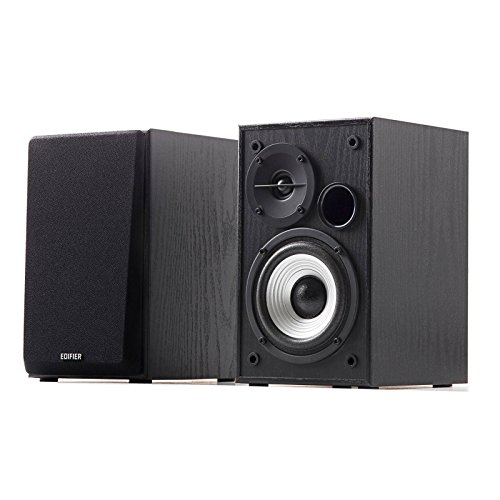
    Edifier R980T 4" Active Bookshelf Speakers - 2.0 Computer Speaker - Powered Studio Monitor (Pair)

    Edifier R980T 4" Active Bookshelf Speakers - 2.0 Computer Speaker - Powered Studio Monitor (Pair)

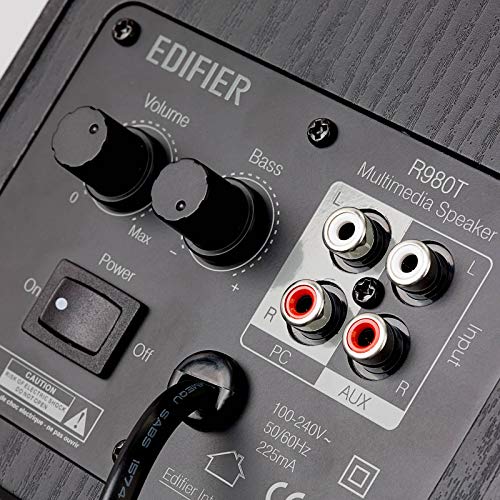
    These speakers connect primarily by an auxiliary chord and it has two inputs for that so you can connect two devices to it without needing to unplug the first one. It also has RCA ports for connecting to devices that require a connection through RCA wiring like a TV, a DVD player, and some turntables. Unfortunately, there is no wireless connection or a remote control for these speakers.

    These speakers run for about $75 on Amazon.

    Micca PB42X Powered Bookshelf Speakers

    The next speaker set for those on a budget is the Micca PB42X Powered Bookshelf Speakers. This set of speakers is significantly smaller than the Edifier R980T speakers, but that is not to say that they give any less sound clarity or power. These will fit in any little area and are great to keep on a desk or side table with your turntable.

    Micca PB42X Powered Bookshelf Speakers, 30-Watt RMS Power, Active Near Field Studio Monitors, 2-Way (Black, Pair)

    This speaker set was built for clean sound and a clean look. They are compact and modern and are built from materials that give you the best sound quality possible for its size and tweeter. It has a 3.5 mm input port, for a standard auxiliary cord and RCA ports on the back for connectivity options. This speaker set also does not offer a wireless connection option.

    This speaker set is about $120 on Amazon.

    Edifier R1280DB Powered Bluetooth Bookshelf Speakers

    Another excellent option for powered speakers on the cheap side are the Edifier R1280DB Powered Bluetooth Bookshelf Speakers. These speakers are much heavier than the other two options, and for good reason. They are packed with all sorts of features that the other two, cheaper options don’t have. However, the sound quality of this speaker set is the same as the sound quality of the Edifier R980T Speakers.

    Edifier R1280DB Powered Bluetooth Bookshelf Speakers - Optical Input - Wireless Studio Monitors - 4 Inch Near Field Speaker - 42w RMS - Wood Grain

    This speaker set does have wireless connection options in addition to its two available RCA inputs and AUX port. With the wireless design, it leaves a cleaner sound set up and allows you to move the speaker as close or as far from the turntable, within the Bluetooth range, as you would like. It also comes with a remote so you can change the setting from a distance.

    The R1280DB Edifier Speakers are roughly priced at $140 on Amazon.

    Average Priced Powered Speakers

    The next category of powered speakers that you should consider are ones that are priced closer to the average range of this type of speaker. If you have a little extra money budgeted for buying speakers, these are a few great options that are a bit more expensive than the previous category of speakers. The range for these is between $200 and $600.
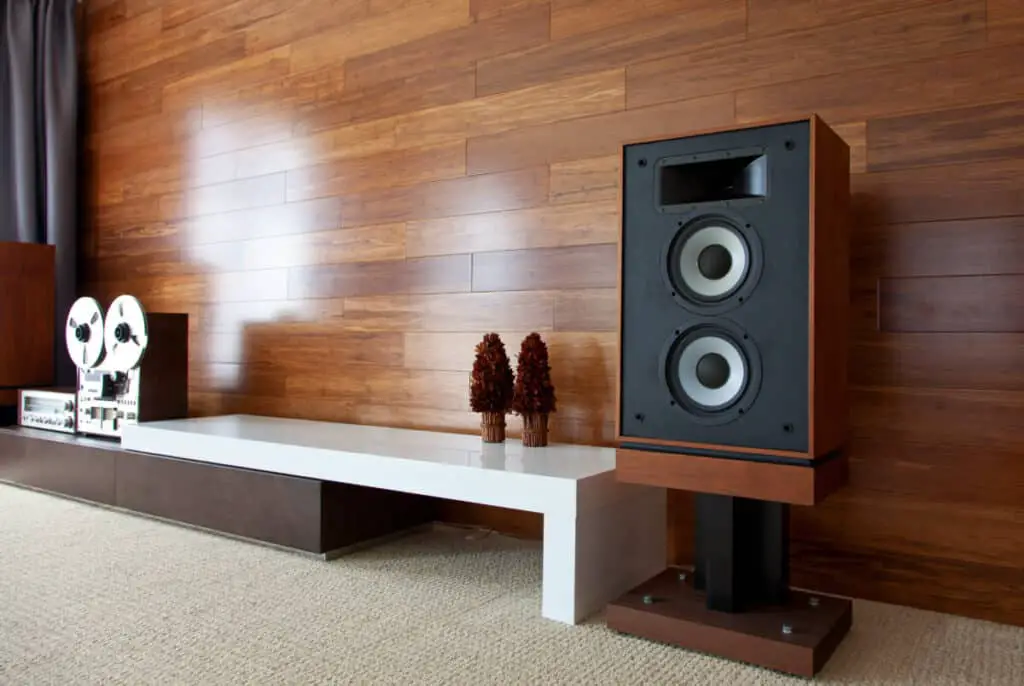
    ELAC Debut 2.0 B5.2 Bookshelf Speakers

    The first set of speakers that are a good middle price are the ELAC Debut 2.0 B5.2 Bookshelf Speakers. These speakers have a wonderful sound to them because of the size and placement of the tweeter. Because of how clear the sound is, they make for great turntable speakers. The clarity will showcase all of the little details of sound that vinyls and turntables offer in the first place, but on a much louder, and clearer level.

    ELAC Debut 2.0 B5.2 Bookshelf Speakers, Black (Pair)

    These speakers do not offer a Bluetooth connection option, but they do have wired connection options like RCA ports. While they are not Bluetooth compatible, they still offer easier connection options by having many of the ports at the front of the speaker so you can back it up against a wall for a more compact look.

    These bookshelf speakers are about $280 on Amazon.

    Klipsch RP-600M Bookshelf Speakers

    The last middle range priced speakers are the Klipsch RP-600M Bookshelf Speakers. This set of speakers has a beautiful, vintage look to them and they come in black, and two options for dark, wood tones. Each of these speakers is quite large, but again, that allows for more cabinet space for the sound to reverberate in, just like the Wharfedale Diamond speakers. One problem with the sound is that the speakers sound best when they are given some room from the wall, about 1.5 to 2 feet of space.
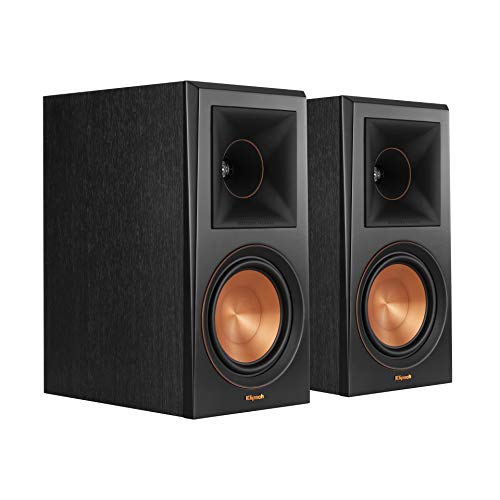
    Klipsch RP-600M Reference Premiere Bookshelf Speakers - Pair (Ebony)

    These speakers have the downfall of requiring an amplifier to connect them to your turntable (non powered). If your turntable has an amp already included in the model, then these could be the perfect speakers for you. They do not offer a Bluetooth connection, but the sound of them is rich, clear, and well worth considering. They look beautiful, sound great, and are offered for a great price.

    These mid-priced speakers are on the higher end at roughly $600 on Amazon.

    High-End Powered Speakers

    The final section of powered speakers to consider are the high-end, expensive speakers. These are for people who want the best sound system they can possibly get and with that standard, they can be quite pricey. These speakers have a ton of useful features and the best sound quality that can be produced, but that drives the prices up, in between $700 and $1,300.
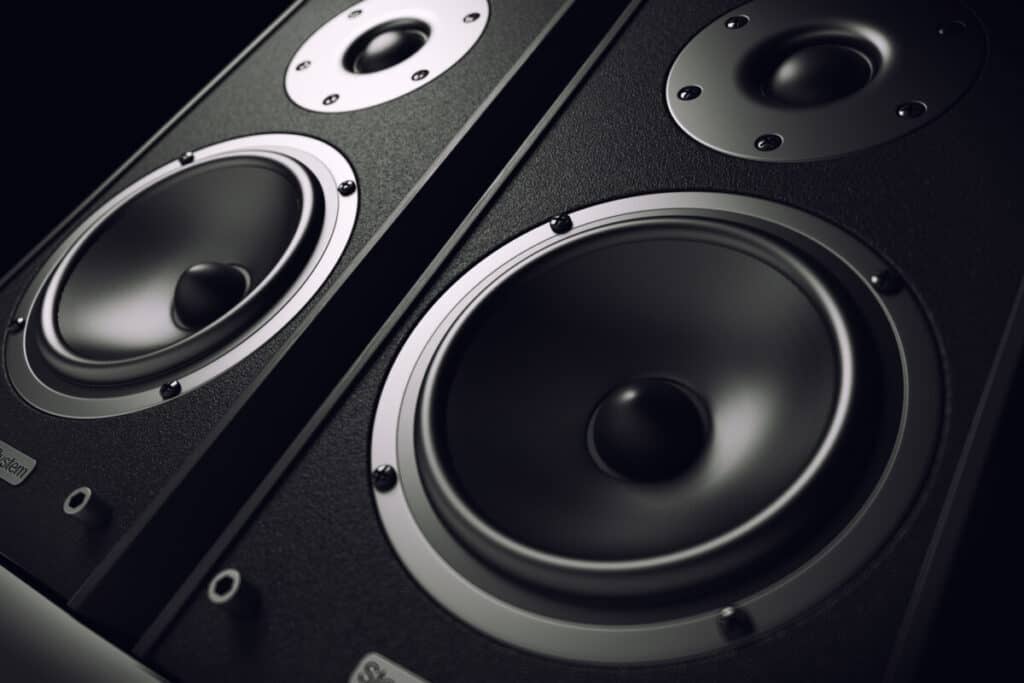
    Audioengine HD6 Wireless Speaker

    The first high-end speaker is the Audioengine HD6 Wireless Speaker. It is made to be sleek and small to fit in any available space. Do not let its size fool you however, because these speakers are powerful with a sound that is full and loud that can fill any room. They have so many great features that are practical and create a sense of luxury when you use these speakers.
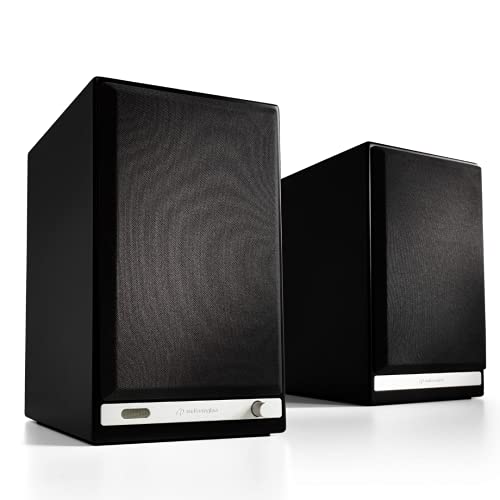
    Audioengine HD6 Wireless Speaker | Desktop Monitor Speakers | Home Music System aptX HD Bluetooth, 150W Powered Bookshelf Stereo Speakers, AUX Audio, USB, Optical, RCA, 24-bit DAC (Black)

    These speakers offer a 30 meter Bluetooth range in addition to RCA ports, AUX ports, and the corresponding cords to go with them. They also come with a remote control so you can change any of the settings from across the room. They are easy to set up and have an additional subwoofer connection option.

    This set of powered speakers is about $700 on Amazon.

    Klipsch The Fives Powered Speaker System

    The next set of high-end powered speakers is the Klipsch The fives Powered Speaker System. This speaker system promises true connectivity which means that they have connectivity options for virtually every device out there. This is great because it means you will have no problems connecting these speakers to your turntable, no matter the age, brand, or model it is.
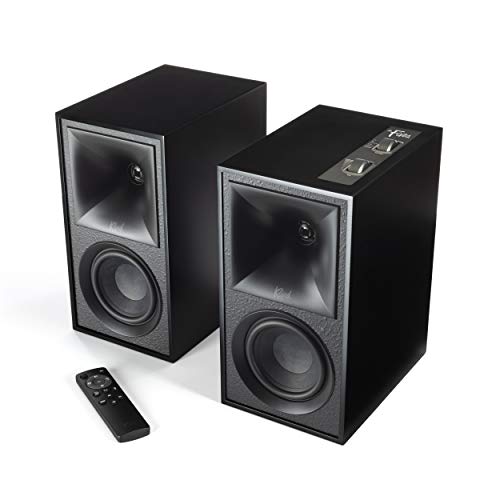
    Klipsch The Fives Powered Speaker System (Matte Black)

    These speakers have a beautiful vintage look to them and will greatly compliment nearly any room and turntable nicely. They offer Bluetooth connection and also come with and HDMI connection option and a remote control for easy access to the levels of these speakers. The Klipsch speakers are larger, but they look stunning next to a turn table, on a TV stand, or on a side table for a more surround sound feel.

    This powerful set of speakers is usually $800 on Amazon.

    KEF LSX Wireless Music System

    The final set of speakers we will talk about is the KEF LSX Wireless Music System. These speakers are very high-end and they are very expensive. However, they are not expensive for no reason, as they have an incredible sound quality with their “Uni-Q driver array”. This makes the sound as clear, and powerful as possible. These speakers come in a variety of colors for you to choose from, so you can find the color that complements your decor the best and they will look stunning.

    KEF LSX Wireless Music System (Black, Pair) LSX Black

    These speakers come with several connectivity options such as Bluetooth, WI-Fi, Auxiliary, and even Ethernet. While these speakers are a great option for a turntable that can connect wirelessly, they are also well equipped to connect via Apple AirPlay so you can play music to the speakers from your phone with a few taps. When connected to your turntable, you can also use your phone, instead of a separate remote control, to change the levels of the speakers, and any attached subwoofers.

    Being the most expensive set of speakers we have covered, they are priced at about $1,250 on Amazon.
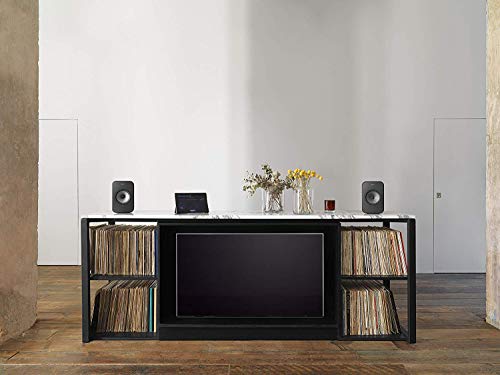
    KEF LSX Wireless Music System (Black, Pair) LSX Black

  • Tube Phono Preamp FAQ and Recommendations for Any Budget

    Tube Phono Preamp FAQ and Recommendations for Any Budget

    Tube phono preamps are great, but many people have questions about them and how they work. They also wonder how much they cost. Luckily, the answers to those questions are below if you keep reading.

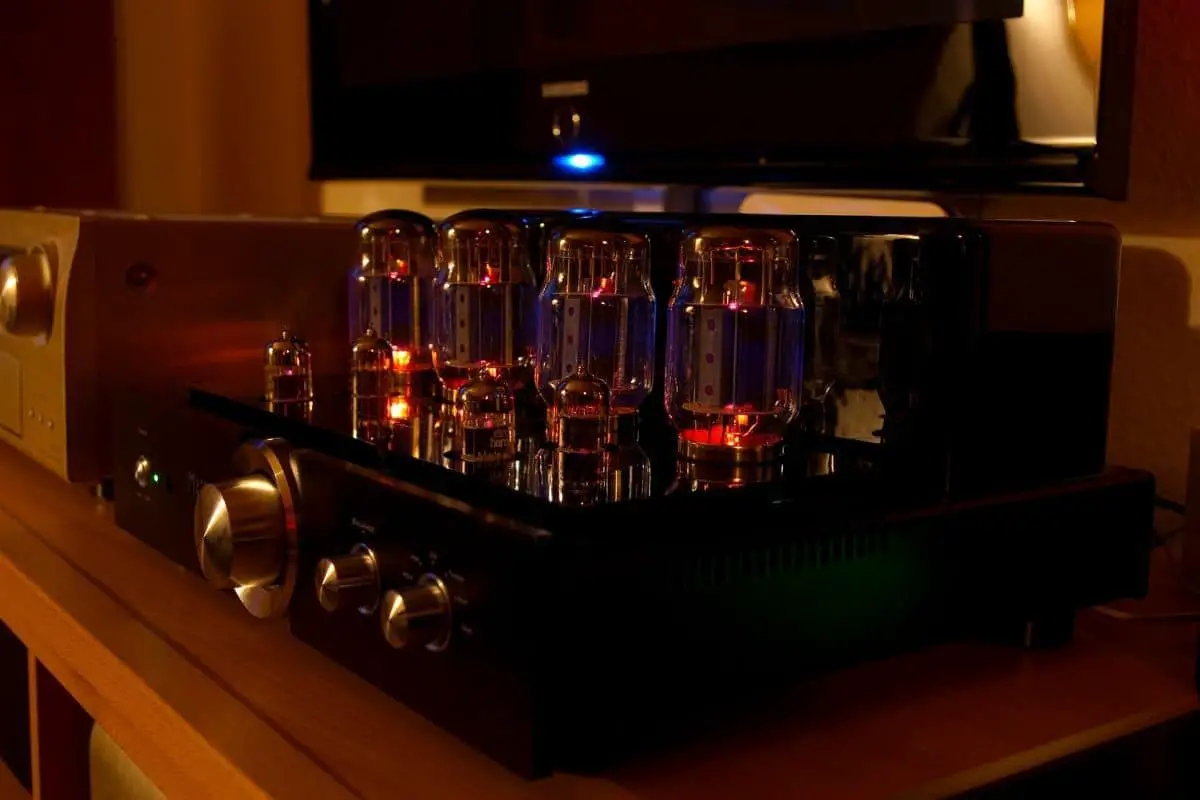
    Tube phono preamps increase and improve the sound that turntables play. Tube phono preamps use vacuum tubes to amplify the signal turntables emit when playing music, which makes the music louder and clearer. Tube phono preamps cost $65-$3,000 and are more expensive than other type of phono preamps.

    Now that you know how tube phono preamps work and how much they typically cost, you may be wondering why they cost so much, and what types of phono preamps there are. Keep reading to find out.

    Are there Different Types of Phono Preamps?

    There are multiple types of phono preamps. There are tube phono preamps and solid state preamps. Solid state preamps are slightly more popular than tube phono preamps because they are typically cheaper, but both types of phono preamp work well.

    There are also phono preamps that work with Moving Magnetic Cartridges (MM) or Moving Coil Cartridge (MC) turntable systems. Most phono preamps nowadays work with both MM and MC systems, but some don’t.

    Tube phono preamps use analogue tubes and valves to amplify the signal that turntables emit when they play vinyl records. Meanwhile, solid state preamps use silicon transistor components to amplify the same signal.

    Tube phono preamps are typically more resistant to voltage spikes and other things associated with electricity that can cause solid state preamps to malfunction and stop working. However, tube phono amps require more electricity than solid state preamps in order to function properly, so they will increase your electricity bill, even if you don’t use it for a long time.

    Tube phono preamps are more fragile than solid state preamps. The tubes and coils that tube phono preamps use to work are fragile and expensive. if you drop a tube phono preamp machine, it will break and you will likely have to purchase things to repair it. Solid state preamps are more durable than tube phono preamps, but it is very expensive to have them repaired when they break.

    It is very easy to fix tube phono preamp machines because the tubes break more frequently than other parts. When one of the glass tubes break, they can just be unscrewed and replaced with a new one. They only cost between $12-$20 and can be found on many online shopping websites or at stores that sell vinyl records.

    But which type of phono preamp machine should you choose? If you plan on moving your phono preamp machine often then don’t choose a tube phono preamp machine as it will likely break when moved, and you don’t want that to happen.

    Now that you know a little bit about tube and solid state phono preamps, you may be wondering if tube phono preamps are useful.

    Are Tube Phono Preamps Useful?

    Tube phono preamps are useful because they make the music that is playing from your turntable louder, clearer, and improve the quality. However, sometimes you don’t need to purchase a separate tube phono preamp system.

    Many record players nowadays have preamp systems built in, so you don’t need to purchase a separate phono preamp system. However, if you do want to purchase a tube preamp system and your turntable already has a system built in, you can turn it off and use the separate system. Although, you will save money if you just use your turntable’s phono preamp system instead of purchasing a separate phono preamp system. (Source)

    Overall, tube phono preamps are useful if you have a turntable that doesn’t already have a tube phono preamp system installed, or when the already installed phono preamp system doesn’t work well.

    How Much Do Tube Phono Preamps Cost?

    Tube phono preamps typically cost between $65-$3,000 dollars, so they are not cheap. Turntable phono preamps typically only cost $20-$2,000, so tube phono preamps are more expensive than other phono preamp systems. However, many people who have tube phono preamp machines think that the cost is worth it.

    Tube Phono Preamp Recommendations

    Now that you know what tube phono preamps are and how they work, you may be wondering what the best ones are. Luckily, compiled below is a list of the best ones. if you are worried about how much they cost, don’t worry, as there are some machines on here that work with smaller budgets.

    ICON Audio PS1 MkII MM/MC Tube Phono Preamplifier

    The ICON Audio PS1 MkII MM/MC Tube Phono Preamplifier is the best expensive tube phono preamp. It is rated 5 stars and costs $2,499.

    The ICON Audio PS1 MkII MM/MC Tube Phono Preamplifier is wired by hand, which increases the price, but it removes impurities that reduce the quality of the music when older records are played, which makes this the best preamp for people who frequently listen to old records.

    With the ICON Audio PS1 MkII MM/MC Tube Phono Preamplifier, you can control the volume and increase it so you can hear the wonderful, detailed sound coming from it. You will definitely enjoy playing your records when you use this preamplifier.

    Click here if you would like to purchase the ICON Audio PS1 MkII MM/MC Tube Phono Preamplifier.

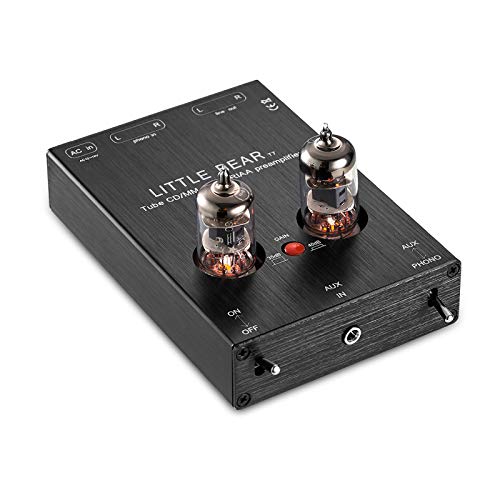
    Little Bear T7 Vacumn Tube Mini Phono Stage

    The Little Bear T7 Vacumn Tube Mini Phono Stage is also a wonderful tube phono preamp that is highly rated. It is rated 5 stays and only costs $65-$81 at the time of writing.

    The Little Bear T7 Vacumn Tube Mini Phono Stage can only be used with MM turntables, so make sure that your turntable is an MM system before you purchase this machine. The bulbs on this tube phono preamp can be easily replaced when they break, and it is compatible with 5654, 6AK5, and EF95 tubes.

    The Little Bear T7 Vacumn Tube Mini Phono Stage comes in black or silver and it is small and portable, so you can move it with little worry about if the tubes will break.

    If you would like to purchase the Little Bear T7 Vacumn Tube Mini Phono Stage, click here to go to Amazon

    Little Bear T7 Vacumn Tube Mini Phono Stage RIAA MM Turntable Preamp & HiFi Tube Pre-Amplifier (Black)

    EAT E-Glo S Hybrid Tube Phono Preamplifier

    The EAT E-Glo S Hybrid Tube Phono Preamplifier is one of the best tube phono preamps. It is rated 5 stars by consumers, but it costs $2,995.

    The EAT E-Glo S Hybrid Tube Phono Preamplifier is portable and can be tucked away when it is not being used. You can control and change many things on the front control panel. One neat feature about this tube phono preamp is that the control panel is lit by small LED lights so you can change the settings even when the lights are off.

    The EAT E-Glo S Hybrid Tube Phono Preamplifier produces wonderful sound so you can enjoy listening to your vinyl records. Unfortunately, the tubes that help it produce that sound are not common. They are Swiss-made and use zircon anodes rather than graphite anodes, which are more expensive to produce. This means if the tubes on this tube phono preamp machine break, you will have to pay a lot of money to replace them.

    If you would like to purchase the EAT E-Glo S Hybrid Tube Phono Preamplifier, click here.

    Valhalla 2 Headphone Amplifier

    The Valhalla 2 Headphone Amplifier is one of the best tube phono preamps as it is rated 5 stars and only costs $349, which is relatively cheap for this type of phono preamp.

    The Valhalla 2 Headphone Amplifier comes in a silver color that will look great in your home. It comes with a 5 year warranty so you won’t have to pay to replace it if it breaks for a long time.

    The Valhalla 2 Headphone Amplifier has a gain switch on the front that allows you to control the amount of output level and impedance that comes from it. It also produces wonderful sound when you use it. You can plug your headphones into this phono preamp so you can hear the sound it produces when it is late or if you want to enjoy the music your playing from your turntable.

    If you would like to purchase the Valhalla 2 Headphone Amplifier, click here.

    Eat E Glo Petit Hybrid Tube Phono Preamplifier

    The Eat E Glo Petit Hybrid Tube Phono Preamplifier is a great tube phono preamp. It is rated 4.9 stars by consumers, and it costs $1,495.

    The Eat E Glo Petit Hybrid Tube Phono Preamplifier is made out of aluminum so it is slightly more durable than some other tube phono preamp machines. It is designed to be slim and not take up a lot of room in your household, so you can put it nearly anywhere. the tubes are even hidden so they won’t break as easily as when they are exposed.

    The Eat E Glo Petit Hybrid Tube Phono Preamplifier produces clear midrange sound, and any music that you are playing from your turntable will be clear and wonderful.

    If you would like to purchase the Eat E Glo Petit Hybrid Tube Phono Preamplifier, click here.

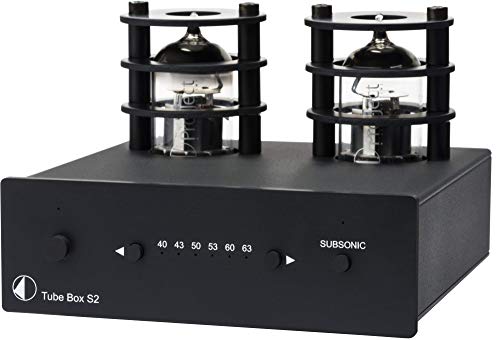
    Pro-Ject Tube Box S2 Black Tube Phono Preamplifier

    The Pro-Ject Tube Box S2 Black Tube Phono Preamplifier is a really nice tube phono preamp. It is rated 4.6 stars by consumers and costs $499.

    The Pro-Ject Tube Box S2 Black Tube Phono Preamplifier is encased in metal and aluminum, which makes it more durable than many other tube phono preamps. The tubes are easy to replace if they break or if you want to change the level of sound that this preamp produces. It has 5 impedance settings that you can adjust to make the music it plays suit your preferences.

    Pro-Ject Tube Box S2 Phono Preamplifier - Black

    You can use both MM and MC turntables with the Pro-Ject Tube Box S2 Black Tube Phono Preamplifier. The connection points are also gold-plated so they will not become corroded over time, which means you will be able to use this phono preamp machine for years to come if you purchase it.

    If you would like to purchase the Pro-Ject Tube Box S2 Black Tube Phono Preamplifier, click here to go to Amazon.

    Any of the tube phono preamps will work very well, but which one you choose to purchase is up to you. Although all of these preamps seem very expensive, they will all last for years to come and help you enjoy listening to your vinyl records that you treasure. if you purchase one of these tube phono preamp machines, you will be able to enjoy your vinyl records for years to come, and your turntable will be able to produce clearer and louder music than before.

    Tube phono preamps work well and improve the quality of the sound that comes from your vinyl records, which is very important to many people. Although the tubes are easy to break, so you may not want to put one of these preamps in a place where young children can reach them, they are also easy to replace and most of the time only cost $12-$20 per tube.

  • Buying a Record Player or Turntable? 8 Things You Must Know

    Buying a Record Player or Turntable? 8 Things You Must Know

    Vinyl records have been around for a while, and they are still a wonderful and high-quality way to listen to music. They are classy and retro, and are most definitely coming back into style. Vinyl record player sales are certainly going up. But before you go get yourself a record player, here are 8 things you definitely need to know. Maybe a turntable would actually be a better fit for you!

    Difference Between a Record Player and a Turntable

    Technically record players and turntables are two different things. A record player is a machine that reads records and turns the vibrations into music. Typically, they contain all that you need to play your records, including speakers. A turntable is part of a record player. It’s the part that spins the record and uses the stylus to read the grooves etched into the vinyl.

    You can either buy the whole record player or customize your own with a turntable and other additions. However, the words turntable and record player are used interchangeably a lot because they are so similar. It’s important to recognize their differences before you buy one or the other though.

    Necessary Additions to a Turntable

    Most record players don’t need any add ons, but some require additional speakers. However, if you get just a turntable, you will definitely need some other components before you can start listening to your records. The turntable reads the record and turns it into vibrations, but it still needs other equipment to turn those vibrations into glorious music. Some other add-ons you need for your turntable are a preamp, an amplifier, and speakers.

    The preamp helps boost the signal from the turntable so it can be received by the amplifier. Some turntables have preamps already built into them. But if your turntable doesn’t have a built-in preamp, you will need to purchase a separate one.

    Like the preamp, the amplifier helps strengthen the signal even more so that the speaker can use it. Without this, the signal will be too weak. Luckily, some speakers have amplifiers built into their system.

    And finally, you need speakers. Speakers are essential because without them it would just be electrical signals, not music. There are many different styles and shapes of speakers. There are stereo speakers or floorstanding speakers. Some record players even come with Bluetooth capabilities and can be used to play with any Bluetooth speaker.

    So if you buy a turntable with a built-in preamp and a speaker with a built-in amplifier, then that will be everything that you need.

    Manual vs Automatic vs Semi-automatic

    There are three different types of record players. There are manual, automatic, and semi-automatic. The big difference between these relates to the tonearm. The tonearm is the mobile part of a record player that holds the needle or stylus that picks up the grooves in the record. For all record players, the tonearm needs to be moved so that the stylus rests on the vinyl record. Once the song is over, the tonearm needs to be moved off of the record. The difference between manual, automatic, and semi-automatic record players is how this tonearm is moved.

    Manual

    Manual record players are record players where you have to place and remove the tonearm from the record to start and stop the music.

    Automatic

    On the other hand, automatic record players will place the tonearm at the push of a button and automatically remove it once the song is done. This makes the record player a lot easier to use.

    Semi-automatic

    Finally, Semi-automatic are record players that you have to manually place the tonearm on the record, but it will automatically remove the tonearm once the record is finished. You just have to get it started and the machine will do the rest.

    The biggest reason to consider one style over another is that placing the tonearm on the record incorrectly can hurt a record. If you don’t put the tonearm on correctly then the stylus might scratch the record, permanently damaging or destroying the item. Also, placing the tonearm wrong can make a terrible screeching sound, which totally ruins the effect of a soothing song.

    In addition, a manual record player will keep going after the song finishes. If you don’t remember to take the tonearm off, it will keep playing, which could cause problems down the road.

    Overall, deciding which style you should get all depends on your personal preference and how confident you are in using your record player.

    Storage of Your Record Player

    Some record players are very portable, specifically suitcase styles ones. But others need a permanent home. Style is important, but there are a lot of other factors that should go into where you put your record player.

    The first thing to do when finding a good place to put your record player is safety and stability. Because they can be so expensive, you never want to put a record player in a place where it could be bumped or knocked off its resting place. Record players need to be placed on a stable and heavy surface. If the player causes the table or shelf it sits on to vibrate, it can mess up the record player and cause it to skip or cause tracking issues. One way to help mitigate this is the use of isolation platforms, feet, or pads. These add-ons will help reduce the vibrations that affect your record player.

    The next thing to consider is whether the player will be level or not. Record players and turntables should always be placed on flat surfaces. Make sure you test to see if the surface you picked out is uneven or not. If the surface isn’t level then it could cause unnecessary wear and tear on your equipment.

    Finally, you need to figure out where to place your speakers. Because sound is composed of vibrations, speakers cause a lot of vibrations. Placing your speakers too close to or even on the same surface as the record player can cause problems. Like placing it on an unsteady surface, extra vibrations can cause the record player to have tracking problems.

    A good way to prevent this is to put speakers on a different surface, like a separate shelf. Another option is floorstanding speakers, which are speakers that just sit on the floor. Also, there are speaker isolation pads that will reduce vibrations caused by the speaker.

    A lot of this depends on your available space and how you want your setup to look. But these factors are crucial for the safety of the player and the quality of the sound. You need to keep these things in mind as you plan where to put your record player.

    Price

    You can buy a turntable for a fairly cheap price, but a cheap one can hurt your records. Not all record players and turntables are made equal. You get what you pay for, and sometimes it’s best to pay a little more.

    A starter turntable usually costs between $100 to $400. A high-quality model turntable will cost closer to $400 and $700. (Source) Keep in mind that turntables also require additional parts, like speakers, which will increase the overall price.

    On the other hand, record players can cost from $50-$300. Again, there is a strong correlation between price and quality. The lower the cost, the more likely it is to both hurt your records and to fall apart before its time.

    Which Brand is Best?

    There are so many different styles and brands of record players that are available to buy. Some of the best brands to buy record players and Turntables from include Pro-Ject, Fluance, and Audio-Technica. Each of these brands has its own different benefits. Audio-Technica is the most affordable of the three. Fluance and Pro-Ject are a little more pricey, but they are worth the extra money.

    There are plenty of other good brands out there, but there are also some brands and styles that aren’t the best. Some record players aren’t very good and can actually cause damage to your records. Crosley and Victrola brand players aren’t as good and the same goes for Denver suitcase models.

    Each of these brands have different downsides. For example, the Crosley brand record players sometimes use cheaper styluses that are rougher on your records and can shorten the life span of that record. If you want your vinyl to last longer, it’s worth the extra money to get a better quality record player.

    Size of Records You Want to Play

    Not all vinyl records are the same. There are three different possible sizes of records. This is important to know because not all record players can play all sizes of records.

    The different sizes are 12-inch diameter records, 10-inch diameter records, and 12-inch diameter records. The 10-inch size is the least common size, typically the records you will see will be 12-inch or 7-inch records. All record players can play a 12-inch record and a 7-inch record. However, not all can play a 10-inch record. If you want to play a 10-inch record you will need to make sure that the record player or turntable that you are buying is capable of playing a record of that size.

    One thing that size can affect is how fast your record player should be going. The speed of a record player is determined by RPMs or rotations per minute. There are three different possible speeds, 33 1/3 RMs, 45 RPMs, and 78 RPMs.

    Normally, your records should say what speed they should be played at. Typically 12-inch records should be played at 33 1/3 RPMs, 10-inch records should be played at 78 RPMs, and 7-inch records should be played at 45 RPMs. However, the speed can vary depending on the specific record. Playing a record at the wrong speed will not cause any lasting damage to it, but the song will not sound the way it is supposed to.

    The final thing that size affects is how much music it contains. Records that have a 7-inch diameter will only last for about 5 minutes for each side while 10-inch records will last about 8 minutes per side. Finally, 12-inch records will last about 22 minutes for each side.

    Long Term Care

    The last thing you need to know about record players and turntables is how to clean them. Cleaning your record player is critical. If you ignore cleaning your record player, then it will end up hurting your player and your records. Dirt and dust builds up over time and can cause many problems. It can interfere with the playing of the music and ends up scratching your records and causing permanent damage to the vinyl. A little cleaning every time you use your record player can save you a lot in the long run.

    First, you should dust your record player every time you use it with a lint-free or microfiber cloth. However, if you only use your record player every now and then, you should try to dust it twice a week. If you need a bit of a deeper clean, use rubbing alcohol on the microfiber cloth before you dust. If you do use rubbing alcohol, go over the player again with a dry microfiber cloth to remove any excess moisture.

    Another thing you need to take care of is the stylus. There are special brushes for cleaning stylus, but if you don’t have them a fin small paintbrush would work. You should wipe the stylus with this brush every time you use your record player. If you want a more in-depth cleaning, use rubbing alcohol. Be very careful as you clean the stylus. It is very fragile and can bend easily. (Source)

    One good way to make cleaning your record player easier is to use a dust cover between uses. Some record players have dust covers built into them. Some dust covers are plastic while others are cloth. Using a dust cover will limit the amount of dust and dirt that will accumulate on your player. Dust covers aren’t perfect and dust will still get on your record player, but it will make cleaning a lot easier. You can also just use a cloth if you don’t have a dust cover. (Source)

    Now that you know these important things, you’re ready to enjoy your record player.

  • The 10 Best Places to Buy Vinyl Records Online

    The 10 Best Places to Buy Vinyl Records Online

    These days, everyone has their preferred method of daily entertainment whether it be music, books, movies, or a variety of other media types. For many true music lovers, the old fashioned vinyl record is the best way to go. In-person shopping can be an exciting way to find new music and old favorites. However, stores may be limited in product, and are oftentimes difficult to physically sort through as it can take hours to find what you like.

    Online shopping is an easy route for all your purchases, including vinyl records! Each online store listed is unique and offers different services, products, and online tools. Some customers may be looking to start a vinyl collection at home, which some sites are more suited for. Other customers may be new to the vinyl world and would like an expert to guide them in their journey to find the best products for the best prices, and to discover their personal music tastes. Or, like many music lovers, you might be interested in a more community based company where you can collaborate with other customers, review music together, buy/sell products from others, and view their collections online to help grow your own. Whatever your preferences and needs, you may find your best fit in one of these sites. Here are 10 of the best online vinyl record stores.

    Top Pick

    Turntable Lab

    My absolute favorite store for vinyl records and audio equipment is Turntable Lab. They have a great online store that primarily focuses on new releases and reissues.

    Turntable Lab

    Turntable Lab prides itself on being selective with the quality of the products they offer. The store started by catering to DJs and providing high-quality audio equipment, including turntables and sound mixers.

    Today, they continue to cater to aspiring DJs while housing a unique collection of vinyl records. If you’re a hip-hop lover, few record stores can offer the solace you’ll find here at Turntable Lab. Aside from records and audio equipment, they also provide streetwear, production gear, and vinyl toys, including an action figure of the late J-Dilla.

    As a record store, TTL focuses primarily on new releases and reissues rather than old records. So if you’re digging for the classics, you may not find many at this store. However, TTL caters to a wide variety of music tastes, and you’re sure to be pleasantly surprised by the wide range of genres they carry.

    Aside from audio equipment and vinyl records, this store also sells books and magazines related to music and the art of DJing. And while it’s recognized primarily as a record store, TTL was instrumental in uplifting the DJ movement in its early stages

    Amazon

    If you’re going to write a list of all the places to buy vinyl records online, it’s hard to avoid Amazon. They have an extensive selection, and they are competitively priced. In addition, if you’re a Prime member, you usually get delivery within 1-2 days.

    Visit Amazon here to buy vinyl records.

    Amazon has also launched a new subscription service called Vinyl of The Month Club. As part of the club, you get a record from the Golden Era of Vinyl every month. And you don’t have to be a Prime member.

    You can find out more about the Vinyl of The Month Club on Amazon here.

    Vinyl of the Month Club: The Golden Era - Vinyl Subscription

    Amoeba

    Amoeba is based in California in Berkeley, San Francisco and Hollywood. They are currently one of the largest and most popular online record stores. They provide a wide range of genres including but not limited to rock, hip hop, soul, classic jazz, and electronica. They offer albums from artists, both popular and underappreciated. With their staff consisting of musicians, music lovers, and experts, they will help you find your preferences in music, and will offer similar artists you may be interested in listening to. By joining their AVC (Amoeba Vinyl Club), you can receive a new vinyl every month to grow your collection at home. You can also join their email list to be notified of upcoming sales, news, and more.

    Amoeba has been in business since 1990 and was founded at a time when chain stores were popping up everywhere and making independent stores like Amoeba go out of business. Luckily, Amoeba thrived in this climate as one of the only independent music stores that were left in the area because of their loyal, music-loving customers. (Source)

    Amoeba has continued to thrive since then, and it is now one of the best places to purchase vinyl records online if you don’t live in the Berkeley, California area.

    Experience Vinyl

    Experience Vinyl is for all you independent shoppers. You get all the control in your purchases with no financial contracts. You can browse or shop their broad selection of old or new music, and you can pre-order upcoming releases.

    On the home page of their website, Experience Vinyl posts a “Selection of the Month” album to purchase new music, along with information on the artist. They also provide a monthly offer for limited edition albums you may be interested in, but with no obligation to purchase. Experience Vinyl is a great way to learn about new genres and artists, and to dive deeper into your world of music without any pressure.

    Experience Vinyl has a Vinyl Club that doesn’t have a monthly fee that gives you access to these “Selection of the Month” albums. You just tell them your name, email address, and become a part of the Vinyl Club. (Source)

    Experience Vinyl is one of the best places to purchase vinyl records online partially because the Vinyl Club doesn’t cost money to become a part of, but also because they sell a wide variety of vinyl records so you will definitely be able to find one you will enjoy listening to.

    EIL

    With EIL, you can do more. They have a large range of genres, rare records of different sizes, as well as CD’s and music memorabilia to purchase. You also have the option to sell items for cash, or trade-in, which allows customers to grow and share their personal collections. They offer same-day shipping, and if you aren’t satisfied with your product, you can return it for a full refund.

    The staff at EIL are involved with purchases and respond to contacts quickly with any questions or concerns. You can view real reviews from customers on their website. They also have a blog where you can view posts on record collecting news, advice on starting your own collection, reviews, and so much more.

    EIL started as a vinyl collecting hobby in 1985 by founders Robert and Julian, that grew overtime into a full business for all that are passionate about music and record collecting. Although it is one of the best places online to purchase vinyl records, their website does look slightly dated. Instead of taking time to redesign their website, they choose to focus on selling vinyl records that are in mint condition, which their customers greatly appreciate. (Source)

    Discogs

    Discogs is for music collaborators. Through the site, customers can share their collections, wish lists, and reviews with others. This can play a part in growing the site’s music catalog as more customers contribute. Discogs has a blog where they share news, updates, and articles for all music lovers to dive deep into their favorite artists. You can also download their app to easily connect with buyers and sellers and to add to your music collection quickly.

    Discogs was founded in the year 2000 by Kevin Lewandowski and was originally a simple project. Now, that simple project has become a passion. They now want to build the largest and most comprehensive database of music. They are now one of the best places to purchase a vinyl record online, but keep an eye on this company as it grows. You will definitely find vinyl records you will enjoy when you visit this website. (Source)

    Dusty Groove

    Dusty Groove carries the major genres but has a main focus on funk, soul, reggae, jazz, and other less popular genres. You can easily browse through used items, vinyl’s and CD’s for under $10, and other low priced products.

    The website puts a deep focus on helping customers find their passion and deeply appreciate music again. It provides the company’s history through the website, as well a link to the trailer for “Dusty Groove: The Sound of Transition”, a documentary of jazz, soul, and hip hop lovers and their connection to music that was completed in 2019. The film focuses on customers that have visited the Dusty Groove storefront and how music has shaped their lives. (Source)

    All Tower Records stores have a red-and-yellow color scheme and a ‘No Music, No Life’ slogan that they go by. All storefronts have wide aisles that are filled to the brim with vinyl records, LP’s, and CD’s. If you can’t go into one of their stores, you can purchase all of the products that they sell in their stores on their website. (source)

    Dusty Groove is one of the best places to purchase vinyl records online. They have vinyl records in genres such as:

    • Soul
    • Funky 45’s
    • Jazz
    • Funky Compilations
    • Hip Hop
    • New Grooves
    • House Music
    • Neo Soul
    • Deep Funk
    • Brazil
    • Latin
    • Reggae
    • Rock

    They have vinyl records in more genres, but those are the most prevalent and some of the most popular types of records that they sell. If you purchase records online, you can receive your records within 2-10 days, depending on the type of shipping you choose at checkout and where you live.

    Presto

    Presto, is based in Royal Leamington Spa, UK. The jazz and classical focused site, makes it easy and simple to browse your desired vinyl items, and many other products. Customers can purchase sheet music for many instruments, books about composers and musicians, beginner’s guides, as well as instruments.

    You can download the free Presto Music App where customers can bring their music along with them on the go.

    The website allows you to search for music by composer, award, label, instrument, etc., and their staff is full of experienced musicians and experts to help you along the way. They are one of the best places to purchase vinyl records online because they have over 230,000 recordings in total, so you will definitely be able to find a vinyl record that has music that you will thoroughly enjoy. (source)

    Presto also sells sheet music titles, music books, and musical instruments. When you order anything online, you will likely receive the product(s) within 2 weeks, but that will vary on where you live and the products that you order.

    Vinyl Me, Please

    Vinyl Me, Please has a fun, upbeat website full of everyone’s music favorites to choose from. It is one of the best online places to purchase vinyl records.

    They provide an exclusive ‘Record of the Month’ subscription. They select a track from different genre options (‘Classics’, ‘Essentials’, ‘Hip Hop’, and ‘Country’) for subscribed customers to receive each month, and can cancel anytime. Members also get free shipping with their purchases. The ‘Record of the Month’ subscription costs about $43 per month per music genre, but that may vary depending on the music genre album that you are sent every month.

    Vinyl Me, Please wants to help people make a deep connection to the music that they listen to and create. The owners and staff of Vinyl Me, Please are firm believers that vinyl records are the best way to listen to music, and they want to help everyone do that. They also want to help you listen to your records that you ordered from them as quickly as possible, so they make the purchasing and checking out process that occurs when you purchase a vinyl record quick, easy, and painless. (source)

    Overall, if you purchase one or more of the many records that Vinyl Me, Please sells, you will find new and old music that you will enjoy playing on your turntable. That is a guarantee. If you order a record and it arrives damaged in some way, shape, or form, they will send you a replacement so you can enjoy listening to the vinyl record that you ordered. However, if the record you ordered is out of stock it will likely take them a while to send a replacement to you.

    Tower Records

    Tower Records provides an all-around energetic music experience. With lots of vinyl records and merchandise, there’s so much to choose from. It is easy to view their recent re-stocks on their home page for customers eager to get their hands on their favorites. Unique albums and artists that often go unnoticed are posted on the website regularly with information about upcoming albums and dates. This is perfect for listeners and customers to grow their music collection and to find new interests.

    Tower Records was founded by Russ Solomon in 1960 when he was a teenager, and it has stood the test of time until now. It was originally a business where Solomon would re-sell 78 RPM jukebox records. This original business was in the back of his father’s drug store. Now, Tower Records is a company that has become a retail behemoth. They are in charge of dozens of stores all across America.

    Tower Music as a company wants everyone to enjoy listening to records and to ‘Know Music, Know Life’. Because this is one of their company mottos, they are one of the best places to purchase vinyl records online. Their website is bright and well organized. On the forefront of their website, they have newly released and newly restocked vinyl records so you know when your favorite artists have released new music that is available on vinyl records.

    You can purchase vinyl records online from any of these stores, but some of them also have storefronts that you can go to. You will definitely be able to find many vinyl records that you will enjoy listening to when you go onto their websites.

    Related articles: 

  • Phono Vs. Line: We Explain the Difference

    Phono Vs. Line: We Explain the Difference

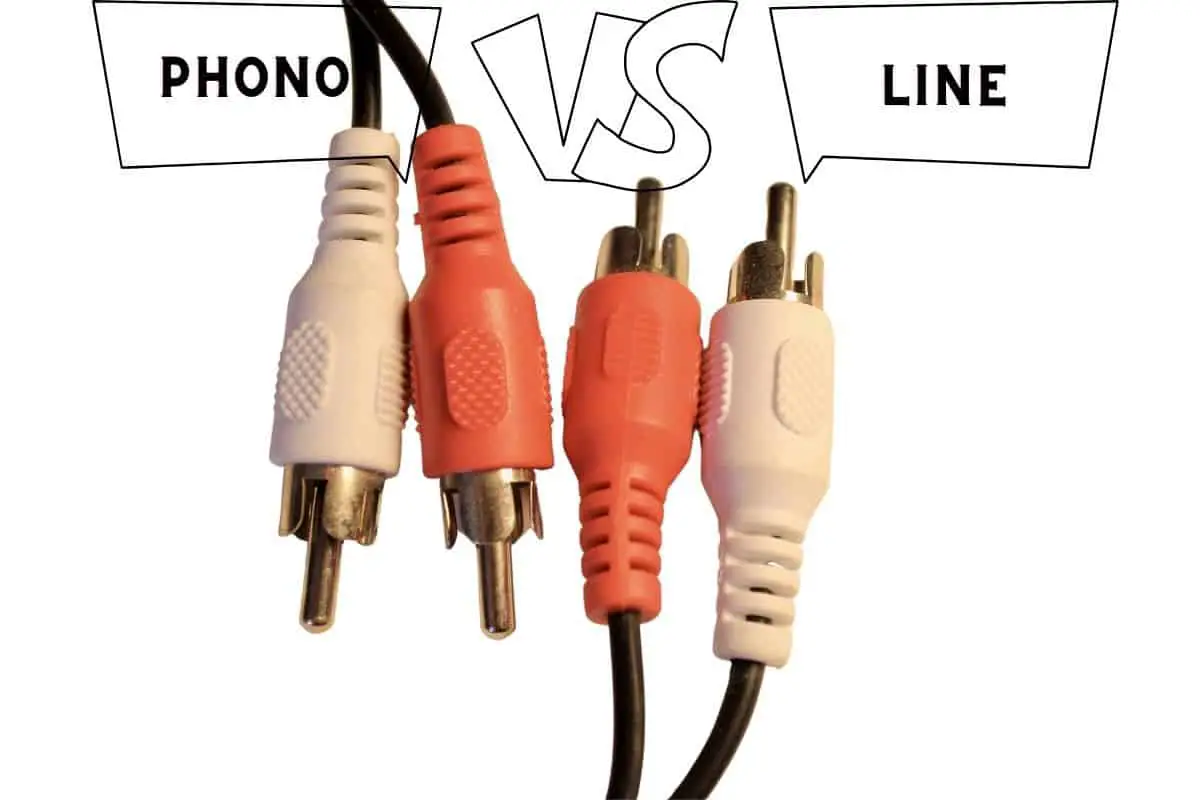
    In 1877, the invention of vinyl altered the way the world hears music and audio. Over time, technology has evolved away from the phonograph; however, many continue to enjoy the audio they produce. For this reason, newer audio players include an input labeled phono. But how does the phono input differ from the line input?

    Phono produces a very mild electrical signal; meanwhile, line, which encompasses most digital audio players, creates a much stronger signal. This variation impacts the quality of the audio played. To play a phonograph properly, the device must translate its signal through a phono stage, or a preamp.

    While listening to vinyl is a relaxing way to pass the time, understanding the signals, inputs, and outputs associated with audio playing devices complicates the hobby. Luckily, we are here to explain it to you! In this article, you will learn everything you need to know about phono and line signals. Let’s get started.

    What is Phono Signal?

    When a record is made, the recorded sounds are processed onto the vinyl in grooves. These grooves are essentially a physical representation of the soundwaves. The soundwaves in the grooves are then detected by the needle of a record player.

    As the needle passes over it, it reads the electromagnetic signals stored in the vinyl and transforms them into an electrical signal. This electrical signal is then translated by the device’s speakers as sound.

    To make more room on a record and to increase the duration of sound on each side, vinyl makers alter the recorded audio’s frequencies.

    For example, they must raise the bass’s frequency to make room on the vinyl for multiple songs. Because bass has larger soundwaves, if they were left unaltered, they would take up too much space on the record. The needle would not have enough room to play the song properly, if at all.

    When you raise the bass, you also have to boost the treble. Heightening the treble on vinyl during production improves the quality of the audio. 

    Records with altered frequencies are known as phono signals. Phono signals are considered “unequalized.” Were you to play this through a phonograph, the sound would not play as recorded.

    Since the sounds recorded on the vinyl have increased frequencies, they must be corrected before they are played. This is where RIAA Equalization comes into play.

    RIAA Equalization process and normalizes the frequencies of the vinyl to produce the sound correctly. This process can also reduce the effects of dust, debris, hand oils, and other substances that alter a vinyl’s sound.

    Phono signals only produce about 0.2 to 0.8 millivolts. On a turntable or other modern-day audio device, this is not enough signal to play the sound audibly. Think of it like only half the headphone jack is plugged into your iPod or mp3. The sound playing through the speakers is muffled due to a lack of electricity produced.

    Phono Signal and Preamp

    Because phono signals are too weak for most audio devices to process, the electrical signal must be increased. This process is done with a phono preamp or a phono stage.

    If you were to play a record without the use of a preamp you wouldn’t be able to hear it, and what you could hear would sound odd. 

    Phono preamps are what enact the RIAA equalization process. The frequencies are lowered and the sound is balanced.

    A phono stage may be built into a turntable, record player, CD player, and DVD player. However, some devices will not include the equalization stage needed to play a phonograph properly. Luckily, a preamp can also be found as a stand-alone piece of equipment. Many audio or record repair stores still have these machines on hand. 

    Some modern audio devices will not need a phono stage since they can identify the difference between vinyl and a CD.

    Remember to be careful when handling vinyl. While CDs will not be affected much by fingerprints, fingerprints on vinyl will result in static and background noise. Luckily, most of these imperfections will be buffed out in the equalization process.

    What is Line Signal?

    The term line signal refers to the natural frequency or basic standard level of audio output that you are used to hearing before any major amplification. 

    Devices such as CD players, DVD players, laptops, phones, and televisions will output a line signal without any alterations or amplifications.

    Line signals are much stronger than phono signals. While a phono signal is only a fraction of a millivolt, a line signal is 0.316 volts root-mean-square.

    Because these audio recordings produce a much larger electrical signal, they do not require additional amplification. When you plug a device into the line input, it will play the sound without altering the electrical signals. 

    Line Input VS Line Output

    You may see the word line on the back of your turntable or other audio playing device multiple times. While one of the labels will be close to the word “phono” others might say “line-in” or “line output.” 

    Are these related to line signals? Not entirely.

    The line input port close to the phono input port is meant to plug the audio device into as described above. The others have unique purposes.

    The port labeled for line-in is meant to assist with maintaining audio quality while recording. 

    Meanwhile, the line output jack is where additional external amplification can be plugged in. This could be a PA system, headphones, or recording equipment. 

    The Differences Between Phono and Line

    Phono and line have several differences every vinyl collector should be aware of. Speaker variation will impact your listening experience.

    Differences between phono and line have to do with the size of the electrical signals produced and the quality of sound.

    The phono input is the older version and newer systems have stopped including it. As described earlier, the needle of a record player travels over the vinyl, it creates an electric signal that is then transformed into sound. The amount of electrical signal produced is the main difference between phono and line systems.

    As mentioned earlier, line signal is stronger than phono signal. Phono signals are between about 0.2 to 0.8 millivolts; meanwhile, a line signal is 0.316 volts.

    Why does the signal produce matter? The signal created translates to the volume, and quality, of the audio played.

    Earlier on, we learned that phono signals travel through a preamp before it gets played through the speakers. If you plug a phono into the line input, the signal will be too weak to hear. On the other hand, if you plug a line into a phono, the already loud signal will be amplified and will be too loud for the speakers to translate properly.

    Remember, not all turntables have a built-in preamp. If your turntable struggles to play phonographs, you may need to invest in a preamp.

    If your turntable features a phono, line switch, how does it affect the sound played? Turntables with this switch will only have one type of input port. Rather than distinguishing the type of signal being played through the type of port, the switch tells the machine how to read the signal.

    When the switch is set to the phono, play the audio at the regular phono signal level. This will result in a quieter output that might include significant background noise.

    When you change the settings to the line, the signal produced increases, and background noise is removed. This setting runs the signal through a phono stage equalizing the frequencies and preparing it to be played line quality levels. Phono signals need to be boosted between 50 and 1000 times to be at an acceptable level of line signal.

    Phono Line Turntable and Preamp Examples

    As record players have had a surge of popularity, many companies have begun to manufacture them again. Many listeners enjoy customizing and upgrading standard phonographs and record players to meet their audio preferences. 

    To leave room for customization and upgrades, not every record player has a phono preamp built-in. Brands such as Victrola, Yamaha, Technica offer players with and without the preamp. With prices that range from fifty dollars to seven hundred and fifty dollars. While these brands can get a bit more expensive, their machines have a lot to offer.

    Not sure what type of turntable or record player you need? Take a look at the following examples to find the right machine for you!

    H009 Turntable Stereo System

    The H009 Turntable Stereo System is a combination of preamp, speakers, and turntable. The preamp on this machine is activated with a line, phono switch.

    This turntable has a vintage look so you can enjoy music the way it was meant to be.

    There is little setup for this system, allowing you to start enjoying your phonographs immediately. The H009 Turntable has a built-in Hi-Fi speaker for improved listening ability.

    This system also includes a vibration dampener for better sound quality. Get the H009 Turntable Stereo System for just $200 from 1 by One Audio.

    Pyle Phono Attachable Preamp

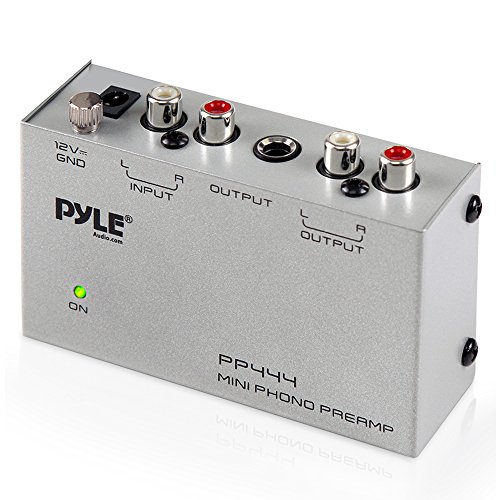
    As mentioned earlier, not all turntables will feature systems like the one above. If your record player or turntable does not include a phono stage, you will need an external preamp.

    The Pyle Phono Attachable Preamp is the perfect addition to your turntable setup. This external preamp costs less than $20.

    Get the Pyle Phono Attachable Preamp from Amazon here.

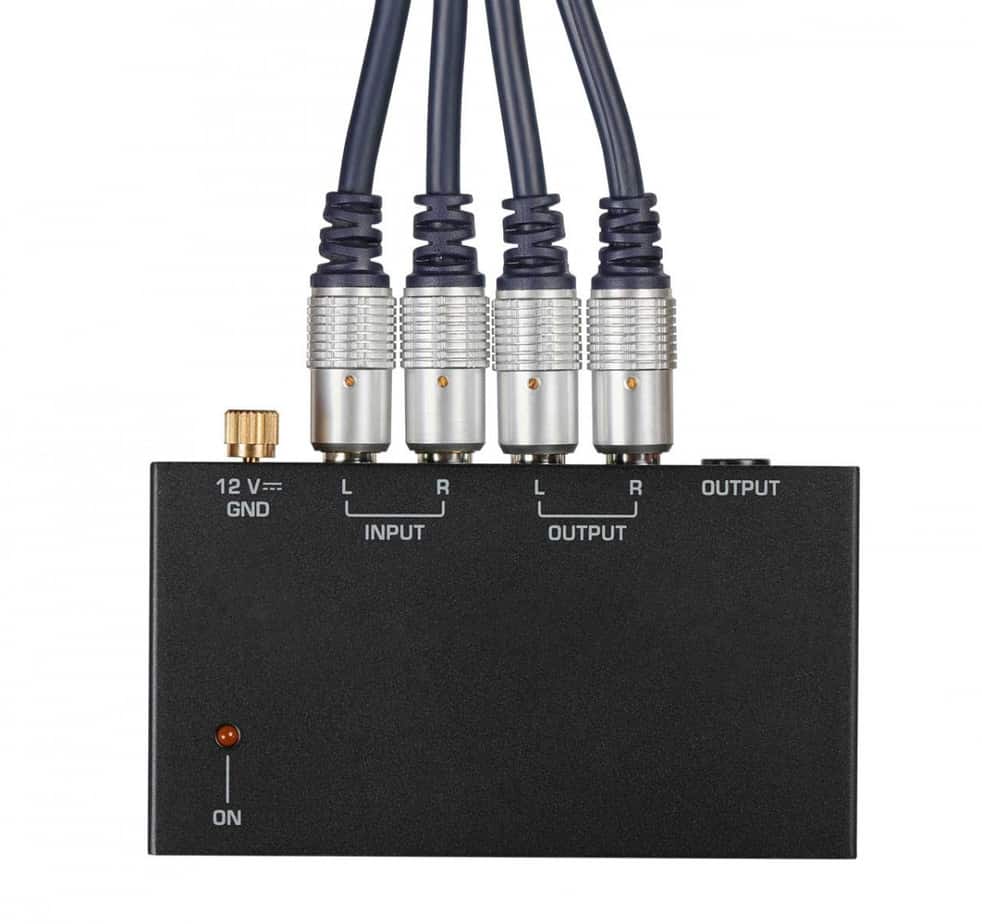
    Pyle Phono Turntable Preamp - Mini Electronic Audio Stereo Phonograph Preamplifier with RCA Input, RCA Output & Low Noise Operation Powered by 12 Volt DC Adapter (PP444)

    Sony 2.0-Ch. Stereo Receiver with Bluetooth

    Record players and turntables are not the only audio devices featuring a phono input. Stereo receivers occasionally have the phono input too!

    This allows you to play a phonograph through a stereo receiver. CDs and other audio devices are plugged into the normal audio input ports.

    This stereo even features BlueTooth connectivity for increased audio abilities. Add the Sony 2.0-Ch. Stereo Receiver to your audio player collection from BestBuy here.

    4-Way RCA / Phono Line Amp Router Audio Switcher Selector Splitter

    Like the Sony option above, the 4-Way RCA / Phono Line Amp Router Audio Switcher Selector Splitter allows listeners to switch between their source of audio at the turn of a knob.

    It includes a phono input port and a phono stage to create undistorted audio and amplification.This Audio Switcher can support a DVD player, a tuner, a video player, and so much more. 

    Learn more about the 4-Way RCA / Phono Line Amp Router Audio Switcher Selector Splitter from Walmart here.

    H004 Hi-Fi Turntable Stereo Set

    This turntable is designed for the most dedicated vinyl listeners. The H004 Hi-Fi Turntable Stereo Set includes two BlueTooth speakers and a heavier platter for improved rotation and sound quality.

    This system will also appeal to listeners interested in upgrading or customizing their listening experience. 1 by One regards the H004 as a “Future-proof system.”

    Changing from line to phono can be done with the flick of a switch. 

    The H004 Hi-Fi Turntable Stereo Set also features a vinyl to MP3 recording system! Now you can transfer all your favorite vinyl to mp3 without a struggle.

    Because this system has more features than most turntables, it is a bit costly. However, it can be yours for less than $300.

    Get the H004 Hi-Fi Turntable Stereo Set from 1 by One here.

    TechPlay Analog Turntable

    While it is not costly to add a preamp to your turntable system, it is just simpler to purchase a turntable with the built-in system.

    The TechPlay Analog Turntable is one such system.  The TechPlay features a built-in preamp with a bypass selector to ensure your audio source is being read properly. 

    This turntable also features anti-shock legs to ensure your listening experience is not interrupted by movement around the machine. Not only does the TechPlay Analog Turntable play music well, but it also looks great.

    This system has a piano gloss finish and chrome accents. Additionally, the compact design ensures that the turntable can fit anywhere in your home. It also leaves room for speakers and other audio systems to surround it.

    Get the TechPlay Analog Turntable with a built-in phono preamp from Walmart by clicking here.

  • What is a Turntable Phono Preamp? We Explain

    What is a Turntable Phono Preamp? We Explain

    Turntables and records are making a comeback, and many people have vinyl record versions of their favorite albums. But now that they have a turntable for their vinyl records they are wondering if they need a turntable phono preamp. What is a turntable phono preamp?

    A turntable phono preamp is an electronic circuit that converts phono signals to line signals so the music coming from the vinyl record is clear. It helps increase the volume of the music coming from the record, and makes sound come out of speakers or stereo systems that are connected to turntables.

    Now that you know what turntable phono preamps are, you may be wondering if you need one if you have a turntable and how much they typically cost. Keep reading to find out.

    What is a Turntable Phono Preamp?

    Turntable phono preamps are electric circuits that helps boost the output of a vinyl record. They also equalize the output of a turntable so the sound that comes from the turntable is correct and sounds like it should. Some phono preamps are not included in turntables and are part of an external system, but most modern turntables have a phono preamp included in the turntable system. (Source)

    Phono preamps make the sound quality of a vinyl record better. They make the record sound more similar to the sound that a CD or tape would produce so people don’t think that the sound that a CD and a vinyl record are really different, although there are differences in the sound that each of them produce.

    When a turntable plays a vinyl record, they produce a phono output signal that needs to be converted to a line level signal, otherwise known as an AUX signal, in order for the music to be played through speakers or another sound system. Phono preamps receive the phono output signal and convert it to a line level signal so it can be played, and you can hear the music that you are playing on the turntable. (Source)

    Phono preamps also emphasize the high and low frequencies that hide the sound that the turntable needle makes as the vinyl record spins so you can hear the music clearly, without any irritating scratching noise that will make the music less appealing.

    A phono preamp is also known as a phono stage. When turntables were used in almost every household, a phono preamp was included in the turntable system so it was easy to use the turntable and no one had to purchase extra parts in order to play their music.

    However, as tapes and CDs became popular and people nearly stopped purchasing turntables altogether, companies removed the phono preamp system in order to save money. Now that turntables are making a comeback and people are purchasing turntables to play their vinyl records, companies have put the phono preamp system back into them. However, not all companies put the phono preamp system in turntables, as it is cheaper for them to leave it out. (Source)

    Most phono preamps nowadays reduce the amount of hissing and rumbles that are commonly heard when a vinyl record is played. This makes it so the music playing is clear and of a high quality.

    Most phono preamps are small and compact so you can keep them stowed away when you aren’t using your turntable. If you have a turntable and need a separate phono preamp, make sure that you purchase one that works for your turntable. Although most phono preamps nowadays work with both moving magnetic (MM) and moving coil (MC) turntable systems, before you purchase one make sure that it works with the turntable system that you have.

    Do I Need a Turntable Phono Preamp?

    You need a turntable phono preamp if your turntable does not have the system already included in it. If your turntable system has a USB or has a phono preamp system already included, then you don’t need to worry about purchasing a separate phono preamp system.

    Separate phono preamps are necessary if the turntable system does not have it included because they make the sound of the vinyl record the turntable is playing louder and clearer than if the phono preamp system was not included, so they are necessary if you want to hear your music clearly while using a turntable system. (Source)

    According to Reddit users, you don’t need a separate phono preamp system if your turntable system already has it, as it won’t make much of a difference in the sound quality. When you connect a phono preamp to a turntable system that already has it included, it doesn’t change anything because there is nothing to change, so the sound quality doesn’t improve as it can’t be improved. (Source)

    Some turntables and speakers have phono preamps or something similar already included in them. Before you purchase a phono preamp, make sure your turntable or speakers don’t already have the system, as this will make the purchase of a phono preamp system useless.

    How Much Do Turntable Phono Preamps Cost?

    Turntable phono preamps can cost anywhere from $20 to $500. Most phono preamps can be connected to turntables, but some can’t so you will need to double check before you purchase one if you intend to use it with your turntable.

    However, some phono preamps can cost $20,000. These super expensive phono preamps are typically large and used by DJs and other people who work in the music industry.

    Luckily for people who don’t want to or can’t spend $20,000 or more on a phono preamp system, most high-quality phono preamp systems only cost between $20 and $200. It is very easy for you to find a phono preamp that is reasonably priced and helps produce a high quality sound.

    Most of the time, the more expensive the phono preamp system is, the better quality sound it will produce from your turntable, and the more you will be able to enjoy your vinyl records.

    Best Turntable Phono Preamps

    Now that you know what turntable phono preamps are and what they do, you may be wondering what the best phono preamps are and how much they cost. Keep reading to find out, and look into purchasing the ones that you are interested in purchasing.

    Schiit Mani Phono Preamp for MC and mm Cartridges

    The Schiit Mani Phono Preamp for MC and mm Cartridges is one of the best phono preamp machines on the market. It is rated 4.7 stars by consumers, and it costs $129, which is relatively cheap for a quality phono preamp machine.

    The Schiit Mani Phono Preamp for MC and mm Cartridges can be used with both MM and MC turntable machines, so you can use them with almost any type of turntable without worrying about whether or not it will work properly. It has a 2-year warranty.

    Click here if you would like to purchase the Schiit Mani Phono Preamp for MC and mm Cartridges machine.

    Pro-Ject Phono Box DC -Black Flexible Phono Preamp

    The Pro-Ject Phono Box DC -Black Flexible Phono Preamp is the best turntable phono preamp machine. it is rated 4.8 stars by consumers. The best part about this phono preamp machine is that it only costs $99, which is quite cheap for a quality phono preamp machine.

    The Pro-Ject Phono Box DC -Black Flexible Phono Preamp machine has gold-plated sockets that will not become corroded over time, which means you can use this machine for years to come, even if you use it frequently.

    The Pro-Ject Phono Box DC -Black Flexible Phono Preamp can be used by MM and MC turntable machines, so you can use your turntable no matter what system it uses. It produces a high-quality sound, so you can enjoy your vinyl records and hear the music clearly.

    If you would like to purchase the Pro-Ject Phono Box DC -Black Flexible Phono Preamp, click here.

    Rolls Bellari PA550

    The Rolls Bellari PA550 is a great phono preamp machine. It is rated 4.7 stars by consumers, and it only costs $129. It is encased in metal, so it is very durable and will not break easily even if it is dropped. This is a very portable machine, so you can take it anywhere you go, or stow it in a small place when you are not using it with your turntable.

    The Rolls Bellari PA550 can be used with headphones, so you can use your turntable with your headphones at night when others who live in the area are sleeping and it would otherwise be rude to use your turntable, even if you want to, as it would likely wake them up.

    The Rolls Bellari PA550 has rotary bass and treble controls on the front of it so you can customize the equalization of the music that is playing on your turntable. This feature is not available in most phono preamp machines, but it is a great feature because it allows you to customize your vinyl records and how you listen to them.

    If you would like to purchase the Rolls Bellari PA550, click here.

    Behringer Microphono PP400 Phono Preamp

    The Behringer Microphono PP400 Phono Preamp machine is a great phono preamp machine. It is rated 4.5 stars. However, the best part about this phono preamp machine is the price. It only costs $25, and it still helps your turntable produce great sound that you will very much enjoy.

    The The Behringer Microphono PP400 Phono Preamp is only 1.25 inches tall and 4 inches deep, which means that it is very compact and can be stored nearly anywhere when you are not using it, and it won’t take up a lot of space while you are using it.

    Click here if you would like to purchase the Behringer Microphono PP400 Phono Preamp machine.

    Cambridge Audio Phono Preamplifier

    The Cambridge Audio Phono Preamplifier is a great phono preamp machine. it is rated 4.7 stars by consumers and costs $179. It comes in a silver color, so it will blend in with many other silver devices that you have in your home.

    The Cambridge Audio Phono Preamplifier is one of the larger phono preamps on this list, but it is not large enough to be a hassle or take up too much room in your home. It looks sleek enough to keep out all of the time, even when you are not using your turntable. If weighs 1 pound so it can easily be moved if you need to, but you will likely not have to move it.

    The Cambridge Audio Phono Preamplifier will allow you to listen to your vinyl records and hear the music quite clearly, which everyone enjoys. Unfortunately, if only works with MM turntable machines, but as long as you have one it will work wonderfully. It has a 1 year warranty, and it will last for a long time after the warranty expires.

    if you would like to purchase the Cambridge Audio Phono Preamplifier, click here.

    Now that you know what the best turntable phono preamp machines available are, choose which one is best for you and your turntable, and enjoy the clear music that you will hear coming from your favorite vinyl records. Keep in mind that many turntables that have been made in recent years already have phono preamp systems installed, so you don’t need to purchase an extra one in order to properly enjoy your vinyl records.

    Any of these phono preamp machines on this list will work wonderfully, but it is up to you which machine you choose to use. As the machines listed cost a variety of prices, but are all high quality, it is up to you to choose which one fits your budget the best, and which one will work well with your turntable that does not already have a phono preamp system installed or included already. Remember, phono preamp machines aren’t necessary if the turntable already has a phono preamp system included in the turntable’s software or machinery.

    Related Article

    Two Types Of Amps For Turntables (And A Few Recommendations We Bet You Would Like)

  • How to Store Vinyl Records: 8 Things You Need to Know

    How to Store Vinyl Records: 8 Things You Need to Know

    Your vinyl collection has finally outgrown its designated space, and it’s time to figure out a better place for them. But ensuring the safety of your precious records is hard, especially when there is so much to remember.

    What if I told you that storing your records doesn’t have to be stressful, or even difficult?

    In this article, we’ll discuss a few storage tips, general care tips, and display tips to keep your record collection safe, clean, and eye-catching.

    Jackets With Sleeves

    When it’s cold outside, a jacket without sleeves isn’t what we’re going to reach for, because we know it won’t help. This is the same concept with your records. A cardboard jacket can’t totally protect a record. This is why record sleeves have come into practice and popularity.

    There are two types of record sleeves. First, the inner sleeve. This one goes over the vinyl record as the first layer of protection. For an inner sleeve, you’ll want the material to be smooth and silky. Other materials- paper-like sleeves, for example- will scratch up the surface of the vinyl. Once the inner sleeve is over the record, it will go inside the cardboard jacket.

    Next, we have the outer sleeve. This is similar to the inner sleeve in that it needs to be smooth and silky in material and feel. The outer sleeve will help protect from dust buildup on the vinyl and its jacket. You’ll want to make sure that your outer sleeve is also lightweight. A heavy one could end up sticking to and eventually peeling pieces off of the jacket.

    If you don’t want to have multiple sleeves, you can try vinyl bags. These are similar to outer sleeves in that they go over the cardboard jacket. However, vinyl bags can also seal and become airtight, better helping to protect from dust, dirt, and anything else that could antagonize your records. If you like the sleeve idea and you want to give your vinyl that extra 10% of protection, try adding a vinyl bag on top of the sleeves.

    Temperature

    There are several factors that can affect your records, including temperature, light, and humidity. Temperature is perhaps the most major of these because vinyl records are incredibly sensitive to heat- within minutes they can be rendered completely unusable. As a general rule, lower temperatures are safer for your records.

    The recommended temperature for records to be stored at is about 46-50°F. Anything above 50 degrees can start warping your records. This isn’t a hard and fast rule, though. For the records you play daily, the collection can be stored in temperatures from 65-70°F. That said, for long-term storage, 50°F and under is the best temperature range to keep your vinyl safe.

    Related articles

    What Temperature Can Vinyl Records Withstand? We Have The Answer.

    This Is The Temperature In Which Records Warp

    Light

    Light is another important environmental factor to watch out for while deciding where and how to store your vinyl records. Records should not ever be directly exposed to light, whether it’s intense or not. But that doesn’t mean that you need to keep your records out of all light, though that would be kind to the vinyl. A good principle to follow is to keep the vinyl out of direct light as much as you can- minimal exposure is key.

    Direct exposure to light can, like high temperatures, start to warp your vinyl. This is because direct light does have heat, whether we can feel it or not.

    Humidity

    Similar to temperature and light, humidity can also create heat and, therefore, warping effects in your vinyl collection.

    The biggest key to this is keeping air flowing. Fans and air conditioning are both great options to assist with this. And another tip: don’t store your vinyl in the attic or the basement. You may have noticed that neither of these areas has good air circulation, and they sustain more extreme temperatures, because attics and basements are more affected by outside temperatures. This is not good for vinyl, so try to keep it in a spot where there is consistent airflow and not a lot of humidity.

    Vinyl loves a dry environment. By dry, we mean anywhere from 35-40% relative humidity (RH). Anything more than that can create a greenhouse-like effect on the vinyl, like higher temperatures and more water in the air.

    Cleaning and Care

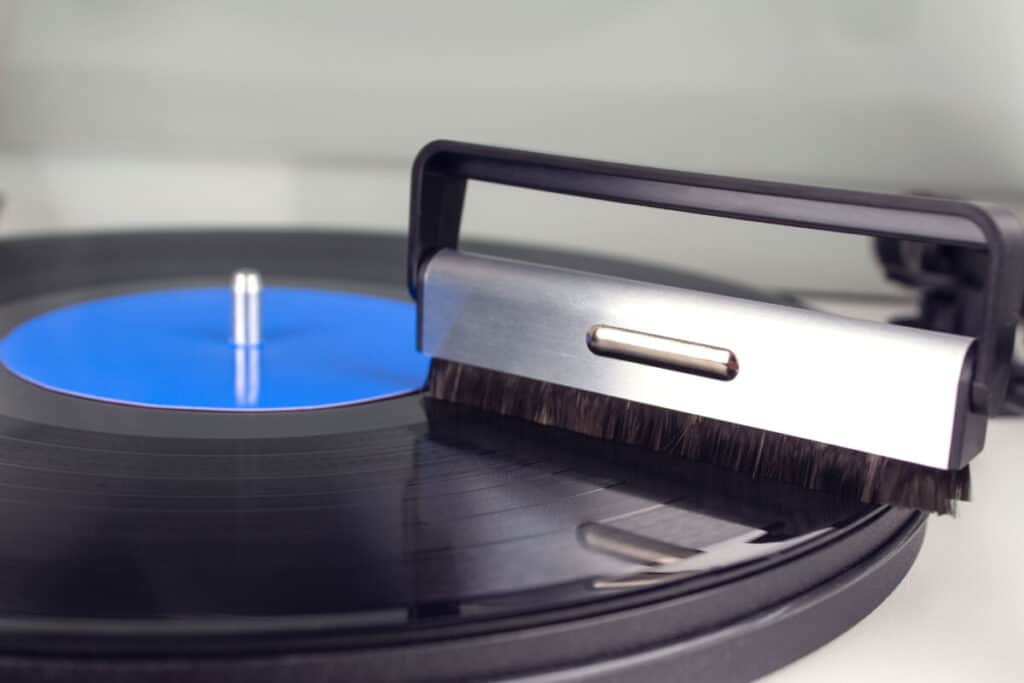
    The way you clean and care for your vinyl collection also has a big effect on the records. A record cleaning brush is a great way to keep your records clean. True to the name, these brushes are specific to cleaning records, so they have no problem getting into those grooves and cleaning out any dust or dirt that has gathered while it was out of its jacket and sleeves.

    You may be the type of person that cleans their records on their t-shirt and calls it good, and if so, this next part is for you. Cleaning the record with your t-shirt is not good for the record. Even if the shirt is super comfy and soft, fibers in the shirt can still scratch the vinyl.

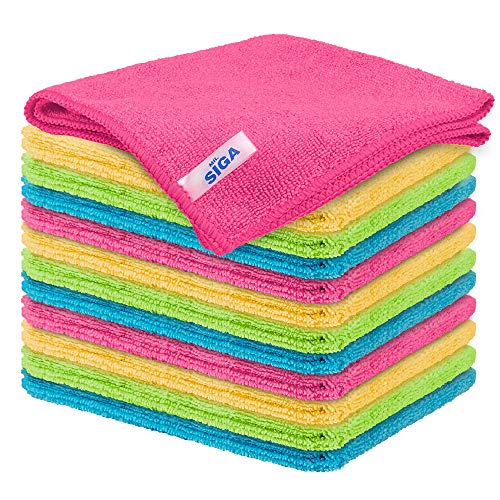
    Another great cleaning option for your vinyl is a vinyl cleaning solution that comes as a simple spray. For use, you can just spray the solution onto the record. Make sure to stay clear of the record label! Then, gently wipe down with a microfiber cloth. Using this cleaning process every 6 months will keep your records looking nice, shiny, and most importantly, clean!

    As a general rule, don’t touch your records with your hands (unless you’ve carefully washed and dried them first). Even after being washed, and especially before, hands have so many oils in and on them, and these act as a trap to catch all the dirt, dust, and debris. Think of handling your vinyl collection as you would handle a hard copy of a photograph. Touching the photograph damages it, right? It’s the same case with vinyl: the oils in our hands are harmful to the material.

    Using finger cots or clean nitrile gloves while cleaning will help to keep fingerprints and oils off of the vinyl, give you a better grip, and assist in keeping the vinyl records clean. If you’re just playing your records, make sure to wash your hands first, and try to only touch the edges of the record.

    Boxes

    Boxes and bins are great storage options, especially if you don’t play your records super often. If you’re storing your records in a box, make sure it’s not in a cardboard box. Cardboard boxes aren’t as strong as other materials and they can break easily. A better option would be a heavy-duty plastic box. Crates and baskets are also some great, more stylish, options.

    There are also several airtight options, some that are specifically designated for record storage. These are great for transporting your collection during a big move, but for permanent storage, these are also not the greatest option. Though they’ll keep the records safe, airtight boxes have no airflow, which can contribute to higher or lower temperatures and other components that can compromise your records.

    Shelving

    Because there are so many types of shelves, they have a lot to offer. Shelves can be fun accents, function as beautiful accent furniture, provide useful storage, and so much more. These uses make shelves the perfect candidate for vinyl storage. We’ll further discuss how to style different types of shelves later, but here’s a list of shelving do’s and don’ts for your vinyl collection.

    • DO install metal brackets under the corners of shelves. Shelves aren’t mean to hold too much weight, especially floating ones. Give your shelves a little extra power by adding brackets underneath them.
    • DO group your vinyls together by size. You may already have a great organization system, whether it’s by color, genre, or artist, but trust me on this. Grouping records together by size will not only make the shelves aesthetically pleasing to look at, but it will also assist in evenly distributing weight among shelves.
    • DO use labeled dividers in between groups. This one isn’t necessary, but for the inner perfectionist and organization master in all of us, it makes tracking down the record we’re wanting so much easier.
    • DO store your vinyl records in an upright position. This will eliminate pressure on the vinyls and keep them happy.
    • DON’T touch your vinyls! If you must touch them, wash and dry your hands first. And please, just touch the edges. The oils in your hands can cause damage to your records.
    • DON’T stack your records on top of each other. Pressure isn’t good for records. This is another factor that can cause warping and other complications in the records.
    • DON’T store in direct sunlight. You may have an empty shelf on the wall, but if that wall gets tons of sun, that is not the place for your vinyl collection. Direct and intense light can cause major warping problems in vinyls.
    • DON’T put away vinyl records before cleaning them. Nobody wants to see a buildup of dirt and dust, and it’ll start to affect how they play after going too long without cleaning.

    Some Display Tips

    Vinyl records are becoming a very popular way to decorate, whether you’re into collecting them or not. We’re seeing them pop up in college dorms and on prominent display in homes, bringing some nice vintage, retro, or sometimes even boho vibes to the room. It all depends on what they are styled with.

    Crates have always been an interior design staple. You may be surprised to hear that they have a history with storing records- people used to use milk crates as record storage because they fit the records perfectly. Now, though real milk crates are incredibly hard to come by, putting your records in a cute crate would add a touch of history to the space.

    Open shelving units are another great way to store records. A great example of these is the KALLAX shelves from IKEA. These have so many functions, and you’re able to either put the records straight into some shelves and put baskets in the other shelves to add a bit of balance and keep some things out of sight and out of mind.

    Related Article:

    Great IKEA Hacks for Storing Vinyl Records

    Floating shelves are another fun way to store your vinyl records. There are so many types, ranging from wire racks bent into fun shapes to the basic, clean-cut wooden shelves we all love. You can either prop up a few records on the shelves, slide them into the racks, or you can combine them with other design elements like cute plants, stacked books, and figurines. Floating shelves are easy to overload, so be careful to not put too much weight on shelves that are holding your collection (or any other valuables).

    Wire magazine racks (and designated record racks) that can stand in a corner are another great way to store records. Be careful of storing yours in one of these, though, because overloading the angled shelves could cause pressure on the records that are on the bottom.

    There are also so many great end tables that can be used to store records. With the rise in people looking for beautiful and functional furniture, stylistic and functional shelves seem to be incorporated into everything, including those tiny tables on the sides of your sofas.

    If you want to display your records on the wall, you could purchase a pretty picture frame and display the record on a wall without lots of sunlight. This will give a little bit more of a sophisticated, art-gallery vibe to your decorating.

    Another super fun option is to mount your records on the wall without a frame. Twelve Inch sells an amazing wall-mount made for vinyl records specifically. It comes with two magnetic pieces, one on the wall and one on the jacket of the record, that allows for easy attachment and removal. This is perfect for those that want their favorite vinyls displayed prominently, but want to be able to listen to those favorites with ease.

  • Best Way to Remove Static from Vinyl Records: 7 Easy Tips

    Best Way to Remove Static from Vinyl Records: 7 Easy Tips

    Listening to music on vinyl records is amazing, with a nostalgic sound quality that some prefer to digital recordings. However, when records develop static it interrupts the experience you get and makes it sound like your TV is on the wrong channel.

    The best way to remove static on records is by carefully cleaning the record. Storing records in sleeves helps prevent static noise, while spraying antistatic on a cloth and gently wiping down the record can help to get rid of any static remnants. There are also vinyl record safe brushes that combat static.

    These are great ways to get rid of static on records, but how should you best store your vinyl records to combat static? How should you clean them? How should you get rid of static noise in detail? What products can you use?

    Tips for Removing Static

    Removing static off of records is an easy task to do, you simply need a couple of supplies and time in order to do it. If you have a little bit of cleaning time in your day, consider using that time to go deep clean your record player and your vinyl records.

    If you keep up on cleaning your record player and records once a month, or anytime you hear static noise, then your records will be in great shape for a long time. But, cleaning your record player is tricky because you do not want to harm the needle. So, how do you clean your record player and vinyl records?

    Brush Your Record

    There are antistatic brushes that are made out of carbon fiber bristles. This helps remove static noise from your record by physically removing static off of your record. The bristles also help get into the grooves in the record and lose them up and brush them out.

    Dust and dirt get into the record from static electricity drawing them in and keeping them there, then over time, it builds. The brush neutralizes the charge of the static electricity and gets rid of some built-up dirt and dust. These brushes can be as low as $10 and they are great additions to your record player collection. But, they do not deep clean as other products do.

    Clean Your Record

    Clean your vinyl record products. The needle, the player mat, and the record should all be cleaned regularly. Look at your instructions that come with your record player and use their recommendations for cleaning.

    Before washing your record, brush it and get rid of the loose dirt and dust that have built up on it. This will prep your record and get it ready for cleaning. After you’ve done that, get yourself a record solution for cleaning records. These come as sprays for easy cleaning, so simply spray your record down and gently wipe it with a microfiber towel. This towel is very soft and gentle which will work perfectly for your record.

    You’ll also want to clean your player mat and needle. The needle is difficult to clean because you want to be very careful as to not harm or move the needle out of place. For cleaning your needle you can either use a needle cleaning brush that comes with your record, a clean paintbrush, or a Mr. Clean Magic Eraser.

    Record players can come with a little brush that you can use on the needle to clean it. Simply brush the needle in the same direction that the record goes when it is playing. Do not go side to side or backward. You do not want to damage your needle with scratches going in the wrong direction because it can ruin the sound quality. If you have a clean paintbrush that is small, you can use it the same way you use the record needle brush.

    The other option is using the Mr. Clean Magic Eraser. This is very easy for people because chances are you have one of these in your home already. All you need to do is cut off a little piece and place it under your needle. Then, let your needle slowly lower itself down onto the eraser. The needle will push on it a little, then lift up. Do this a couple of times and your needle will be clean. The eraser is good at picking up small pieces of dirt and dust and traping them. Using this method can be fast, and convenient for you!

    You can gently wipe down the platter mat, but a great way to clean it is to sweep it with the antistatic brush that you use (gently) on your record. This product or a clean paintbrush will wipe away any dust and leave your mat clean for your records to be played on.

    Anti-Static Spray

    This spray is great for removing static off of your records and for cleaning. After brushing your vinyl records, spray them with an antistatic spray and wipe them down with a microfiber towel. This spray will help remove static and help prevent static from building on your records. Using this once a month will keep your records in great shape.

    Use an Anti-Static Gun

    This gun is very simple to use. Simply point it at the record and press on the trigger. It removes static electricity very efficiently. It cannot clean your record and remove dirt and dust, but it takes away static better than other products do. This is a simple and fast solution to getting rid of static on your vinyl records.

    Antistatic Tonearm

    This product was made after the record brush’s success. It is basically a thin little antistatic brush that hangs over your record as it plays. This product gets rid of static as soon as it arrives, and it keeps your sound crisp because there is no build-up from static.

    Store Your Record Correctly

    To prevent static from building up on your vinyl record, store your records well. Investing in protective sleeve covers for your records will be a great help in the long run. You can prevent scratches as well as dust build-up. It is great for easy storage too. By keeping your records in protective sleeves you can store them next to one another without them scratching each other.

    Use a Good Platter Mat

    If your record is not set on a good platter mat then it can be a cause for static on your records. Getting a good quality platter mat for your records is a great way to help minimize the amount of static on your records. Ones of good quality help to generate less static charge so that you do not need to deal with static noise.

    Products to Remove Static on Vinyl Records?

    There are many great products for removing static off of records. Getting an antistatic spray, antistatic brush, microfiber towel, antistatic tonearm, vinyl record sleeves, and antistatic gun. These will get rid of static and help preserve your vinyl records to last a long time.

    Antistatic Spray: Antistatic spray is great for cleaning your vinyl record and for getting rid of static. On Amazon, this product sells for $10.95 and it has great reviews.

    Antistatic Brush: An antistatic brush is great for keeping your records clean for removing static. It is not a deep cleaning product, but it is great for keeping up on your records and making sure they are in good condition.

    Facmogu LP Cleaning Brush Vinyl Record Cleaner Anti-Static Soft Turntable CD Album Cartridge Clean

    Microfiber Towel: These cloths are great for all cleaning needs. They do not have lint build-up on them so keeping them clean and without fuzzies on them is easy. They trap in dirt and dust and they are great for dusting, cleaning, and polishing. When you spray your vinyl record with antistatic spray, use this cloth to gently wipe down and remove any build-up on the surface of the record.

    MR.SIGA Microfiber Cleaning Cloth,Pack of 12,Size:12.6" x 12.6"

    Antistatic Record Cleaning Arm: This device is great for constantly keeping your records clean while using them. The arm hangs over the record and the brush gently touches the record to remove static electricity. By removing the static you get better sound and you get cleaner records. The static on vinyl records attracts the dust and dirt in the air so by removing the static you remove a lot of dirt and dust as well.

    Vinyl Record Sleeves: Getting protective sleeves for your records is important in keeping them in prime condition and for keeping out dust and dirt. You can get a 100 pack of vinyl sleeves for $16.13 on Amazon. This is a low cost for keeping all of your precious, expensive, valuable, and collectors’ records safe and protected.
    Antistatic Gun: Antistatic guns are great for getting rid of static on vinyl records. It does not clean them, but it does get rid of static very fast. The static stays off better when using anti-static guns rather than other methods. If you want it, it is a great tool for efficiency in removing the static off of vinyl records.

    Milty 5036694022153 Zerostat 3 Anti-Static Gun, Blue

    Record Cleaning Kit: Getting an all-included cleaning kit is great if you have a record player and vinyl records. That way, you can buy a kit that has all you need instead of buying each item individually that you want and having the cost go up. This kit that is linked from Amazon has 5 pieces included. It includes the cleaning solution, a stylist brush, a velvet brush, a nylon microfiber brush, and a storage pouch for it all. Out of over 3,000 ratings, it has 5 stars, so customers who have bought this product love it. If you want a cheap kit, this one costs $21.99, but normally it is $29.99.

    Vinyl Buddy Record Cleaner Kit 5 Piece Ultimate Cleaning System - Velvet Brush - Nylon Microfiber Brush - Stylus Brush - LP Cleaning Solution - Storage Pouch

    How to Take Care of Your Records?

    To take care of your records you need to use the products listed above and treat your vinyl records and your record player with care. Clean it monthly and make sure you are protecting your vinyl records in protective sleeves. Getting a scratch on your record is horrible and it can ruin the record. By treating your records and equipment with care you will avoid this issue and make your vinyl records last a long time.

    The best way to take care of vinyl records is to keep up on cleaning them. Clean your records after they have been put on your record player and place them in the protective sleeve. Be gentle when you wipe down your records and store them in safe places where they will not get damaged.

    If you like to hang them up on your wall for display or if you like to show them on bookcases or shelves, then clean them before use. By being out in the open they can easily collect a lot more dust and dirt than your records that are stored away in sleeves, so by cleaning it before playing you can get rid of the dust and static. This will help the record to sound clearer and not static. You can get any of the supplies listed and linked above for your records and use them when you pull your records off the wall for playing.

    How to Remove Static Noise Out of Your Speakers

    If your speakers have static noise, then check out any wires that could be connecting to them. When a wire is broken it can make the quality of the speaker sounds bad and can cause static noise. If you do not notice a problem with them, then look at your location and move the speakers from any other cords. If you have your phone connected to your speaker, disconnect your device and see if your phone is the issue.

    If your speaker has coverings that are dirty, then clean those out to improve the sound quality. If you have tried these tips and possibly others, then chances are your speaker is broken, possibly a broken wire or loose connection. You can take your speaker to an electronic store to see if they can diagnose the speaker with a problem, and offer a solution.
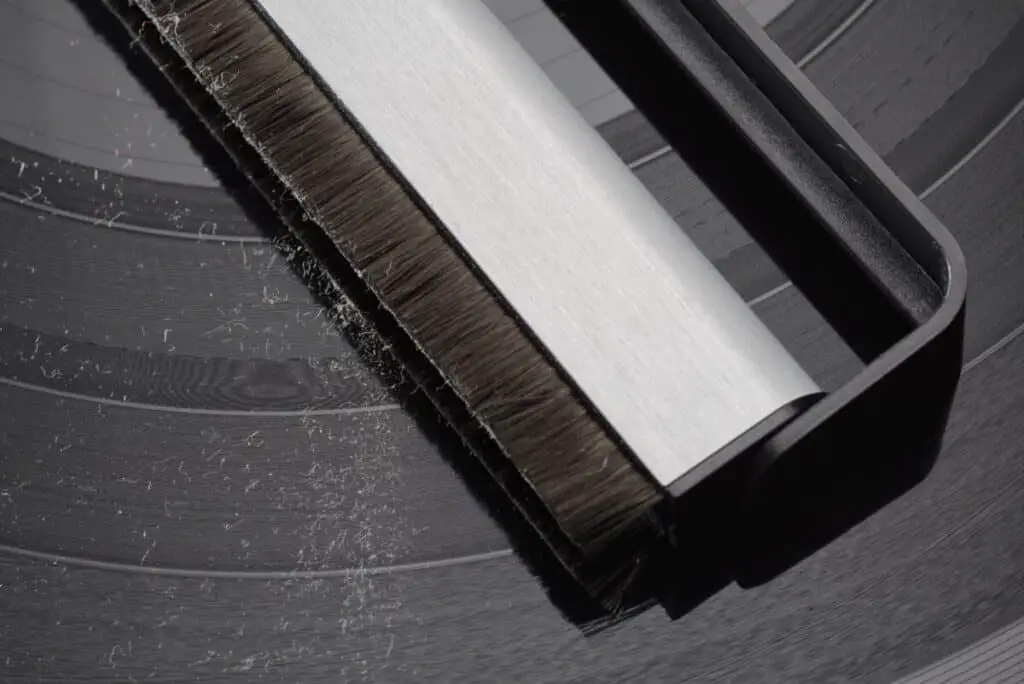
  • The History of Record Players, Turntables, and Vinyl Records

    The History of Record Players, Turntables, and Vinyl Records

    Music is a staple for all of human civilization, and it plays a large role in culture and history. In the scope of all of human history, it is astounding that we have only been able to record sound for the last century. It is nearly impossible to imagine a time of not being able to listen to your favorite song at will, and it is obvious we have come a long way from live music being the only way to enjoy it.
    Record players were invented in 1877 by Thomas Edison. After Edison’s invention of the phonograph, other inventors improved his design to make the machine more effective. In the 1950s when vinyl records were mass-produced, record players became the main method of listening to music.

    The history of record players is fascinating, and there is much to be known about it. Although every individual has experience with the record player, there are few that know about its rich history. If you want to learn more about the history of record players, turntables, and vinyls, then you will want to continue reading below.

    The Phonautograph

    Although Thomas Edison is credited with the invention of the record player, it is important to note that he was inspired by other inventions.

    One of these includes the phonautograph, which was invented by Edouard-Léon Scott de Martinville, twenty years prior to the phonograph. Without the phonautograph and knowing that recording sounds were possible, Edison would have found it difficult to invent the phonograph.

    Edouard-Léon Scott de Martinville had the idea of recording sound. In layman’s terms, he viewed recording sound the same as photographing a word. Although no one had done it yet, he knew it was possible.

    Scott began to work on his creation, and by 1857, an association for new technologies, SEIN, became interested in his concept. Scott began working with them and eventually others to make the phonautograph. By 1860, Scott had successfully made a machine where self-recording was possible.

    The Phonograph

    Due to the phonautograph that was invented by Edouard-Léon Scott de Martinville, it was known that recording sounds was possible. However, playing back these sounds had not yet been done. Sounds were visualized and produced on paper, however, they could not yet be heard. It was not until twenty years after the invention of the phonautograph that sounds could be played back.

    In 1877, the phonograph was invented by Thomas Edison. The invention was a cylinder that was wrapped in tin foil and that was turned by hand with a crank. The machine consisted of two different needles, one that was for recording sounds to the tin foil, and the other that was used for replaying the sounds originally recorded. Although the tin foil was far from ideal, it was the best option currently known. Indentations were made into the foil, and it was effective at its purpose. Over time it underwent revisions that made it even more worthwhile.

    It was not until Edison reversed his original process that he was able to hear the words he recorded play out loud. Edison first recorded the nursery rhyme “Mary Had a Little Lamb”, which was an impressive feat for its time. In 1878, he became officially patented with the invention. The patent was well deserved, as Edison carved the way for future record players.

    Despite how important this invention was, it was not Edison’s most profitable discovery. The phonograph was not nearly as popular as Edison expected. Edison suspected that the phonograph would do well and was surprised when it did not. He was proud of his invention, however, he moved on to other projects in hopes that one of them would succeed.

    Although the phonograph was not especially popular, it laid the foundation for record players. Other inventors took what Edison did with the phonograph, and perfected it in a way that made it desirable to the public.

    Thomas Edison’s invention was undoubtedly a monumental discovery. Because of him, other inventors now knew that the playback of sound was possible. After Edison’s invention did not prove to be as popular with the public as expected, others took it upon themselves to improve the machine so more people would be interested in it.

    One of these inventors was Alexander Graham Bell. Bell’s intentions were to improve the design of the phonograph and make it more effective for users. Edison and Bell had always been competitors. They oftentimes played off of each other’s inventions, and it was no different with the phonograph. Bell once wished to work with Edison on the improvement of the phonograph, but Edison stubbornly refused.

    Because of Edison’s refusal to collaborate, Bell was forced to work on the improvements himself. Bell sought a more durable machine, which is exactly what he got. The current design was using tin foil, and this was less than desirable. The tinfoil was fragile, and so Bell immediately wanted a better medium. Rather than using foil, Bell used wax, which proved to be successful in terms of durability.

    There was fierce competition when it came to the phonograph. Everyone was surprised by how Edison made it possible to playback sounds, and so they were all trying to perfect the machine. This made is as to where multiple credible inventors were competing against each other at the same time. Because of the phonograph, Edison had created a culture of competition amongst fellow inventors. It was only a matter of time before one of them hit the mark and would further escalate the capabilities of the record player.

    The Gramophone

    According to the Library of Congress, Emile Berliner is credited with the invention of the gramophone. Berliner was fascinated by Edison’s invention of the phonograph, and also by the graphophone. He used a combination of the techniques that were used for these machines and also used his own unique methods to create what is now known as the gramophone.

    By 1896, the gramophone was available for purchase. The Berliner Gramophone Company of Philadelphia was created, and its goal was to sell and distribute the product.

    However, on September 29, 1897, a tragic fire occurred at the laboratory of the gramophone company. All the gramophones were burned, and all the equipment had to be replaced. This was an unexpected setback for the gramophone, and it was difficult for the company to recover.

    Although the fire was a setback for the gramophone, the company eventually recovered. The gramophone become a success and was eventually sold throughout the world. The gramophone caught the attention of many, and Berliner began to face many competitors. Despite multiple lawsuits revolving around the gramophone, its invention remained influential. Due to Berliner’s gramophone, the record industry was transformed.

    When Were Vinyl Records Popular?

    Records existed long before the classic vinyl. What we know today as a vital part of the record player did not always exist. Instead, other types of records were used until the vinyl was discovered.

    Before vinyl records, shellac records were used. However, shellac records were only able to hold two songs. One song could be recorded on each side, which made records in general very ineffective. Those who were passionate about music made it work, but they longed for a more practical way of listening to music.

    Thankfully, Peter Carl Goldmark came to the rescue in 1948. Goldmark invented the Long Play records, which allowed more music to be held on records than ever before. Not only did he allow for more music to be held on a single record, but he also increased the overall sound quality. Vinyl records quickly replaced the original shellac records, and thus began the popularity of records.

    The Downfall of the Record Player

    Record players transformed how music lovers could listen to music. They were now able to listen to music whenever they wanted with ease, as long as they were in their home. However, individuals could not yet listen to music when they are on the go. Although they could listen to music in the comfort of their homes, there still was room for improvement when it came to listening to music in various locations.

    The downfall of the record player came when the Sony Walkman was invented. On July 1, 1979, the Walkman demonstrated how it was a breakthrough technology.

    The compact size of the Walkman made it possible for individuals to listen to music wherever they were at. They quickly replaced the need for record players as cassette players could be used anywhere. Record players were more inconvenient as they were so large and could only be used in homes.

    The Sony Walkman dominated the 1980s and 1990s. Everyone had one, and those of all ages could use them. Not only the younger generation used them, but individuals of every generation could. The cassette player became a way for all lovers of music to bond, as they could be used anywhere and everywhere.

    After the Walkman, the CD started to gain popularity. CDs were invented in 1979 just like the Walkman, but they did not become available to the public until 1982. The CD was extremely effective, even more so than the Walkman. During the 1990s, CDs began to climb in popularity. Once more people learned about them and realized how much music they could hold, they stopped using cassette players. By the 2000s, CD players replaced cassette players. This was of no surprise, due to how much storage is available on CDs.

    The CD player overtook both record players and cassettes. Rather than having cassette players, cars became furnished with CD players. No matter where you were, you could find a place to play your CD, and that continued to be the main form of listening to music until online music was invented.

    Record Players Today

    In most cases, once newer technology is invented, the old one never comes back. It goes extinct, because the more advanced machines overpower the old ones, and there is no reason to downgrade. New technology is always up and coming, and individuals try to not live in the past. They want to continue moving forward and it is not common to go back and use old technologies.

    This is true for nearly every source of technology except for the record player/turntable. After nearly everyone had gotten rid of their original record player, individuals started to miss it. After thirty years of using more advanced technologies to listen to music, individuals started to long to listen to their classic vinyl records. They wanted to once again hear its classic sound, and it became a source of nostalgia for the older generation.

    Although the older generation wanted to use record players/turntables because it was what they grew up with, the rising generation had an alternative motive. For them, vinyl records were new and had the classic vintage aesthetic that is becoming increasingly popular. The younger generations did not live in an era where record players were popular, but thanks to its now high marketability, they can feel as though they did.

    Nearly every artist today releases a vinyl version of their album. Artists know their vinyls are in high demand with younger generations, so they use this to their advantage. Now they can sell their albums digitally, on CDs, and on vinyl records. This allows them to get three times the amount of sales that artists used to. According to The Manual, 2020 was the first time in years that vinyl records outsold CDs. This is a surprising time in history, as no one would have ever expected that vinyl records would be able to maintain being such an influential part of history.

    While younger generations still use more updated forms of technology, it is no question that they enjoy record players. They listen to them almost as often as individuals did in the ’50s. Record players and vinyl records making a comeback prove how influential their creations were, and makes it difficult to doubt that they will never go out of style.

    Related Articles

  • How to Convert Vinyl Records to Digital: 9 Easy Steps

    How to Convert Vinyl Records to Digital: 9 Easy Steps

    Whether you are new to vinyl or you have been spinning the old turntable for years, you’ve probably grown to love the vintage sound that comes with a good record player. However, there are many reasons why it might be more convenient to convert your vinyl to digital.


    To convert a vinyl record to a digital audio file, you’ll need a turntable, a phono preamp (if not built into your turntable), and an audio recording program. Once you have the required hardware and software, you’ll need to hook up to your computer and play through your records or singles. After recording, you can go through and break up your audio into tracks.

    Below, we’ll go into detail about each step to converting your vinyl records to digital. We’ll also talk about various products you may need to go through this process.

    1. Purchase the Right Hardware

    If you’re into vinyl, you probably already own a turntable. That’s the first step in digitizing your vinyl. But not all turntables were created equal; some are built better for needle dropping. There are three components you will need to start with your recording process. 

    1. A turntable
    2. A phono preamp
    3. Connection to your computer. 

    Many modern turntables come with a built in preamp and USB output. These are ideal for converting vinyl and make the process much easier. A widely recommended turntable for this is the AT-LP60XUSB. The price sits at around $250. It makes the digitizing process easier because everything you need is built in already. 

    Another option that is recommended is the Sony PSH500. The price point for this one sits closer to $400, but it produces a more professional quality digital copy of your records. With the higher quality though, it’s made for professionals, so it’s a bit less user friendly than its previously mentioned competitor.

    If you aren’t looking to spend on a new turntable and you already have a functional one, you can make nearly any turntable work. 

    First, you’ll have to check your turntable for a built-in phono preamp. Check your output signals. You should have either LINE or PHONO. If you have the PHONO output, there is a built-in phono preamp. The preamp will convert your sound so it can be hooked up to a typical stereo system. You can then record your vinyl on the stereo system, which can later be converted to a digital file.

    If you don’t have a LINE output, you can buy a separate phono preamp to attach to your turntable. These can range from $15 to $150+ based on quality. LINE output is typically weaker than PHONO output, so it is best to get a phono preamp.

    Another route to get even better sound quality is to get an external ADC (Analog Digital Converter). These record a better sound than the USB turntables and they do a better job at capturing the classic sound than your computer recording software will do. 

    If you have a computer with a 3.5mm audio jack (AUX), you can also use a “Y” cable that has the AUX jack on one side and the two RCA on the other side and hook straight up to your computer. 

    2. Download Audio Recording Software

    When it comes to audio recording software, your dedication to the hobby determines what route you need to go here. There are more professional apps that are user friendly, but they can get pricey. Those who are quite serious about converting their records to digital might want to consider a program like Pure Vinyl or Vinyl Studio. They are designed for needle dropping and are user friendly. Pure Vinyl costs $129. Vinyl Studio offers a standard package for $29.99 and a pro version for $49.99.

    At $99.95, Studio One is another great option. If you are into music in general and you’re looking for a recording and mixing application, Studio One is a good option. It is a little more on the expensive side, but it’s a very high-quality recording software.

    If you just want to save a few of your vinyl on digital and you are looking to save, Audacity might be the way to go. While it isn’t optimized for converting records, it works well and doesn’t cost anything to try out.

    3. Clean Your Records

    A record player runs a needle across grooves in vinyl, so if your records have been sitting out in a dusty area, perhaps on display or if they’ve been handled a lot, you will want to clean them off really well before recording to be sure the sound is as clear and true to the original as it can be. Making sure your records are free from other debris and dust will prevent skipping as well and give you better audio. 

    Cleaning your records well will take time. There is a variety of supplies you can get to clean your records and we’ll go over them below:

    • Warm water and gentle Soap: This is best to just get general grime off. You don’t want to use a sponge or anything with a rougher side because that could damage or scratch the vinyl. Mircrofiber will work best.
    • Microfiber Cloth: If your vinyl has been collecting dust on the shelves, it is best to use a microfiber cloth to remove it.
    • Record Brush: A record brush is made to clean records without damaging them. This is best for dust, grime, or dirt to gentle brush off, no scrubbing. These brushes, are also great at eliminating static on your vinyl.
    • Cleaning Kits: On Amazon and various Vinyl websites, you can order vinyl cleaning kits that uusally have the brush, cloth, a cleaner, and a stylus brush.
    • Record Cleaning solution: You can make a good cleaning solution at home if you don’t want to buy one. You just need some rubbing alcohol, distilled water, and some soap. Mix 1/4 cup of rubbing alcohol with 3/4 cup of distilled water and two drops of soap.

    When it comes to cleaning your records, do it slowly and carefully, you don’t want to break or scratch the records. When using a cloth or brush, use gentle and slow strokes. It is also good to wipe in circular motions. After you are done cleaning it, let it dry completely before storing it. When storing your record, make sure it is put away correctly in its sleeve and safely on a shelf or in a storage bin.

    4. Connect the Devices

    Your connection may look quite simple or be more involved based on your equipment. As we talked about earlier, depending on what kind of turntable you have will determine what you need to link it up.

    If you have the preamp on your turntable, you can easily connect it to a stereo system and record the vinyl onto a CD. You’ll have to insert a blank CD and hook your turntable up to the stereo system with a phono cord. Then you are able to start recording. Once you have finished, you should be able to pop your CD into your computer and create a folder for all the music on your computer.

    Another way to connect is with a “Y” cable. On one end is an AUX cord that connects to your turntable and the other end has two RCA cables that connect to your computer. This will convert the files directly from the turntable to the computer. You can get these for about $8.

    If you want to connect with an ADC, you’ll need to connect your turntable to the ADC and then connect the ADC to your computer. The ADC will convert the sound your turntable is producing into files to put onto your computer.

    The easiest setup will be the USB turntables. This turntable you buy has a USB port on the side. So that while your record your vinyl, they will immediately be converted into files on the USB drive plugged into your turntable. Once you have finished recording, you can easily plug in your USB drive into your computer and upload the files.

    5. Prepare Your Software

    Once you have selected your software and downloaded it, it is a good idea to test out your program before you begin the lengthy recording process. Get familiar with its functions and learn its interface. 

    This will look differently on each program, but you’ll need to add metadata for each album. If your program is specifically designed for needle dropping, it will have inputs for the album title and other information about your music. If you are using a more generic recording program, you’ll still have places for names, but it won’t be as optimal for naming albums and tracks.

    Make sure everything is set up correctly by testing a few minutes of recording. You may have to choose inputs on your program for where the audio is coming from. If your program can’t find any sources, you may want to check that everything is plugged in correctly and switched on. 

    6. Record Your Albums

    Before you begin your recording session, do a little test run. Record one song or a little bit of a song on the software and then check how it sounds. If it doesn’t great, adjust some cords, clean the record, and make sure everything is plugged in correctly. Then try again. Once it sounds as good as it’s going to get, you are free to record the whole thing.

    Your conversion to digital will take time. If your album runs for 42 minutes, it will need to record for 42 minutes. The best thing to do is let your album run and check on it every once and a while to make sure it is still running. Don’t leave it alone for too long, otherwise, you might come back to find it stopped recording a long time ago.

    If it happens to stop recording or malfunctions while it is recording, make sure to stop the recording process completely. Delete the track that had been recording. Reset everything and double-check that everything is plugged in correctly. Then start the whole recording process over again. This will make sure you record everything with the best quality without having to figure out where it stopped and where to start again.

    7. Split the Tracks

    After you have finished recording an album, you’ll be able to see a visual waveform of the music on your recording software. You’ll want to look for moments the waves fall flat, that will be the moment in between songs. However, you should double-check where the song ends by listening to each of the tracks and then marking the point where one song ends and the other begins. Then you can split your songs there. This will make it easy to download each individual song, instead of having to listen to the whole album every time you want to listen to one song from it.

    8. Export Your Music

    After recording all the vinyl and splitting them into specific tracks, you can then export your music into a downloadable file format. To do this, you’ll have to download the file as an mp3, a .wav file, or others depending on the software you used to record your tracks. It is best to keep all the music in folders named after the albums. Make sure to save a copy of your tracks on your music software in case you lose them on your computer. Then you’ll always be able to download your vinyl music if you need to. You can also go above and beyond and save a copy of your music files on a USB so if your computer loses everything, you’ll still have a copy.

    9. Enjoy Your Digitized Vinyl

    Now for the best part! Download your files onto your device of choice and listen to your wonderful vinyl all the time wherever you go. There are many methods for digitizing vinyl and make sure to choose the one that works best for you and the sound you want.