Blog

  • A Guide To Storing Your Vinyl Records

    A Guide To Storing Your Vinyl Records

    When you’re an audiophile, or even just want to keep your music in great condition, understanding the requirements for storing your vinyl records is essential. After all, you’re collecting them for a reason, just as I do. After years of storing vinyl in various conditions (not all of which were my choice), I’ve found the best ways to store your vinyl records for the optimal condition of your records.

    Vinyl records, like other fabricated physical forms of music storage, have specific conditions which offer optimal results. Optimal conditions will benefit your collection by increasing the longevity of your vinyl records. Best conditions include low humidity, stable temperature, and vertical placement.

    Let’s dive into the different things that affect vinyl record storage to give you the best chance of maintaining your collection for the longest possible time, in the best possible condition.

    How Things Affect Vinyl Record Storage

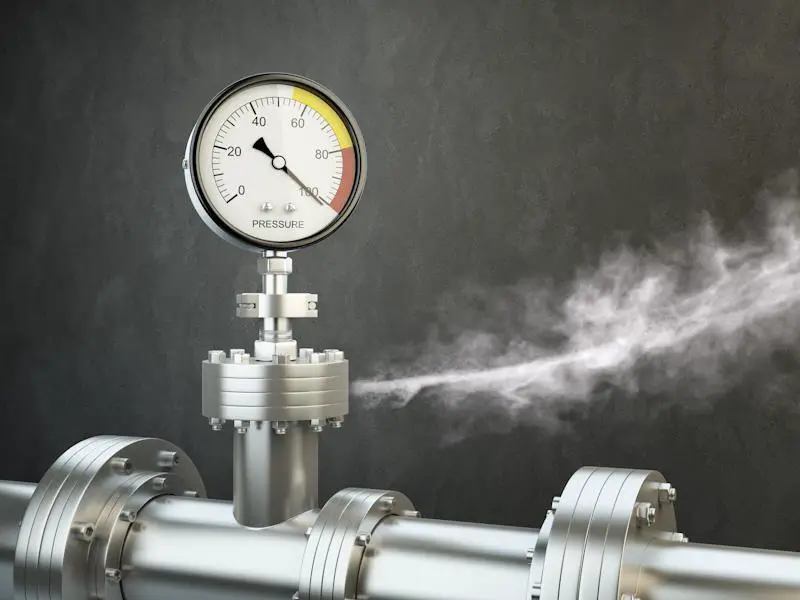
    We know that vinyl records construction is that of polyvinyl chloride. Commonly known as PVC, we use this same sort of plastic for all kinds of things, from water pipes to our audio record recordings. Given that PVC is a type of plastic, it can last a long time – but it is by no means invincible. (source)

    There are things that can negatively affect PVC. I mean, you can take a PVC pipe and shatter it if you drop the temperature enough. Similarly, PVC will also melt at higher temperatures. The melting point of PVC is between 212 and 500 degrees Fahrenheit. (source)

    What Determines A Record Is Well-Kept?

    A paper on changing perceptions to what good sounding (good quality) vinyl records are to collectors notes how our perceptions have changed. The paper points out how in 1979, a Rolling Stones reader complained about vinyl records ‘the snap, crackle and pop on undulating vinyl’ (Di Gianvittorio, 1979: 6). (source)

    Current culture (at the time of writing) is such that we yearn to hear those familiar sounds that define vinyl, albeit not during the actual music playback, but maybe in between tracks, right? It’s one of the things we all love about our vinyl.

    Although our perceptions of a good condition of vinyl record recording have changed over the years, collectors today still want our records to maintain their familiar-sounding personality and warmth only achievable with a good turntable and vinyl record.

    Let’s look now at what things affect vinyl so we know how to best store it for the best condition over time.

    Placement

    PVC plastic is a relatively malleable plastic, so it is so versatile and used for so many different purposes. As the plastic is somewhat pliable, vinyl records can bend and warp. Knowing this, we can define some rules for vinyl record placement for optimal storage results.

    Horizontal Placement

    Horizontally storing vinyl records is ideal. However, some stipulations make it likely less suitable for practicality. Let me explain.

    Vinyl records stored horizontally on a flat and level surface will be ideally protected in terms of a stable base to rest without fear of warping. However, they must not be stored horizontally with any weight on top. Given that most people who collect vinyl records have more than a few records in their collection. Well, imagine you had hundreds of vinyl records. If you were to store them horizontally and not pile them on top of each other, you would need an awful lot of floor space. Totally impractical in reality and therefore not recommended.

    Vertical Placement

    Vertical storage of vinyl records solves the issue of impractical floor space used for storage purposes. However, we now must introduce several other variables that can affect the record negatively when stored horizontally.

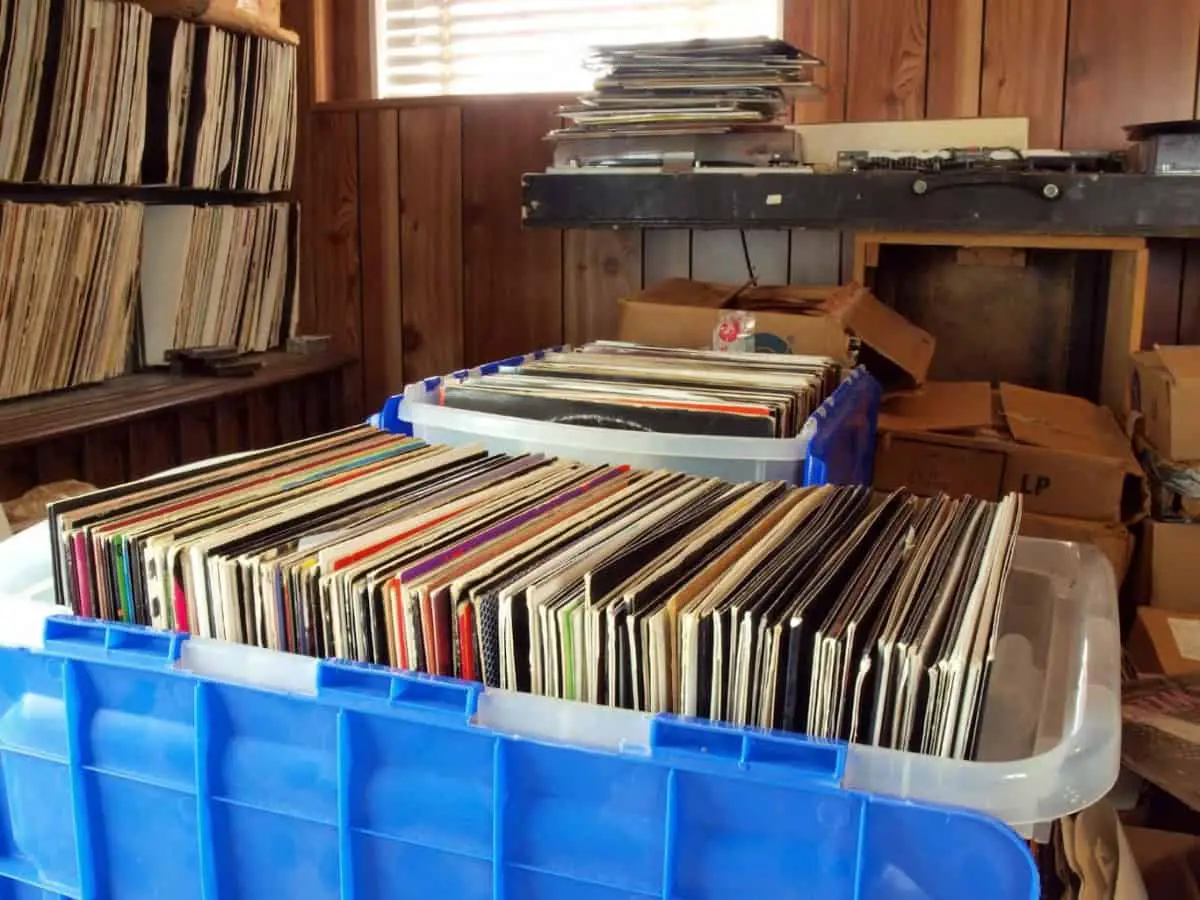
    First, if a record is stored vertically without proper support (like leaning against something on a slight angle), your record will warp over time. So, optimal storage of vinyl records requires stable support to maintain a true vertical storage position without leaning or horizontal pressures. An ideal piece of furniture for such a purpose is a record storage box utilizing rigid foam inserts to hold records upright; if the box isn’t full of records, that is.

    Light

    One of the most deadly adversaries of your record collection is sunlight. Have you ever felt something that is black and left in the sun? It gets pretty hot! With that said, your records will be destroyed by sunlight. Do not store your records anywhere that direct sunlight will find them.

    Sunlight is a significant contributor to vinyl decay. And vinyl decay is a primary source for audio degradation, so again, it’s best to avoid it if you like your records. (source)

    Temperature

    Temperature plays a significant role in degrading PVC. Keep in mind that the audio recorded into the record is done so within tiny microscopic grooves with even smaller cuts and notches. These tiny cuts into the record grooves are what give the record the ability to record audio. Can you imagine how easy it is to melt a tiny groove enough to affect the audio quality negatively? As the melting point of PVC can be as low as 212 Fahrenheit (boiling water temperature), depending on additives to the plastic, you can understand that leaving a record on a radiator could leave you with a very soft and useless clump of vinyl.

    Cold temperatures at extremes will also damage or increase the risk of damage to your records. For example, say you were living in Michigan and get some pretty nasty winter weather. You wouldn’t want any of your vinyl stored in an unheated garage. Extreme cold makes PVC extremely brittle.

    If you’ve ever seen a video of something dipped in freezing nitrogen and then shattered, that’s the same as what happens to records when cold and dropped. And you don’t need liquid nitrogen to do that to a record, just some nasty winter weather below zero. So, it isn’t just heat that can hurt your records.

    Similarly, as mentioned with sunlight, just leaving a record out in the sun for a short time can heat the plastic enough to cause audio degradation in mere minutes of exposure. And if you leave a record in a hot area or in the sun and it isn’t on a level surface, you can expect a lovely warp in your vinyl record.

    Humidity
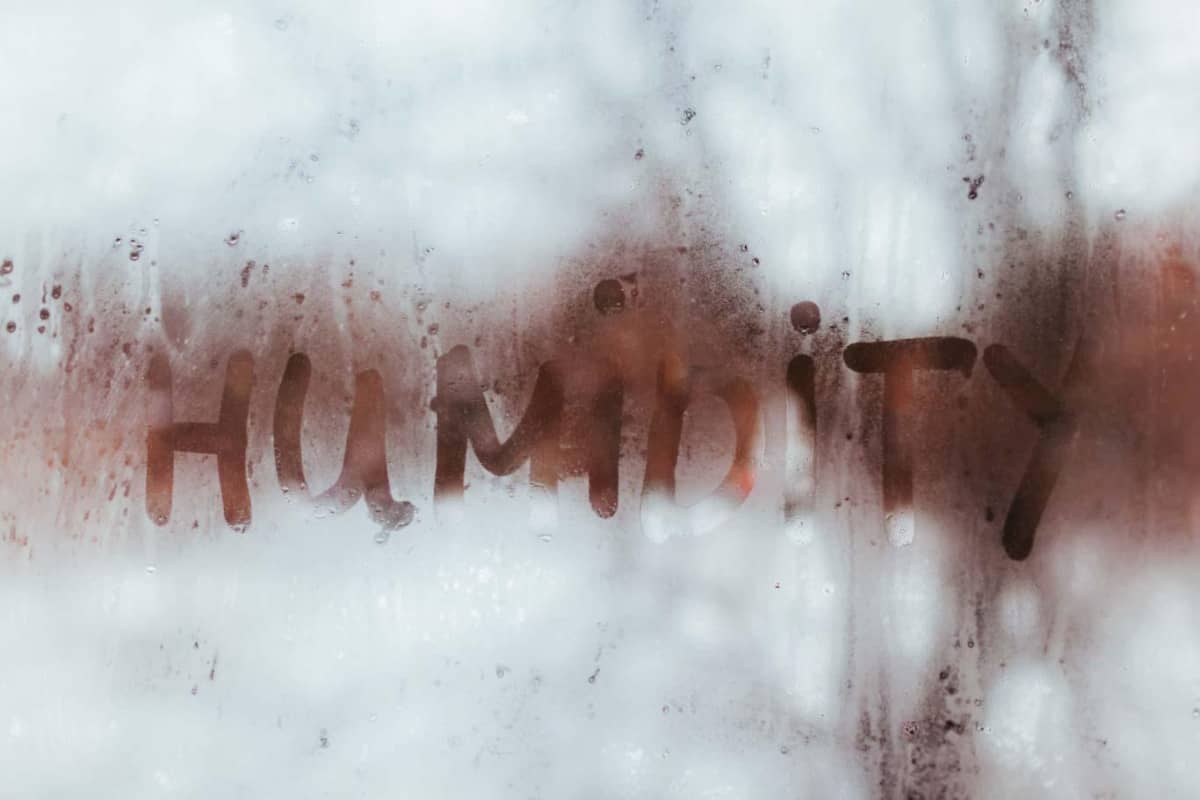
    Humidity does not generally affect PVC on its own. However, if we add a few things to moisture, then it can be very detrimental.

    First, we have to consider that most record sleeves are made of cardboard. Well, cardboard in a moist environment makes mushy paper mache-like stuff, doesn’t it? You can imagine what high humidity will do to your collector record sleeves holding your precious musical recordings. For this fact alone, it is best to store vinyl in a low humidity environment.

    Second, if we add temperature change to high humidity, we get another set of issues. Fast temperature changes with high humidity levels induce condensation. Think of a cold drink in a glass on a hot day. The cold glass will ‘sweat’ as the humidity in the air condenses on the cold surface. Similarly, if your records are cooler than the atmosphere around them, condensation will occur that could damage your cardboard vinyl record sleeves.

    Long-term storage of vinyl records in a moist environment may also encourage mold or bacterial growth, so again, high humidity should be avoided for best results storing your records.

    Atmosphere

    As we were just discussing the nature of high humidity, let’s take a moment to consider the atmosphere itself and neglect the moisture content for a moment.

    Have you heard of rust? Of course, you have (not like you’ve been living under a rock, right?). Rust is basically the oxidation of iron. However, it brings about a good point – oxygen likes to oxidize stuff. Fire is another form of oxidation, which can be a handful to stop once it gets started.

    Oxygen reacts with many things. You could say it is reactive. PVC also degrades from oxygen overtime via oxidation. However, it’s not like the rusting of iron; it’s much more subtle.

    The air we breathe is about 21 percent oxygen. So this is the sort of benchmark we want to use when thinking of the best atmosphere to store records. (source)

    Indeed storing them near any type of possible harmful vapor is a bad idea. For example, I wouldn’t keep my records anywhere near where I might get acidic vapor trapped in their storage box. In other words, I don’t use bleach spray cleaner or similar things near my records that could affect them via vapor exposure. Not something I typically worry about nearly as much as potential chemical exposure.

    Chemicals

    One of the last serious considerations for storing vinyl records is ensuring that they are not exposed to chemicals. Now, I don’t generally concern myself with spraying cleaners and whatnot in the room where my vinyl is in storage. Due to keeping my vinyl in a storage box, there is little chance I will expose them to chemicals.

    The main problem that some face with chemical exposure and storage damage is cleaning vinyl records with inappropriate chemicals and leaving a residue that damages the records while in storage. Similarly, some substances can seep into the cardboard sleeves holding your records, causing long-term exposure to potentially various harmful substances.

    Similarly, chemicals might damage your record sleeves also. Therefore, knowing how to clean your records properly is vital to their long-term storage success. Take a look at an article I wrote on proper cleaning for the vinyl records here.

    Many manufacturers have perfected the chemical composition of vinyl to best suit the audio recording process. However, it does not necessarily mean they use the chemical additives the PVC needs to reduce oxidation or reactivity to radiation like ultra-violet.

    Studies have shown that using additive chemicals like dibutyltin maleate (DBTM) and dioctyltin bis(isooctyl thioglycollate) (DOTG) both help to stabilize the PVC further and reduce its reactivity to both oxygen and ultra-violet radiation. (source)

    Try to say those chemical names three times fast; I dare you! Seriously though, unless you are a genius chemical engineer, understanding how cleaners or other chemicals might react with these sorts of additives to PVC is a bit of a mystery. So, to err on the side of caution and attempt to prevent a reaction between chemicals, it’s best to steer clear of using any chemicals to clean your vinyl records.

    Summary Of Best Storage Practices For Storing Vinyl Records

    • Keep your vinyl stored vertically but well-supported to avoid warping over time.
    • Keep your records out of direct sunlight.
    • Try to maintain a consistent room temperature for storage without swings in temperature.
    • Keep records stored in a low humidity environment.
    • Maintain storage of records at a safe distance from hazardous chemical vapors
    • Keep records clean with a carbon fiber brush and avoid using harsh chemicals that could leave residues that cause damage over time.

    My Favorite Type Of Record Storage Box

    I’ll be honest – I love my records. I’ve also had my eye on the music business for years. I just find it so fascinating. Well, my taste in record storage boxes reflects not only my desire to have outstanding quality records kept in excellent condition, but it also reflects my love for concerts and the industry.

    My favorite record storage box is a sturdy aluminum (road case style) vinyl record box like this one I bought from Amazon.
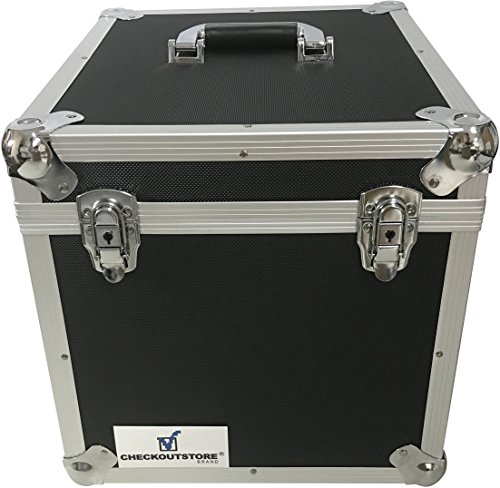
    CheckOutStore (1) Aluminum Heavy Duty 12" LP Vinyl Record Album Storage Box (Black/Holds 125 Records)

    This record storage case holds up to 125 records, although about 120 is best. It has soft padding on the inside and rigid heavy-duty protection on the outside. A sturdy handle and two latches keep your storage box closed, locked, and secure. The handle makes it easy to carry, but still, you need to consider that a full crate of vinyl is still going to be pretty hefty (don’t throw your back out!).

    As you can see from the style, it’s a very concert road case styled with a definite appeal to those like me who value function over appearance (but still want it to look cool).
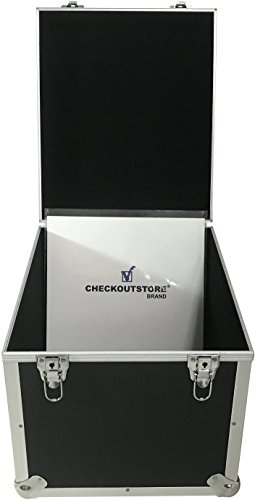
    CheckOutStore (1) Aluminum Heavy Duty 12" LP Vinyl Record Album Storage Box (Black/Holds 125 Records)

    I also like that the case has a locking lid. Not that I need to lock my records up at home, but it helps to keep them dust-free by having the lid shut. I’ve seen a lot of record storage shelves and similar, but all keep your records exposed to the elements, and many will warp your records unless they are completely full. This storage box is, in my experience, the best option for storing records at home. And you can travel with it, given its great road-case robust construction.

    Sources

  • How To Tell If A Record Is Warped

    How To Tell If A Record Is Warped

    How to tell if a record is warped — if you are new to collecting vinyl records, this is important for you to know. Vinyl records are delicate items, so proper care is essential. But before you can do that, you need to know how to check if there is warping on your record.

    The simplest way to know if warping on a record is to hold it flat at eye level. This way, you will see even the smallest warping on the vinyl. Sound distortion when you play the vinyl will also be present if there is enough warping on it. (source)

    Vinyl records are sensitive, so you need to know what factors can cause them to warp and get damaged. Apart from that, you also need to understand how to care for them to keep them in good condition.

    Vinyl 101: How To Tell If A Record Is Warped

    Regardless of the modern advancements that happened to the music industry, there is no denying that vinyl is here to stay. The reason is that there is no replacement for the warm, high-quality sound that a vinyl record can provide.

    Unfortunately, audiophiles who are new to vinyl may accidentally purchase a warped record, preventing them from enjoying the crispness of the vinyl experience. Some of the vinyl problems caused by warps are:

    • changes in tracking force
    • mistracking
    • harmonic and pitch fluctuation
    • vertical tracking angle

    That said, you need to learn how to tell if a record is warped.

    The easiest way to see warping on your record is by holding it flat at eye level. A perfect vinyl record will look utterly flat on your vision. But if it is not, you will see even the slightest apparent warping.

    Variations in the wow and flutter are also indicators of warping.

    On the other hand, you can also play the vinyl record to inspect if it is warped. A warped vinyl will have a distortion of the audio and a skipping sound.

    Fortunately, most vinyl record sellers will check their items for damage before selling them to the public. If you want to avoid buying a warped record, choose a shop that has a good reputation or reviews from other buyers. (source)

    The Causes of Vinyl Warping

    In most cases, the cause of warping on vinyl records is improper storage. Considering how sensitive vinyl records are, warping can be a cause of various factors.

    That said, it is not enough that you know how to tell if a record is warped. Instead, you also need to know the possible causes of warping so that you can avoid them.

    Improper storage

    Not knowing how to store vinyl records properly can cause warping. For instance, stacking your records on top of each other can cause pressure, negatively affecting their shape.

    You might think that horizontally laying your records will keep them flat. But in reality, this method of storing can lead to warping and damage.

    For this reason, it is essential to store your records vertically. You should also not cram too many vinyl records together in storage space as it will also expose them to pressure.

    If you are keeping your records in a box, do not pack them too tightly. The container needs to be a perfect fit for your records as too big boxes will cause the records to move too much.

    Exposure to extreme temperatures

    Vinyl records become soft when you expose them to high temperatures. Since they are already soft, any amount of pressure will cause them to warp.

    A vinyl record starts warping at approximately 140 degrees Fahrenheit. Then, it will begin to melt at 212 degrees Fahrenheit. For this reason, it is ideal to get a wooden shelf for your records.

    Wood does not heat up quickly, so it is the safest material for you to store your record. Plastic storage materials trap heat, so it is not ideal for vinyl records. On the other hand, metal storage moistens when the temperature changes, so it can also damage your records.

    Moreover, do not place your vinyl records near a place where it has direct contact with sunlight, such as windows.

    If you know how to tell if a record is warped and you know are aware of the causes of warping, you will be able to take better care of your vinyl record. (source)

    How To Fix A Warped Vinyl Record

    Record warping is one of the most dreaded problems of vinyl collectors. Unfortunately, there may come the point where you have to face this problem, so it is a good thing that you know how to fix a warped vinyl record.

    However, it is essential to note that the remedies to warping will not fix your record perfectly. TO simply put it, a vinyl record will rarely become perfect again after it is warped.

    Still, it is a good thing that you know how to fix them.

    Sandwich the vinyl record between two heavy objects

    Get two objects that are heavy enough to apply pressure to the record without causing it to break. The objects need to be wide enough to cover the entire record. If you have two large books, they will work perfectly for this process.

    Before starting with the process, make sure that everything you will use is clean.

    Place the first object on a flat surface where there will be no disturbance. Before placing the record, it is ideal to cover it with a soft cloth on both sides to prevent scratching.

    Next, place the vinyl record on top of the first object and cover it with the second heavy object. This method will not show immediate results. It may take up to work, so make sure that you place it somewhere undisturbed.

    While this method can be time-consuming, it is also the easiest and most effective one. Still, it is essential to note that it will not always work.

    Apply heat and pressure

    After knowing how to tell if a record is warped, the next thing you need to know is all the possible methods to fix it. On

    This process requires you to have:

    • two glass panes.
    • your warped vinyl record
    • an oven
    • hot pads or oven mitts

    Preheat your oven to approximately 175 degrees Fahrenheit. The preheating time can take about 5 to 10 minutes, depending on your oven.

    While the oven is preheating, place the record between the glass panels, ensuring it is in the center. Take note that those two panes need to cover the entire vinyl record. Once the oven reaches the right temperature, you can place the vinyl record and glass panes stack onto the oven rack.

    Make sure that you are not pushing the record and glass pane combination too far to be easy to remove later on. The record should sit in the oven for less than three minutes.

    You need to keep your eyes on the oven while doing this method. If you smell anything or hear noise from it, take the vinyl record out immediately.

    After less than three minutes, get a hot pad or oven mitts and remove the vinyl and glass panes from the oven. Put them on a table or any flat surface, and place a heavy object above it until the glass cools. After that, you can remove the vinyl record from the glass panes to see if the warping is gone.

    You already know how to tell if a record is warped. So, you can repeat this process if you cannot fix the warping on the first try. (source)

    Call for a professional’s help.

    If you are unsure if you can do the two methods mentioned above correctly, hiring a professional to help you can be your last resort. Calling a professional is always the most excellent option. Not only do they know how to tell if a record is warped, but they also know what they should do to fix your warped vinyl record.

    Many record shops have a heat and press machine that will bring your record back to its flat shape.

    How To Take Care Of A Vinyl Record To Avoid Warping

    A vinyl record requires more care than CDs and digital music files. And if you know how to tell if a vinyl record is warped, you should also know how to take care of it properly. This way, you will be able to avoid problems in the long run.

    In addition, taking care of your vinyl will help you make it last a lifetime.

    Dry clean your vinyl record

    When dry cleaning a vinyl record, a carbon fiber anti-static brush is the best tool, such a brush allows you to get into the grooves of your record and remove dust and dirt without scratching it. In addition, an anti-static brush will help you clean your record without ruining its audio quality.

    To clean the record correctly, spin it on a turntable and rest the brush lightly on top. After spinning the record for a few seconds, slowly and carefully drag the brush off of the record.

    Be careful with wet cleaning.

    You will need a mild cleaning agent when wet cleaning your vinyl record. Make sure that the cleaner you will use does not have any harsh chemicals that can damage the surface of your record. If you damage your record surface, it will not be enough that you know how to tell if a record is warped. Instead, you will also need to find out how to fix a scratched record.

    You will also need a microfiber cloth to help you remove any dirt, dust, and fingerprint from your vinyl record. The cloth will also give your record a more thorough cleaning.

    For this method, simply spray your cleaning solution directly on the record and let it sit for a few seconds so it can seep into the grooves. Next, wipe the record with a microfiber cloth, following the grooves around.

    Keep your vinyl record in a cool and dry place.

    Vinyl is a type of plastic. For this reason, heat can quickly soften it and cause it to be out of shape. Such is the reason why you need to know how to tell if a record is warped. But apart from that, you need to know the factors that can warp your record so that you can avoid them.

    In addition, keeping your record cool and dry will help you preserve it for a long time. The reason is that storing your record in an area that is too hot or humid will make it prone to bending, warping, and surface damage.

    Avoid touching the surface of your record.

    All the musical information in a vinyl record is stored in the grooves. So, anything that touches the surface of your record can ruin its audio quality. Meaning even your hands can affect the sound quality of a vinyl record.

    If you want your vinyl record to have the best possible audio quality, the right way of handling your record is by touching only the inner label and outside edges.

    Place the vinyl record inside the record jacket right after using it

    Every vinyl record has a jacket where you need to place it after using it. Leaving your record out of its cover for a long time will allow dust, dirt, and other particles to stick into its surface. These buildups can damage the surface of your vinyl record as well as its grooves in the long run.

    If that happens, the audio quality of your record will decrease significantly. (source)

    Avoid Warping: The Do’s And Don’ts Of Vinyl Records

    New vinyl record collectors might not know what they should and should not do with their vinyl records. They may think that learning how to tell if a record is warped is enough to keep vinyl in an excellent state. However, that is not the case.

    As mentioned, vinyl records are sensitive. For this reason, there are a lot of things that you need to avoid doing if you want your collection to last a lifetime. Similarly, there are things that you can do to keep them in good shape.

    Do clean your records before playing them.

    If you know how to tell if a record is warped, you will be able to fix your vinyl records when they acquire damage. However, preventing the records from getting damaged is always better than fixing them. That said, knowing when to clean your records is one of the best ways to keep them in good shape.

    You need to clean your record before using it. While it may sound a little pedantic, cleaning your vinyl record is essential. Such can be as simple as wiping the surface of the record before putting it on a turntable.

    Don’t let the damaged stylus touch the record grooves

    Your stylus will acquire damage in the long run. If you have poor upkeep of your stylus and play your record on the turntable, the record will obtain scratches, which is irreversible damage.

    For that reason, it is not enough that you know how to tell if a record is warped. It is also vital that you take care of your record player and change the stylus once it gets damaged.

    One method to keep your stylus in excellent condition is to reduce the static charge of the records before playing them. Vinyl records consist of PVC, which is prone to static electricity buildup. So, using an anti-static brush will help you prevent any damage to the stylus.

    Don’t lift the vinyl record from the turntable before it stops.

    It is essential to wait for your turntable to stop completely before taking off the record. If you remove the record while the turntable is still spinning, you will scratch its underside and ruin the grooves. Scratches are far different from warping, so you will not be able to use your knowledge about how to tell if a record is warped once your vinyl record obtains scratches.

    Don’t wipe your record using a towel or a shirt.

    Never use a towel or a shirt as a record cleaner regardless of how soft or clean it is. These materials can easily scratch the surface and damage its ridges if you put too much pressure on it.

    If you want to dry clean your vinyl record, you should instead use an anti-static brush and microfiber cloth.

    Don’t use shaky hands when cueing up a record.

    When skipping a song from the record, make sure that you are not using shaky hands. Your hands should be as stable as possible when you cue up the lever and lower the needle to your record. The reason is that cueing the lever with shaky hands and abruptly picking up the needle will cause your vinyl to make popping and ticking sounds in the future.

    If your record player does not have a cueing lever, make sure that you are resting the base of your hand on a steady surface. Next, use two of your fingers to carefully lift the tonearm without gouging the grooves of your record.

    Make sure that you are carefully cueing your tonearm as your knowledge about how to tell if a record is warped will not help you once you scratched it. (source)

  • Are Old Record Players Valuable? Everything You Need To Know

    Are Old Record Players Valuable? Everything You Need To Know

    Are old record players valuable? Suppose you plan to collect vinyl records and turntables. In that case, you may have already asked this question or searched for the answer on the internet. Considering how old record players are, what value can they offer?

    Old record players vary in sound qualities, yet many audiophiles treasure them. But several factors determine how valuable your vintage player is:

    • Brand
    • Condition
    • Model
    • Design
    • Rarity

    Apart from that, record players are also valuable on a sentimental level. (source)

    Moreover, you also need to know the factors that make a vintage record player valuable. 

    Are Old Record Players Valuable? Why?

    Record players were trendy back then. They were the top music-playing device for many music enthusiasts, so it’s no surprise that they provide an unmatched music experience. 

    Right now, the music industry experienced a surge in sales of vintage record players. The reason is that collectors and audiophiles flocked to the vintage appeal of old record players.

    As a result, old record players are worth something nowadays. 

    So, why are old record players valuable? 

    The sound

    One of the essential reasons why old record players are valuable is the way it plays music. Generally, record players have an analog sound that reverberates way better than their digital counterparts. In record players, especially the old ones, the vocals, and music are closer to the real deal than those produced by digital audio formats. 

    In digital audio, such as iTunes, Spotify, and MP3, the sound quality of a song reduces. The reason is the compression of the files to fit into the memory of your device. 

    On the other hand, old record players offer excellent audio quality. If your old record player is still in good physical condition, it will still be valuable despite its age.

    Manufacturing

    To answer the question, “are old record players valuable,” you also need to look at how brands manufactured the turntable. Vintage record players have small yet complex internal components, making their manufacturing process so complicated. Manufacturers need to meet certain adjustments and requirements when producing record players. 

    For instance, one of the most challenging parts of the manufacturing process is ensuring that you will not hear too many vibrations and resonance while a vinyl record is playing. 

    It is also essential to note that manufacturers created vintage turntables for them to last a long time. So apart from precision in manufacturing, they also ensure that they use high-end components. For this reason, old record players are still valuable today. (source)

    Vintage Record Player Components That Make Them More Valuable

    One of the things that answer “are old record players valuable” is their parts. Vintage record players contain intricate pieces that are highly sensitive and follow exact standards when produced. These parts need to work together for the record player to convert the sound picked up by the stylus. 

    Are old record players valuable? That depends on the condition of their intricate parts. 

    1. Cartridge or stylus

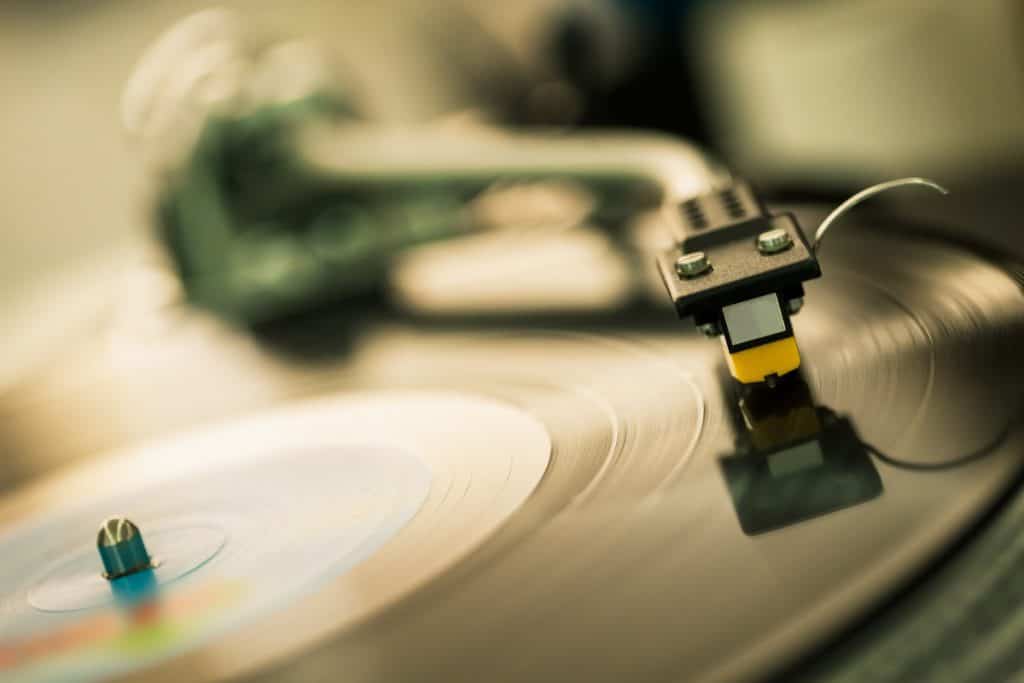
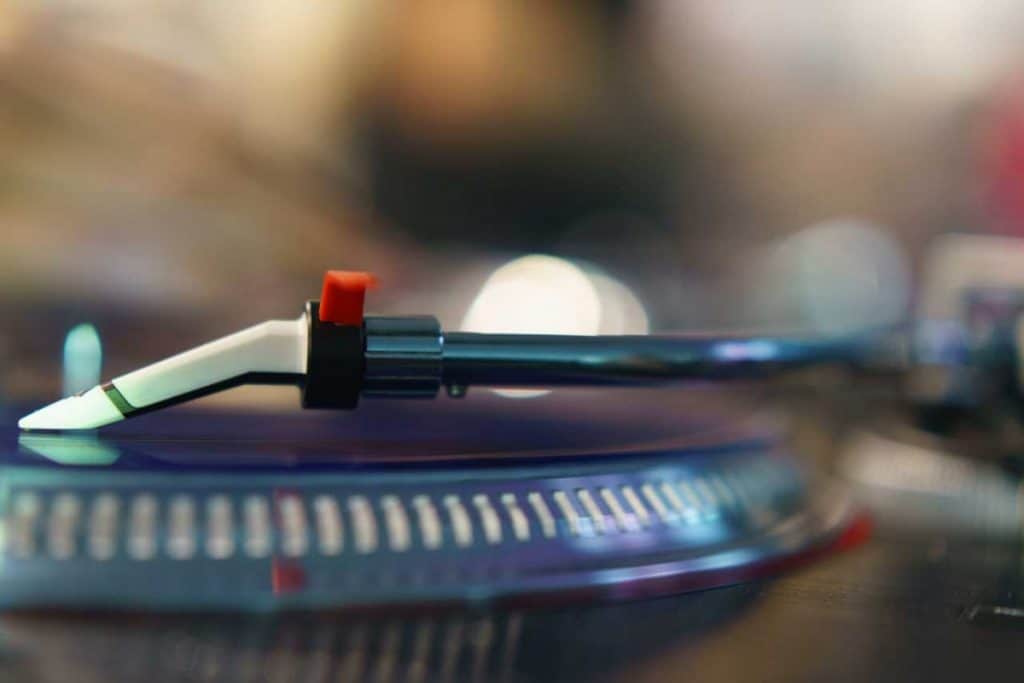
    The stylus is the part that tracks the grooves. It is the needle that you put on the surface of a vinyl record to produce sound. The stylus should be appropriately aligned and have an exact weight to avoid damaging the vinyl record. 

    Additionally, the stylus connects to the cartridge, which allows it to move without any disturbance and do its job correctly. 

    The cartridge and stylus are two of the essential parts of the record player. The reason is that they have the most significant impact on the sound quality produced by your turntable. 

    Moreover, the quality of cartridges varies depending on their prices. However, you need to note that the cheaper ones can easily damage your vinyl records.

    2. Bearing

    The bearing is responsible for ensuring that the turntable’s platter will rotate consistently and stay level. It also ensures that the stylus will track the record correctly. For this reason, manufacturers need to produce bearings precisely as a bit of deviation can significantly affect the turntable’s performance. 

    3. Platter

    This part is where you place your vinyl record. A platter usually has a rubber mat or felt as its top component, which prevents the record from resonating too much. The platter’s top mat also ensures that the record will not slip around while on the play. 

    4. Motor

    Another component that answers “are old record players valuable” is the motor. It is the heart of the record player as it is responsible for making the platter and vinyl record turn. If the motor is in bad condition, a vintage turntable will not be that valuable. 

    An essential aspect of the turntable motor that needs to be precise is its speed. The motor must be speed consistent, so the type of drive that connects it to the platter is also a crucial factor. The drive should either be a belt drive or a direct drive.

    5. Tonearm

    The tonearm is the pivotal or radial arm that holds the cartridge. It is generally adjustable when it comes to height. The tonearm also has a counterweight that balances the cartridge at the right height, allowing it to put just enough pressure on the record. 

    With enough pressure and counterweight, a record player’s tonearm can provide you with optimal tracking. It can also prevent your vinyl record and cartridge from getting any damage. 

    Are old record players valuable? The answer depends on the condition of its individual parts. The components mentioned above need to work together despite how old the record is. This way, it will still be able to produce high-quality audio. 

    If the components of your old turntable are in excellent condition, they may have a high market value. (source)

    How To Determine The Value Of A Record Player

    People experience music differently depending on the system that they are using. Right now, the most convenient form of music is the digital format, which you can access through different music streaming platforms. 

    However, such a format involves compressing the music files into smaller sizes. While digital music is utterly convenient, this convenience often outweighs the quality of music for reduced quality. But for audiophiles who want to get the best out of their music experience. 

    Such is the reason why record players are still valuable regardless of how old they are. But how exactly do you find the answer to “are old record players valuable?”

    Brand

    A lot of manufacturers produced record players in the 90s. But it is essential to note that some brands are better than others in terms of the quality and look of their record player. 

    Moreover, the most valuable record players in the 90s are created by:

    • Micro Seiki
    • Dual
    • Thorens 
    • Linn
    • Technics 
    • Rega
    • Kenwood
    • Marantz
    • Garrard 
    • Denon

    In addition, Bang & Olufsen were also popular for making exceptional record players. If you have a record player made by any of these brands, chances are you own a high-value device. 

    Condition

    The brand is not the sole thing that answers “are old record players valuable.” No matter how popular the brand that created your record players is, its value will decrease if it is in poor condition. 

    The condition of your device is highly essential when you are determining its value. A record that physically looks good but is no longer working might be a good vintage decoration. However, it will not have the same value as a record player that is working perfectly. 

    A record player that is already in bad shape will ruin a delicate vinyl record.

    So, how are old record players valuable? If your player has a flat base, turns freely, and the arm moves without friction, then it has a high value. 

    Additionally, the cartridge and stylus of your record platter should also be in good condition. This way, you will be able to touch them without causing any damage. 

    Model

    Are old record players valuable? Well, some record player models have an extremely high value. For instance, the Linn Sondek LP12 is an invaluable record player among collectors. Another iconic model is the Garrard 301/401 was also a record player of choice among audiophiles. The reason? Their features.

    Record PlayerWhy it is valuable
    Linn Sondek LP12launched in 1972has a wooden exterior that’s is aesthetic and valuable among the most expensive record players launched in the market the price, which is more or less $800, can increase with modifications and adding parts
    Garrard 301/401ranked among the best vintage Hi-Fi record players still popular up until today can sell for more than $2340

    Moreover, old record players sold by exclusive brands can sell for over $11,670. 

    Design

    Damaged record players and the ones that no longer work may not be as valuable as those that play perfectly. But that does not mean they do not have any value at all. However, it is essential to note that there are marketplaces that will not accept broken records. 

    Moreover, some old record players still hold value due to how they look. Record players created in the 60s and early 70s focused primarily on sound quality. Manufacturers did this by producing high-quality speakers and amplifiers. 

    On the other hand, the focus of record players shifted in the late 60s and 70s. Instead of focusing on the sound, brands put their emphasis on the designs of their players. 

    So, are old record players valuable in terms of design? Yes.

    Moreover, some examples of old record players with rare designs are:

    • Michell Transcriptors
    • Audio Research XA
    • Dieter Rams Design

    The Audio Research XA is among the most straightforward and best turntables in history in terms of design. On the other hand, the other two were famous for their high-quality construction and minimalistic design. If you have any of these record players, you may have a highly collectible piece. (source)

    Top 6 High Valued Vintage Record Player and Brands

    Even before the resurgence of record players, many audiophiles are already collecting vintage turntables. The primary reason is that vintage turntables are very reliable despite how old they are. They have an excellent sound quality and robust construction, which define their value in the market. 

    Record players were trendy in the mid-90s. So, the industry had a lot to offer, and each of those models competed for dominance. For this reason, finding a valuable vintage record player today can be a challenge.

    That said, check out the turntables below to find out why our old record players are valuable:

    1. Linn

    Linn Products is popular for its Linn Sondek LP12 record player. This vintage turntable was popular due to its chassis design. Linn created a single-bearing suspended sub-chassis, which offered excellent performance.

    Additionally, the brand created the said bearing precisely, which allowed it to deliver smooth operation. 

    On the practical side, the Linn Sondek LP12 was popular as people recognized its quality very quickly. Up until now, this vintage record player still holds a place in the list of popular turntables.

    Apart from quality, the LP12 appeals to audiophiles because you can purchase it for approximately $700 – $800 in its basic configuration. But this record player possesses an impressive potential in terms of an upgrade. That means you can spend how much you want for it to have a better power supply, tonearm, as well as other components. (source)

    2. Technics

    If you want a record player with vintage gear yet can support a modern upgrade, you should go for Technics turntables. This brand is developing some of its legendary record players into impressive current models. 

    For instance, the vintage Technics SL-1200 now has a modern counterpart, the Technics SL2-1200 MK7. 

    The MK7 maintains the classic look of its vintage predecessor. However, the difference lies in the fact that it features a coreless direct-drive motor. This feature offers better torque. It even comes with the classic S-shaped tonearm, which made the SL-1200 popular back then.

    Similarly, the Technics SP-10 was also popular back in its days. The turntable industry debated about belt drive versus direct drive, causing it to become polarized. While both sides showed strong arguments, belt drive slowly took the lead.

    But when Technics launched the SP-10, it was able to lay down the law simply. Another proof of why are old record players valuable is the pure engineering excellence of this vintage turntable. 

    The SP-10 has a direct drive system that even the best belt-driven record players found difficult to counter. Today, a decent Technics SP-10 costs around $2000, highly valuable considering its unattractive format. (source)

    3. Garrard

    Garrard is one of the record players that has classic and timeless designs. The company was first seen in the market in 1915 and closed in 1992. Within this timespan, Garrard produced one of the most iconic record players that we know today.

    That record player is the famous Garrard 301/401. 

    The two designations were the representations of two nearly identical models. In addition, they were also the embodiment of elite Hi-Fi, making them two of the most sought-after Garrard turntables up until today. 

    Moreover, the Garrard 301/401 costs more than $5000. So, if you ask, “are old record players valuable,” this vintage turntable is a perfect answer. (source)

    4. Thorens

    Thorens is also another legendary vintage turntable brand. It is a Swiss-based manufacturer known to deliver impressive record players equipped with high quality and excellent performance. 

    One of the most sought-after turntables by this brand is the Thorens TD-124. This model, launched in the mid-’50s, has a belt drive that gives it high-definition audio. There are also several torques connected to its heavy platter, allowing it to provide fantastic performance. 

    The TD-124 is a bit outdated today, but it can still keep up with other younger turntables. This vintage icon costs approximately $1000. (source)

    5. Kenwood

    Kenwood is no longer a stranger to vinyl enthusiasts who have already experienced music in various ways, shapes, and forms. This manufacturer is still among the top authorities in the industry today and is producing various audio equipment apart from turntables. 

    But before this brand produced fantastic audio devices, it was manufacturing excellent record players. For instance, the Kenwood L-07D is a model that received a lot of praises back then. 

    For people asking, “are old record players valuable,” the L-07D proves that they do. Its performance can even go against some of the modern record player giants available today. The L-07D features a direct drive and a triple layer platter, ensuring that you can get high-quality audio without too much vibration. 

    Moreover, the popularity of this vintage Kenwood turntable will require you to spend $2000 at the very least. (source)

    6. Marantz

    This record player manufacturer was behind some of the most legendary record players that the world has seen. For instance, the Marantz Tt 1000 is one of the most iconic turntables the brand has ever produced. This brand is another manufacturer that answers, “are old record players valuable.”

    The Tt 1000 is a direct drive model that conquered the industry from about 1980 to 1990. Up until this day, this record player is one of the most popular vintage turntables. The older the unit, the more valuable it will be. 

    Audiophiles who want to purchase a decent Marantz Tt 1000 will need to spend at least $4000. But it is essential to note that you need luck in tracking one down. (source)

    How to Maintain Your Vintage Record Player

    Are old record players valuable? The answer not only depends on their brand and model. Instead, the condition of the equipment is also a factor to consider. 

    Record players, particularly the vintage ones, require care and maintenance. The reason is that even the most minor damage can affect how your turntable delivers sound. Fortunately, these devices are created with precision, making them durable.

    But regardless of how high-quality your vintage record player is, you need to know how to take care of it properly. The reason is that proper maintenance will allow you to keep your vintage record player valuable. 

    Use a table that can adequately support your turntable

    If you want to maintain the value of your record player, the first way to do it is to place it on the right platform. 

    Without the right platform, record players tend to have a jarring effect of your footsteps when suspended. This jarring effect can lead to your turntable producing distorted audio. For this reason, you need to place it somewhere that prevents it from vibrating.

    In addition, you need to place your vintage turntable somewhere where nothing can interfere with its signal. You need to keep any unwanted force away from your equipment unless it is good enough to absorb vibration even before it gets to the needle and the vinyl record. 

    Calibrate the anti-skate, tracking force, and height settings correctly

    Are old record players valuable? Well, a vintage turntable must not have any visible sign of wear and tear for it to be valuable. In order to achieve this, proper calibration is essential. 

    Your record player’s tracking force, anti-skate, and you must set the height adjustment correctly to prevent the needle from skipping. 

    Additionally, you should always check the tonearm of your vintage record player to ensure that it puts enough pressure on a vinyl record when in use. 

    Clean the stylus using a carbon fiber brush

    A record player is prone to distortion and skipping once the stylus has accumulated dirt and dust deposits. For this reason, you must have a high-quality stylus brush that can remove the buildup without damaging the stylus. 

    A carbon fiber brush is the best choice for cleaning a stylus. You can also use mild liquid cleaners to keep it in excellent condition. In addition, it is ideal for replacing the stylus every 3,000 hours to ensure that the record player will have a fantastic audio quality. 

    The stylus is one of the most critical parts of your turntable. So, making sure that it is well-kept will answer yes to “are old record players valuable.”

    Align your anti-skate counterweight correctly.

    The anti-skate counterweight is a part of a record player that is responsible for positioning your stylus correctly in the center of the groove. Proper alignment is crucial as it can significantly affect how your stylus sits in the groove of a vinyl record while it is spinning. Therefore, it can also affect the quality of sound that your record player produces. 

    Replace the record player’s belt every few years

    If you own a vintage belt-drive record player, one way of keeping it in good shape is to replace its belt once every few years. Once you start seeing it slip on its pulley lower than the usual, that is an indication that it needs a new one. 

    Another sign that you need a new belt for your turntable is when you hear it slip every time you turn your record player to the on position.

    Clean the surface of your record player

    Cleaning your record player will help you keep it in good shape. But to ensure that you will not cause any scratches or damage when you are cleaning your turntable, you have to use a clean, lint-free cloth.

    If there are fingerprints, alcohol is the best cleaning material. You should never use cleaners with harsh chemicals as they can ruin the surface of your record player. 

    Once completed with removing any dust, dirt, and fingerprints, rub the surface of the turntable with a dry, antistatic cloth once again. 

    Moreover, it is essential to note that you should never use your bare fingers to clean the turntable.

    Make sure that the insides of the record player are clean

    As mentioned, turntables have complex parts on the inside. If those parts are kept clean, you will have a positive answer to “are old record players valuable.” For this reason, you need to clean the insides of your turntable every once in a while. 

    Cleaning the internal parts of your record player will help it sound better and have a longer lifespan. Such is especially true if you have a belt-drive record player. 

    To clean your turntable on the inside, the first thing you need to do is to remove the rubber mat and platter. To ensure that you are doing this step correctly, make sure that you look for your unit’s operating instructions online. Once you successfully remove the platter, take off the belt carefully and clean it with a cloth and alcohol. 

    Next, wipe the underside of the platter to remove any dust and deposits. Once done, wait until each part is completely dry before assembling the record player again.

    This process can seem complicated. Fortunately, you only need to do it once or twice a year to keep your record player in its perfect shape. It is also ideal to use a dust cover to protect your device. (source)

  • Best Powered Speakers for Turntables: Budget to High-End

    Best Powered Speakers for Turntables: Budget to High-End

    Turntables and record players have increased in popularity in recent years and with that comes a need for bigger and better speakers. Everyone loves to be able to hear their music clearly, but when you have a turntable, they often do not come with built-in speakers or an amplifier. The most obvious solution to this is to get powered speakers that you can connect to your turntable.

    When budgeting, the best powered speakers under $200 are the Edifier R980T Speakers, the Micca PB42X, and the Edifier R1280DB. If you have the budget for more expensive speakers, the Audioengine HD6, the KEF LSX Music System, and the Klipsch The Fives Speaker System are great options.

    While these are definitely some great options for a powered speaker set, there are so many more options and details that are good to know before making a decision on the speaker set that you want. Keep reading to learn more!

    Why you need Powered Speakers

    Before we get into all of the details of each speaker, it is important to know why you even need to get a powered speaker in the first place. While there are a lot of different reasons to want powered speakers, to amplify your existing record player’s speakers, or to have better sound quality when playing music, in the situation that you have a turntable, you need external powered speakers because most turntables do not have built-in speakers.

    Because turntables do not usually have speakers or an amplifier built-in, you have to buy powered speakers that you can connect to it. If you don’t have these external, powered speakers, your turntable is nothing more than a nice decoration that has no practical function. When you purchase speakers that connect with a wire or Bluetooth, you can now use your turntable to play the records that you have bought for it!

    If your turntable does have built-in speakers, you might still want to purchase exterior powered speakers. Often times, the speakers that are built into record players or turntables do not play the sound very clearly or very loudly. This can be very annoying for a lot of people because you spent all this money to play vinyls but now you can’t hear it very well. Purchasing and hooking up powered speakers is an easy solution to this problem, and the speakers will likely last you a very long time.

    Speakers for a Tight budget

    The very first price range of speakers that we will talk about are the speakers for people on a strict budget. While the average price for powered speakers is anywhere from $300 to $600, but each of these speaker sets, for those on a budget, are under $200! They are also pretty good quality speakers and are worth looking at for your sound set up.

    Edifier R980T 4″ Active Bookshelf Speakers

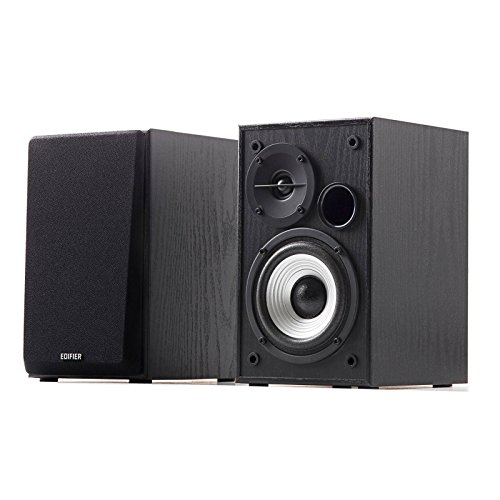
    The first set of speakers are the Edifier R980T 4″ Active Bookshelf Speakers. These speakers are specifically designed to fit in small spaces like on bookshelves and in between other items on desks, hence the name “Bookshelf Speakers”. They have a 4-inch bass driver, which is significant for a speaker of this size and will give you a sufficient “bass” sound when dialed up.

    Edifier R980T 4" Active Bookshelf Speakers - 2.0 Computer Speaker - Powered Studio Monitor (Pair)

    Edifier R980T 4" Active Bookshelf Speakers - 2.0 Computer Speaker - Powered Studio Monitor (Pair)

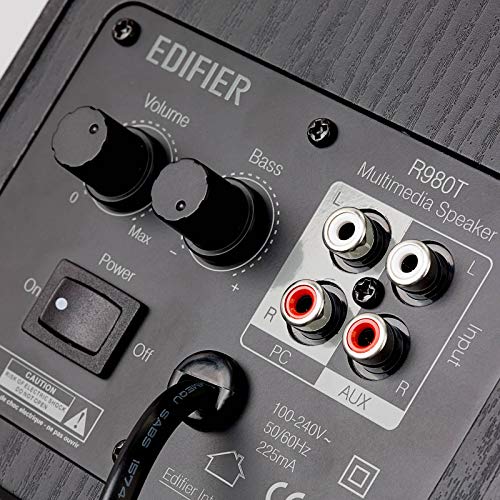
    These speakers connect primarily by an auxiliary chord and it has two inputs for that so you can connect two devices to it without needing to unplug the first one. It also has RCA ports for connecting to devices that require a connection through RCA wiring like a TV, a DVD player, and some turntables. Unfortunately, there is no wireless connection or a remote control for these speakers.

    These speakers run for about $75 on Amazon.

    Micca PB42X Powered Bookshelf Speakers

    The next speaker set for those on a budget is the Micca PB42X Powered Bookshelf Speakers. This set of speakers is significantly smaller than the Edifier R980T speakers, but that is not to say that they give any less sound clarity or power. These will fit in any little area and are great to keep on a desk or side table with your turntable.

    Micca PB42X Powered Bookshelf Speakers, 30-Watt RMS Power, Active Near Field Studio Monitors, 2-Way (Black, Pair)

    This speaker set was built for clean sound and a clean look. They are compact and modern and are built from materials that give you the best sound quality possible for its size and tweeter. It has a 3.5 mm input port, for a standard auxiliary cord and RCA ports on the back for connectivity options. This speaker set also does not offer a wireless connection option.

    This speaker set is about $120 on Amazon.

    Edifier R1280DB Powered Bluetooth Bookshelf Speakers

    Another excellent option for powered speakers on the cheap side are the Edifier R1280DB Powered Bluetooth Bookshelf Speakers. These speakers are much heavier than the other two options, and for good reason. They are packed with all sorts of features that the other two, cheaper options don’t have. However, the sound quality of this speaker set is the same as the sound quality of the Edifier R980T Speakers.

    Edifier R1280DB Powered Bluetooth Bookshelf Speakers - Optical Input - Wireless Studio Monitors - 4 Inch Near Field Speaker - 42w RMS - Wood Grain

    This speaker set does have wireless connection options in addition to its two available RCA inputs and AUX port. With the wireless design, it leaves a cleaner sound set up and allows you to move the speaker as close or as far from the turntable, within the Bluetooth range, as you would like. It also comes with a remote so you can change the setting from a distance.

    The R1280DB Edifier Speakers are roughly priced at $140 on Amazon.

    Average Priced Powered Speakers

    The next category of powered speakers that you should consider are ones that are priced closer to the average range of this type of speaker. If you have a little extra money budgeted for buying speakers, these are a few great options that are a bit more expensive than the previous category of speakers. The range for these is between $200 and $600.

    ELAC Debut 2.0 B5.2 Bookshelf Speakers

    The first set of speakers that are a good middle price are the ELAC Debut 2.0 B5.2 Bookshelf Speakers. These speakers have a wonderful sound to them because of the size and placement of the tweeter. Because of how clear the sound is, they make for great turntable speakers. The clarity will showcase all of the little details of sound that vinyls and turntables offer in the first place, but on a much louder, and clearer level.

    ELAC Debut 2.0 B5.2 Bookshelf Speakers, Black (Pair)

    These speakers do not offer a Bluetooth connection option, but they do have wired connection options like RCA ports. While they are not Bluetooth compatible, they still offer easier connection options by having many of the ports at the front of the speaker so you can back it up against a wall for a more compact look.

    These bookshelf speakers are about $280 on Amazon.

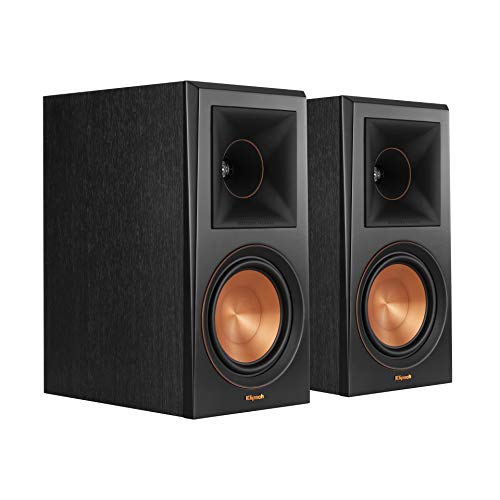
    Klipsch RP-600M Bookshelf Speakers

    The last middle range priced speakers are the Klipsch RP-600M Bookshelf Speakers. This set of speakers has a beautiful, vintage look to them and they come in black, and two options for dark, wood tones. Each of these speakers is quite large, but again, that allows for more cabinet space for the sound to reverberate in, just like the Wharfedale Diamond speakers. One problem with the sound is that the speakers sound best when they are given some room from the wall, about 1.5 to 2 feet of space.

    Klipsch RP-600M Reference Premiere Bookshelf Speakers - Pair (Ebony)

    These speakers have the downfall of requiring an amplifier to connect them to your turntable (non powered). If your turntable has an amp already included in the model, then these could be the perfect speakers for you. They do not offer a Bluetooth connection, but the sound of them is rich, clear, and well worth considering. They look beautiful, sound great, and are offered for a great price.

    These mid-priced speakers are on the higher end at roughly $600 on Amazon.

    High-End Powered Speakers

    The final section of powered speakers to consider are the high-end, expensive speakers. These are for people who want the best sound system they can possibly get and with that standard, they can be quite pricey. These speakers have a ton of useful features and the best sound quality that can be produced, but that drives the prices up, in between $700 and $1,300.

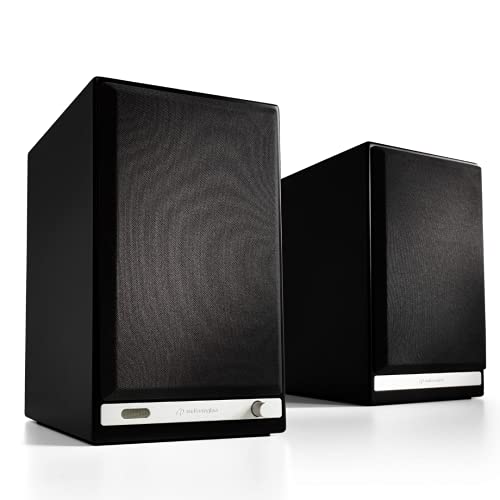
    Audioengine HD6 Wireless Speaker

    The first high-end speaker is the Audioengine HD6 Wireless Speaker. It is made to be sleek and small to fit in any available space. Do not let its size fool you however, because these speakers are powerful with a sound that is full and loud that can fill any room. They have so many great features that are practical and create a sense of luxury when you use these speakers.

    Audioengine HD6 Wireless Speaker | Desktop Monitor Speakers | Home Music System aptX HD Bluetooth, 150W Powered Bookshelf Stereo Speakers, AUX Audio, USB, Optical, RCA, 24-bit DAC (Black)

    These speakers offer a 30 meter Bluetooth range in addition to RCA ports, AUX ports, and the corresponding cords to go with them. They also come with a remote control so you can change any of the settings from across the room. They are easy to set up and have an additional subwoofer connection option.

    This set of powered speakers is about $700 on Amazon.

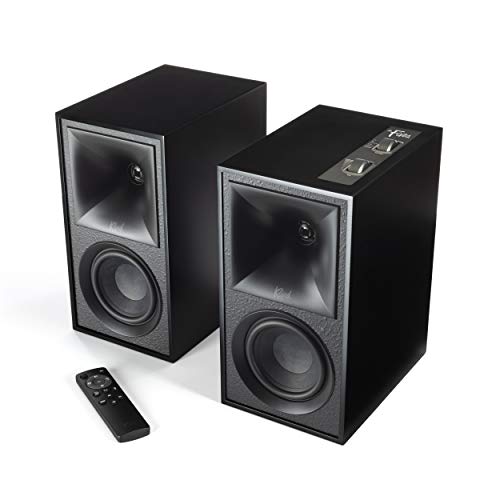
    Klipsch The Fives Powered Speaker System

    The next set of high-end powered speakers is the Klipsch The fives Powered Speaker System. This speaker system promises true connectivity which means that they have connectivity options for virtually every device out there. This is great because it means you will have no problems connecting these speakers to your turntable, no matter the age, brand, or model it is.

    Klipsch The Fives Powered Speaker System (Matte Black)

    These speakers have a beautiful vintage look to them and will greatly compliment nearly any room and turntable nicely. They offer Bluetooth connection and also come with and HDMI connection option and a remote control for easy access to the levels of these speakers. The Klipsch speakers are larger, but they look stunning next to a turn table, on a TV stand, or on a side table for a more surround sound feel.

    This powerful set of speakers is usually $800 on Amazon.

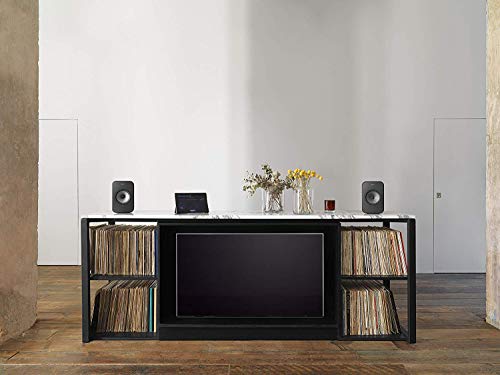
    KEF LSX Wireless Music System

    The final set of speakers we will talk about is the KEF LSX Wireless Music System. These speakers are very high-end and they are very expensive. However, they are not expensive for no reason, as they have an incredible sound quality with their “Uni-Q driver array”. This makes the sound as clear, and powerful as possible. These speakers come in a variety of colors for you to choose from, so you can find the color that complements your decor the best and they will look stunning.

    KEF LSX Wireless Music System (Black, Pair) LSX Black

    These speakers come with several connectivity options such as Bluetooth, WI-Fi, Auxiliary, and even Ethernet. While these speakers are a great option for a turntable that can connect wirelessly, they are also well equipped to connect via Apple AirPlay so you can play music to the speakers from your phone with a few taps. When connected to your turntable, you can also use your phone, instead of a separate remote control, to change the levels of the speakers, and any attached subwoofers.

    Being the most expensive set of speakers we have covered, they are priced at about $1,250 on Amazon.

    KEF LSX Wireless Music System (Black, Pair) LSX Black

  • Tube Phono Preamp FAQ and Recommendations for Any Budget

    Tube Phono Preamp FAQ and Recommendations for Any Budget

    Tube phono preamps are great, but many people have questions about them and how they work. They also wonder how much they cost. Luckily, the answers to those questions are below if you keep reading.

    Tube phono preamps increase and improve the sound that turntables play. Tube phono preamps use vacuum tubes to amplify the signal turntables emit when playing music, which makes the music louder and clearer. Tube phono preamps cost $65-$3,000 and are more expensive than other type of phono preamps.

    Now that you know how tube phono preamps work and how much they typically cost, you may be wondering why they cost so much, and what types of phono preamps there are. Keep reading to find out.

    Are there Different Types of Phono Preamps?

    There are multiple types of phono preamps. There are tube phono preamps and solid state preamps. Solid state preamps are slightly more popular than tube phono preamps because they are typically cheaper, but both types of phono preamp work well.

    There are also phono preamps that work with Moving Magnetic Cartridges (MM) or Moving Coil Cartridge (MC) turntable systems. Most phono preamps nowadays work with both MM and MC systems, but some don’t.

    Tube phono preamps use analogue tubes and valves to amplify the signal that turntables emit when they play vinyl records. Meanwhile, solid state preamps use silicon transistor components to amplify the same signal.

    Tube phono preamps are typically more resistant to voltage spikes and other things associated with electricity that can cause solid state preamps to malfunction and stop working. However, tube phono amps require more electricity than solid state preamps in order to function properly, so they will increase your electricity bill, even if you don’t use it for a long time.

    Tube phono preamps are more fragile than solid state preamps. The tubes and coils that tube phono preamps use to work are fragile and expensive. if you drop a tube phono preamp machine, it will break and you will likely have to purchase things to repair it. Solid state preamps are more durable than tube phono preamps, but it is very expensive to have them repaired when they break.

    It is very easy to fix tube phono preamp machines because the tubes break more frequently than other parts. When one of the glass tubes break, they can just be unscrewed and replaced with a new one. They only cost between $12-$20 and can be found on many online shopping websites or at stores that sell vinyl records.

    But which type of phono preamp machine should you choose? If you plan on moving your phono preamp machine often then don’t choose a tube phono preamp machine as it will likely break when moved, and you don’t want that to happen.

    Now that you know a little bit about tube and solid state phono preamps, you may be wondering if tube phono preamps are useful.

    Are Tube Phono Preamps Useful?

    Tube phono preamps are useful because they make the music that is playing from your turntable louder, clearer, and improve the quality. However, sometimes you don’t need to purchase a separate tube phono preamp system.

    Many record players nowadays have preamp systems built in, so you don’t need to purchase a separate phono preamp system. However, if you do want to purchase a tube preamp system and your turntable already has a system built in, you can turn it off and use the separate system. Although, you will save money if you just use your turntable’s phono preamp system instead of purchasing a separate phono preamp system. (Source)

    Overall, tube phono preamps are useful if you have a turntable that doesn’t already have a tube phono preamp system installed, or when the already installed phono preamp system doesn’t work well.

    How Much Do Tube Phono Preamps Cost?

    Tube phono preamps typically cost between $65-$3,000 dollars, so they are not cheap. Turntable phono preamps typically only cost $20-$2,000, so tube phono preamps are more expensive than other phono preamp systems. However, many people who have tube phono preamp machines think that the cost is worth it.

    Tube Phono Preamp Recommendations

    Now that you know what tube phono preamps are and how they work, you may be wondering what the best ones are. Luckily, compiled below is a list of the best ones. if you are worried about how much they cost, don’t worry, as there are some machines on here that work with smaller budgets.

    ICON Audio PS1 MkII MM/MC Tube Phono Preamplifier

    The ICON Audio PS1 MkII MM/MC Tube Phono Preamplifier is the best expensive tube phono preamp. It is rated 5 stars and costs $2,499.

    The ICON Audio PS1 MkII MM/MC Tube Phono Preamplifier is wired by hand, which increases the price, but it removes impurities that reduce the quality of the music when older records are played, which makes this the best preamp for people who frequently listen to old records.

    With the ICON Audio PS1 MkII MM/MC Tube Phono Preamplifier, you can control the volume and increase it so you can hear the wonderful, detailed sound coming from it. You will definitely enjoy playing your records when you use this preamplifier.

    Click here if you would like to purchase the ICON Audio PS1 MkII MM/MC Tube Phono Preamplifier.

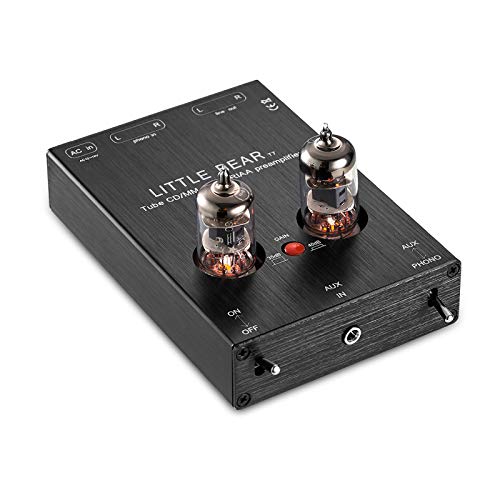
    Little Bear T7 Vacumn Tube Mini Phono Stage

    The Little Bear T7 Vacumn Tube Mini Phono Stage is also a wonderful tube phono preamp that is highly rated. It is rated 5 stays and only costs $65-$81 at the time of writing.

    The Little Bear T7 Vacumn Tube Mini Phono Stage can only be used with MM turntables, so make sure that your turntable is an MM system before you purchase this machine. The bulbs on this tube phono preamp can be easily replaced when they break, and it is compatible with 5654, 6AK5, and EF95 tubes.

    The Little Bear T7 Vacumn Tube Mini Phono Stage comes in black or silver and it is small and portable, so you can move it with little worry about if the tubes will break.

    If you would like to purchase the Little Bear T7 Vacumn Tube Mini Phono Stage, click here to go to Amazon

    Little Bear T7 Vacumn Tube Mini Phono Stage RIAA MM Turntable Preamp & HiFi Tube Pre-Amplifier (Black)

    EAT E-Glo S Hybrid Tube Phono Preamplifier

    The EAT E-Glo S Hybrid Tube Phono Preamplifier is one of the best tube phono preamps. It is rated 5 stars by consumers, but it costs $2,995.

    The EAT E-Glo S Hybrid Tube Phono Preamplifier is portable and can be tucked away when it is not being used. You can control and change many things on the front control panel. One neat feature about this tube phono preamp is that the control panel is lit by small LED lights so you can change the settings even when the lights are off.

    The EAT E-Glo S Hybrid Tube Phono Preamplifier produces wonderful sound so you can enjoy listening to your vinyl records. Unfortunately, the tubes that help it produce that sound are not common. They are Swiss-made and use zircon anodes rather than graphite anodes, which are more expensive to produce. This means if the tubes on this tube phono preamp machine break, you will have to pay a lot of money to replace them.

    If you would like to purchase the EAT E-Glo S Hybrid Tube Phono Preamplifier, click here.

    Valhalla 2 Headphone Amplifier

    The Valhalla 2 Headphone Amplifier is one of the best tube phono preamps as it is rated 5 stars and only costs $349, which is relatively cheap for this type of phono preamp.

    The Valhalla 2 Headphone Amplifier comes in a silver color that will look great in your home. It comes with a 5 year warranty so you won’t have to pay to replace it if it breaks for a long time.

    The Valhalla 2 Headphone Amplifier has a gain switch on the front that allows you to control the amount of output level and impedance that comes from it. It also produces wonderful sound when you use it. You can plug your headphones into this phono preamp so you can hear the sound it produces when it is late or if you want to enjoy the music your playing from your turntable.

    If you would like to purchase the Valhalla 2 Headphone Amplifier, click here.

    Eat E Glo Petit Hybrid Tube Phono Preamplifier

    The Eat E Glo Petit Hybrid Tube Phono Preamplifier is a great tube phono preamp. It is rated 4.9 stars by consumers, and it costs $1,495.

    The Eat E Glo Petit Hybrid Tube Phono Preamplifier is made out of aluminum so it is slightly more durable than some other tube phono preamp machines. It is designed to be slim and not take up a lot of room in your household, so you can put it nearly anywhere. the tubes are even hidden so they won’t break as easily as when they are exposed.

    The Eat E Glo Petit Hybrid Tube Phono Preamplifier produces clear midrange sound, and any music that you are playing from your turntable will be clear and wonderful.

    If you would like to purchase the Eat E Glo Petit Hybrid Tube Phono Preamplifier, click here.

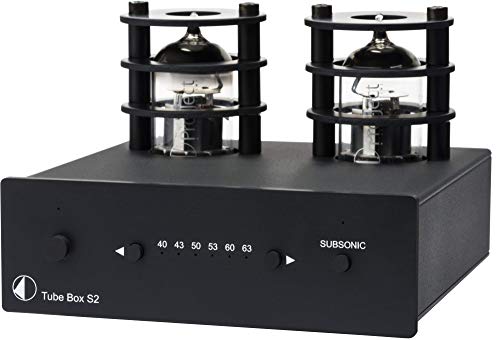
    Pro-Ject Tube Box S2 Black Tube Phono Preamplifier

    The Pro-Ject Tube Box S2 Black Tube Phono Preamplifier is a really nice tube phono preamp. It is rated 4.6 stars by consumers and costs $499.

    The Pro-Ject Tube Box S2 Black Tube Phono Preamplifier is encased in metal and aluminum, which makes it more durable than many other tube phono preamps. The tubes are easy to replace if they break or if you want to change the level of sound that this preamp produces. It has 5 impedance settings that you can adjust to make the music it plays suit your preferences.

    Pro-Ject Tube Box S2 Phono Preamplifier - Black

    You can use both MM and MC turntables with the Pro-Ject Tube Box S2 Black Tube Phono Preamplifier. The connection points are also gold-plated so they will not become corroded over time, which means you will be able to use this phono preamp machine for years to come if you purchase it.

    If you would like to purchase the Pro-Ject Tube Box S2 Black Tube Phono Preamplifier, click here to go to Amazon.

    Any of the tube phono preamps will work very well, but which one you choose to purchase is up to you. Although all of these preamps seem very expensive, they will all last for years to come and help you enjoy listening to your vinyl records that you treasure. if you purchase one of these tube phono preamp machines, you will be able to enjoy your vinyl records for years to come, and your turntable will be able to produce clearer and louder music than before.

    Tube phono preamps work well and improve the quality of the sound that comes from your vinyl records, which is very important to many people. Although the tubes are easy to break, so you may not want to put one of these preamps in a place where young children can reach them, they are also easy to replace and most of the time only cost $12-$20 per tube.

  • Buying a Record Player or Turntable? 8 Things You Must Know

    Buying a Record Player or Turntable? 8 Things You Must Know

    Vinyl records have been around for a while, and they are still a wonderful and high-quality way to listen to music. They are classy and retro, and are most definitely coming back into style. Vinyl record player sales are certainly going up. But before you go get yourself a record player, here are 8 things you definitely need to know. Maybe a turntable would actually be a better fit for you!

    Difference Between a Record Player and a Turntable

    Technically record players and turntables are two different things. A record player is a machine that reads records and turns the vibrations into music. Typically, they contain all that you need to play your records, including speakers. A turntable is part of a record player. It’s the part that spins the record and uses the stylus to read the grooves etched into the vinyl.

    You can either buy the whole record player or customize your own with a turntable and other additions. However, the words turntable and record player are used interchangeably a lot because they are so similar. It’s important to recognize their differences before you buy one or the other though.

    Necessary Additions to a Turntable

    Most record players don’t need any add ons, but some require additional speakers. However, if you get just a turntable, you will definitely need some other components before you can start listening to your records. The turntable reads the record and turns it into vibrations, but it still needs other equipment to turn those vibrations into glorious music. Some other add-ons you need for your turntable are a preamp, an amplifier, and speakers.

    The preamp helps boost the signal from the turntable so it can be received by the amplifier. Some turntables have preamps already built into them. But if your turntable doesn’t have a built-in preamp, you will need to purchase a separate one.

    Like the preamp, the amplifier helps strengthen the signal even more so that the speaker can use it. Without this, the signal will be too weak. Luckily, some speakers have amplifiers built into their system.

    And finally, you need speakers. Speakers are essential because without them it would just be electrical signals, not music. There are many different styles and shapes of speakers. There are stereo speakers or floorstanding speakers. Some record players even come with Bluetooth capabilities and can be used to play with any Bluetooth speaker.

    So if you buy a turntable with a built-in preamp and a speaker with a built-in amplifier, then that will be everything that you need.

    Manual vs Automatic vs Semi-automatic

    There are three different types of record players. There are manual, automatic, and semi-automatic. The big difference between these relates to the tonearm. The tonearm is the mobile part of a record player that holds the needle or stylus that picks up the grooves in the record. For all record players, the tonearm needs to be moved so that the stylus rests on the vinyl record. Once the song is over, the tonearm needs to be moved off of the record. The difference between manual, automatic, and semi-automatic record players is how this tonearm is moved.

    Manual

    Manual record players are record players where you have to place and remove the tonearm from the record to start and stop the music.

    Automatic

    On the other hand, automatic record players will place the tonearm at the push of a button and automatically remove it once the song is done. This makes the record player a lot easier to use.

    Semi-automatic

    Finally, Semi-automatic are record players that you have to manually place the tonearm on the record, but it will automatically remove the tonearm once the record is finished. You just have to get it started and the machine will do the rest.

    The biggest reason to consider one style over another is that placing the tonearm on the record incorrectly can hurt a record. If you don’t put the tonearm on correctly then the stylus might scratch the record, permanently damaging or destroying the item. Also, placing the tonearm wrong can make a terrible screeching sound, which totally ruins the effect of a soothing song.

    In addition, a manual record player will keep going after the song finishes. If you don’t remember to take the tonearm off, it will keep playing, which could cause problems down the road.

    Overall, deciding which style you should get all depends on your personal preference and how confident you are in using your record player.

    Storage of Your Record Player

    Some record players are very portable, specifically suitcase styles ones. But others need a permanent home. Style is important, but there are a lot of other factors that should go into where you put your record player.

    The first thing to do when finding a good place to put your record player is safety and stability. Because they can be so expensive, you never want to put a record player in a place where it could be bumped or knocked off its resting place. Record players need to be placed on a stable and heavy surface. If the player causes the table or shelf it sits on to vibrate, it can mess up the record player and cause it to skip or cause tracking issues. One way to help mitigate this is the use of isolation platforms, feet, or pads. These add-ons will help reduce the vibrations that affect your record player.

    The next thing to consider is whether the player will be level or not. Record players and turntables should always be placed on flat surfaces. Make sure you test to see if the surface you picked out is uneven or not. If the surface isn’t level then it could cause unnecessary wear and tear on your equipment.

    Finally, you need to figure out where to place your speakers. Because sound is composed of vibrations, speakers cause a lot of vibrations. Placing your speakers too close to or even on the same surface as the record player can cause problems. Like placing it on an unsteady surface, extra vibrations can cause the record player to have tracking problems.

    A good way to prevent this is to put speakers on a different surface, like a separate shelf. Another option is floorstanding speakers, which are speakers that just sit on the floor. Also, there are speaker isolation pads that will reduce vibrations caused by the speaker.

    A lot of this depends on your available space and how you want your setup to look. But these factors are crucial for the safety of the player and the quality of the sound. You need to keep these things in mind as you plan where to put your record player.

    Price

    You can buy a turntable for a fairly cheap price, but a cheap one can hurt your records. Not all record players and turntables are made equal. You get what you pay for, and sometimes it’s best to pay a little more.

    A starter turntable usually costs between $100 to $400. A high-quality model turntable will cost closer to $400 and $700. (Source) Keep in mind that turntables also require additional parts, like speakers, which will increase the overall price.

    On the other hand, record players can cost from $50-$300. Again, there is a strong correlation between price and quality. The lower the cost, the more likely it is to both hurt your records and to fall apart before its time.

    Which Brand is Best?

    There are so many different styles and brands of record players that are available to buy. Some of the best brands to buy record players and Turntables from include Pro-Ject, Fluance, and Audio-Technica. Each of these brands has its own different benefits. Audio-Technica is the most affordable of the three. Fluance and Pro-Ject are a little more pricey, but they are worth the extra money.

    There are plenty of other good brands out there, but there are also some brands and styles that aren’t the best. Some record players aren’t very good and can actually cause damage to your records. Crosley and Victrola brand players aren’t as good and the same goes for Denver suitcase models.

    Each of these brands have different downsides. For example, the Crosley brand record players sometimes use cheaper styluses that are rougher on your records and can shorten the life span of that record. If you want your vinyl to last longer, it’s worth the extra money to get a better quality record player.

    Size of Records You Want to Play

    Not all vinyl records are the same. There are three different possible sizes of records. This is important to know because not all record players can play all sizes of records.

    The different sizes are 12-inch diameter records, 10-inch diameter records, and 12-inch diameter records. The 10-inch size is the least common size, typically the records you will see will be 12-inch or 7-inch records. All record players can play a 12-inch record and a 7-inch record. However, not all can play a 10-inch record. If you want to play a 10-inch record you will need to make sure that the record player or turntable that you are buying is capable of playing a record of that size.

    One thing that size can affect is how fast your record player should be going. The speed of a record player is determined by RPMs or rotations per minute. There are three different possible speeds, 33 1/3 RMs, 45 RPMs, and 78 RPMs.

    Normally, your records should say what speed they should be played at. Typically 12-inch records should be played at 33 1/3 RPMs, 10-inch records should be played at 78 RPMs, and 7-inch records should be played at 45 RPMs. However, the speed can vary depending on the specific record. Playing a record at the wrong speed will not cause any lasting damage to it, but the song will not sound the way it is supposed to.

    The final thing that size affects is how much music it contains. Records that have a 7-inch diameter will only last for about 5 minutes for each side while 10-inch records will last about 8 minutes per side. Finally, 12-inch records will last about 22 minutes for each side.

    Long Term Care

    The last thing you need to know about record players and turntables is how to clean them. Cleaning your record player is critical. If you ignore cleaning your record player, then it will end up hurting your player and your records. Dirt and dust builds up over time and can cause many problems. It can interfere with the playing of the music and ends up scratching your records and causing permanent damage to the vinyl. A little cleaning every time you use your record player can save you a lot in the long run.

    First, you should dust your record player every time you use it with a lint-free or microfiber cloth. However, if you only use your record player every now and then, you should try to dust it twice a week. If you need a bit of a deeper clean, use rubbing alcohol on the microfiber cloth before you dust. If you do use rubbing alcohol, go over the player again with a dry microfiber cloth to remove any excess moisture.

    Another thing you need to take care of is the stylus. There are special brushes for cleaning stylus, but if you don’t have them a fin small paintbrush would work. You should wipe the stylus with this brush every time you use your record player. If you want a more in-depth cleaning, use rubbing alcohol. Be very careful as you clean the stylus. It is very fragile and can bend easily. (Source)

    One good way to make cleaning your record player easier is to use a dust cover between uses. Some record players have dust covers built into them. Some dust covers are plastic while others are cloth. Using a dust cover will limit the amount of dust and dirt that will accumulate on your player. Dust covers aren’t perfect and dust will still get on your record player, but it will make cleaning a lot easier. You can also just use a cloth if you don’t have a dust cover. (Source)

    Now that you know these important things, you’re ready to enjoy your record player.

  • The 10 Best Places to Buy Vinyl Records Online

    The 10 Best Places to Buy Vinyl Records Online

    These days, everyone has their preferred method of daily entertainment whether it be music, books, movies, or a variety of other media types. For many true music lovers, the old fashioned vinyl record is the best way to go. In-person shopping can be an exciting way to find new music and old favorites. However, stores may be limited in product, and are oftentimes difficult to physically sort through as it can take hours to find what you like.

    Online shopping is an easy route for all your purchases, including vinyl records! Each online store listed is unique and offers different services, products, and online tools. Some customers may be looking to start a vinyl collection at home, which some sites are more suited for. Other customers may be new to the vinyl world and would like an expert to guide them in their journey to find the best products for the best prices, and to discover their personal music tastes. Or, like many music lovers, you might be interested in a more community based company where you can collaborate with other customers, review music together, buy/sell products from others, and view their collections online to help grow your own. Whatever your preferences and needs, you may find your best fit in one of these sites. Here are 10 of the best online vinyl record stores.

    Top Pick

    Turntable Lab

    My absolute favorite store for vinyl records and audio equipment is Turntable Lab. They have a great online store that primarily focuses on new releases and reissues.

    Turntable Lab

    Turntable Lab prides itself on being selective with the quality of the products they offer. The store started by catering to DJs and providing high-quality audio equipment, including turntables and sound mixers.

    Today, they continue to cater to aspiring DJs while housing a unique collection of vinyl records. If you’re a hip-hop lover, few record stores can offer the solace you’ll find here at Turntable Lab. Aside from records and audio equipment, they also provide streetwear, production gear, and vinyl toys, including an action figure of the late J-Dilla.

    As a record store, TTL focuses primarily on new releases and reissues rather than old records. So if you’re digging for the classics, you may not find many at this store. However, TTL caters to a wide variety of music tastes, and you’re sure to be pleasantly surprised by the wide range of genres they carry.

    Aside from audio equipment and vinyl records, this store also sells books and magazines related to music and the art of DJing. And while it’s recognized primarily as a record store, TTL was instrumental in uplifting the DJ movement in its early stages

    Amazon

    If you’re going to write a list of all the places to buy vinyl records online, it’s hard to avoid Amazon. They have an extensive selection, and they are competitively priced. In addition, if you’re a Prime member, you usually get delivery within 1-2 days.

    Visit Amazon here to buy vinyl records.

    Amazon has also launched a new subscription service called Vinyl of The Month Club. As part of the club, you get a record from the Golden Era of Vinyl every month. And you don’t have to be a Prime member.

    You can find out more about the Vinyl of The Month Club on Amazon here.

    Vinyl of the Month Club: The Golden Era - Vinyl Subscription

    Amoeba

    Amoeba is based in California in Berkeley, San Francisco and Hollywood. They are currently one of the largest and most popular online record stores. They provide a wide range of genres including but not limited to rock, hip hop, soul, classic jazz, and electronica. They offer albums from artists, both popular and underappreciated. With their staff consisting of musicians, music lovers, and experts, they will help you find your preferences in music, and will offer similar artists you may be interested in listening to. By joining their AVC (Amoeba Vinyl Club), you can receive a new vinyl every month to grow your collection at home. You can also join their email list to be notified of upcoming sales, news, and more.

    Amoeba has been in business since 1990 and was founded at a time when chain stores were popping up everywhere and making independent stores like Amoeba go out of business. Luckily, Amoeba thrived in this climate as one of the only independent music stores that were left in the area because of their loyal, music-loving customers. (Source)

    Amoeba has continued to thrive since then, and it is now one of the best places to purchase vinyl records online if you don’t live in the Berkeley, California area.

    Experience Vinyl

    Experience Vinyl is for all you independent shoppers. You get all the control in your purchases with no financial contracts. You can browse or shop their broad selection of old or new music, and you can pre-order upcoming releases.

    On the home page of their website, Experience Vinyl posts a “Selection of the Month” album to purchase new music, along with information on the artist. They also provide a monthly offer for limited edition albums you may be interested in, but with no obligation to purchase. Experience Vinyl is a great way to learn about new genres and artists, and to dive deeper into your world of music without any pressure.

    Experience Vinyl has a Vinyl Club that doesn’t have a monthly fee that gives you access to these “Selection of the Month” albums. You just tell them your name, email address, and become a part of the Vinyl Club. (Source)

    Experience Vinyl is one of the best places to purchase vinyl records online partially because the Vinyl Club doesn’t cost money to become a part of, but also because they sell a wide variety of vinyl records so you will definitely be able to find one you will enjoy listening to.

    EIL

    With EIL, you can do more. They have a large range of genres, rare records of different sizes, as well as CD’s and music memorabilia to purchase. You also have the option to sell items for cash, or trade-in, which allows customers to grow and share their personal collections. They offer same-day shipping, and if you aren’t satisfied with your product, you can return it for a full refund.

    The staff at EIL are involved with purchases and respond to contacts quickly with any questions or concerns. You can view real reviews from customers on their website. They also have a blog where you can view posts on record collecting news, advice on starting your own collection, reviews, and so much more.

    EIL started as a vinyl collecting hobby in 1985 by founders Robert and Julian, that grew overtime into a full business for all that are passionate about music and record collecting. Although it is one of the best places online to purchase vinyl records, their website does look slightly dated. Instead of taking time to redesign their website, they choose to focus on selling vinyl records that are in mint condition, which their customers greatly appreciate. (Source)

    Discogs

    Discogs is for music collaborators. Through the site, customers can share their collections, wish lists, and reviews with others. This can play a part in growing the site’s music catalog as more customers contribute. Discogs has a blog where they share news, updates, and articles for all music lovers to dive deep into their favorite artists. You can also download their app to easily connect with buyers and sellers and to add to your music collection quickly.

    Discogs was founded in the year 2000 by Kevin Lewandowski and was originally a simple project. Now, that simple project has become a passion. They now want to build the largest and most comprehensive database of music. They are now one of the best places to purchase a vinyl record online, but keep an eye on this company as it grows. You will definitely find vinyl records you will enjoy when you visit this website. (Source)

    Dusty Groove

    Dusty Groove carries the major genres but has a main focus on funk, soul, reggae, jazz, and other less popular genres. You can easily browse through used items, vinyl’s and CD’s for under $10, and other low priced products.

    The website puts a deep focus on helping customers find their passion and deeply appreciate music again. It provides the company’s history through the website, as well a link to the trailer for “Dusty Groove: The Sound of Transition”, a documentary of jazz, soul, and hip hop lovers and their connection to music that was completed in 2019. The film focuses on customers that have visited the Dusty Groove storefront and how music has shaped their lives. (Source)

    All Tower Records stores have a red-and-yellow color scheme and a ‘No Music, No Life’ slogan that they go by. All storefronts have wide aisles that are filled to the brim with vinyl records, LP’s, and CD’s. If you can’t go into one of their stores, you can purchase all of the products that they sell in their stores on their website. (source)

    Dusty Groove is one of the best places to purchase vinyl records online. They have vinyl records in genres such as:

    • Soul
    • Funky 45’s
    • Jazz
    • Funky Compilations
    • Hip Hop
    • New Grooves
    • House Music
    • Neo Soul
    • Deep Funk
    • Brazil
    • Latin
    • Reggae
    • Rock

    They have vinyl records in more genres, but those are the most prevalent and some of the most popular types of records that they sell. If you purchase records online, you can receive your records within 2-10 days, depending on the type of shipping you choose at checkout and where you live.

    Presto

    Presto, is based in Royal Leamington Spa, UK. The jazz and classical focused site, makes it easy and simple to browse your desired vinyl items, and many other products. Customers can purchase sheet music for many instruments, books about composers and musicians, beginner’s guides, as well as instruments.

    You can download the free Presto Music App where customers can bring their music along with them on the go.

    The website allows you to search for music by composer, award, label, instrument, etc., and their staff is full of experienced musicians and experts to help you along the way. They are one of the best places to purchase vinyl records online because they have over 230,000 recordings in total, so you will definitely be able to find a vinyl record that has music that you will thoroughly enjoy. (source)

    Presto also sells sheet music titles, music books, and musical instruments. When you order anything online, you will likely receive the product(s) within 2 weeks, but that will vary on where you live and the products that you order.

    Vinyl Me, Please

    Vinyl Me, Please has a fun, upbeat website full of everyone’s music favorites to choose from. It is one of the best online places to purchase vinyl records.

    They provide an exclusive ‘Record of the Month’ subscription. They select a track from different genre options (‘Classics’, ‘Essentials’, ‘Hip Hop’, and ‘Country’) for subscribed customers to receive each month, and can cancel anytime. Members also get free shipping with their purchases. The ‘Record of the Month’ subscription costs about $43 per month per music genre, but that may vary depending on the music genre album that you are sent every month.

    Vinyl Me, Please wants to help people make a deep connection to the music that they listen to and create. The owners and staff of Vinyl Me, Please are firm believers that vinyl records are the best way to listen to music, and they want to help everyone do that. They also want to help you listen to your records that you ordered from them as quickly as possible, so they make the purchasing and checking out process that occurs when you purchase a vinyl record quick, easy, and painless. (source)

    Overall, if you purchase one or more of the many records that Vinyl Me, Please sells, you will find new and old music that you will enjoy playing on your turntable. That is a guarantee. If you order a record and it arrives damaged in some way, shape, or form, they will send you a replacement so you can enjoy listening to the vinyl record that you ordered. However, if the record you ordered is out of stock it will likely take them a while to send a replacement to you.

    Tower Records

    Tower Records provides an all-around energetic music experience. With lots of vinyl records and merchandise, there’s so much to choose from. It is easy to view their recent re-stocks on their home page for customers eager to get their hands on their favorites. Unique albums and artists that often go unnoticed are posted on the website regularly with information about upcoming albums and dates. This is perfect for listeners and customers to grow their music collection and to find new interests.

    Tower Records was founded by Russ Solomon in 1960 when he was a teenager, and it has stood the test of time until now. It was originally a business where Solomon would re-sell 78 RPM jukebox records. This original business was in the back of his father’s drug store. Now, Tower Records is a company that has become a retail behemoth. They are in charge of dozens of stores all across America.

    Tower Music as a company wants everyone to enjoy listening to records and to ‘Know Music, Know Life’. Because this is one of their company mottos, they are one of the best places to purchase vinyl records online. Their website is bright and well organized. On the forefront of their website, they have newly released and newly restocked vinyl records so you know when your favorite artists have released new music that is available on vinyl records.

    You can purchase vinyl records online from any of these stores, but some of them also have storefronts that you can go to. You will definitely be able to find many vinyl records that you will enjoy listening to when you go onto their websites.

    Related articles: 

  • Phono Vs. Line: We Explain the Difference

    Phono Vs. Line: We Explain the Difference

    In 1877, the invention of vinyl altered the way the world hears music and audio. Over time, technology has evolved away from the phonograph; however, many continue to enjoy the audio they produce. For this reason, newer audio players include an input labeled phono. But how does the phono input differ from the line input?

    Phono produces a very mild electrical signal; meanwhile, line, which encompasses most digital audio players, creates a much stronger signal. This variation impacts the quality of the audio played. To play a phonograph properly, the device must translate its signal through a phono stage, or a preamp.

    While listening to vinyl is a relaxing way to pass the time, understanding the signals, inputs, and outputs associated with audio playing devices complicates the hobby. Luckily, we are here to explain it to you! In this article, you will learn everything you need to know about phono and line signals. Let’s get started.

    What is Phono Signal?

    When a record is made, the recorded sounds are processed onto the vinyl in grooves. These grooves are essentially a physical representation of the soundwaves. The soundwaves in the grooves are then detected by the needle of a record player.

    As the needle passes over it, it reads the electromagnetic signals stored in the vinyl and transforms them into an electrical signal. This electrical signal is then translated by the device’s speakers as sound.

    To make more room on a record and to increase the duration of sound on each side, vinyl makers alter the recorded audio’s frequencies.

    For example, they must raise the bass’s frequency to make room on the vinyl for multiple songs. Because bass has larger soundwaves, if they were left unaltered, they would take up too much space on the record. The needle would not have enough room to play the song properly, if at all.

    When you raise the bass, you also have to boost the treble. Heightening the treble on vinyl during production improves the quality of the audio. 

    Records with altered frequencies are known as phono signals. Phono signals are considered “unequalized.” Were you to play this through a phonograph, the sound would not play as recorded.

    Since the sounds recorded on the vinyl have increased frequencies, they must be corrected before they are played. This is where RIAA Equalization comes into play.

    RIAA Equalization process and normalizes the frequencies of the vinyl to produce the sound correctly. This process can also reduce the effects of dust, debris, hand oils, and other substances that alter a vinyl’s sound.

    Phono signals only produce about 0.2 to 0.8 millivolts. On a turntable or other modern-day audio device, this is not enough signal to play the sound audibly. Think of it like only half the headphone jack is plugged into your iPod or mp3. The sound playing through the speakers is muffled due to a lack of electricity produced.

    Phono Signal and Preamp

    Because phono signals are too weak for most audio devices to process, the electrical signal must be increased. This process is done with a phono preamp or a phono stage.

    If you were to play a record without the use of a preamp you wouldn’t be able to hear it, and what you could hear would sound odd. 

    Phono preamps are what enact the RIAA equalization process. The frequencies are lowered and the sound is balanced.

    A phono stage may be built into a turntable, record player, CD player, and DVD player. However, some devices will not include the equalization stage needed to play a phonograph properly. Luckily, a preamp can also be found as a stand-alone piece of equipment. Many audio or record repair stores still have these machines on hand. 

    Some modern audio devices will not need a phono stage since they can identify the difference between vinyl and a CD.

    Remember to be careful when handling vinyl. While CDs will not be affected much by fingerprints, fingerprints on vinyl will result in static and background noise. Luckily, most of these imperfections will be buffed out in the equalization process.

    What is Line Signal?

    The term line signal refers to the natural frequency or basic standard level of audio output that you are used to hearing before any major amplification. 

    Devices such as CD players, DVD players, laptops, phones, and televisions will output a line signal without any alterations or amplifications.

    Line signals are much stronger than phono signals. While a phono signal is only a fraction of a millivolt, a line signal is 0.316 volts root-mean-square.

    Because these audio recordings produce a much larger electrical signal, they do not require additional amplification. When you plug a device into the line input, it will play the sound without altering the electrical signals. 

    Line Input VS Line Output

    You may see the word line on the back of your turntable or other audio playing device multiple times. While one of the labels will be close to the word “phono” others might say “line-in” or “line output.” 

    Are these related to line signals? Not entirely.

    The line input port close to the phono input port is meant to plug the audio device into as described above. The others have unique purposes.

    The port labeled for line-in is meant to assist with maintaining audio quality while recording. 

    Meanwhile, the line output jack is where additional external amplification can be plugged in. This could be a PA system, headphones, or recording equipment. 

    The Differences Between Phono and Line

    Phono and line have several differences every vinyl collector should be aware of. Speaker variation will impact your listening experience.

    Differences between phono and line have to do with the size of the electrical signals produced and the quality of sound.

    The phono input is the older version and newer systems have stopped including it. As described earlier, the needle of a record player travels over the vinyl, it creates an electric signal that is then transformed into sound. The amount of electrical signal produced is the main difference between phono and line systems.

    As mentioned earlier, line signal is stronger than phono signal. Phono signals are between about 0.2 to 0.8 millivolts; meanwhile, a line signal is 0.316 volts.

    Why does the signal produce matter? The signal created translates to the volume, and quality, of the audio played.

    Earlier on, we learned that phono signals travel through a preamp before it gets played through the speakers. If you plug a phono into the line input, the signal will be too weak to hear. On the other hand, if you plug a line into a phono, the already loud signal will be amplified and will be too loud for the speakers to translate properly.

    Remember, not all turntables have a built-in preamp. If your turntable struggles to play phonographs, you may need to invest in a preamp.

    If your turntable features a phono, line switch, how does it affect the sound played? Turntables with this switch will only have one type of input port. Rather than distinguishing the type of signal being played through the type of port, the switch tells the machine how to read the signal.

    When the switch is set to the phono, play the audio at the regular phono signal level. This will result in a quieter output that might include significant background noise.

    When you change the settings to the line, the signal produced increases, and background noise is removed. This setting runs the signal through a phono stage equalizing the frequencies and preparing it to be played line quality levels. Phono signals need to be boosted between 50 and 1000 times to be at an acceptable level of line signal.

    Phono Line Turntable and Preamp Examples

    As record players have had a surge of popularity, many companies have begun to manufacture them again. Many listeners enjoy customizing and upgrading standard phonographs and record players to meet their audio preferences. 

    To leave room for customization and upgrades, not every record player has a phono preamp built-in. Brands such as Victrola, Yamaha, Technica offer players with and without the preamp. With prices that range from fifty dollars to seven hundred and fifty dollars. While these brands can get a bit more expensive, their machines have a lot to offer.

    Not sure what type of turntable or record player you need? Take a look at the following examples to find the right machine for you!

    H009 Turntable Stereo System

    The H009 Turntable Stereo System is a combination of preamp, speakers, and turntable. The preamp on this machine is activated with a line, phono switch.

    This turntable has a vintage look so you can enjoy music the way it was meant to be.

    There is little setup for this system, allowing you to start enjoying your phonographs immediately. The H009 Turntable has a built-in Hi-Fi speaker for improved listening ability.

    This system also includes a vibration dampener for better sound quality. Get the H009 Turntable Stereo System for just $200 from 1 by One Audio.

    Pyle Phono Attachable Preamp

    As mentioned earlier, not all turntables will feature systems like the one above. If your record player or turntable does not include a phono stage, you will need an external preamp.

    The Pyle Phono Attachable Preamp is the perfect addition to your turntable setup. This external preamp costs less than $20.

    Get the Pyle Phono Attachable Preamp from Amazon here.

    Pyle Phono Turntable Preamp - Mini Electronic Audio Stereo Phonograph Preamplifier with RCA Input, RCA Output & Low Noise Operation Powered by 12 Volt DC Adapter (PP444)

    Sony 2.0-Ch. Stereo Receiver with Bluetooth

    Record players and turntables are not the only audio devices featuring a phono input. Stereo receivers occasionally have the phono input too!

    This allows you to play a phonograph through a stereo receiver. CDs and other audio devices are plugged into the normal audio input ports.

    This stereo even features BlueTooth connectivity for increased audio abilities. Add the Sony 2.0-Ch. Stereo Receiver to your audio player collection from BestBuy here.

    4-Way RCA / Phono Line Amp Router Audio Switcher Selector Splitter

    Like the Sony option above, the 4-Way RCA / Phono Line Amp Router Audio Switcher Selector Splitter allows listeners to switch between their source of audio at the turn of a knob.

    It includes a phono input port and a phono stage to create undistorted audio and amplification.This Audio Switcher can support a DVD player, a tuner, a video player, and so much more. 

    Learn more about the 4-Way RCA / Phono Line Amp Router Audio Switcher Selector Splitter from Walmart here.

    H004 Hi-Fi Turntable Stereo Set

    This turntable is designed for the most dedicated vinyl listeners. The H004 Hi-Fi Turntable Stereo Set includes two BlueTooth speakers and a heavier platter for improved rotation and sound quality.

    This system will also appeal to listeners interested in upgrading or customizing their listening experience. 1 by One regards the H004 as a “Future-proof system.”

    Changing from line to phono can be done with the flick of a switch. 

    The H004 Hi-Fi Turntable Stereo Set also features a vinyl to MP3 recording system! Now you can transfer all your favorite vinyl to mp3 without a struggle.

    Because this system has more features than most turntables, it is a bit costly. However, it can be yours for less than $300.

    Get the H004 Hi-Fi Turntable Stereo Set from 1 by One here.

    TechPlay Analog Turntable

    While it is not costly to add a preamp to your turntable system, it is just simpler to purchase a turntable with the built-in system.

    The TechPlay Analog Turntable is one such system.  The TechPlay features a built-in preamp with a bypass selector to ensure your audio source is being read properly. 

    This turntable also features anti-shock legs to ensure your listening experience is not interrupted by movement around the machine. Not only does the TechPlay Analog Turntable play music well, but it also looks great.

    This system has a piano gloss finish and chrome accents. Additionally, the compact design ensures that the turntable can fit anywhere in your home. It also leaves room for speakers and other audio systems to surround it.

    Get the TechPlay Analog Turntable with a built-in phono preamp from Walmart by clicking here.

  • What is a Turntable Phono Preamp? We Explain

    What is a Turntable Phono Preamp? We Explain

    Turntables and records are making a comeback, and many people have vinyl record versions of their favorite albums. But now that they have a turntable for their vinyl records they are wondering if they need a turntable phono preamp. What is a turntable phono preamp?

    A turntable phono preamp is an electronic circuit that converts phono signals to line signals so the music coming from the vinyl record is clear. It helps increase the volume of the music coming from the record, and makes sound come out of speakers or stereo systems that are connected to turntables.

    Now that you know what turntable phono preamps are, you may be wondering if you need one if you have a turntable and how much they typically cost. Keep reading to find out.

    What is a Turntable Phono Preamp?

    Turntable phono preamps are electric circuits that helps boost the output of a vinyl record. They also equalize the output of a turntable so the sound that comes from the turntable is correct and sounds like it should. Some phono preamps are not included in turntables and are part of an external system, but most modern turntables have a phono preamp included in the turntable system. (Source)

    Phono preamps make the sound quality of a vinyl record better. They make the record sound more similar to the sound that a CD or tape would produce so people don’t think that the sound that a CD and a vinyl record are really different, although there are differences in the sound that each of them produce.

    When a turntable plays a vinyl record, they produce a phono output signal that needs to be converted to a line level signal, otherwise known as an AUX signal, in order for the music to be played through speakers or another sound system. Phono preamps receive the phono output signal and convert it to a line level signal so it can be played, and you can hear the music that you are playing on the turntable. (Source)

    Phono preamps also emphasize the high and low frequencies that hide the sound that the turntable needle makes as the vinyl record spins so you can hear the music clearly, without any irritating scratching noise that will make the music less appealing.

    A phono preamp is also known as a phono stage. When turntables were used in almost every household, a phono preamp was included in the turntable system so it was easy to use the turntable and no one had to purchase extra parts in order to play their music.

    However, as tapes and CDs became popular and people nearly stopped purchasing turntables altogether, companies removed the phono preamp system in order to save money. Now that turntables are making a comeback and people are purchasing turntables to play their vinyl records, companies have put the phono preamp system back into them. However, not all companies put the phono preamp system in turntables, as it is cheaper for them to leave it out. (Source)

    Most phono preamps nowadays reduce the amount of hissing and rumbles that are commonly heard when a vinyl record is played. This makes it so the music playing is clear and of a high quality.

    Most phono preamps are small and compact so you can keep them stowed away when you aren’t using your turntable. If you have a turntable and need a separate phono preamp, make sure that you purchase one that works for your turntable. Although most phono preamps nowadays work with both moving magnetic (MM) and moving coil (MC) turntable systems, before you purchase one make sure that it works with the turntable system that you have.

    Do I Need a Turntable Phono Preamp?

    You need a turntable phono preamp if your turntable does not have the system already included in it. If your turntable system has a USB or has a phono preamp system already included, then you don’t need to worry about purchasing a separate phono preamp system.

    Separate phono preamps are necessary if the turntable system does not have it included because they make the sound of the vinyl record the turntable is playing louder and clearer than if the phono preamp system was not included, so they are necessary if you want to hear your music clearly while using a turntable system. (Source)

    According to Reddit users, you don’t need a separate phono preamp system if your turntable system already has it, as it won’t make much of a difference in the sound quality. When you connect a phono preamp to a turntable system that already has it included, it doesn’t change anything because there is nothing to change, so the sound quality doesn’t improve as it can’t be improved. (Source)

    Some turntables and speakers have phono preamps or something similar already included in them. Before you purchase a phono preamp, make sure your turntable or speakers don’t already have the system, as this will make the purchase of a phono preamp system useless.

    How Much Do Turntable Phono Preamps Cost?

    Turntable phono preamps can cost anywhere from $20 to $500. Most phono preamps can be connected to turntables, but some can’t so you will need to double check before you purchase one if you intend to use it with your turntable.

    However, some phono preamps can cost $20,000. These super expensive phono preamps are typically large and used by DJs and other people who work in the music industry.

    Luckily for people who don’t want to or can’t spend $20,000 or more on a phono preamp system, most high-quality phono preamp systems only cost between $20 and $200. It is very easy for you to find a phono preamp that is reasonably priced and helps produce a high quality sound.

    Most of the time, the more expensive the phono preamp system is, the better quality sound it will produce from your turntable, and the more you will be able to enjoy your vinyl records.

    Best Turntable Phono Preamps

    Now that you know what turntable phono preamps are and what they do, you may be wondering what the best phono preamps are and how much they cost. Keep reading to find out, and look into purchasing the ones that you are interested in purchasing.

    Schiit Mani Phono Preamp for MC and mm Cartridges

    The Schiit Mani Phono Preamp for MC and mm Cartridges is one of the best phono preamp machines on the market. It is rated 4.7 stars by consumers, and it costs $129, which is relatively cheap for a quality phono preamp machine.

    The Schiit Mani Phono Preamp for MC and mm Cartridges can be used with both MM and MC turntable machines, so you can use them with almost any type of turntable without worrying about whether or not it will work properly. It has a 2-year warranty.

    Click here if you would like to purchase the Schiit Mani Phono Preamp for MC and mm Cartridges machine.

    Pro-Ject Phono Box DC -Black Flexible Phono Preamp

    The Pro-Ject Phono Box DC -Black Flexible Phono Preamp is the best turntable phono preamp machine. it is rated 4.8 stars by consumers. The best part about this phono preamp machine is that it only costs $99, which is quite cheap for a quality phono preamp machine.

    The Pro-Ject Phono Box DC -Black Flexible Phono Preamp machine has gold-plated sockets that will not become corroded over time, which means you can use this machine for years to come, even if you use it frequently.

    The Pro-Ject Phono Box DC -Black Flexible Phono Preamp can be used by MM and MC turntable machines, so you can use your turntable no matter what system it uses. It produces a high-quality sound, so you can enjoy your vinyl records and hear the music clearly.

    If you would like to purchase the Pro-Ject Phono Box DC -Black Flexible Phono Preamp, click here.

    Rolls Bellari PA550

    The Rolls Bellari PA550 is a great phono preamp machine. It is rated 4.7 stars by consumers, and it only costs $129. It is encased in metal, so it is very durable and will not break easily even if it is dropped. This is a very portable machine, so you can take it anywhere you go, or stow it in a small place when you are not using it with your turntable.

    The Rolls Bellari PA550 can be used with headphones, so you can use your turntable with your headphones at night when others who live in the area are sleeping and it would otherwise be rude to use your turntable, even if you want to, as it would likely wake them up.

    The Rolls Bellari PA550 has rotary bass and treble controls on the front of it so you can customize the equalization of the music that is playing on your turntable. This feature is not available in most phono preamp machines, but it is a great feature because it allows you to customize your vinyl records and how you listen to them.

    If you would like to purchase the Rolls Bellari PA550, click here.

    Behringer Microphono PP400 Phono Preamp

    The Behringer Microphono PP400 Phono Preamp machine is a great phono preamp machine. It is rated 4.5 stars. However, the best part about this phono preamp machine is the price. It only costs $25, and it still helps your turntable produce great sound that you will very much enjoy.

    The The Behringer Microphono PP400 Phono Preamp is only 1.25 inches tall and 4 inches deep, which means that it is very compact and can be stored nearly anywhere when you are not using it, and it won’t take up a lot of space while you are using it.

    Click here if you would like to purchase the Behringer Microphono PP400 Phono Preamp machine.

    Cambridge Audio Phono Preamplifier

    The Cambridge Audio Phono Preamplifier is a great phono preamp machine. it is rated 4.7 stars by consumers and costs $179. It comes in a silver color, so it will blend in with many other silver devices that you have in your home.

    The Cambridge Audio Phono Preamplifier is one of the larger phono preamps on this list, but it is not large enough to be a hassle or take up too much room in your home. It looks sleek enough to keep out all of the time, even when you are not using your turntable. If weighs 1 pound so it can easily be moved if you need to, but you will likely not have to move it.

    The Cambridge Audio Phono Preamplifier will allow you to listen to your vinyl records and hear the music quite clearly, which everyone enjoys. Unfortunately, if only works with MM turntable machines, but as long as you have one it will work wonderfully. It has a 1 year warranty, and it will last for a long time after the warranty expires.

    if you would like to purchase the Cambridge Audio Phono Preamplifier, click here.

    Now that you know what the best turntable phono preamp machines available are, choose which one is best for you and your turntable, and enjoy the clear music that you will hear coming from your favorite vinyl records. Keep in mind that many turntables that have been made in recent years already have phono preamp systems installed, so you don’t need to purchase an extra one in order to properly enjoy your vinyl records.

    Any of these phono preamp machines on this list will work wonderfully, but it is up to you which machine you choose to use. As the machines listed cost a variety of prices, but are all high quality, it is up to you to choose which one fits your budget the best, and which one will work well with your turntable that does not already have a phono preamp system installed or included already. Remember, phono preamp machines aren’t necessary if the turntable already has a phono preamp system included in the turntable’s software or machinery.

    Related Article

    Two Types Of Amps For Turntables (And A Few Recommendations We Bet You Would Like)

  • How to Store Vinyl Records: 8 Things You Need to Know

    How to Store Vinyl Records: 8 Things You Need to Know

    Your vinyl collection has finally outgrown its designated space, and it’s time to figure out a better place for them. But ensuring the safety of your precious records is hard, especially when there is so much to remember.

    What if I told you that storing your records doesn’t have to be stressful, or even difficult?

    In this article, we’ll discuss a few storage tips, general care tips, and display tips to keep your record collection safe, clean, and eye-catching.

    Jackets With Sleeves

    When it’s cold outside, a jacket without sleeves isn’t what we’re going to reach for, because we know it won’t help. This is the same concept with your records. A cardboard jacket can’t totally protect a record. This is why record sleeves have come into practice and popularity.

    There are two types of record sleeves. First, the inner sleeve. This one goes over the vinyl record as the first layer of protection. For an inner sleeve, you’ll want the material to be smooth and silky. Other materials- paper-like sleeves, for example- will scratch up the surface of the vinyl. Once the inner sleeve is over the record, it will go inside the cardboard jacket.

    Next, we have the outer sleeve. This is similar to the inner sleeve in that it needs to be smooth and silky in material and feel. The outer sleeve will help protect from dust buildup on the vinyl and its jacket. You’ll want to make sure that your outer sleeve is also lightweight. A heavy one could end up sticking to and eventually peeling pieces off of the jacket.

    If you don’t want to have multiple sleeves, you can try vinyl bags. These are similar to outer sleeves in that they go over the cardboard jacket. However, vinyl bags can also seal and become airtight, better helping to protect from dust, dirt, and anything else that could antagonize your records. If you like the sleeve idea and you want to give your vinyl that extra 10% of protection, try adding a vinyl bag on top of the sleeves.
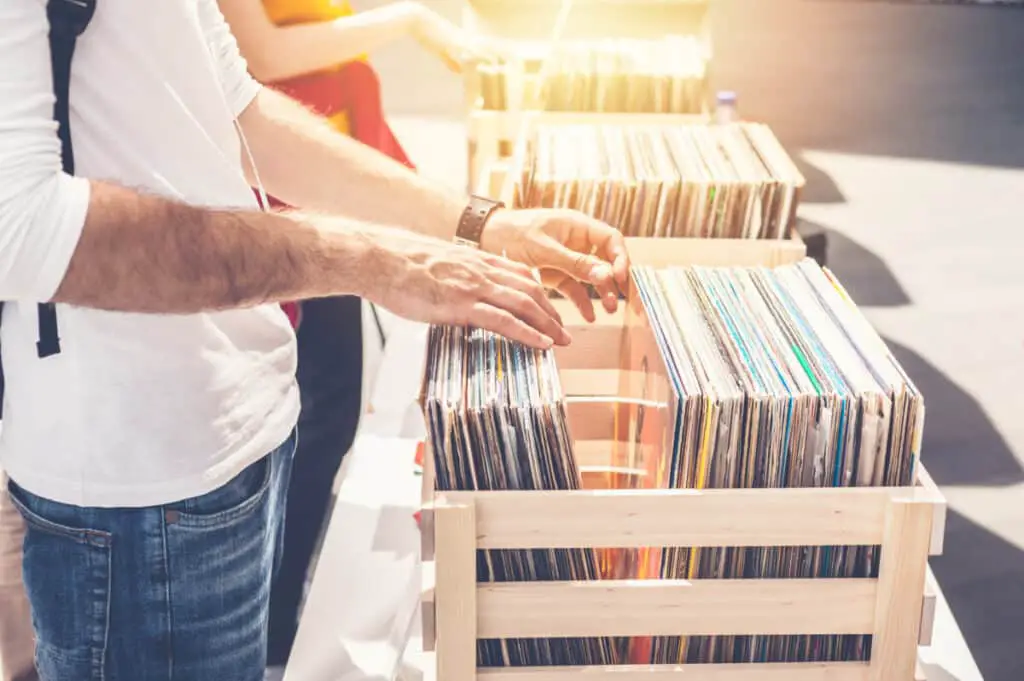
    Temperature

    There are several factors that can affect your records, including temperature, light, and humidity. Temperature is perhaps the most major of these because vinyl records are incredibly sensitive to heat- within minutes they can be rendered completely unusable. As a general rule, lower temperatures are safer for your records.

    The recommended temperature for records to be stored at is about 46-50°F. Anything above 50 degrees can start warping your records. This isn’t a hard and fast rule, though. For the records you play daily, the collection can be stored in temperatures from 65-70°F. That said, for long-term storage, 50°F and under is the best temperature range to keep your vinyl safe.

    Related articles

    What Temperature Can Vinyl Records Withstand? We Have The Answer.

    This Is The Temperature In Which Records Warp

    Light

    Light is another important environmental factor to watch out for while deciding where and how to store your vinyl records. Records should not ever be directly exposed to light, whether it’s intense or not. But that doesn’t mean that you need to keep your records out of all light, though that would be kind to the vinyl. A good principle to follow is to keep the vinyl out of direct light as much as you can- minimal exposure is key.

    Direct exposure to light can, like high temperatures, start to warp your vinyl. This is because direct light does have heat, whether we can feel it or not.

    Humidity

    Similar to temperature and light, humidity can also create heat and, therefore, warping effects in your vinyl collection.

    The biggest key to this is keeping air flowing. Fans and air conditioning are both great options to assist with this. And another tip: don’t store your vinyl in the attic or the basement. You may have noticed that neither of these areas has good air circulation, and they sustain more extreme temperatures, because attics and basements are more affected by outside temperatures. This is not good for vinyl, so try to keep it in a spot where there is consistent airflow and not a lot of humidity.

    Vinyl loves a dry environment. By dry, we mean anywhere from 35-40% relative humidity (RH). Anything more than that can create a greenhouse-like effect on the vinyl, like higher temperatures and more water in the air.

    Cleaning and Care

    The way you clean and care for your vinyl collection also has a big effect on the records. A record cleaning brush is a great way to keep your records clean. True to the name, these brushes are specific to cleaning records, so they have no problem getting into those grooves and cleaning out any dust or dirt that has gathered while it was out of its jacket and sleeves.

    You may be the type of person that cleans their records on their t-shirt and calls it good, and if so, this next part is for you. Cleaning the record with your t-shirt is not good for the record. Even if the shirt is super comfy and soft, fibers in the shirt can still scratch the vinyl.

    Another great cleaning option for your vinyl is a vinyl cleaning solution that comes as a simple spray. For use, you can just spray the solution onto the record. Make sure to stay clear of the record label! Then, gently wipe down with a microfiber cloth. Using this cleaning process every 6 months will keep your records looking nice, shiny, and most importantly, clean!

    As a general rule, don’t touch your records with your hands (unless you’ve carefully washed and dried them first). Even after being washed, and especially before, hands have so many oils in and on them, and these act as a trap to catch all the dirt, dust, and debris. Think of handling your vinyl collection as you would handle a hard copy of a photograph. Touching the photograph damages it, right? It’s the same case with vinyl: the oils in our hands are harmful to the material.

    Using finger cots or clean nitrile gloves while cleaning will help to keep fingerprints and oils off of the vinyl, give you a better grip, and assist in keeping the vinyl records clean. If you’re just playing your records, make sure to wash your hands first, and try to only touch the edges of the record.

    Boxes

    Boxes and bins are great storage options, especially if you don’t play your records super often. If you’re storing your records in a box, make sure it’s not in a cardboard box. Cardboard boxes aren’t as strong as other materials and they can break easily. A better option would be a heavy-duty plastic box. Crates and baskets are also some great, more stylish, options.

    There are also several airtight options, some that are specifically designated for record storage. These are great for transporting your collection during a big move, but for permanent storage, these are also not the greatest option. Though they’ll keep the records safe, airtight boxes have no airflow, which can contribute to higher or lower temperatures and other components that can compromise your records.

    Shelving

    Because there are so many types of shelves, they have a lot to offer. Shelves can be fun accents, function as beautiful accent furniture, provide useful storage, and so much more. These uses make shelves the perfect candidate for vinyl storage. We’ll further discuss how to style different types of shelves later, but here’s a list of shelving do’s and don’ts for your vinyl collection.

    • DO install metal brackets under the corners of shelves. Shelves aren’t mean to hold too much weight, especially floating ones. Give your shelves a little extra power by adding brackets underneath them.
    • DO group your vinyls together by size. You may already have a great organization system, whether it’s by color, genre, or artist, but trust me on this. Grouping records together by size will not only make the shelves aesthetically pleasing to look at, but it will also assist in evenly distributing weight among shelves.
    • DO use labeled dividers in between groups. This one isn’t necessary, but for the inner perfectionist and organization master in all of us, it makes tracking down the record we’re wanting so much easier.
    • DO store your vinyl records in an upright position. This will eliminate pressure on the vinyls and keep them happy.
    • DON’T touch your vinyls! If you must touch them, wash and dry your hands first. And please, just touch the edges. The oils in your hands can cause damage to your records.
    • DON’T stack your records on top of each other. Pressure isn’t good for records. This is another factor that can cause warping and other complications in the records.
    • DON’T store in direct sunlight. You may have an empty shelf on the wall, but if that wall gets tons of sun, that is not the place for your vinyl collection. Direct and intense light can cause major warping problems in vinyls.
    • DON’T put away vinyl records before cleaning them. Nobody wants to see a buildup of dirt and dust, and it’ll start to affect how they play after going too long without cleaning.

    Some Display Tips

    Vinyl records are becoming a very popular way to decorate, whether you’re into collecting them or not. We’re seeing them pop up in college dorms and on prominent display in homes, bringing some nice vintage, retro, or sometimes even boho vibes to the room. It all depends on what they are styled with.

    Crates have always been an interior design staple. You may be surprised to hear that they have a history with storing records- people used to use milk crates as record storage because they fit the records perfectly. Now, though real milk crates are incredibly hard to come by, putting your records in a cute crate would add a touch of history to the space.

    Open shelving units are another great way to store records. A great example of these is the KALLAX shelves from IKEA. These have so many functions, and you’re able to either put the records straight into some shelves and put baskets in the other shelves to add a bit of balance and keep some things out of sight and out of mind.

    Related Article:

    Great IKEA Hacks for Storing Vinyl Records

    Floating shelves are another fun way to store your vinyl records. There are so many types, ranging from wire racks bent into fun shapes to the basic, clean-cut wooden shelves we all love. You can either prop up a few records on the shelves, slide them into the racks, or you can combine them with other design elements like cute plants, stacked books, and figurines. Floating shelves are easy to overload, so be careful to not put too much weight on shelves that are holding your collection (or any other valuables).

    Wire magazine racks (and designated record racks) that can stand in a corner are another great way to store records. Be careful of storing yours in one of these, though, because overloading the angled shelves could cause pressure on the records that are on the bottom.

    There are also so many great end tables that can be used to store records. With the rise in people looking for beautiful and functional furniture, stylistic and functional shelves seem to be incorporated into everything, including those tiny tables on the sides of your sofas.

    If you want to display your records on the wall, you could purchase a pretty picture frame and display the record on a wall without lots of sunlight. This will give a little bit more of a sophisticated, art-gallery vibe to your decorating.

    Another super fun option is to mount your records on the wall without a frame. Twelve Inch sells an amazing wall-mount made for vinyl records specifically. It comes with two magnetic pieces, one on the wall and one on the jacket of the record, that allows for easy attachment and removal. This is perfect for those that want their favorite vinyls displayed prominently, but want to be able to listen to those favorites with ease.