Category: Turntables

  • Best Wooden Turntables [2023]

    Best Wooden Turntables [2023]

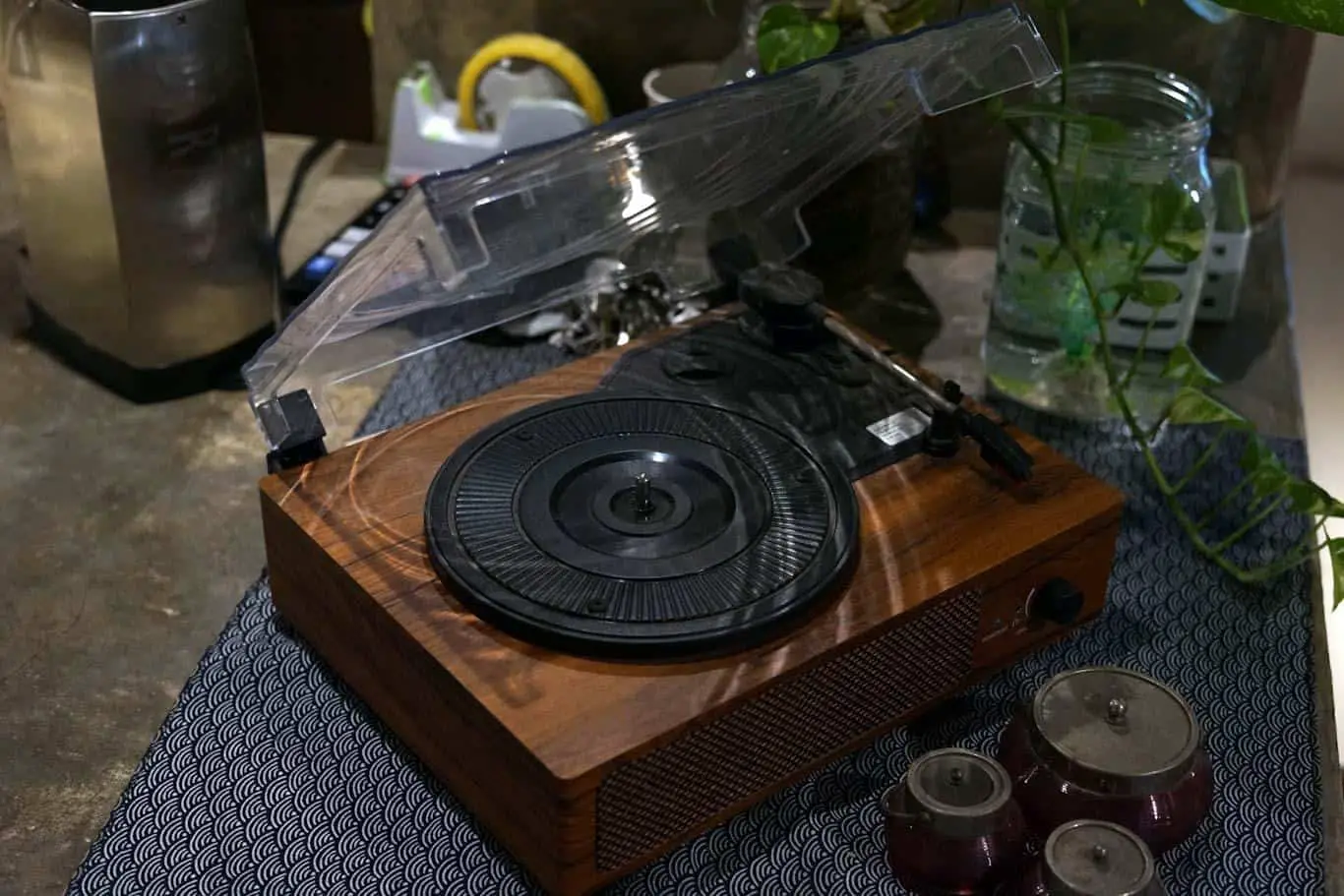
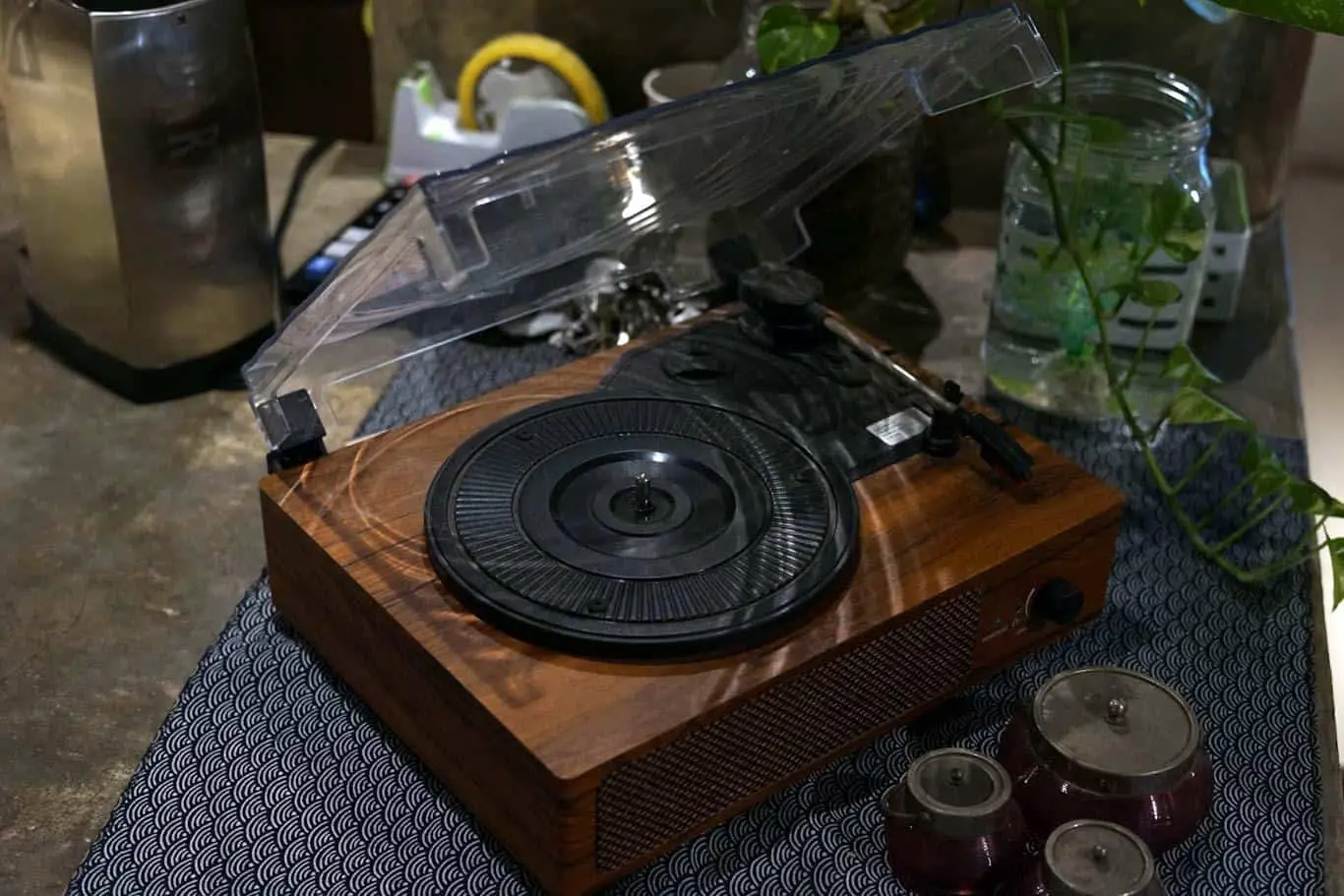
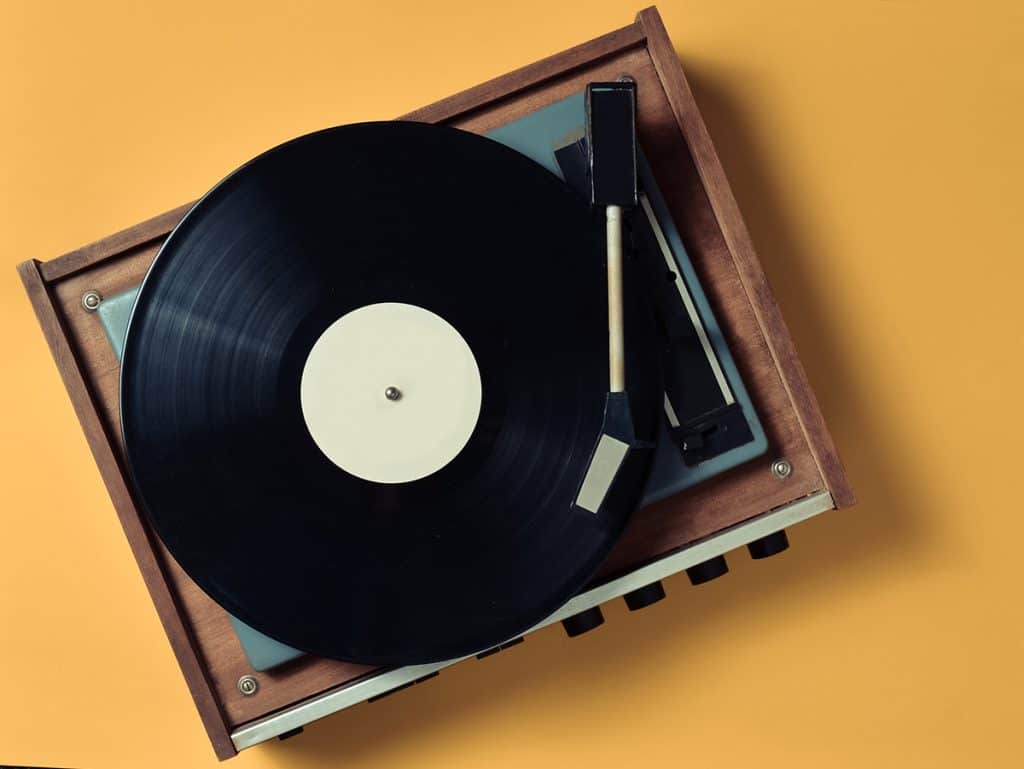
    Are you a music lover who enjoys listening to music on vinyl records? If so, you’ll love wooden turntables. They bring the classic spin-the-disc experience back to life and are perfect for listening to music the old-fashioned way.

    The best wooden turntable overall is the ION Audio Archives LP. It delivers excellent sound and reproduces music distortion-free without damaging your records. It also tends to be easy to use, with controls that are simple and clear to navigate.

    Add a touch of class to your listening experience by investing in a wooden turntable. A wide range of options is available on the market, and with a little bit of work, you’ll find your perfect fit. In this article, I’ll take you through the best wooden turntables, as well as give you some tips on choosing the right one for your needs.

    Factors To Consider When Buying a Wooden Turntable

    You might be wondering: “What makes an excellent wooden turntable?”. Well, many factors go into a quality player. To help you find the best wooden turntable for your needs, I’ve compiled a list of some of the most important factors when choosing one.

    • Your budget. Selecting a turntable will be determined by your budget. While some cheaper options work fine, they might not last for long. If you’re looking for something that will last through years of use, you’re likely to pay more. It might be best to pick your budget so you know what to look for since prices range from around 80 to over 1000 dollars for a high-end model. 
    • Turntable tonearm. Turntable tonearms come in three types: automatic, semi-automatic, and manual.
    • Design and aesthetics. You can have a stylish wooden turntable to match the style of your house. People often prefer wooden turntables because it makes their home look elegant and classy. A nicely designed turntable will give a room character and make it look more attractive.
    • Availability of turntable accessories. When choosing your player, you should also consider accessories availability. For instance, it can be convenient to have spare parts such as an extra needle or vinyl cleaning sets, should the need arise.
    • Sound quality. Investing in a quality product is worth it if you want to get the most out of your records. You don’t want to spend money on something that doesn’t produce excellent sound, especially if you’re using it regularly. Make sure your choice has enough wattage output to eliminate sound distortion or other issues with quality when playing back music.
    • Devices connectivity, including Bluetooth, USB, Audio Inputs, and Outputs. These turntable features make it easy to enjoy your music in different ways. You can connect your turntable to external speakers, listen through headphones, or convert your records into digital audio files.

    A wooden vinyl record player is one of the best ways to listen to music, with the added benefit of a beautiful aesthetic. There are many types of turntables and players out there, and choosing one can be tricky.

    For instance, several turntables are advertised as wooden but are merely made of engineered wood, plastic, and wood veneer. Fortunately, I have a list of the best and most affordable solid wooden vinyl turntables to help narrow down your choices.

    All these wooden turntables are available on Amazon, so go ahead and check them out.

    Best Wooden Turntables 

    There’s something about an analog system’s rich, warm sound that digital devices just can’t replicate. For many people, this is the appeal of record players. Turntables may be old-fashioned, but they allow you to relive some of your old favorite memories. People long for that nostalgic feel that only comes from listening to their favorite tunes on a vinyl record.

    Here’s my list of the top wooden turntables (available on Amazon.com) that stand out from the rest. Each has unique features that make it an excellent option for personal use.

    Best Overall: ION Audio Archives LP

    The ION Audio Archive LP is a machine that brings the analog experience of vinyl records and LPs into the modern digital age. With built-in speakers housed in an all-wooden base, this turntable also offers an aesthetic appeal to complement its functionality.

    This all-in-one turntable and digital audio converter feature quality sound with built-in speakers and a diamond-tipped stylus for your best listening experience. This device supports playing 33 ⅓, 45, and 78 RPM records.
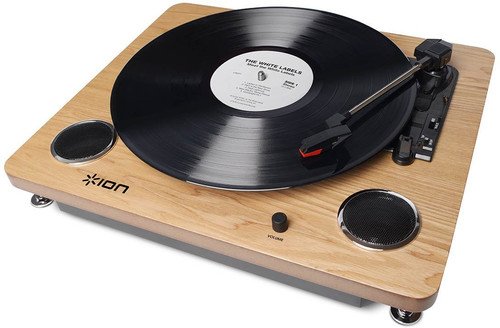
    ION Audio Archive LP | Digital Conversion Turntable with Built-In Stereo Speakers and Diamond-Tipped Stylus

    Alternatively, you can use the EZ Vinyl/Tape Converter software that converts tracks into MP3s. The software can easily convert your old vinyl records into digital files for you to enjoy on your computer, tablet, or smartphone.

    You’ll love the ION Audio Archive LP if you’re a vinyl fan. This digital conversion turntable is suitable for people who want to enjoy their music the old-fashioned way. What’s more, it’s easy to use; just plug it in, and that’s all.

    Archive LP’s natural wood finish adds a sense of class and natural beauty to any room. Plus, its simple solid design ensures durability and smooth play.

    The ION Audio Archive LP is perfect for beginners in the vinyl world who are on a budget. It’s not highly priced, has a built-in speaker, and allows you to convert your old records into digital files. For a low price, this turntable offers excellent features.

    Pros

    • Not expensive, yet outstanding. The ION Audio Archive LP is perfect if you’re looking for well-priced, good equipment. An excellent choice for anyone who wants a low-entry player that looks stylish and has good sound.
    • Built-in speakers. The built-in speakers of ION Audio Archive LP are suitable for playing music, although not the best. Even though the sound may be adequate for most people, you could as well invest in an external speaker system. The built-in stereo speakers are a nice feature that can be useful if you don’t want to mess with cords and devices. It’s convenient if you just want to listen to music without fuss.
    • ION Audio Archive LP connects to a computer via USB to turn records into digital music files. You can convert your vinyl records via a USB port and hear them as digital audio files on your computer or any compatible device.
    • Strong build. The turntable’s natural wood finish and sturdy build will ensure a smooth playback experience for years to come. The Ion Audio Archives LP  is the perfect addition to any analog lover’s collection. Its natural wood finish and sturdy build will ensure durability.
    • Simple controls. It’s as simple as putting the needle down on the record, adjusting the volume and you’re all set. In short, that’s all there’s to it. This turntable is a great option if you want an easy-to-use vinyl player. The controls are simple, making it easy to get what you need without fumbling around with buttons or switches.

    Cons

    • The Ion Audio Archives LP turntable has no dust cover. The most glaring downside is the absence of a dust cover. As a result, dust and dirt can accumulate on the platter, resulting in scratches.
    • It lacks Bluetooth features. The Ion Audio Archives LP turntable does not have Bluetooth capabilities. This model does not have Bluetooth capabilities, and you’ll need to rely on audio cables for connections or pairing.
    • No headphone jack. An inconvenience if you prefer using headphones while listening to your music.

    Best Low-Cost: ION Audio Max LP

    ION Audio Max LP boasts many features similar to the ION Audio Archives LP. This easy-to-use turntable connects to your computer and separates the tracks into individual files, so you can easily convert them to digital music files. Max LP is perfect for anyone who wants to easily and quickly enjoy their records without spending hours changing them to a digital format.

    ION Audio Max LP – Vinyl Record Player / Turntable with Built In Speakers, USB Output for Conversion and Three Playback Speeds – Natural Wood Finish

    Like the ION Audio Archive LP, this model supports playing 33 ⅓, 45, and 78 RPM records.

    With ION Audio Max LP, you’ll experience music from the in-built stereo speakers, just like the ION Archive LP. Connecting Max LP to your existing HIFI system is simple, thanks to its standard RCA and headphone outputs.

    This turntable features a built-in USB port for easy conversion of your records to digital music files, a scratch-proof platter, and automatic tonearm adjustment.

    Pros

    • A decent-sounding low-budget model. A good choice if you want a low-entry turntable with good sound.
    • It comes with built-in speakers. The sound output is good enough for you to enjoy your music.
    • USB port. A USB port to digitize your vinyl records to MP3 files.
    • Comes with standard RCA and dedicated headphone outputs. You can connect to external speakers and headphones.
    • Dust cover. The ION Audio Max LP has a protective plastic cover to keep your player clean and dust-free.

    Cons

    • It lacks Bluetooth features. This turntable lacks Bluetooth capabilities, so you’ll need to connect via cables.
    • Average sound output. The sound is okay for its price tag, but some audiophiles might complain about its quality.

    To better understand the difference between these two similar turntables, below is a table comparing their features.

    ION Audio Max LPIOP Audio Archive LP
    MaterialWoodWood
    Size15”x16’x 4” ( 38.1×40.64×10.16 cm)14”x16”x3.5” (35.56×40.64×8.89 cm)
    Weight7.7lbs ( 3.493 kg)5.9lbs (2.67kg)
    Turntable3-speed manual belt-drive3-speed manual belt drive
    Dust CoverYesNo
    BluetoothNoNo
    Aux InputYesNo
    Headphone jackYesNo
    Built-in speakersYesYes
    Converts to digitalYesYes
    Table 1. Comparison of features between ION Audio Max LP and ION Audio Archive LP.

    Most Versatile: Victrola 8-in-1 Bluetooth Record Player and Multimedia Center

    Dust off your old vinyl collection and prepare for the Victrola 8-in-1 Bluetooth Record Player. With its 3-speed turntable, FM radio, CD, and cassette players to keep you entertained, this is the perfect addition to your home. Plus, you can use the Bluetooth function to stream music from your tablet or smartphone.
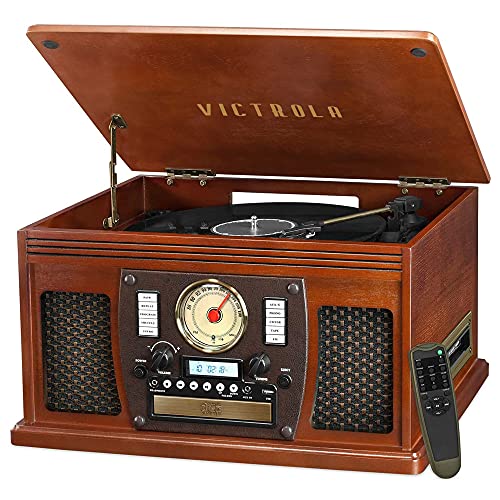
    Victrola 8-in-1 Bluetooth Record Player & Multimedia Center, Built-in Stereo Speakers - Turntable, Wireless Music Streaming, Real Wood | Mahogany

    The built-in stereo speakers provide clear sound. You can also convert your vinyl records to MP3s with the included software. The Victrola 8-in-1 Bluetooth Record Player is the perfect way to enjoy your whole music collection.

    Therefore, whether you’re into old-school country music or want to groove to your latest playlist, the Victrola 8-in-1 Record Player is sure to please.

    Pros

    • High-quality design. The classic retro real wood case, solid hinges, premium fabric grilles, and excellent sound showcase superior craftsmanship. The unit boasts a stunning vintage design with modern features, making it a great addition to any room.
    • Built-in stereo speakers. The costume-tuned built-in speakers deliver crisp, clear sound.
    • Record from vinyl to MP3. With the help of the included software, you will be able to convert high-quality audio from vinyl to MP3. You can also use the USB cable to transfer music files between your PC and turntable.
    • Bluetooth connectivity. Bluetooth connectivity makes it possible to stream wirelessly from your smart device through the built-in stereo speakers.

    Cons

    • It’s expensive. Although the Victrola 8-in-1 Bluetooth Record Player is a bit pricey, it offers a wide range of features that are perfect for music lovers.
    • Limited functions of the remote. As a result of its retro design, you can’t use the remote to power on/off the radio or tune it.

    The following table better shows the features of the Victrola 8-in-1 Bluetooth Record Player.

    MaterialReal wood
    Turntable3-speed manual belt drive
    Size18.2”x13.2”x10” (46.23×33.52×25.4cm)
    Weight16.5lbs (7.53 kg)
    FeaturesTurntable, CD player, Cassette player, FM Radio
    Dust coverYes
    BluetoothYes
    Aux inputsYes
    Headphone jackYes
    Built-in speakersYes
    Converts to digitalYes
    Table 2. Victrola  8-in-1 Bluetooth Record Player features and dimensions

    Most Aesthetically Pleasing: 1 BY ONE Belt Driven Turntable
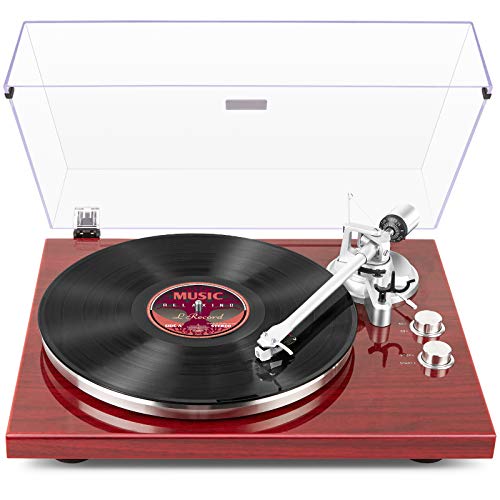
    1 BY ONE Belt Drive Turntable with Bluetooth Connectivity, Built-in Phono Pre-amp, USB Digital Output Vinyl Stereo Record Player with Magnetic Cartridge, 33 or 45 RPM

    Are you looking for a stylish way to add a little fun to your home audio system? Then you’ll love the 1byone Wooden Turntable. This turntable is stylish and easy to use, and it also comes with a built-in stereo speaker that gives you high-quality sound. Whether you’re a music lover or just want a unique way to add some extra personality to your home, the 1byone Belt Driven Wooden Turntable is a good choice.

    Are you looking to rediscover that lost art of vinyl listening? This is the perfect way to do so and make some new memories in the process.

    The vinyl-to-MP3 recording transforms your favorite vinyl records and cassettes into MP3 files that you can play on any device.

    You can choose from 3-speed settings, and the built-in stereo speakers deliver optimal sound quality for all your music needs. Whether you’re a classic rock, jazz, or blues fan, this is your kind of turntable.

    Pros

    • Vintage appearance. This turntable features a simple but stylish look. The solid natural wood looks give it a traditional appeal. This elegant turntable also features a solid natural wood frame that gives it a classic and timeless appearance. Plus, its simple design won’t take up much space on your shelves or in your room; it is perfect for any décor.
    • Bluetooth connectivity. You can play music from all your compatible digital devices through the speakers.
    • Vinyl-to-MP3 Recording. You can convert audio from your vinyl records into MP3 files for later playback on digital devices.
    • Built-in Full Range Stereo Speakers. The turntable’s active 2-way stereo system provides enhanced sound and clarity across all music genres.

    Cons

    • Sound output. The music sounds great, even though there is not much bass. However, when you crank the volume all the way up, you might get some distortion.
    MaterialReal wood
    Turntable3-speed manual belt drive
    Size16.5 x 13.6 x 4.9 inches (42×34.5×12.4cm)
    Weight12.8 lbs (5.8 kg)
    Dust coverYes
    BluetoothYes
    Aux inputsYes
    Headphone jackYes
    Built-in speakersYes
    Converts to digitalYes
    Table 3. 1byone Belt Driven Wooden Turntable features and dimensions

    Best High-End: U-Turn Audio – Orbit Special Turntable

    For a high-end turntable that offers a listening experience like no other: the U-Turn Audio-Orbit Special Turntable is your perfect choice. This turntable features a flat-cut maple or rift walnut plinth from solid wood sourced in the US. The Ortofon 2M Red cartridge and an external belt drive let you enjoy clear and detailed playback free from Motor noise.

    U-Turn Audio - Orbit Special Turntable with Built-in Preamp (Walnut)

    The precision OA2 gimbal tonearm ensures accurate tracking and low distortion for consistent sound quality. Whether you’re a vinyl lover or an audiophile, take your music listening experience to the next level.

    Regarding sound quality, the award-winning Ortofon 2M Red cartridge deserves a special mention. This cartridge delivers an open and dynamic sound without coloring your music, letting you enjoy the fullest range of sound from your vinyl records. Plus, the Cue Lever makes it simple and easy to operate the tonearm to get the most out of every track.

    Pros

    • High-quality sound. This high-end turntable is equipped with the Ortofon 2M cartridge, designed to deliver an exceptionally dynamic sound. This turntable makes music come to life with clarity and depth, sure to excite your senses.
    • Real wood construction. The turntable is made from natural solid hardwood, thereby ensuring durability.
    • Low-Resonance acrylic platter. The acrylic platter provides smoother playback and better speed consistency.
    • The tonearm. This OA2 gimbal tonearm enables precise tracking and minimal distortion.
    • The external belt drive eliminates motor noise. U-Turn Audio-Orbit Special Turntable uses an external belt drive to eliminate motor noise, ensuring reliable performance. This unique feature ensures that the turntable runs smoothly and makes far less noise, making it a great choice for audiophiles looking for high-quality sound.

    Cons

    • The U-Turn Audio-Orbit Special Turntable is quite expensive. This unique turntable is made from high-quality materials and has several notable features that set it apart from other turntables on the market. From its design to its audiophile-grade sound, this turntable is sure to impress. However, it will set you back a pretty penny.
    • Red cartridge standard. When ordering the turntable, you don’t get the option of choosing a different cartridge. You’ll have to upgrade to get the Ortofon 2M Blue cartridge.
    • No automatic stop. When a record is over, the arm does not lift automatically. You have to raise the tonearm manually; this is a minor inconvenience, but most high-end turntables do not have auto-stop.
    • Extra care for the external belt drive. The exposed external drive requires extra keenness in order to avoid damage.
    MaterialReal wood
    Turntable2-speed external belt drive, fully manual
    Size16.75”x12.5”x4.25” (42.54×31.75×10.79cm)
    Weight12.5lbs (5.67 kg)
    Dust coverYes
    BluetoothNo
    Aux inputsYes
    Built-in speakersYes
    Converts to digitalNo
    Table 4.  U-Turn Audio-Orbit Special Turntable features and dimensions

    Now that you have seen some of the best wooden turntables available in the market today, it’s time to make your choice. Let your decision be based on the relevant factors I explained at this article’s beginning. However, at the end of the day, remember that it’s all about your personal preferences.

    Read on to learn about your best choice if you’re new to the vinyl world.

    Best Wooden Turntable for You

    There’s a world of turntables out there, and it can be hard to know where to start. Do you go for a cheap entry-level model or invest in a higher-end one? And what about all those different brands? In this segment, I’ll guide you through choosing the most suitable wooden turntable for yourself.

    The Best Wooden Turntable for Beginners

    There are a lot of factors to consider when choosing a turntable. But if you’re a beginner, the most important thing is to find a turntable that’s easy to use, produces good sound, and isn’t expensive.

    The Audio Max LP should be your go-to choice if you’re just starting and want a good wooden turntable. This turntable is affordable and boasts many features, including a built-in speaker, pre amp, and a USB output. In case the in-built speakers are inadequate, you can connect external speakers.

    The ION Audio Max LP is an easy-to-use turntable; that’s why I’ll recommend it for beginners. The controls are simple, making it easy to get what you need without fiddling with switches or buttons. All you have to do is set the needle down on the record, set your volume, and you’re ready to go.

    How about if you’re looking to upgrade or if you need something a little bit more high-end? Keep reading to find out.

    The Best High-End Wooden Turntable

    When it comes to buying high-end audio equipment, most people tend to stick to mainstream brands. But what if you’re looking for something a little more unique that will set you apart from the crowd? The U-Turn Audio-Orbit Special Turntable is the best if you’re looking for a safe bet.

    This turntable is made from high-quality materials and features a sleek design that will turn heads. Plus, it boasts a wide range of features that will make your music-listening experience unique and special.

    The U-Turn Audio-Orbit Special Turntable is made from solid wood, giving it a unique natural look and feel compared to other turntables on the market. Additionally, its solid wood construction plus the external belt drive minimize distortion and vibration to produce high-quality sound.

    Having picked the turntable that will add a unique and stylish element to your home entertainment system, it’s essential to take proper care of it. In the next section, I’ll discuss how to take care of your turntable and keep it in good condition so that you can enjoy it for years to come.

    How To Take Care of Your Wooden Turntable

    As a music lover, you know that vinyl records are making a comeback. And if you’re a vinyl lover looking to add this retro style of music to your collection, a wooden record player or turntable is the perfect way to do it. But how do you take care of your wooden vinyl player?

    Here are some tips to help keep your turntable in top condition:

    • Clean your turntable regularly. Vinyl lovers know how crucial it’s to maintain their turntables. But while regular cleaning is a good idea, it’s also important to remember that dust will get in there, and over time, it can build up and cause problems. To avoid this, try to clean your turntable as often as possible with a microfibre cloth. Moreover, when playing records, keep the lid closed to minimize the dust that gets in.
    • Clean your vinyl records. Keep your hands off of records. Touch only the edges and center. The grease and dirt on your hands can damage the grooves and lower sound quality. You can remove dirt from the vinyl using a brush or wiping with an anti-static solution. Many record cleaning solutions are available both in stores and online. Always read the instructions, as some can damage vinyl if not used properly.
    • Take care of the stylus. To keep your turntable sounding its best, clean the stylus after each use if possible. Clean the needle from back to front using a stylus brush because brushing from side to side can damage it. Even though the stylus tip is diamond, one of the hardest substances, it will deteriorate over time. Replace the stylus if you notice it’s worn down to prevent damage to the grooves on the record.

    Key Takeaways

    In case you’re looking for something that provides both style and functionality, then a wooden turntable might be right up your alley. These turntables add a lot of aesthetic appeal to any room and are often very unique in their designs. They also come in various sizes and shapes to fit any space you might have. A wooden turntable can be a perfect addition to your home entertainment setup.

    Playing vinyl on a wooden turntable goes beyond playing music; it’s creating an auditory experience that takes you back to the golden age of music in a unique way.
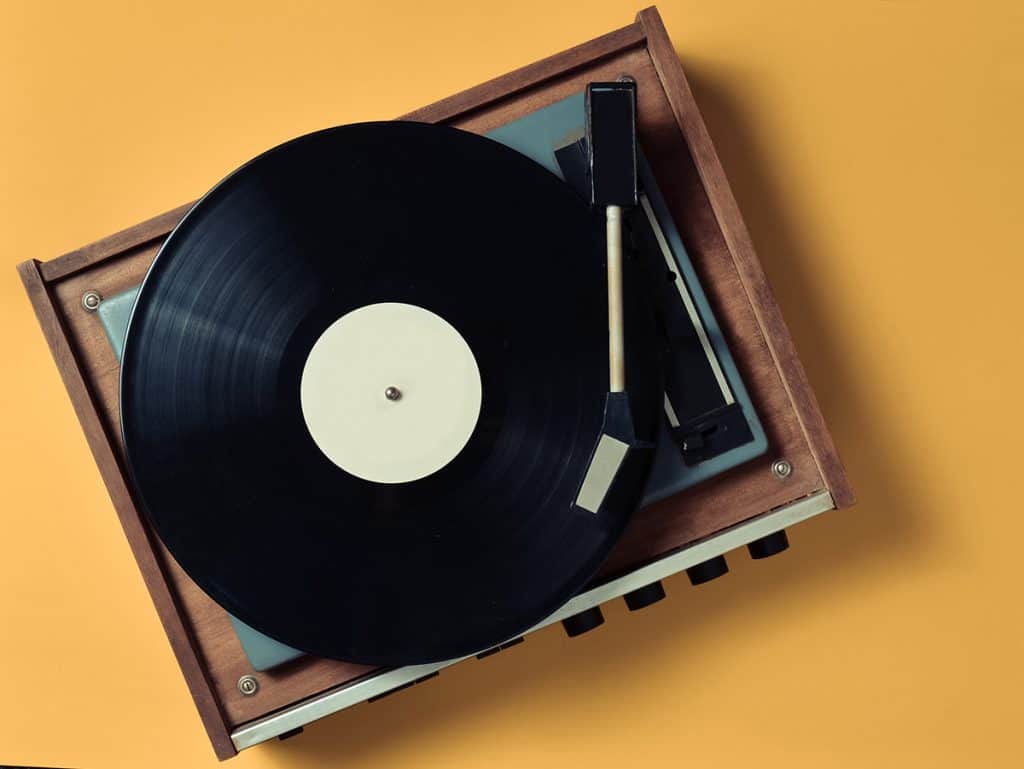
  • Best USB Turntables: Budget to High-End.

    Best USB Turntables: Budget to High-End.

    Music enthusiasts and audiophiles alike enjoy listening to vinyl records for a superior listening experience. One of the biggest drawbacks of vinyl records is that you can’t just carry them around when you travel. A good alternative is a USB turntable, which allows you to listen to your favorite LP by plugging the turntable into your laptop. And it’s easy to digitalize your vinyl collection with a USB Turntable.

    The best USB turntable for most people is the Audio-Technica AT-LP60X-GM. It offers high fidelity audio quality while offering a simple design for seamless use. Its automatic arm will ensure the integrity of your records, and its two-speed control will allow you to play a wide range of albums. 

    I’ll walk you through what you should consider before purchasing your first USB turntable. After that, I’ll give you our top five USB turntable recommendations for different occasions. Keep reading to find out which USB turntable is best for you!

    Things To Consider When Buying a USB Turntable

    You need to understand what to look for in a USB turntable before investing your money in one. Luckily, you won’t have to invest a whole lot of time into researching what makes a good USB turntable since we’ve already done that for you!

    Before buying a USB turntable, you should be somewhat familiar with the following factors:

    • Preamp
    • Speed controls
    • Upgradeable cartridge
    • Arm rotation

    Let us walk you through what each of these does and what you should know about them.

    Preamp

    The preamp will amplify the sound coming from your table so that you can play audio from your turntables in speakers or any other sound system. Many turntables come with a built-in preamp so that you don’t have to worry about converting the signal when you plug it into an external speaker. 

    As a fundamental part of USB turntables in the modern era, we have stuck with turntables that come with a preamp in this guide. You don’t have to worry about amplifying the signal if you choose one of our recommended USB turntables below.

    Speed Controls

    Vinyl records are pressed at different speeds, which are measured in rotations per minute (RPM). Most records these days are pressed at either 33 ⅓ RPM or 45 RPM. Some older records may also be pressed in 78 RPM, although those are not that common these days. 

    You will want a USB turntable that is capable of adjusting between 33 ⅓ RPM and 45 RPM at least so that you can listen to a wide variety of albums. All USB turntables in our guide can play records at 33 ⅓ RPM and 45 RPM, so you don’t have to worry about buying the correct RPM record for your turntable.

    Upgradeable Cartridge

    Whether you’re a record amateur or a seasoned pro, you will want to get a turntable that will give you the option to upgrade in the future. Being able to swap out the needle or cartridge will allow you to improve the sound quality of your USB turntable and also replace these parts if they get worn out after years of use. 

    Upgrading a turntable cartridge is not that complicated, so don’t worry if you feel like you do not have the know-how to do these improvements yourself. You can watch the following YouTube video to get an idea of how easy it is. 

    Automatic vs. Manual Arm Turn

    If you’re new to the world of vinyl records and turntables, you may not know about the difference between automatic and manual turntables. This refers to how the needle, or stylus, is placed on the record to begin playing and lifted off the record to stop playing. 

    Whether the machine does it automatically or whether you have to do it yourself determines if it is a manual or automatic turntable. 

    You may think that this is a minor issue and one that is simply based on convenience or preference, but you should think carefully about which type of turntable you will choose. 

    If you are a beginner and are just starting to grow your record collection, you will almost certainly want to go with an automatic arm-turn turntable. This will allow the machine to carefully play your records, thus eliminating the risk of accidentally damaging them. 

    You may lose some sound quality due to the extra automation, but it’s probably worth it to prevent causing some real harm to your records. 

    If you already have some experience with record players and want to get the best possible sound quality, then you should go with a manual turntable. You will have to do all the work of raising the stylus and placing it on the record, and then lifting it off the record when done, but the sound quality will be second-to-none. 

    We have included a mix of automatic and manual USB turntables in our guide below. Be sure to decide which type of turntable you want and pay attention to the type of arm turn to make sure you get the right kind!

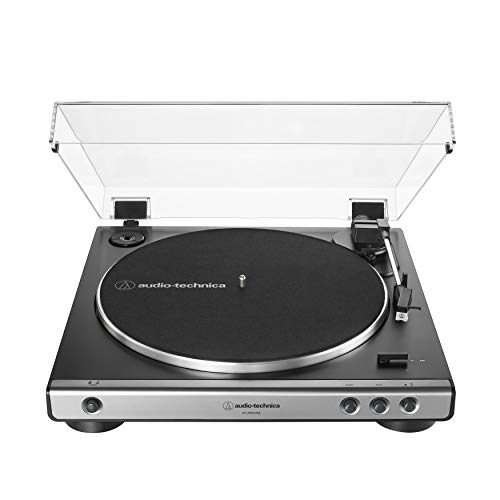
    Best Overall: Audio-Technica AT-LP60XUSB-GM 

    Audio-Technica AT-LP60XUSB-GM Fully Automatic Belt-Drive Stereo Turntable (Analog & USB), Gunmetal, Hi-Fidelity, Plays 33 -1/3 and 45 RPM Records, Convert Vinyl to Digital

    Audio-Technica is one of the most respected brands in the music and sound production world. Known for offering superior quality at a small premium, any Audio-Technica turntable is synonymous with quality. 

    The Audio-Technica AT-LP60XUSB-GM is a perfect USB turntable for music lovers and casual hobbyists alike. Its simple design with abundant features allows for a seamless listening experience without sacrificing audio quality. 

    Audio-Technica AT-LP60XUSB-GM Fully Automatic Belt-Drive Stereo Turntable (Analog & USB), Gunmetal, Hi-Fidelity, Plays 33 -1/3 and 45 RPM Records, Convert Vinyl to Digital

    Bottom Line: Any Audio-Technica USB turntable is guaranteed to be a good choice, but if you’re not sure where to start, then this is the right choice. The convenience of this machine, along with its high quality, makes it the clear winner for the overwhelming majority of high fidelity music enthusiasts, so unless you are a seasoned pro, you will not be disappointed with this machine.

    Pros

    • Die-cast aluminum platter designed to minimize vibrations and reduce audio distortions.
    • Integrated switchable phono preamp for easy connection to external audio output sources.
    • Dual speed control plays 33 ⅓ and 45 RPM records.
    • Upgradeable stylus.
    • A fully automatic arm that allows for easy play.
    • Compatibility with Audacity Mac and PC software to easily convert records into digital files.

    Cons

    • The built-in Audio-Technica cartridge is not upgradeable.
    • Ripped audio files may not be of the best quality. 

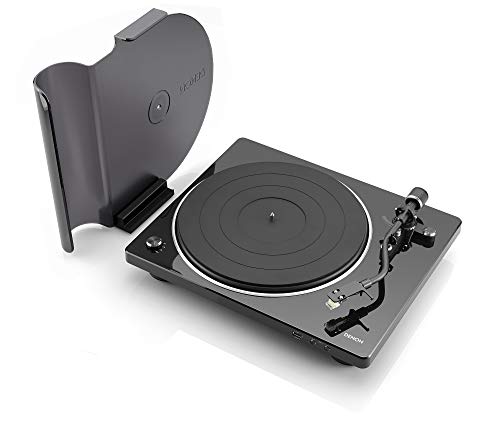
    Best for Private Use: Denon DP-450USB

    If hi-fi listening is your hobby, you might want to look for a record player that is designed for audiophiles. While this turntable won’t allow you to make killer mashups or adjust the tempo, it will play some of the highest audio quality available today. 

    Denon DP-450USB Semi-Automatic Analog Turntable | USB Output for Recording | Speed Auto Sensor | Specially Designed Curved Tonearm | 33 1/3, 45, 78 RPM (Vintage) Speeds | Superior Audio, Black

    The sleek and minimalist design will also ensure this looks great on your coffee table or on a stand in your living room or music room. While not necessarily the type of turntable you will want to carry around, it will definitely be a welcome addition to your house and could be great for people who love to entertain. 

    Denon DP-450USB Semi-Automatic Analog Turntable | USB Output for Recording | Speed Auto Sensor | Specially Designed Curved Tonearm | 33 1/3, 45, 78 RPM (Vintage) Speeds | Superior Audio, Black

    Bottom line: This USB turntable is on the pricier side, so only get this if you are a certified audiophile. You will appreciate the turntable’s superior audio quality, as well as its easy digitalization features. 

    Pros

    • A built-in preamp that allows for seamless use of external speakers.
    • It comes with some of the most advanced speed controls in the industry, allowing you to play 33 ⅓, 45, and 78 RPM records.
    • A fully replaceable cartridge, which allows for a high degree of customization.
    • The semi-automatic arm allows for superior sound quality while still retaining a degree of automation.

    Cons

    • Pricier than other turntables of similar audio quality.
    • Not fully automatic.

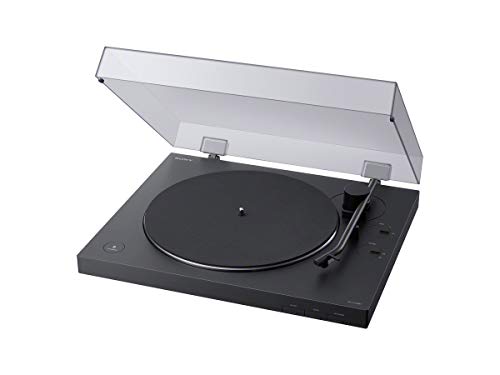
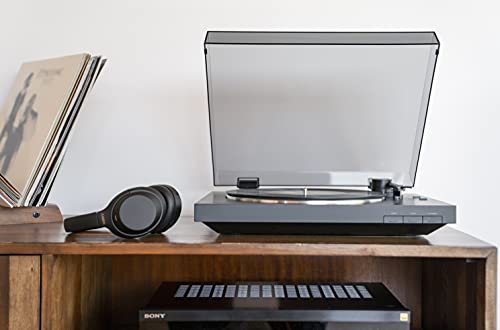
    Best for Beginners: Sony PS-LX310BT

    Few turntables are as easy to use as the Sony PS-LX310BT. This turntable was specifically designed for effortless use, allowing even the most inexperienced beginners to enjoy an enhanced listening experience. 

    Sony PS-LX310BT Belt Drive Turntable: Fully Automatic Wireless Vinyl Record Player with Bluetooth and USB Output Black

    This turntable is so effortless, in fact, that you don’t even need a cable. The Sony PS-LX310BT comes with built-in wireless support, allowing you to connect it to your computer via bluetooth or to bluetooth speakers.

    Sony PS-LX310BT Belt Drive Turntable: Fully Automatic Wireless Vinyl Record Player with Bluetooth and USB Output Black

    Bottom line: If you’re interested in developing a hi-fi listening hobby but don’t have any experience with it yet, this is where you want to start. In addition to being extremely easy to use, this machine is a great balance of audio quality and price.

    Pros

    • Integrated preamp for seamless use of external output sources.
    • Speed controls allow you to play 33 ⅓ and 45 RPM records.
    • Upgradable stylus for improved audio.
    • Fully automatic turntable.

    Cons

    • The built-in cartridge is not upgradable or replaceable. 
    • The lack of a manual arm slightly affects the audio quality. 

    Best Value: House of Marley Stir It Up Turntable

    This is the most affordable USB turntable of all five in this guide. Not only is it a relatively cheap option, but it is also the most environmentally-friendly one. The House of Marley turntable features eco-friendly and lightweight materials like bamboo without sacrificing audio quality.

    House of Marley Stir It Up Turntable: Vinyl Record Player with 2 Speed Belt, Built-in Pre-Amp, and Sustainable Materials

    This turntable also happens to have one of the most creative designs out there. By incorporating Bob Marley quotes and features, you can rest assured that this is a unique machine that can help you add personality wherever you decide to place it. 

    It’s recyclable materials also make it one of the lightest USB turntables out there. This could make it a great option if you’re looking to purchase a highly portable machine.

    Bottom line: If you’re just a casual vinyl record enthusiast and are not looking to invest a whole lot into your USB turntable, this is the best option for you. Plus, you’ll be helping the environment by purchasing a turntable that is made from mindfully sourced materials.

    Pros

    • Built-in preamp for superior audio quality and easy use of external speakers.
    • Speed controls make it compatible with 33 ⅓ and 45 RPM records.
    • Upgradable stylus for improved audio quality.
    • Made from lightweight and eco-friendly materials like bamboo, recycled plastic, and recycled aluminum. 

    Cons

    House of Marley Stir It Up Turntable: Vinyl Record Player with 2 Speed Belt, Built-in Pre-Amp, and Sustainable Materials

    • Manual stylus, which means you will have to be careful when playing records to avoid damaging them.
    • Cannot upgrade the built-in cartridge.

    Key Takeaways

    USB turntables are great ways to listen to high-quality audio with the convenience of being able to hook them up to your computer via USB cable. We hope this guide helped you choose the best kind of turntable for you based on your needs. 

    When buying a USB turntable, remember to pay attention to:

    • Whether the turntable comes with a built-in preamp.
    • The turntable’s speed controls will allow you to listen to different records.
    • Whether the turntable will allow you to upgrade or replace the cartridge.
    • Whether the turntable is automatic or manual.

    How to convert your vinyl to a digital format

    One of the main reasons for buying a USB turntable is that you want to digitalize your entire vinyl collection or just a few vinyl records. It can be intimidating for the non-techie, but don’t sweat. The process is pretty straightforward, and I wrote an entire article about all the necessary steps. Which you can find here: How to Convert Vinyl Records to Digital: 9 Easy Steps

  • How To Make any Turntable Wireless (Bluetooth)

    How To Make any Turntable Wireless (Bluetooth)

    Knowing how to make a turntable Bluetooth compatible makes it easier to enjoy your favorite tracks. You can connect the turntable to your wireless headphones, speakers, and other devices. Some modern turntables come with this feature, but you can easily add it to many models. 

    Here are a few different ways to make any turntable wireless with Bluetooth: 

    1. Add a Bluetooth transmitter to the preamp. 
    2. Add an external preamp if needed. 
    3. Pair your devices and stereo system. 
    4. Consider a hybrid turntable. 
    5. Add Bluetooth to a vintage turntable. 

    Adding Bluetooth to any turntable is easy! I made sure to cover everything on setting up Bluetooth on your turntable so that you can follow along with the article. Let’s get started. 

    1. Add a Bluetooth Transmitter to Preamp

    You can convert any turntable to Bluetooth using a Bluetooth transmitter and receiver. You’ll want to do this with a model that doesn’t already have Bluetooth built-in. For the transmitter, you have a lot of options on LINE! However, you’ll need to make sure it has analog inputs and supports aptX Bluetooth. 

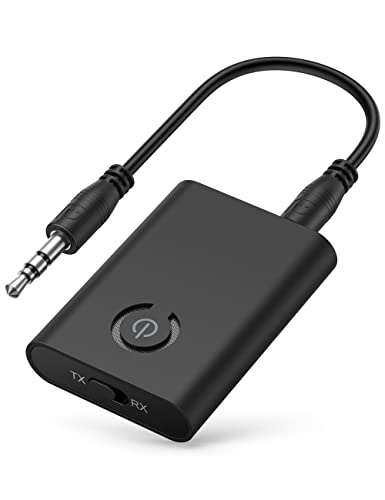
    I recommend the Hsoipn Bluetooth 5.0 Transmitter and Receiver on Amazon. It works well to convert multiple devices to Bluetooth and do the same for your record player. The transmitter also comes with high fidelity audio and has a listening range of up to 33 feet (10.05 meters). Lastly, it offers a dual connection, so two people can listen simultaneously. 

    Bluetooth 5.0 Transmitter and Receiver, 2-in-1 3.5mm Wireless Audio Adapter, aptX Low Latency, Pair 2 Bluetooth Devices Simultaneously, for TV/Headphones/PC/Home Stereo/Car/Nintendo Switch/Speakers

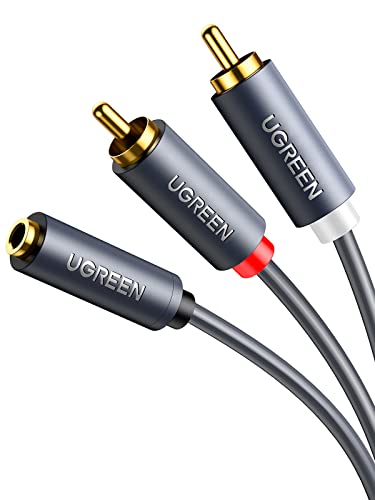
    Before ordering one, check the outputs on your record player, it’s most likely RCA. So in that case you need 2 RCA Male Cable to 3.5mm Female to be able to connect the Bluetooth transmitter. (available on Amazon) Then, once you have your transmitter ready, you’ll need to connect it to the preamp on your turntable. 

    UGREEN 3.5mm Female to 2 RCA Male Cable Gold Plated Stereo RCA Auxiliary Audio Adapter Flexible Metal Shell RCA Y Splitter Aux Cord Compatible with iPod MP3 DVD DJ Controller Mixer Speaker, 0.65 FT

    If your turntable has a built-in preamp, you’ll need to plug the transmitter into the RCA output. However, if you have an external preamp, you’ll need to connect the transmitter to the PHONO output there. It won’t work if you have an external preamp, but still, plug the transmitter into the turntable. 

    From there, you’re ready to listen to your favorite tracks through Bluetooth! It’s a very simple setup process, and you can redo it any time you need to. 

    How Do Bluetooth Transmitters Work?

    Bluetooth transmitters work by converting the audio from the turntable to a file that your Bluetooth device can read through radio waves. You can easily connect your turntable with many different devices this way. 
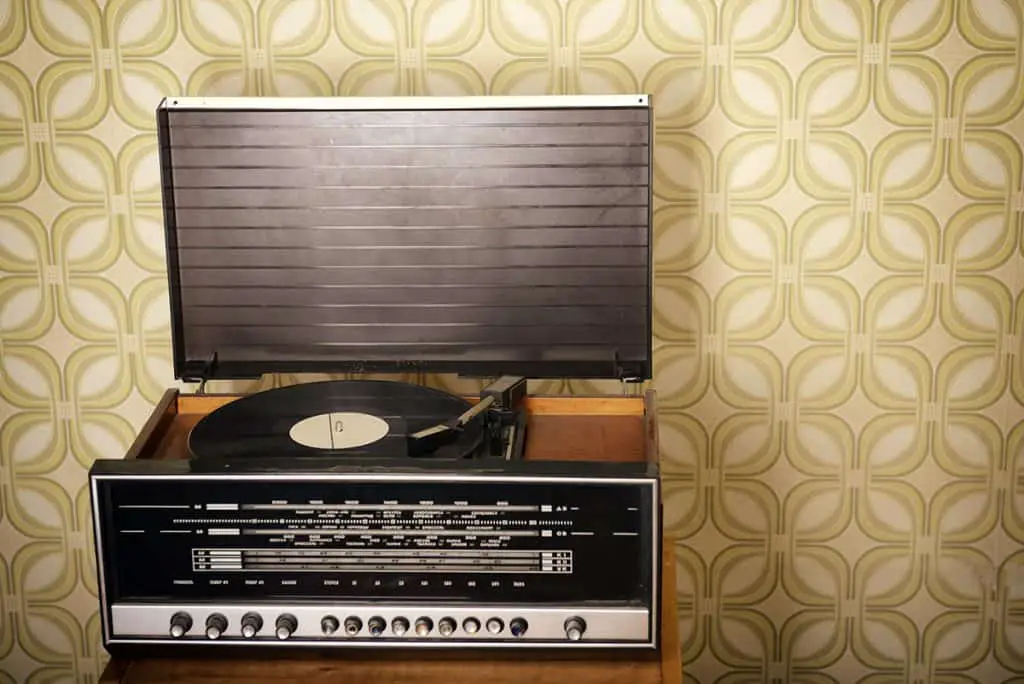
    Bluetooth transmitters are required to listen to music through Bluetooth headphones but don’t have a turntable with it preinstalled. It’s helpful to have a transmitter at home because it works with so many electronics- you can even use it on your TV. 

    Since the transmitter does compress the audio, there is a loss of quality. If you’re looking for the highest fidelity setup, then you’ll want to stick with wired options. However, Bluetooth offers more portability, which some people prefer. The setup process is often much more convenient as well. 

    Overall, Bluetooth converters can add Bluetooth to any device. It makes it simple to cast audio to wireless headphones, speakers, and virtual assistants like Alexa. 

    2. Add an External Preamp if Needed

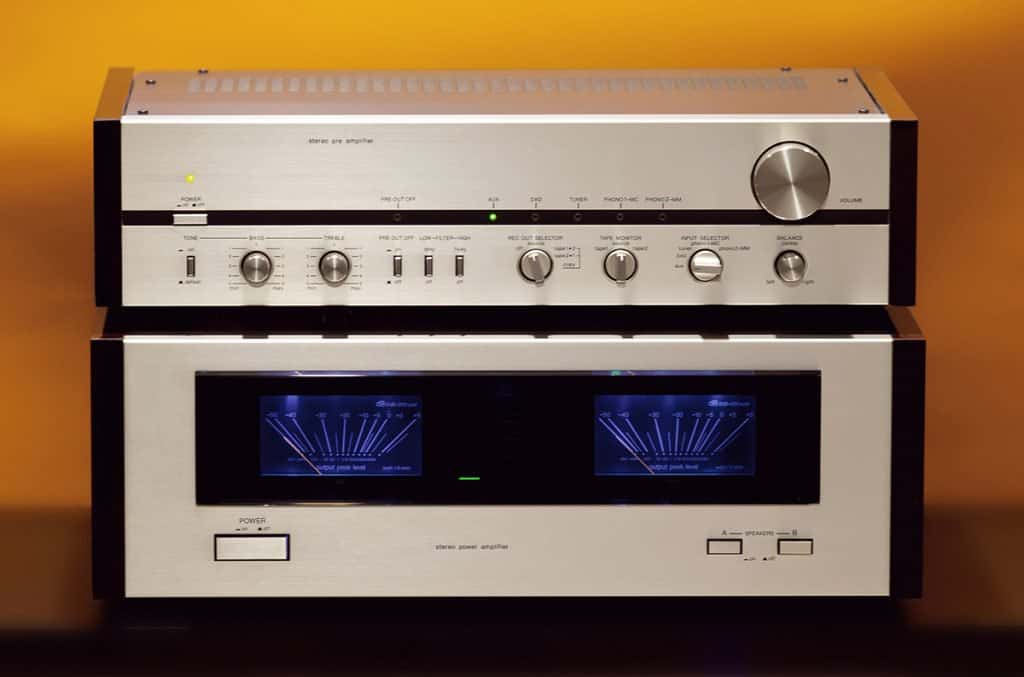
    Some turntables won’t come with an external preamp. If you plug the transmitter directly into a turntable without one, it won’t work. You’ll need to add one first. The preamp converts the PHONO signal into a LINE signal, which audio devices can read. 

    The PHONO inputs on the preamp should connect to the PHONO outputs on your turntable. The preamp’s LINE output connects to the Bluetooth transmitter since that’s what will act as your speaker. 

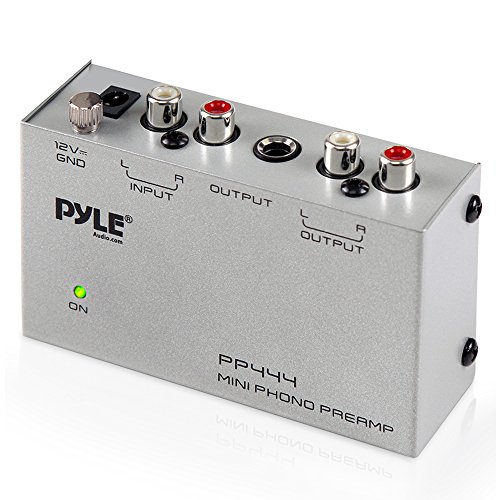
    In short, you won’t be able to add Bluetooth without a preamp on the turntable. I recommend the Pyle Phono Turntable Preamp from Amazon.com if you need to buy one. You can use it with any turntable! It even works with vintage models to connect the turntable to modern sound equipment. 

    Pyle Phono Turntable Preamp - Mini Electronic Audio Stereo Phonograph Preamplifier with RCA Input, RCA Output & Low Noise Operation Powered by 12 Volt DC Adapter (PP444),Gray

    How To Tell if Turntable Has a Preamp

    You’ll want to know how to tell if your turntable has a preamp. You’ll want to check for a PHONO/LINE switch on the back of the device. Putting the switch on LINE mode will activate the preamp. 

    If the turntable doesn’t have a built-in preamp, you’ll only see PHONO on the back. You’ll need to get an external preamp. You can also tell because the music will sound quiet and won’t have a strong baseline. 

    3. Pair Your Devices and Stereo System

    Next, you’ll need to know how to pair your devices with the turntable. Ensure the Bluetooth transmitter is connected correctly and fully charged before using it. Then, turn on the transmitter. 

    You should be able to find it while your devices are in pairing mode. Every headset does have a different way to activate pairing mode, so you might need to check online for your specific model. Once paired for the first time, your devices should connect automatically when turned on. 

    Overall, connecting to the turntable with Bluetooth is easy! It should only take you a few seconds. 

    What To Pair With Your Turntable

    You have many options with what you can connect to your turntable! As long as the audio device has Bluetooth and can play sound, you can connect it. Many people connect their wireless headphones and speakers to the system. 

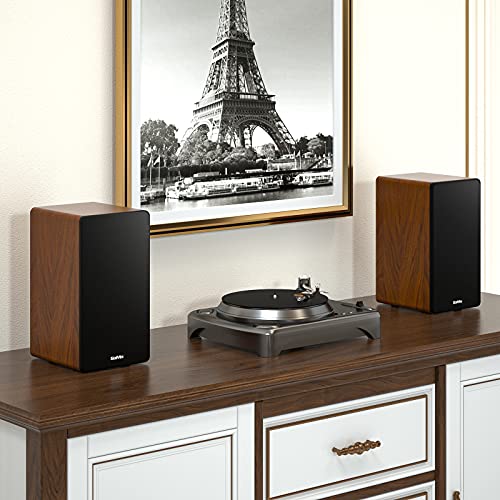
    If you’re looking for a Bluetooth speaker set, you should look into the Cyefacha Bluetooth Bookshelf Speakers on Amazon.com. You can pair your turntable with it and connect it to your laptop or smartphone when needed. It even comes with wire inputs, so you can use wired connections if you have to. 

    Bluetooth Bookshelf Speaker, Powered Speakers 2.0 Stereo 36W X 2 Active Studio Monitors with Optical/Coxial/RCA inputs/Subwoofer Line Out for Turntable, TVs

    4. Consider a Hybrid Turntable

    If you’re looking to buy a new wireless turntable, you may want to choose one that has built-in Bluetooth. A hybrid turntable usually comes with multiple ways for you to connect to the device. For example, the player could come with both Bluetooth and Wi-Fi connectivity. Some hybrid turntables also offer CD readers. 

    Using a turntable that comes with Bluetooth built-in saves you the hassle of needing to buy a Bluetooth transmitter, a converter, and an external preamp. You also avoid having to connect all of those items to one another. Many people prefer this option when looking for a modern record player because it’s simpler. 

    Additionally, make sure that your current speakers aren’t Wi-Fi only. You wouldn’t be able to connect to them with Bluetooth, even after setting it up correctly on your turntable. A hybrid set would offer both connection options to work with your Wi-Fi speakers. 

    Overall, you’ll want to think about how you want to listen to the turntable before buying one. If you’re going to listen using different devices, having a turntable with multiple ways to connect is best. 

    5. Add Bluetooth to a Vintage Turntable

    Since all you need to add Bluetooth to a turntable is a preamp and Bluetooth transmitter. This method works even for vintage record players! You can connect your vintage record player to your Bluetooth speaker or headphones for an entirely new listening experience. 

    Most older turntables won’t have a built-in preamp, so you’ll need first to make sure you have one. From there, plug your transmitter into the preamp. If you want to follow along with a YouTube video, watch this: 

    Overall, many vinyl lovers are surprised to learn that it’s straightforward to set up Bluetooth on their old record players. It’s the same process you use to set up Bluetooth on modern models. If you already have a record player at home, you don’t need a new one to enjoy Bluetooth compatibility! 

    Benefits of Using Bluetooth With a Turnable

    Are you wondering why you should connect your turntable with Bluetooth? There are many benefits that you can take advantage of. Many people enjoy having fewer cables to manage and enjoy taking their music around the house with them. 

    Here are all of the benefits of setting up Bluetooth on your turntable: 

    Fewer Cables

    Having fewer cables is beneficial for many reasons. You won’t have to deal with hiding the wires to keep your space looking nice. Plus, it’s easier to set up the record player anywhere. Without all those cables coming out of the back, you can put it somewhere more convenient. 

    When people install Bluetooth on their turntables, they usually think of this benefit first. I’m confident your record player could also benefit! 

    Can Easily Move the Turntable

    Using Bluetooth also makes it easier to move the turntable whenever you need to. You can take it anywhere to get power and still listen to your favorite music through Bluetooth. If you want to bring your music outside for a special gathering, you can do so easily. 

    Suppose you often move your furniture or take the turntable with you during the day. In that case, it’s possible with Bluetooth connectivity. 

    More Portability

    Plus, your vinyl records get more portability overall. You can find Bluetooth transmitters that offer long-range listening, allowing you to move around the home. At the same time, you can listen to your favorite records no matter where you go. 

    If you want to do chores, sit outside, work out, or clean while listening to your music, you can easily do so without any wires holding you back. 

    Most Bluetooth transmitters have at least a range of 30 feet (9.14 meters). This option is plenty for most homes! You can likely go upstairs without breaking the connection unless you have a very large house. It’s possible to find options that can reach much further than that if you need them. 

    Easily Connect to More Devices

    Bluetooth is a universal connection- you can find thousands of Bluetooth-compatible devices that you can connect with your turntable. Plus, some transmitters allow you to connect multiple devices at once. 

    Overall, you’ll have no problem connecting to a variety of devices- without having to change the wires and connections every single time. 

    Easy Setup

    Lastly, setting up Bluetooth is very easy. It shouldn’t take you very long, whether or not you have any experience using it. Simply put your devices into pairing mode, then connect your turntable with them. 

    Most Bluetooth headphones and speakers will give you audio cues and use flashing lights to tell you when they’re in pairing mode. They’ll do something similar to let you know that you’ve successfully connected to your turntable. Many devices make it obvious to connect with Bluetooth. 

    Plus, most devices will save their previous connections, allowing them to connect with your turntable as soon as you turn on the transmitter. Setting up later only takes a few seconds after you’ve turned the transmitter and receiver on. 

    Are There Wireless Alternatives to Bluetooth?

    There are wireless alternatives to Bluetooth. Bluetooth is the best option for wirelessly connecting a turntable to your speakers or headphones. However, some turntables also use Wi-Fi to connect to speakers. There are several pros and cons to using Wi-Fi on a turntable. 

    The biggest con to using Wi-Fi on a turntable is that your music will stutter or stop when you don’t have a strong Wi-Fi connection. If you have issues with your Wi-Fi, it’s not the best choice for you to use at home. 

    However, music tends to sound better when broadcast through Wi-Fi when compared to Bluetooth. Bluetooth compresses audio, which then needs uncompressed after transmitting for you to hear it. Compression can lower the quality of the sound. 

    That said, Bluetooth is still the best option for most people to use with their turntables. Your music won’t stop if your Wi-Fi runs into connectivity issues! 

    Final Thoughts

    In short, you can connect your Bluetooth-compatible devices with a turntable through a transmitter. The transmitter should connect to your preamp, whether you have an external or internal one. 

    This method should even work for vintage turntables! Many vinyl lovers use Bluetooth for its portability. You can use it to listen to your music anywhere in the house. Plus, you won’t have to deal with as many wires.

    Related Articles

  • Do All Record Players Use The Same Needle? Let’s Find Out

    Do All Record Players Use The Same Needle? Let’s Find Out

    Your record player cartridge comes with a stylus, also referred to as a needle that sits on the record’s groove. Unfortunately, when that needle goes, you’ll need to replace it, but are they all the same? Can you just swap it out with a generic one? I wanted to know if they were all the same, so after thorough research, this is what we found out.

    When it comes to stylus or needles, no one needle fits all. Therefore, all turntables don’t use the same needle or stylus. After all, they have different designs, and different types of stylus vary in designs, material, even how they mount.

    The cartridge is the most crucial part of the record player responsible for reading the vibrations on the vinyl record. In this article, we will show you why record players don’t use the same needle. We will also show you the different types of needles for record players.

    What Is A Stylus?

    A stylus is a uniquely shaped needle that rests on the record player’s grooves and helps pick the vibrations. In fact, the names needle and stylus are used most of the time interchangeably. The needle is the only part of the turntable that comes into contact with the vinyl record. Unfortunately, this component is subjected to hard wear thanks to the pressure it applies to the grooves. (source)

    Luckily, there are three desired characteristics of these needles:

    • The needle faithfully follows the vinyl record’s groove contour and picks the transmitted vibrations.
    • Secondly, the needle does not break the vinyl record despite the amount of force used while on the record’s grooves.
    • The stylus is resistant to wear; therefore, it can take years before you ever have to replace your turntable’s needle or cartridge. (source)

    Remember, a damaged needle can degrade the quality of sound produced and damage the vinyl records’ grooves. Manufacturers have used different materials to make the needle over the years; in fact, Thomas Edison introduced a diamond stylus in 1910 and a sapphire one in 1892. The early record players used short-lived needles besides the diamond and sapphire stylus.

    In fact, the most preferred materials for turntable needles over the years have been tungsten, copper, steel, and bamboo, among others. Unfortunately, steel needles needed replacement regularly, thanks to the high wear and tear rate. Therefore, the adverts asked folks to replace the steel needle after listening to each side of the record player, which meant that you had to purchase lots of needles at once.

    Luckily, the steel needles were relatively cheap; in fact, you could get a packet of 500 needles for only 50 American cents. Plus, they were sold in small tins and packets. These needles varied in length and thickness. The longer stylus produced muted softer tones while the short, thick ones made loud, intense sounds. Therefore, record players used the same needle in the past, so you had to pick which type of music you wanted to listen to and enjoy. (source)

    The shortage of steel in 1916 forced people to turn to tungs-tone needles. Produced by Victor, these needles played between 100 to 300 records before being replaced. They were long, so you had to use them until they were too short to be used. (source)

    Therefore I am sure you are wondering, do record players use the same needles? Technology has changed over the years with better and reliable needles produced. After all, high-end turntables don’t use the same needles as the low-end record players.

    Do All Record Players Use the Same Needle?

    All turntables come with many components that work together to convert the vibrations to music. And depending on the cartridge, record players can be grouped as the moving coil and magnet cartridges. (source)

    The cartridges are electromagnetic generators that convert the vibration (mechanical movement) picked by the stylus. The cartridge converts the vibrations to an electric signal amplified and converted to sound by the amplifier and speakers.

    Both the magnetic coil and moving magnet cartridges use a coil and a magnet, vibrating in unison with the needle assembly. These cartridges come with either a permanent or removable stylus; therefore, each turntable brand has a unique needle. Luckily, there is a perfect replacement that you can install in your record player.

    Remember, low-end record players, come with a permanent cartridge that supports needle replacement. So when upgrading your turntable, you can install a new high-end stylus that can improve your listening experience.

    Therefore, turntable styli are not universal; every turntable comes with a specific needle. After all, folks are allowed to upgrade the stylus of their low-end turntable with the high-end options. But for it to work, you have to make sure that it is compatible with your record player’s original needle. So you may have to do some research online for compatible options for your turntable.

    Plus, different types of needles vary in material, size, and shape. These needles also vary in shank construction. Therefore, when replacing your turntable’s needle, you can’t just walk into the local store and pick the first stylus you get on the shelf. You have to choose a replacement needle that matches your device’s needle.

    You have to make sure that the replacement needle fits your cartridge perfectly and is compatible with your device. Luckily, many replacement needles match your device online that you can order.

    Construction Of The Stylus

    Before we even talk about the different types of needles, we need to consider the shank construction. Remember, this needle sits at the tip of the cantilever in the cartridge connected to the tonearm. The needle attached to the cantilever is either a tipped diamond or a nude diamond.

    Just as the name suggests, the tipped diamond comes with a diamond tip on the stylus, while the other part consists of metal. But with the nude diamond, the stylus is made from diamond and attached to the cantilever. Luckily, the diamond tracks easily and accurately; plus, it has a lower mass, which means it applies less pressure on the vinyl record’s grooves.

    The diamond-tipped needles are less costly to produce, but they increase the stylus’s overall mass. This design will affect the transient response of the tipped diamond than a nude stylus.

    Types Of Stylus

    As aforementioned, there is no one fits all needle. And that is because every manufacturer tries to design a perfect needle for their different record players. Plus, these needles are designed for reading certain types of vinyl records.

    Generally, there are four types of needles, excluding those meant for reading the 78 RPM records. After all, the needles for reading the grooves on 78 RPM are about four times wider than the typical needle for 33 1/3 records. (source)

    The radius of the tip for a 78 RPM stylus is about 20mm, and anything smaller than that can ride low in the vinyl’s grooves. A typical stylus will produce noisy signals with a 78 RPM record, accelerating its wear. Plus, 78 RPM records are pretty rare these days, so the four types of the stylus are:

    Conical Or Spherical Stylus

    The spherical stylus is the most common and the least costly in the market. (source) This stylus resembles the tip of your ballpoint pen. And thanks to their huge radius, this stylus traces less on small grooves with high frequencies.

    The rate of wear and tear with the spherical is debatable among members of the Hi-Fi community. Some claim that this needle produces the most wear since the contact region is restricted to only 2 points. On the other hand, some music lovers claim that the spherical stylus produces minor wear. (source)

    This stylus has a radius of about 0.6mil*; therefore, it does touch the center of the vinyl record’s groove. This device works perfectly with older and lower to moderately priced turntables. Plus, the tonearm tends to apply high tracking force than the other types of needles. (source)

    Elliptical Stylus

    The second most common needle in the market is the bi-radial or elliptical stylus. The elliptical stylus contacts a larger area of the grooves than the dual radii. It guarantees you lower distortion (especially in the hard-to-track parts of the grooves), improved phase response, improved frequency response, and more precise tracking.

    These needles tend to wear a bit faster than the conical stylus. So, you will have to pay attention to the tonearm alignment and cartridge for perfect results. (source) The elliptical stylus has two radii; the wider front radii and the side radii. Its unique design makes it possible for the needle to track the middle of the groove. At the same time, the side radius allows it to track more accurately. (source)

    Compared to the spherical stylus, this needle has a narrower back to the front area and an extended vertical contact region. This needle is available in 3 sizes: 0.4 by 0.7mil, 0.3 by 0.7mil, and 0.2 by 0.7mil, with the first number representing the side radius. Remember, the smaller the side radius, the better the sound quality produced. The smaller the tip radius, the less tracking force you will ever need. (source)

    Hyper Elliptical

    The third most common stylus is the hyperelliptic needle, also referred to as stereohedron, fine line, or Shibata. This stylus represents the next phase of stylus evolution, which is sharpening the needle for more significant contact. When correctly aligned, this needle can offer low record wear, improved tracking, longer tip life, and high-frequency performance. This stylus has an even longer vertical contact area than the elliptical needles.

    But thanks to its vast tracing footprint, this stylus can produce more noise on worn-out records. This stylus is ideal for high-end cartridges. (source)

    The MicroLine Stylus

    The Microline also referred to as the micro-ridge, is one of the most advanced needles in the market. This computer-designed needle has a unique tip that resembles the stylus used to make the master disc. Its unique multilevel ridge shape will guarantee high-performance frequency with exceptional life and extended record. Unfortunately, they are pretty expensive and difficult to manufacture. (source)

    Why Does The Shape Of The Stylus Matter?

    If you are a casual turntable enthusiast, you don’t have to lose too much sleep over the shape of the stylus. But for audiophiles, the shape of the stylus matters because of the following:

    • The construction and shape of the needle play a key role in sound replication, thanks to its access to the groove’s surface.
    • The shape of the stylus also plays a crucial role in the record player’s rate of wear and tear.
    • The shape and construction affect the stylus price; therefore, if you have some cash and want to upgrade your record player, you need to know the benefits and types of the style.

    How Do You Know When It’s The Right Time To Replace The Stylus?

    Fortunately, physical and audible indicators can tell you when to replace the needle. A few things on the physical sign can show you if the needle is damaged. Some of them include:

    • Misshaped or crooked needle tip
    • The stylus may jump or skip out of the record’s grooves when playing.
    • Accumulated muck on the tip of the stylus might be the culprit. The accumulated dirt can be black spots, which means that you haven’t cleaned your record player in a long time.

    On the audible side, there are a few things you have to listen to and consider. Some of them include:

    • The record won’t sound great when using a damaged or old stylus
    • The record will produce a static or crackling noise
    • It may create distorted music

    When this happens, then it is time to replace the turntable needle. But make sure you get a suitable replacement for your record player. And if the record player’s needle cannot be removed, you will have to replace the entire cartridge. (source)

    If you didn’t purchase a new turntable, the chances are that the needle is not in good shape. Plus, you don’t know if the previous owner took good care of it. So the first thing you should do is replace the stylus with a new one. You can even choose to upgrade your device’s needle to a high-end option.

    How To Replace The Stylus

    Generally, you should replace the needle after every 3 to 5 years or after 1,000 hours of play. So if you can replace your record player’s needle, then you should do the following:

    • Unplug the turntable and hold its arm using your non-dominant hand.
    • Grip the metal or plastic case covering the needle using the other hand
    • Pinch the sides of the needle and remove it
    • Slide the needle out of the cartridge while ensuring it is parallel to the tonearm. If the needle can’t come out, you will have to go online and look for the manual.
    • If the stylus is attached to the cartridge frame, then it’s not removable. So you may have to replace the entire cartridge.
    • With the old stylus removed, you can look for a perfect replacement. Most needles have some numbers or letters on them. These numbers are the model numbers, and they can help you get a replacement. You can order a suitable replacement online or a better option if you’re upgrading the turntable.
    • Slide the new needle into the cartridge with the stylus facing outside. Remember, the stylus is very sharp; you should wear some rubber gloves, but make sure you don’t touch the needles’ tip. (5)

    FAQs

    Does The Stylus Fit Any Turntable?

    The stylus, also referred to as the needles, are not universal. Every turntable uses a certain kind of stylus, so it is technically impossible to replace your record player’s needle with a different type of needle. So make sure they are compatible with the original stylus before purchasing it.

    How Do I Know If The Needle For My Turntable Can Be Replaced?

    If you are not sure it is replaceable, you can look at the tonearm. You can replace the needle if some screws mount your cartridge to the tonearm. But if there are no screws, you will not be able to replace them.

    Are All The Needles Diamond?

    Most of the modern needles are made using either sapphire or diamond. But there are some needles made from sapphire-diamond combination and steel. Therefore, not all needles are made from diamonds or have a diamond tip.

    Conclusion

    The needle is the most crucial part of the turntable, which is responsible for the quality of the sound produced by your record player. Unfortunately, no one needle fits all kinds of turntables. So before replacing your record player’s needle, you need to know the difference between the several types of needles in the market. Remember, before installing a different kind of needle, you have to make sure that it’s compatible.

    Sources

    1. Audio-Technica staff, Audio-Solutions Question of the Week: What are the Differences Between Moving Magnet and Moving Coil Phono Cartridges? Accessed January 07, 2022
    2. Wikipedia Contributor, Phonograph, Accessed January 07, 2022
    3. Jess Thompson, The Different Types of Turntable Styli (and Which is Right for you) Accessed January 07, 2022
    4. Tucker Bowe, When Should You Replace Your Turntable’s Stylus, Accessed January 07, 2022
    5. Eric McClure, How to Change the Needle on a Record Player? Accessed January 07, 2022
  • 9 Turntables That You Can Scratch Records On

    9 Turntables That You Can Scratch Records On

    The turntables that you can scratch records on are not challenging to find. The real challenge is learning how to scratch records. Still, you need to make sure that you purchase the best turntable for your hobby.

    Direct-drive turntables are the record players that you can scratch records on best. They have a record platter that sits directly above the motor. This feature lets the turntable platter get to the correct speed instantly.

    Turntables That You Can Scratch Records On

    A turntable is a significant device for people who aim to become professional DJs. While there are other devices that you can use for DJing, such as DJ mixers and CDJs, professionals mostly use turntables. The reason is that many people want the pure scratching sound that only turntables can produce.

    The problem is that finding a turntable suitable for scratching can be a real challenge. Such is especially true for beginners who are still trying to develop their abilities. For this reason, we listed down some of the best turntables that you can scratch records on easiest.

    9 Turntables For DJs

    1. Technics SL-1210GR

    Technics is the leading name in the turntable industry. For this reason, you cannot expect anything less from the Technics SL-1210GR.

    According to the brand, the SL-1200G (SL-1210GR) combined Technics’ traditional analog technology and advanced digital technology, while redesigning parts throughout.”

    The SL-1210GR is a top-of-the-line direct drive turntable. The coreless motor with a unique design provides the device with the ultimate speed and torque. Yet, the platter does not suffer from vibrations.

    This turntable features a 2.5 kg cast aluminum casing added with polymer. This way, the turntable has some vibrations along with excellent audio quality.

    Even better, the device has an S-arm with pipe and advanced suspension. For this reason, the SL-1210GR packs ultimate precision.

    That said, there is no denying that the SL-1210GR is one of the best turntables that you can scratch records on easily. (source)

    2. Numark PT01 Scratch Portable DJ Turntable

    An affordable and low-end turntable model yet boasts fantastic options is ideal for beginners. Such is a factor that the Numark PT01 Scratch can provide you with for some tremendous turntabling.

    This portable turntable is lightweight, so you can easily carry it anywhere. Despite the portability, it packs a power supply from a standard AC outlet. It also has six D batteries.

    Additionally, this turntable features a USB and 1/8″ input along with double RCA 1/8″ and 1/4″ outputs.

    Moreover, the best feature about this turntable is the Scratch Slide Switch. Meaning it has a joy-stick slide switch instead of the usual slide switch. (source)

    3. Pioneer DJ PLX-500

    The PLX-500 from Pioneer is a small yet high-quality turntable that boasts a die-cast aluminum body. In addition, it has a direct drive and a built-in preamp. You can even connect it to your computer with its USB port.

    There is also a phono-line switch that enables the turntable to perform excellently.

    This turntable also has a short S-arm to provide the best sound quality possible. Even better, the S-arm is adjustable so that you can set the optimal height for you. It also comes with an internal anti-skate mechanism and a pitch-shifter. (source)

    4. Audio-Technica AT-LP120XUSB-SV

    If you are looking for turntables that you can scratch records on, this one from Audio-Technica is worth checking out.

    This direct-drive turntable allows you to do both forward and reverse playback. It also delivers fast start-ups with the pitch slider, allowing you to adjust the pitch quickly. Additionally, the device has a removable dust cover that helps you keep your turntable clean.

    Even better, the AT-LP120XUSB-SV has a speed selection feature that lets you set the playback speed to either 33, 45, or 78 revolutions per minute (RPM).

    This turntable has a USB cable and port, so you can easily connect it to your computer. (source)

    5. Technics SL-1200MK7

    Professional DJs will find it fantastic to scratch records with the Technics SL-1200MK7. The reason is that it has a coreless direct-drive motor, which delivers accuracy. The motor also eliminates the speed variations encountered by other lesser direct-drive motors.

    Moreover, the problem you may encounter with some turntables that you can scratch records on is stability. Fortunately, the SL-1200MK7 has four insulated feet that minimize vibrations and provide stability.

    Additionally, the S-shaped tonearm helps produce precise sound. You can even adjust the pitch by +8% or +16% with the pitch control feature. (source)

    6. Stanton STR8.150 MKII

    This turntable is for people who are serious about developing their scratching technique. The STR8.150 MKII is a high-end turntable dedicated to professionals. This aluminum model has a fine adjustment and a straight tonearm, producing a fantastic sound quality.

    In addition, this Stanton turntable runs using a 4.5 torque engine. The all-metal casing and the engine allow the device to play smoothly without interference.

    In terms of connectivity, the device has:

    • two phono lines
    • RCA double output
    • pitch shifter
    • reverse button

    With all these features, it is essential to note that the STR8.150 MKII costs a bit more than the other turntables on this list. (source)

    7. Reloop AMS-RP-4000-MKII

    Reloop is a brand that not many people are familiar with these days. Still, the AMS-RP-4000-MKII turntable can provide the needs of every aspiring DJ out there.

    This turntable has a direct-drive motor and a fader located on the right side of the platter. It lets you shift the playback speed between +/08% and +/-16%.

    In addition, you can reverse your record’s direction with this turntable. Meaning you can play your records backward for scratching. (source)

    8. Audio Technica AT-LP120XBT-USB-BK

    This turntable from Audio Technica looks similar to the other turntables in this guide. However, it has features that make it different from the other turntables that you can scratch records on. Its most advanced feature is that it supports Bluetooth connectivity. For this reason, you will be able to stream music from the turntable to a wireless speaker or headphones.

    The AT-LP120XBT-USB-BK also has a USB port behind it, which allows you to digitize your records quickly. It also has a dust cover that keeps it free from dust and dirt buildups.

    Moreover, this device has a fader on the right side. You can use it to start and stop a record or switch between 33.3, 45, or 78RPM. (source)

    9. Pioneer PLX1000

    The best thing about the Pioneer PLX1000 is its overall design. It consists of a high torque motor that, according to the brand, can spin the table to 33/3RPM within 0.3 seconds. Die-cast zinc composes the chassis so that you can ensure extreme stability.

    Pioneer also claims that the PLX1000 is a “club grade.” For this reason, you can use it regularly as it can withstand abuse.

    Moreover, this turntable has its start and stop buttons at the left of the platter. It also has a 45 adapter that fits into a seven-inch single’s larger hole. The only downside is that it does not have a needle, so you must purchase a separate one. (source)

    How To Choose A DJ Turntable

    You need to consider five factors when choosing turntables that you can scratch records on. That said, it is essential that you know each of them to ensure that you are getting the best device.

    Direct Drive

    It is critical to get a direct-drive turntable when choosing a turntable that you can scratch your records on. The reason is that this type of record player is more precise and more durable than belt-drive record players.

    Speed Shift

    Turntables that let you change the speed between 33/3 and 45RPM will allow you to play singles and full-sized records.

    Tempo Controls

    One of the features that you need to look for in a DJ turntable is tempo control. With this feature, you can increase or decrease the platter’s speed to change the speed of the song.

    Casual Use

    Although DJ turntables are meant for scratching records, there are some devices that you can use for listening to albums.

    Preamp

    Some turntables come with a built-in preamp, a sound component that increases the output’s volume. A turntable with a preamp will let you connect it to any input on a stereo receiver. This way, you can produce a louder sound whenever you need to. (source)

    Does Scratching Ruin Vinyl?

    Vinyl records are fragile. A single scratch and it will skip while you are playing it. So, if you see turntables that you can scratch records on, you may wonder whether or not it can ruin the vinyl record.

    Since vinyl records are delicate, scratching will definitely damage them. In fact, even too much pressure from the turntable’s needle can cause damage to a record.

    But even without scratching it, vinyl records will inevitably get damaged in time. The reason is that vinyl records consist of polyvinyl chloride (PVC) – a type of plastic.

    Vinyl records are thin and round plastic contraptions. These factors make them prone to melting, warping, and scratching when exposed to unideal conditions.

    That said, the only thing you can do is to prolong the lifespan of your vinyl record by:

    • using a special mat
    • washing your hands before touching the record

    Related article: Does Record Scratching Damage The Vinyl?

    Use A Special Mat

    There are mats that you can buy for your turntable platter. The original purpose of such mats is to provide a higher fidelity music experience. But apart from that, you can also use them to protect your vinyl record while you are scratching them.

    However, it is essential to note that turntables that you can scratch records on do not have a built-in mat. For this reason, you will need to purchase a mat separately.

    Related articles:

    Wash Your hands Before Scratching A Record

    Your hands produce natural oils. You will transfer the oils from your skin to the vinyl’s surface as you touch the record. Such will result in the degradation of the record’s quality, thus shortening its lifespan.

    For this reason, you need to wash your hands before DJing. This step will help you reduce the risk of transferring oils from your hands to your vinyl.

    Unfortunately, there is no way to prevent your vinyl record from getting damaged while scratching it. While initial damages will be unnoticeable at first, they will always be there. So, the only thing you can do is to minimize these damages. (source)

    Can You Scratch On Belt Drive Turntables?

    You may be overwhelmed with direct drive and belt drive if you are new to turntables that you can scratch records on. However, these two turntable types are not confusing if you know how they differ.

    Direct Drive Turntables

    A direct-drive turntable has a motor located directly underneath the vinyl platter. This motor is linked directly, meaning there are no moving parts like a belt between the platter and the motor. With this type of build, all the turntable’s force and energy that the motor generates transfers immediately into the platter.

    As a result, direct-drive turntables spin at the speed needed almost instantly. Since the motor is powered, the platter will spin freely even after turning the record player off. This way, you will be able to do the wind-down effect that a lot of DJs do.

    Additionally, this type of turntable transfers forces directly to the platter, making the speed predictable and reliable. As a result, two tracks will blend well together as you know that both will hold their tempo.

    That said, you should go for a direct drive if you are looking for turntables that you can scratch records on.

    Belt Drive Turntables

    Casual listeners use this type of turntable. As the name implies, a belt-drive turntable has either a natural or synthetic rubber belt that drives the record platter. The platter also sits on a center spindle with a bearing that supports it.

    Additionally, the belt revolves around a pulley attached to a drive motor. This drive motor sits separately from the platter, preventing vibration from traveling to the entire turntable.

    Moreover, a belt-drive turntable sounds better in terms of casual listening.

    Can You Scratch Records On Belt-Drive Turntables?

    Do belt-drive record players belong to turntables that you can scratch records on with all that’s said and done? Well, you can scratch on this type of turntable. However, such is not an ideal thing to do.

    The reason is that since a belt turns the platter, it takes a little time before it gets to the right speed. As mentioned, direct-drive turntables instantly get to the correct speed since the platter sits directly on the motor. On the other hand, belt-drive turntables have a slight lag in speeding up.

    That said, belt-drive turntables are not as responsive as direct-drive turntables. For this reason, they are not the ideal turntables that you can scratch records on. (source)

    How Do Beginners Scratch Records?

    Scratching is a skill seen as a challenging part of turntablism. It takes time and practice to master the techniques. But the most difficult part is that beginners do not know where to start and how they will progress.

    That said, you need to take one step at a time if you want to learn how to scratch records.

    Here are the steps for beginners to start record scratching:

    1. Get a basic DJ setup

    A basic DJ setup consists of two direct-drive turntables, a mixer, and vinyl records that you can practice scratching. Remember that you need two turntables, as using only one will not produce music.

    2. Find a mixer with curve adjustment on the crossfader

    Using a mixer’s cross adjustment option, you can control switching sound back and forth between your turntables. For this reason, you need to find a mixer equipped with a crossfader. Having your mixer will make it easier for you to begin doing advanced scratching techniques later.

    3. Prepare a collection of records to practice on

    Turntablists need as many vinyl records as they can get to build music. The reason is that you need to use the beats from multiple records along with sampled portions from other records to make music.

    That sounds like a complicated collage-style of making music. But you can accomplish it with a lot of practice and many vinyl records to scratch.

    How To Start Scratching

    Back then, DJs would take round stickers and place them next to the record groove just beyond the sample. This way, they have a visual cue to where the sample begins. With this trick, you can easily place the stylus to the groove where the music will begin.

    Once you already have a visual cue, the next thing you need to do is to practice stopping the record using your fingertips. All you have to do is to rock the platter back and forth over a particular sound, and that will allow you to create a distinct scratch sound.

    After mastering how to scratch, put another song that compliments the beat you create. (source)

    Does Scratching Damage The Needle?

    One of the most common questions asked in the world of turntablists is whether or not a scratched record can damage a turntable’s needle. Fortunately, it does not. The reason is that the needle consists of a hard, precious stone, such as a diamond or sapphire, while vinyl records are plastic.

    Additionally, the needle stays within the grooves when you are scratching. For this reason, scratching a record will not damage the needle in any way.
    For that reason, turntable needles can withstand the pressure coming from uneven surfaces. (source)

    The Takeaway

    Finding turntables that you can scratch records on is relatively easy. In fact, you can use any direct-drive record player to start DJing. Still, you need to ensure that you get a suitable turntable for you.

    The reason is that the turntables for record scratching have different features – some are for beginners while others are for professionals. So, if you are a beginner, getting a suitable turntable will help you practice and hone your skills.

    Sources

    1. Direct Drive Turntable System SL-1210GR.” Technics. Accessed January 4, 2022.
    2. The New Era of Scratch.” Numark. Accessed January 4, 2022.
    3. PLX-500.” Pioneer DJ. Accessed January 4, 2022.
    4. AT-LP120XUSB.” Audio Technica. Accessed January 4, 2022.
    5. Direct Drive Turntable System SL-1200MK7.” Technics. Accessed January 4, 2022.
    6. STR8.150 M2.” Stanton DJ. Accessed January 4, 2022.
    7. RP4000MK2 Professional High Torque Turntable System. Accessed January 4, 2022.
    8. “AT-LP120XBT-USB.” Audio Technica. Accessed January 4, 2022. https://www.audio-technica.com/en-us/at-lp120xbt-usb.
    9. A Reborn Classic.” Pioneer DJ. Accessed January 4, 2022.
    10. John Steventon, DJing For Dummies. West Sussex: John Wiley & Sons, Ltd, 2014.
    11. Mark Katz, Groove Music: The Art and Culture of the Hip-hop DJ. USA: Oxford University Press Inc., 2012.
    12. Stephen Webber, DJ Skills: The Essential Guide to Mixing and Scratching. USA: Elesevier, 2008.
    13. Ben James, DJ 31hz, DJ KNS, Ultimate Beginner Series DJ Styles Series: The Turntable DJ. Alfred Music.
    14. Nicolae Sfetcu, Dance Music. Nicolae Sfetcu, 2022.
  • A Guide To Fixing A Record Player That Plays Too Fast

    A Guide To Fixing A Record Player That Plays Too Fast

    Does the fact that your turntable is revolving too fast keep you up every night? If it does, you’re an audiophile, and you appreciate the music art. Therefore, you love the idea of listening to live music, and digital music just can’t cut it for you. Plus, you may have a perfect pitch and can tell when the turntable is playing too fast. So to help you solve this issue, we have prepared the following guide to fix a record player that plays too fast.

    The vinyl records come in three speeds: 78 rpm, 45 rpm, and 33 1/3 per minute (generally referred to as a 33). The RPM shows how fast your record player should be spinning; therefore, you will know when the speed changes. (source)

    Generally, one determines the speed of the record player by the vinyl record; after all, they are designed to spin at a certain pace when playing. You have come to the right place if you notice that your record player is moving too fast. So in this article, we will show you how to fix a record player that is playing too fast. We’ll also show you why your record player is playing too fast.

    Is the Record Player Playing Too Fast?

    You should first pick the right spinning speed when you purchase the record player. And if it is not spinning at the right pace, then a technician at the store will help you calibrate it. After all, if calibrated correctly, it can play different vinyl records.

    Remember, if the record player is spinning too slowly, it will sound like the battery is low. If the record player is spinning too fast, the music will sound like Alvin-and-the-Chipmunks. (source) And as an audiophile, this can be very frustrating. Therefore, you will know when the speed of the turntable changes.

    Generally, only three turntable speeds can play all the vinyl records in the market. For 12-inch vinyl, you will require a rate of about 33 RPM. On the other hand, a 7-inch disc requires a 45 RPM, while the older 10-inch discs play at 78 RMP. So it’s crucial you set the record’s speed correctly. But at times, the record can start spinning faster than usual. (source)

    Unfortunately, once you start believing that your record player is playing too fast, your subconscious will convince you that you’re right, and you’ll begin hearing more evidence. So before jumping to a conclusion, it’s always a good idea to first determine if it’s spinning at the right speed. But most folks don’t know how to test the speed of their record player. In fact, most record player owners have never heard of a device for setting the pace of their player.

    How Can I Determine the Speed of My Record Player?

    To test the speed of the turntable, you need a stroboscopic system. This system features a cardboard disc with equally spaced marks that goes on the record player. In fact, some record players have stroboscopic markings on their edges. This process works thanks to the optical illusion that can help you make precise and fast adjustments when the speed increases. (source)

    DollaTek LP Vinyl Record Turntable Phono Tachometer Calibration Strobe Disc Stroboscope Mat 33.3 45 78 RPM

    If you reside in Australia, Asia, or Europe, you will require a 50 Hz disc, and in North America, you will need a disc marked 60 Hz. Fortunately, you can download these discs from the internet or purchase the disc from the local stores. If the record player is spinning at the right speed, the markings may seem to stand still. If the turntable appears to rotate to the right or left, then the spinning rate is off, So you have to adjust it.

    The slower or faster the drift, the bigger the error; this illusion is more visible under most lights, including fluorescents. However, some folks prefer LED bulbs or specialized strobe lights. Press the play button, place the strobe disc, and lower the tone-arm for better results. Lowering the tone-arm and pressing play will let you compensate for the extra drag that the stylus and record will impose. (source)

    Some unique apps can also help you determine the turntable’s speed, such as the RPM iOS. The RPM (iOS) uses the phone’s gyroscope to measure the turntable’s speed. (source) All you have to do is start the program and place your smartphone on the platter, and press play. The program will measure the speed of the turntable.
    How Can You Fix a Record Player That Is Spinning Too Fast?

    Even though you set the speed correctly when you purchased the turntable, some record player parts will start wearing out with time. And this will force some features of the record player to either spin faster or slower, thereby distorting the quality of your music. But before you start looking for solutions for this issue, you need to find out the cause of the problem. Plus, this will help you troubleshoot and eventually repair your record player:

    Lube, Clean, and Check Every Part of the Turntable

    The first thing you should do is ensure that every movable part of the turntable is lubricated and clean. After all, the accumulation of dirt and dust can leave some turntable parts dry and clogged. So before you even test anything else, you should first ensure that the device is well maintained.

    Remember, lots of gears and motors in the turntable help your device function better. And for these parts to work, they have to be lubricated, and if there is too much friction, then the turntable’s speed can change. Too much friction can strain some parts of the turntable leaving the others to move even faster than expected.

    Another reason the turntable can move faster is the presence of grime and dirt on some of the most crucial parts of the turntable. Dirt or grime on different parts of the turntable can affect the turntable’s speed. So before you even check the other details for wear and tear, you can lube and clean all the movable parts of the turntable.

    After all, you must make sure everything is working flawlessly before tweaking the machine. So the first thing you should do is uninstall the platter and look at the motor’s tip. If you notice any grime or dirt, you should scrape it off before cleaning it using a few drops of synthetic oil like the Redline D4-ATF.

    Remember, the spindle and the motor’s shaft enter the housing, so you should only use two drops of the Redline D4-ATF. If purchasing a quart of high-tech, cool, exotic transmission lubricant is too much, you should go for the 20-weight oil with PTFE. Before reinstalling the platter, you should also examine the belt. The belt can get misplaced or stretched if it is rubbing on anything.

    On the other side, if particles of the turntable belt wear out, they can gunk on the motor pulley resulting in the record player spinning faster. And that is because of the increase in diameter of the motor pulley. So when this happens, you should remove the belt and then clean the pulley using a Q-tip cotton swab dipped in alcohol. But make sure you don’t use rubbing alcohol as it contains lanolin that will force the belt to slip. (source)
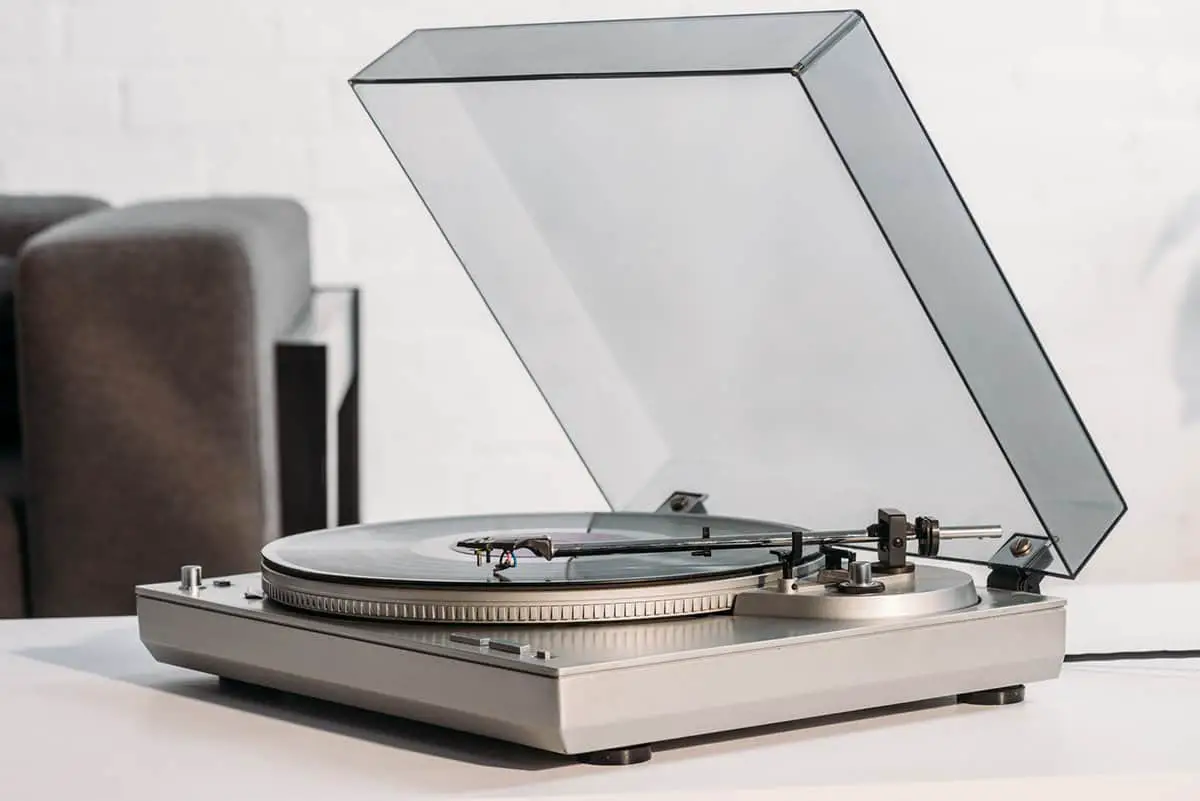
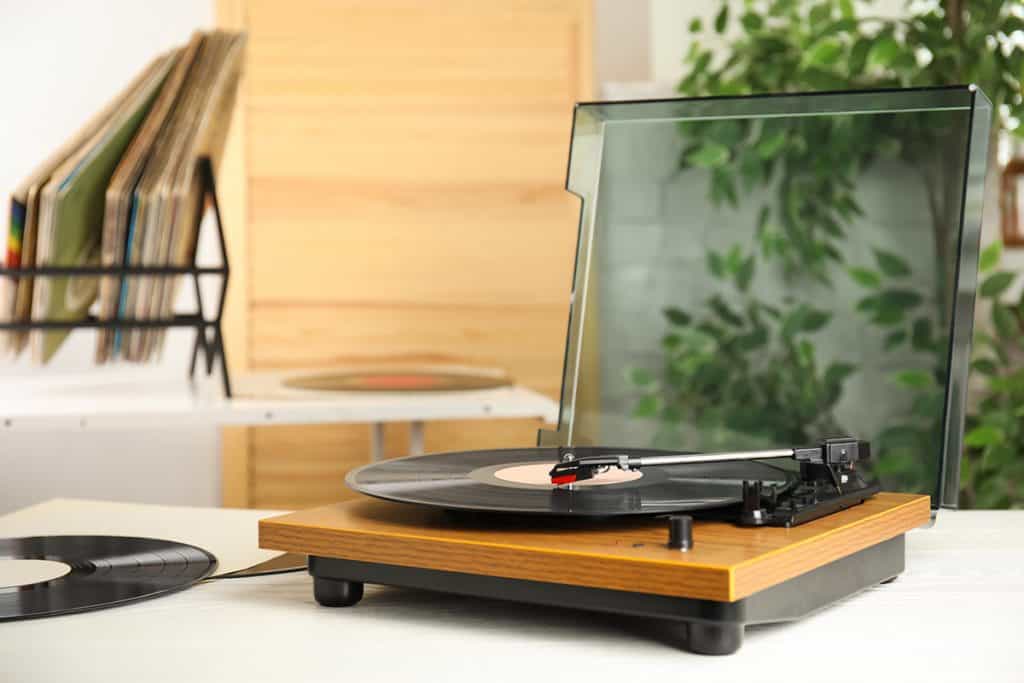
    After cleaning and lubricating some of the most crucial parts of the turntable, you should reassemble the device and test it. If the speed of the record player is still high, you should proceed to the next step.

    Confirm if There Are Any Turntable Belt Problems

    The turntable belt resembles all the other straps you may have seen in other devices, including vacuum cleaners. Therefore, it is bound to get repositioned or stretch with time resulting in the speed of the turntable changing. When stretched, even a few millimeters, it can slow down. Even as little as an increase by 6mm can distort your music. (source)

    The turntable’s speed can change when one repositions the belt, and its spinning rate increases or decreases accordingly. If it stays in the wrong position for too long, it can become overstretched. If it is repositioned, it can tighten, resulting in the speed of the record player increasing. The best solution is to replace the belt, but you could shrink it back to the average size if it’s still in exceptional condition.

    If the turntable belt ends up stretching because of being repositioned, then you should either shrink it down or replace it. To replace the belt, you should do the following:

    How to Replace a Damaged Turntable Belt

    When dealing with any repair work, the first thing you should do is disconnect it from the power. Unplugging the turntable will help prevent electrical shocks and keep the motor safe. Next, remove the plastic mat that supports the record when playing. Removing the plastic mat is relatively easy; all you have to do is pull it off and place it in a safe place.

    Remove the platter situated below the plastic mat, which has two access holes that make it possible for you to monitor the motor. Turn it upside down and place it on a flat surface and then stretch the new belt over the platter’s center hub. Make sure the belt is straight, and if there is a ribbon on it, you can align it with the access holes. It makes it easy for you to install the belt over the motor.

    If the platter has no access holes, then you should place a peg on the platter’s edge with the belt already installed on the center circle. Stretch it over the peg and create a round-bottomed triangle. You should ignore this step if the platter has two access holes.

    Reinstall the platter making sure the access holes expose its motor; you can use the access holes to access the motor and then stretch it around the body of the motor. If it doesn’t have access holes, you should align the peg or post with the motor spindle. Finally, you can spin the platter clockwise and then anticlockwise to hook the belt on the motor. (source)

    After replacing the turntable belt, you can proceed and measure its spinning speed and confirm if it’s back to normal. If the problem persists, you should try switching the spinning speed using the speed selector switch. If it doesn’t work, you should proceed to the next step.

    A Speed Selector Switch Issue

    All the turntables made after 1960 come with a 2-speed speed-selector switch for 33 1/3 and 45 RPM. (source) Unfortunately, the speed selector can get damaged or be covered with dust, resulting in the speed of the turntable increasing. Accumulation of the grime or the dirt in this switch can force too much voltage on the turntable’s motor, forcing it to spin faster.

    If the platter spins slower or faster when you switch the spinning speed, the issue could be the switch. So you can either clean it or replace it once and for all. Cleaning it can work but only for a short period. On the other hand, replacing it can seem costly, but it will save a lot of cash in the end. After confirming that every component is functioning perfectly, the issue may be with calibration.

    Rotation Speed Calibration Problems

    The calibration issue is the most straightforward solution, especially if you already know how to set the turntable’s speed. Generally, the turntable comes already calibrated when new and functions correctly. But with time, the motor’s speed can change abruptly and need to be calibrated. But before you conclude that it is a calibration problem, you should troubleshoot the above issues.

    If the problem persists even after cleaning and lubricating the dry parts of the turntable, then the issue may be with calibration. If the turntable’s speed is still high, you should try calibrating your turntable. Fortunately, most turntables come with manuals that you can find online. Plus, most manuals will show you exactly where the adjustment screws are situated.

    If you are using a vintage turntable and can’t find the manual, you can look for a similar model. If you still can’t find the adjustment screws, then you should lift the pad and confirm if the adjustment screw is below the platter. If the adjustment screws are not below the platter, you should look below the motor.

    Some turntables have surface holes or knobs that make it easy for you to adjust the turntable from the surface. You can change other turntables from beneath. But you must level your record player before you make any adjustments. Place it on a piece of wood or between two tables to access the underneath parts of the turntable.

    The adjustment screws are a set positioned next to each other. The screw that turns clockwise increases the turntable’s speed while the other one lowers the rate. So make sure you set the 33 1/3 RPM first. Some audiophiles use a small screwdriver to adjust, but that is not mandatory. the screws can help change the velocity of the potentiometers, so you should be patient and measure the speed using the app. (source)

    Remember, it can be almost impossible to set the right speed, and you might never get to the point in some cases. After all, even if you are 3% off, you will still notice the lag or speed of the turntable is still high. So you have to be very careful and take your time to get within 1% of accuracy.

    FAQs

    Why Are My Vinyl Records Playing Fast?

    The issue is usually a belt that has been improperly installed. If your turntable’s belt slips out of its grooves when the record is playing, it will start riding up and down. The movement of the belt up and down the spindle will force the platter to start spinning fast. Therefore, you will have to reinstall the belt in the platter’s inner ring.

    How Can I Fix a Record Player That Is Spinning Too Fast?

    The best method for repairing a turntable that spins too fast is recalibrating it. Some screws below the splatter can help you set the right spinning speed. If you don’t know where the calibrating screws are, consult the manual.

    Can Dirt Accumulation Increase the Speed of the Turntable?

    If not well maintained, most turntable’s movable parts can dry, resulting in increased friction. High friction can strain some parts of the turntable, leaving others to spin very fast.

    Conclusion

    If not well maintained, the turntable’s speed can increase, resulting in it producing distorted sound. When new, turntables are typically well-calibrated, but the spinning rate can improve with time. Luckily, there is a solution for this problem, and if every other component is working perfectly, then the only solution is recalibrating it.

    Sources

    1. Rich Tozzoli, Here’s What You Need to Know About Vinyl, Accessed December 24, 2021
    2. Libby Plummer, How toSet Up and Maintain Your Turntable for Analogue Audio Joy, Accessed December 24, 2021
    3. Nelson Kline, Dialing in Your Turntable Speed, Accessed December 24, 2021
    4. Wikihow Contributor, How to Replace a Record Player Belt, https://www.wikihow.com/Replace-a-Record-Player-Belt/ Accessed December 24, 2021
    5. Sam Sauls, Audio Production Worktext: Concepts, Techniques, and Equipment, Accessed December 24, 2021
    6. NewYork Times staff, How to Set Up Turntable, Accessed December 24, 2021
  • Ten of the Best Vintage Turntables

    Ten of the Best Vintage Turntables

    The demand for the best vintage turntables is on the rise. Vinyl enthusiasts want to know what to expect from their record players, and the choice is not an effortless one. With so many brands out there that offer selected turntables, how to know which is the one?

    These ten vintage turntables are sought-after due to their caliber of sound. Certain lines such as Technics or Rega have a few significant types of turntables. For example, Yamaha or Michell Gyrodec have been luminaries for decades.

    The re-emergence of records in recent years has provided a stage for turntables to make their comeback as well. Plenty of companies still produce them, but nothing beats the feel of an old-school record player.

    If you have been wondering which ten vintage turntables are the best on the market, look no further. Our in-depth list provides you with the models, specifications, and more.

    First, we will look at what a vintage turntable should consist of and why we call it vintage. There are plenty of second-hand record players going around, but are they all worthy of your attention (and money)?

    Vintage Turntables 101

    Ever since the invention of the gramophone in the late 19th century, people have developed ways to play their favorite tunes indoors. They were looking for the best musical experience possible, available from the comfort of their own homes.

    Original turntables were massive and needed two people to power them. One person held the structure while the other cranked the player. The sound that came out was raw and loud.

    The only types of records these turntables could play were the 78s. They used shellac to make them, which was a very resistant material.

    Scratches and moisture were out of the question. The biggest downside to a 78 was that it could contain no more than 5 minutes of music.

    Record companies developed new kinds of records, the 45s and the 33s. They were more compact, so their grooves could hold more sound. A need for an accompanying record player arose.

    Brands competed with one another to launch the best record player there is. In the 1970s, there wasn’t a home that didn’t have a proper sound system.

    Most of the famous vintage turntables are from this era. The attention to detail during production still has a high-value today.

    However, it’s not easy to stumble upon a record player in mint condition. Unless you know what you’re looking for and get lucky.

    Technics SL-1200

    A turntable that has started a cultural phenomenon and still delivers that sound quality nowadays? TheTechnics SL-1200 is a category on its own.

    It stems from the revolutionary SP-10, introduced in 1970, which marked the start of direct drive turntables. Because of their connection to the platter, the decks are more stable. They can also get to the desired speed faster. (1)

    These years saw the emergence of the hip-hop scene, with the Technics record players at the forefront. DJs only wanted to spin on them, which made sales surge. They were perfect for clubs for a few distinct reasons. (1)

    The turntable’s cabinet absorbs any vibrations, so there is no interference with tunes played. Any imperfections in rotation got solved with the pitch adjustment dial. Technics SL-1200 happened to be at the right place at the right time. (1)

    Technics have continued to develop their turntables bearing this model in mind. DJs requested certain things, and the company listened. The Quartz Lock system and fader controllers were introduced with the following model. (1)

    To recognize the Technics SL-1200, look to its sides. Each model from the series has dots engraved on it. If you happen to get your hands on one of these, rest assured it won’t disappoint.

    Garrard 301

    Garrard was a British company that used to make jewelry. It reverted to producing state-of-the-art turntables during the 1950s. (2)

    Their 301 model is the earliest transcription turntable, meaning it plays every recording format. Finally, vinyl lovers didn’t have to operate a couple of separate turntables with various recordings.

    Whether it’s the 33, 45, or 78, Garrard 301 plays them all. (2)

    This record player is the definition of vintage – since its creation in 1952, its exterior didn’t go through any changes. The heavy platter lays on deep-brown walnut, next to the SME M2-12R tonearm. (3)

    Even the tonearm’s base adjusts, but it’s nothing next to switching between the speed ranges. Reminiscent of an old-time scale, its whole structure provides for smooth listening. (3)

    There are plenty of second-hand Garrard 301s about. However, you can get a brand-new one from the company itself. Vintage meets modern has never looked better.

    Related article:

    Linn Axis

    More modest than its LP 12 older brother, the Linn Axis got introduced in the late 1980s as an alternative to CD players. This record player was belt-driven, and it didn’t cost as much. It’s not that hard to find it for a reasonable price today, either. (4)

    It is a relatively light turntable with a more modern approach than other vintage turntables. It comes with an electronic power supply, also used for switching speed. Linn Axis is a transcription turntable that changed between 33s and 45s. (4)

    Unlike LP 12’s suspended chassis, the Axis has a suspension made out of rubber that you can’t adjust. It does contain the same motor, drive belt, and container. This model sold quite well, and it was re-issued in 1991 with an Akito tonearm. (4)

    As good as this record player is, it has a downside: the electronics that control the motor can fail. It isn’t an easy fix as the company doesn’t service the turntables anymore. If you’re interested in purchasing, consider some possible maintenance investments. (4)

    Pink Triangle Tarantella

    As unassuming as the Pink Triangle Tarantella might look (or its name sound) at first, it’s one of the best vintage turntables out there. It’s known for its bold design – the platter is acrylic, and there’s no cover. There is the possibility of changing the speeds from 33 to 45 RPM and undeniable sound quality. (5)

    The engine needs a ‘Hornet’ to power it – this is its round power controller with two buttons for switching speeds as it lays on a spike. The Tarantella needs a flat structure to sit on, as it doesn’t come with a platform. (5)

    The tonearm to use with this turntable should be Rega’s, but you can substitute it for another one. It used to come in a package together with a Rega tonearm, yet it’s unlikely you’ll stumble upon it now. (5)

    The record player doesn’t come cheap – and it never did. The company making it, Pink Triangle, doesn’t manufacture turntables anymore, so your best bet is to find it second-hand. If you do so, get ready for one of the best sonic experiences of your life.

    Yamaha YP-701

    This list wouldn’t be complete without mentioning the Yamaha YP-701, a vintage turntable that came out in 1974. Sleek-looking and smooth-sounding, what more could you ask for?

    It’s an automatic belt-driven turntable that comes with an S-shaped tonearm. A cartridge wasn’t included back then, but the deck has a universal plug for your cartridge of choice. (6)

    Yamaha is a company famous for making motors, so it’s no wonder the motor is one of the highlights of this turntable. It has its own substructure and comes with a spring suspension, which minimizes the noise level. (6)

    The YP-701 has another notable characteristic: auto-cut prevents sound until the needle falls into the record’s groove. No more compromising on the sound. (6)

    It’s essential to note that this record player should come with the weights for setting up the tonearm in place. They’re hard to come by, as vintage turntable parts tend to be. Getting a YP-701 is definitely worth the trouble, though. (6)

    Thorens TD-124

    An iconic vintage turntable that came from a longstanding Swiss audio company, the TD-124 is available once again. The upgraded model, TD-124 DD, has the same classic look as its predecessor, but it comes with a few tricks up its sleeves. (7)

    Thorens builds all their equipment with the essential Swiss values in mind: precision and efficiency. The vintage TD-124 is no exception here. It comes with an in-built magnetic brake that calibrates the rotation’s speed. The transcription turntable has four speeds – 16, 33, 45, and 78 RPM. (7)

    Thorens TD-124 originally came as a built-in drive without a designated tonearm. You can adjust the suspension as well; Thorens left it all in the hands of the end consumer. The philosophy here is to create an authentic sound system. Yet the company sold the record player as a complete unit in later years. (7)

    This turntable is instantly recognizable because of its simple appearance. Do not let it fool you – TD-124 creates a nuanced sound, making it one of the best vintage turntables out there.

    Michell GyroDec

    Another vintage record player that got its modern counterpart, Michell’s GyroDec, came out in the 1980s. It had a groundbreaking design; Michell turned the entire structure upside down. They isolated the motor and hung the framework on three springs. (8)

    It’s belt-driven, which prevents any unwanted vibrations obstructing its sound. The belt is the only thing connecting the separate motor from the record player. (8)

    Another part of the GyroDec which guarantees a superior sound is its aluminum feet. They are low to have as little contact with the surface as possible. The turntable base is out of acrylic, a popular material at the time. (8)

    Although it looks light, Michell GyroDec weighs about 30 lbs. It has a low setting, making it a perfect addition to any living or playing area. (8)

    Getting a vintage turntable that looks contemporary has never been easier. Find out for yourself by making acquaintance with the GyroDec.

    Rega Planar 3

    The British company Rega had one thing in mind when launching their Planar 3: minimalism. It goes both for the design and the parts within. Sitting atop a glass platter, the plinth lays on rubber feet with no suspension. (9)

    The record player is belt-driven, with a single default speed, 33 RPM. The speed changes manually to 45 RPM. The cover is out of perspex to isolate the sound. It used the now-iconic RB300 tonearm, made out of aluminum alloy. (9)

    The main idea behind this turntable was to make it as affordable as possible without settling for a low-quality sonic experience. It did very well in sales, so it had a few successors in the subsequent years. (9)

    Certain audiophiles have issues with its lightness, as they believe it doesn’t offer a full sound. It makes for an easy turntable for beginners, as its set-up is relatively straightforward.

    Take a look at the Planar 3 and see if it suits you. The connection might be instantaneous.

    Dual 701

    In the 1970s, Dual made a resolute decision to launch the quietest turntable that has ever existed on the market. It was Dual 701, an automatic turntable, which became one of the most beloved vintage turntables of all time. (10)

    The biggest reason for its popularity was the electronic motor that operates at a low speed, leaving no room for resonance. The motor complements the two speeds: 45 and 33 RPM, which you can regulate electronically. Its precision is feedback managed, and it rotates the detachable platter. (10)

    The motor goes straight to the chassis, as there is no chance of any vibrations interfering. Even after many years of being in use, it will live on if you take care of it. Make sure to check which type of cartridge comes with it, as the original one might not suit your taste. (10)

    Although this record player might seem to be a lot to get used to, it’s beginner-friendly. It’s easy to use due to its simple Start/Stop lever and the lever that switches between the two speeds. All in all, Dual 701 is a model that you do not want to miss out on if you find it.

    Acoustic Research XA

    Last but not least, here’s one of the original classic turntables, Acoustic Research’s trusted XA model. Set very low, with a motor running at a low speed like the Dual 701, this record player still does the job today. (11)

    Everything about it is light: the platter, the motor, and the sound. The wow and flutter are very low, providing a grounded accent. Both the platter and the tonearm fit the sub-platform to lower the pulsation. (11)

    The XA has no electronics involved – the process is a very personal and a very manual one. If you’re not familiar with these types of vintage record players, don’t fret. It isn’t difficult to handle, and parts are available without scarcity.

    It is a perfect record player for those wanting to test their ears to subsonic melodies. Since its release in 1961, Acoustic Research has sold thousands of XAs.

    Who knows, you might come across one of these turntables and discover its charms for yourself.

    What Is the Best Vintage Turntable Brand?

    The best vintage turntables are the ones that stood the test of time. Brands such as Linn, Dual, and Yamaha have produced a few models that continue to deliver on their long-given promises.

    Then there are the classics like Technics, Garrard, and Acoustic Research, which are best suited for true audiophiles.

    It all depends on what you’re looking for: bold design is what sets Pink Triangle and Michell apart from the rest, next to the superb sound. Look for Rega’s and Thorens’ models to build your adventure.

    Plenty of great companies have been producing record players for a long time now. Many of them are getting back to the game, upgrading old prototypes with the new technologies.

    Is It Worth Buying A Vintage Turntable?

    Vintage turntables do not come by any day. Of course, you can buy them straight from the shop, but not always. These machines need devotion and regular maintenance, same as your favorite records they play.

    Investing in a vintage record player will ripple throughout different areas of your life. Consider it not only as your latest hobby; you will get up close with a new form of being. Complex and delicate on the surface, vintage turntables are a gift that keeps on giving.

    Don’t buy an old-looking turntable just because you’ve read a review on the internet. Or because it will look good in your living room. Try it out first and see if you can immerse yourself in the process. Remember, vintage turntables are still here for a reason.

    Sources:

    1. SL-1200 ‒ Heritage – Technics
    2. Garrard Engineering and Manufacturing Company – Wikipedia
    3. Garrard Turntables
    4. Linn Axis Integrated Belt-Driven Turntable
    5. SoundStage! Vinyl Word – Pink Triangle Tarantella Turntable (09/1998)
    6. Yamaha YP-701
    7. THORENS® TD 124 DD
    8. Michell GyroDec | Reference Turntables
    9. Rega Planar 3 – Wikipedia
    10. Dual 701 2-Speed Automatic Single Play Turntable Manual | Vinyl Engine
    11. A Classic Turntable’s Forgotten Roots: the AR XA – PS Audio
  • 11 Reasons Why Your Record Player Is Quiet

    11 Reasons Why Your Record Player Is Quiet

    Has your record player suddenly gone quiet, and you’re looking for ways to solve the problem? Then you’re in the right place. This article discusses all the possible reasons why your record player is quiet and the best ways to get the volume back up.

    The most common culprit behind a record player suddenly going quiet is the cartridge. However, several faults can arise and cause your record player to go silent. The good news is that it is easy to fix all of these faults.

    Record players, by nature, are not designed to give out the sound with the volume you would get from your regular TV or CD player.

    Record players instead produce a super low electrical signal produced by the movement of the stylus on the groove.

    These electrical signals need double amplification. It is where the preamplifier and the amplifier come in.

    The preamplifier reads these signals and changes them into a LINE. The amplifier then reads this LINE signal and then transmits it aloud as the sound or music we enjoy.

    If you follow the instructions in the record player’s manual to the detail and set it up correctly, then your record player should not be quiet. If you are experiencing sound issues with your record player, there might be other reasons for low sound or sound loss.

    The Most Common Reasons Why Your Record Player Is Silent

    Let’s go over some of the possible reasons for a quiet record player and how to solve these issues.

    1. Cartridge Problems

    A record player cartridge is also known as a phonograph cartridge, and this component houses the stylus that reads the sound from the record’s groove.

    The cartridge identifies the sound patterns and runs through the grooves to produce quality musical notes.

    There are two variations of a record player’s cartridge.

    They are known as the

    • Moving Magnet Cartridges (MM)
    • Moving Coil Cartridges (MC)

    Standard or lower-end turntables, in most instances, come with a Moving Magnet cartridge. At the same time, the higher-end record players are populated by Moving Coil cartridges.

    It goes without saying that if you are not a vinyl record lover with a costly record player, you quite possibly own a record player with a Moving Magnet cartridge.

    Record-loving fans prefer the record players with Moving Coil cartridges is because MC cartridges have a lower mass that allows them to read the grooves in the record with more precision, speed, and accuracy. It, in turn, results in better reproduction of the recorded sound.

    On the other hand, the MC cartridges are known to produce a much weaker Phono signal than the premium MM cartridges. It is why they are primarily found in lesser record player models.

    Differences between both cartridges are shown in the table below.

    Cartridge Type

    Phono Output

    Moving Magnet (MM)

    5mV ( range is between 2mV – 8mV)

    Moving Coil (MC)

    0.5mV (range is between 0.2mV – 1.5mV)

    The PHONO signal released from an MC cartridge is typically weaker than the PHONO signal emitted from a MM cartridge.

    By default, the MC PHONO signal will need more amplification than a MM PHONO signal to reach the standard LINE signal level of 0.316 Volt.

    When purchasing an external preamp, it is vital to check that it supports the cartridge type you use. Some high-output type MC cartridges produce nearly the same signal level as a MM cartridge.

    2. Cheap Quality Record Player

    The quality of sound your record player will produce depends on the quality of the record player itself. A cheap quality record player will not give you the same sound quality as a high-end record player.

    Although high-quality players might seem costly, they are worth investing in in the long run. These record players will last much longer than the cheap ones and will hardly give you difficulties.

    3. Needle Problems

    The stylus is a pretty essential component of the turntable. It is a tiny dot that rests on the groove, thereby reading and producing sound.

    The stylus is bound to lose its texture after a long period of continuous usage. However, the needle can wear out before its time due to dust accumulation.

    Although needles are made up of solid materials, they can be affected when dust particles stick to them during the usage period.

    Non-stop contact with dust will wear out the needle and make your record sound quieter over time. Excessive use can also cause the stylus to lose its sturdy grip.

    4. Bad RCA Cables

    It is quite a common occurrence. Many of these cables are cheap and poorly designed, so much so that the soldered connections at the tips eventually break loose due to bending and a few hours of usage.

    You can tell your RCA cable is bad by using a multimeter. Once you notice they’re bad or worn out, try to replace your RCA cables with some quality ones. (Source)

    5. Speaker Problems

    Speakers are responsible for providing us with a good sound, and they come with a remote controller to easily control and adjust the volume.

    There are two main types of speakers, the cable speaker that is directly connected to the record player and the Bluetooth speakers that can be connected using a remote control. Most people prefer the second option due to the fast and easy connection and a long time usage guarantee.

    Cheap speakers can wear out very quickly. A quick way to find out if you are experiencing speaker problems is to connect your record player to a different speaker. If the problem continues, then you are sure your speaker is yet to wear out.

    6. Tonearm Problems

    A tonearm is a long arm that supports the cartridge to run smoothly and stop the record disc. It houses the cartridge and stylus and maintains the perfect angle and height with accurate pressure to process its function.

    It is an essential component of a record player and most times houses the most problems. Some of the issues that you may experience with tonearms include:

    • Tonearm swinging to the side – This issue can arise if your record player is not on a level surface or the balance is off with the arm. Most of the tonearms are incredibly delicate and, as such, need to be handled carefully in the correct manner.
    • The tonearm is not lowering – You should notice that the tonearm is not making direct contact with the disc and causing some skips while playing the record. It can be down to the tonearms bridge screw being screwed down too tightly or too loose. A simple adjustment to this bridge screw should fix the problem.

    7. Wrong/Incorrect Wiring

    It is not at all uncommon for a record player newbie to experience wrong wiring or output connections. However, a few boxes need to be checked before you can conclude or determine if you got your external wiring wrong.

    8. Absence Of A Phono Preamp

    Every record player needs a preamplifier. It can be a built-in internal preamplifier or a separate external preamplifier. You can also use the preamplifier on your receiver, which you can find in the phono input section.

    To produce clear and quality sound, it is imperative to determine which preamp your player utilizes and use just that.

    Changes might lead to sound distortions. If your record player does not have a built-in preamplifier, you can purchase an external preamp or use the preamp on your receiver. Qualities to look out for when buying an external preamp include:

    • Good timing
    • Dynamic and expressive sound
    • Sleek design
    • Moving magnet
    • Moving coil

    9. Non-operational Internal Preamp

    For record player models that come with a built-in preamp run a check to confirm your record player’s inbuilt preamplifier is on. You should find an on and off switch for this simple command.

    If your record player’s internal preamp is on, do not connect your record player into the phono input on your receiver that would result in you using the preamp on the receiver simultaneously. Using both preamps will result in terrible sound distortion and quality.

    10. Record Player Plugged Into The Wrong Phono Input On The Receiver

    Most audio receivers have a phono input. It is an analog input that is made just for record players. It houses an internal preamplifier that transmits the electronic signal to a line-level which can then be amplified to the speakers.

    On the other hand, a line signal is the standard audio output level that most audio devices use as an industry standard.

    Devices such as CD players, laptops, mobile phones, and TVs will produce a line signal without any changes or amplification of the signal.

    Line signals are more substantial than phono signals, being amplified to an industry-standard voltage. While a phono signal is 0.005 of a millivolt, a line signal is 0.316 volts root-mean-square.

    The audio recordings produced from these devices show a much higher electrical signal, and as such, they do not require extra amplification.

    By default, when you plug a device into the line input, it will easily play the sound without changing or amplifying the electrical signals.

    Differences between line and phono signals are shown in the table below:

    Line

    Phono

    Weak Signal 0.3 Volt

    Weaker Signal 0.005 Volt

    Boosted Bass (RIAA equalized)

    Flat Frequency Curve

    Record player owners should pay attention to these differences because the variations strongly affect the production of sound.

    You should plug the RCA jacks into the correct phono input for quality sound production if your receiver houses an analog input. It is not uncommon to randomly plug in your record player’s jack into any input on your receiver.

    However, it is essential to note that they do not serve the same functions. So always make sure you have plugged in the jack correctly for excellent sound production.

    Difference Between The Line Output And The Line Input

    Displayed behind your turntable or other audio playing device multiple times, you may find the word “line.” While one of the labels may be just beside the word”phono,” other labels might read “line-in” or “line output.”

    It, however, does not mean they are related to line signals entirely.

    The line input port close to the phono input port is meant to plug in the audio device cable.

    The line-in labeled port is designed to assist with maintaining audio quality while recording.

    The line output jack is where you can plug in an external amplification cable. It could be a PA system, headphones, or home theaters.

    11. Cheap/Worn Out Record

    Cheap records poorly made might be a contributing factor to low sounds. Excessive play of a particular record, too, might result in scratches and wears. It can lead to poor or low sound production by the record player due to its inability to correctly read the record.

    How to Make Your Record Player Louder

    We have outlined some of the problems you might be experiencing that would cause your record player to be quiet or produce low sounds. Now let’s talk about how to make your record player loud again with a few helpful tips.

    Replacing the Cartridge

    A faulty or worn-out cartridge is one of the problems to be considered when the volume of the sound produced suddenly goes down. If you have used the cartridge for quite some time, it is possible that the needle has gathered dust or has other defects like scratches and this, in turn, affects its output.

    Run a check through the surface of the cartridge to make sure that you are not replacing a fully functional component.

    A second method to fix the cartridge issue is to replace the cartridge with an output level that is double its current output level. It is conducive to increasing the sound quality and producing a much louder sound. (Source)

    Change The Amplifier

    It costs a lot of money to change an amplifier, so you want to be sure the fault is from the amplifier before you decide to make such a pricey investment. Once you have confirmed the preamplifier and the cartridge are not the problems, you can consider changing the amplifier.

    The amplifier can be described as the final stage of the record player as it re-equalizes the electronic signal converted by the preamplifier and then amplifies the sound.

    You can make the switch to a more powerful version after confirming the current one is faulty so that you can enjoy a much louder and more refined sound. You can / should also seek professional help before making such a decision.

    Use High-Sensitivity Speakers

    A speaker’s sensitivity is the volume of music a speaker can deliver when a specific power (Watts) passes through it. A higher sensitivity means that most of the power sent to it is converted into sound.

    As opposed to a speaker with lower sensitivity that converts all its energy into heat, which is pretty much not useful. (Source)

    Sound sensitivity is an essential factor to consider when experiencing any sound complaints. Sound sensitivity is also necessary with loudspeakers and home theatres, not just with your record players but generally with your sound electronics.

    Install A Phono Preamp

    The function of the phono preamp is to receive the signal sent by the stylus and translate it into a LINE, and it also pre amplifies the sound produced by the record player.

    The sound produced by a record player is nothing compared to the sound produced by a CD player or your Home Theater. The quality of sound produced by a record player without using a preamplifier will be low or non-existent. (Source)

    If your record player already has an inbuilt phono preamp, but you would still want a louder voice, the next step you should consider would be updating the existing preamp with a higher output level.

    A phono preamp with a higher gain will positively affect the quality of the sound produced. The updated preamp will use advanced technology to filter out songs in a better manner, thereby making them super clear and loud. (Source)

    There are two types of phonograph preamp, the kind that comes already pre-installed in your record player and the external type that can be attached using external cords.

    For built-in record player preamps, mostly its output and gain level are always relatively low. Ensure the external preamp you purchased is of higher quality than what you already have to avoid further damages or complications.

    Conclusion

    Record players are sensitive items that require proper care and utmost careful maintenance to continue working perfectly.

    There are several reasons for a record player to experience volume issues. We have extensively talked about several reasons that could be responsible for low sound production or sound loss and how to solve these problems.

    Hopefully, after reading this article, you can troubleshoot and identify the issue with your record player and get it fixed.

    Reaching out to an expert for professional help if you realize your record player requires more attention or diagnosis than explained is a great idea. You can also visit your record store for advice or to seek clarity.

    Poor or low sound production is not a good enough reason to discard your record player. There are several repair options and hacks to leave it feeling brand new again.

    Source

    1. Hand Tools For Fun, “How To Test RCA Cables with A Multimeter,” Hand Tools For Fun, Accessed November 18, 2021, https://handtoolsforfun.com/how-to-test-rca-cables-with-a-multimeter/
    2. Crutchfield, “How to Replace Your Phono Cartridge,” YouTube Video 9:14, Posted By “Crutchfield,” March 18, 2020, https://www.youtube.com/watch?v=1J_kI2hhV5A
    3. Gary Altunian, “What Is a Speaker Efficiency or Sensitivity Rating?”, LifeWire, Accessed November 18, 2021, https://www.lifewire.com/amp-power-speaker-efficiency-3135077
    4. The Next Web, “Does your record player need an external phono preamp?” The Next Web, Published July 8, 2021, Accessed November 18, 2021, https://thenextweb.com/news/does-record-player-turntable-need-external-phono-preamp-stage
    5. Julian Krause, “USE YOUR GAIN! The TRUTH about maximum gain setting (set preamp gain properly and minimize noise),” YouTube Video 11:25, Posted by “Julian Krause,” August 6, 2020, https://www.youtube.com/watch?v=beXVfl1TSD0
  • Turntable vs. Record player: (We Explain the Difference)

    Turntable vs. Record player: (We Explain the Difference)

    Playing vinyl records is one of the most satisfying experiences you can have. If you’re into vinyl records, you may have faced the dilemma of having to choose between a turntable or a record player. So, are they different? 

    While turntables are the main part of record players, they can be standalone units. However, they need external amps or speakers. Turntables are compact, portable, and upgradeable, whereas record players are bulky, stationary, and non-upgradeable. However, record players often have more features.

    Keep reading this article to learn more about the differences between turntables and record players. We’ll go over each one in detail to help you make an educated choice. 

    Are Turntable and Record Players the Same?

    Turntables and record players aren’t the same, yet they work similarly. While both spin the records and use a cartridge to read the musical footprints carved onto them, turntables can’t play music independently. Conversely, record players have all they need for outputting music and even more.

    Here are some pros and cons of both devices to consider when you’re trying to figure out which one suits you best: 

    Turntable

    Pros

    • Easy to upgrade 
    • Customizable 
    • Portable 
    • Unlimited sound quality potential
    • Portable  

    Cons

    • Require maintenance 
    • Can be expensive  
    • Require additional components to set up

    Record Player

    Pros

    • Can work standalone
    • Lots of additional functions
    • Budget-friendly 
    • Stylish

    Cons

    • Sound quality may degrade over time
    • Large and stationary
    • Require care
    • Little upgrading potential   

    What Is a Turntable?

    You may have seen turntables as one of the main components of record players, but as we said, they’re purchasable as standalone units too. 

    A standalone turntable unit is a device for playing musical records. It’s made of components like a stylus, cartridge, and tonearm, but it doesn’t have any built-in speaker or amplifier. However, turntables are highly customizable, allowing you to enhance the sound quality.

    The biggest drawback of turntables is the lack of built-in speakers or amplifiers, but it can also be seen as their most significant advantage! 

    The lack of any components reduces their size and weight, making them even more convenient to carry around, leading to their higher customization potential. 

    Consequently, you’re free to add different components from the brands you prefer. Your options are literally endless. By choosing the right parts, you can improve the sound quality. As you know, built-in speakers and amps are no rival for external ones. 

    And while a turntable has limited features to offer compared to the record players, you can “scratch” them — something you can’t do on record players. Scratching is a technique used by DJs and turntablists in which they move the vinyl record back and forth to produce percussive or rhythmic sounds. 

    A turntable gives you the freedom to add any device and use it for different aims, but it all comes at a cost. While the turntable itself can be cheap, adding those external and high-quality components can significantly increase your expenses.

    The Components of a Turntable 

    A traditional turntable setup requires a preamp, an amplifier, and speakers for playing vinyl. Note that all these components are standalone units. 

    The turntable reads the records, and the preamp boosts the signal. The amplifier also strengthens the signal, and the speakers transform it into music you can hear.

    However, a turntable has more components. Although the parts in question vary by model, these are the most common ones found in almost every turntable:

    • Plinth: It’s the foundation of the turntable and supports the other components by separating them mechanically. So, ideally, it’s best if it’s made of heavy metal.
    • Tonearm: It’s the part of a turntable that grips the cartridge and moves it on the records while playing. One end of it is connected to the plinth.
    • Stylus: commonly called the “needle,” the stylus gets into the carved grooves on records and reads them. It’s ideally made from diamond, but, most commonly, it’s made of sapphire.
    • Platter: This is the part of the turntable that the records are placed on. This spinning surface plays a vital role in turntables. It maintains a consistent speed and prevents undesired vibrations.
    • Cartridge: It’s an electro-mechanical device translating what’s in the record’s grooves into an electrical signal that turns into music by amplification.
    • Speed selector: This component allows you to select at what speed the turntable spins. It will enable the turntable to spin and play music at 33 RPM (rotations per minute), 45 RPM, and occasionally 78 RPM. 

    Some turntables also have a preamp and produce line signals, while a turntable without a preamp produces phono signals. 

    Turntables allow you to change or upgrade some components to add the required parts. For example, you can change/upgrade the stylus or cartridge whenever you want. The stylus can wear out over time, and upgrading the cartridge can improve sound quality. 

    Besides, most turntables allow you to adjust the cartridge alignment, the stylus downforce, and anti-skate. Such adjustments can make the turntable deliver the optimal sound quality and reduce the wear and tear of your records.

    How a Turntable Works 

    As the name suggests, a turntable turns. It has a belt drive or direct drive motor that makes the platter that holds the record turn with it. Then when you place the stylus or needle on the record, it catches into the carved grooves on its surface. 

    These grooves, which appear as rings on the record, are pressed into it when it’s created. The stylus then reads these grooves and translates them into soundwaves (or phono signals) that go through the preamp to get amplified. 

    The audio signal is the electrical translation of vibrations from the record. It’s too weak to go into the speaker before amplification.

    That’s why they need other components. A turntable can’t play any music by itself. It needs a built-in or external preamp to boost the phono signal coming from the turntable. The preamp boosts it to a line-level frequency to make it usable by the amp.

    Then the signal is sent to an amplifier for further boosting, and finally, speakers output music as we know it.

    The speed at which a vinyl record is played is also critical — that’s why they’ve got a speed selector. This depends on the speed at which the record is originally “cut.” Most of them are either 33.5 RPM or 45 RPM. The older ones sometimes run at 78 RPM. 

    What Is a Record Player? 

    A record player is a comprehensive audio system setup equipped with built-in speakers, amplifiers, and a turntable. Besides, it comes with many additional features that allow it to play different file formats, including MP3, CD, radio, etc.

    Record players aren’t just simple players; they’re comprehensive systems with many components and functional features. They have their own built-in speakers and amplifiers, plus a turntable. So, basically, there’s no need to pay extra cash to buy additional components. 

    While these built-in components mean lower sound quality, they can suffice for most people to enjoy their music. However, most record player models allow you to use external components like preamps and speakers to improve sound quality.

    Besides, a record player offers convenience. You just need to plug it in and enjoy the music directly out of the box — no setup required. That’s why they’re usually budget-friendly unless you want extra functions, have an external preamp, or prefer high-end models.

    What’s more, record players have a lot of additional features in one place. For example, they can play a wide range of different formats, from MP3 and CD to AM/FM radio. Some can even copy the vinyl records to MP3 files or a CD. 

    However, record players are usually hefty devices that can’t be moved or carried easily. The inclusion of all those built-in components has turned them into large musical devices that occupy a lot of space. That’s why you typically set and forget them.

    Another drawback of record players is that you can’t use them for scratching.

    The Components of a Record Player

    Record players also come with a plinth, tonearm, stylus, platter, cartridge, and speed selector. But there’s more.

    Record players also have built-in preamps, amplifiers, and speakers. Since they’re all included in the box, you won’t need additional boxes or cables to play records. This feature poses some limitations regarding changing or upgrading the components or adjusting the cartridge and stylus. 

    Some modern record players have additional features that turn them into an all-inclusive audio entertainment set. Here are a few of those features:

    • Built-in CD drives
    • Cassette players
    • USB ports
    • Bluetooth
    • AM/FM radio

    You can even see record players equipped with audio converters and recorders, which allow professional musicians to record audio files and transfer them from vinyl to digital devices. 

    How a Record Player Works

    The basics of a record player are almost the same as a turntable. All those steps we mentioned above happen behind the scenes, and all you have to do to enjoy music is plug the record player in. 

    As mentioned, record players have all their required parts in one place and don’t need additional devices like speakers or amplifiers. Thus, once you power it on and place a record on its platter, the turntable does its job, and the produced signal is then amplified and heard from the speakers.

    The Difference Between a Turntable and a Record Player

    The main difference between a turntable and a record player is that a record player is an all-inclusive device. Turntables are only the main part of a record player and can’t play music without additional hardware. That’s because turntables don’t have built-in speakers and amplifiers. 

    This lack of built-in speakers and amplifiers leads to another key difference between the two devices — a turntable is small and more compact than a record player, making it much easier to move and carry around. 

    Another distinction between the turntable and the record player is the number of features. Turntables have very few features compared to record players. While modern versions of turntables come with Bluetooth, USB, and software, record players have more versatile features like audio converters and recorders. They allow you to mix and play vintage records with modern audio components. 

    Turntable vs. Record Player – Which One Is Better? 

    You can’t say with certainty which one is better; it heavily depends on what you expect from the device, along with a few other considerations. Besides, both have their own advantages and disadvantages. 

    A record player can’t work without the turntable, and a turntable cannot play music without additional devices to output the produced signals. 

    Today, many people prefer record players and are quite happy with them. That’s because it’s an all-in-one device that’s ready to play music once it’s plugged in. You don’t need additional devices or a specific setup. Besides, they offer a lot of functions, such as playing different formats and copying vinyl records to CDs.

    However, the biggest issue with a record player is the inability to upgrade its components, which usually aren’t of the highest quality — especially the preamp and speakers. Although some models allow you to use external hardware, a good turntable always beats a decent record player. 

    That’s why professionals and those who care more about sound quality opt for turntables. They’re highly customizable, allowing the DJs to connect whatever components they want to the turntable to achieve superior sound quality. Besides, turntables are more compact, allowing for better portability.

    The final decision, however, depends on your needs and considerations. 

    If you just want to enjoy music, get some retro vibes on budget, and don’t care about its large size and lack of portability, a record player can be your friend. But if you want excellent sound quality, have a high budget, and want something portable, only a turntable can satisfy you.

    Final Words 

    Turntables and record players have their own unique advantages and shortcomings. Look at your needs and consider your budget to make a wise decision. Not all people have sensitive ears. Some of us just want a pleasing retro record player as room decor!

  • Turntable Isolation: How To Eliminate Vibration (8 Tips)

    Turntable Isolation: How To Eliminate Vibration (8 Tips)

    If you own a turntable, there’s no doubt that sound quality is important to you. Nothing kills the mood more than your turntable skipping a beat when you walk across the room. Whether you are a vinyl novice or highly experienced in the world of turntables, you might be interested in some creative solutions for turntable vibration. 

    Here are eight things you can do to eliminate turntable vibration:

    1. Invest in quality isolation pads.
    2. Purchase turntable isolation feet. 
    3. Consider installing wall-mounted shelves for your speakers. 
    4. Separate your speakers and turntable. 
    5. Buy a turntable platform. 
    6. Make your own turntable platform. 
    7. Purchase a marble or granite platform.
    8. Use spikes for your turntable. 

    Below, we’ll expand on the nine tips for eliminating turntable vibration and ensuring you have an isolated, smooth sound. But first, let’s talk about the importance of sound isolation and what might be causing your turntable to vibrate in the first place. 

    The Importance of Sound Isolation

    When listening to music, isolation is everything. It’s easier to hear than explain, but we will go into the details anyway.

    Sound isolation separates sounds in the environment, allowing you to clearly hear just one sound. Sound isolation ensures that what you hear is pure and unaffected by other happenings within the same environment. 

    Noise isolation and noise-canceling are different but come with similar results, which is uninterrupted sound. Noise isolation is about setting up the environment and using materials in a way that minimizes noise, while noise cancellation uses technology to do so. 

    If the noises or vibrations of things around your turntable affect its performance, it won’t isolate your sound. The quality of what you’re hearing will be less isolated and not sound as good. Consider the example of someone signing at a concert. 

    The smaller the venue and less prominent outside noise, the more you’ll enjoy the performance. But if someone performed while construction was happening and fireworks were going off, it would make a difference, right? 

    You want your turntable to be as isolated as possible so you can enjoy your music without the influence of other factors. However, vibration is a common problem for turntable listeners. Below, we’ll talk about what might be causing your turntable to vibrate. 

    The Source of Turntable Vibration

    Picture this: you just purchased a new vinyl, the sound quality is immaculate, and then when you get up to dance, your turntable starts skipping. 

    Or, maybe, whenever you turn your speakers up to a certain volume, they start to jump. If you own a turntable, you know that sound quality is important. Whether you’re an audiophile or just enjoy listening to some good music, a vibrating turntable can be a huge bummer. But what could be causing it?

    If your setup isn’t right, some environmental factors contribute to turntable vibration. These can be easily fixed by adjusting the setup you have or buying a specific tool to combat the issue. Regardless, pinpointing the underlying cause will help you move forward in your troubleshooting process. 

    Below, we discuss some common reasons your turntable may be absorbing extra vibrations.

    Your Speakers Are Too Close to the Turntable

    You probably know that your speakers vibrate when you play music loud enough. The video below is a great illustration of this concept:

    That said, if your speakers are too close to the turntable, the vibration from the speakers may also cause your records to skip. Beyond this, it may even end up damaging your vinyl. Your vinyl produces sound when the needle touches the many grooves on the record. If your speakers are too close and the sound vibration starts to jump your needle, it can ultimately damage the vinyl.  

    Vibration From Movement Near the Turntable

    Another common reason your turntable is skipping is movement, but if that’s the problem, you might have already noticed. 

    Many turntable users complain about their turntable skipping if they walk too quickly or heavily. It can be disappointing if you want to use your turntable to dance or use it at a party, where lots of people will be walking around. 

    As you move, the needle and turntable will react to your movement. Particularly with hardwood floors, vibration can be a problem. If you have your turntable on a not-so-sturdy shelf or have hardwood floors, even walking across the room may be what’s causing vibration.

    Your Shelf Isn’t Level 

    Another common reason for vibration problems that usually gets overlooked is whether or not the turntable is level. 

    If you have your turntable on a shelf or stand that isn’t sitting perfectly level, it can cause the needle and speakers to vibrate more aggressively. This issue could also be a matter of how your floors are situated. If your floors aren’t level, then the same problem can occur. 

    To know if your floor or shelf is level, you can buy a leveler online or from most hardware stores. If the little air bubble isn’t in the exact middle of the green liquid, then you have a problem. This problem can directly affect the vibration of your speakers and damage the sound quality. 

    Consider this factor when you set up your turntable and speakers. Even if you have a level shelf and a level floor, putting your speakers on top of a book or otherwise unsteady base can also lead to vibrations.  

    Tips for Eliminating Vibration

    Now, we’ll expand on the tips we listed above for isolating sound and eliminating turntable vibration. None of these solutions will solve your problem single-handedly, and the tips below aren’t one-size-fits-all, either. As discussed above, a lot of the issues can be based on the environment you have your turntable in. 

    Experiment with different combinations of the tips below and see what works best for you. As always, research products within your budget that still have the quality you’re looking for. 

    1. Invest in Quality Isolation Pads

    Your setup matters, and to get quality sound, you need quality accessories.

    Isolation pads were invented with sound quality in mind. They prevent feedback and movement from your turntable even when the volume is at the highest. Additionally, they help your turntable sit still if the speakers are causing the needle to jump or vibrate.

    Typically, isolation pads are made with rubber or foam. You put your turntable directly on top of the isolation pad for movement prevention. Having your turntable on top will absorb the shock of vibration and keep it stable. 

    Here are some of the most recommended isolation pads on Amazon.com:

    Good Vibrations Turntable Isolation Pad 

    This isolation pad is made of natural textured rubber and sold by a veteran-owned business. The pad comes in quite a few sizes, so you can pick which one would best fit your set-up. 

    The natural rubber ensures no rub off or damages to the furniture you have your turn-table on and guarantees to stop turntable movement. 

    Auralex Acoustics Sound Damping Products 

    Auralex Acoustics is known for its high-quality products for sound isolation. This isolation pad is about two inches thick and made from a foam material. With this isolation pad, the foam not only stabilizes the turntable but absorbs excess feedback. 

    This product has a ton of five-star reviews and users singing their praises in the comments section. Definitely consider this isolation pad if you’re looking for something made of foam, which will be a good fit in a hardwood setting. 

    Auralex Acoustics Sound Damping Products (ISOTONE)

    Sound Addicted Studio Monitor Isolation Pads

    These isolation pads, made with acoustic foam, are made to absorb vibration from speakers. If you have found that the speakers connected to your turntable are the actual problem, these isolation pads will be perfect.

    You’ll simply set your speakers on top to use these isolation pads. The Sound Addicted Studio isolation pads can hold speakers up to twenty-four pounds without changing shape. Once atop the isolation pads, your speakers will stop vibrating, and all feedback that may bounce off of their stand will be absorbed. 

    These isolation pads are an Amazon Choice product and have thousands of positive reviews. 

    Sound Addicted - Studio Monitor Isolation Pads for 3-4.5 inches Small Speakers, Pair of 2 High Density Dampening Acoustic Stands Foam which Fits most Bookshelf’s and Desktops | SMPad 4

    2. Purchase Turntable Isolation Feet 

    Another common way turntable experts isolate sound for their turntables is with isolation feet.

    Your turntable will produce audio feedback from being on any surface unless you use an isolation pad like those discussed above. Turntable isolation feet help to elevate your turntable, so there’s less feedback from the material under it. It also helps the turntable stabilize from vibrations that your platform may be experiencing.

    To use turntable isolation feet, you’ll just put them onto your platform and put your turntable on top. Some isolation feet require you to screw them in, but it’s not difficult to do. You’ll simply screw them into the bottom of your turntable. Most feet sets come with instructions on the best way to connect them to the turntable. 

    Below, we list the most audiophile-recommended turntable isolation feet.

    Tuneful Cables Sound Isolation Pads 

    These little isolation feet require no extra hardware. Built like little platforms, you’ll just set them up on your stand and then place the turntable on top. They’re made with corkboard, giving your setup a cute boho touch if that’s your style. 

    Tuneful Cables Sound Isolation Pads. Cork Pads for Turntables to Reduce Vibration & Skipping (1" Pack of 4)

    This set will be a great pick if you want to isolate sound with minimal hardware. You don’t need to screw or stick them to the surface, making them easy to remove if you need to change the position of your setup. 

    Tuneful Cables Sound Isolation Pads. Cork Pads for Turntables to Reduce Vibration & Skipping (1" Pack of 4)
    Tuneful Cables Sound Isolation Pads  from Amazon

    IsoBlock Silicone Isolation Feet

    The IsoBlock Silicone Isolation Feet is another excellent choice if you aren’t interested in doing any installation or replacing the feet already on your turntable. These silicone feet are said to absorb about 95% of vibration. They hold sixty pounds, which is excellent for nearly all turntables. They’re soft enough to absorb any vibration and sturdy enough to bear the weight of your speakers or turntable. 

    The Isoblock Silicone Isolation Feet have lots of glowing reviews and ranks in pretty close to five stars. 

    IsoBlock Silicone Isolation Feet (4 Pack, Soft Block 60lb Capacity) Non-Adhesive

    Preffair Store Audiophile Turntable Isolation Stand Feet

    Preffair Store Isolation Stand Feet are shockproof and crafted with aluminum. Each pack comes with four items, so you can use them under your turntable or speakers, depending on which you believe is causing the vibration issue. 

    These isolation feet are the most unique-looking of the ones we have listed. Some people will appreciate the design with visible aluminum alloy springs, while others might want to look elsewhere. Another possible con is that the brand, Preffair, is written right across the feet, which may be unideal if you want an aesthetic appeal. 

    Audiophile Turntable Isolation Stand Feet, Aluminum Adjustable Speaker Floor Protector Mats, Non-Slip Subwoofer Spring Vibration Absorber Spikes, LP Vinyl Record Player Shockproof Base Pad.(4 Pack)

    Sound Addicted Isolation Feet

    These little silicone rubber isolation feet will do the trick if your speakers are causing skipping. Unique from the ones above, they stick onto either the platform where you have your speakers or directly onto them. 

    The Sound Addicted Isolation Feet are created with speakers in mind, and because they’re sticky, you should probably avoid using them on your turntable. 

    Sound Addicted Subble 1.2 '' (8 Pack) Isolation Feet Suitable for 3'' - 5'' inch Speakers, The Hemisphere Bumper with Adhesive Will Prevent Vibrations and Improve The Sound of Your Monitors | Subble

    3. Consider Installing Wall-Mounted Shelves for Your Speaker

    As we discussed above, an essential factor in sound isolation is the surface that your turntable and speakers are on. 

    Though it might take a lot of effort to find a shelf sturdy enough and large enough for your turntable, you can quickly put your speakers on some wall shelves. This setup will keep your speakers from damaging your vinyl. It will also prevent the vibration of your speakers from shaking your turntable. 

    Quite a few brands make wall shelves specifically for speakers and audio, but any set should do the trick. Using isolation pads or feet in tandem with wall-mounted shelves ensures that the speakers have feedback absorbed rather than audio bouncing off of the shelves. 

    Another critical piece of installing wall-mounted shelves is to ensure they’re level. Otherwise, gravity may take control and affect the vibration of your speakers.

    4. Separate Your Speakers and Turntable 

    If you live in an apartment and can’t install shelves or drill holes in your wall, you can still use the same concept as the tip above. 

    Separating your speakers and turntable will help reduce feedback and vibration. As discussed in the first section, speakers vibrate even with quiet sound. The louder you play your music, the more aggressively your speakers will vibrate. This can damage your vinyl, as too much jumping will damage the grooves within the record. 

    Separating your speakers from your turntable is an easy, cost-effective fix for vibration. Just be sure to keep the safety of your speakers in mind. Experts suggest not putting your speakers on the floor, as it may put them at risk of flood or other damage, 

    5. Buy A Turntable Platform

    A turntable platform combines the power of an isolation pad and isolation feet, but the price tag can be pretty steep. 

    Turntable platforms can set your turntable on top to absorb vibration and prevent feedback. Not just anything can perform as a turntable platform, though it may be tempting to just set your turntable on top of a thick book or cutting board. Turntable Platforms are usually made of high-quality materials to ensure the audio isn’t compromised. 

    Below, we list a few of the top-rated turntable platforms on Amazon.com: 

    Butcher Block Acoustics Audio Isolation Platform 

    Purchasers have given the Butcher Block five stars and rave about its quality construction. This platform is stylish and made of quality material. It resembles a cutting board and sports turntable isolation feet already connected. The Butcher Block Acoustics platform is made with sugar maple wood, which is rare and gorgeous in and of itself. 

    Butcher Block Acoustics Audio Isolation Platform - Edge Grain - with Threaded Brass Inserts - Includes ISO-FEET (17" x 14" x 1-3/4", Maple)

    IsoAcoustics Delos Turntable Isolation Butcher Block Series

    This professional butcher block platform has six high-quality isolation feet attached to it. This turntable platform detaches the turntable from the surface it’s on top of, minimizing the vibrations. You can even choose between walnut or maple to match the aesthetic of your set-up. 

    IsoAcoustics Delos Turntable Isolation Butcher Block Series: 2216M1 (22" W x 16" D x 1.75" H) Maple

    IsoAcoustics zaZen Series Isolation Platform 

    The IsoAcoustics platform has a more modern finish, with slick black gloss covering the entire thing. This isolation platform has four isolation feet and was tested at the National Research Council of Canada. 

    It comes in two different versions, one with 40 lbs (18.1 kg) weight capacity and one with 25 lbs (11.3 kg) weight capacity. This way, you can choose the one that best suits the weight of your turntable.

    IsoAcoustics zaZen Series Isolation Platform 17" W x 15" D: zaZen I (25 lbs Max)

    Inevitably, when looking for the right platform, you might see some users in the comment section complaining that they had built a better platform themselves for half the price. Below, we discuss this option. 

    6. Make Your Own Turntable Platform 

    As mentioned above, turntable platforms can be an expensive investment. If you don’t want to purchase one and want to see if the concept will even help your turntable, you can build your own. 

    That will be more of a time investment but will save you money if you’re satisfied with the outcome. YouTube user Bits Bytes Bobs shares how they made a double platform for isolation for less than fifty dollars: 

    You can also use other everyday objects to make your own turntable platform or repurpose other furniture. This user used Ikea furniture to build their own turntable platform:

    Regardless, if you decide to invest later in a high-quality and more expensive turntable platform, building one yourself will allow you to see the difference a platform can make for your setup.

    7. Purchase a Marble or Granite Platform 

    If money isn’t an object, using marble or granite as a platform is the ultimate choice. 

    On audiophile forums, some turntable users say that they have repurposed leftover granite or marble from household projects. A great thing about this solution is that granite and marble aren’t so easily moved, so even significant movements in your home won’t affect your turntable as frequently. Additionally, these materials last a long time, so if you invest in a slab, you can keep it for a long time. 

    8. Use Spikes for Your Turntable 

    Spikes are similar to isolation feet but a little bit different. They work in the same way, lifting your turntable off of a surface so that it’s less prone to being disturbed by movements. 

    Spikes are usually adjustable, meaning you can move the height up and down depending on your preference. They’re rarely as easy to install as feet, though, and you might have to install them directly onto your turntable, which might not be ideal if you just want to test them out.

    Below, we detail two examples of isolation spikes found on Amazon. 

    Awpeye Store Golden Speaker Spikes 

    These golden speaker spikes are adjustable and come with double-sided adhesive for installation. The gold is super attractive and fits well with any finish of the turntable. 

    8 Set Golden Speaker Spikes, Speaker Stands Subwoofer CD Audio Amplifier Turntable Isolation Stand Feet Cone Base Pads

    Awpeye Speaker Spikes have the capacity to hold a record player that’s one-hundred pounds or lighter, which is a relief for those who might worry about putting their turntable on something. If your turntable is heavier or closer to that one-hundred-pound mark, these might not be the ideal spikes. 

    Facmogu Speaker Spike 

    The Facmogu Speaker Spikes are made from stainless steel and can hold up to four-hundred and fifty pounds. There are few turntables out there with that kind of girth, so this will likely hold up any turntable effectively. 

    These spikes also come with two-sided adhesive, which seems to be the only complaint in the comments. Get ready for an easy install, but come prepared with backup plans to get them fitted just right. 

    Facmogu 4 PCS Stainless Steel Speaker Spike Shockproof 28-32mm Adjustable Isolation Feet Stand Cone Pad for Turntable Amplifier CD DAC Recorder with 3M Adhesive

    Key Takeaways

    Sound isolation is essential for a quality turntable experience. It’s common to experience some vibrations or skips in your record playing. That’s especially true if your environment hasn’t been set up for ideal sound quality.

    To eliminate the vibrate in your turntable, you can try: 

    • Getting an isolation pad.
    • Buying turntable isolation feet.
    • Moving your speakers away from your turntable.
    • Wall mounting your speakers.
    • Finding a new turntable platform.